
Review · CHILE
Trekking Base Torres – Torres del Paine trek from Puerto Natales
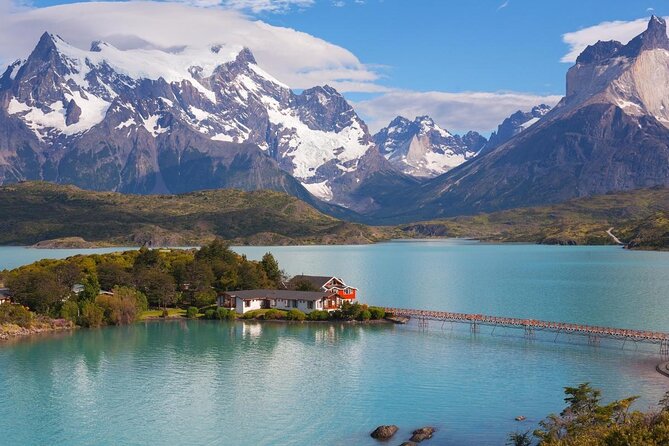
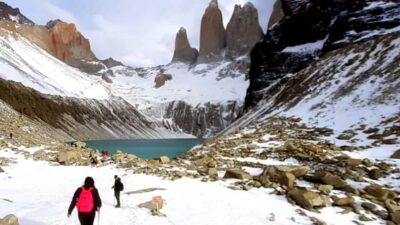
The reward here is one of Patagonia’s great mountain views: three granite towers rising above a bright mountain lake. Reaching Base Torres takes real work, with roughly 20 kilometers of walking and a steep, rocky final section, but the payoff is exactly the sort of view that justifies sore legs.
I like two things right away. The early start makes this possible in one day from Puerto Natales, and the guides work hard to keep mixed-ability groups together. I also like the practical equipment: trekking poles, a first aid kit, and crampons when needed are supplied. The main caution is simple: this is a hard hike, not a gentle park stroll, and poor weather or a slower pace can change how much time you get at the viewpoint.
Key points to know before booking
- The hike covers about 20 kilometers: Plan on roughly eight hours on foot, with a total day of 10 to 12 hours.
- The final kilometer is the hardest: Expect a steep moraine with loose rock and a demanding climb.
- Guides are central to the experience: Guides including Pablo, Sebastián, Alex, Ramiro, Leo, and Claudia have been praised for pacing, encouragement, and safety.
- You leave Puerto Natales early: Hotel pickup is scheduled between 6:30 and 7:00 AM, with a return around 8:00 to 9:00 PM.
- The $99 price covers useful basics: Transport, bilingual guiding, trekking poles, first aid support, and crampons when needed are included, but park admission and lunch are extra.
- Weather matters enormously: Wind, rain, snow, and cloud can make the final section unsafe or spoil the view, even after a strong climb.
Why Base Torres is worth the effort
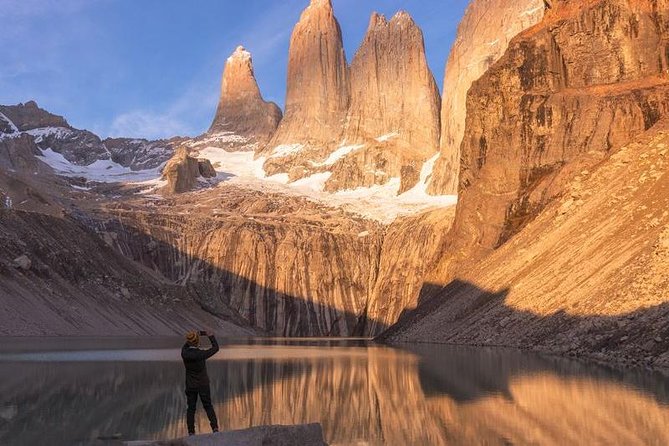
Torres del Paine is named for the three distinctive granite towers that rise above the park. The Base Torres viewpoint puts you close to the classic scene: pale rock, a mountain lake, and the towers framed by the steep walls of the surrounding peaks.
This is not a sightseeing stop reached by a short walk from the bus. You begin near the Hostería Las Torres sector and cross the Ascensio Valley before entering a Lenga forest. The route then becomes more demanding as you gain height toward the moraine.
I like the shape of this day because the scenery changes as your legs warm up. The valley gives you open mountain views. The forest provides some shelter and a cooler walking section. Almirante Nieto Hill appears from different angles as you continue, giving you something to study during the long climb.
The final view is the reason most people accept the effort. Still, you should book this for the hike itself, not only for the photograph at the top. You spend much of the day walking, and the view is never guaranteed in Patagonia’s fast-changing weather.
A few more treks around the world worth a look
- Mount Etna: Trek to 3000m with cable car and 4×4
★ 4.6 · 3,823 reviews - Bali: Mount Batur Sunrise Trek With Guide and Breakfast
★ 4.8 · 3,461 reviews - From Chania: Full-Day Samaria Gorge Trek Excursion & Guide
★ 4.6 · 3,191 reviews
The early morning departure from Puerto Natales
Pickup begins between 6:30 and 7:00 AM, depending on where you stay in Puerto Natales. Once the group is together, the guide hands out trekking poles and explains the route, the Base Torres climb, and the day’s safety plan.
That briefing matters. You need to understand from the start that the day has a fixed rhythm. The group must reach the viewpoint, allow time for the return, and get back to the shuttle for the drive to Puerto Natales.
The ride to the park takes about two hours. That makes an early departure unavoidable, but it also gives you a useful transition from town to the wide-open scenery of Torres del Paine. Bring food and water with you from the beginning. Lunch is not generally included, except for a lunchbox listed with the private service.
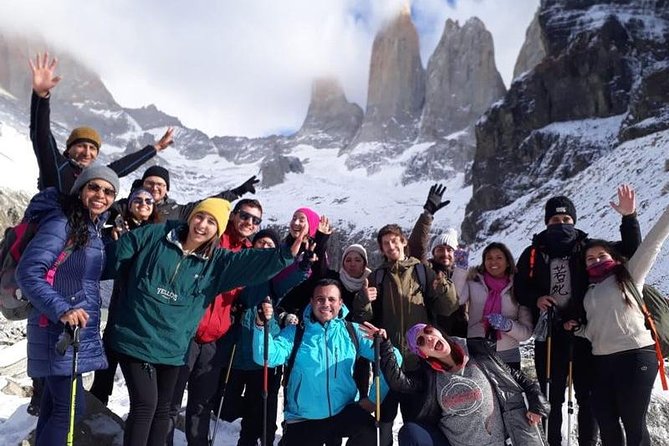
Group size and guide support vary by season. Winter groups are smaller, with one guide for every four people. Summer groups can be larger, with one guide for every six people, and the booking information gives a maximum of 15 people for the activity. Groups may naturally split into smaller walking units of around seven to ten people along the route.
That arrangement can work well for different walking speeds. Guides such as Sebastián, Felipe, Leo, Pablo, Ramiro, Daniel, and Alex have been singled out for keeping people together and offering encouragement. Still, a guided group is not a private hike. If you need frequent long breaks, your day may feel more pressured.
Entering Torres del Paine through Porteria Amarga
The shuttle enters Torres del Paine National Park through the Porteria Amarga sector. From there, the mountains begin to frame the day, and you can expect impressive views even before the main climb begins.
Park admission is not included in the $99 tour price. Treat that fee as part of your real budget, along with lunch, drinks, and any equipment you need to buy or rent separately.
The transport is an important part of the value. Getting from Puerto Natales to the park independently requires planning, timing, and a reliable way to reach the trailhead. Here, the shuttle and return transfer are arranged for you, and the driver brings you back to your accommodation area at the end of a long day.
The drawback is that the bus ride adds several hours to an already demanding outing. You should not expect a relaxed half-day visit. This is a full-day commitment from early morning until roughly 8:00 or 9:00 PM.
Across the Ascensio Valley and Lenga forest
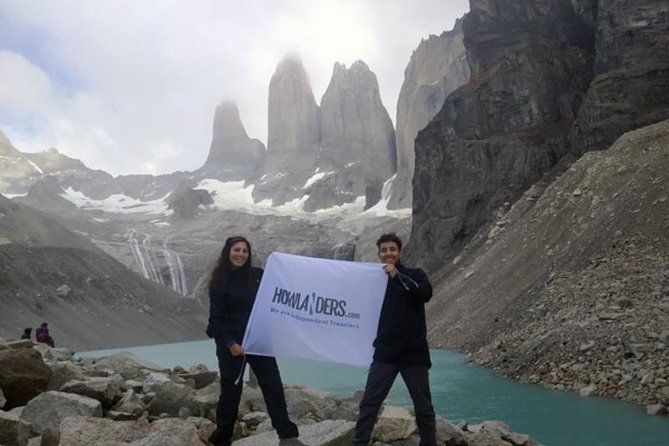
The main walking section begins toward the Hostería Las Torres sector. The route through the Ascensio Valley takes you into the heart of the mountain setting, with views of Almirante Nieto Hill changing as you move.
The Lenga forest gives the hike a different character. It is a welcome contrast to the exposed mountain sections, though it does not make the climb easy. The route remains long, and you are steadily saving energy for the final push.
The published walking time is about eight hours, with the approach to Base Torres taking around four hours. Fit hikers may move faster, while people with less mountain experience can take five hours or more to reach the top. Several guides have been praised for managing mixed paces, but one account describes the uphill speed as too hard to maintain.
That is useful guidance. You do not need to be an elite athlete, but you should have a moderate level of fitness and be comfortable walking for most of a day. Regular running or gym training helps, but it does not remove the difficulty of a long uphill hike on uneven ground.
Use the trekking poles. They are not decorative extras. They help with balance, reduce strain on the descent, and give you more control over loose or rocky ground.
Same trailhead, a different route:
- Mount Etna: Summit Crater Trek with Cable Car
★ 4.8 · 1,875 reviews - La Palma: Tajogaite Volcano Guided Trek
★ 4.8 · 1,810 reviews - Skaftafell: Ice Cave Tour and Glacier Hike
★ 4.5 · 1,746 reviews - Etna: summit craters trekking with volcano guide 3350mt
★ 4.7 · 1,712 reviews
The steep moraine to Base Torres
The final approach is the point where this outing earns its medium rating with a large asterisk. You climb a glacier moraine, a rough, steep section of rock that can feel closer to scrambling than ordinary trail walking.
The last kilometer is especially difficult. It can be steep, rocky, and exposed to changing weather. One group was advised not to continue during this section, while another stopped at an alternative viewpoint. That means you should think of the summit view as the goal, not a promise.
At the same time, the guides appear to take safety seriously. In difficult weather, groups have turned back after wind, rain, and heavy snow. Guides have also looked for other viewpoints and allowed extra time at nearby lodges. That is the right approach in a place where conditions can change quickly.
Guides named in the feedback include Alex, Pablo, Matías, Sebastián, Ramiro, Daniel, Leo, Claudia, Paulina, Ignacio, and others. Their strengths are practical rather than theatrical: steady pacing, encouragement, route support, and making sure nobody is left behind.
You should still take responsibility for your own limits. Tell the guide early if your shoes are causing trouble, if you are struggling with the pace, or if the final climb feels unsafe. Stopping short is better than turning a difficult day into an injury.
Time at the viewpoint and the lake
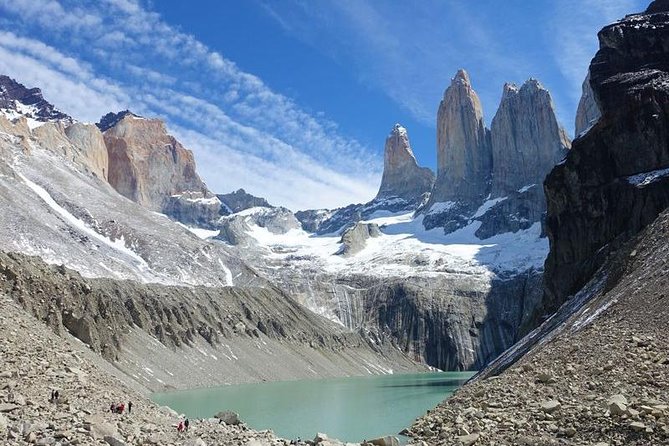
At Base Torres, the group has time to eat lunch, take pictures, and look across the lake toward the towers. Clear weather can produce the classic view, while cloud, rain, or wind may hide parts of the scene.
Do not assume you will have an hour at the top. The total schedule includes the climb, time at the viewpoint, the descent, and the long drive home. In poor conditions, guides may ask the group to leave after a short visit.
That can be frustrating after such a demanding climb. It is also one of the unavoidable limits of a guided day in Patagonia. The safest decision can mean less time for photos, especially when wind or snow arrives.
The route then reaches a small beach formed by the lake. You can touch the water and take in the view from a lower angle before the full group begins the descent. This detail adds something valuable to the day. You are not simply climbing to a single photo point and immediately turning around.
Still, stay aware of the clock. A long stop at the beach or viewpoint can make the return feel rushed. Eat efficiently, take your photos, and keep enough energy for the walk down.
The descent and return to Puerto Natales
The descent takes about three hours. It may be easier on your lungs, but uneven rock can be hard on tired knees and ankles. This is another reason to keep your trekking poles and wear mountain shoes with good soles.
After the walk, the shuttle returns you to Puerto Natales. The expected arrival is between 8:00 and 9:00 PM, so plan a quiet evening. You may be hungry, tired, and dusty, but you will have completed one of the region’s best-known day hikes.
The organized return is a real advantage. You do not need to arrange a late transfer after finishing a demanding route. The day has a clear beginning and end, which is useful if your time in Puerto Natales is limited.
What the $99 price really covers
At $99 per person, the tour offers solid value for a visitor who wants Base Torres without arranging every moving part alone. The price includes shuttle transportation from the Puerto Natales metropolitan area, a bilingual guide and assistant guide, a first aid kit, trekking poles, and crampons if conditions require them.
The extras matter. You must pay the Torres del Paine entrance fee separately. Lunch is also extra unless you have the private-service lunchbox option. You must bring food and drinks, and in winter you need a headlamp and gaiters, which are mandatory from roughly June through September.
You also need proper mountain shoes. Do not rely on casual sneakers. The steep moraine, loose rock, and long descent make firm soles important.
The best value comes from the guide support and transport, not from luxury. This is a practical group trek. You pay for access, organization, safety equipment, and help with pacing. You do not pay for a leisurely schedule or a guaranteed clear view.
The weather and seasonal equipment
Patagonia can change mood quickly. Clear sunshine, strong wind, rain, snow, and cloud are all part of the calculation. One outing may feel easy in calm weather, while another becomes a careful retreat before the final climb.
Winter requires more preparation. Headlamps and gaiters are mandatory, and crampons may be supplied when necessary. Check that you have the required gear before departure rather than discovering a missing item at pickup.
Summer generally offers easier conditions, but it does not turn the hike into an easy walk. The distance and steep final section remain. Summer groups can also be larger, though the guides are assigned to keep different walking speeds accompanied.
Flexible scheduling can help if weather threatens your day, but do not rely on last-minute changes. Changes made less than 24 hours before departure are not accepted, and a full refund requires cancellation at least 24 hours ahead of the start time.
Who should book this Base Torres day?
I would choose this tour if you have limited time in Puerto Natales, want the famous towers, and prefer arranged transport with guides. It suits people who are comfortable with long, strenuous walks and who appreciate help with route decisions and pacing.
It is also a good choice if you are traveling alone. The guide structure gives you company and support, and the small-group format can feel more personal than a large bus excursion.
I would hesitate if you dislike early starts, need a slow and flexible schedule, or are mainly interested in sightseeing from the vehicle. The 20-kilometer distance is serious. You should also reconsider if you have no experience with steep, rocky paths or if your footwear is not suitable.
Should you book Trekking Base Torres?
Book it if Base Torres is high on your Patagonia wish list and you can handle a full day of hard walking. The combination of transport, guide support, poles, safety equipment, and a famous viewpoint makes $99 a reasonable starting price, though you must add park admission, lunch, and winter gear costs.
Go in with realistic expectations. You may reach the towers under clear skies, or you may get cloud and wind after hours of effort. You may finish the final moraine, or you may sensibly stop at a lower viewpoint.
The best reason to book is not convenience alone. It is the chance to spend one demanding, well-supported day moving through the Ascensio Valley, Lenga forest, and mountain terrain toward one of Chile’s most memorable views.
FAQ
How long does the Base Torres tour take?
The full experience takes approximately 10 to 12 hours. Pickup begins around 6:30 to 7:00 AM, and the shuttle usually returns to Puerto Natales between 8:00 and 9:00 PM.
How far is the hike?
The hike covers about 12.43 miles, or 20 kilometers, and takes roughly eight hours on foot. The climb to Base Torres takes about four hours, followed by a descent of around three hours.
Is the hike difficult?
It requires a moderate level of physical fitness and includes a steep, rocky glacier moraine near the viewpoint. The final kilometer is particularly demanding, and the route may be unsuitable for people who are not comfortable with long uphill walks.
What equipment is included?
The tour includes trekking poles, a first aid kit, and crampons when necessary. You must bring mountain shoes with good soles, food, and drinks. A headlamp and gaiters are mandatory during the winter season, approximately June through September.
Is the Torres del Paine entrance fee included?
No. Admission to Torres del Paine National Park is not included in the tour price. Lunch is also not included, except for a lunchbox offered with the private service.
What happens if the weather is bad?
The guides may change the route, use other viewpoints, or stop the group before the final section if conditions become unsafe. Wind, rain, snow, and poor visibility can affect both the climb and the amount of time available at Base Torres.
Just added around the world
- Everest Base Camp Trek★ 5.0 · 3 reviews
- Everest Base Camp Trek★ 5.0 · 7 reviews
- 15 Days Private Everest Base Camp Trek★ 5.0 · 30 reviews
- Everest Base Camp Trek★ 5.0 · 57 reviews
- 14 Days of Adventure Trekking to Everest Base Camp★ 5.0 · 2 reviews
- 14-Day Everest Base Camp Trek★ 5.0 · 20 reviews
- From Kathmandu: Private 14-Day Everest Base Camp Trek★ 5.0 · 20 reviews
- 14 Days Everest Base Camp Trek★ 5.0 · 4 reviews
Chile Trekking Tours, compared.
Puerto Natales: Base of the Towers Trekking Experience
Read our review →
Puerto Natales: Base Torres Small Group Trekking
Read our review →
Full Day Mountaineering to Villarrica Volcano from Pucón
Read our review →
San Pedro de Atacama: Desert Tour with Canyoning & Trekking
Read our review →
San Pedro de Atacama: Canyon Swimming Pools Trekking Trip
Read our review →Browse the lists this trek appears in