
Review · SAPA
Easy Trek in Sapa mountain : Y Linh Ho – Lao Chai – Ta Van
Sapa’s best views come when you leave town behind, and this trek does that quickly. You cross the Muong Hoa River, walk through bamboo and rice terraces, then connect three mountain communities: Y Linh Ho, Lao Chai, and Ta Van. I like the small groups of up to 10 and the chance to eat lunch with a local Hmong family rather than at a large tourist restaurant.
I also like the guides’ personal touch. Mao has invited walkers to her home for tea, while Su has earned praise for his English, patience, and explanations of local customs. The main caution is simple: this is called an easy trek, but steep slopes, slippery ground, and five hours of walking can make it quite demanding.
Key points to know before booking
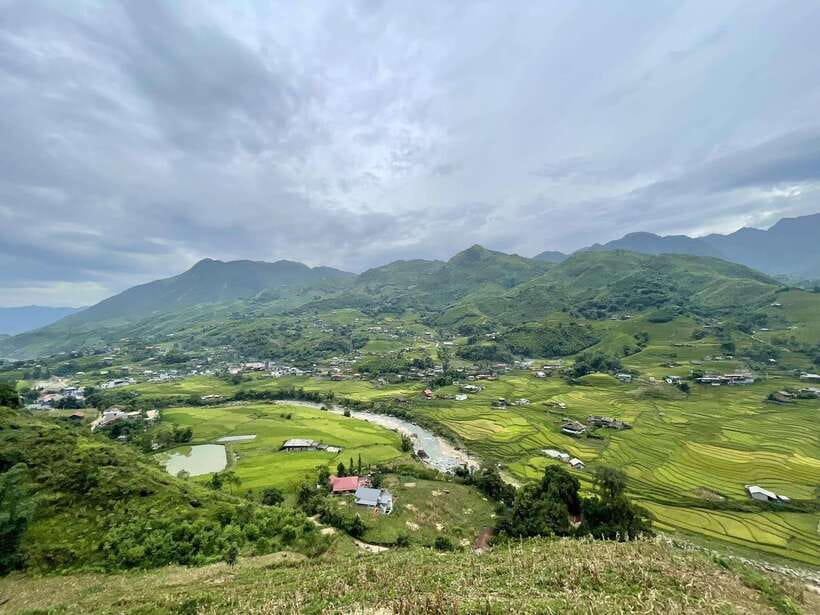
- Rice terraces take center stage: The route reaches some of Sapa’s largest and most striking cultivated slopes.
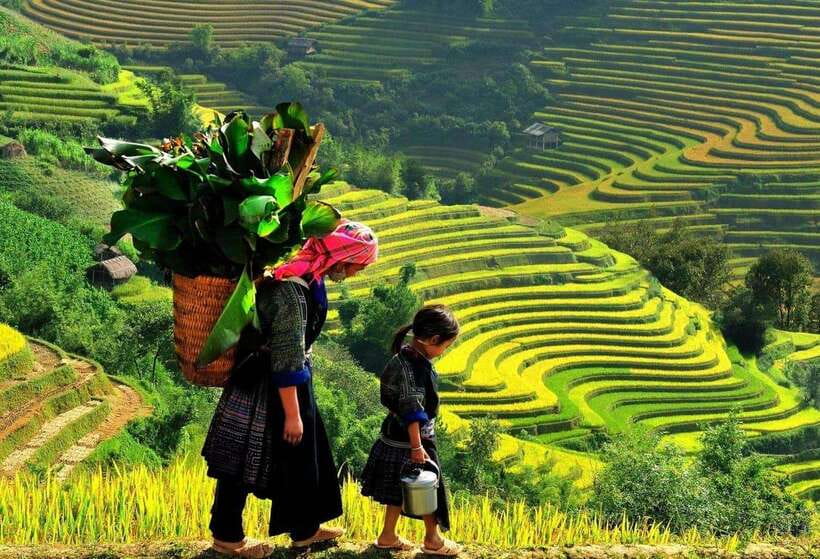
- Three ethnic communities: You visit Black Hmong villages in Y Linh Ho and Lao Chai, then meet the Giay community in Ta Van.
- A real local lunch: Your midday meal is served at a small restaurant run by a Hmong family.
- Guides can shape the day: Mao and Su are named guides praised for warmth, English, and cultural explanations.
- Easy on the wallet, harder on the legs: At $20 per person, the value is strong, but the walking is not casual.
- Useful afternoon finish: You return to Sapa around 3:30, leaving time to catch a bus onward.
Why this Sapa trek is worth your time
Sapa town can feel busy and full of tour traffic. This route gives you a useful escape in one day, without requiring an overnight stay or a costly private excursion. For $20, you receive transport, an English-speaking guide, lunch, and roughly seven hours devoted to the valley and its villages.
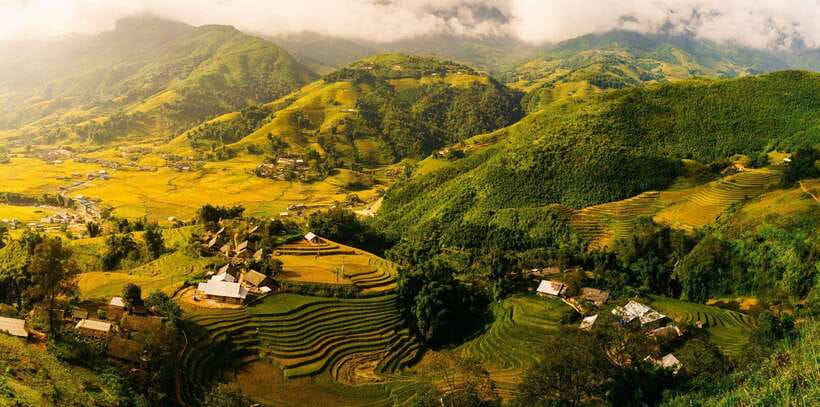
The real value is not just the number of stops. It is the way the route links scenery with daily life. You see rice fields, buffalo, mountain paths, homes, and village communities while your guide explains how the local ethnic groups differ. That makes the day more meaningful than a viewpoint stop followed by a quick photo.
The experience has a rating of 4.8 from 16 reviews, with particular praise for the scenery, lunch, and guides. Mao and Su receive special mention, but your assigned guide may be someone else. The activity is offered in English, and the group is limited to 10 people, which should make it easier to ask questions and keep a steady walking pace.
A few more treks around Sa Pa worth a look
- Sa Pa: Muong Hoa Valley Trek and Local Ethnic Villages
★ 4.6 · 864 reviews - Sapa: Eco Adventure Terrace Fields and Local Villages Trek
★ 4.9 · 636 reviews - Number one top rated ethical cultural trekking and homestay by ETHOS
★ 5.0 · 456 reviews
Starting at Hoang Van Thu and leaving Sapa
The meeting point is Massage Lits at 01 Hoang Van Thu Street. The tour begins at 9:00, when the guide and van collect you from your accommodation, according to the tour details. The listed starting location is also Hoang Van Thu, so confirm the exact pickup arrangement when you book.
The first van ride takes about 15 minutes. The route description says the vehicle takes you roughly 2 kilometers down to Cat Gat’s road, known as an area associated with the Hmong community. From there, the walking begins near the hanging bridge over the Muong Hoa River.
This short transfer matters. You do not spend the first hour trudging through town or along ordinary roads. The van places you near the valley, where the views and village paths begin.
Wear shoes you trust. The route includes slopes, and rain can make the path slick. One guide, Su, was praised for helping each person along wet ground, which tells you something useful about the conditions: weather can change the character of the walk quickly.
Crossing the Muong Hoa River and entering the hills
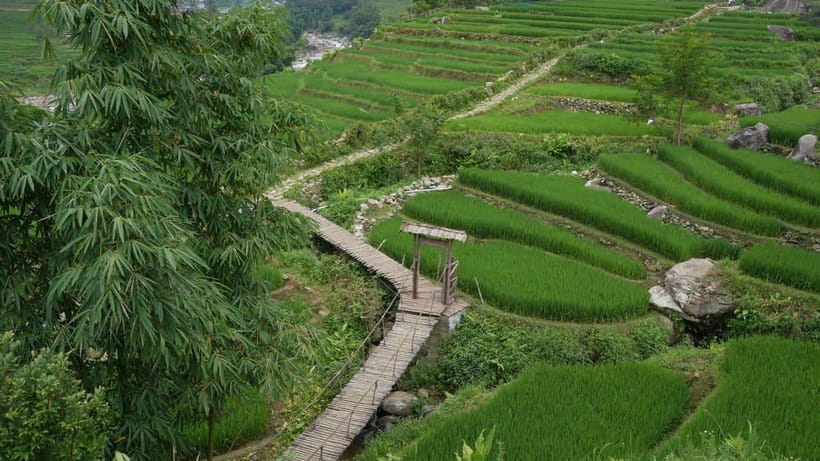
The hanging bridge over the Muong Hoa River is one of the first memorable points on the route. After crossing, you continue uphill into the mountains and through a bamboo forest.
This section is more than a warm-up. The climb gives you a first sense of Sapa’s terrain, where the valley floor sits well below the mountain paths. The bamboo offers a change from the open rice fields, and the route soon opens to broad views toward the Hoang Lien Son mountain range.
The tour description calls the walk easy, but you should not read that as flat or effortless. One participant described the trek as quite physical because of the slopes, even on a rainy day. If you walk regularly and are comfortable on uneven ground, the route may feel manageable. If you expect a gentle stroll, it could surprise you.
Bring water, sunscreen, and a hat. Breathable clothing is useful in warm weather, while rain can make the ground slippery. A charged phone helps with photographs, though the best reason to keep it ready is the changing scenery.
Y Linh Ho and the biggest rice terraces
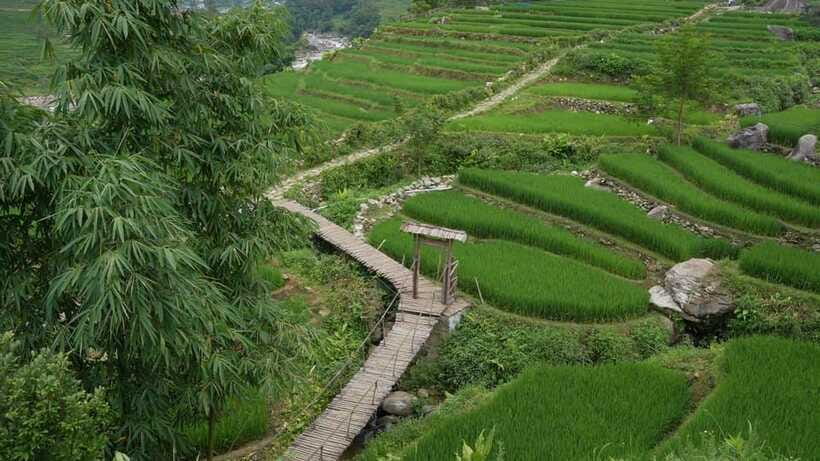
The first major walking section leads toward Y Linh Ho, with about three hours set aside for the stop and the route around it. This is where the rice terraces become the main event.
The terraces are not a single lookout that you see and leave. You walk among them, with mountain views changing as the path rises and falls. The cultivated slopes show how farming fits into the steep valley. Depending on conditions, you might also see buffalo and other signs of village life along the way.
The route gives you time for photos, free walking, and guided explanations. That slower pace is important. Sapa’s scenery is best understood from the path, not only from a roadside viewpoint. You can see how terraces follow the contours of the hills, while the guide explains the communities living and working in the area.
The scenery is strongest in clear weather, but rain does not make the route pointless. It can make the walk harder, and clouds may hide some mountain views, yet the rice fields still offer plenty to see. Plan for conditions rather than assuming a perfect blue-sky day.
Same trailhead, a different route:
- From Sapa: 1-Day Guided Trek to Lao Chai & Ta Van with Lunch
★ 4.9 · 416 reviews - Sa Pa Full Day Trekking Tour
★ 5.0 · 414 reviews - Sapa 1 Day Long Trek: Trek to Hau Thao and Sa Seng Villages
★ 4.6 · 344 reviews - Explore Sapa by TrekkingAdventures, Mountain,Rice fields
★ 4.9 · 229 reviews
Lunch beside the valley with a Hmong family
After the Y Linh Ho section, you stop for lunch at a small traditional restaurant run by a local Hmong family. Lunch is included, but drinks are not, so carry water and budget for anything else you want to buy.
This meal is one of the tour’s strongest features. It gives you a proper pause after the longer first walking section, and it puts local hospitality at the center of the day. A meal in a small family-run place also feels more connected to the village than eating at a large restaurant in Sapa town.
The supplied details do not specify the menu, so do not book this expecting a particular dish. The useful point is the setting and the local connection. Reviews describe the lunch as good, including a meal beside the river in one of the villages.
Take the break seriously. You still have Lao Chai and Ta Van ahead, plus more walking. Refill your water, adjust your shoes, and use the pause to ask your guide about the communities you are about to visit.
Lao Chai and the Black Hmong community
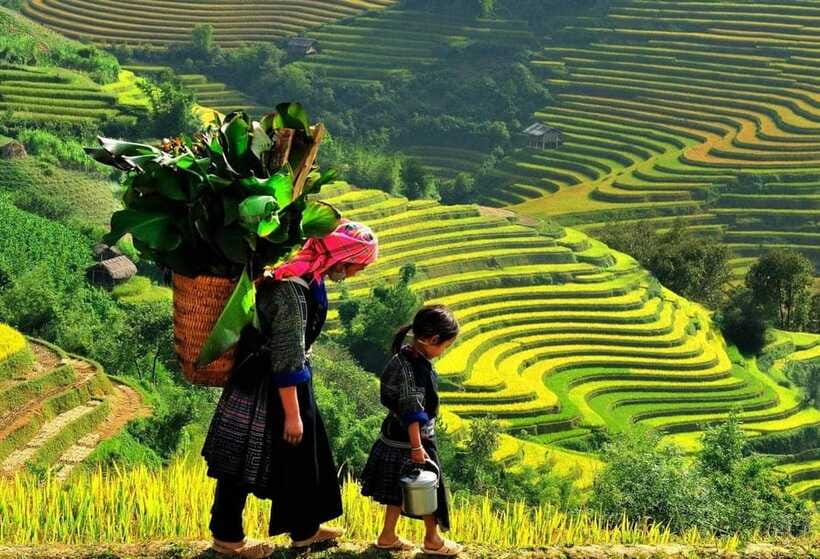
The next stop is Lao Chai, a village associated with the Black Hmong. The walk here takes about an hour, with time for sightseeing, photographs, and explanations from the guide.
The Black Hmong are one of the ethnic minority groups living around Sapa. The name is commonly linked to traditional dark clothing, though the most valuable part of the visit is not simply identifying clothes. Your guide helps explain how local groups differ in customs, daily life, and community identity.
That cultural context gives the scenery more meaning. You are not just walking through attractive fields. You are passing through places where farming, family life, and village traditions remain part of the setting.
Keep your manners simple and respectful. The tour specifically asks you to respect local customs and traditions. Ask before photographing people, listen when your guide explains local practices, and avoid treating homes or villagers as scenery.
The route can feel more tiring by this point. The morning includes a climb, a long stretch around Y Linh Ho, and uneven paths. If your legs are not used to hills, take shorter steps and use the breaks instead of trying to rush.
Ta Van and the Giay community
From Lao Chai, you continue to Ta Van, with about an hour planned for the village. Ta Van is associated with the Giay minority, giving the day a clear cultural contrast: Black Hmong communities at Lao Chai, followed by a Giay community at Ta Van.
The guide’s role matters most here. Su was praised for speaking excellent English and explaining local ethnic groups, while Mao was described as warm, funny, and willing to share personal details about her life. Those qualities can turn a series of village names into a clearer picture of Sapa’s people.
Ta Van also serves as the final village section before you reach the waiting vehicle. You have time for a break, photographs, a guided visit, and free sightseeing. The route does not treat the village as a rushed five-minute stop, which is useful after the long approach through the terraces.
Mao has also invited walkers to her home for tea, and her accommodation has been described as a collection of small individual cabins with mountain views and a pool. That is connected to her longer excursions, not something you should assume is included in this day trek. Still, it may be worth asking about if you want to return to Sapa for a longer homestay experience.
The return to Sapa by van
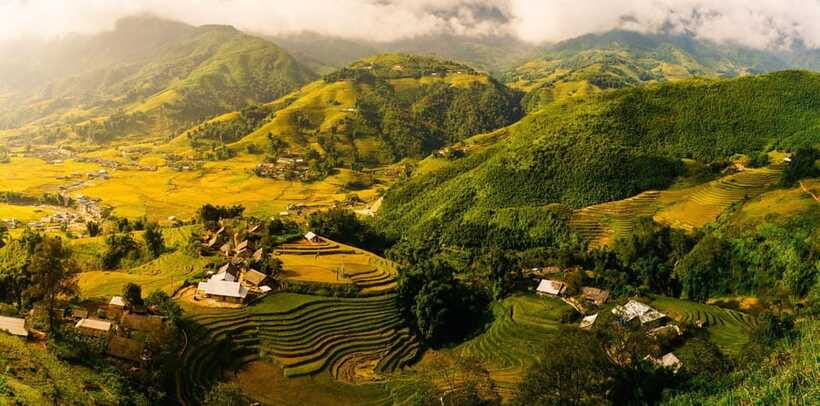
After Ta Van, the van takes you back to Sapa. The final arrival is scheduled for about 3:30, giving you a full afternoon and evening in town.
This timing is useful if Sapa is only one stop on a larger Vietnam trip. You may be able to catch a bus to Hanoi or another destination after the tour, but leave enough margin for delays. Mountain roads and weather can affect timing, and the trek itself may run at a slower pace for a mixed group.
The return ride also keeps the day from becoming an exhausting walk back toward town. You get the scenery on foot and the final connection by vehicle, a sensible balance for a seven-hour outing.
The $20 price and what it covers
At $20 per person, this is a strong-value Sapa excursion. The price includes transportation, an English-speaking guide, and lunch with locals. It also gives you a small group of no more than 10 participants, which is a better setup for conversation and village visits than a large coach tour.
You pay separately for drinks. A tax invoice and visa are not included, though neither should affect the normal cost of the day for most visitors. The tour also offers a 20 percent massage discount at Massage Lits, 01 Hoang Van Thu, after the trip. That could be welcome after the hills, especially since the walking is more physical than the title suggests.
Free cancellation is available up to 24 hours before departure, and you can reserve now and pay later. Those terms are useful in Sapa, where rain and changing mountain conditions may affect your plans.
Who should book this trek
I would choose this trek if you want a full day of mountain scenery and village life without staying overnight. It suits walkers who can handle several hours on uneven, sloping paths and who want more than a quick photo stop.
It is a good fit for:
- Adults who enjoy active sightseeing
- Visitors who want rice terraces and villages in one day
- People interested in Black Hmong and Giay communities
- Small groups that prefer a guide they can talk with
- Anyone looking for an inexpensive Sapa activity with lunch included
The tour is not suitable for children under 10, pregnant women, wheelchair users, people with back problems or recent surgery, and people over 70 according to the supplied restrictions. The information also lists limits for people over 80 and over 95, so older participants should check eligibility carefully before booking. Babies under 1 are not accepted.
Smoking and alcohol are not allowed in the vehicle. Those rules are easy to follow, but the walking requirements deserve more attention. Comfortable shoes are essential, not optional.
Should you book the Y Linh Ho to Ta Van trek?
Book it if your priority is big rice terraces, local village contact, and a low price. The combination of a family-run lunch, three communities, an English guide, and a 3:30 return makes this a practical one-day choice.
Skip it if you want a flat walk, a luxury meal, or a tightly controlled sightseeing schedule. Rain can make the trail slippery, and the steep sections may test anyone who arrives expecting an easy stroll.
For most reasonably fit visitors, I would consider it one of the better-value ways to see the Sapa valley. Bring water, wear proper shoes, and treat the word easy with caution. Do that, and the route gives you the scenery and human connection that make leaving Sapa town worthwhile.
FAQ
How long does the Sapa trek last?
The experience lasts about seven hours. It starts at 9:00 and ends in Sapa at about 3:30.
How much does the trek cost?
The price is $20 per person.
What villages does the route visit?
The route visits Y Linh Ho, Lao Chai, and Ta Van. Lao Chai is associated with the Black Hmong, while Ta Van is associated with the Giay community.
Is lunch included?
Yes. Lunch is included and takes place at a small traditional restaurant run by a local Hmong family. Drinks are not included.
Where does the tour meet?
The meeting point is Massage Lits at 01 Hoang Van Thu Street in Sapa. The tour details also state that the guide and van pick you up from your accommodation.
Is this suitable for children or people with mobility concerns?
The trek is not suitable for children under 10, pregnant women, wheelchair users, people with back problems, people with recent surgeries, or babies under 1. The route includes significant walking and slopes, and comfortable walking shoes are required.
Just added around Sa Pa
- Sapa: Private The Most Beautiful Terraced Fields Trekking★ 4.8 · 42 reviews
- Soob Sapa Trekking Tour★ 4.3 · 3 reviews
- Sapa Trekking – Waterfalls And H’mong Villages★ 5.0 · 2 reviews
- Sapa3D2N TrekkingAdventures,Valleys,Bambooforest,Waterfall★ 4.8 · 24 reviews
- Sapa: Trekking Through Terraced Rice Fields & Valley 1 Day★ 4.8 · 4 reviews
- Sapa: Trekking Sapa One Day With Group Tour★ 4.7 · 55 reviews
- Sapa Trekking Private Tour With Ethnic Female Tour Guide★ 4.9 · 24 reviews
- Sapa: Y Linh Ho – Lao Chai, and Ta Van Trekking Day Tour★ 5.0 · 25 reviews
Sapa Trekking Tours, compared.
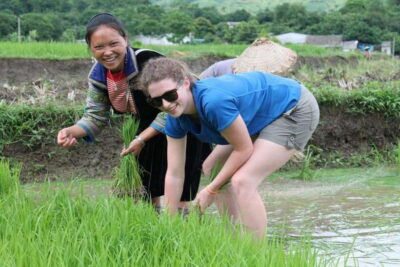
Muong Hoa Valley Trek and Local Ethnic Villages
Read our review →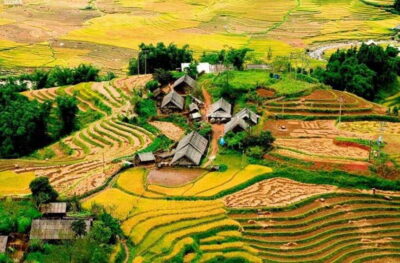
Eco Adventure Terrace Fields and Local Villages Trek
Read our review →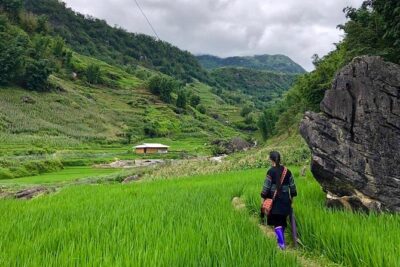
Number one top rated ethical cultural trekking and homestay by ETHOS
Read our review →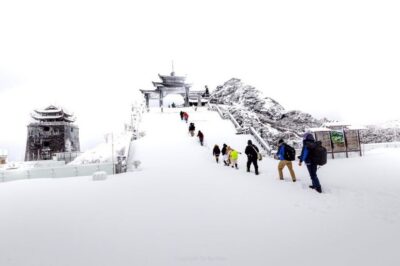
1-Day Guided Trek to Lao Chai & Ta Van with Lunch
Read our review →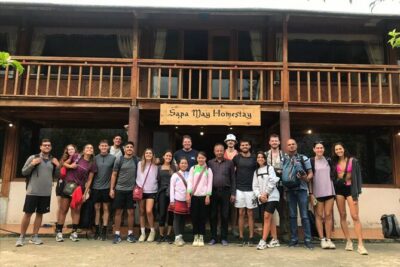
Sapa 1 Day Long Trek: Trek to Hau Thao and Sa Seng Villages
Read our review →
Explore Sapa by TrekkingAdventures, Mountain,Rice fields
Read our review →
EXPLORE SAPA: 2D1N TREKKING & HMONG CULTURE WITH DINH
Read our review →Browse the lists this trek appears in