
Review · HANOI
2-Day SAPA Trekking – Villages-Homestay-Ethnic-Local Food-Market
Sapa’s appeal is not just its cool mountain air or famous rice terraces. It is the chance to walk between villages where Black Hmong, Giay, Dao, and Red Dzao communities still farm, host visitors, and live along the Muong Hoa valley. This two-day trip gives you that view on foot, with a night in a local cottage rather than a standard hotel.
I like the long first-day walk through Y Linh Ho and Lao Chai, and I like the homestay meal and family setting in Ta Van. You get two very different trekking days, plus a useful look at village life. The main drawback is the long transfer from Hanoi, followed by a demanding afternoon hike. The $85 price also excludes a stated $15 round-trip transfer charge, so confirm the final total before booking.
Key points to know before you book
- The first day combines a long Hanoi bus ride with a serious afternoon trek, so you will spend much of the day moving.
- Y Linh Ho and Lao Chai provide the big terrace views, with paths beside the Muong Hoa Stream and through mountain farmland.
- Ta Van is your base for the night, with a local homestay, family-prepared food, and shared bathroom arrangements.
- The second-day trek covers about 4 kilometers in roughly two hours, including bamboo forest and a viewpoint toward Giang Ta Chai.
- The maximum group size is 22 people, which keeps the cost down but may feel less personal on narrow village paths.
- The tour includes meals, entrance fees, water, guide service, and lodging, but drinks, extra services, and the listed transfer supplement cost more.
From Hanoi at 6:00 to Sapa after lunch
Your day starts early, with hotel pickup in Hanoi’s Old Quarter between 6:00 and 6:30 in the morning. The bus follows the highway toward Lao Cai, with a first rest stop around 9:30 and another stop in Lao Cai at about 11:00.
You reach Sapa Town at roughly 13:30. That is a long road morning, so keep your expectations realistic. This is not a relaxed scenic rail journey with time to wander before lunch. It is a practical bus transfer designed to get you from Hanoi to the trailhead on a two-day schedule.
At Sapa, the guide collects you for lunch at a local restaurant. The timing matters: you begin the main trek around 14:30, leaving only about an hour between arrival and walking. Wear your hiking shoes before you arrive, keep water handy, and pack anything you need for the trail in a small day bag.
The tour is limited to 22 people. That is not a tiny walking party, but it is manageable for a group excursion. On narrow paths, the pace may spread out, and you should expect to stay with the guide rather than wander off for long photo stops.
More Homestay Treks in Hanoi
- Hanoi – Sapa 2 Days 1 Night Overnight At Homestay
★ 5.0 · 899 reviews - From Hanoi: 2-Day Sapa Trekking Trip with Homestay & Meals
★ 4.8 · 704 reviews - 2-Day Sa Pa Ethnic Homestay Tour & Trek with Limousine Bus
★ 4.8 · 440 reviews
Y Linh Ho: the quiet start to the valley walk
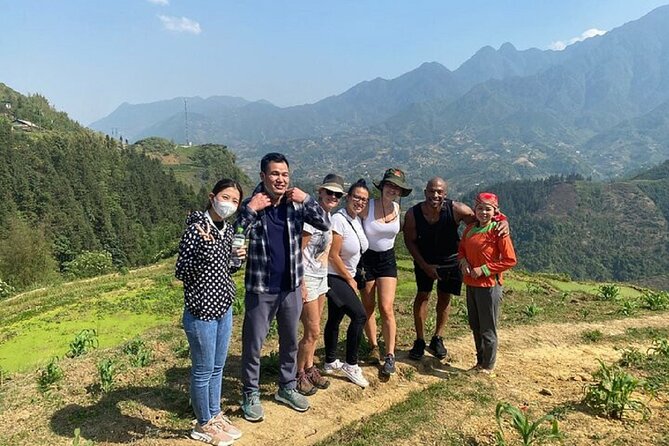
The afternoon trek heads through Y Linh Ho before continuing toward Lao Chai and Ta Van. Y Linh Ho has a local story tied to its name. According to village elders, the first settlement was formed by a Dao man called Ly Linh Ho. The Dao later moved away, and Mong people settled there, but the village kept its original name.
That detail gives the walk more meaning than a simple photo stop. You are passing through a place shaped by migration, farming, and family memory, not just crossing a scenic viewpoint.
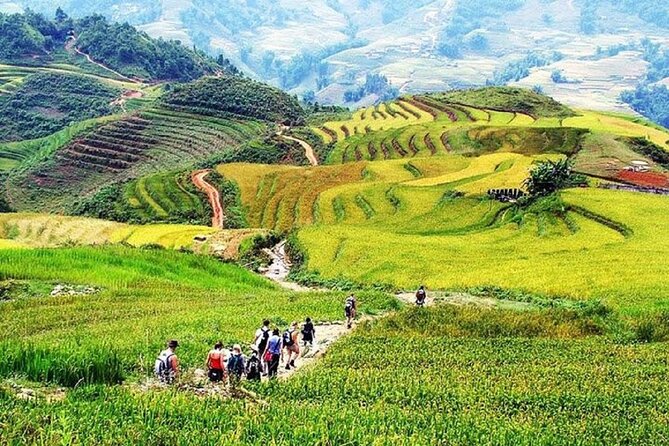
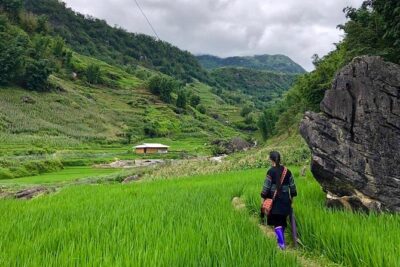
The path leads among rice terraces and along the Muong Hoa Stream. The route is a good fit if you want to see how the valley is used for agriculture. You will walk close to cultivated fields, with the Hoang Lien Son mountains rising around the valley. The scenery is strongest when the terraces are planted or filled with standing rice, but the area remains attractive outside the main growing season.
The walk is described as long, and the first day lasts about 12 hours from Hanoi pickup through the afternoon program. You should be comfortable walking uphill and downhill on uneven village tracks. The experience is not designed for someone seeking a gentle stroll beside a paved road.
Lao Chai and the famous rice terraces
Lao Chai sits among rice and corn terraces, with narrow paths crossing the fields. From the main road, you can look down over the village, mountain slopes, and river. On foot, you get a closer view of the terraces rather than seeing them only from a roadside lookout.
The period from September through April is identified as a particularly good time for the terraces. September can offer strong views of mature rice fields, while the months after the harvest give you a clearer sense of the earth-colored steps cut into the hills. Conditions can change with weather, and the tour requires suitable weather to operate.
Lao Chai is also a useful place to see the Black Hmong community. The walk does not present the village as a staged attraction. Instead, you pass through a working agricultural area where farming and local tourism both support households.
You should bring clothing that handles changing mountain weather. The information provided does not specify a gear list, but a sturdy pair of shoes is sensible given the long trek, streamside paths, terraces, and bamboo sections on the following day.
Ta Van: your homestay night in the Muong Hoa valley
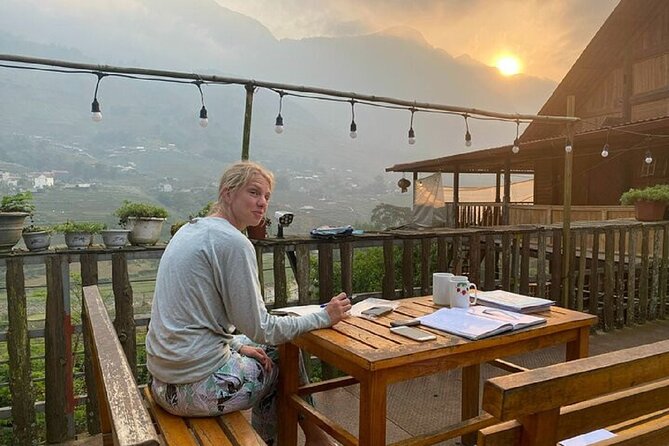
The trek continues toward Ta Van, where you spend the night in a local house or cottage. The accommodation may be a private room with a shared bathroom, so do not book this expecting hotel facilities. The appeal is the family setting, not polished comfort.
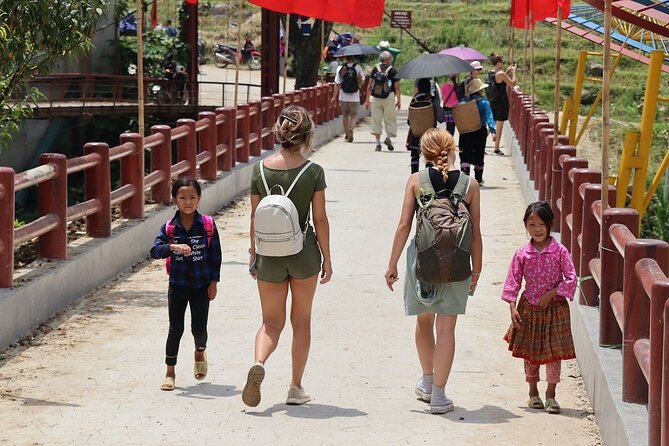
Ta Van includes Giay and Dao communities, along with Black Hmong families in the wider village area. After crossing the wooden bridge over the Muong Hoa Stream, you reach the Giay community. The Dao community lies farther up the hill. Farming is central to local life, while tourism provides an additional source of income for some households.
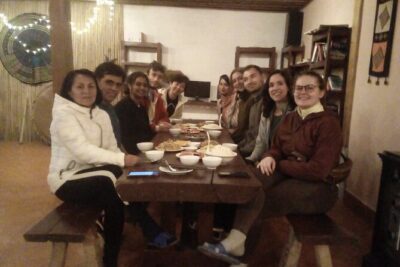
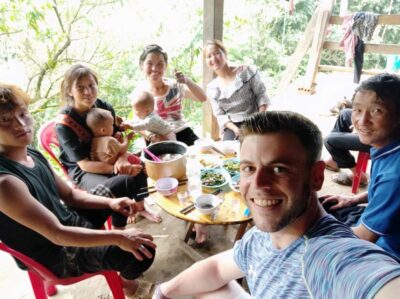
Dinner is included and is prepared by the host family. This is one of the strongest parts of the trip because the meal gives you time to slow down after the trail and see how the homestay works. The supplied feedback praised the host family and the chance to learn about local people, and that matches the design of the experience: you are staying in the village rather than returning to Sapa Town.
The accommodation arrangement deserves a clear check before payment. The tour states local house, homestay, private room, and shared bathroom, while a solo traveler pays a $20 supplement for a private room. If you are traveling alone and care about privacy, ask how the room will be assigned.
Ta Van also has a seasonal cultural detail. Giay wedding customs may be visible around mid-November or December, described as October in the lunar calendar. That does not mean a wedding will be taking place during your visit, but those dates may offer an extra glimpse of village traditions if local events happen to align with your stay.
Same trailhead, a different route:
- Sapa 3 Days 2 Nights Trekking Tour (1 Night In Ta Van Village, 1 Night In Hotel)
★ 5.0 · 699 reviews - 3-Day Trekking Adventure of Sapa from Hanoi – Stay Ta Van Village
★ 5.0 · 611 reviews - Hanoi – Sapa 3 Day 2 Night Trekking With Hotel & Homestay
★ 5.0 · 389 reviews - From Hanoi: 2-Day Sapa Trek Tour – Luxury Limousine Transfer
★ 4.1 · 249 reviews
A shorter second day through bamboo forest
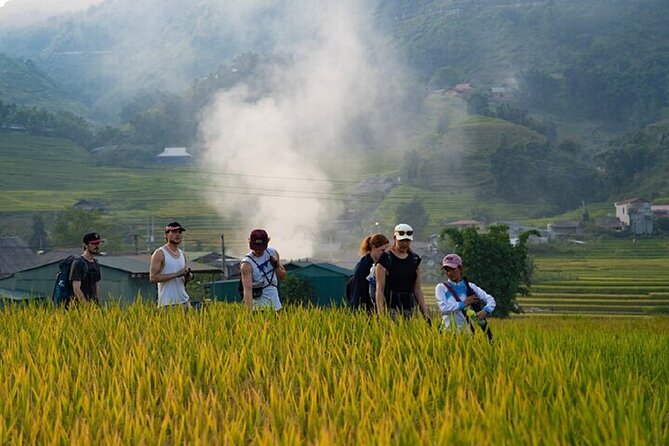
Breakfast is prepared by the family at about 8:00. The second trek begins around 8:45 and covers approximately 4 kilometers over two hours. Compared with the previous afternoon, this is a shorter walk, but it still includes rice paddies, uneven paths, and a bamboo forest.
One highlight is the view toward Giang Ta Chai, a village associated here with the Red Dzao people. You stop for photos from a panoramic point, then continue toward the Giang Ta Chai Bridge and the main road around 11:00.
This morning works well as a second chapter rather than a repeat of the first. Day one focuses on the broad valley, terraces, stream, and route into Ta Van. Day two adds bamboo, a bridge, and a view toward another ethnic village.
The short distance does not mean you should treat it as a city walk. Mountain paths can be slippery or tiring, especially after the previous afternoon. Your guide sets the pace, and the group format means you may not be able to linger at every viewpoint.
You return to the bungalow around noon to shower and prepare for lunch. Lunch runs from 12:30 to 13:30, after which a bus or car takes you to the bus station. You receive transport back toward Hanoi, but the supplied schedule does not give an exact arrival time. Plan your evening conservatively and avoid booking a fixed late-night connection.
Food, water, and what the $85 covers
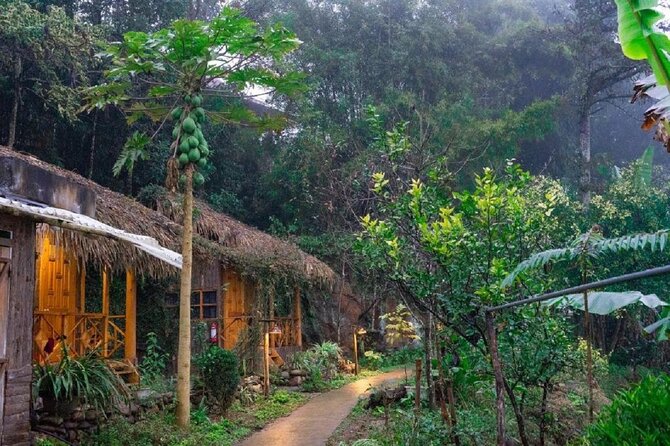
At $85 per person, this is good value if you want transport from Hanoi, a guide, village trekking, meals, and a night in a homestay bundled together. The included items are two lunches, dinner, breakfast, mineral water, entrance fees, and group trekking with an English-speaking guide.
The meal information contains some repetition, but the practical point is clear: breakfast, two lunches, and dinner are part of the package. Personal drinks and extra services are not included. Carry some cash for anything beyond the stated meals and water.
There is also a listed $15 per person transfer charge for two ways. Since the tour already describes Hanoi pickup and return transport, ask the provider exactly what this fee covers and whether it applies to your pickup location. That clarification changes the real cost from the advertised $85 to as much as $100 per person.
A solo traveler should also add the $20 private-room supplement if that option is required. The tour is more economical for two or more people sharing the standard arrangement.
The guide, the pace, and the limits of the experience
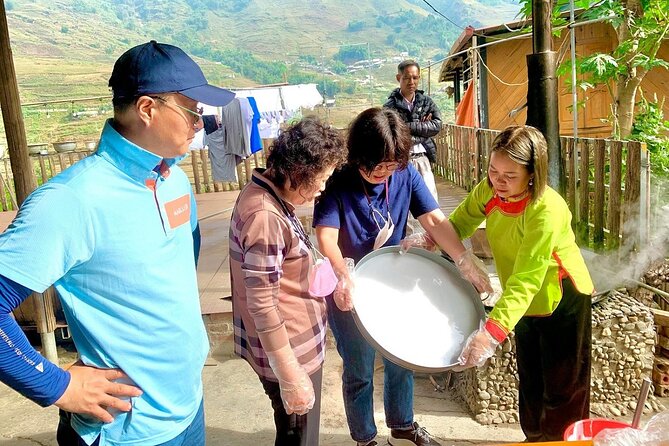
An English-speaking guide accompanies the trek and explains the villages along the way. The available feedback praised the guide but noted that more information about local plants and wildlife would improve the experience. That is useful advice if natural history matters to you. Expect help with the route and cultural context, but do not assume a specialist botany or ecology walk.
The tour’s main strength is access. You walk into Y Linh Ho, Lao Chai, Ta Van, and the Giang Ta Chai area rather than simply stopping at a Sapa viewpoint. You also spend the night in a local home, which gives the trip a more personal rhythm.
The trade-off is structure. This is a group tour with a fixed departure, set meal times, and a long bus ride on both ends. If you want to choose your own trail speed, spend hours photographing one terrace, or stay in a higher-end room, a private custom trek would suit you better.
The route also needs reasonable fitness. The first day combines road travel and a long walk. The second day is shorter, but the ground remains rural and uneven. Most people can participate according to the tour information, yet you should be honest about your ability to walk for several hours.
Who should book this Sapa trek?
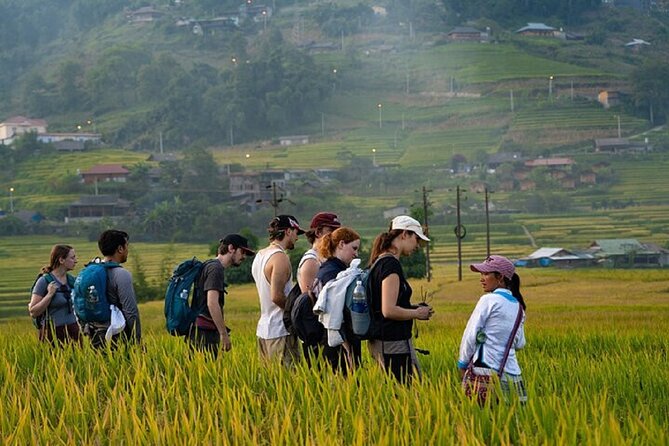
I would choose this trip if you have only two days for Sapa and want village walking rather than a resort stay. It suits first-time visitors who want the major valley scenery, an introduction to several ethnic communities, and a simple homestay without organizing transport, meals, and entrance fees separately.
It also suits anyone who values local contact over comfort. The family meal, shared facilities, and cottage setting are part of the point. Pack lightly and expect a basic night.
I would be cautious if you dislike early starts, long bus journeys, shared bathrooms, or fixed group schedules. You should also think twice if you want a detailed naturalist guide, because the guide’s strengths appear to be route leadership and local interpretation rather than specialist plant and animal knowledge.
Free cancellation is available until 24 hours before the start time. Changes or cancellations inside that window are not accepted, and poor weather may lead to a different date or a full refund.
Should you book it?
Book this Sapa trek if you want a reasonably priced, active introduction to the Muong Hoa valley and are happy to trade hotel comfort for a local homestay. The strongest parts are the walk from Y Linh Ho through Lao Chai, the terrace views, and the chance to eat and sleep in Ta Van.
Before paying, confirm three things: the final transport price, the exact room arrangement, and the expected return time to Hanoi. If those details work for you, this is a practical way to see more than Sapa Town in a short visit.
FAQ
Where does the tour start?
Pickup is offered from hotels in Hanoi’s Old Quarter, with departure between 6:00 and 6:30 in the morning.
How long is the experience?
The tour lasts two days. The first day includes the Hanoi to Sapa transfer and a long trek. The second day includes about four kilometers of trekking before transport toward the bus station.
Which villages are included?
The route includes Y Linh Ho, Lao Chai, and Ta Van on the first day. The second day includes a pass through the Giang Ta Chai area and a viewpoint toward Giang Ta Chai Village.
Where do I sleep?
You stay in a local house or homestay in Ta Van. The accommodation may be a private room with a shared bathroom. A solo traveler can pay a $20 supplement for a private room.
Are meals included?
Yes. The package includes breakfast, two lunches, and dinner. Personal drinks and other extra services are not included.
Is transport from Hanoi included?
Hanoi pickup and return transport are described in the schedule, but a $15 per person two-way transfer charge is also listed. Confirm how this fee applies to your booking.
What happens if the weather is poor?
The experience requires good weather. If it is canceled because of poor weather, you will be offered another date or a full refund. You can cancel for a full refund up to 24 hours before the start time.
More Food in Hanoi
- From Siracusa: Etna Tour – Trek, Wine and Food
★ 4.8 · 50 reviews - Ancona: Urban Trek Tour with Wine and Food Tasting
★ 4.5 · 4 reviews - Arequipa: Colca Canyon Trekking 2 days and 1 night + food
★ 4.8 · 3 reviews
More Food & Drink in Hanoi
- Etna Sunset Tour: Volcano trek, Cave & tasting from Catania
★ 4.8 · 1,290 reviews - From Catania: trek on Mount Etna, Lava Cave & tasting Tour
★ 4.8 · 563 reviews - Catania: Mount Etna Sunset Trekking with Wine Tasting
★ 5.0 · 140 reviews - Vernazza: Panoramic Vineyard Trekking Tour w/ Wine Tasting
★ 4.9 · 126 reviews
Just added around Hanoi
- 8-Days Hanoi, Sapa Trekking And Halong Bay Cruise★ 5.0 · 8 reviews
- From Hanoi : Sapa Moutain Trek – Halong bay Heritage★ 4.5 · 25 reviews
- Trekking around Ha Giang 5 days 4 nights★ 3.0 · 2 reviews
- Mai Chau – Pu Luong trekking 3 days 2 nights★ 4.5 · 7 reviews
- Trekking In Ha Giang 5 Days★ 5.0 · 4 reviews
- Hanoi: 3D2N Mu Cang Chai Visit All Attractions, Trek, Ethnic Life★ 5.0 · 3 reviews
- 2-Day Trekking in Sa Pa from Ha Noi by sleeping bus★ 5.0 · 4 reviews
- Sapa trekking – Unique Route – 2D1N★ 5.0 · 3 reviews
Homestay & Village Treks, compared.
Number one top rated ethical cultural trekking and homestay by ETHOS
Read our review →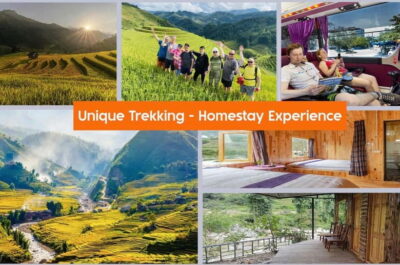
2-Day Sa Pa Ethnic Homestay Tour & Trek with Limousine Bus
Read our review →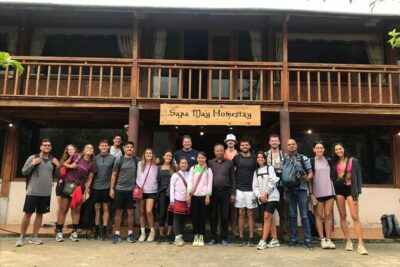
Sapa 3 Day 2 Night Trekking With Hotel & Homestay
Read our review →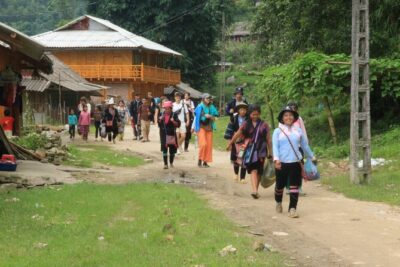
Sapa 2 Days 1 Night Overnight At Local Homestay
Read our review →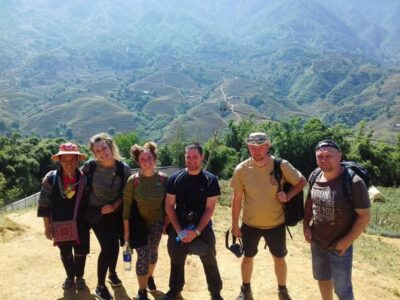
2-Day Trekking Trip with Ethnic Minority Homestay
Read our review →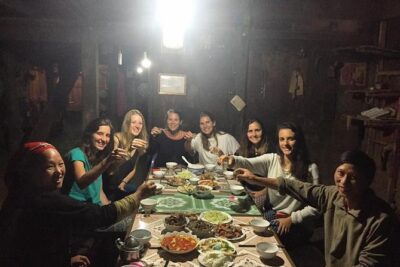
2-Day Trek & Heartwarming Homestay with an Ethnic Family
Read our review →Browse the lists this trek appears in