
Review · ARUSHA
4 Days Mount Meru Climbing | Hiking | Trekking Tour
Mount Meru’s best surprise is not simply the summit. It is the changing route: wildlife country near Momela Gate, thick forest, a volcanic crater, a narrow ridge, and a sunrise high above Tanzania. You climb with an armed ranger, a park requirement that also adds a real safari note to the first and last days.
I like two things here. First, four days gives you a useful acclimatization climb before Kilimanjaro. Second, the hut-to-hut format means you do not carry a tent or sleep on bare ground. The main caution is the summit day: a 1:30 a.m. start, steep terrain, and up to 12 hours on foot make this a serious mountain trip, not a gentle hike.
Key points to know before booking
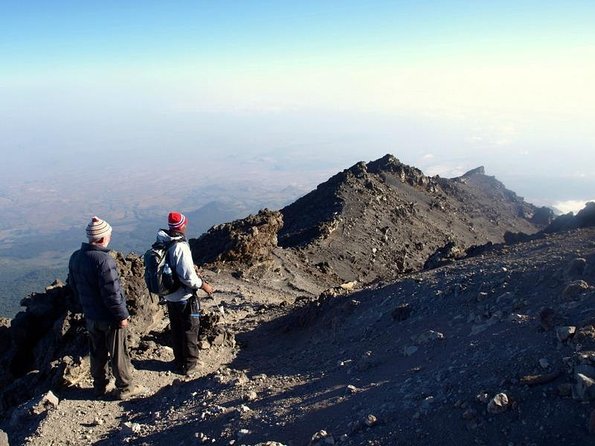
- Wildlife can appear near the lower trail: Elephants, giraffes, buffalo, zebras, monkeys, and antelope are all possible in Arusha National Park.
- The summit ridge is the great prize: You walk between the inner crater cliffs and the outer slope, with views toward Kilimanjaro when the weather allows.
- Little Meru makes a useful warm-up: The 3,820m side summit gives you a strong test of the altitude before summit morning.
- You sleep in designated huts: Miriakamba Hut and Saddle Hut replace camping, though hut accommodation is still basic.
- Summit day is demanding: The route includes Rhino Point, Cobra Point, the 4,565m summit, and a long descent.
- The price needs checking carefully: The $2,600 cost includes meals, transfers, crew wages, and airport pickup and drop-off, but park fees, visas, flights, and tips are extra.
Why Mount Meru makes a smart Kilimanjaro warm-up
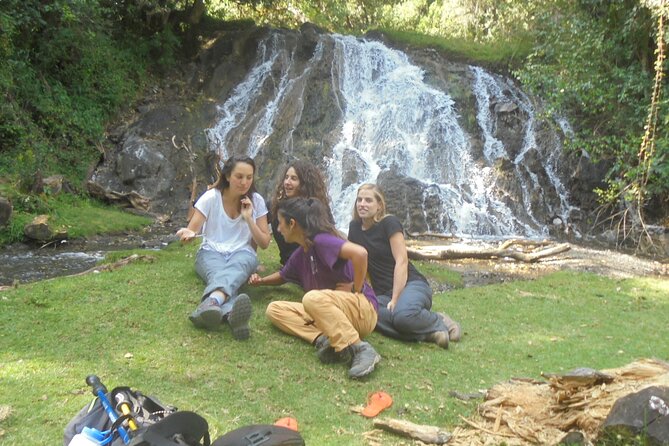
At 4,568 meters, Mount Meru is Tanzania’s second-highest mountain and Africa’s third-highest, according to the tour information. Its height is enough to test how you handle thin air, early starts, steep ground, and several days of walking without the full time commitment of Kilimanjaro.
That makes it especially useful if Kilimanjaro follows soon afterward. Some people use Meru as a warm-up two days before Kilimanjaro, but I would not treat the schedule as effortless. You finish the hardest Meru day with a long descent, and your legs may still feel it when the next climb begins.
The route also gives you a fuller mountain experience than a simple summit attempt. You pass through several habitats, sleep in huts, and follow the edge of a volcanic crater. The setting changes every day, so the trip feels like a journey rather than four repetitions of the same uphill walk.
A few more treks around Arusha worth a look
- 4 Days Mount Meru Trekking
★ 5.0 · 55 reviews - 4 days Best experience Kilimanjaro Hike, Serengeti &Ngorongoro
★ 5.0 · 54 reviews - 4 Days best Mount meru trekking
★ 5.0 · 2 reviews
Day 1: Momela Gate to Miriakamba Hut
Your morning starts at about 8:30 a.m. at Arusha Center Inn TouristTZ on Main Street, near Bondeni Street. The drive continues from Arusha to Momela Gate, where you complete registration before walking into Arusha National Park.
The ranger escort matters from the first step. This is a wildlife area, and the lower route may bring sightings of elephants, giraffes, buffalo, zebras, monkeys, and antelope. You should enjoy the possibility without expecting a guaranteed safari. The animals are part of the mountain setting, not a scheduled performance.
The first day covers about 10 kilometers and takes roughly four to six hours. The route rises from the gate area toward Miriakamba Hut through montane forest. It is a moderate opening compared with summit day, but it is still long enough to reveal whether your boots, pack, and pacing are working well.
Miriakamba Hut is your first overnight stop. Dinner is included, as are breakfast and lunch during the trip. The sleeping arrangements are in designated huts, which is a major practical advantage for anyone who would rather not camp. Still, you should expect simple mountain accommodation, not hotel comfort.
One point needs clarification before payment: the supplied elevation figures for Day 1 are not presented consistently. Ask the operator for the exact starting and hut elevations, as well as a current packing list and park-fee breakdown.
Day 2: Miriakamba, Saddle Hut, and Little Meru
Day two is shorter in distance, about 8 kilometers, but steeper. You climb from Miriakamba Hut toward Saddle Hut, gaining height through forest and moorland. The stated walking time is three to five hours, so you reach camp with time to rest and take stock.
The route follows a ridge with views into Meru’s crater. You also see the Ash Cone, a striking volcanic feature inside the crater. This is one of the most rewarding parts of the route because the mountain begins to feel less like a forest walk and more like a high volcanic climb.
After a hot lunch at Saddle Hut, you can make the short climb to Little Meru at 3,820 meters. The timing is intended to catch the views before sunset. This side trip is useful, but it is not compulsory in the same way as the main summit. If you feel headache, nausea, or unusual fatigue, saving energy for the next morning is the sensible choice.
Saddle Hut is higher and more exposed than Miriakamba. The short day can fool you into relaxing too much. You need to eat, drink, organize your summit clothing, and sleep as early as possible because the wake-up comes around 1:30 a.m.
Day 3: Rhino Point to the 4,565m summit
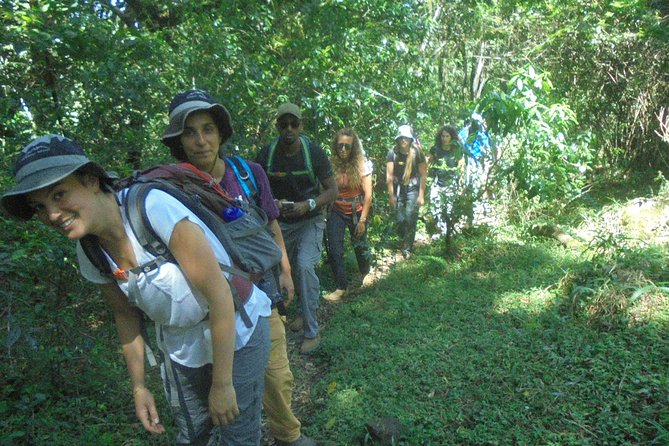
This is the hard day, and the itinerary allows 10 to 12 hours. You leave Saddle Hut in the early morning and climb toward Rhino Point at about 3,800 meters, then Cobra Point at about 4,350 meters.
The dark start is practical rather than scenic. It gives you a chance to reach the summit for sunrise, but it also makes the cold, steep upper trail feel more demanding. Move slowly and listen to your guide. Several trip accounts praise the crew for encouraging people through this section, and the advice to walk slowly is exactly right at altitude.
The final ridge is Mount Meru’s signature feature. It runs between the steep inner crater cliffs and the sloping outer wall. This narrow line above the crater can feel exposed, particularly when you are tired, but it is also the point where the climb becomes memorable. You are no longer simply gaining height. You are walking along the rim of a giant volcanic structure.
The summit is listed at 4,565 meters. At sunrise, you may see Mount Kilimanjaro above the clouds, though weather controls the view. You also have broad views into the Meru Crater and across the surrounding country. Do not make Kilimanjaro visibility the measure of success. Reaching the summit and seeing the crater ridge are the central rewards.
After a short rest, you descend to Saddle Hut for brunch, then continue down to Miriakamba Hut. The schedule lists about 5 kilometers upward and 13 kilometers downward. That downhill distance is easy to underestimate. Descending steep ground after a night start can be hard on knees and feet, so trekking poles, careful steps, and well-fitted boots are useful.
The summit is where the crew’s support matters most. The trip accounts repeatedly emphasize guide assistance, porter help, encouragement, and even songs of celebration after the climb. The exact staff assigned can change, so do not book based on a particular guide name. Do expect the operation to include a guide, cook, porters, and an armed ranger.
Same trailhead, a different route:
- 8-Day Small-group Lemosho Kilimanjaro Summit Trekking
★ 5.0 · 186 reviews - 7-Day Machame Kilimanjaro Summit Tour from Arusha
★ 5.0 · 125 reviews - Mountain Kilimanjaro Day Hike
★ 5.0 · 102 reviews - From Arusha/Moshi: Kilimanjaro Hike Marangu Route Day Trip
★ 4.5 · 54 reviews
Day 4: Miriakamba Hut to Momela Gate
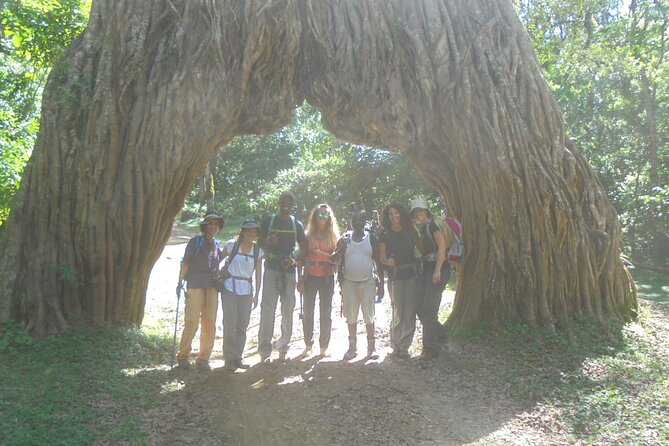
The final day is a shorter descent of about 10 kilometers, taking two to four hours. You pass through open grassland and mixed forest on the way back to Momela Gate.
There is still a chance of wildlife, especially in the lower sections. Keep your eyes open, but follow the ranger’s instructions and do not treat an animal sighting as a reason to leave the group.
At the gate, a return transfer takes you back to your hotel in Arusha or Moshi. The tour information also lists airport pickup and drop-off, plus gate transfers. Confirm exactly which airport transfer is included and whether it applies to your arrival, departure, or both.
The last day sounds easy after the summit, but it is a useful buffer. You can finish the mountain in the late morning rather than spending another full day descending. If you are continuing to Kilimanjaro, allow enough recovery time and discuss the schedule honestly with the operator.
What the $2,600 price really covers
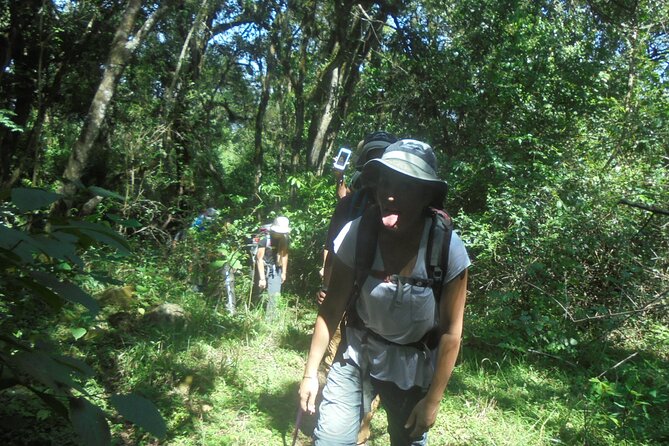
The listed price is $2,600 per person. That is a substantial cost for four days, so you should look beyond the headline number.
The package includes breakfast three times, dinner three times, and lunch four times. It also includes crew wages, gate transfer, airport pickup and drop-off, and the trekking support needed for the route. The mountain team is central to the experience. You are not just paying for a path and a permit. You are paying for food logistics, hut-to-hut support, transport, and staff on a route where summit morning is physically demanding.
Park fees are not included. This is the biggest budget issue. The details say you can pay those fees directly to the park or through the operator. Ask for the current amount in writing before booking, and ask whether any listed price already includes taxes or service charges.
Flights, visas, and tips are also excluded. Tipping the crew is a separate custom and should be planned as part of your total budget. The $2,600 price may be good value for a fully supported private climb, but you need the final total, not just the advertised base price.
The guide and crew experience
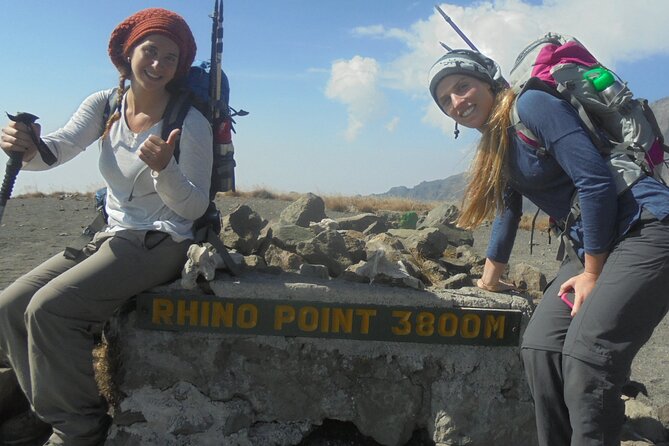
The strongest part of this trip is the human support on difficult ground. The supplied comments repeatedly praise the guide’s mountain knowledge, calm assistance, and ability to motivate climbers when the final ascent becomes steep. One especially practical lesson is to walk slowly and save energy for the upper ridge.
Porters and cooks also shape the trip. Meals and hut arrangements were described as well organized, while the crew’s songs and congratulations helped lift spirits after the summit. That warmth can matter when you are cold, tired, and wondering if the next steep section is worth it.
Ask how many staff will accompany your group, what each porter carries, and how tips are handled. The maximum group size is stated as 200, which is a very large possible number, even if your actual group is smaller. Get the expected group size before you commit, since crowding affects pace, hut space, and the feel of the route.
Preparation for a serious four-day climb
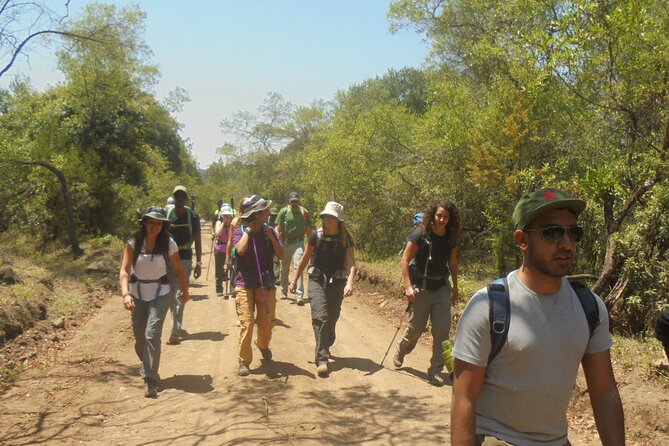
You do not need to be an elite mountaineer, since the activity information says most people can participate. Still, the repeated warning that Meru is not easy should be taken seriously.
Prepare for:
- Four days of walking, with distances up to 13 kilometers on the descent day
- A 1:30 a.m. summit start
- Cold and fatigue at high altitude
- Steep sections around Rhino Point and Cobra Point
- Basic hut accommodation
- A long summit day followed by a major descent
Use broken-in hiking boots, warm layers, gloves, a headlamp, water storage, sun protection, and a small personal pack. The exact equipment list is not provided, so request one before departure. You should also ask what bedding is supplied in the huts.
The route reaches 4,565 meters, so altitude problems are possible. The tour data does not provide a medical protocol, evacuation plan, or acclimatization policy. Ask the operator what happens if you need to turn around, and listen to the guide if your condition worsens.
Who should choose this Mount Meru trek?
I would choose this trip if you want a compact high-mountain experience near Arusha, prefer huts to tents, and like the idea of wildlife on the lower trail. It suits someone planning Kilimanjaro who wants an acclimatization climb, provided there is enough recovery time afterward.
It is also a good match if crater scenery matters as much as the summit. The Ash Cone, Meru Crater, and narrow sunrise ridge give this climb its own identity rather than making it a lesser copy of Kilimanjaro.
I would be cautious if you want a relaxed nature walk, dislike very early starts, or need a highly predictable schedule. The summit day is long, park fees are extra, and the exact group size and equipment details need confirmation.
Booking is flexible in one useful way: cancellation is free up to 24 hours before the local start time, with a full refund. Inside 24 hours, there is no refund, and poor weather may lead to another date or a full refund.
Should you book it?
Book this Mount Meru climb if you want a demanding but manageable four-day test before Kilimanjaro, with crater views, possible wildlife, hut accommodation, and a strong support crew. The best moments come from the route’s variety and the summit ridge, not from comfort.
Before paying, confirm park fees, group size, airport transfer details, hut equipment, and the current guide and porter arrangements. If those points are clear and you are ready for the 1:30 a.m. start, this is a worthwhile mountain trip. If you want an easy warm-up, choose a less demanding activity instead.
FAQ
How long is the Mount Meru climb?
The experience lasts approximately four days.
Where does the tour start?
The listed meeting point is Arusha Center Inn TouristTZ on Arusha Main Street, near Bondeni Street, Arusha.
What time does the tour start?
The stated start time is 8:30 a.m.
Where does the activity end?
The activity ends back at the meeting point, with a return transfer to a hotel in Arusha or Moshi also described after the descent.
How high is the Mount Meru summit?
The summit is listed at 4,565 meters, while the mountain height is also given as 4,568 meters.
Do I need to climb with a ranger?
Yes. Because Mount Meru is inside Arusha National Park and has wildlife, hikers must climb with an armed ranger.
What animals might I see?
Possible sightings include elephants, giraffes, buffalo, zebras, monkeys, and antelope, especially on the lower sections.
Where do I sleep?
You sleep in designated mountain huts, including Miriakamba Hut and Saddle Hut.
Are park fees included?
No. Mount Meru park fees are not included and can be paid directly to the park or through the tour operator.
What is included in the price?
The package includes airport pickup and drop-off, gate transfer, crew wages, three breakfasts, three dinners, and four lunches. Flights, visas, tips, and park fees are not included.
Just added around Arusha
- Mt. Kilimanjaro: Shira plateau to Cathedral point 3872m Day hike★ 5.0 · 7 reviews
- 5 days safari, hiking & culture (Serengeti & kilimanjaro)★ 5.0 · 27 reviews
- One Day Hike from Kilimanjaro to Mandara★ 5.0 · 2 reviews
- 3 Days Mount Meru trekking★ 4.5 · 7 reviews
- climb the KILIMANJARO via Lemosho route★ 5.0 · 4 reviews
- 6 Day: Hiking Kilimanjaro via Machame Route★ 5.0 · 2 reviews
- Private 8 day Northern Circuit Kilimanjaro Climb★ 5.0 · 8 reviews
- Kilimanjaro Waterfalls Hike & Moshi Hot Springs Day Trip Tour★ 5.0 · 4 reviews
4-Day Experiences, compared.
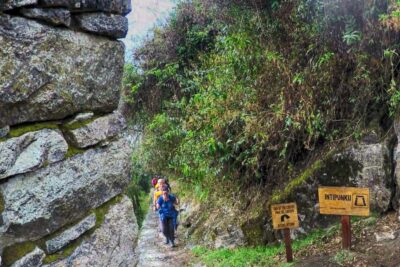
4-Day Inca Trail to Machu Picchu with Accommodation
Read our review →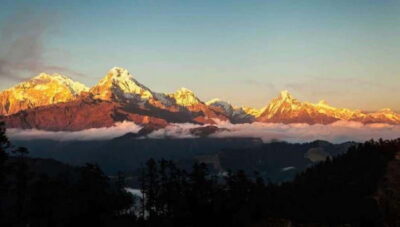
4-Day Ghorepani, Poonhill & Ghandruk Mountain Trek
Read our review →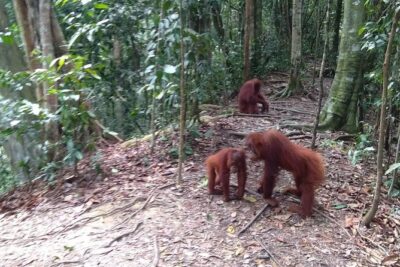
TOUR PACKAGE (jungle trekking, taxi, Room) 4 DAYS 3 NIGHTS in BUKIT LAWANG
Read our review →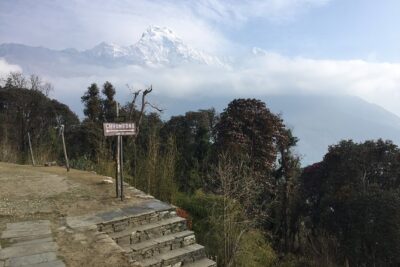
Ancascocha Trek To Machu Picchu 4 Days And 3 Nights
Read our review →
4 Day Inca Trail Trek to Machu Picchu Multi day tour
Read our review →Browse the lists this trek appears in