
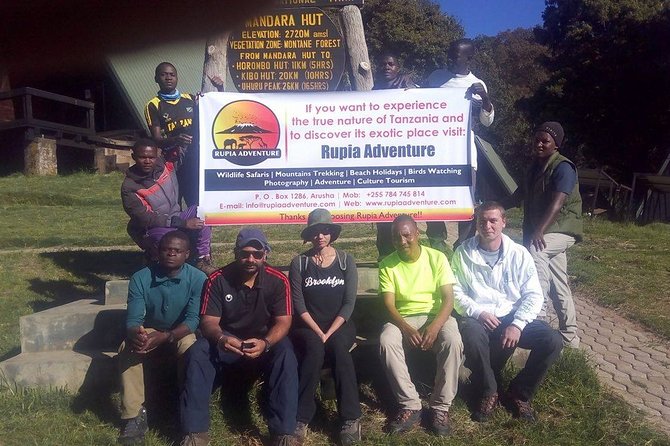
Review · ARUSHA
13 Days Adventure in Tanzania – Trekking and Wildlife Safari
Tanzania gives you two big adventures in one trip: a hard climb up Kilimanjaro and game drives across three of northern Tanzania’s best-known parks. The Machame Route moves from rainforest and colobus monkeys to heath, moorland, and high volcanic terrain, while Serengeti, Ngorongoro, and Tarangire bring very different wildlife settings.
I like the small maximum group of four, which should make the mountain days more personal and easier to manage. I also like the contrast between the seven-day trek and the wildlife portion, especially Tarangire’s large elephant population and the broad open plains of Serengeti. The main caution is that this is a demanding trip, and the published details do not spell out every hotel, meal, transfer, or safari day.
Key points to know before booking
- Seven-day Machame Route: You pass through rainforest, heath, moorland, and high mountain country before the summit attempt.
- Three major wildlife areas: Serengeti, Ngorongoro Crater, and Tarangire each offer a different setting and wildlife focus.
- Small-group format: The tour accepts a maximum of four people, useful for a more focused experience.
- Starting point: The trip is based in Arusha, with pickup offered and a listed start time of 12:00 am.
- Big Five potential: Serengeti and Ngorongoro offer a good chance to look for lion, leopard, elephant, buffalo, and rhinoceros.
- Weather matters: Poor weather can lead to a date change or full refund, and cancellation is free up to 24 hours before the start.
Why this Tanzania combination works
A Tanzania trip built around only a safari can be wonderfully relaxing, but it does not test you in the same way as a mountain climb. A Kilimanjaro trip alone gives you a strong physical goal, yet it can leave little room for the wildlife that draws many people to northern Tanzania.
This package joins both experiences. You spend part of the journey relying on fitness, pacing, and mental strength, then shift to vehicle-based wildlife viewing across famous protected areas. I like that change of rhythm. After several days of walking uphill, sitting quietly in a safari vehicle can feel like a real reward.
The advertised price is $3,000 per person. That may offer good value for a 12 to 13-day program combining a long mountain route with several national parks, but the value depends heavily on what is included. The available details confirm pickup and a mobile ticket, but do not list accommodation categories, meals, park fees, airport transfers, equipment, or transport between every stop.
Before paying, I would ask Rupia Adventure for a written day-by-day plan and a clear list of inclusions. The published material calls the trip 13 days, while the duration is also described as approximately 12 days. That difference may be a simple scheduling issue, but you should have the exact number of nights and active days in writing.
More Safaris in Arusha:
- 5 days safari, hiking & culture (Serengeti & kilimanjaro)
★ 5.0 · 27 reviews - 6-day Private Camping Safari Tour from Kilimanjaro Airport
★ 5.0 · 27 reviews - 7 Day Kilimanjaro Climb Lemosho Route & 2 Day Safari
★ 5.0 · 16 reviews
Starting in Arusha and reaching Machame Gate
Arusha is the practical base for the trip. From here, the mountain section begins with the transfer to Machame Gate, listed at 1,790 meters. The first day then continues to Machame Camp at 3,010 meters.
That first gain in altitude matters. You are not starting with a gentle stroll at low elevation. The route climbs into the mountain environment from the beginning, so your pace, hydration, and willingness to walk steadily will matter more than speed.
The first stage also introduces the character of the Machame Route. The lower section passes through lush rainforest, where colobus monkeys may be seen. The forest is not just a warm-up for the summit. It is one of the route’s most appealing sections, with a clear change from ordinary East African travel into a cooler, greener mountain world.
You should arrive ready for a full outdoor day, not a casual park walk. The available information does not give the exact driving time from Arusha, walking hours, meal plan, or camp arrangements, so ask those questions before departure. A 12:00 am start time is listed, which is unusual enough to confirm directly with the operator.
The seven-day Machame Route and its changing terrain
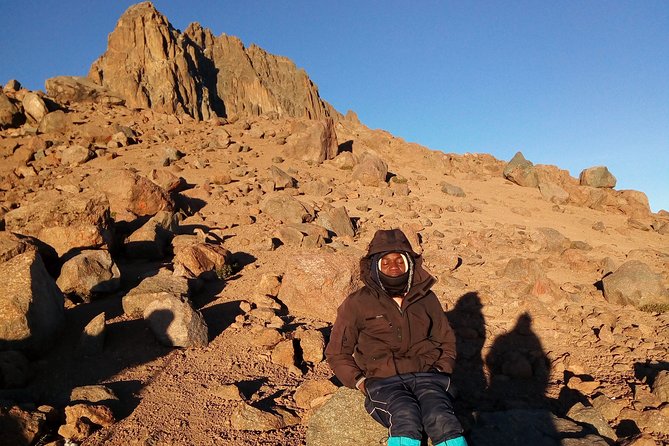
The Machame Route is described as a seven-day climb. Its appeal comes from variety. You move through rainforest first, then heath and moorland, followed by increasingly cold and exposed high-altitude terrain.
That gradual change can help with acclimatization. The route includes varying altitudes, giving your body more time to adjust than a very short ascent might allow. It does not remove the risk of altitude sickness, and no itinerary can promise a summit success. Still, the longer schedule offers a sensible structure for someone who wants a serious attempt rather than a rushed climb.
Fitness is only part of the equation. The tour description rightly points to mental strength and willpower. High-altitude walking can be tiring even when the trail itself is not technically difficult. You need to accept slow progress, changing conditions, and the possibility that the mountain will dictate the pace.
I would treat the climb as the central commitment of the trip. Do not book this simply because the safari sounds appealing. If you are not prepared for a seven-day route that reaches icy summit conditions, the mountain portion could overshadow the rest of your holiday.
The route’s scenery should reward that effort. The forest gives way to ferns and ericas in the heath and moorland zone, then to a colder world near the top. The contrast is one of the strongest reasons to choose Machame. You are not walking through one repeated view for a week.
The information provided does not name the mountain guides or describe the camps, gear, porter arrangements, summit timing, or emergency procedures. Those are important questions. Ask how the operator handles altitude concerns, what sleeping equipment is supplied, and what you need to bring yourself.
Serengeti, where the plains set the scene
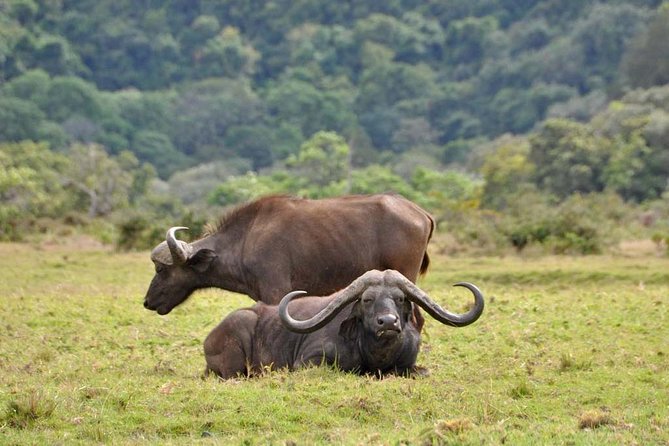
The Serengeti brings a completely different kind of adventure. The park is known here for its endless plains and strong opportunities to see the Big Five. That means lion, leopard, elephant, buffalo, and rhinoceros are among the animals you may hope to find, though wildlife sightings can never be guaranteed.
The open plains are especially well suited to the feeling of a classic safari. You can scan a wide horizon rather than looking only into thick forest. That openness may make some animals easier to spot, while other sightings still depend on timing, patience, and luck.
This is also where the schedule matters. The supplied information does not say how many nights are spent in Serengeti or which parts of the park you visit. Ask for that detail. A short pass through the park gives you a taste, while several game-drive days give you more chances to see animals behaving naturally.
I would not measure Serengeti only by the number of species checked off a list. The pleasure is also in watching the plain change as you move through it, and in the quiet stretches when nothing obvious appears. A good safari needs time, not just a famous park name.
More Wildlife Trips in Arusha:
- Khao Sok: Private Waterfalls and Wildlife Half-Day Trek
★ 4.5 · 337 reviews - 4-Day Uganda Gorilla Trekking and Wildlife Safari
★ 5.0 · 37 reviews - 5 Day Gorillas, Wildlife and Kalinzu Forest Chimp Trek
★ 5.0 · 27 reviews - 9 Days Uganda Wildlife Safaris, Gorilla Trekking & Hiking
★ 5.0 · 15 reviews
Ngorongoro Crater, the compact wildlife setting
Ngorongoro Crater is described locally as a garden of animals, and it is included for its strong chance of Big Five sightings. Its appeal is the sense of wildlife concentrated within a dramatic natural setting.
Compared with the wide open reach of Serengeti, the crater offers a more contained experience. That can suit you if you want a productive wildlife day, especially after the scale of the plains. The setting also gives the safari a strong visual change rather than repeating the same type of scenery.
The tradeoff is that a concentrated wildlife area can feel busier or more structured than a remote stretch of open country. The supplied details do not state how long the crater visit lasts, how the descent is arranged, or where you stay nearby. Those points affect the pace and comfort of the day.
You should also keep expectations realistic. A good chance to see the Big Five is not a promise to see every animal. Wildlife is wild, and even a well-known crater cannot guarantee a particular sighting.
Tarangire and its large elephant herds
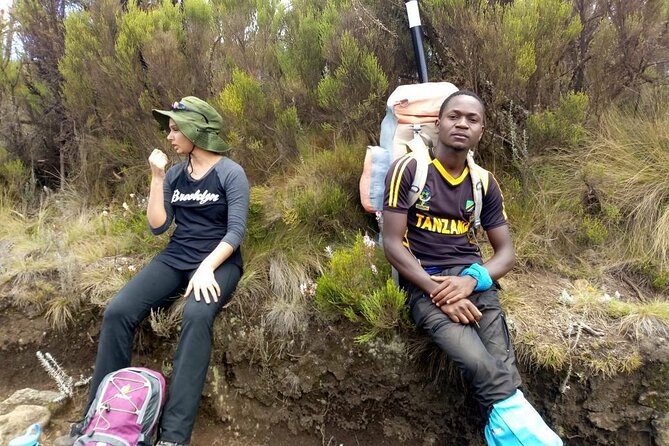
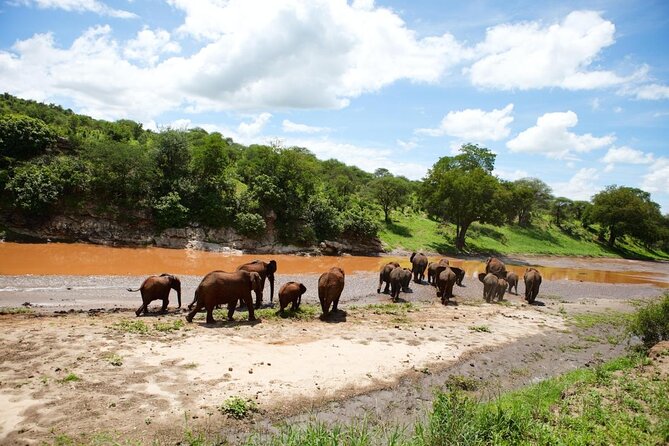
Tarangire adds another useful contrast. It is singled out for its huge number of elephants, making it a strong choice for anyone who especially wants to spend time watching these animals.
Elephants give a safari a different mood from a quick predator sighting. You may find yourself watching a herd move, feed, or gather rather than simply spotting an animal and driving on. That slower attention is part of what makes Tarangire worthwhile.
Tarangire also keeps the trip from becoming a repeat of Serengeti and Ngorongoro. Each park has its own character, and including all three gives you a broader view of northern Tanzania’s wildlife country.
Again, the number of game drives and overnight stays is not specified. I would ask whether Tarangire comes before or after the other parks, how much road travel is involved, and whether the safari days are full-day outings or shorter visits. These details can change the experience more than the park names alone.
What the small group changes
A maximum of four participants is one of the clearest practical strengths of this tour. On a mountain route, a small group can make it easier to keep a shared pace and communicate with the guide. On safari, it can reduce the sense that you are part of a large vehicle group.
A small group does not guarantee a private trip. The wording gives a maximum, not a promise that every booking will contain only your party. Ask whether the group is private or shared, and whether pickup and transfers are arranged only for your group.
The compact size may be especially useful for families or close friends. One family described taking the trip with a husband, wife, and son, which suggests the format can suit a family adventure, provided everyone is ready for the physical demands of the climb.
The trip has also earned strong praise for service. Rupia Adventure is described as offering kind customer care, and the coordination contact listed is Jolanda Bronsvoort. That human support matters on a complex trip, where a clear answer before departure can prevent confusion once you are in Tanzania.
Who should book this adventure
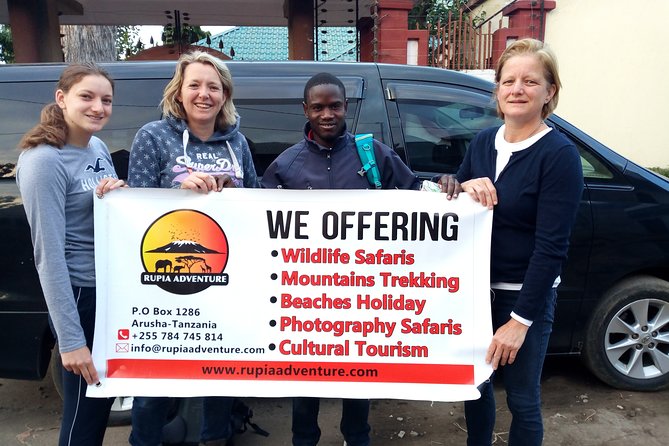
I would recommend this experience to you if you want a serious physical challenge and a safari in the same holiday. It suits active couples, families with appropriate fitness, and small groups of friends who want more than a standard vehicle tour.
It is also a good fit if you value variety. One day you may be thinking about altitude and foot placement, while later days are spent watching elephants or scanning the Serengeti plains. That contrast keeps the trip from feeling one-note.
I would be more cautious if you want a relaxed holiday, dislike early starts, or are uncertain about walking for seven days at high altitude. The tour information says most people can participate, but that broad statement does not explain the fitness level required for the climb.
The trip may also suit repeat visitors to Tanzania who want to add Kilimanjaro to a safari. One especially enthusiastic customer planned a third trip with Rupia Adventure, which suggests the company can build lasting loyalty. Still, I would base your decision on the written itinerary, safety information, and inclusions rather than enthusiasm alone.
Price, timing, and the questions I would ask
At $3,000 per person, the package could be fair value for a long trip covering a seven-day mountain route and three major parks. The price becomes more attractive if it includes park entry fees, mountain staff, camping or lodging, meals, transfers, and safari transport.
Because those inclusions are not listed, I would not compare the price with a simple safari package. A Kilimanjaro climb involves far more planning and support than a few game drives. Ask for a full cost breakdown before deciding.
The timing also needs clarification. The experience is promoted as a 13-day adventure, while the stated duration is approximately 12 days. The start time is shown as 12:00 am. Confirm the actual pickup hour, the first overnight location, the number of mountain days, and the number of safari days.
Pickup is offered, and a mobile ticket is available. Confirmation is provided at booking, and the group size is capped at four. The cancellation policy allows a full refund if you cancel at least 24 hours before the start time. Cancellations inside 24 hours are not refunded, while poor weather or failure to reach the minimum group size can lead to a new date or a full refund.
Should you book the Tanzania trek and safari?
Book this trip if you want Tanzania in its most active form: a demanding seven-day climb followed by wildlife in Serengeti, Ngorongoro, and Tarangire. The small group, varied route, elephant focus in Tarangire, and strong service reputation give it real appeal.
Before booking, get the missing details in writing. Confirm the exact duration, price inclusions, accommodation, meals, transport, mountain equipment, guide arrangements, and daily schedule. If those answers are clear and you are ready for the physical effort, this is a memorable way to combine Kilimanjaro with northern Tanzania’s best-known wildlife parks.
FAQ
Where does the experience begin?
The experience is based in Arusha, Tanzania. Pickup is offered.
How long is the trip?
It is promoted as a 13-day adventure, while the duration is also listed as approximately 12 days. Confirm the exact schedule with Rupia Adventure before booking.
How long is the Kilimanjaro trek?
The Machame Route portion is described as a seven-day tour.
What parks are included?
The wildlife portion includes Serengeti National Park, Ngorongoro Crater, and Tarangire National Park.
How many people can join the tour?
The activity has a maximum of four participants. The available details do not confirm whether every departure is private.
What is the cancellation policy?
You can cancel at least 24 hours before the start time for a full refund. Cancellations or changes made within 24 hours are not refunded. Poor weather or failure to meet the minimum number of participants may result in a different date or a full refund.
Just added around Arusha
- Mt. Kilimanjaro: Shira plateau to Cathedral point 3872m Day hike★ 5.0 · 7 reviews
- 5 days safari, hiking & culture (Serengeti & kilimanjaro)★ 5.0 · 27 reviews
- One Day Hike from Kilimanjaro to Mandara★ 5.0 · 2 reviews
- 3 Days Mount Meru trekking★ 4.5 · 7 reviews
- climb the KILIMANJARO via Lemosho route★ 5.0 · 4 reviews
- 6 Day: Hiking Kilimanjaro via Machame Route★ 5.0 · 2 reviews
- Private 8 day Northern Circuit Kilimanjaro Climb★ 5.0 · 8 reviews
- Kilimanjaro Waterfalls Hike & Moshi Hot Springs Day Trip Tour★ 5.0 · 4 reviews
Safari, compared.
Khao Sok: Private Day Trekking, Jungle Dinner & Night Safari
Read our review →
3 Days gorilla trekking Safari tour in Uganda
Read our review →
8-Day Murchison Falls, Chimp and Epic Gorilla Trekking Safari
Read our review →
5-Day Pearl of Africa Chimps and Gorilla Trekking Safari
Read our review →
4-Day Uganda Gorilla Trekking and Wildlife Safari
Read our review →
Private 3 Day Gorilla Trekking Safari in Uganda
Read our review →Browse the lists this trek appears in