
Review · POKHARA
Pokhara: 7-Day Annapurna Base Camp Trek & Natural Hot Spring
Annapurna Base Camp is one of Nepal’s best short treks because the scenery changes almost every day. You start among Gurung villages and terraced fields, then pass through forests, river valleys, and high alpine country before sleeping beneath the peaks at 4,130 meters. I like the clear seven-day shape, and I like the hot spring finish at Jhinu Danda, a welcome reward after the long descent.
The main caution is the pace. Several days call for five to seven hours of walking, with stone steps and a sharp rise in altitude. Simple tea houses, road dust near the start and finish, and the need to carry warm and wet-weather clothing make this a real mountain trek, not a gentle sightseeing walk.
Key points to know before booking
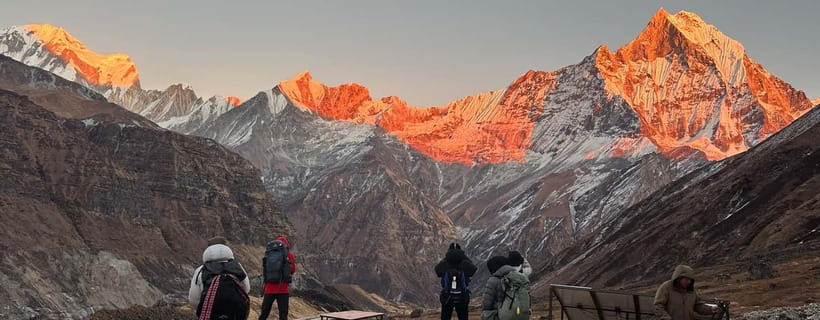
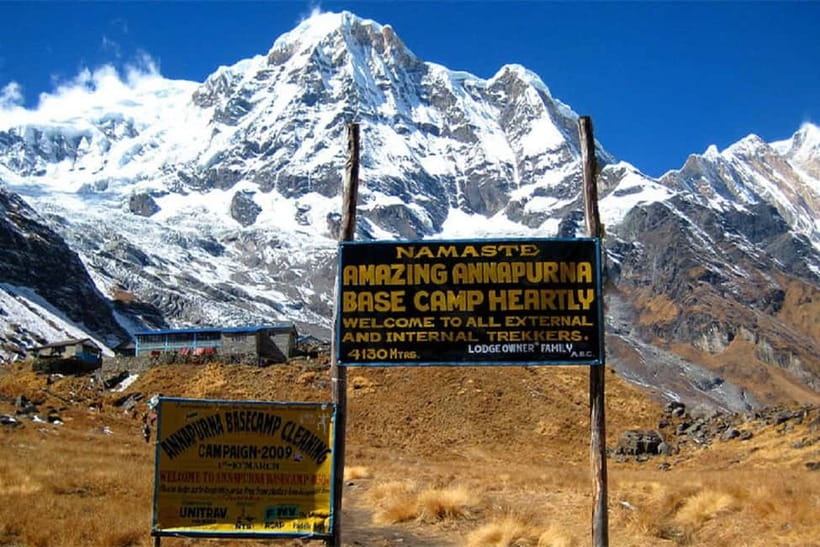
- Annapurna Base Camp at 4,130 meters: You reach the high point on Day 4, inside a dramatic mountain amphitheater.
- A varied route from Ghandruk: Expect village paths, stone stairways, rhododendron and bamboo forests, waterfalls, rivers, and glacier country.
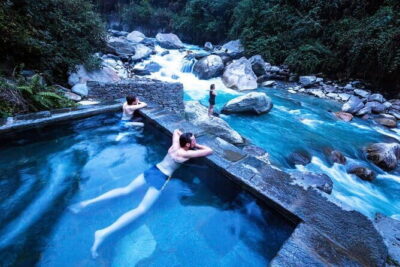
- Natural hot springs at Jhinu Danda: The soak comes after the hardest high-altitude section and gives the trip a pleasant change of pace.
- Private guiding in English, Hindi, or Nepali: Guides have included Chandra, Bishnu Giri, Anil, Jeet Bahadur, Sun, and Laxman.
- Good package value at $181 per person: Permits, TIMS fees, tea house lodging, guide costs, transport, and some meals are included, depending on the selected option.
- A demanding but compact trek: You should be reasonably fit and carry mandatory travel insurance, with emergency rescue available if needed.
Why this seven-day Annapurna route works
This route packs Nepal’s classic mountain experience into one week from Pokhara. You see village life, forest trails, high peaks, and a natural hot spring without committing to a much longer circuit.
The itinerary also has a sensible rhythm. You gain height gradually for the first three days, spend one night at base camp, then descend quickly through Bamboo and Jhinu Danda. That fast descent means less time at high altitude, though it also makes Day 4 a serious test of fitness.
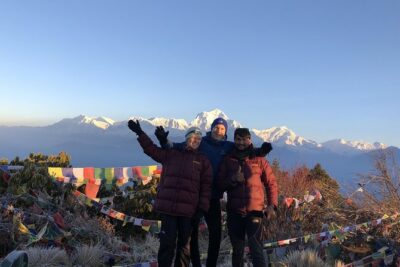
The setting changes quickly. Ghandruk feels warm and settled, with village paths and broad mountain views. By Himalaya, the trail is narrower and more enclosed by forest. At Machhapuchhre Base Camp and Annapurna Base Camp, trees disappear and the peaks fill your view.
A private group matters here. Your guide can keep an eye on your pace, answer questions, and help with the practical parts of tea house life. The strongest praise has gone to the guides’ care and encouragement, especially Chandra and Bishnu Giri. Bishnu has more than 20 years of experience, and his cultural stories add something beyond route finding.
More Annapurna Treks in Pokhara
- Trekking in Annapurna/Langtang/Everest/Upper Mustang regions
★ 5.0 · 161 reviews - Pokhara: Annapurna Foothills Day Hike with Transfers
★ 5.0 · 100 reviews - Kathmandu/Pokhara: 5-Day Annapurna Base Camp (ABC) Trek
★ 4.9 · 72 reviews
Day 1: Pokhara to Ghandruk through the foothills
The trip begins with a roughly one-hour drive from Pokhara to Nayapool, followed by about five to six hours on foot to Ghandruk. Pickup is available from a hotel in the Lakeside area or Pokhara International Airport, depending on the option you select.
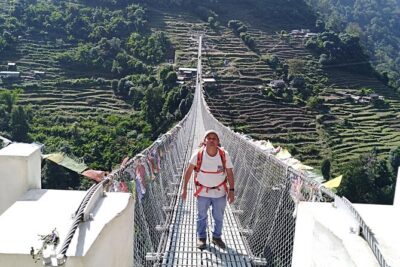
Ghandruk sits at 1,940 meters and is one of the most appealing overnight stops on the route. The day introduces you to the rhythm of Himalayan walking: village lanes, forest sections, and views around the Modi Khola valley.
The route description includes walking along roads in places. This is worth noting because one person specifically suggested using a car or jeep on the first and last days rather than walking dusty road sections. If road dust bothers you, ask about the transport plan before departure.
The overnight tea house is simple rather than luxurious. You get a bed in a mountain lodge and the basic comfort needed after a full walking day. Meals are included only with certain booking options, so check that detail before you pay.
Day 2: Stone steps and mountain views from Ghandruk to Chomrong
Day 2 covers five to six hours from Ghandruk to Chomrong, at 2,170 meters. The route uses forest trails and plenty of stone steps, with views toward Annapurna and Machhapuchhre.
Chomrong is an important stop because it marks the gateway to the upper Modi Khola valley and the Annapurna Sanctuary. It is also a day when your legs start to understand what this trek requires. The steps can be tiring, especially if you are not used to sustained uphill walking.
Your guide can help set a steady pace. The guide’s role is especially useful here because the route has repeated climbs and descents rather than one simple uphill stretch. Keep water close, protect your skin from the sun, and do not treat a short daily distance as an easy day.
The village setting gives you a good look at mountain hospitality. Tea houses are practical places for meals and sleep, with shared social space and basic rooms. You should bring cash for personal snacks and drinks, since those costs are not included.
Day 3: Forest trails from Chomrong to Himalaya
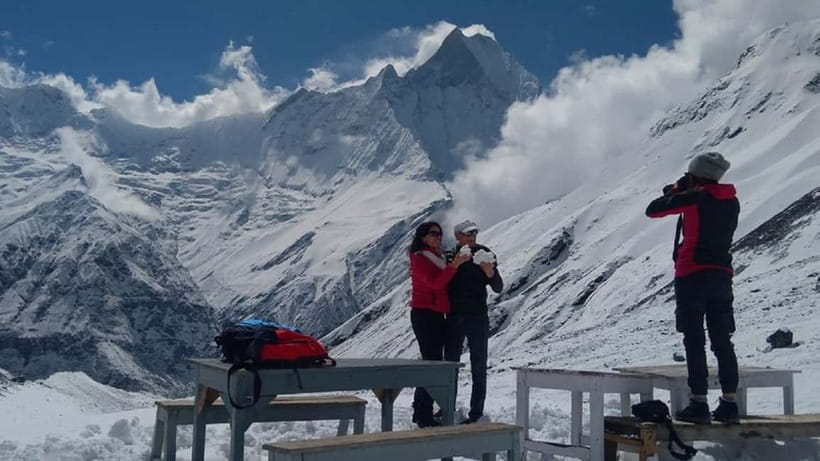
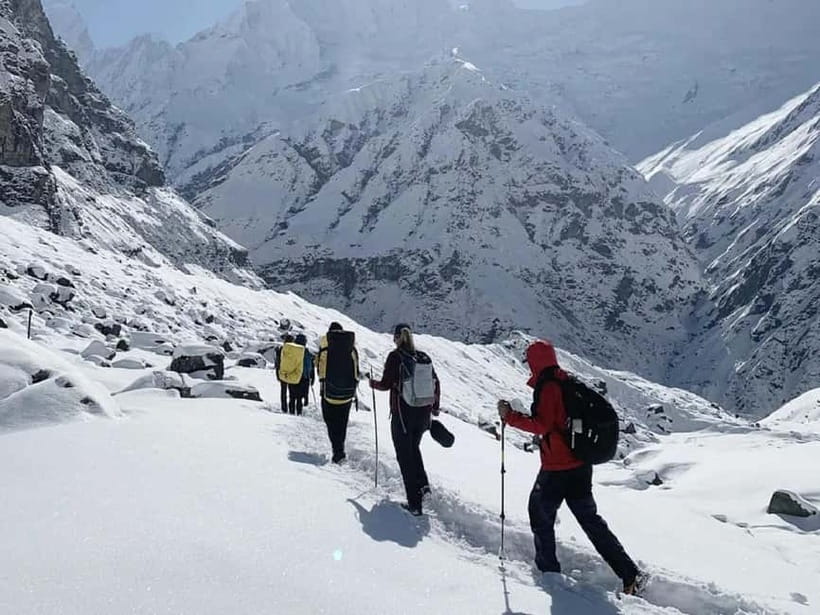
The six to seven-hour walk to Himalaya reaches 2,920 meters. You first descend toward the river, then climb through bamboo and rhododendron forest.
This is one of the most varied walking days. The forest gives shade, but the trail still demands effort. The repeated change between descent and ascent can feel harder than a steady climb, so save energy for the second half of the day.
Waterfalls and steep valley walls add to the sense that you are moving into wilder country. The route becomes less about village scenes and more about the river corridor and forest around you.
Himalaya is a functional overnight stop, not a place with a long list of attractions. Its value is its position on the route. Sleeping at 2,920 meters prepares you for the higher country on Day 4, while the guide can watch for signs that altitude is affecting you.
More Hot Spring Treks in Nepal
- Pokhara: 5 Day Annapurna Base Camp Trek & Natural Hot Spring
★ 4.9 · 44 reviews - From Pokhara: 5-Day Annapurna Basecamp Trek with Hot Springs
★ 4.9 · 26 reviews - Pokhara: 5-Day Trek to Annapurna Base Camp and Hot Springs
★ 5.0 · 4 reviews - Pokhara: 7-Day Annapurna Base Camp Trek & Hot Spring
★ 4.0 · 3 reviews
Day 4: Machhapuchhre Base Camp and Annapurna Base Camp
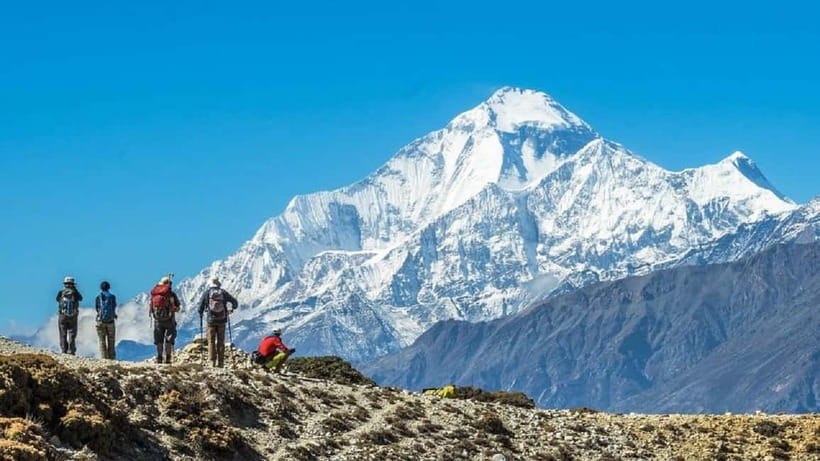
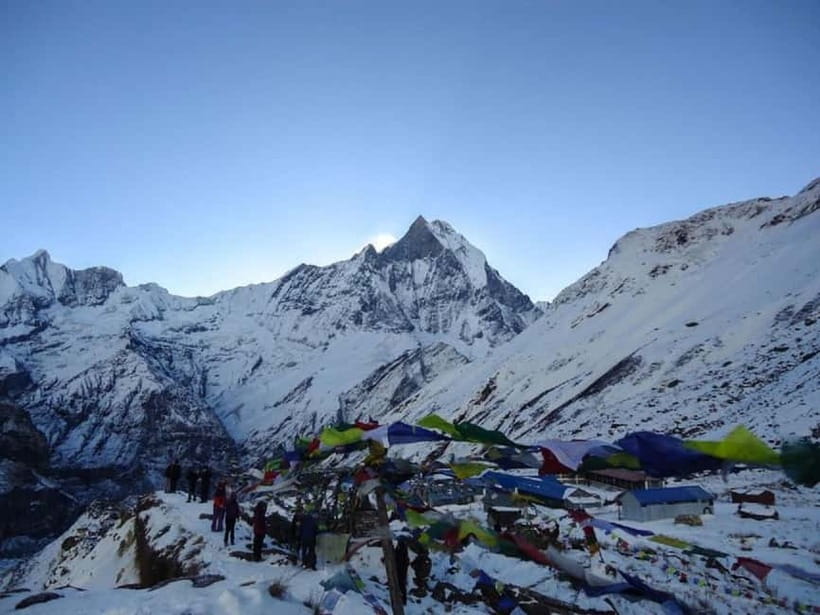
This is the central day of the trek. You walk six to seven hours from Himalaya through the alpine zone to Machhapuchhre Base Camp, then continue to Annapurna Base Camp at 4,130 meters.
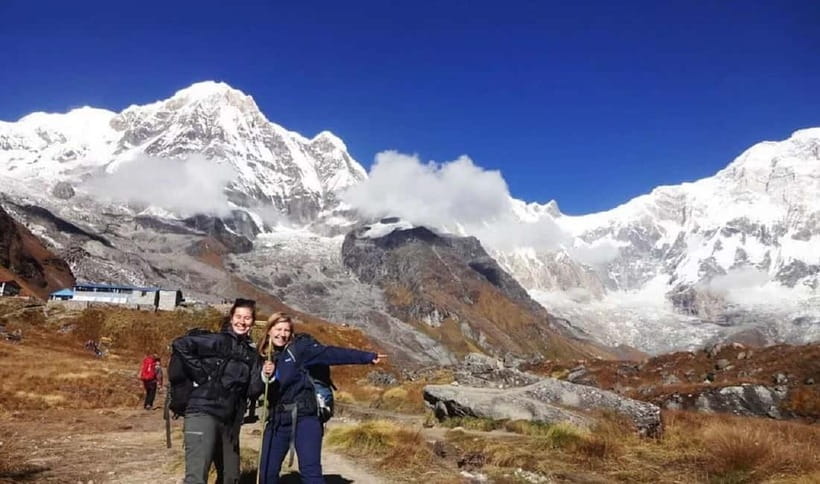
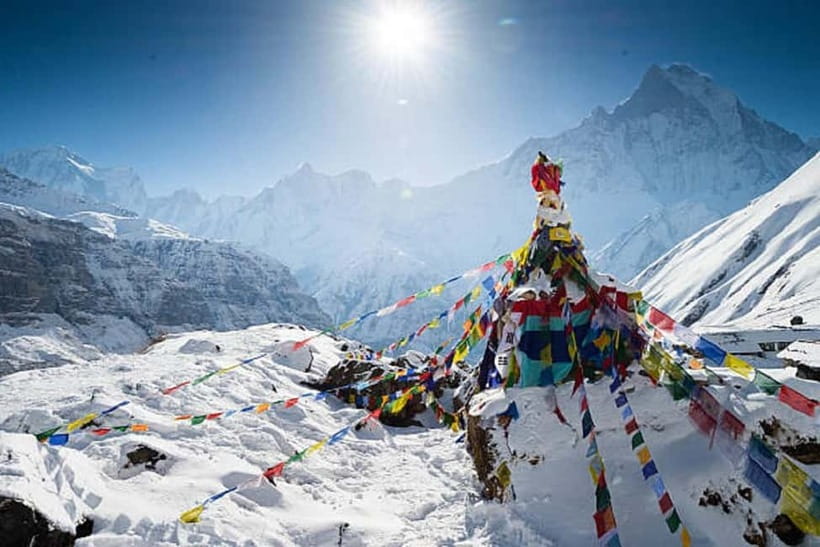
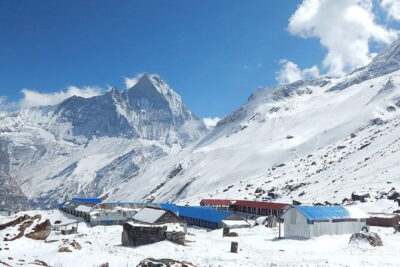
The forest gradually gives way to open mountain country. You enter the Annapurna Sanctuary, a high valley ringed by major peaks. The trail leads into a glacier valley, with the final overnight stay surrounded by the Annapurna range.
Machhapuchhre, also called Fishtail, is one of the defining mountains along the route. Annapurna I gives the destination its name and scale. At base camp, the key experience is not a single viewpoint but the feeling of being enclosed by huge Himalayan walls.
This is the day when fitness and altitude matter most. Six to seven hours at increasing elevation can be demanding, even for a strong walker. Follow your guide’s advice, keep your pace controlled, and tell the guide quickly if you feel unwell.
The overnight stay at base camp is a major part of the experience, but comfort is limited. Bring warm clothing, gloves, a sleeping bag if needed, and a flashlight. Night temperatures can be cold at this elevation, and the tea house facilities are basic.
Day 5: The long descent from base camp to Bamboo
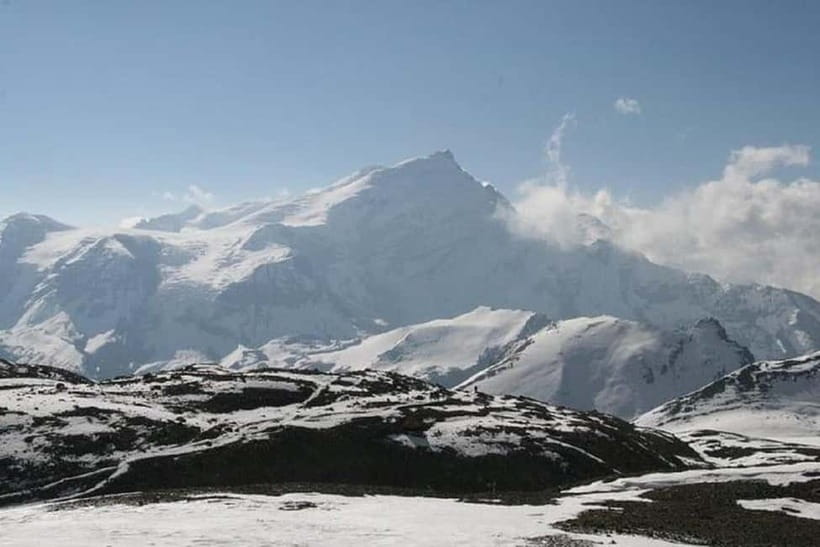
After the high point, you descend for six to seven hours to Bamboo at 2,335 meters. The route retraces sections of the valley, but the views change when you look back toward the peaks.
Descending feels easier on the lungs, but it can be hard on knees and thighs. Take care on stone steps and uneven trail sections. Trekking poles are included as needed and can be useful here, especially if you find long downhill stretches tiring.
This is also a good day for photographs. The mountains remain behind you, while waterfalls, forest, and the narrowing valley return to the route. Bamboo is lower and warmer than base camp, which makes the overnight stop feel like a practical recovery point.
The rapid loss of altitude is helpful, but you should not assume you can rush. Fatigue often appears on the way down, particularly after the summit day. A private guide can adjust the pace and help decide how much ground to cover safely.
Day 6: Bamboo to Jhinu Danda and the hot springs
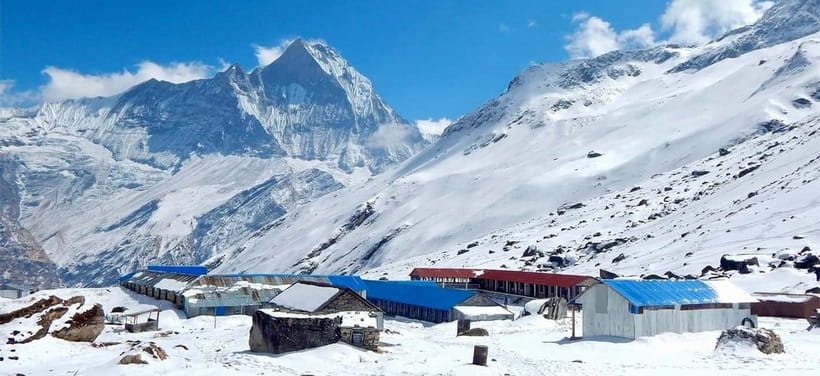
The six-hour walk from Bamboo to Jhinu Danda drops to 1,610 meters. You continue down toward the river, then reach the village known for its natural hot springs.
This is the most distinctive comfort feature in the itinerary. After several days of climbing and descending, a warm soak gives your legs a real break. Bring a towel, bathing clothes, and a change of dry clothing. The packing list specifically calls for a towel, and you will be glad to have one.
Jhinu Danda also changes the mood of the trek. The previous nights focus on altitude and distance. Here, the hot spring offers time to slow down and enjoy the fact that the hardest section is behind you.
Do not expect a resort spa. The appeal is the setting and the simple reward of warm water after a mountain walk. The overnight stay is at 1,610 meters, so the air should feel easier than it did at base camp.
Day 7: Return to Nayapool and Pokhara
The final day involves four to five hours of trekking to Nayapool, followed by about an hour’s drive to Pokhara. Drop-off can be arranged at several listed locations, including Lakeside hotels, Hotel Temple Tree, Hotel Barahi, Pokhara International Airport, and Sarangkot.
As with Day 1, some of the final route can involve dusty road walking. One useful improvement would be arranging a vehicle for these sections if available. Ask the provider what the road and walking plan will be on your dates.
The return to Pokhara gives you a clear sense of what you have covered. In one week, you have moved from a lakeside city to high Himalayan base camp and back through forests and villages. You can also store luggage in Pokhara, which means you need to carry only trek essentials.
What the $181 price really covers
At $181 per person, this is a strong price for a private seven-day trek if your selected option includes the advertised meals. The package covers round-trip transport, trekking permits, paperwork, TIMS fees, tea house accommodation, an English-speaking government-certified guide, guide expenses, taxes, a first aid kit, and luggage storage in Pokhara.
Guide expenses are covered in detail, including salary, meals, accommodation, insurance, transport, and equipment. Trekking sticks and sleeping bags are available as needed. That reduces the need to rent every item separately.
The main extra cost is a porter, listed at $20 per day if you want one. Personal snacks and drinks are also extra. Emergency rescue is available if needed, but it is not included in the price, which is one reason mandatory travel insurance matters.
Check the meal inclusion before booking. The package says meals are included depending on the selected option, so two people paying different rates may receive different coverage. You should also budget cash for personal purchases along the route.
Guides, group style, and care on the trail
This is a private-group trek, and guide quality is central to the experience. Named guides connected with this route include Chandra, Bishnu Giri, Anil, Jeet Bahadur, Sun, and Laxman.
The strongest pattern is personal care. Chandra has been praised for clear English, mountain information, flexibility, and attention to safety. Bishnu Giri has been valued for cultural stories, health checks, and advice at higher elevations. Anil has helped with walking and food, while Jeet Bahadur has brought a lively spirit to the route.
Guide assignment can vary, so do not assume you will receive a specific person unless the company confirms it. If you especially want Bishnu or another named guide, ask when booking.
The language options are English, Hindi, and Nepali. That gives you a practical way to communicate about food, pace, weather, and health. In a private group, you also avoid being tied to the speed of a large mixed party.
Who should book this trek
I would recommend this trip to you if you want a real Himalayan trek but have only one week from Pokhara. It suits people who value mountain scenery, village stays, and a guide-led route more than hotel comfort or a leisurely schedule.
You should be in good health and have a reasonable fitness level. The longest walking days run six to seven hours, and the elevation reaches 4,130 meters. Comfortable shoes alone are not enough. Bring proper hiking shoes, warm layers, rain gear, gloves, sun protection, a power bank, cash, and a passport copy.
This is not the best choice if you want short walks, private bathrooms, or a soft bed every night. It is also not ideal if you dislike stairs, basic tea houses, or changing weather. Travel insurance is mandatory, and your policy should support the realities of a high-altitude trek.
The trip has earned a five-star rating from 11 bookings, with especially strong praise for guides, safety, scenery, and the quality of encouragement on difficult days. That does not remove the physical challenge, but it does suggest the guiding side is a major strength.
Should you book the Annapurna Base Camp trek?
Book it if you want a compact route with a big payoff: Annapurna Sanctuary views, a base camp night, traditional villages, and a hot spring finish. The price is appealing because permits, guide costs, transport, lodging, and equipment support are bundled together.
Before committing, confirm three things: which meals your option includes, whether a porter is needed, and how much road walking is planned on the first and last days. If you prepare for the elevation and accept simple accommodation, this seven-day trek offers an efficient and memorable way to reach Annapurna Base Camp from Pokhara.
FAQ
How long is the Annapurna Base Camp trek?
The trek lasts seven days, including transport from Pokhara at the start and return transport at the end.
What is the highest altitude reached?
Annapurna Base Camp is at 4,130 meters, or 13,550 feet.
Where does the trek begin?
The standard route starts with transport from Pokhara to Nayapool, followed by the trek toward Ghandruk.
Where do I sleep during the trek?
You stay in simple tea houses or lodges along the route, including Ghandruk, Chomrong, Himalaya, Annapurna Base Camp, Bamboo, and Jhinu Danda.
Are meals included?
Meals are included depending on the option selected when booking. Snacks and beverages for personal use are not included.
Is a guide included?
Yes. The package includes a professional, government-certified trekking guide who can speak English, Hindi, or Nepali.
Is a porter included?
No. A porter is optional and costs $20 per day if required.
Is transportation from Pokhara included?
Yes. Round-trip transport between your hotel or Pokhara International Airport and the trek start point is included. Drop-off is available at listed Pokhara locations.
Do I need travel insurance?
Yes. Travel insurance is mandatory. Emergency rescue services are available if needed but are not included in the listed price.
What should I bring?
Bring hiking shoes, comfortable clothing, warm layers, rain gear, gloves, sunglasses, a sun hat, sunscreen, a towel, cash, a flashlight, a power bank, a passport copy, and a sleeping bag if needed.
More Spa & Hot Springs in Pokhara
- Mount Batur Sunrise Trekking & Hot Spring Tour
★ 5.0 · 54 reviews - Mount Batur Trekking & Hot Spring
★ 5.0 · 50 reviews - Mount Batur Sunrise Trek & Hot Springs Tour
★ 4.8 · 45 reviews - All inclusive Mount Batur Trekking with Hot Spring tour
★ 5.0 · 41 reviews
More Hot Spring Treks in Pokhara
- Private Tour Mount Batur Sunrise Trekking and Natural Hot Spring
★ 5.0 · 431 reviews - Mount Batur Sunrise Trek & Natural Hot Spring Experience
★ 5.0 · 95 reviews - 3D/2N Rinjani trekking summit,lake and hot springs.
★ 5.0 · 85 reviews - Mount Batur Sunrise Trekking & Natural Hot Spring – All Inclusive
★ 5.0 · 58 reviews
Just added around Pokhara
- Pokhara: Sarangkot Sunrise & Panoramic Annapurna View Tour★ 4.8 · 10 reviews
- Pokhara: Majestic Mardi Base Camp Guided Trek with HotSpring★ 5.0 · 6 reviews
- Pokhara: Bungee Jumping Experience Near Annapurna★ 5.0 · 9 reviews
- Pokhara: Annapurna Day Hike with Panoramic Views★ 4.3 · 7 reviews
- Pokhara: 9-Day Annapurna Base Camp Trek with Poon Hill★ 5.0 · 6 reviews
- Pokhara: 7-Day Annapurna Base Camp Trek & Hot Spring★ 4.0 · 3 reviews
- Pokhara: 5-Day Ghorepani and Poon Hill Private Trek★ 5.0 · 4 reviews
- Pokhara: 5-Day Trek to Annapurna Base Camp and Hot Springs★ 5.0 · 4 reviews
Annapurna Base Camp Treks, compared.
Trekking in Annapurna/Langtang/Everest/Upper Mustang regions
Read our review →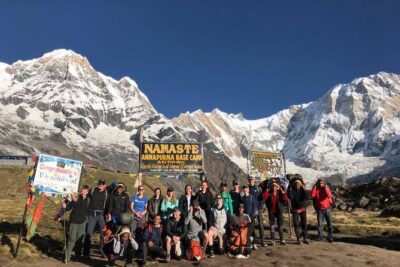
Kathmandu to Annapurna Base Camp (ABC) 5-Day Trek
Read our review →Browse the lists this trek appears in