Review · SAPA
From Sapa: Muong Hoa Valley View & Village Trek 1-Day
The best part of this Sapa day trip is that you earn the views. You climb rough mountain paths above Sa Seng, Hang Da, and Tao Sha, then look across rice terraces, forest, clouds, Sapa town, and the Hoang Lien Son range. This is not a gentle village stroll.
I like the private group format, which lets your guide set a sensible pace, and I like the chance to see Black H’Mong villages away from Sapa’s busy center. The main caution is simple: steep climbs and descents make this a medium-level hike, not a sightseeing ride with a short walk.
Key points to know before booking
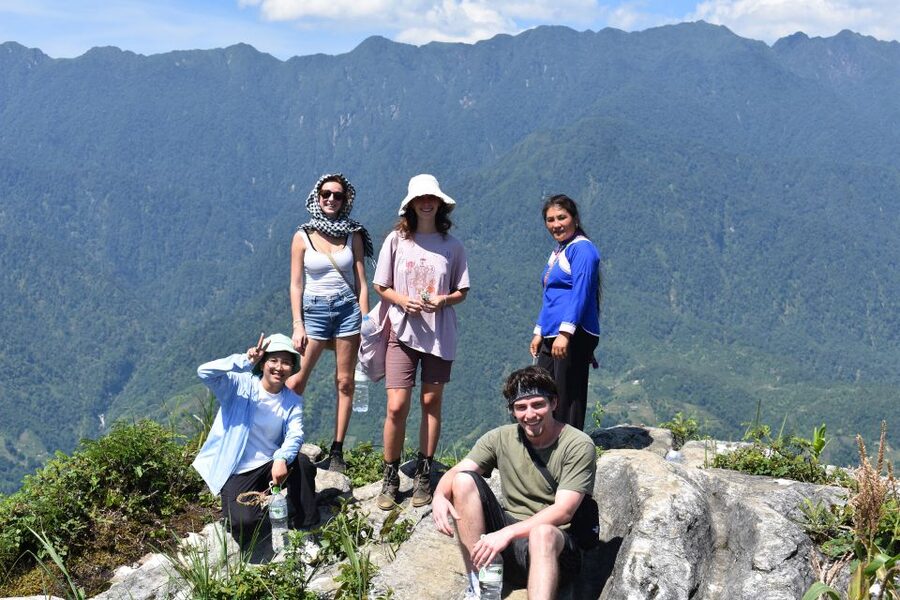
- Climb toward villages above Sapa: The route reaches Sa Seng and Tao Sha, described as Sapa’s highest village, with views across the Muong Hoa Valley.
- Expect steep, rough sections: Some parts take you up or down mountain paths, and the full trek can last six to seven hours.
- Local guides make the difference: English-speaking guides such as Nhu and Nay have led this route, with time for questions about plants, food, and ethnic culture.
- Lunch is part of the day: You eat at a local restaurant in or near Hang Da Village, with 1.5 liters of water supplied.
- Ancient stones finish the walk: The route passes around 200 old stone blocks in different shapes and sizes.
- Good value at $36: Hotel transport, guide, lunch, water, entrance fees, and a private group are included.
Why this Muong Hoa trek is different from a standard Sapa walk
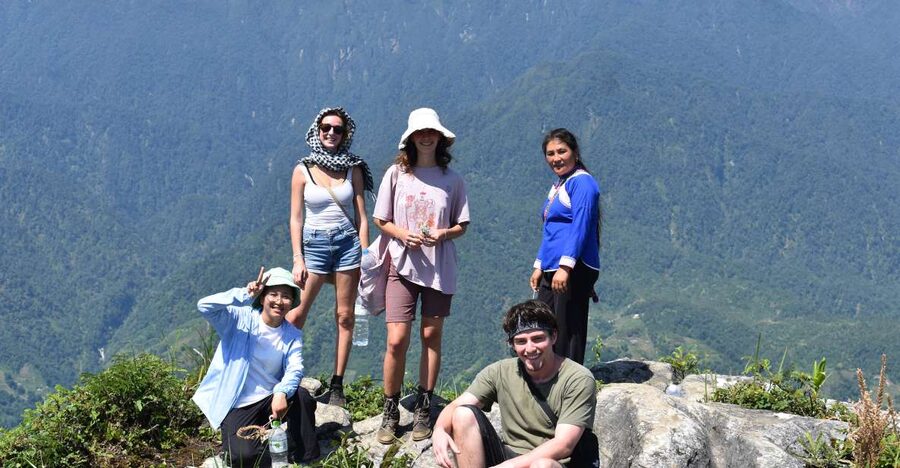
Sapa offers many short valley walks, but this route aims higher. The day begins with a climb from your hotel pickup point toward Sa Seng Village, then continues along mountain roads and trails above the valley.
That higher position changes the view. Instead of seeing only a few rice terraces from below, you get broad views over the Muong Hoa Valley and toward the Hoang Lien Son mountains. On clear days, Sapa town appears below, while clouds can gather around the ridges and fields.
The setting also gives you a closer look at Black H’Mong communities. You pass through villages, stop near homes, and walk through areas where rice fields sit beside bamboo and forest. The experience is less polished than a staged cultural attraction, which is part of its appeal. It also means paths can be uneven, muddy, or rough.
The tour costs $36 per person. For that price, you receive a private group, an English-speaking guide, hotel pickup and drop-off, village entrance fees, lunch, and water. That is a strong package for a full day in the mountains, especially if you want a guide rather than trying to piece together the route yourself.
More Homestay Treks in Sapa
- Number one top rated ethical cultural trekking and homestay by ETHOS
★ 5.0 · 456 reviews - Sa Pa: 2-Day Trekking Trip with Ethnic Minority Homestay
★ 4.7 · 145 reviews - Sapa : 2-Day Trek & Heartwarming Homestay with an Ethnic Family
★ 5.0 · 143 reviews
The 8:30 start and the climb to Sa Seng Village
Pickup is scheduled for 8:30 in the morning, though the exact starting time depends on availability and your booking. You should be at your hotel front desk 30 minutes before departure because the company contacts you to arrange the pickup.
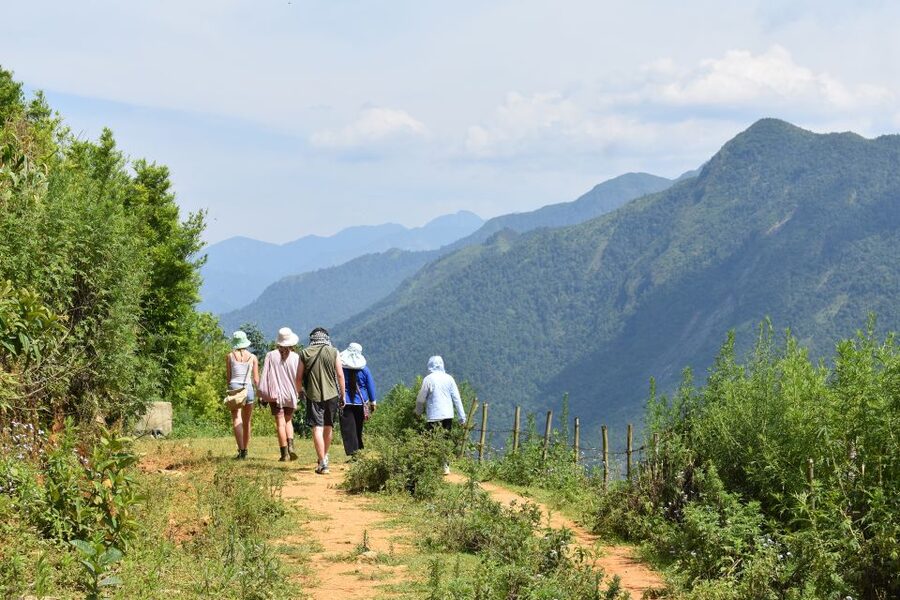
From Sapa, the trek heads toward Sa Seng Village. The first section is the part that tests your legs. The route follows rough roads and steep mountain paths, and one direct account describes the opening climb as particularly hard. Once you reach the higher ground, the effort begins to pay off.
The path moves through Black H’Mong villages and toward the top of Ham Rong Mountain. From there, you can look across Sapa town and the Hoang Lien Son range. This is a useful early pause because it gives you a sense of how high you have climbed and how much terrain lies around the town.
Do not treat the morning as a warm-up for an easy afternoon. The hike remains active for most of the day. Wear shoes with a firm sole, carry the supplied water, and keep some energy for the descent. The tour is not suitable for pregnant women, and anyone with limited walking ability should think carefully before booking.
Hang Da Village and the cloud-viewing stop
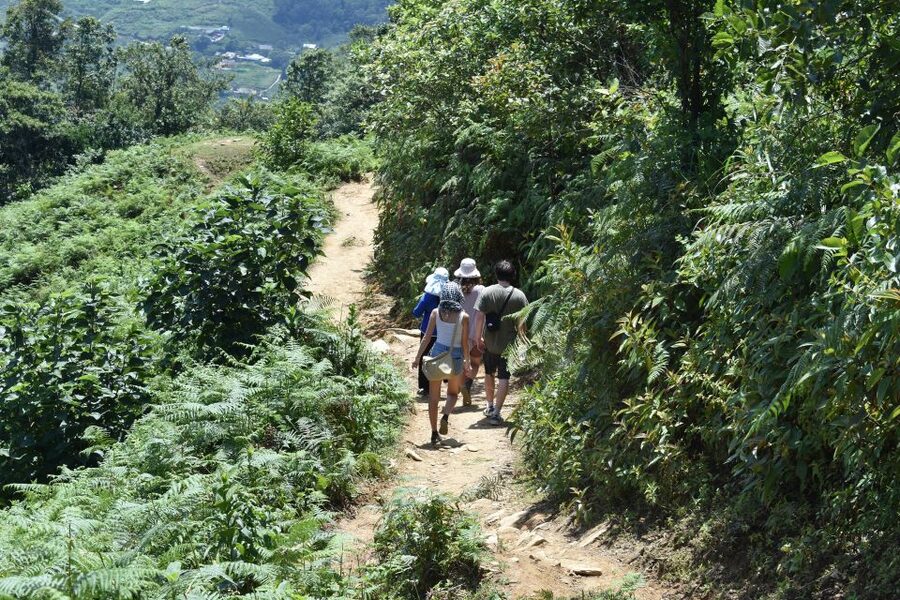
By about 11:30, you reach Hang Da Village for lunch. The route into this area follows a narrow mountain road with a cliff on one side and the Muong Hoa Valley on the other. That setting gives you dramatic views, but it also explains why the walk demands care.
Hang Da is known for wide views of forests, mountains, curving rice terraces, clouds, and open sky. If you enjoy photography, this is one of the strongest parts of the day. The views can change with the weather, so a cloud-covered valley is possible, but that can also create the misty mountain scenes people come to Sapa hoping to see.
Lunch is served at a local restaurant. The exact menu is not specified, so you should expect a local meal rather than a choice of international dishes. The food is included, which keeps the day simple and avoids the need to carry a full picnic.
The lunch break also gives you time to recover before the afternoon route. That matters because the hardest climbing may be behind you, but the walk is not finished. The next section leads to Tao Sha, followed by Hau Thao and the ancient stones.
Tao Sha, Sapa’s high village, and Black H’Mong culture
At about 1:15 in the afternoon, the trek continues toward Tao Sha, described as the highest village in Sapa. The village belongs to the Black H’Mong community and offers more views over the valley and the Hoang Lien Son mountains.
You also stop in local homes in Sapa Sa, a village in Hau Chu Ngai. These visits give the day a human focus. You are not only looking at rice terraces from a mountain path. You have a chance to see how local families live and to ask your guide about ethnic customs, food, plants, and village life.
Guides are central here. Nhu and Nay are among the guides associated with this experience, and both have been praised for clear English, warm communication, and useful explanations. You should confirm your guide when arranging the tour, since assignments can change.
A small practical point: local women may walk alongside the group briefly and offer products for sale. The direct experience reported here is that politely saying you are not interested was enough for them to move on. You should not assume every interaction will be identical, but a calm, clear answer usually keeps the encounter comfortable.
More Rice Terrace Treks in Sapa
- Sa Pa: Muong Hoa Valley Trek and Local Ethnic Villages
★ 4.6 · 864 reviews - Explore Sapa by TrekkingAdventures, Mountain,Rice fields
★ 4.9 · 229 reviews - Sa Pa: 6-Hours Muong Hoa Valley Trek with Local Ethnic guide
★ 4.5 · 178 reviews - Sapa Muong Hoa Valley & Ta Van Eco Village Scenic Tour (No Trek)
★ 5.0 · 144 reviews
Hau Thao rice fields and the long mountain route
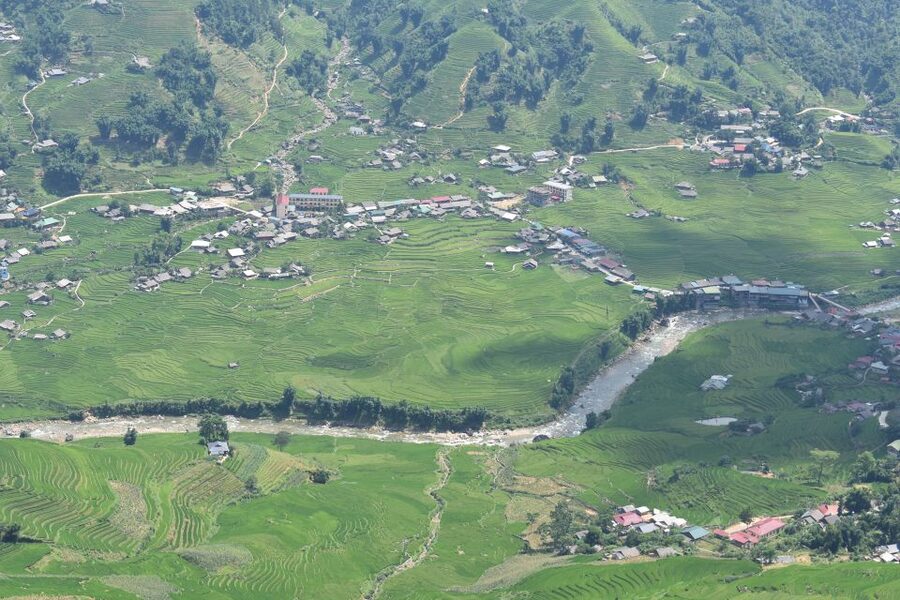
After Tao Sha, the path leads toward Hau Thao. Rice fields spread across the mountainside beside bamboo forest and other wooded areas. This part of the route is less about one single viewpoint and more about the changing relationship between fields, forest, homes, and ridgelines.
In good conditions, you may see a broad sea of white cloud below or around the mountains. Weather is a major part of any Sapa trek. Clear skies offer sharp views, while mist can hide the valley and make the trail feel more remote. Your guide can help you understand what you are seeing, but no tour can promise a particular view on a particular day.
The trail can feel peaceful because the route is designed as a private group experience rather than a large shared outing. That gives you more room to stop for photos, ask questions, or slow down on steep sections. It also means the quality of your day depends heavily on the guide’s pacing and communication.
This is where the tour suits fit hikers best. One account describes the route as exhausting but well worth the effort, with the complete trek taking about six to seven hours. If you are comfortable walking uphill for long stretches, you should manage it at a steady pace. If you want only a relaxed look at the valley, choose a shorter walk instead.
The ancient stones near Sapa
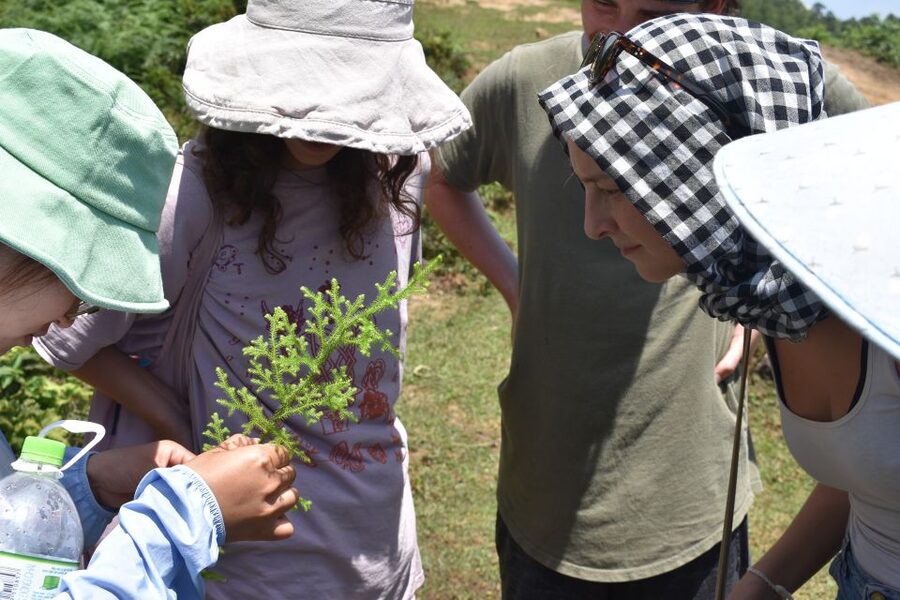
At about 3:00, the route turns downhill toward the ancient stones of Sapa. Around 200 stone blocks are scattered through this area, with different sizes and unusual shapes. They are presented as evidence of people living in the region during an ancient period.
The stones provide a change of pace after hours of mountain views and village paths. Your guide can add context, though the supplied information does not specify the exact age, inscriptions, or meaning of each block. Keep your expectations grounded: this is an outdoor archaeological feature, not a formal museum or restored monument.
The descent deserves as much attention as the climb. Downhill paths can be hard on knees and ankles, especially after a long day. Trekking poles are not listed as part of the tour, so bring your own if you normally use one. Take short steps, watch the ground, and avoid rushing to reach the vehicle.
At around 4:00, the trek ends and an awaiting car returns you to Sapa. Having transport included is a real advantage. After a demanding route, you do not need to arrange your own ride from a remote village.
What the private format means for your day
The tour is for a private group. That does not mean the route becomes easy, but it does give you more control than a large group outing.
You can ask the guide to explain local food, plants, and ethnic culture in more detail. You can also discuss the pace before the climb begins. If your group has mixed fitness levels, agree early on how often to pause.
English is the listed tour language. The guides connected with this experience have been praised for speaking good English and for handling communication before pickup. That matters in the mountains, where you need clear directions on steep or uneven ground.
The private setup is especially useful for couples, families with older teenagers, and small groups of friends who want a full day outside. It is less useful if you dislike physical effort or prefer a fixed sightseeing schedule with frequent vehicle transfers.
What to bring and how to prepare
The tour supplies 1.5 liters of water per person, but you should still prepare for a long day outdoors. Useful items include:
- Shoes with good grip
- Light clothing that can handle changing mountain weather
- Sun protection
- A small day bag
- Extra water if you usually drink a lot while hiking
- A camera or phone with enough battery
- A rain layer if the forecast looks unsettled
The supplied information does not specify the difficulty in technical hiking terms, but the route includes steep climbs, steep descents, rough roads, and a hike of roughly six to seven hours. I would rate it as a moderate physical challenge, with short sections that may feel harder.
Do not book this as a casual walk because the photos look beautiful. The scenery is the reward for the work. You need to be ready to climb, walk downhill, and stay on your feet for most of the day.
Optional herbal baths and massage after the trek
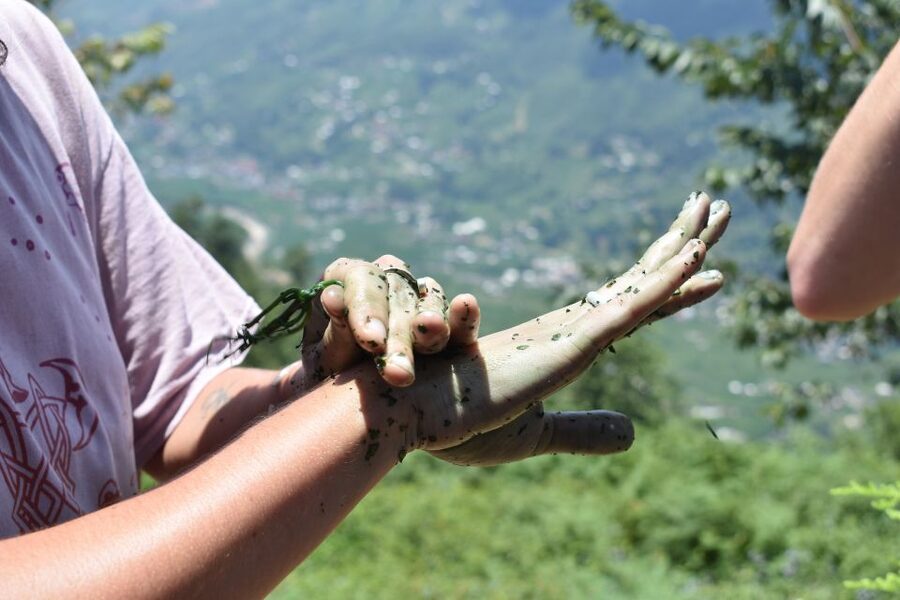
At the end of the adventure, you can choose an indigenous herbal bath, foot bath, or massage. These are optional, not part of the stated core inclusions.
That add-on could be welcome after a long descent, especially if your legs feel tired. Ask about the available treatment and any extra charge before agreeing, since no price is provided. If you have another evening plan in Sapa, allow time for the return and recovery.
Is $36 good value for a full day in Sapa?
At $36 per person, the tour offers a lot in one package. You receive:
- Hotel pickup and drop-off
- A private group
- An English-speaking guide
- Lunch at a local restaurant
- 1.5 liters of water
- Village entrance fees
- A full mountain route lasting about six to seven hours
The value is strongest if you want a guided trek and care about visiting several villages rather than stopping at one viewpoint. Private transport and a guide also remove the practical work of finding mountain routes and arranging a return ride.
The price does not remove the physical cost. You are paying for access, guidance, meals, and transport, but you still need to supply the fitness and suitable footwear. A shorter, easier walk may be better value for anyone who wants scenery without a demanding climb.
Free cancellation is available up to 24 hours before the activity for a full refund, and you can reserve now and pay later. Those terms help if your Sapa plans depend on weather or transport.
Should you book this Muong Hoa Valley trek?
Book it if you want high viewpoints, real village routes, and a proper day on foot. It is a strong choice for people who want more than a quick photo stop and are comfortable with steep mountain paths.
I would be especially keen to book it for a small private group that values quiet walking, local food, and time with an English-speaking guide. Nhu or Nay may be available, but confirm the guide when arranging your pickup.
Skip it if you are pregnant, have difficulty with long uphill walks, or want an easy half-day outing. The best reason to choose this tour is also its main warning: the views are excellent because the route climbs high. You have to work for them.
FAQ
How long does the trek last?
The scheduled day runs from pickup at about 8:30 until the return to Sapa at about 4:00. The walking itself can take roughly six to seven hours.
How much does the tour cost?
The listed price is $36 per person.
Is hotel pickup included?
Yes. Hotel pickup and drop-off in Sapa are included. You should be at the hotel front desk 30 minutes before departure.
Is lunch included?
Yes. Lunch at a local restaurant is included, with the main stop scheduled at Hang Da Village.
Is drinking water provided?
Yes. Each person receives 1.5 liters of water.
What language does the guide speak?
The live guide speaks English.
Is this a private tour?
Yes. The group type is private.
Can pregnant women join the trek?
No. The activity is listed as not suitable for pregnant women.
More Rice Terrace Treks in Sa Pa
- SAPA: 1-DAY TREKKING TOUR WITH LOCALS, LUNCH & RICE FIELDS
★ 4.7 · 18 reviews - From Sapa : 1 Day Amazing Sapa Trek To Terrace rice field
★ 4.6 · 17 reviews - Trekking Sapa 1 Day With Local Guide, Terraced Rice Fields
★ 4.5 · 5 reviews - Sapa: Trekking Through Terraced Rice Fields & Valley 1 Day
★ 4.8 · 4 reviews
More Rice Terrace Treks in Vietnam
- Daily Tour: Sapa Trekking in Muong Hoa valley, Bamboo forest
★ 5.0 · 121 reviews - 1-Day Sapa Long Trek – Rice Field Terrace, Ethnic Culture
★ 4.9 · 62 reviews - Sapa: Muong Hoa Mountain Views and Villages Trek with Lunch
★ 4.3 · 28 reviews - Sapa: Muong Hoa Valley View & Villages Trek with Local Guide
★ 5.0 · 25 reviews
Just added around Sa Pa
- Sapa: Private The Most Beautiful Terraced Fields Trekking★ 4.8 · 42 reviews
- Soob Sapa Trekking Tour★ 4.3 · 3 reviews
- Sapa Trekking – Waterfalls And H’mong Villages★ 5.0 · 2 reviews
- Sapa3D2N TrekkingAdventures,Valleys,Bambooforest,Waterfall★ 4.8 · 24 reviews
- Sapa: Trekking Through Terraced Rice Fields & Valley 1 Day★ 4.8 · 4 reviews
- Sapa: Trekking Sapa One Day With Group Tour★ 4.7 · 55 reviews
- Sapa: Y Linh Ho – Lao Chai, and Ta Van Trekking Day Tour★ 5.0 · 25 reviews
- Sapa Trekking Private Tour With Ethnic Female Tour Guide★ 4.9 · 24 reviews
Rice Terrace Treks, compared.
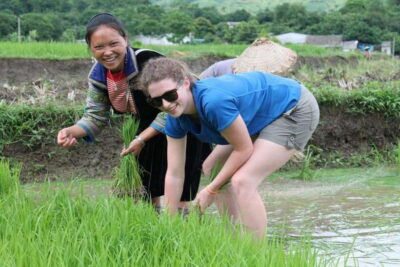
Muong Hoa Valley Trek and Local Ethnic Villages
Read our review →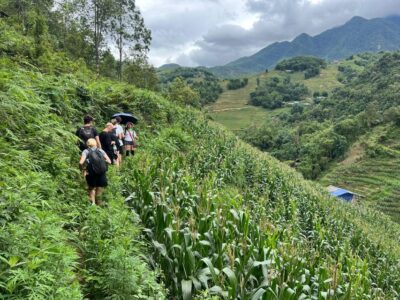
Explore Sapa by TrekkingAdventures, Mountain,Rice fields
Read our review →
Selogriyo Temple and Trekking Java Rice Terraces, hidden waterfall -Nature Java
Read our review →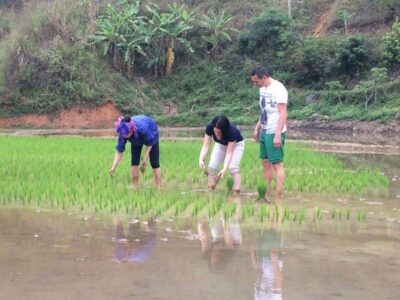
6-Hours Muong Hoa Valley Trek with Local Ethnic guide
Read our review →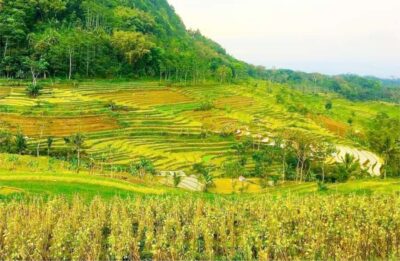
Yogyakarta: Selogriyo Temple Tour & Java Rice Terrace Trek
Read our review →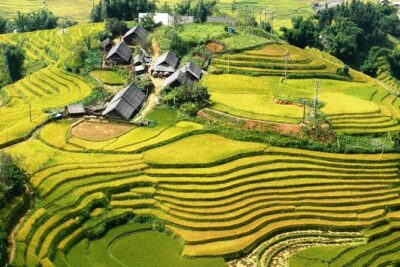
Sapa Muong Hoa Valley & Ta Van Eco Village Scenic Tour (No Trek)
Read our review →
Daily Tour: Sapa Trekking in Muong Hoa valley, Bamboo forest
Read our review →