
Review · SAPA
Sapa: Private trek to Muong Hoa Valley
Muong Hoa Valley is best seen on foot, where a paved town gives way to rice terraces, village paths, and daily life among the Black Hmong and Dzay communities. I like the 12-kilometer route for its mix of scenery and village time, and I like that lunch is part of the day rather than an afterthought. The main caution is simple: this is a real trek, not a gentle stroll.
I also like the personal guiding. Cha explains local life along the way, while Zheng has adapted the pace and route to suit hiking comfort. The steep, slippery sections can make the five-hour outing tiring, especially from May through September, so good trekking shoes are essential.
Key points at a glance
- Muong Hoa Valley on foot: Follow a roughly 12-kilometer route from Sapa through some of northern Vietnam’s best-known rice terraces.
- Two distinct communities: Visit Black Hmong villages around Lao Chai and continue to Ta Van, home to the Dzay people.
- A guide who can adjust the route: Guides such as Cha and Zheng can explain local customs and adapt the trek when paths become steep or slippery.
- Lunch by the river or at a local restaurant: The included meal gives you a break in the middle of the walk and adds a taste of local food.
- Private return to Sapa: After reaching the main road, a private car brings you back to Sapa town.
- Good value at $47: The price includes the guide, food, water, entrance fees, transport, and hotel pickup and drop-off in Sapa town.
Leaving Sapa for Muong Hoa Valley
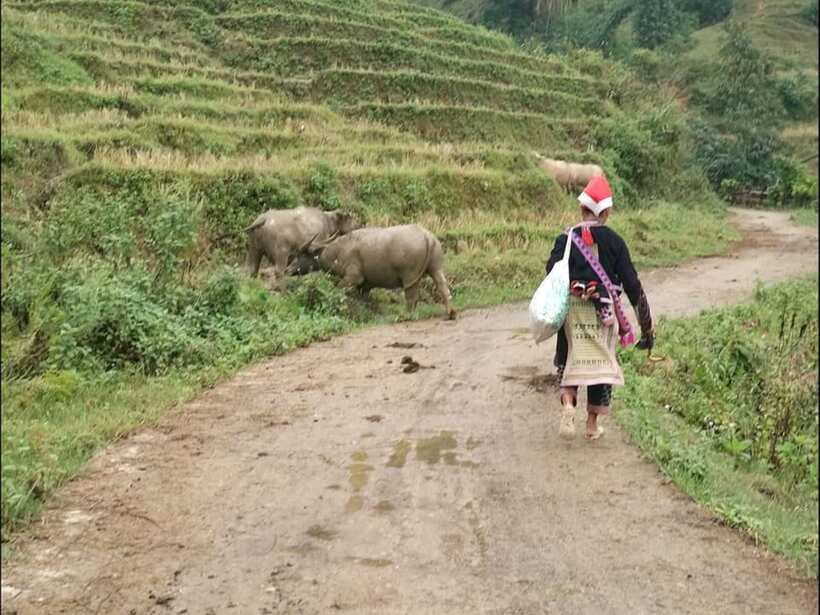
The day begins on foot from Sapa town. That matters because you do not spend the first part of the outing sitting in a vehicle. You start walking directly into the countryside, with the town gradually giving way to mountain paths and village life.
The route leads toward Muong Hoa Valley, one of northern Vietnam’s most striking areas for broad mountain views and layered rice terraces. The scenery changes with the weather and season, but you can expect open views, cultivated slopes, and paths linking small communities.
Your English-speaking guide gives the walk its local meaning. Rather than simply pointing out viewpoints, the guide can explain customs, clothing, handicrafts, and the daily routines of the ethnic groups living in the valley. Cha is one guide associated with this experience, and Zheng has adjusted the route to match a group’s comfort level.
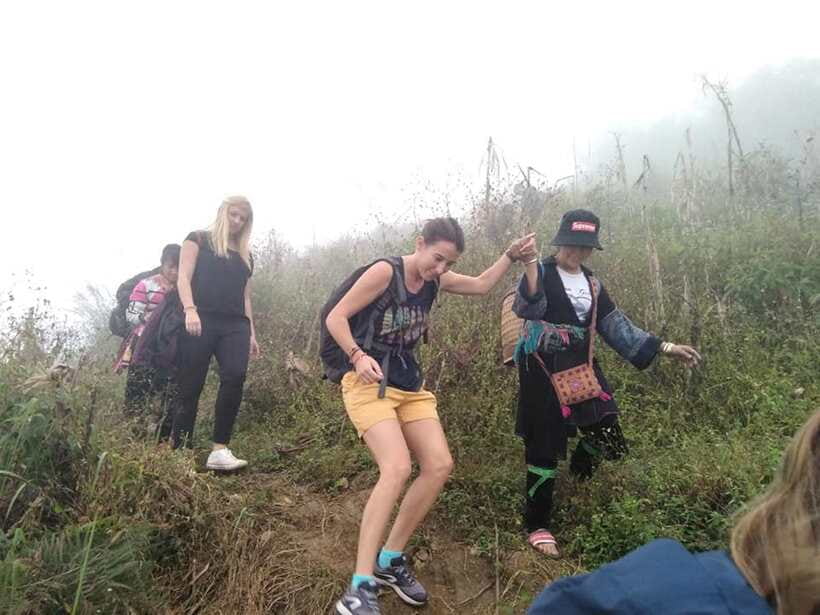
The exact walking conditions matter more than the five-hour duration suggests. Twelve kilometers is a serious distance, and the route includes steep sections. From May to September, rain can make the paths slippery. Bring proper trekking shoes with good grip, not sandals or slippers.
More Rice Terrace Treks in Sapa
- Sa Pa: Muong Hoa Valley Trek and Local Ethnic Villages
★ 4.6 · 864 reviews - Explore Sapa by TrekkingAdventures, Mountain,Rice fields
★ 4.9 · 229 reviews - Sa Pa: 6-Hours Muong Hoa Valley Trek with Local Ethnic guide
★ 4.5 · 178 reviews
Lao Chai and the Black Hmong villages
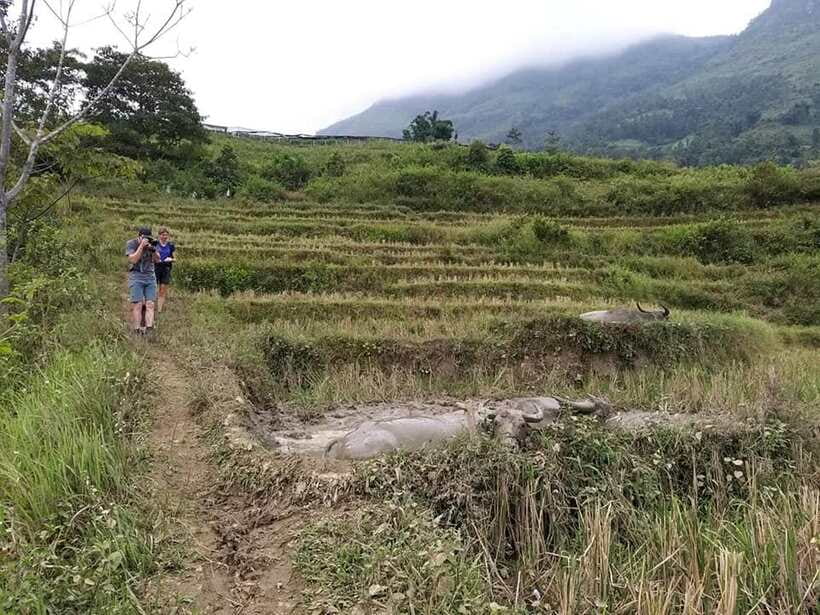
One of the first major parts of the trek takes you through villages connected with the Black Hmong community. This is where the outing shifts from mountain scenery to human encounters. You have time to interact with local people and see aspects of everyday rural life instead of viewing the valley only from a lookout.
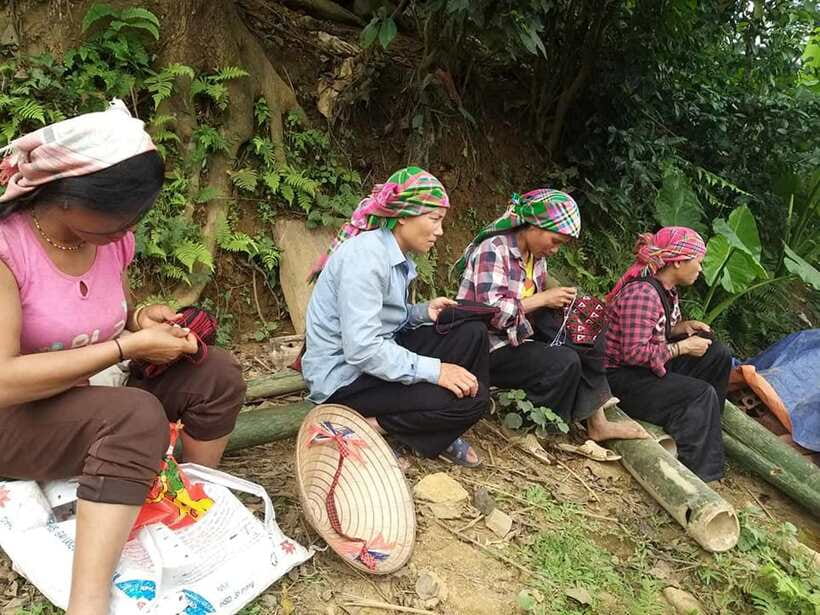
The Black Hmong are known for distinctive clothing and traditional craft work, and your guide can provide context as you walk. The value here is not a staged performance. You are moving through inhabited villages, learning about customs as part of the route.
Lao Chai is a key stop. It offers broad views across some of the area’s most impressive rice terraces. The terraces are the visual centerpiece of the trek, with the slopes shaped by farming rather than by nature alone. Take your time here, especially if the weather gives you clear views.
The route is not always easy. Paths may be narrow, uneven, wet, or steep. A guide who changes the route when conditions are poor can make a big difference. One guide adjusted the trek when sections became too steep and slippery, a practical choice that keeps the day enjoyable rather than turning it into a test of stubbornness.
Lunch beside the river or at a local restaurant
Lunch comes after the Lao Chai section, near the river bank or at a local restaurant. The setting depends on the day and the route, but either option gives you a proper pause after several kilometers of walking.
The meal is included, along with water. It is described as plentiful, which is useful on a route of this length. You should still arrive ready to walk, since lunch is a break rather than a substitute for carrying the basics you need on the trail.
This is also one of the more pleasant parts of the experience because it slows the pace. You have time to rest, take in the surroundings, and talk with your guide about the communities you have just passed through. The local meal adds something a standard sightseeing drive cannot provide.
Do not expect a long restaurant visit with a wide menu. The point is a simple meal connected to the route. If local food and a rural setting appeal to you, this is a strong part of the package. If you prefer full control over what and when you eat, the fixed lunch may feel less flexible.
Continuing to Ta Van and the Dzay community
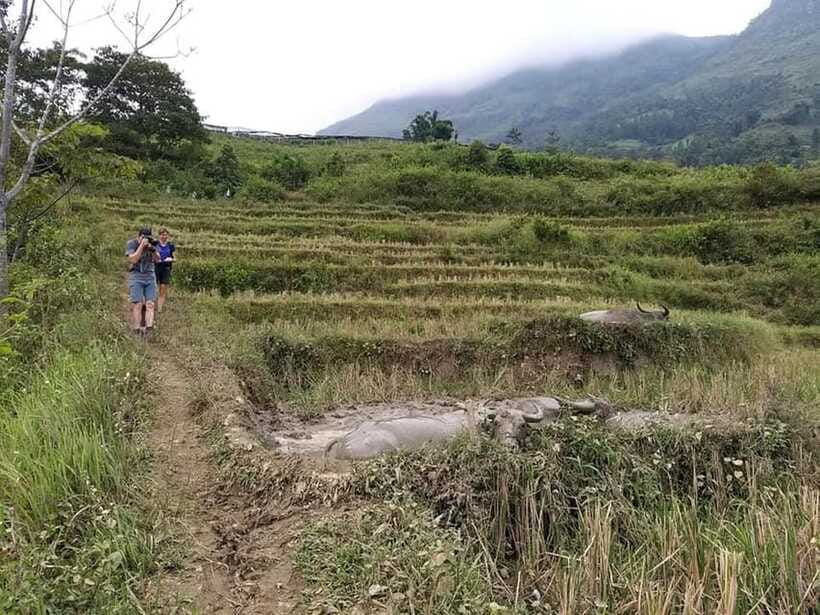
After lunch, the trek continues toward Ta Van village. The village is inhabited by the Dzay ethnic group, giving you a second cultural perspective within the same half-day outing.
The change from Black Hmong villages to Ta Van is useful because you are not seeing one community presented as a stand-in for all of Sapa. Your guide can help you understand differences in customs, clothing, and rural life.
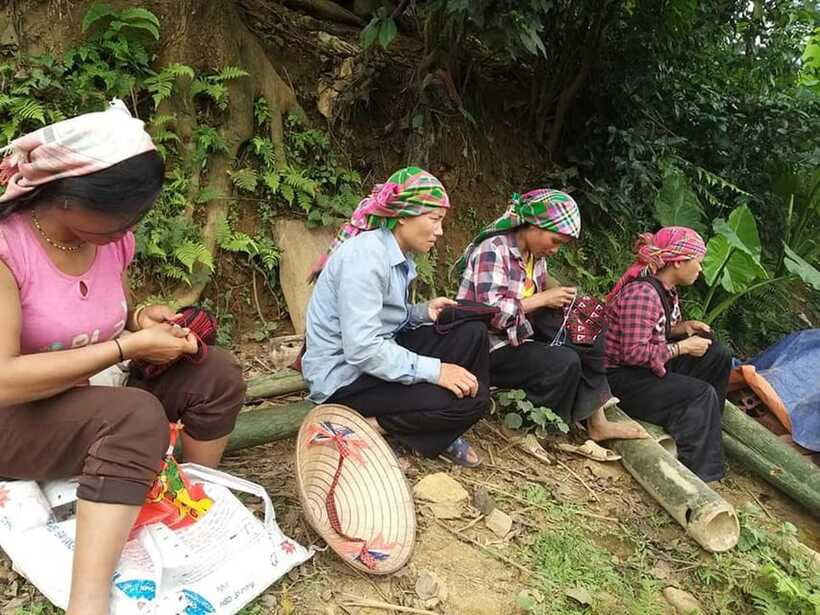
In Ta Van, you visit local houses and learn about traditional handicrafts, including weaving and coloring. These details make the stop more than a photo break. You can see how practical skills connect with identity and daily work.
The village visit is also a good place to ask questions. A guide such as Cha can explain what you are seeing, while a guide such as Zheng can help keep the pace comfortable as the day progresses. The guide’s role is especially important here because customs are easier to understand when you have someone to provide context without making the visit feel rushed.
You should keep your expectations realistic. This is a five-hour trekking experience, not a full cultural workshop. You learn about handicrafts and local life, but the activity does not promise an extended lesson in weaving or dyeing.
More Rice Terrace Treks in Vietnam
- Sapa Muong Hoa Valley & Ta Van Eco Village Scenic Tour (No Trek)
★ 5.0 · 144 reviews - Daily Tour: Sapa Trekking in Muong Hoa valley, Bamboo forest
★ 5.0 · 121 reviews - 1-Day Sapa Long Trek – Rice Field Terrace, Ethnic Culture
★ 4.9 · 62 reviews - Sapa: Muong Hoa Mountain Views and Villages Trek with Lunch
★ 4.3 · 28 reviews
Returning from the trail by private car
The walking section ends at the main road, where a private car waits to take you back to Sapa town. This is a welcome arrangement after 12 kilometers on foot. You get the countryside experience without having to walk the full distance back to your hotel.
Hotel pickup and drop-off are included for hotels in Sapa town only. If you are staying outside town, confirm the meeting point before booking. The activity ends after the return to Sapa center.
The private return also keeps the timetable practical. You spend the active part of the day on the trail, then avoid a long final walk when your legs are tired. Transportation is included in the $47 price, along with the guide, lunch, entrance fees, and water.
What $47 buys you
At $47 per person, this tour offers good value if you want a guided day in the valley rather than arranging each part yourself. The cost covers the main expenses that can otherwise add up: an English-speaking guide, lunch, drinking water, entrance fees, pickup and drop-off in Sapa town, and the private car back from the trail.
The value comes from the combination of activities. You are not paying only for a viewpoint or a short village visit. You get a substantial walk, two ethnic communities, rice terraces, a meal, and return transport.
The price does not include insurance, personal expenses, or VAT. A French-speaking guide costs an additional $15 per person, paid at the meeting point. There is also a Lunar New Year surcharge of $35 per person for trips from January 26 to February 2, 2025, paid directly on the trip.
For a private trek, the price is particularly reasonable if you are splitting the experience with a companion or small group. Still, the word private should not make you expect a completely private schedule with no physical demands. The route remains fixed around the valley and requires a good level of walking ability.
How hard is the 12-kilometer trek?
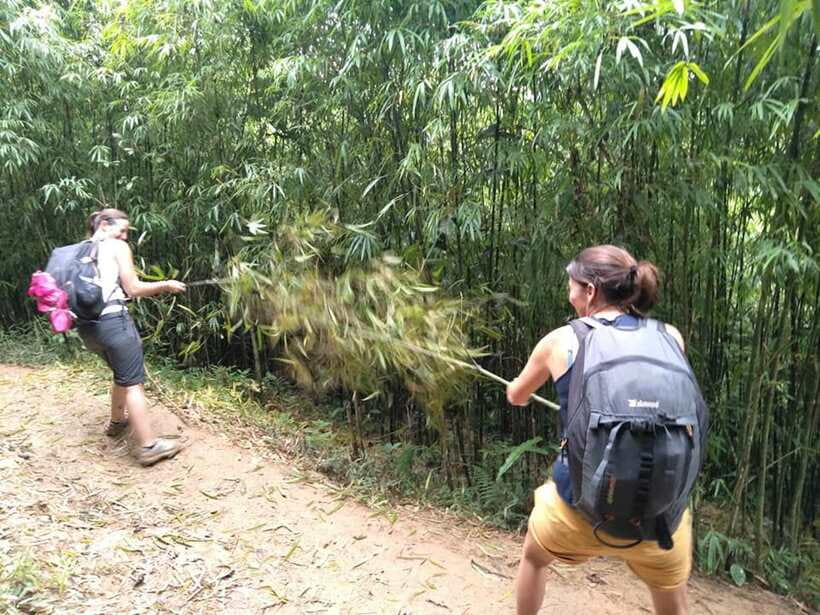
The route is suitable for people who are comfortable walking several hours over uneven ground. It is not suitable for people with mobility impairments, heart problems, or pregnant women.
The five-hour length includes walking, village visits, lunch, and the return transfer, but you should still allow enough energy for the trail. The steep areas can make the route feel harder than the distance alone suggests.
Wear comfortable clothes and sturdy trekking shoes. Slippers are not allowed, and they would be a poor choice on wet or uneven paths anyway. From May to September, bring footwear with a firm sole because rain can make the trail slick.
The guide can adapt the trekking route when conditions or comfort levels call for it. That flexibility is useful, but it does not turn the outing into an easy walk. If you dislike hills or regularly avoid long walks, choose a shorter Sapa activity instead.
The guide makes the difference
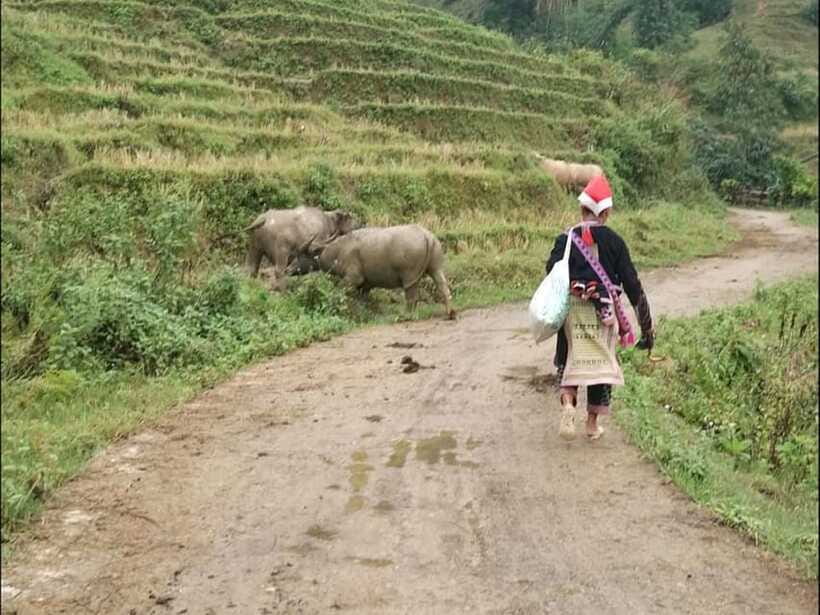
A good guide matters on this trek for three reasons: route choices, cultural explanation, and pace. The trail can become steep or slippery, and a guide who pays attention to conditions can choose a safer or more comfortable way through.
Cha has provided detailed explanations about the area, while Zheng has been described as friendly, accommodating, and willing to tailor the hike. Those qualities fit this particular route well. You need someone who can explain what you are seeing and also notice when the group needs a slower pace.
The guide also helps bridge the gap between a village visit and simple sightseeing. You can ask about customs, traditional clothing, handicrafts, and rural routines as they come up. That makes the experience more personal and helps you approach local homes and communities with greater awareness.
Guide availability can vary, so do not assume you will be assigned Cha or Zheng specifically. English guiding is included. French guiding costs extra.
Who should book this Sapa trek?
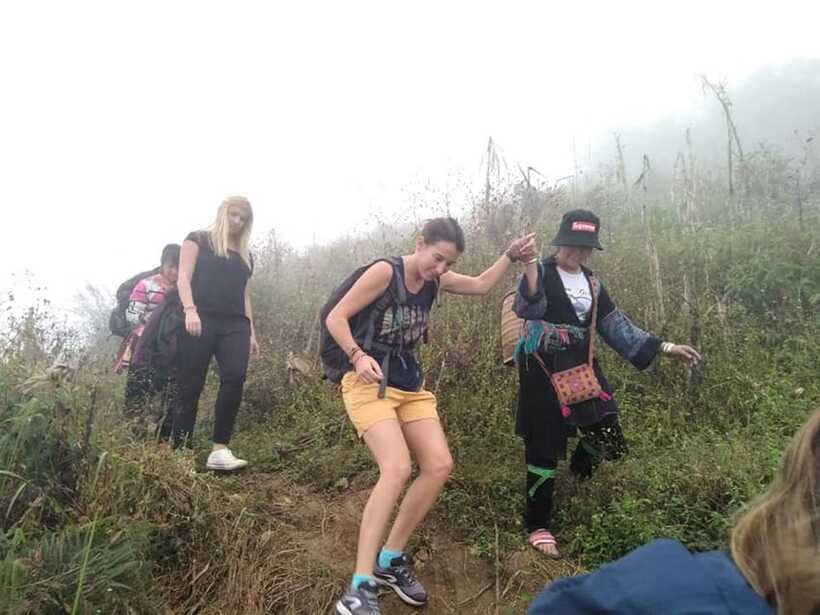
I would recommend it to you if you want a balanced Sapa outing with scenery, walking, cultural contact, and a local meal. It suits active visitors who want to leave the town behind and spend several hours in the valley.
It is also a good choice if you value a guide who can explain local customs rather than simply lead you between photo stops. The visit to Ta Van adds variety, and the return car keeps the day from becoming an exhausting out-and-back walk.
You may want to skip it if you have limited mobility, a heart condition, are pregnant, or are looking for a very gentle excursion. The route can be demanding, and wet-season conditions may add difficulty.
Check the forecast before you go, wear proper shoes, and keep your schedule flexible enough for a five-hour activity. Free cancellation is available up to 24 hours before departure, and you can reserve now and pay later, which helps if mountain weather is uncertain.
Should you book the Muong Hoa Valley trek?
Book this experience if the idea of walking through rice terraces, meeting Black Hmong and Dzay communities, and eating a local lunch appeals to you more than riding between viewpoints. The cultural variety and adaptable guiding are its strongest features.
At $47, the package is well priced for the guide, meal, water, entrance fees, and private return transfer. Just treat the 12 kilometers seriously. With good shoes and a reasonable level of fitness, this is a practical way to see Muong Hoa Valley at walking pace. With poor footwear or limited mobility, it is the wrong match.
FAQ
How long is the Muong Hoa Valley trek?
The activity lasts about five hours and includes roughly 12 kilometers of trekking.
Where does the trek begin?
You depart on foot from Sapa town and walk toward Muong Hoa Valley.
Which villages does the route visit?
The route goes through Black Hmong villages, reaches Lao Chai, and continues to Ta Van, which is inhabited by the Dzay ethnic group.
Is lunch included?
Yes. Lunch is included and is served near the river bank or at a local restaurant.
What food should I expect at lunch?
The tour provides a local meal. Specific dishes are not stated, but the meal is described as good and plentiful.
Is transportation included?
Yes. Hotel pickup and drop-off in Sapa town are included, along with a private car from the main road back to Sapa center.
Is an English-speaking guide included?
Yes. An English-speaking live guide is included. A French-speaking guide costs an extra $15 per person.
What should I wear and bring?
Bring comfortable clothes and comfortable trekking shoes. Slippers are not allowed, and good trekking shoes are especially important because the route can be slippery from May to September.
Is the trek suitable for everyone?
No. It is not suitable for pregnant women, people with heart problems, or people with mobility impairments.
Can I cancel the booking?
Yes. You can cancel up to 24 hours in advance for a full refund. You can also reserve now and pay later.
More Rice Terrace Treks in Sa Pa
- Sapa: Muong Hoa Valley View & Villages Trek with Local Guide
★ 5.0 · 25 reviews - From Sapa: Muong Hoa Valley View & Village Trek 1-Day
★ 5.0 · 21 reviews - SAPA: 1-DAY TREKKING TOUR WITH LOCALS, LUNCH & RICE FIELDS
★ 4.7 · 18 reviews - From Sapa : 1 Day Amazing Sapa Trek To Terrace rice field
★ 4.6 · 17 reviews
Just added around Sa Pa
- Sapa: Private The Most Beautiful Terraced Fields Trekking★ 4.8 · 42 reviews
- Soob Sapa Trekking Tour★ 4.3 · 3 reviews
- Sapa Trekking – Waterfalls And H’mong Villages★ 5.0 · 2 reviews
- Sapa3D2N TrekkingAdventures,Valleys,Bambooforest,Waterfall★ 4.8 · 24 reviews
- Sapa: Trekking Through Terraced Rice Fields & Valley 1 Day★ 4.8 · 4 reviews
- Sapa: Trekking Sapa One Day With Group Tour★ 4.7 · 55 reviews
- Sapa: Y Linh Ho – Lao Chai, and Ta Van Trekking Day Tour★ 5.0 · 25 reviews
- Sapa Trekking Private Tour With Ethnic Female Tour Guide★ 4.9 · 24 reviews
Rice Terrace Treks, compared.
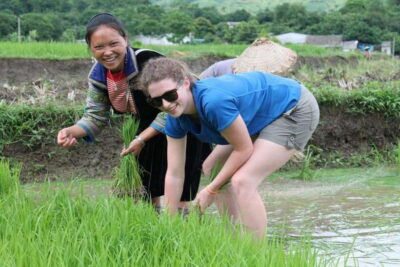
Muong Hoa Valley Trek and Local Ethnic Villages
Read our review →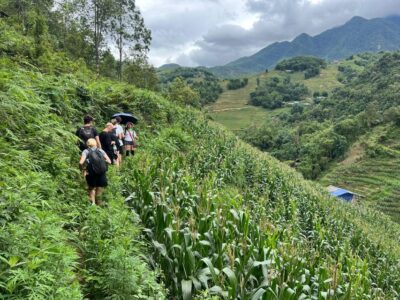
Explore Sapa by TrekkingAdventures, Mountain,Rice fields
Read our review →
Selogriyo Temple and Trekking Java Rice Terraces, hidden waterfall -Nature Java
Read our review →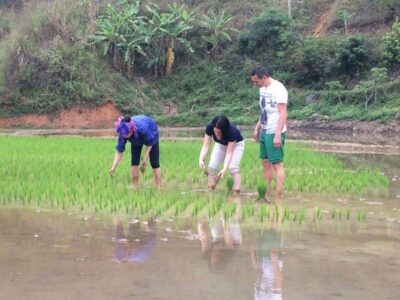
6-Hours Muong Hoa Valley Trek with Local Ethnic guide
Read our review →
Yogyakarta: Selogriyo Temple Tour & Java Rice Terrace Trek
Read our review →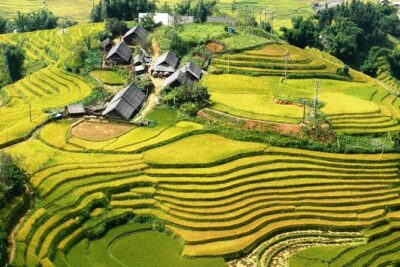
Sapa Muong Hoa Valley & Ta Van Eco Village Scenic Tour (No Trek)
Read our review →
Daily Tour: Sapa Trekking in Muong Hoa valley, Bamboo forest
Read our review →
Rice Terrace, Holy Water Temple & Waterfalls Trek Tour
Read our review →Browse the lists this trek appears in