
Review · ITALY
Lake Garda: Cima Capi Via Ferrata
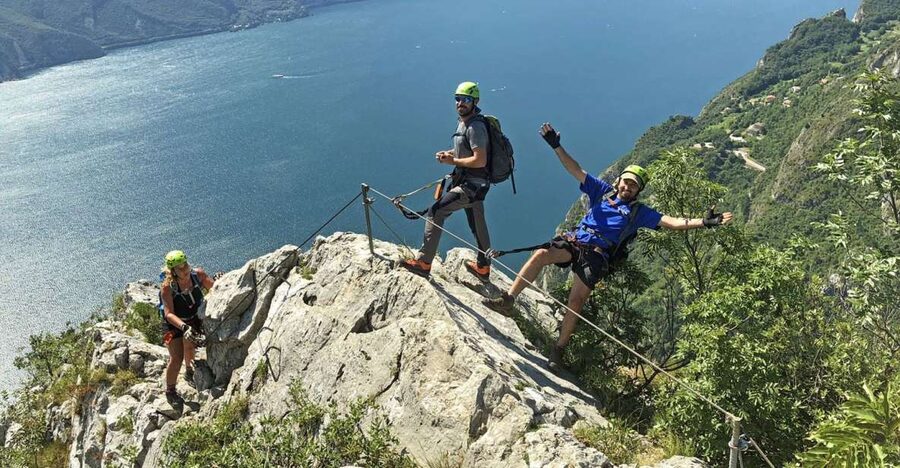
Lake Garda spreads below you as you climb Cima Capi, with a via ferrata above the water and the Sarca Valley opening out beside you. The route combines cable-assisted climbing, steep hiking, old military paths, and First World War tunnels in one long mountain day.
I like the small groups of up to six and the chance to see the area’s military past without giving up the thrill of the climb. The views are the main prize, but guides such as Marco and David also add useful instruction, friendly company, and photographs to the day.
The catch is simple: this is not a short walk to a viewpoint. You may spend about an hour hiking before reaching the ferrata, then another long stretch getting back, and the steep height gain takes real effort. People with vertigo or low fitness should choose another outing.
Key points to know before you book
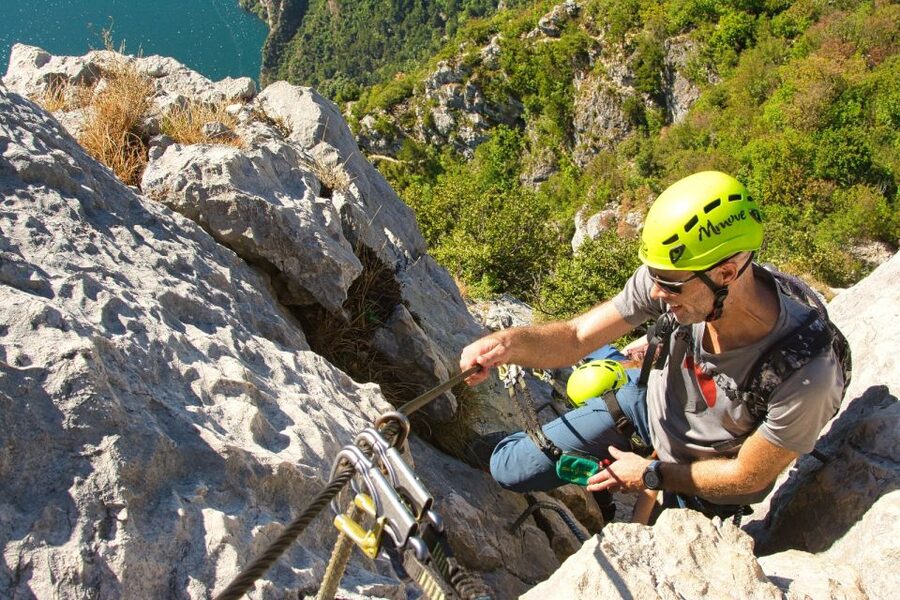
- The climb is exposed: You’ll use a harness on a route with steep drops and frequent views down to Lake Garda.
- The approach takes about an hour: The via ferrata is only one part of a six-hour mountain excursion.
- Military history comes at the end: The return passes old walkways, fortifications, and tunnels built during the First World War.
- A torch matters: Bring one for the dark sections of the old fortifications.
- Six people is the maximum: The small group makes it easier to follow the guide and manage the climbing equipment.
- Fitness matters more than technical skill: The climbing is considered relatively easy, but the vertical gain and total walking time are demanding.
Cima Capi gives you a high view of Lake Garda
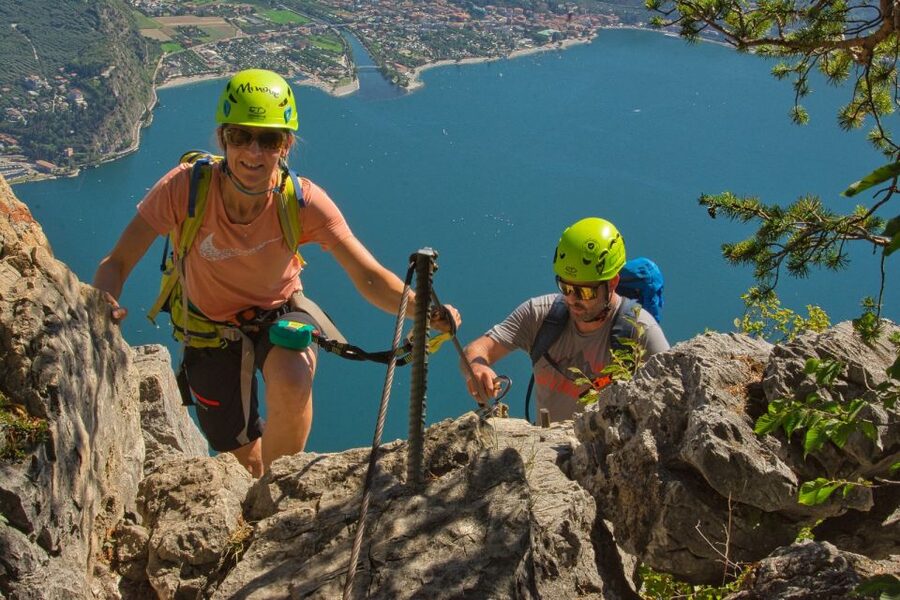
The strongest reason to choose this outing is the setting. From the Cima Capi route, Lake Garda sits below the exposed path, while the Sarca Valley stretches inland. You are not simply walking beside the lake. You are looking down on it from a mountain route that repeatedly puts the water, cliffs, and valley in view.
The ferrata offers a mix of climbing and walking. Steel cables and fixed aids help you move along the route, while your harness provides protection on exposed sections. The climbing itself is not described as especially difficult, but the position can feel serious when the ground falls away below you.
That difference matters. A route can be technically manageable and still feel intense. You may find the hand and footholds straightforward, yet feel the height in your stomach when you look toward the vertical walls. If you dislike exposed drops, this is not the place to test your limits for the first time.
For the right person, the exposure is exactly what makes the day memorable. You get the satisfaction of moving across a genuine mountain route, not just walking to a lookout and taking a photograph. The views keep changing as you gain height, so the scenery is part of the climb rather than a reward saved for the final few minutes.
More Via Ferrata Routes in Italy
- Dolomites Via Ferrata Experience
★ 5.0 · 58 reviews - Via Ferrata Cima Capi
★ 5.0 · 27 reviews - Via Ferrata Rio Sallagoni
★ 5.0 · 22 reviews
The long approach is part of the day
Plan on roughly an hour of hiking before reaching the main via ferrata. That approach is easy to underestimate when you read the headline description, so I would treat the six-hour duration as a full mountain day from the start.
This walk-in has two effects. First, it gives you time to warm up before the more exposed sections. Second, it uses energy that you may wish you had later. Good hiking shoes, water, snacks, and a sensible pace are important here.
The return includes another substantial walk, and one recent participant described nearly an hour of hiking on the way back as well. That makes the outing better suited to someone who enjoys a long day outside than to someone looking for a short climbing sampler.
I like this format because the approach helps the day feel like a real mountain outing. Still, you should not book it expecting six hours of continuous cable climbing. The ferrata is the central feature, but walking to and from it takes a large share of the time.
What the via ferrata feels like on the mountain
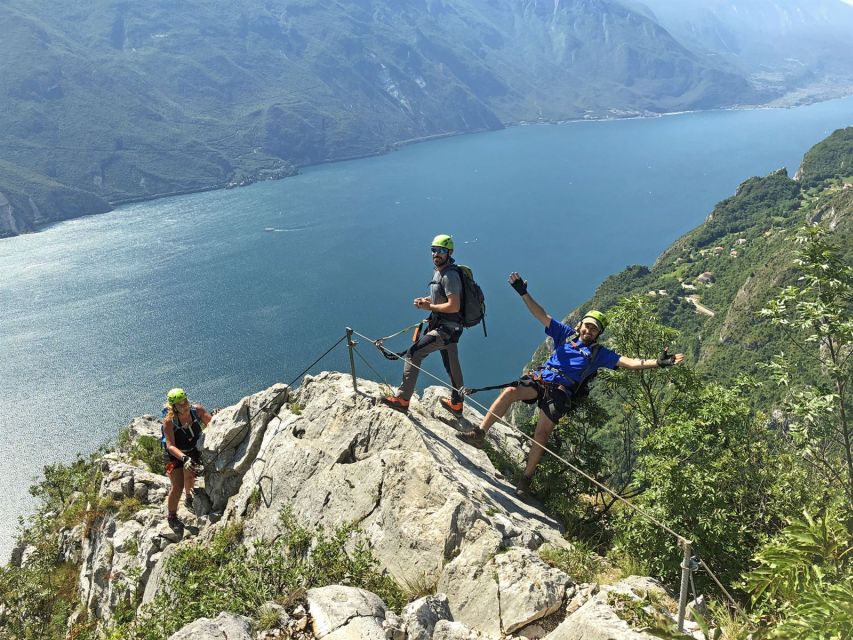
Once you reach the equipped route, the character of the day changes. You clip into the protection system and begin following the fixed line across steep mountain terrain. The exact rhythm will depend on the group and the guide, but expect a combination of hiking, scrambling, and assisted climbing.
The route offers frequent glimpses of Lake Garda and the Sarca Valley. Some sections are more exposed than others, and the vertical walls create the most dramatic moments. You may find yourself stopping not because the route is technically hard, but because the view demands a pause.
The supplied equipment includes a harness, and equipment was provided during recent outings. Your guide handles the practical side of the route and gives instruction in English or Italian. That language choice is useful for a mixed group, especially when a quick explanation about footing, clipping, or pacing is needed.
The route has been described as a good introduction to via ferrata because the climbing is relatively easy. I would read that as accessible for a fit person who is comfortable with heights, not as a promise of an effortless walk. The exposure and sustained uphill work still require concentration.
A small group helps here. With no more than six participants, the guide can keep track of the group more easily and offer individual help when someone needs a moment to settle into the height or adjust their rhythm.
The summit is about more than a photograph
Reaching Cima Capi gives you the main visual payoff, with Lake Garda far below and the valley opening toward the mountains. The summit itself is a natural point to take stock of the route behind you and the height you have gained.
The value of the summit is not only the view. You have reached it by using the route rather than by taking a simple path to a lookout. That sense of effort gives the scenery more weight. You can see the lake from many easy viewpoints around Garda, but this outing puts you above it in a very different way.
The mountain setting also gives you a better sense of the area’s shape. The lake is not an isolated blue patch. It sits within a much larger system of valleys and steep slopes, with the Sarca Valley providing a clear inland direction.
Allow time for the group to enjoy this part of the route, but do not expect a long summit picnic unless the guide and conditions allow it. Food and drinks are not included, so carry your own snacks and water. The practical rule is to bring enough for six hours, not just for the climbing section.
Same trailhead, a different route:
- Mount Etna: Trek to 3000m with cable car and 4×4
★ 4.6 · 3,823 reviews - Mount Etna: Summit Crater Trek with Cable Car
★ 4.8 · 1,875 reviews - Etna: summit craters trekking with volcano guide 3350mt
★ 4.7 · 1,712 reviews - Catania: Mount Etna Trekking Tour Beyond the Tourist Trails
★ 4.9 · 1,596 reviews
First World War forts turn the return into a history walk
The return adds a second story to the day. After the climb, you cross old walkways, military positions, fortifications, and tunnels built during the First World War.
These remains change the mood completely. On the way up, your attention is on height, cables, and the lake. On the way back, the route becomes a walk through mountain defenses and old passages. The combination makes this more distinctive than a standard via ferrata excursion.
Bring a torch. The old tunnels are not simply open-air ruins, and a phone light may be less useful than a proper small torch, especially if you want to look carefully rather than hurry through. The activity specifically recommends one for exploring the fortifications.
The military remains also add context to the terrain. The cliffs and high routes were not only chosen for their views. They formed part of a strategic mountain zone during the First World War. You do not need to be a military-history enthusiast to appreciate the change from outdoor adventure to historic site, but anyone interested in old roads, forts, and tunnels will get extra value from the return.
Because the climb comes first, you may be tired by the time you reach these features. That is another reason to pace yourself early. A rushed return would mean missing one of the experience’s most unusual elements.
How hard is the six-hour outing?
The key physical challenge is vertical height gain. You will walk for a long time, climb on an exposed route, and continue moving after reaching Cima Capi. The activity is not suitable for people with a low level of fitness.
The route is also not suitable for children under 12 or pregnant women. People with vertigo should avoid it. Those restrictions are sensible given the steep walls and open views below the route.
You do not need to be an expert climber. The fixed cable system and guide support make the climbing more approachable, and the route has been described as relatively easy from a technical point of view. But you should be able to handle a long uphill hike and remain steady when the route becomes exposed.
I would choose hiking shoes rather than casual trainers. Pack sunglasses, a hat, sunscreen, a jacket, and snacks. Mountain weather can feel different from the lakeshore, and a jacket is useful even on a warm day.
Guides, group size, and equipment
The experience is led in English or Italian by a live mountain guide. Marco and David are among the guides associated with recent departures, and both were singled out for their friendly approach. David also took photographs during one outing, which can be a nice bonus on a route where stopping to handle your phone is not always practical.
The maximum group size is six. That is a meaningful advantage on a via ferrata. A large group can create delays at narrow or exposed sections, while a small group usually gives the guide more room to manage pace and explain the route.
A mountain guide certificate and liability insurance are included. Climbing equipment is provided, according to the practical experience of recent participants. You should still arrive with your own personal hiking gear, food, and drinks, since those are not included.
The guiding matters most for first-time participants. A good guide can help you use the cable system correctly, keep a steady pace, and avoid wasting energy early in the day. You still need to do the walking and climbing yourself, but you are not left to figure out the route alone.
Is $106 good value?
At $106 per person, this is not a budget walk. The value depends on what you want from a Lake Garda day.
If you want a simple scenic hike, the price may feel high. You are paying for a six-hour guided mountain activity, a small group capped at six, safety equipment, mountain guidance, and the chance to use an equipped route above the lake. You also get an unusual combination of climbing and First World War sites.
The price makes more sense for someone who would otherwise need to arrange equipment, find the route, and judge the exposed sections alone. The guide reduces that planning burden and gives a first-time participant a more controlled way to try via ferrata.
Food and drinks are extra, so add your own snacks and water to the day’s cost. The certificate and liability insurance are included, which adds some practical value, but I would choose the outing mainly for the route and the small-group guidance rather than for those extras.
The activity offers free cancellation up to 24 hours before departure, and you can reserve now and pay later. Check the available starting times before committing, since the full six-hour duration can affect the rest of your day.
Who should book this Cima Capi route?
I would recommend it to a fit adult who wants more than a viewpoint and is curious about via ferrata. It works especially well for a first or early ferrata experience because the climbing is relatively manageable while the setting feels dramatic.
It is also a strong choice if you like variety. In one outing, you get a long mountain approach, exposed cable climbing, a summit view, old military walkways, and tunnels. Few short Lake Garda activities combine all of those elements.
I would not choose it for a relaxed family outing, a quick half-day activity, or a person who is uneasy with heights. The six-hour duration, steep gain, and exposed route are not minor details. They define the day.
The 4.9 rating from 14 verified bookings fits the experience’s strongest points: stunning views, a well-kept route, friendly guides, and a satisfying mix of climbing and walking. The lower score in the available feedback was tied to the amount of walking, which is the clearest warning to take seriously.
My verdict on the Cima Capi experience
Book this if you want Lake Garda from above and are ready to work for the view. The climb is technically approachable, but the day is physically demanding, exposed, and much longer than the phrase via ferrata might suggest.
I especially like the small group, the historic forts and tunnels, and the way the return adds substance after the summit. Bring a torch, pack snacks, wear proper hiking shoes, and accept that the approach and return are part of the adventure.
Skip it if you have vertigo, low fitness, or only a few spare hours. For a fit person who wants a guided introduction to via ferrata with outstanding lake views, Cima Capi offers strong value at $106.
FAQ
Where is the Cima Capi via ferrata located?
The activity takes place in Trentino-South Tyrol, Italy, above Lake Garda.
How long does the experience last?
The activity lasts six hours.
What languages does the guide speak?
The live guide service is available in English and Italian.
How many people can join the group?
The group is limited to six participants.
Is the route suitable for beginners?
The climbing is described as relatively easy and suitable as an introduction to via ferrata, but you still need to manage a long hike, significant vertical gain, and exposed sections.
Is equipment provided?
A harness and climbing equipment are provided for the via ferrata.
What should I bring?
Bring sunglasses, a hat, snacks, hiking shoes, sunscreen, a jacket, and a torch for the fortifications and tunnels.
Are food and drinks included?
No. Food and drinks are not included, so bring your own snacks and refreshments.
Who should not take part?
The experience is not suitable for children under 12, pregnant women, people with vertigo, or people with a low level of fitness.
Can I cancel for a full refund?
Yes. You can cancel up to 24 hours in advance for a full refund.
Just added around Italy
- Wild Walk – Discovering the hidden paths★ 5.0 · 31 reviews
- Wine Hiking Sip & Trek★ 5.0 · 3 reviews
- Innerkofler-De Luca via ferrata to Monte Paterno★ 4.0 · 4 reviews
- Dolomites Trekking Experience★ 4.5 · 3 reviews
- Trekking an Island of Palmaria★ 4.5 · 6 reviews
- BarCa Winery Cinqueterre Trekking & Wine Tasting & Pesto Class★ 5.0 · 48 reviews
- Mount Etna Advanced Trekking: Private Full-Day Tour from Catania★ 5.0 · 21 reviews
- Trekking in the morning on Mount Etna★ 5.0 · 2 reviews
Via Ferrata Routes, compared.
Banff: Mount Norquay 2.5 or 4-Hour Guided Via Ferrata Climb
Read our review →
Sant Feliu de Guixols: Climb Via Ferrata Cala del Molí
Read our review →
Small-Group Guided Via Ferrata Climbing with Banff’s Best Views
Read our review →
Via Ferrata in Gran Canaria. Vertical adventure park. Small groups
Read our review →Browse the lists this trek appears in