

Review · SAPA
From Hanoi: 3-Day Sapa Trekking (sleep at hotel & homestay)
Sapa’s best moments come on foot, when rice terraces give way to forest paths and village lanes. This three-day trip takes you from Cat Cat to Y Linh Ho, Lao Chai, Ta Van, and Giang Ta Chai, with a hotel night and a homestay night to break up the trekking.
I like the mix of ethnic village visits and mountain scenery, especially the home-cooked meal in Cat Cat and the spring-roll cooking class in Ta Van. I also like the small group size, capped at 12, which should make narrow paths and village stops easier to manage.
The main drawback is the schedule. You leave Hanoi at 9:30 PM, arrive in Sapa around 4:00 AM, and then begin the first day soon after. Add roughly 21 kilometers of hiking, and you need decent fitness, good shoes, and a willingness to trade comfort for access to northern Vietnam’s countryside.
Key points to know before booking

- The first night is on a sleeper bus, not in Hanoi or Sapa, with arrival around 4:00 AM.
- Cat Cat combines village life, a waterfall, and a former French-built hydroelectric plant in one morning.
- Day two is the cultural heart of the trip, linking Y Linh Ho, Lao Chai, and Ta Van through Muong Hoa Valley.
- You sleep in a Ta Van homestay, then join a spring-roll cooking class before dinner.
- The total trek is about 21 kilometers, or 13 miles, with a moderate to high fitness requirement.
- The $114 price includes transport, lodging, meals, guide services, and entry tickets, but not drinks, insurance, or personal costs.
Why this Sapa trip works well on foot

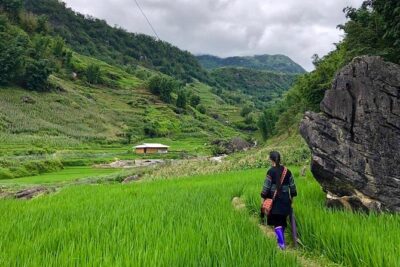
Sapa can be visited by car, but the area makes more sense when you walk between its villages. The route follows rice terraces, forest paths, valley contours, and small bridges. You get time to notice how villages sit among the hills rather than simply stopping at a viewpoint and moving on.
This is not a luxury mountain retreat. It is an active, tightly scheduled trip that uses a sleeper bus from Hanoi, one hotel night, and one homestay night. In return, you reach several well-known villages without arranging separate transport, meals, tickets, and lodging yourself.
The cultural focus is also practical. You are not only looking at scenery. In Cat Cat, you learn about Hmong customs and local life. In the Muong Hoa Valley, the route passes through Black Hmong communities at Y Linh Ho and Lao Chai, then continues to Ta Van. Day three brings a different community, the Red Dao of Giang Ta Chai.
More Homestay Treks in Sapa
- Number one top rated ethical cultural trekking and homestay by ETHOS
★ 5.0 · 456 reviews - Sa Pa: 2-Day Trekking Trip with Ethnic Minority Homestay
★ 4.7 · 145 reviews - Sapa : 2-Day Trek & Heartwarming Homestay with an Ethnic Family
★ 5.0 · 143 reviews
The overnight bus from Hanoi to Sapa
Pickup begins at 9:30 PM from Hanoi Capsule Station at 22 Tran Nhat Duat, or from a hotel or hostel in Hanoi’s Old Quarter. You should wait in the lobby at least 15 minutes before departure and keep your passport and small day bag close.
The sleeper bus is included in the price, which makes this a useful option if you want to save a separate hotel night in Hanoi. The tradeoff is obvious: overnight buses are efficient, but they are rarely the best place for deep sleep. You arrive in Sapa around 4:00 AM and rest until 6:00 AM before meeting the guide.
Do not bring large luggage. A compact bag with hiking clothes, rain gear, water, toiletries, and a change of clothes is much easier to handle. Your larger bags should not be part of this trip, so plan your packing before pickup.
Day one: Cat Cat village, waterfall, and Sapa town

At 6:00 AM, the guide meets you at the hotel so you can freshen up and eat breakfast. The timing gives you a short recovery period after the bus, but it does not create a full morning of rest. If you sleep poorly on buses, expect the first day to feel long.
The trek to Cat Cat begins around 8:00 or 8:30 AM. The route passes through rice terraces toward a Hmong community, with the scenery changing as you leave Sapa’s town streets behind. This is your first proper introduction to the area’s walking routes and village setting.
Cat Cat offers more than a quick photo stop. You learn about Hmong customs and daily life, then visit Cat Cat waterfall. The old hydroelectric plant is another point of interest. Built under French colonial rule in the early 20th century, it gives the village visit a small piece of local industrial history alongside the natural scenery.
You also have a home-cooked meal with a local family in Cat Cat. That is one of the more personal parts of the program, since food gives you a direct way to connect with village life rather than simply passing through.
Lunch at a restaurant follows around 12:30 PM. After checking into the hotel, the afternoon is free for Sapa town. This unstructured time matters. You can rest, walk around town, or simply recover before dinner at 6:00 PM.
The first day is attractive because it combines a manageable village outing with an evening in a proper hotel. Still, the combination of an early arrival, limited sleep, trekking, and sightseeing means you should not treat this as an easy introduction. Comfortable walking shoes and water are essential.
Day two: the Muong Hoa Valley route

Breakfast is served at the homestay at 7:00 AM, then the main trek begins around 8:00 or 8:30 AM. The route covers about 6 kilometers toward Y Linh Ho, southeast of Sapa, following the contours of Muong Hoa Valley.
Y Linh Ho is a Black Hmong village surrounded by green hills and rice terraces. The value here is the walk itself. You are moving through the valley rather than viewing it from a road, so the pace lets you see the relationship between the paths, homes, fields, and slopes.
From Y Linh Ho, you continue about 3 kilometers to Lao Chai. The route includes a small tunnel or bridge connecting the path with the Muong Hoa Valley. That detail gives you a sense of the terrain: this is not a flat village stroll, and some sections may feel more demanding than the distance suggests.
Lao Chai is another Hmong village, with a setting that keeps the focus on mountain scenery and local life. The guide helps explain the communities you pass through, making the walk more useful than a simple march from one viewpoint to the next.
Lunch is in Ta Van around 12:30 PM, followed by check-in and rest at the homestay. The afternoon includes a visit to nearby village areas with the guide. You then return around 4:00 PM for a break before the cooking activity.
More Homestay Treks in Sa Pa:
- Sapa Valley Trek and Homestay – 3D2N
★ 5.0 · 105 reviews - 2 days authentic trekking tour in Sapa ( Homestay – Less touristy )
★ 5.0 · 68 reviews - From Sapa: 2 Days 1 Night Trek Over Night At Homestay
★ 5.0 · 68 reviews - Private Hoang Lien National Park & Tribal Village Trek
★ 4.7 · 30 reviews
What the Ta Van homestay adds

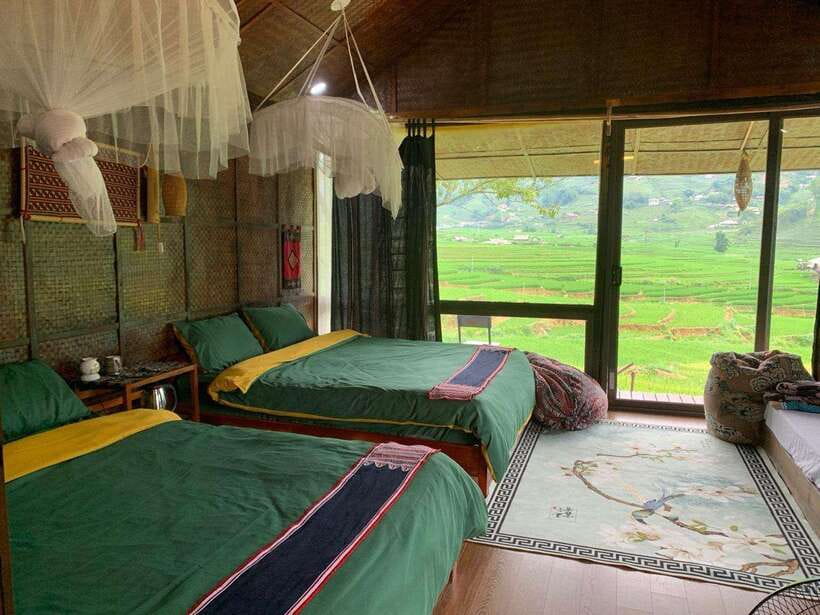
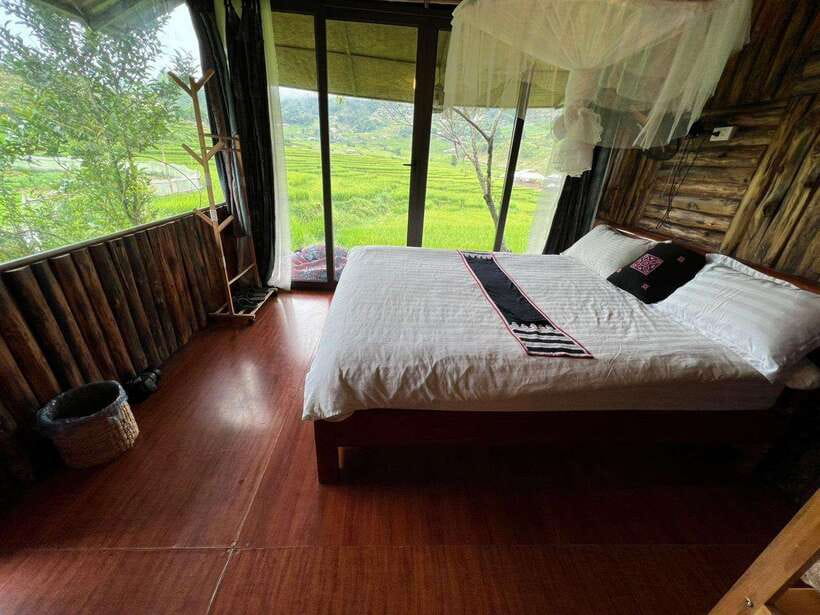
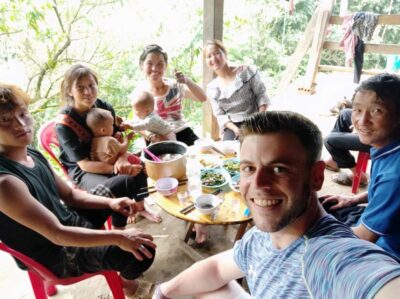
The homestay is the clearest change of pace in the trip. After the hotel night in Sapa, you stay in Ta Van village and eat local dishes for dinner. The setting gives you a closer look at village routines, although it also means fewer hotel-style comforts and less privacy than you would have in town.
The spring-roll cooking class is a useful touch because it turns dinner into an activity. You learn how to make traditional Vietnamese spring rolls, then eat local food at about 6:30 PM. It is a simple experience, but it helps connect the meal with the place where you are staying.
I would choose this trip over a hotel-only itinerary if you want cultural contact and do not mind basic accommodation. If you need guaranteed quiet, private facilities, or a fixed level of comfort, the homestay may be the part that requires the most adjustment.
Day three: Red Dao villages and the return to Hanoi

Breakfast comes at 7:00 AM, followed by an 8-kilometer trek to Giang Ta Chai at 8:00 AM. The route passes through two Red Dao communities, giving you a different cultural focus from the Black Hmong villages visited earlier.
Giang Ta Chai is known for its Red Dao traditions and colorful customs. The change in community makes the final hiking day feel distinct rather than like a repeat of the previous route. You continue to see mountain paths and village life, but the people and traditions are not exactly the same as those in Cat Cat, Y Linh Ho, Lao Chai, or Ta Van.
Lunch is served at a local restaurant at noon. After a short rest, a car takes you back to Sapa Town between 1:30 and 2:00 PM. This transfer is important because it gives your legs a break before the return bus.
At 3:00 or 3:30 PM, you board the sleeper bus for Hanoi. Arrival is scheduled for around 9:30 PM, with drop-off on Tran Quang Khai Street. The full return day is long, but the timing lets you complete the final trek and return to Hanoi without adding another hotel night.
How demanding is the 21-kilometer trek?
The advertised total is about 13 miles, or 21 kilometers, over three days. The distance is spread across several hikes, including roughly 6 kilometers to Y Linh Ho, another 3 kilometers to Lao Chai, and 8 kilometers to Giang Ta Chai.
Distance alone does not tell the whole story. Rice terraces, village paths, slopes, bridges, and changing weather can make the route feel harder than a similar walk on pavement. The activity is marked as moderate to high in fitness level, so you should be comfortable walking for several hours and handling uneven ground.
Bring proper hiking shoes, not just casual trainers. Pack a hat, sunscreen, water, and rain gear. A camera is useful, but keep your bag light. The route is much more enjoyable when you are not carrying unnecessary weight.
This trip is not suitable for wheelchair users, people with mobility impairments, or pregnant women. It is also not intended for people over 95 years old. Those limits are practical rather than fussy: the route is active, rural, and not designed around accessible paths.
What the $114 price includes
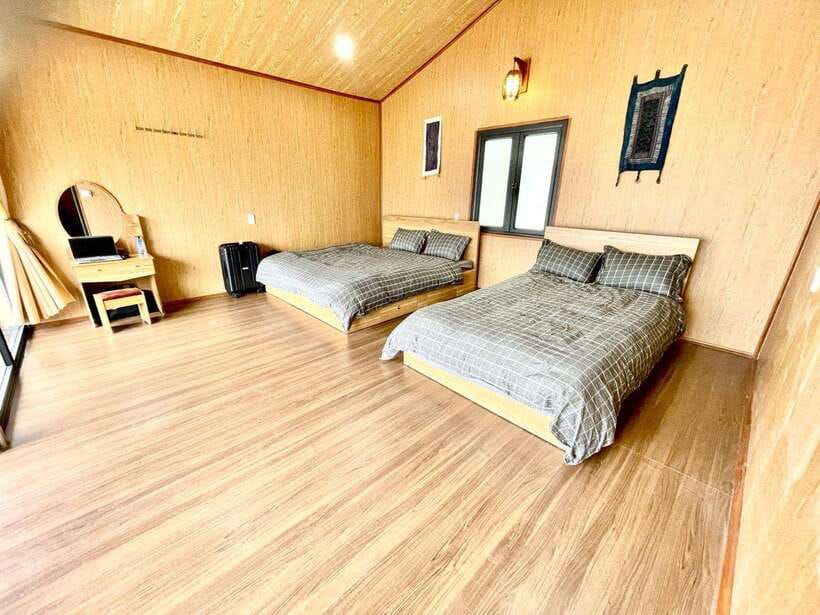
At $114 per person, the price covers the parts that can make an independent Sapa trip awkward to organize. You get round-trip sleeper bus transport between Hanoi and Sapa, one hotel night, one homestay night, meals, an English-speaking guide, and scheduled sightseeing tickets.
That package offers solid value if you want three days of transport and activities arranged in advance. You do not need to separately coordinate the village route, hotel, homestay, meals, bus tickets, and entry fees.
The price does not include insurance, coffee, soft drinks, or personal expenses. Budget for drinks and any purchases in the villages. Cancellation is free up to 24 hours before departure, and you can reserve now and pay later, which helps if your Hanoi schedule is still changing.
The group limit is 12 people. That is small enough for the guide to keep the walking group together more easily than on a large coach excursion, while still offering the social feel of a shared trip.
Who should book this Sapa trek?
I would recommend it to you if you want a first visit to Sapa that mixes hiking and cultural stops without requiring you to arrange the details yourself. It suits active adults, couples, friends, and solo visitors who are comfortable sharing transport and accommodation.
It is especially useful if your time in northern Vietnam is limited. The bus gets you from Hanoi to Sapa overnight, then the three-day plan covers several villages and two types of accommodation.
I would be cautious if you dislike overnight buses, need a slow schedule, or want a polished hotel experience every night. The first morning starts soon after arrival, and the final day ends with a late return to Hanoi. This is a practical route for seeing a lot, not a restful spa break.
A previous booking was rated five out of five, with particular praise for friendly guides, good organization, beautiful scenery, and insight into Vietnamese culture. The only caution noted was that the start felt a little bumpy, which fits the reality of an overnight bus followed by rural trekking.
Should you book it?
Book this Sapa trek if you want good coverage for a moderate price, a small group, and real time in Hmong and Red Dao villages. The home-cooked Cat Cat meal and Ta Van cooking class give the itinerary more substance than a sightseeing drive.
Skip it if you need reliable sleep, private rooms throughout, or an easy walking program. For everyone else, the $114 package is a sensible way to reach Sapa from Hanoi, walk through the Muong Hoa Valley, and see more than the town itself.
FAQ
How long is the Sapa experience?
The activity lasts three days, with an overnight sleeper bus from Hanoi before the first full day and a return sleeper bus to Hanoi on the third day.
What time does the bus leave Hanoi?
Pickup begins at 9:30 PM from Hanoi Capsule Station or a hotel or hostel in Hanoi’s Old Quarter.
When do you arrive in Sapa?
The sleeper bus arrives in Sapa at about 4:00 AM. You can rest until around 6:00 AM before breakfast and the first morning’s activities.
Where does pickup take place in Hanoi?
Pickup is available at Hanoi Capsule Station, 22 Tran Nhat Duat, Dong Xuan, Hoan Kiem, Hanoi, or at a hotel or hostel in Hanoi’s Old Quarter.
How many nights of accommodation are included?
The program includes one night in a hotel and one night in a homestay in Ta Van village.
Which villages are visited?
The route includes Cat Cat, Y Linh Ho, Lao Chai, Ta Van, and Giang Ta Chai. Cat Cat is associated with the Hmong community, Y Linh Ho and Lao Chai with Black Hmong communities, and Giang Ta Chai with Red Dao communities.
How much walking is involved?
The full activity involves about 13 miles, or 21 kilometers, of hiking. The program requires a moderate to high level of fitness.
Are meals included?
Meals are included. The schedule includes breakfast, lunch, and dinner during the Sapa portion, along with a home-cooked meal in Cat Cat and local dishes at the Ta Van homestay.
Is the activity suitable for people with mobility impairments?
No. It is not suitable for people with mobility impairments or wheelchair users. It is also not suitable for pregnant women.
What should you bring?
Bring your passport, comfortable shoes, hiking shoes, a hat, camera, sunscreen, water, and rain gear. Do not bring large luggage.
More 3-Day Experiences in Sa Pa
- Sapa 3-Day Trekking Adventure from Hanoi
★ 4.5 · 64 reviews - From Hanoi: Sapa 3-Day Medium Trek and Limousine Trip
★ 4.5 · 59 reviews - Sapa 3 Days 2 Nights Trekking Tour (1 Night In Ta Van Village, 1 Night In Hotel)
★ 5.0 · 699 reviews - 3-Day Trekking Adventure of Sapa from Hanoi – Stay Ta Van Village
★ 5.0 · 611 reviews
Just added around Sa Pa
- Sapa: Private The Most Beautiful Terraced Fields Trekking★ 4.8 · 42 reviews
- Soob Sapa Trekking Tour★ 4.3 · 3 reviews
- Sapa Trekking – Waterfalls And H’mong Villages★ 5.0 · 2 reviews
- Sapa3D2N TrekkingAdventures,Valleys,Bambooforest,Waterfall★ 4.8 · 24 reviews
- Sapa: Trekking Through Terraced Rice Fields & Valley 1 Day★ 4.8 · 4 reviews
- Sapa: Trekking Sapa One Day With Group Tour★ 4.7 · 55 reviews
- Sapa Trekking Private Tour With Ethnic Female Tour Guide★ 4.9 · 24 reviews
- Sapa: Y Linh Ho – Lao Chai, and Ta Van Trekking Day Tour★ 5.0 · 25 reviews
Homestay & Village Treks, compared.

Number one top rated ethical cultural trekking and homestay by ETHOS
Read our review →
2-Day Sa Pa Ethnic Homestay Tour & Trek with Limousine Bus
Read our review →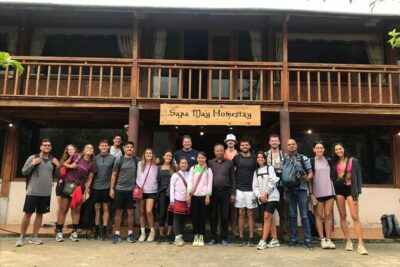
Sapa 3 Day 2 Night Trekking With Hotel & Homestay
Read our review →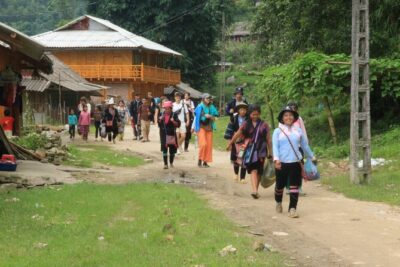
Sapa 2 Days 1 Night Overnight At Local Homestay
Read our review →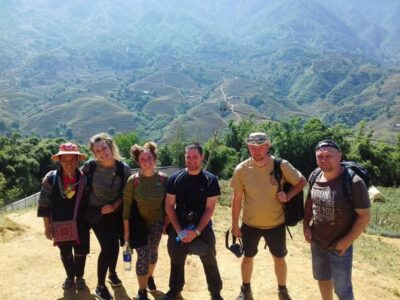
2-Day Trekking Trip with Ethnic Minority Homestay
Read our review →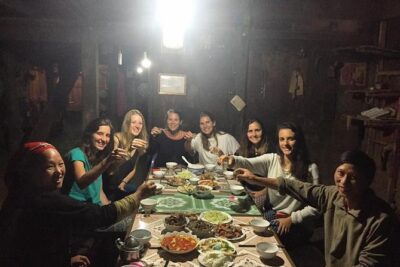
2-Day Trek & Heartwarming Homestay with an Ethnic Family
Read our review →Browse the lists this trek appears in