
Review · CUSCO
Cusco: 5-Day Salkantay Ultimate Trek to Machu Picchu
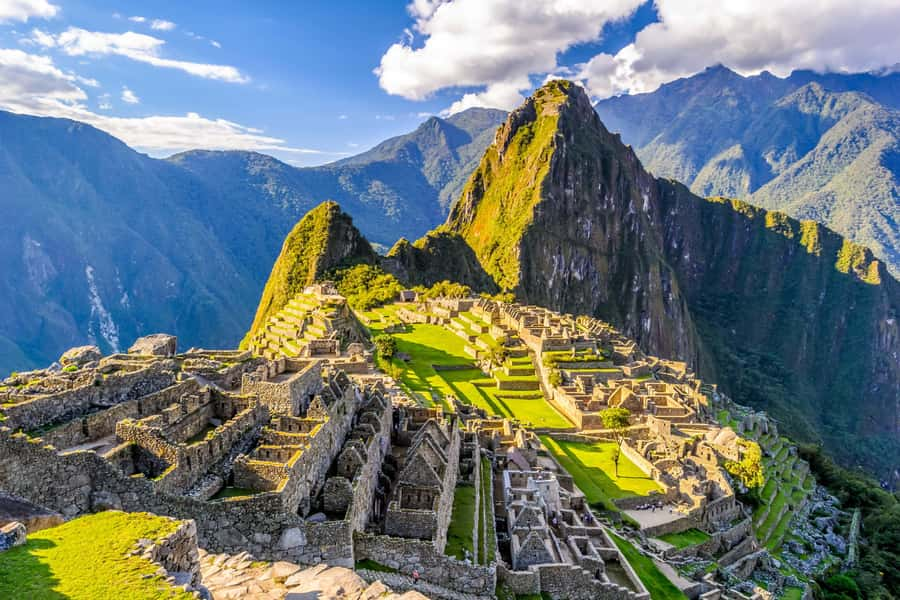
The big draw here is the change of scenery. In five days, you go from icy peaks and turquoise Humantay Lake to coffee country, cloud forest, ancient Inca paths, and Machu Picchu. The crossing of Salkantay Pass at 4,630 meters is the trip’s hardest test and its grandest view.
I like the mix of famous and lesser-seen places, especially the family stay and coffee farm at Lucmabamba, followed by the quiet first view of Machu Picchu from Llactapata. I also like that horses carry equipment and up to 7 kilograms of your belongings. The main caution is simple: this is a demanding trek, not a casual walk, and the altitude can make the first two days tough.
Key points
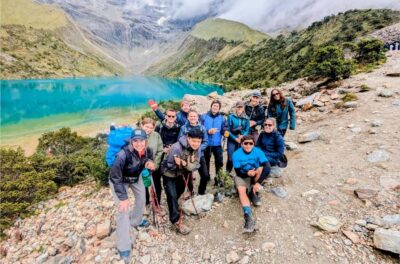
- Humantay Lake at 4,200 meters: Reach a turquoise glacial lake beneath huge Andean peaks.
- Salkantay Pass at 4,630 meters: Cross the highest point of the route before descending toward warmer country.
- Lucmabamba coffee country: Stay with a local family and learn about life on a coffee farm.
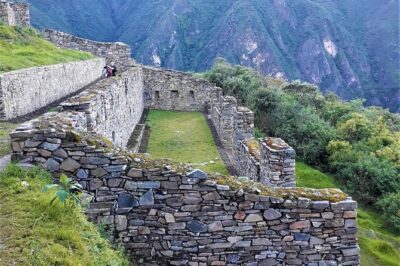
- Llactapata viewpoint: Follow an original Inca trail to a quieter site with an unusual view toward Machu Picchu.
- Small group support: Groups are capped at 10, with an assistant guide for groups of nine or more.
- A full Machu Picchu finish: Enter the citadel with a guide, then return by bus and train to Cusco.
Why this five-day route works
The Salkantay route gives you a broader taste of the Andes than a direct walk to Machu Picchu. The first half is all high mountains, cold air, and hard climbs. The second half drops into warmer, wetter country where coffee, fruit trees, waterfalls, and cloud forest replace snow and stone.
That variety is the reason I would choose this route over a trek that stays in one type of terrain. You get a serious mountain crossing, but you also meet a local family and walk an old Inca route before reaching the famous citadel.
The price is $669 per person. That includes transport from a hotel in central Cusco, guides, a cook, horses, food, camping equipment, an Aguas Calientes hotel, Machu Picchu entry, and the bus up to the ruins. For a five-day trip with this amount of support, the package offers solid value, though you still need to budget for a sleeping bag, trekking poles if wanted, some meals, insurance, and optional mountain entry.
This is a small-group trip with a maximum of 10 people. That matters on a route where pacing, meals, camp setup, and altitude support all affect your day. A private group is offered, and the minimum operating size is two participants.
More Inca Trail Treks in Cusco
- Cusco: 4-Day Inca Trail to Machu Picchu with Accommodation
★ 4.8 · 432 reviews - Cusco: Machu Picchu 2-Day Inca Trail with Panoramic Train
★ 4.9 · 260 reviews - From Cusco: 2-Day Inca Trail to Machu Picchu
★ 4.2 · 244 reviews
Day 1: Soraypampa and the climb to Humantay Lake
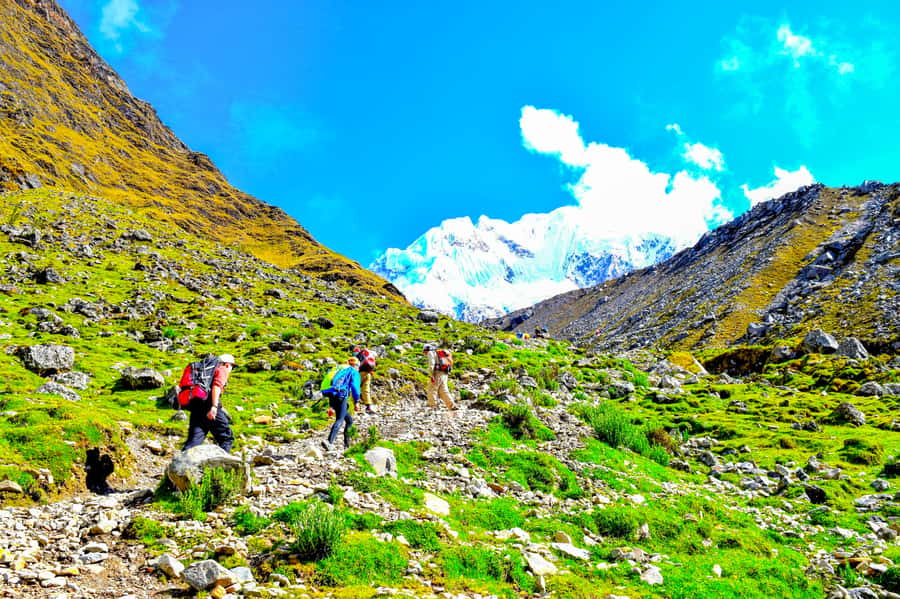
Your first hiking day begins with a climb toward Soraypampa at 3,800 meters. Salkantay Mountain rises to 6,271 meters, while Humantay Mountain provides the other huge wall of rock and snow. Even before reaching the lake, the setting makes clear that this is serious high-country walking.
Breakfast on Day 1 is not included, so plan around that before the hike starts. You also need to carry your own water for the first four hours. After that, water is provided, which takes some weight out of your pack at an important point.
A Peruvian lunch made with local ingredients breaks up the climb. The food is prepared by a professional cook, and meals are served in a dining tent with tables and chairs. That may sound basic, but after several hours at altitude, a real hot meal and a place to sit make a noticeable difference.
The walk to Humantay Lake reaches 4,200 meters. The lake’s turquoise water comes from the surrounding glacial peaks, and the color is most striking against the gray rock and snow. You spend time at the lake before returning to camp for dinner.
This first day combines distance, uphill work, and altitude. The scenery is spectacular, but you should not treat the lake as a quick photo stop reached by an easy stroll. If you have a history of altitude sickness, this route may not be suitable. People with back problems and those over 70 are also advised not to take it.
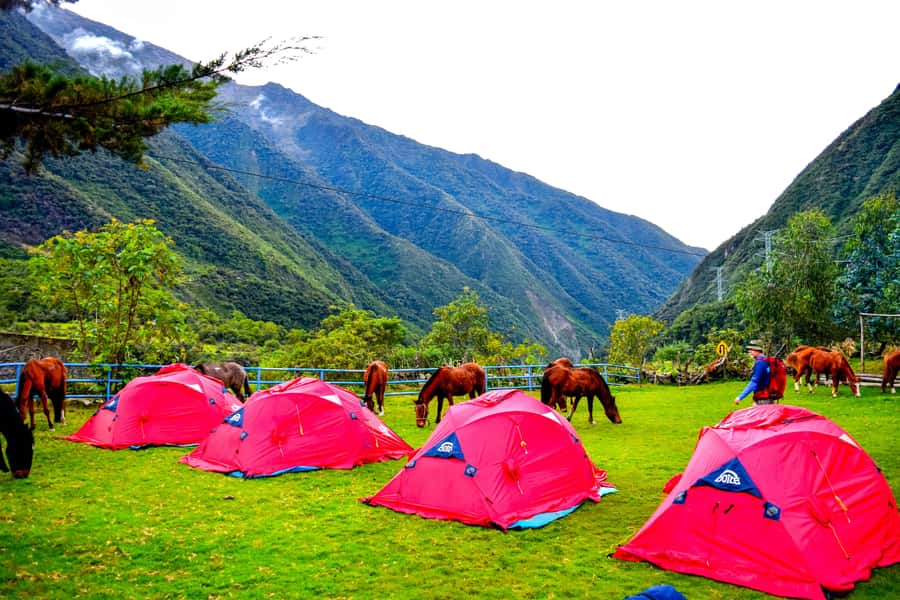
At camp, staff bring wake-up tea each morning, including the following days. You sleep two people per four-person tent, using a double-thickness foam mattress. A sleeping bag is not included, though one can be hired.
Day 2: Crossing Salkantay Pass at 4,630 meters
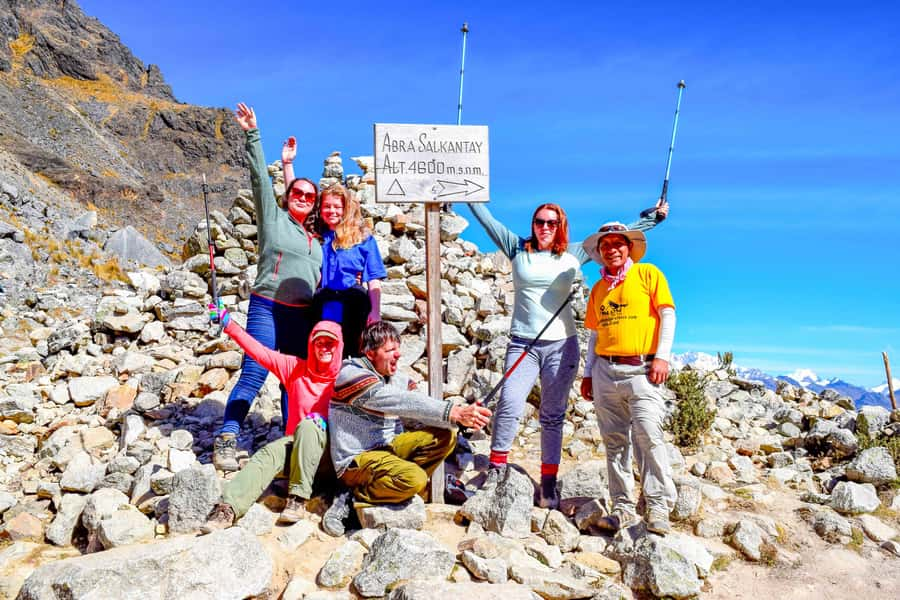
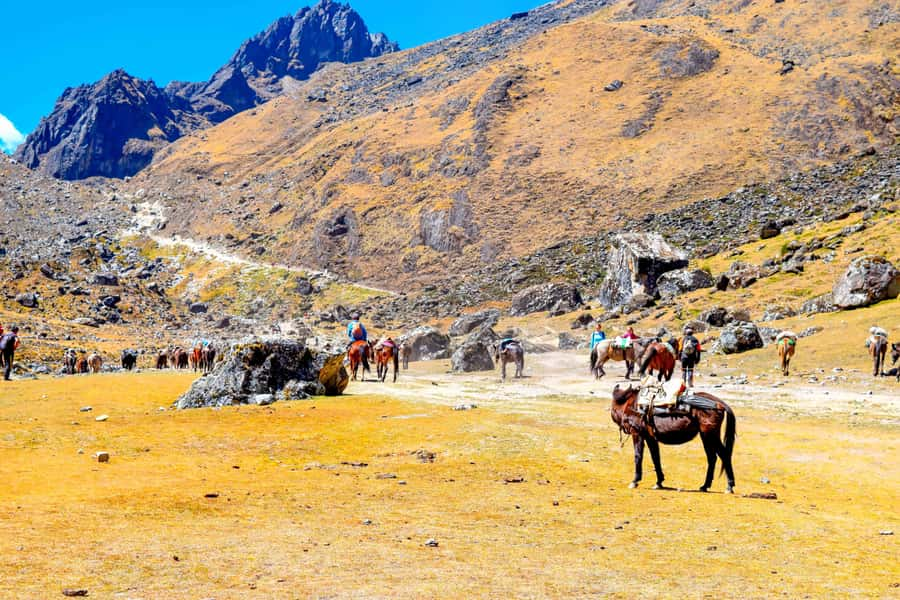
Day 2 is the trek’s major physical challenge. You climb toward Salkantay Pass, the highest point of the route at 4,630 meters, or 15,190 feet. The air is thin, and the ascent can feel slow even for a strong hiker.
The reward is a wide view across snow-capped peaks, sharp ridges, and deep valleys. This is the moment when the route earns its name. You are crossing a high Andean pass rather than simply walking through the hills around Cusco.
Take your time here. The pass is a place to pause, catch your breath, and let the scenery settle in. The guide and support crew are important on this day because the group must keep a sensible pace without losing the schedule.
After the pass, the route changes quickly. You descend toward a high-altitude jungle zone, where the cold, open mountain country gives way to more plant life and softer colors. That contrast is one of the best features of the route, but the descent comes after the hardest climb. You may be tired before the day is over.
Dinner and camping follow the long walk. Four dinners, four lunches, four breakfasts, and four afternoon snacks are included across the trek, with dietary requests such as vegetarian, vegan, or gluten-free meals accepted if arranged in advance and reconfirmed at the briefing.
Day 3: From high country to Lucmabamba coffee farms
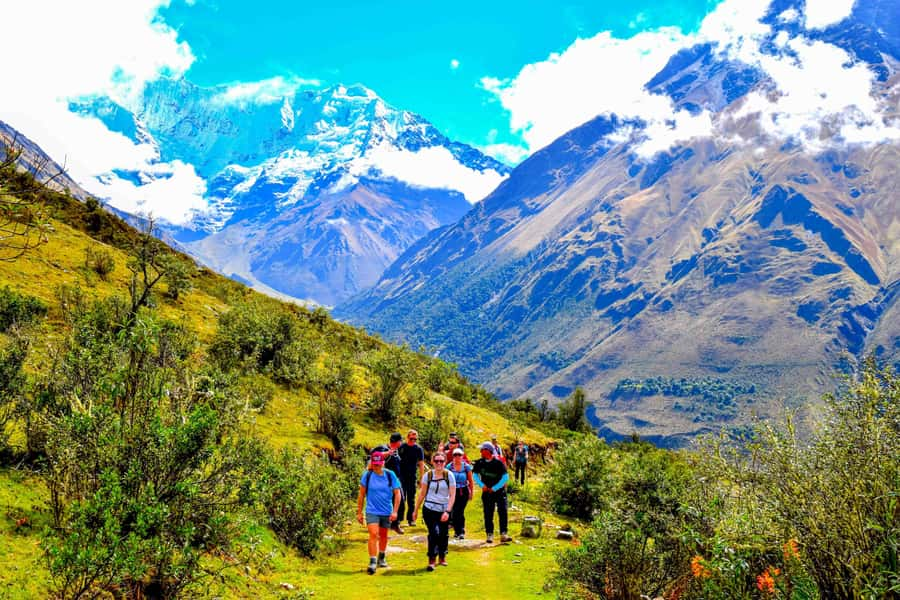
Day 3 takes you deeper into the cloud forest. The path passes waterfalls, fruit trees, and unfamiliar plants, with mist often replacing the clean open views of the pass. After about five hours, you reach Playa Sahuayaco at 2,200 meters.
This descent is not just a change in temperature. It changes the whole feel of the trip. The air becomes warmer, vegetation thickens, and the trail has a more tropical character. If your legs are tired from the previous two days, the downhill sections may still work hard on your knees.
From Playa Sahuayaco, the route continues to Lucmabamba at 2,000 meters. Here you stay with a local family and learn about their coffee farm. This is one of the most appealing parts of the experience because it puts local daily life beside the better-known ruins and mountain views.
Lucmabamba also marks the start of an old Inca route to Llactapata. The campsite is not simply a place to sleep before Machu Picchu. It is the bridge between the farming communities of the cloud forest and the stonework of the Inca world.
You should expect a basic camping setup rather than hotel comfort on this part of the trip. The support crew supplies tents, mattresses, meals, and a dining tent, while horses carry group equipment and up to 7 kilograms of your personal items. Pack carefully and keep essentials in the daypack you carry yourself.
Same trailhead, a different route:
- From Cusco: 7 Lakes Ausangate Trek with Breakfast and Lunch
★ 4.8 · 360 reviews - Machu Picchu: Inca Trail 2-Day Overnight Guided Tour
★ 4.9 · 203 reviews - Cusco: Full-Day Rainbow Mountain & Red Valley Trekking Tour
★ 4.5 · 121 reviews - Short Inca trail to MachuPicchu || 2days – 1nigth ||
★ 5.0 · 103 reviews
Day 4: Llactapata and the first view of Machu Picchu
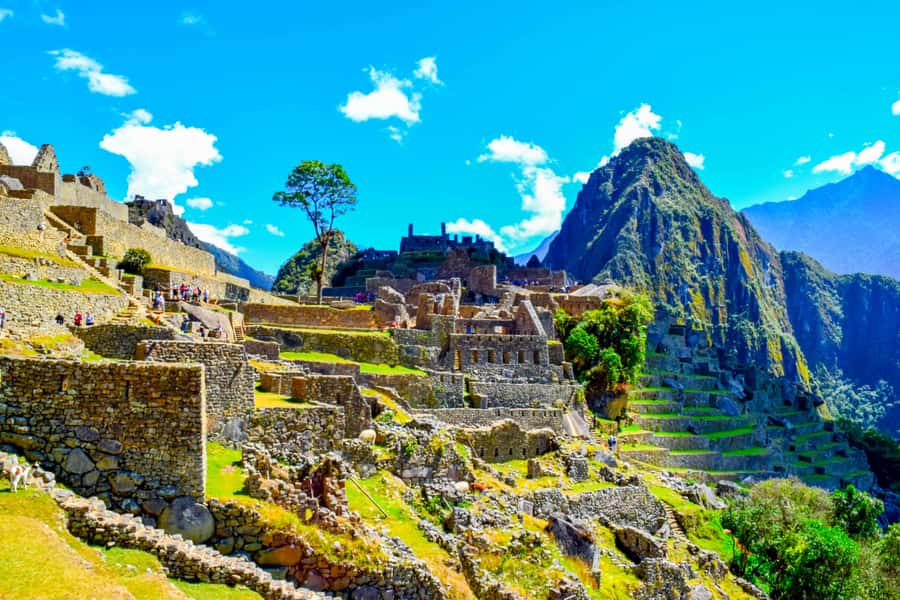
After breakfast, you climb for about two hours along an original Inca trail to Llactapata. The route reaches 2,840 meters and provides a different way to approach Machu Picchu.
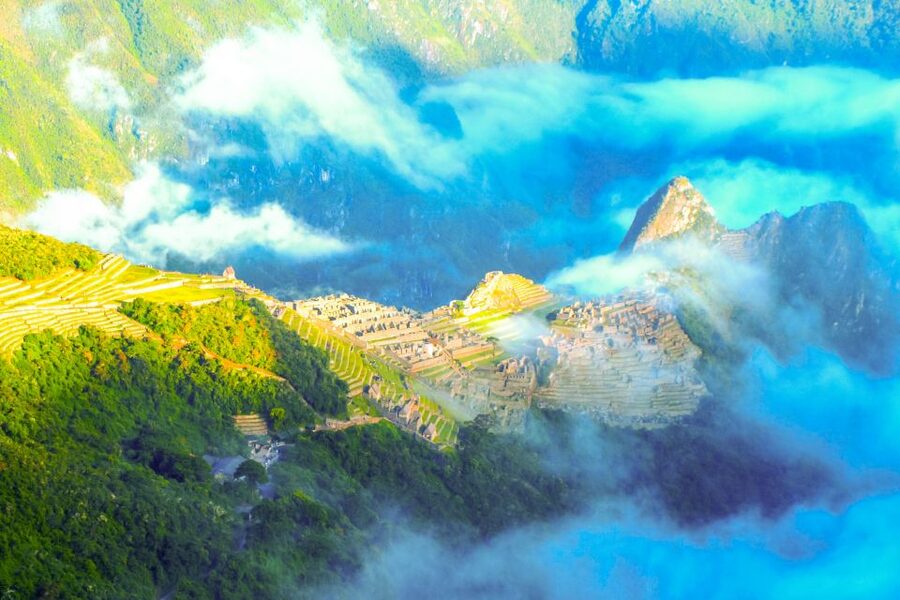
Llactapata is less visited than the main citadel, and its appeal comes partly from the setting. From the terraces, you get a first view toward Machu Picchu from across the surrounding valleys. It is not the classic postcard angle, which is exactly why it feels special.
The morning climb is short compared with the previous days, but it is still uphill. You have already spent three days on foot, so the trail can feel more demanding than its two-hour estimate suggests. Trekking poles may help, and they can be hired if you do not bring your own.
From Llactapata, you descend through cloud forest for about 1.5 hours to the Hydroelectric Station at 1,890 meters. From there, you travel to Aguas Calientes, also known as Machu Picchu Pueblo, at 2,040 meters.
A hotel night in Aguas Calientes is included. That break matters. After several nights in tents, a bed and a chance to rest make the early start for Machu Picchu much easier. Lunch and dinner on Day 5 are not included, so plan to pay for those separately in Aguas Calientes or along the return journey.
Day 5: A guided morning inside Machu Picchu
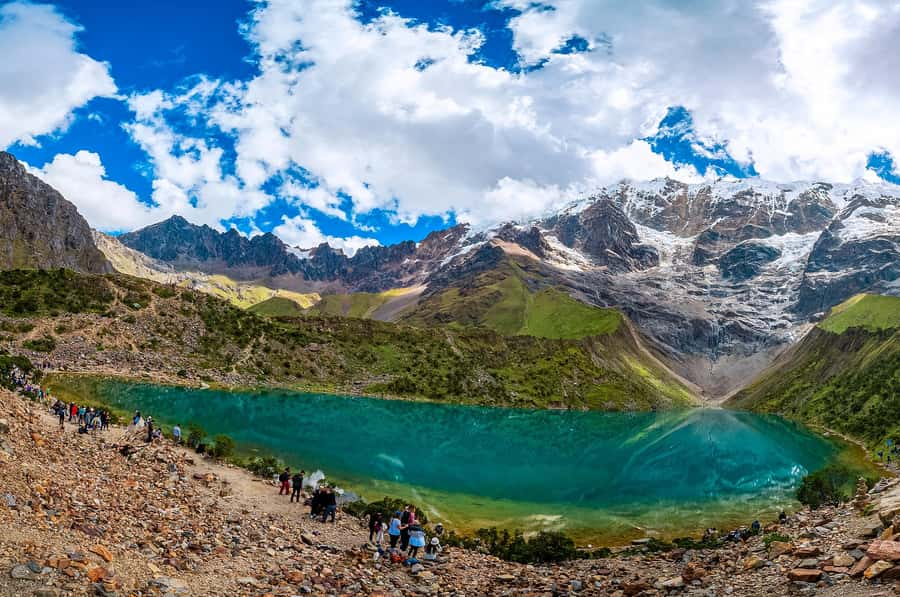
The final day begins with breakfast and a morning bus up to Machu Picchu at 2,430 meters. The bus is included, so you do not have to add another steep walk before the main visit.
Inside the citadel, your guide explains the major areas, including temples, ceremonial spaces, terraces, and storage buildings. A guided visit is useful here because Machu Picchu can otherwise become a parade of stone walls and photo stops. The guide gives the structures a purpose and helps you understand how the site fits together.
Entry to Machu Picchu is included. If you want an extra climb, you can choose Huayna Picchu or Machu Picchu Mountain, subject to the relevant entrance arrangements. Huayna Picchu costs an additional $85. The supplied details do not state the price for Machu Picchu Mountain, so confirm that option before booking if the extra hike is important to you.
These mountain walks are not necessary to enjoy the citadel. After four days of trekking, you may prefer to spend your available time exploring the ruins at a steadier pace. If you do choose an extra summit, remember that it adds more uphill work to an already full morning.
After the visit, the group returns to Aguas Calientes for a short rest and lunch at your own expense. The afternoon train takes you to Ollantaytambo, followed by a van back to Cusco. The return is efficient, but it is also a long final travel day, so do not schedule an important evening commitment in Cusco.
Food, camping, and what the support team does
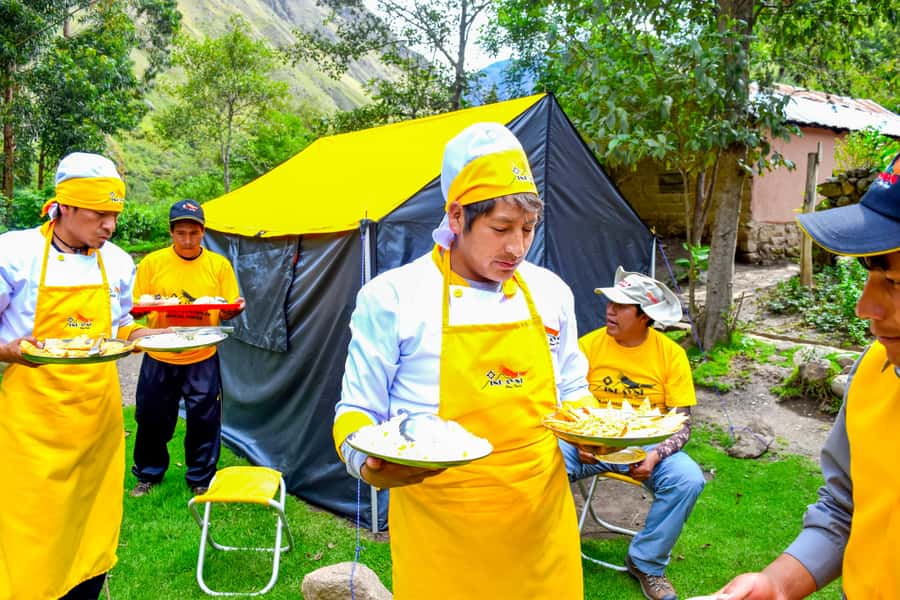
The tour includes a professional cook, four breakfasts, four lunches, four afternoon snacks, and four dinners. That is a useful level of support on a high-altitude trek, especially when your appetite and energy can change from day to day.
You sleep in tents for the camping portions, with two people in each four-person tent. A dining tent provides a shared place for meals, and wake-up tea arrives at your tent each morning. Horses carry camping equipment and up to 7 kilograms of your personal belongings, reducing the load you carry over the passes.
The guide speaks English or Spanish. Groups of nine or more receive an assistant guide, and an oxygen bottle and first-aid kit are carried for emergencies. These provisions do not remove the need to prepare well, but they show that the operator understands the practical demands of the route.
Bring your passport or ID, sun hat, sunscreen, rain gear, and comfortable clothing. A valid passport is required during the activities. Alcohol, drugs, pets, weapons, and sharp objects are not allowed.
How hard is the Salkantay Ultimate Trek?
You need good fitness for this trip. The toughest factors are the altitude, the long uphill sections, the descent after the pass, and the cumulative effect of walking for four days before Machu Picchu.
The first two days are the real test. Day 1 reaches 4,200 meters at Humantay Lake, and Day 2 climbs to 4,630 meters at Salkantay Pass. Even fit people can feel the thin air. The route then becomes warmer, but warmer weather does not make tired legs disappear.
This trek is not suitable for people with back problems or known altitude sickness. It is also listed as unsuitable for people over 70. Those limits are worth taking seriously rather than treating them as boilerplate.
A pre-departure briefing takes place at the operator’s office one or two days before departure. You meet the guide and group there, receive the duffle bag that will be carried by horse, and can clarify dietary needs and equipment rentals. Use that meeting to check what you plan to carry and ask about the day’s pacing.
What the $669 price really includes
At $669, this is not a bare-bones walk. The price covers the guide, cook, support horses, meals, tents, mattresses, a hotel in Aguas Calientes, transport from central Cusco, Machu Picchu entry, and the bus to the ruins.
It does not include a sleeping bag, trekking poles, breakfast on Day 1, lunch or dinner on Day 5, travel insurance, or the $85 Huayna Picchu entry. Add those costs when comparing it with other routes. Travel insurance is strongly recommended for the entire trip, particularly on a high-altitude trek far from Cusco.
The strongest value comes from the support. You are not carrying all camping equipment, shopping for meals, or arranging separate transfers between the trail, Aguas Calientes, and Cusco. For a small group of up to 10, that can make the price reasonable.
The tradeoff is that your schedule is full and the trek is physically demanding. You are paying for access to several types of scenery and a guided Machu Picchu visit, not for a relaxed holiday.
Who should book this trek?
I would recommend it to you if you want more than a single day at Machu Picchu and like the idea of earning the ruins through changing terrain. It suits hikers who can handle high altitude, camping, early starts, and long days on foot.
It is especially good for you if the following appeal:
- A major mountain pass rather than a gentle approach
- A turquoise glacial lake at high altitude
- A local family and coffee farm experience
- A quieter Inca site before the main ruins
- A small group with meals and equipment support included
I would not choose it for a first-ever high-altitude outing, for anyone managing serious back trouble, or for someone who wants comfortable accommodation every night. The route can be physically and mentally difficult, even though the scenery and final visit make the effort worthwhile.
Should you book the Salkantay Ultimate Trek?
Book this trip if you want a demanding five-day route with strong variety, practical support, and a full Machu Picchu visit at the end. The best moments are not limited to the famous ruins: Humantay Lake, Salkantay Pass, Lucmabamba, and the Llactapata view each give the journey its own character.
Before paying, be honest about the altitude and confirm the optional mountain entry you want. Bring rain gear, arrange a sleeping bag or trekking poles if needed, and leave room in your schedule after returning to Cusco.
For a fit hiker who wants high mountains, cloud forest, local coffee country, and Machu Picchu in one well-supported route, the $669 price is a fair deal.
FAQ
How long is the Salkantay Ultimate Trek?
The trek lasts five days and includes hiking from Soraypampa through Salkantay Pass, Lucmabamba, Llactapata, and Machu Picchu, followed by return transport to Cusco.
What is the highest point of the trek?
The highest point is Salkantay Pass at 4,630 meters, or 15,190 feet.
Is Humantay Lake included?
Yes. The route visits Humantay Lake on Day 1 at an altitude of 4,200 meters.
How large is the group?
The maximum group size is 10 people. Groups of nine or more receive an assistant guide.
Is accommodation included?
Yes. Camping accommodation is included during the trek, along with one hotel night in Aguas Calientes.
Are meals included?
The tour includes four breakfasts, four lunches, four afternoon snacks, and four dinners. Breakfast on Day 1 and lunch and dinner on Day 5 are not included.
Is Machu Picchu entry included?
Yes. Entry to Machu Picchu and the bus to the site are included. Huayna Picchu costs an additional $85, and travel insurance is not included.
More 5-Day Experiences in Cusco
- Machu Picchu: 5-Day Salkantay Trek with Panoramic Train
★ 5.0 · 79 reviews - Ausangate Trek 5 Days
★ 5.0 · 74 reviews - Classic Choquequirao Trek – 5 Days / 4 Nights
★ 5.0 · 52 reviews - Ultimate Lares Trek & Inca Trail 5 days
★ 5.0 · 47 reviews
Just added around Cusco
- Classic Choquequirao Trek – 5 Days / 4 Nights★ 5.0 · 52 reviews
- Short Inca Trail 2 Day Hike to Machu Picchu with Permits & Train★ 5.0 · 51 reviews
- 2 Day Tour Throughout the Short Inca Trail to Machu Picchu★ 5.0 · 36 reviews
- Small Group: 4-Day Inca Trail Trek to Machu Picchu★ 5.0 · 33 reviews
- 5-Day: Salkantay Trek to Machupicchu and Humantay Lake★ 5.0 · 42 reviews
- 2 Day – Short Inca Trail to Machu Picchu – Group Service★ 5.0 · 30 reviews
- 5 Day – Salkantay trek to Machu Picchu – Group Service★ 4.5 · 27 reviews
- Salkantay Trek Standard 5D/4N★ 5.0 · 48 reviews
Machu Picchu & Inca Trail Treks, compared.
4-Day Inca Trail to Machu Picchu with Accommodation
Read our review →
Machu Picchu 2-Day Inca Trail with Panoramic Train
Read our review →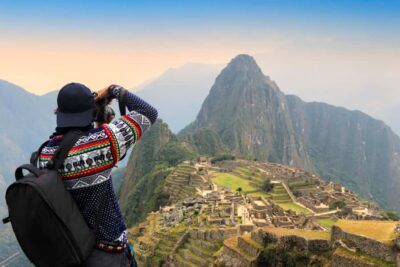
Machu Picchu: Inca Trail 2-Day Overnight Guided Tour
Read our review →
Short Inca trail to MachuPicchu || 2days – 1nigth ||
Read our review →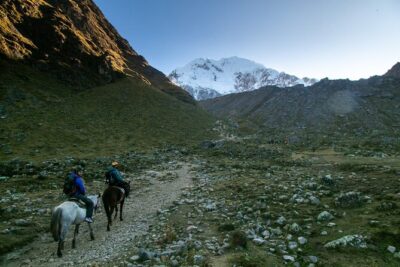
Machu Picchu: 5-Day Salkantay Trek with Panoramic Train
Read our review →Browse the lists this trek appears in