
Review · MHAMID
From Zagora: 3-Desert Tour to Erg Chigaga Dunes & Caml Trek
Erg Chigaga is the main event here: a wide stretch of orange dunes reached by rocky desert tracks, sand, and oases rather than a simple paved road. I like the two-night stay because you get a full day around the dunes instead of rushing in for one sunset, and I like the mix of camel riding, sandboarding, campfire music, and a visit with a nomad family.
The trade-off is that the level of service can vary. Several guests found the guide and camp staff excellent, including Mohammed and Rashid, while one January 2026 booking reported poor meal portions, weak communication about timings, and a camp that felt more like stone rooms than traditional tents. Go with realistic expectations and confirm the day’s schedule when you arrive.
Key points at a glance
- Erg Chigaga by off-road 4×4: The route leaves the paved road near M’Hamid and crosses stones, sand, and desert oases.
- Two nights in camp: The extra night allows a full camel and 4×4 day around the dunes, rather than a quick overnight stop.
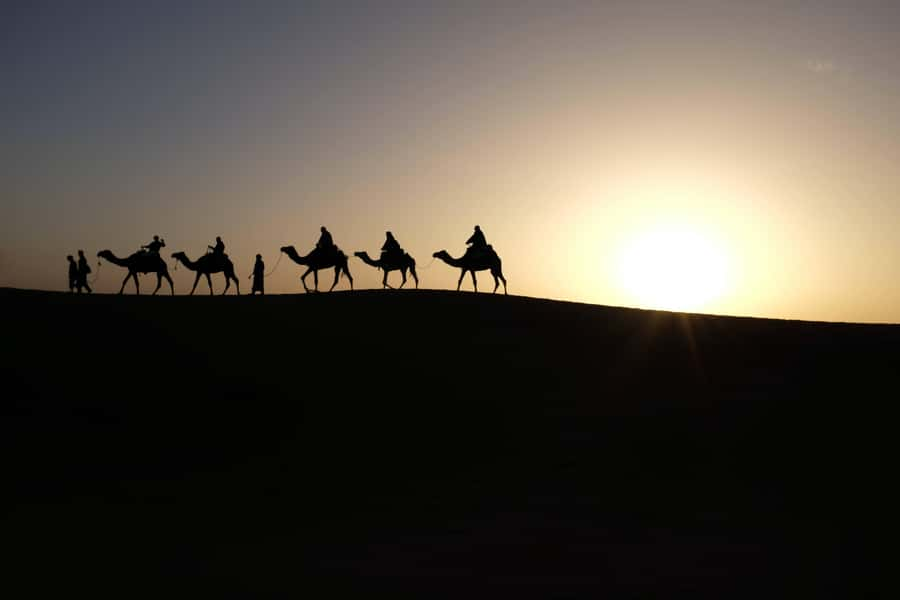
- Sunrise and sunset on camelback: You can ride at both ends of the day, with the option to use a 4×4 for part or all of Day 2.
- Nomad family visit: Tea and conversation at a family camp give the trip a human side beyond dunes and photographs.
- Tamegroute on the return: The final day includes a visit to the Koranic library and green pottery makers.
- Meal and communication checks matter: Dinner and breakfast are included for two nights, but food quantity and daily timing deserve clarification before departure.
Why the road to Erg Chigaga matters
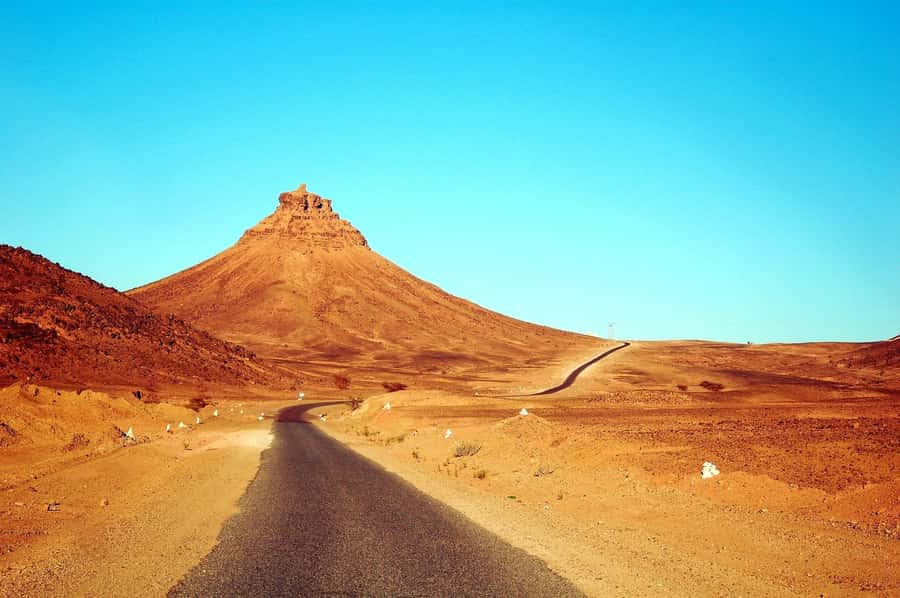
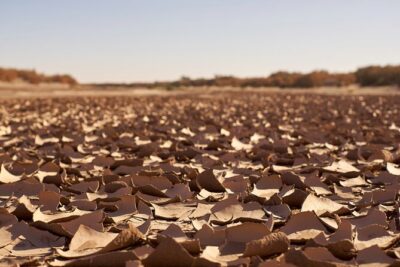
The route from Zagora begins at about 1 p.m. and heads toward M’Hamid through Tizi Anagame and Ben Selman Mountain. The paved road does not carry you all the way to camp. Near M’Hamid, the 4×4 turns onto an off-road route with rocky ground, sand dunes, and occasional oases.
That rougher approach is part of the appeal. Erg Chigaga is not simply a hotel with a few dunes behind it. You spend time crossing open desert, stopping for photographs, and watching the scenery change from stone to sand. The provided schedule describes roughly two hours of driving from the off-road section to the dunes, though desert timing can be flexible.
I would treat the oases as short scenic stops, not guaranteed sightseeing visits. One guest had only about five minutes at an oasis and found it inaccessible. That is useful advice: the word oasis can suggest a lush garden, but here it may mean a brief roadside look at desert vegetation.
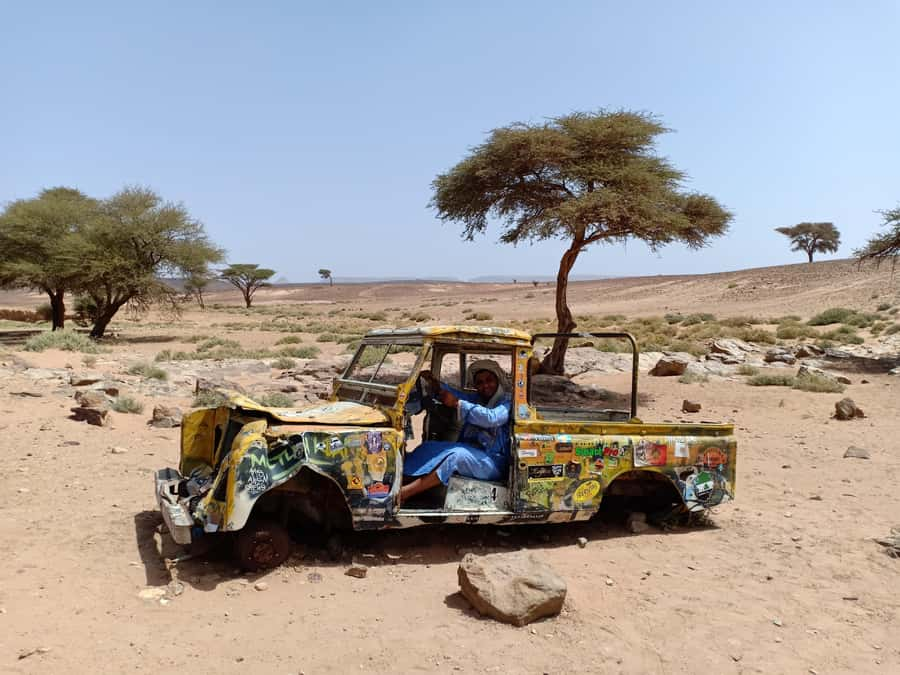
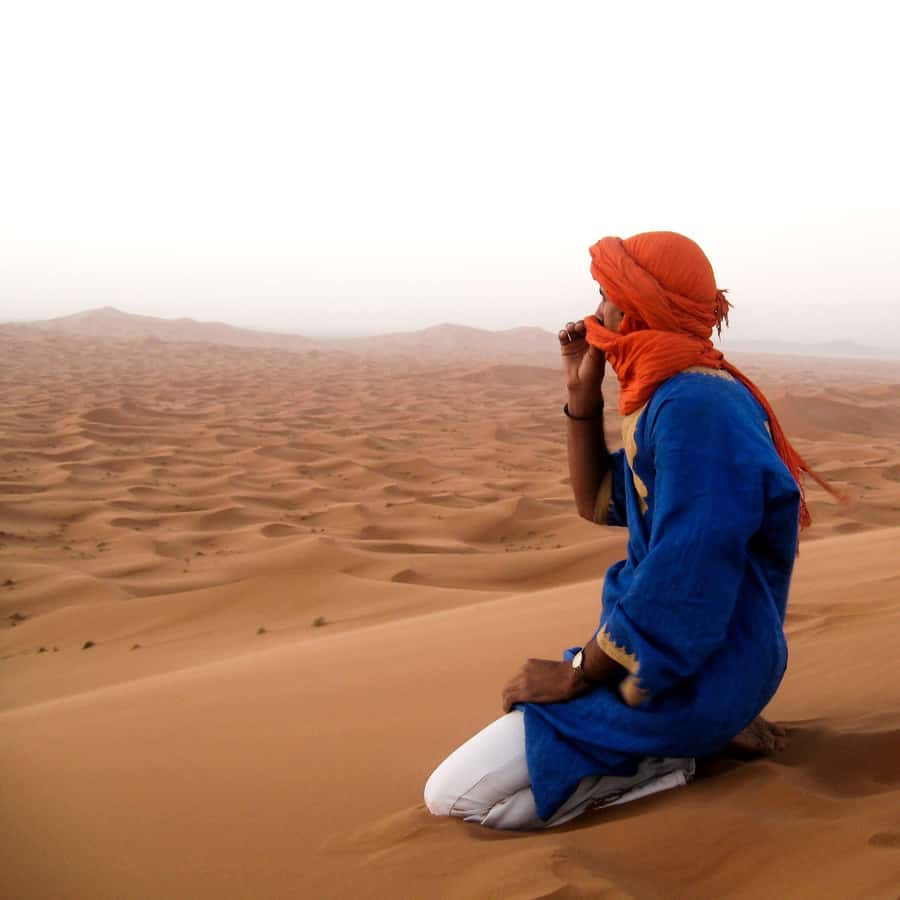
Once Erg Chigaga comes into view, the scale changes. These are described as the largest dunes in the area, and the plan is to arrive before sunset. You will need to climb a dune for the best view. It is not a technical hike, but loose sand makes even a short climb tiring, especially after the drive.
A few more treks around Morocco worth a look
- Mt Toubkal Ascent Express Trek 2 Days 1 Nights
★ 4.7 · 962 reviews - Marrakesh: 2-Day Mt. Toubkal Trek with 1-Night Stay & Meals
★ 4.7 · 795 reviews - Marrakech: 2-Day Atlas Mountains Trek with Village Stay
★ 4.8 · 717 reviews
Day 1: Zagora, M’Hamid, and the first sunset
The first day is deliberately short on scheduled stops and long on scenery. Pickup is from your Zagora hotel, with a private air-conditioned 4×4 or SUV and an English-speaking driver and guide. Other guide languages available are Spanish, Italian, and French.
The private vehicle is a useful feature here. A desert road can be bumpy, and having your own transport gives you more direct communication with the driver. It also means the route is not tied to a large coach schedule. Still, ask your guide at the start when you will stop, when dinner is served, and when the camel ride begins. Clear communication was one of the weak points in one unhappy account.
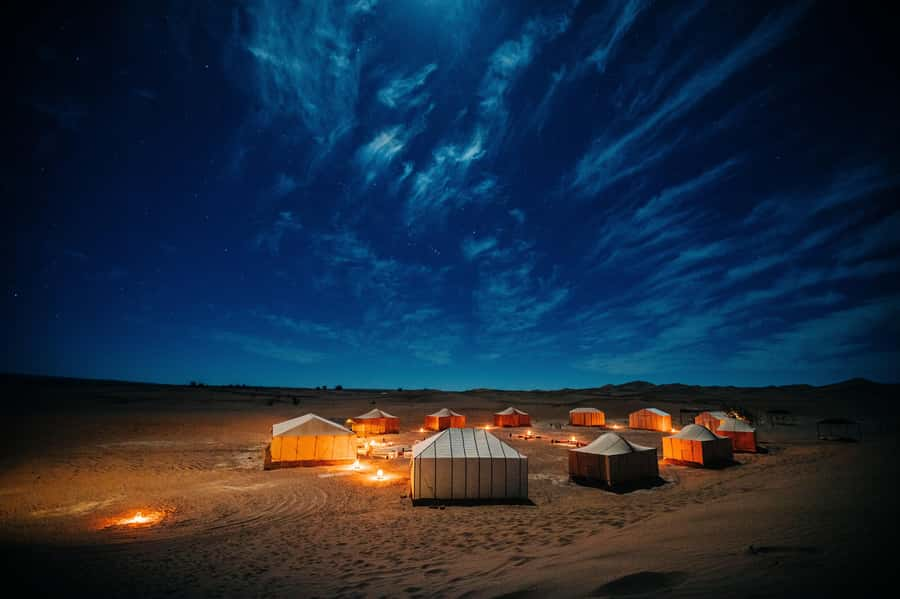
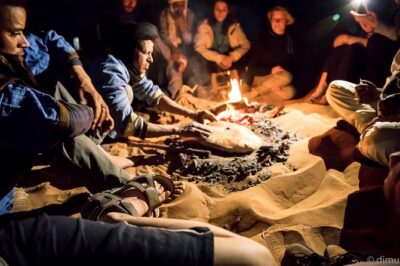
At camp, you check into a private tent and have dinner, followed by a campfire with drums and Berber music. The term private tent may cover different styles of accommodation. One guest found the units more like stone rooms with windows than traditional fabric tents. If the look of your lodging matters, ask for a current description or photographs before booking.
The sunset is worth making an effort for. As the light fades, the sand can take on red and copper tones, especially when viewed from a higher dune. Bring water for the climb and keep your camera ready before the sun reaches the horizon. The best color may last only a short time.
Day 2: Camel trekking, sandboarding, and a nomad tea
Day 2 is the reason the two-night plan makes sense. You wake early for sunrise from the top of the dunes, return for breakfast, and then set out around Erg Chigaga.
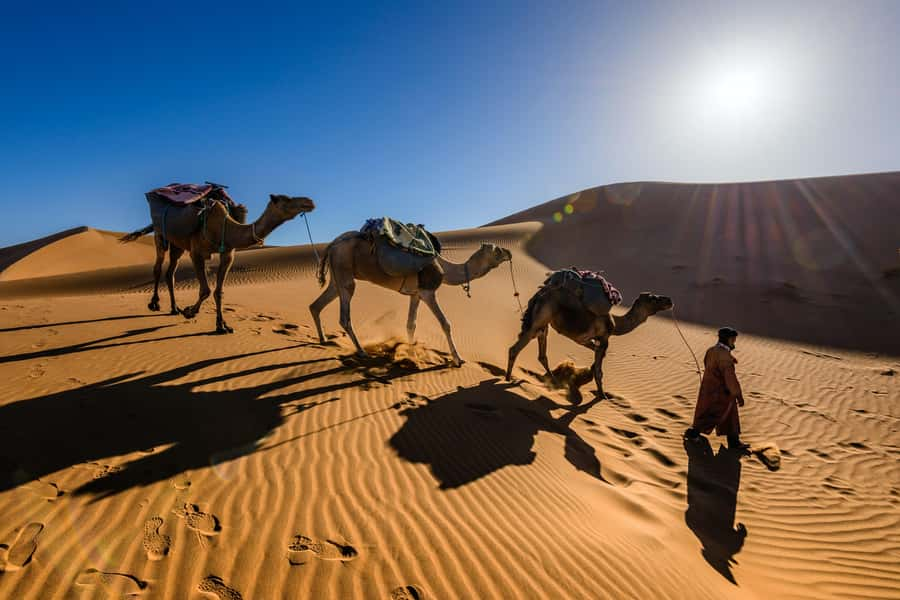
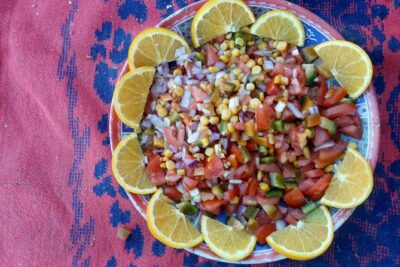
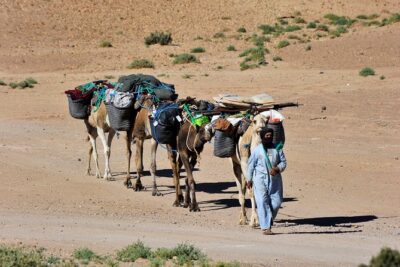
The advertised plan uses camels for a full-day trek. After about two hours, you reach a tamarisk tree, where lunch is prepared locally. The meal is described as kebabs and freshly baked bread made in the style of nomad cooking. This is a memorable idea because the food is tied to the setting rather than served as another standard hotel meal.
There is an important practical point here. The schedule specifically names the tamarisk tree, but one booking reported that the stop did not happen. It is fair to ask your guide in the morning whether the full route and lunch stop are going ahead. Conditions, timing, and the group’s comfort may affect the plan.
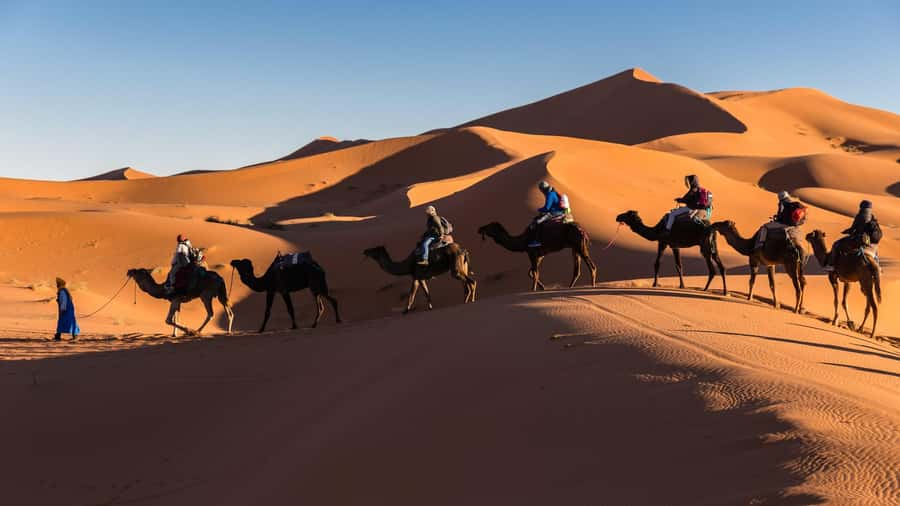
The camel ride can be a fine way to see the dunes, but a full day on camelback is not for everyone. The pace is slow, the saddle can become uncomfortable, and the heat matters even when the air feels pleasant early in the day. You can choose a mixed arrangement using camel and 4×4, or take the day by 4×4 alone. That flexibility is valuable if you want the setting without spending many hours in the saddle.
Sandboarding is also part of the experience. The available details do not specify the type of board, how much instruction is provided, or how many runs you get, so ask at camp. The dunes offer the right setting for it, but walking back up a sandy slope is often harder than sliding down.
The visit to a nomad family adds more depth than another photo stop. You can sit, have tea, and see a little of daily life in a temporary desert camp. Keep the visit respectful. You are entering someone’s home, not watching a staged show, and the quality of the encounter depends on time and the guide’s introduction.
You return to the main camp for another sunset, dinner, and music. Two evenings of drums and campfire songs may feel festive, though it can also become repetitive if you prefer quiet nights. The biggest question is food. Dinner and breakfast are included for both nights, and most feedback about the staff was positive, but one party reported cold spaghetti, small portions, and one tagine shared among three people. I would confirm what meals are planned and carry a few personal snacks.
Day 3: Sunrise, Tamegroute, and the road back
The final morning starts early again. You climb the dunes for sunrise, then eat breakfast before leaving Erg Chigaga for Zagora.
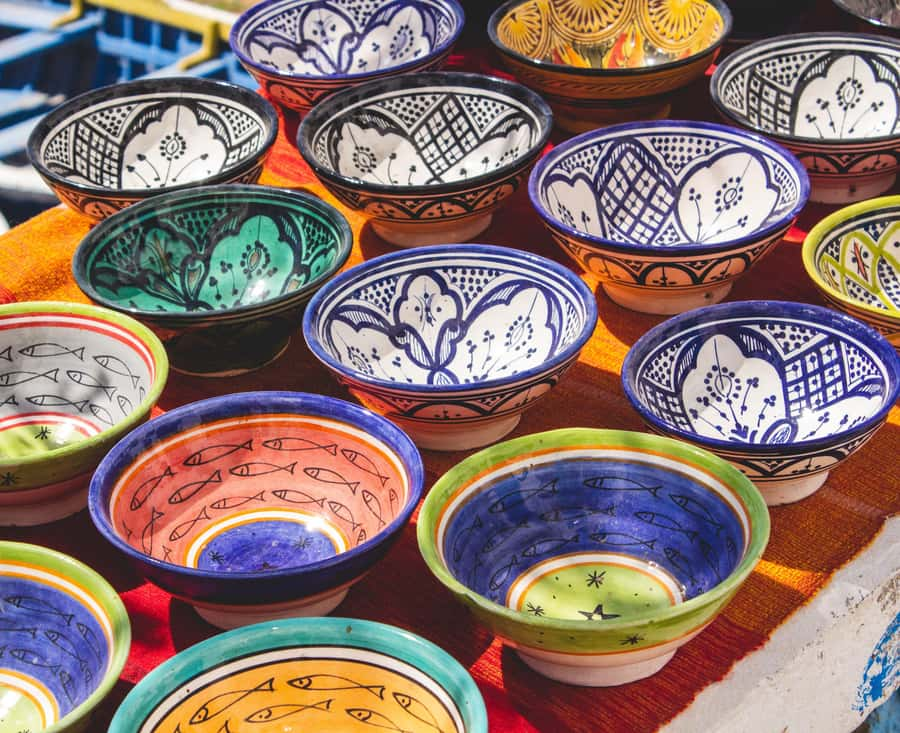
The return route heads toward the last village in the Drâa Valley and includes Tamegroute. The stop is more than a change of scenery. Tamegroute is known here for its Koranic library and green pottery makers, giving the trip a cultural stop after two days focused mainly on desert activities.
The Koranic school and library offer a different kind of visit from the dunes. The supplied details do not give a fixed tour length or explain which rooms are open, so your guide will determine the exact visit. The green pottery makers are another useful stop because you can see a local craft tradition rather than only shop at a tourist market.
The tour ends in Zagora around noon. That early finish is handy if you are continuing to another Moroccan destination or have a later transfer. It also means the desert portion is compact: three days, two nights, and a final morning on the road.
Same trailhead, a different route:
- From Marrakech: 3-Day Mount Toubkal Climbing Trek
★ 4.7 · 597 reviews - From Marrakesh: 2-Day Mount Toubkal Trek
★ 4.7 · 591 reviews - From Agadir: Camel Ride and Flamingo Trek
★ 4.7 · 371 reviews - From Marrakech: Atlas Mountains Summit Trek
★ 4.9 · 228 reviews
Camp comfort, meals, and the question of authenticity
The camp is described as a traditional nomad desert camp with half-board, meaning breakfast and dinner are included. Lunch is included on Day 2 in the desert. Drinks are not included, and private expenses are extra.
The word traditional needs a little care. Camp design can vary, and at least one guest found the accommodation closer to stone buildings than tents. That does not automatically make it uncomfortable, but it may disappoint you if you are picturing a simple canvas tent under the stars.
The strongest pattern in the available feedback concerns the people. Guides and camp staff were praised for courtesy, careful driving, helpfulness, and good information. Mohammed was specifically described as a good, careful driver, while Rashid was named as a guide who helped make a two-night stay enjoyable. You may not be assigned either person, but the names show what to value: a driver who handles rough roads carefully and a guide who explains the schedule clearly.
Food is less consistent. Moroccan meals can be filling, but this particular trip has one clear warning about portions and temperature. If you have a large appetite, dietary restrictions, or strong expectations about a feast, raise the issue before departure. The description promises a Berber feast and local cooking, but the actual meal can depend on the camp team and the day.
Is $448 a fair price?
At $448 per person, the trip is not a budget transfer. You are paying for a private air-conditioned 4×4, fuel, a driver-guide, pickup and drop-off in Zagora, camel trekking, two nights at Erg Chigaga, meals listed in the plan, and the long off-road approach.
The value is strongest if you want a private route and a slower desert stay. One night can make Erg Chigaga feel like a hurried photo stop. Two nights give you sunrise and sunset on more than one day, a full Day 2 option, time for the nomad family visit, and room for sandboarding.
The value is weaker if your main aim is simply to see dunes at sunset. In that case, a shorter desert outing may suit you better. The cost also demands reliable service, so confirm the camp style, meal plan, camel or 4×4 arrangement, and daily timings before you pay.
The booking terms are flexible: you can cancel up to 24 hours ahead for a full refund, and reserve now while paying later. Pickup can be arranged from your location if you provide it when booking. The activity is listed as wheelchair accessible, though you should discuss the rough off-road driving, dune climbs, and camel riding directly before committing.
Who will enjoy this desert trip most?
I would recommend it to you if you want several ways to experience the Sahara: road travel, dunes, camel riding, sandboarding, camp music, and a local family visit. It suits people who prefer a private vehicle and do not mind early mornings or a long day in the desert.
It is also a good match if you want the desert to be more than a single sunset. The full Day 2 route gives the trip breathing room, and the option to replace camel riding with a 4×4 helps if your body objects to a full day on a camel.
You may want another option if you need highly controlled scheduling, guaranteed gourmet meals, or clearly defined luxury accommodation. The tour uses remote desert camps, and the information about food, tent style, and exact timings is not as precise as the price might lead you to expect.
Should you book the Erg Chigaga tour?
Book it if two nights in the dunes matter to you and you want a broad mix of activities rather than a simple camp transfer. The combination of Erg Chigaga, camel rides, sandboarding, a nomad family visit, and Tamegroute gives you a well-rounded three days.
Before booking, send three questions: What kind of tent is available now? What meals and portions are planned? What is the exact timetable for the camel trek, tamarisk lunch stop, and oasis visits? If the answers are clear, the tour offers good variety and a sensible amount of desert time. If those details remain vague, you may be paying a premium for a trip that does not match your picture of a traditional desert camp.
FAQ
How long is the tour from Zagora to Erg Chigaga?
The tour lasts three days and ends back in Zagora around noon on Day 3.
What languages can the driver or guide speak?
Driver and guide languages include English, Spanish, Italian, and French.
Are camel rides included?
Yes. Camel trekking is included, with camel rides planned around sunset, sunrise, and the full Day 2 desert trek. Day 2 can also be done by 4×4 or by a mix of camel and 4×4.
Are meals included?
Dinner and breakfast are included for two nights at the desert camp. Lunch on Day 2 is also included. Drinks and private expenses are not included.
What does the tour visit besides Erg Chigaga?
The route includes desert oases, a nomad family camp, the tamarisk tree lunch stop described for Day 2, and Tamegroute, including its Koranic library and green pottery makers.
Can I cancel or pay later?
You can cancel up to 24 hours before the activity for a full refund. The booking option also allows you to reserve now and pay later.
Just added around Morocco
- Essaouira Beach Horse Rides &Treks for All Levels★ 5.0 · 13 reviews
- 4 days tour and trek from Fez to Marrakech via Sahara Desert★ 5.0 · 3 reviews
- 2 days trekking from Chefchaouen to Akchour★ 5.0 · 12 reviews
- 4 days trekking in the Rif mountains★ 5.0 · 9 reviews
- 3-Day Trekking from Chefchaouen – Rif Mountains Adventure★ 5.0 · 16 reviews
- Trekking in Morocco / Atlas Mountains and Sahara Trek (5days)★ 5.0 · 8 reviews
- 8-Day Morocco Adventure: Imperial Cities & Sahara Desert Trek★ 5.0 · 37 reviews
- Paradise Valley Trekking★ 5.0 · 5 reviews
MHamid Trekking Tours, compared.
Browse the lists this trek appears in