
Review · CATANIA
Special trekking on the most authentic and wild side of Etna
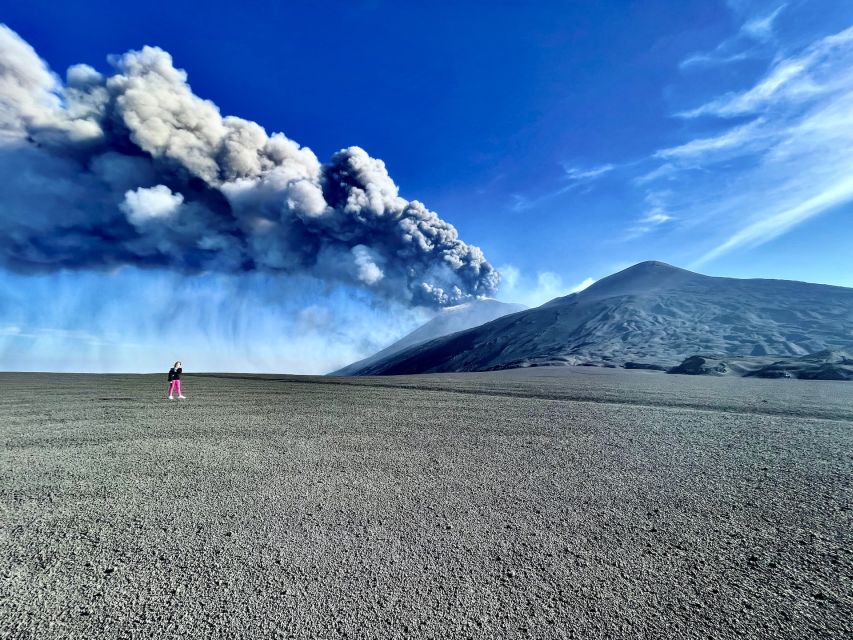
Etna’s north side feels far removed from the usual cable-car circuit. You ride a rough 4×4 road to 2,800 meters, then walk among lava fractures, eruption craters, and old volcanic vents with an authorized guide who explains what you are seeing.
I like the route’s wild setting and its useful backup role when the summit craters are closed. I also like the practical gear supply: poles, helmets, hiking shoes, warm jackets, and spare socks can make a big difference on a cold, dusty volcano.
The main catch is cost and effort. The advertised price covers the guide, but you pay another €50 per person for the 4×4 vehicles, and this high-altitude trek is not suitable for casual walkers or anyone uneasy with heights, enclosed spaces, or rough ground.
Key points at a glance
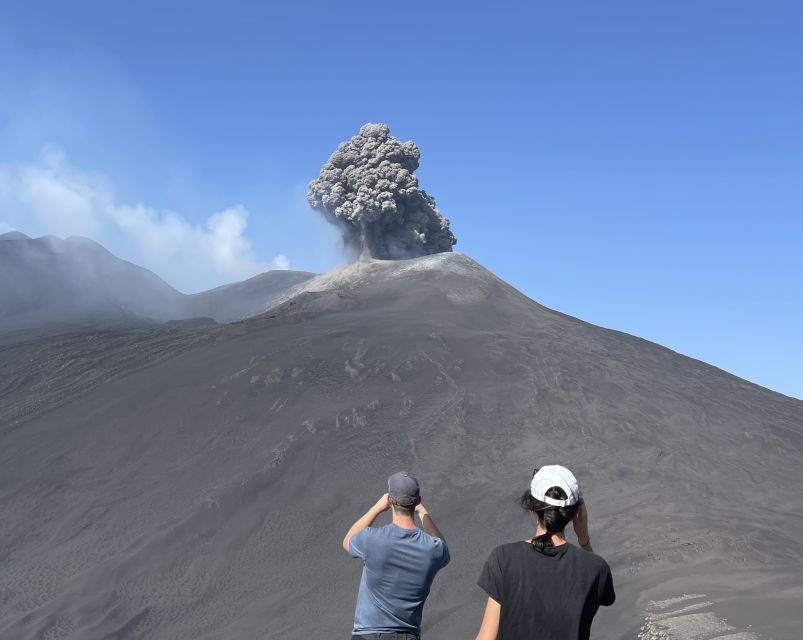
- A 2,800-meter 4×4 ascent: The rough vehicle ride replaces a long approach on foot and gives the guide time to explain Etna before the walking begins.
- A rare look inside a volcanic cone: With a protective helmet, you enter the intact chimney of a cone from the February 24, 1947 eruption.
- A long descent through Etna’s eruption record: The six-kilometer walk passes craters and lava features linked to eruptions from 1809 through 2002.
- A strong alternative to the summit craters: If access to the highest craters is restricted for safety, this route still gets you to the highest point guides can safely reach.
- Views toward Taormina and the Aeolian Islands: Visibility depends on weather, but the north slope offers some of Etna’s finest high views.
- Real hiking, not a sightseeing stroll: Loose ash, crater edges, altitude, and steep sections call for solid fitness and proper shoes.
Why Etna’s north side feels different
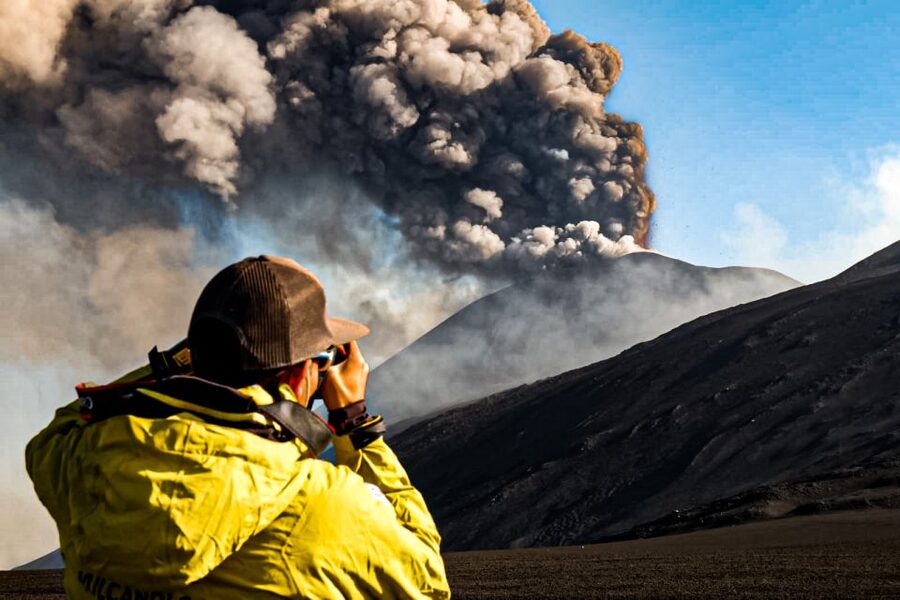
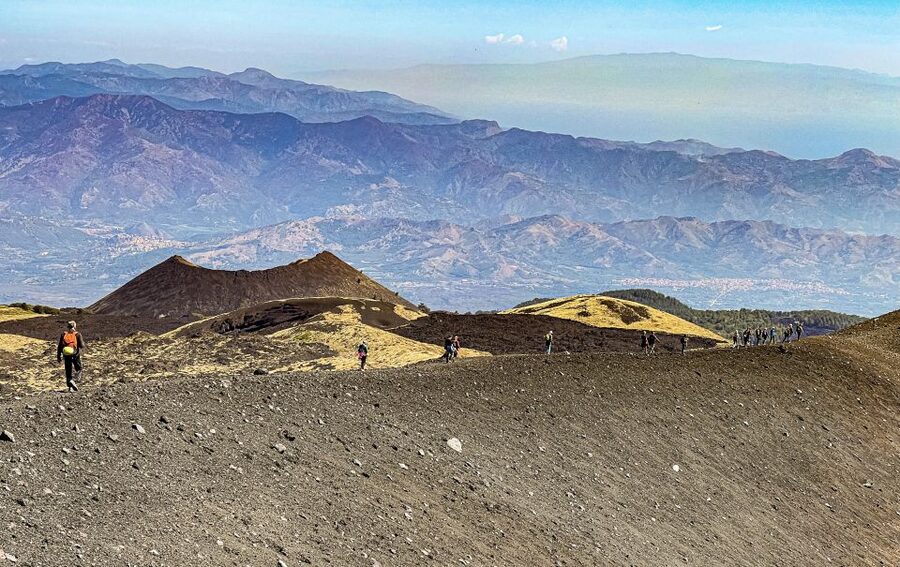
Most people who visit Mount Etna focus on the better-known southern approach. The north side, reached from Piano Provenzana, is quieter and more raw. The ground is shaped by repeated eruptions, with black ash, broken lava, open fractures, and cones scattered across the upper slopes.
That sense of isolation is the main reason to choose this outing. You are not simply driven to a viewpoint, handed a few facts, and sent back down. The route asks you to walk through the working remains of a volcano.
The guide matters here. Authorized volcanological guides lead groups according to current Civil Protection instructions and volcanic-risk limits. That means the exact high point and route can change. If summit access is restricted, the guide takes you to the highest safe point available rather than treating a closed area as something to negotiate.
I see that as a strength, not a weakness. Etna is active, and a good volcanic tour should respect that fact. You may not reach the summit craters, but you still get a serious look at the volcano’s structure and eruption history.
More Volcano Treks in Catania
- Mount Etna: Guided Trek 3,000 Meters to the Summit
★ 4.8 · 1,407 reviews - Etna Sunset Tour: Volcano trek, Cave & tasting from Catania
★ 4.8 · 1,290 reviews - From Catania: trek on Mount Etna, Lava Cave & tasting Tour
★ 4.8 · 563 reviews
The 4×4 ride from 1,800 to 2,800 meters
The meeting point is Chiosco Bar Mareneve, near the winter ski chairlift. It is the second of four buildings in the parking area. Arrive a little early, since the group needs to organize before leaving.
The first vehicle section climbs from about 1,800 meters to 2,800 meters. It covers roughly eight kilometers on very rough volcanic roads. This is not a smooth transfer. The 4×4 is being used because the upper route is rugged and unsuitable for an ordinary car.
The ride also serves as the opening lesson. Your volcanological guide begins explaining Etna while you climb, pointing out the volcanic features and setting up the walk ahead. A guide such as Ciccio has been praised for explaining both the science and the story of the eruptions in a clear, engaging way.
You pay €50 per person locally for the 4×4 transport. This is separate from the listed €62.63 guide price, so your basic cost is about €112.63 before parking, food, or drinks. Add the €3 all-day parking fee and the practical cost is roughly €115.63 per person.
That total is not cheap for four hours, but it includes a specialized guide and equipment that would be difficult to arrange independently. The price makes more sense if you value access to the high north slope and a serious explanation of volcanic features. It is less appealing if you mainly want a quick summit photo.
The first walk at 2,800 to 2,900 meters
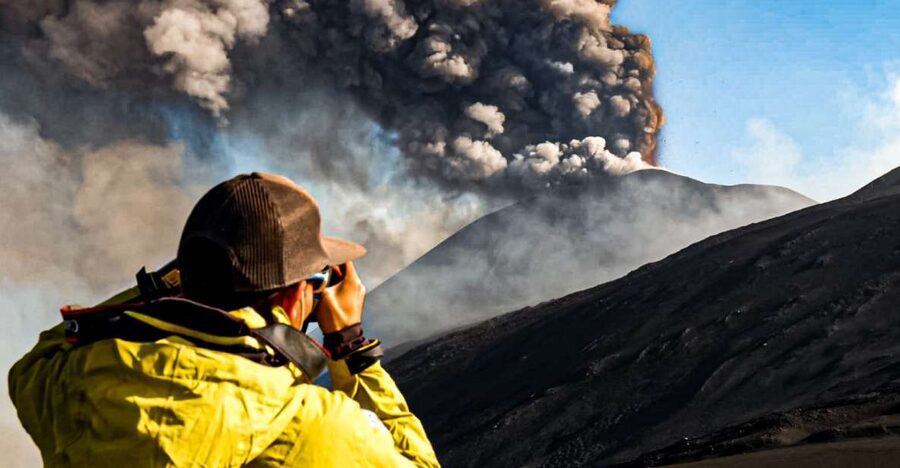
The first section on foot is short but important. From around 2,800 meters, you walk upward to about 2,900 meters and stop at a panoramic point.
Here, the view can open toward Etna’s summit craters, recent lava flows, Taormina, the Aeolian Islands, and Sicily below. Weather controls how much you see. Clouds and wind can appear quickly at this height, so do not treat the promised panorama as guaranteed.
This section also gives you a chance to feel the altitude before the longer walk begins. You might notice the thin air, especially while climbing over loose volcanic material. Move at the guide’s pace and do not rush to prove anything. The route is designed for moderately trained hikers, not for people who rarely walk uphill.
The summit craters remain visible from this area, even when public access is closed. That makes the stop especially useful during periods of volcanic risk. You get a close high-altitude view without entering a restricted zone.
After this first walk, the 4×4 carries the group to the start of the longer trek on the north side. The route eventually returns to the original meeting area at Piano Provenzana.
Entering the 1947 volcanic cone
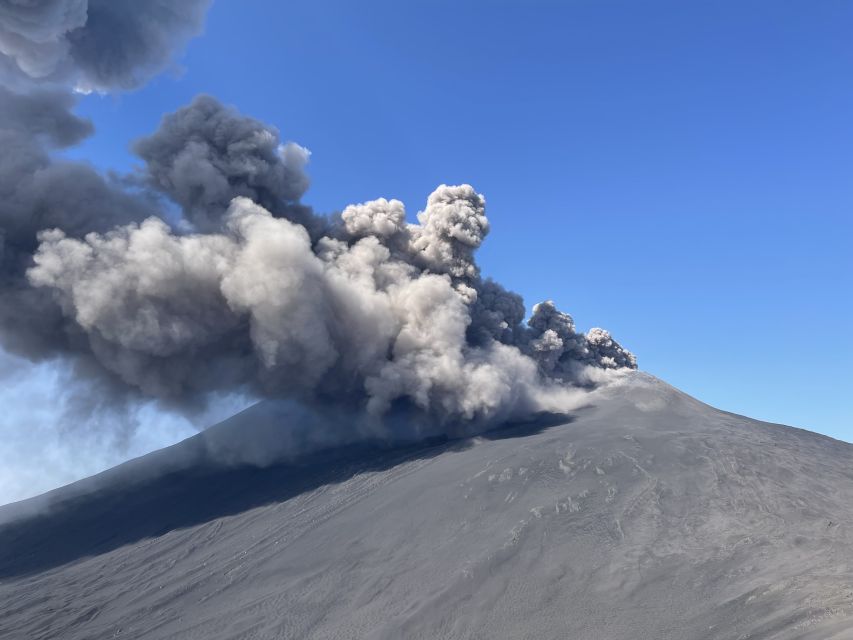
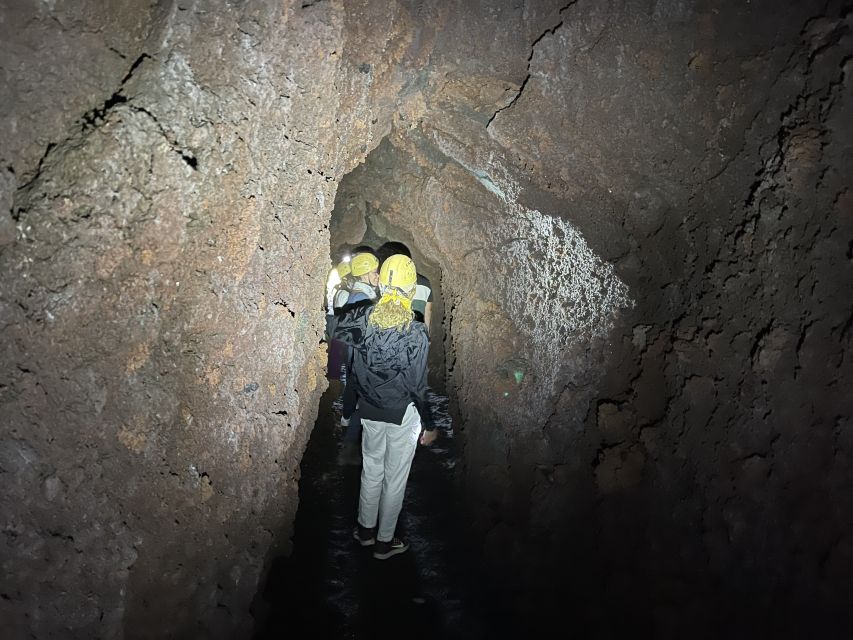
One of the most unusual parts of the outing is the visit to the craters formed during the February 24, 1947 eruption. You do not only walk around them. Wearing a protective helmet, you enter the chimney of an intact volcanic cone.
That moment helps turn abstract geology into something physical. A volcanic cone is not just a mound of dark rock. Inside, you can see the channel through which molten material once moved. The guide explains how pressure, gas, and rising magma produce an eruption, using the actual feature in front of you.
This is also where the excursion differs from a standard mountain hike. The route is built around volcanic structures, not simply high elevation and scenery. You are examining the openings that produced lava flows and the fractures that allowed material to reach the surface.
Claustrophobia is listed as a concern, and that warning deserves attention. The volcanic chimney is an enclosed space, even if the visit is brief. If you become anxious in narrow or confined places, you may prefer to remain outside while the guide explains the feature.
More Volcano Treks in Italy
- Etna Volcano: South Side Guided Summit Hike
★ 5.0 · 311 reviews - Mount Etna: North Upper Craters Guided Tour by 4×4 with Trek
★ 4.6 · 243 reviews - Catania: Mount Etna Sunset Trekking with Wine Tasting
★ 5.0 · 140 reviews - From Catania: Private mt. Etna trekking and pic-nic
★ 5.0 · 37 reviews
Walking the north-side rift and crater edges
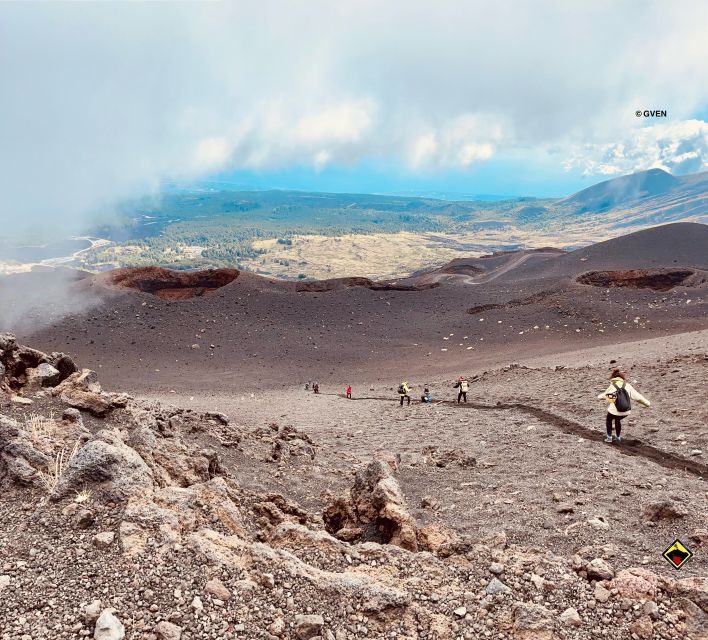
The longer walk includes the north-side fracture, or rift. This is a break in the volcanic structure connected with eruptive activity. From a safety point of view, you follow the guide closely and stay within the route allowed by current regulations.
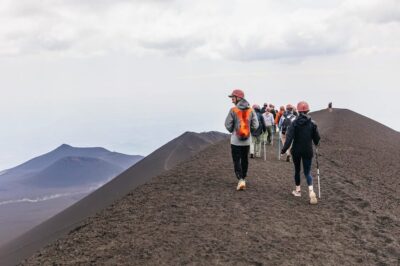
The path continues along the edges of large explosive craters. These sections offer a close view of how eruptions have built and torn apart the upper slopes. Loose ash makes descents less stable than they look, and the crater rims can cause dizziness for anyone sensitive to heights.
Trekking poles are included and useful here. They help with balance on ash and uneven rock, especially during the downward sections. Wear the supplied hiking shoes if needed, but bring your own boots if you have them and know they fit well. The operator warns that insurance does not cover you without adequate footwear.
You also receive a helmet, warm jacket, and spare socks. Those extras are practical rather than decorative. Upper Etna can be cold and windy even when Sicily is warm at sea level, and ash can work into shoes and socks during the descent.
A six-kilometer walk through Etna’s eruption record
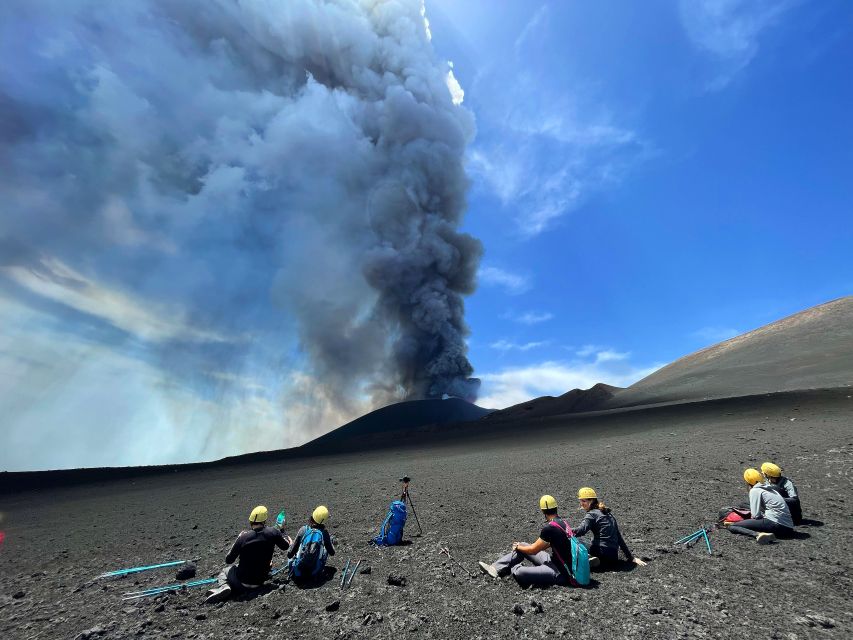
The main route covers about six kilometers toward Piano Provenzana. Along the way, you pass craters linked to many lateral eruptions, including activity from 1809, 1874, 1879, 1911, 1923, 1974 to 1975, and 2002.
That list matters because it shows how Etna grows from the side as well as from its summit. Each eruption leaves cones, flows, and fractures behind. Walking between them gives you a sense of time that a single viewpoint cannot provide.
The most recent features may look harsh and unfinished. Older cones have had more time to weather, but this is still a high volcanic zone rather than a green mountain trail. Expect black and gray ground, loose ash, rough lava, and changing grades.
The route is mostly downhill from the upper section, but downhill does not mean easy. Loose ash can make your feet slide, and the crater edges require care. A moderate level of fitness is necessary, and the route is not suitable for people with mobility limitations, heart or respiratory conditions, recent surgery, epilepsy, altitude sickness, or serious back problems.
The tour also advises against joining if you have little hiking experience or a low fitness level. That is sensible. Four hours at altitude can feel much longer than four hours at sea level.
What the guide adds to the walk
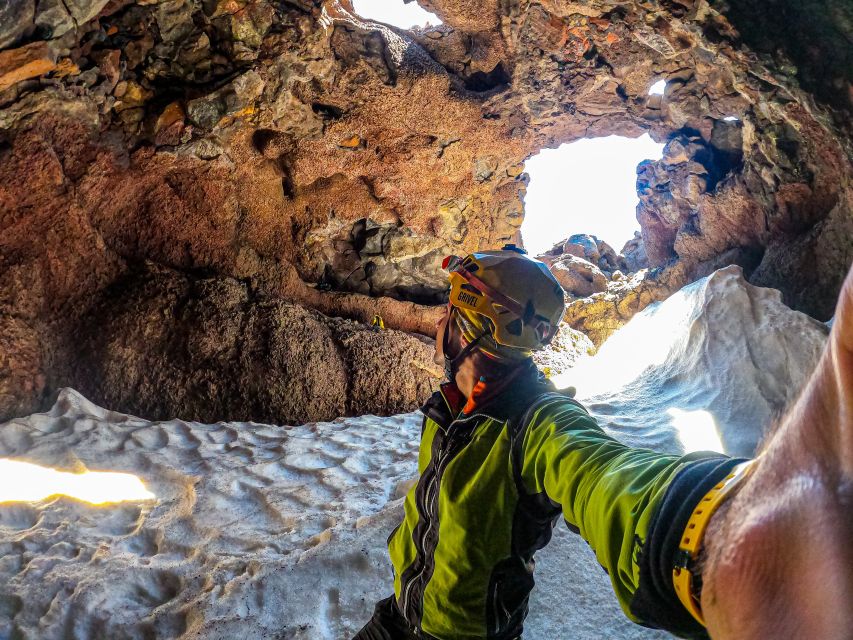
A volcanological guide is the heart of this experience. Without one, the craters and lava features can blur into a series of dark cones. With clear explanations, each fracture and chimney has a reason and a story.
The guide also manages the safety side of the outing. Group size and language affect how the party is arranged, and participants may be divided among several guides to avoid one large, slow-moving group. French, Italian, and English are offered.
Ciccio has been specifically praised for combining scientific and historical explanation with careful guidance through the terrain. If he is leading your group, expect the commentary to continue during the walking sections rather than stopping only at viewpoints.
Good guiding is especially valuable when conditions shift. Visibility can change, wind can rise, and volcanic access rules can be updated. The route follows current ordinances, so no fixed description can promise the same high point every day.
What to bring, and what the operator supplies
The supplied equipment reduces the amount you need to pack. Trekking poles, helmets, hiking shoes, warm jackets, spare socks, and a backpack are included.
Still, bring your own essentials:
- Windbreaker or rain jacket
- Sunglasses and sunscreen
- Long trousers
- Comfortable hiking clothes
- Water and snacks
- Packed lunch if you need a full meal
A K-way or similar rain shell is not included. Bottled water, snacks, and lunch are also your responsibility. Alcohol is not allowed in the vehicle, and sandals, flip-flops, open-toed shoes, and high heels are not permitted.
I would pack more warmth than you think you need. The weather at the meeting point may not resemble conditions near 2,900 meters. A lightweight extra layer, water, and food are small additions that make the day easier.
Who should book this Etna trek?
I would choose this excursion if you want geology, open volcanic ground, and a quieter side of Etna. It suits hikers who can manage several hours on uneven terrain and who are happy to trade a simple viewpoint for a more demanding route.
It is also a smart choice when the summit craters are closed. You still reach a high altitude with a guide and see the summit area from a safe point, while the main walk focuses on the north-side craters and eruption features.
I would not choose it for a relaxed family outing, a short scenic stop, or anyone uncomfortable with loose slopes and crater rims. The operator specifically excludes people with mobility impairments, major medical concerns, vertigo, fear of heights, claustrophobia, or low fitness.
The minimum group requirement is eight participants, so the trip can be cancelled if that number is not reached. Weather can also force a postponement or cancellation. Free cancellation is available up to 24 hours before the start, which gives you some protection when planning around uncertain mountain conditions.
Should you book the wild north side of Etna?
Book it if you want the most active, physical, and geology-focused Etna experience in this price range. The 4×4 ride, volcanic chimney, crater rims, rift, and six-kilometer route offer far more substance than a quick stop at a roadside viewpoint.
Before booking, add the €50 transport charge and check your fitness honestly. If you are prepared for altitude, ash, wind, and a real hike, this is a strong value and a memorable way to see Etna beyond the standard tourist route. If you want easy access, guaranteed summit views, or minimal walking, choose a simpler Etna outing instead.
FAQ
Where does the Etna north-side trek start?
The meeting point is Chiosco Bar Mareneve, near the chairlift used by skiers in winter. It is the second of four buildings in the parking area.
How long does the activity last?
The activity lasts about four hours. Starting times vary, so you need to check availability when booking.
Is the 4×4 transport included in the advertised price?
No. The listed price covers the guide service. The 4×4 transport costs €50 per person and is paid on site.
How high does the excursion go?
The 4×4 climbs from about 1,800 meters to 2,800 meters. The first walk reaches approximately 2,900 meters, subject to current safety limits and conditions.
What equipment is included?
The operator provides an authorized volcanological guide, trekking poles, protective helmets, accident insurance, trekking shoes, warm jackets, extra socks, and a backpack.
What languages are available?
The tour is offered in French, Italian, and English.
Can I join if the summit craters are closed?
Yes. The route is designed as an alternative when the summit craters are closed because of volcanic risk. The guide takes you to the highest point safely allowed under current regulations.
What happens if the weather is bad?
Adverse weather can lead to cancellation or postponement. The operator will advise you as early as possible.
Just added around Catania
- Mount Etna Advanced Trekking: Private Full-Day Tour from Catania★ 5.0 · 21 reviews
- Trekking in the morning on Mount Etna★ 5.0 · 2 reviews
- One Day Tour in Catania and Trekking on Etna★ 5.0 · 2 reviews
- Sunset Trekking on Mount Etna★ 5.0 · 3 reviews
- Nature Reserve ,Trekking Eco Tour in Iblei National Park★ 5.0 · 27 reviews
- Etna trekking and wine tasting★ 5.0 · 28 reviews
- From Catania: Private mt. Etna trekking and pic-nic★ 5.0 · 37 reviews
- Piano Provenzana: Guided Mt. Etna Snowshoeing Trek★ 5.0 · 3 reviews
Volcano Treks, compared.
Mount Etna: Trek to 3000m with cable car and 4×4
Read our review →
Mount Etna: Summit Crater Trek with Cable Car
Read our review →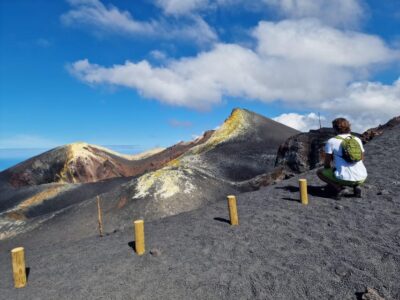
Etna: summit craters trekking with volcano guide 3350mt
Read our review →
Mount Etna Trekking Tour Beyond the Tourist Trails
Read our review →
Mount Etna: Guided Trek 3,000 Meters to the Summit
Read our review →
Etna Sunset Tour: Volcano trek, Cave & tasting from Catania
Read our review →
Browse the lists this trek appears in