
Review · CATANIA
Piano Provenzana: Guided Mt. Etna Snowshoeing Trek
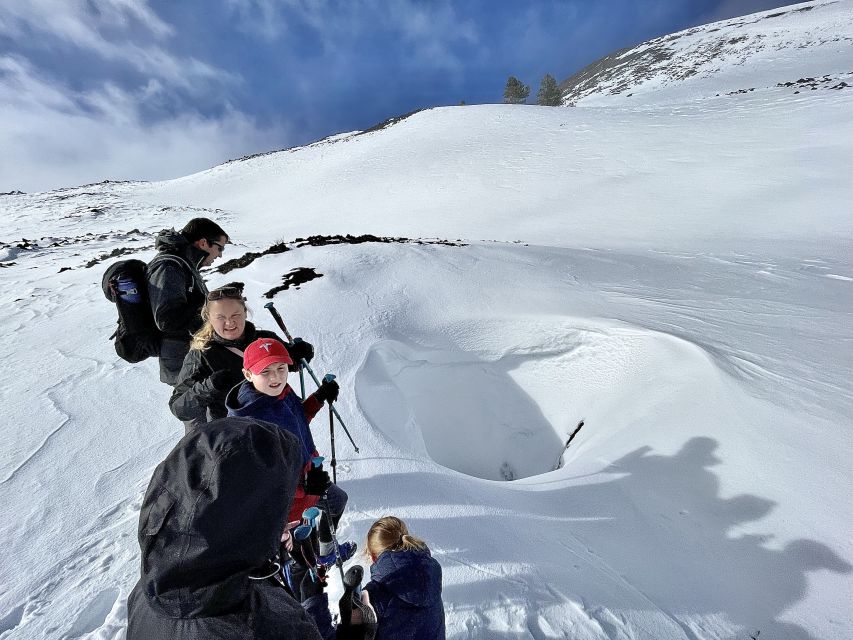
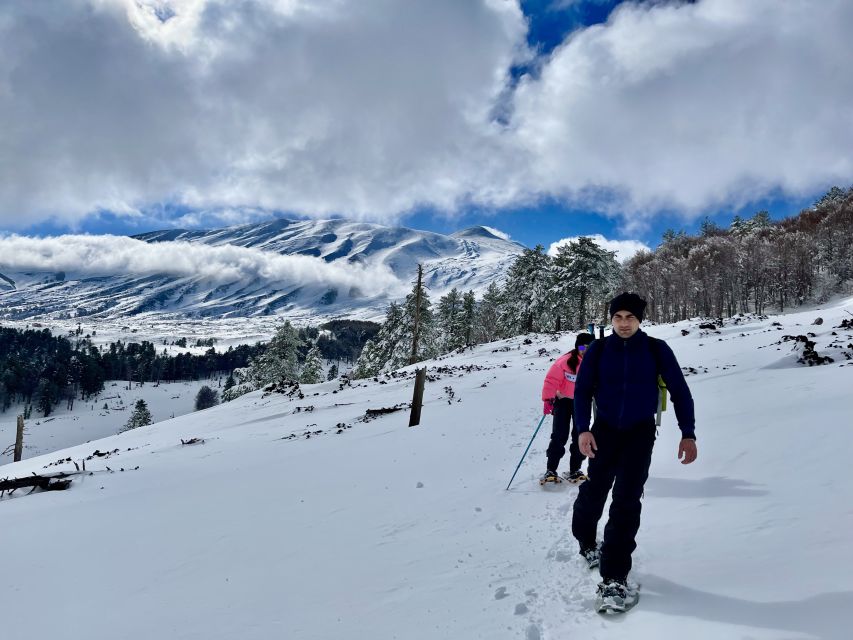
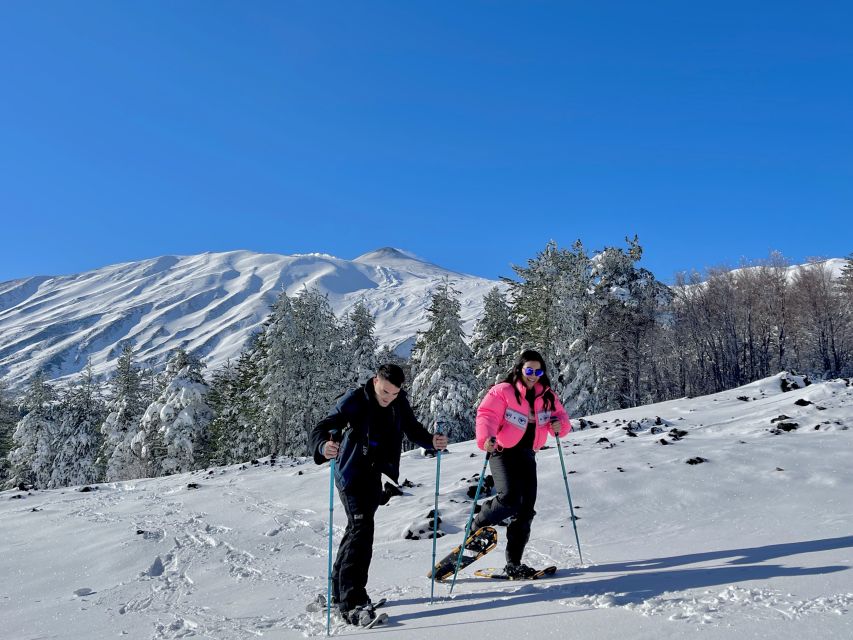
Mt. Etna in winter gives you a rare mix: soft snow underfoot, black lava rock at your side, and a live volcano rising ahead. This three-hour snowshoe trek from Piano Provenzana reaches the large side craters formed during the 2002 eruption, where you can look across the snowy upper slopes and see gases rising from Etna’s summit.
I like the sharp contrast between white snow and dark volcanic rock. I also like that the route has real geological drama, including lava flows, fractures, forests, and the remains of a tourist area damaged by the eruption. The main drawback is that this is a mountain outing, not a gentle walk. Snow, cold, wind, altitude, and a 300-meter climb demand proper clothing and a fair level of fitness.
Key points to know before you go
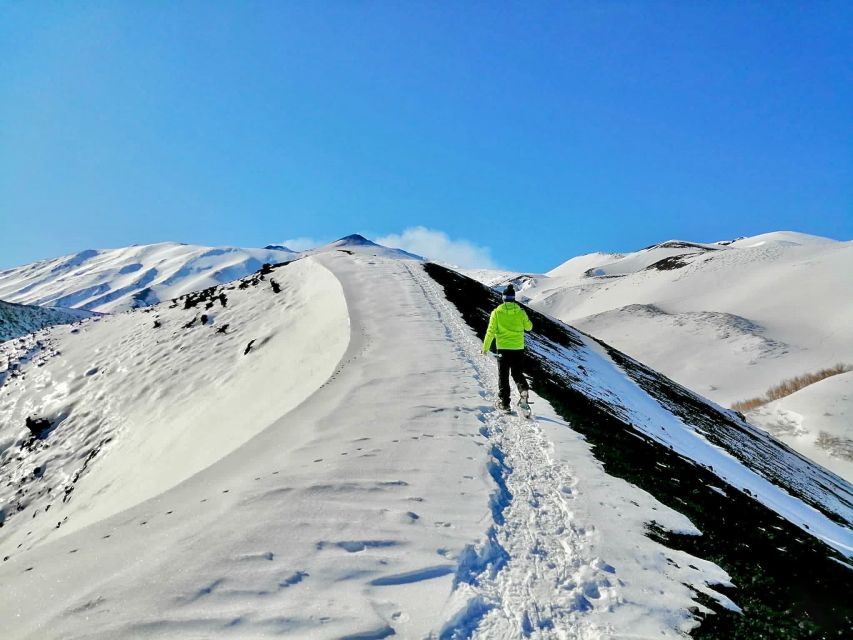
- Reach 2,200 meters on Etna’s north side: The 5-kilometer return route climbs 300 meters from Piano Provenzana.
- Walk through the 2002 eruption zone: You’ll pass lava flows, large lateral craters, and structures destroyed by volcanic activity.
- See Sicily from a high snowy viewpoint: On a clear day, the view takes in Giardini Naxos, Taormina, the sea, and possibly Calabria.
- Bring or rent winter gear: Snowshoes and poles cost €12 per person, while trekking shoes and windbreakers can be rented locally.
- Plan for mountain weather: The tour can be postponed or canceled in bad conditions, and gloves and hats are not provided.
- Expect a guided geology walk: The volcanological guide service is included, with tours offered in Italian, French, and English.
Why this Etna snowshoe walk feels different
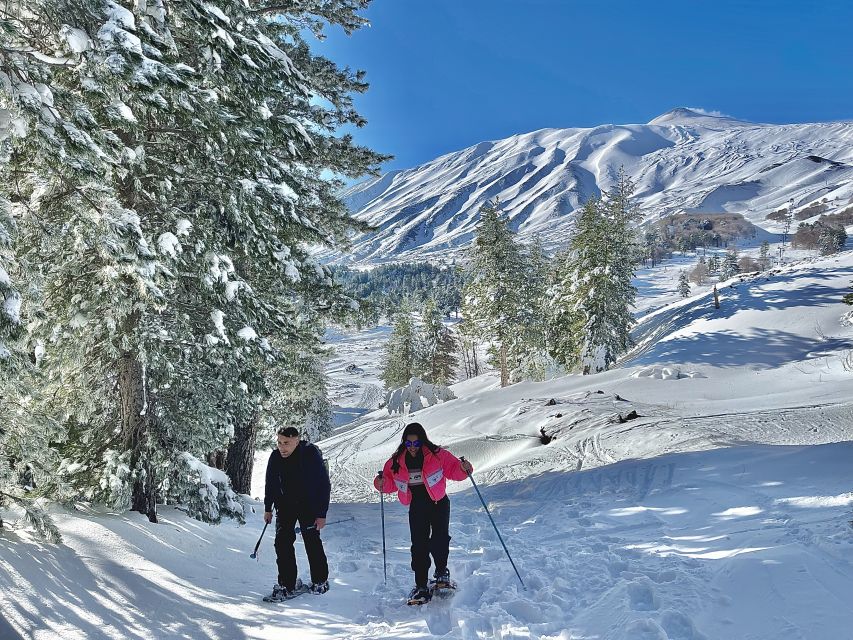
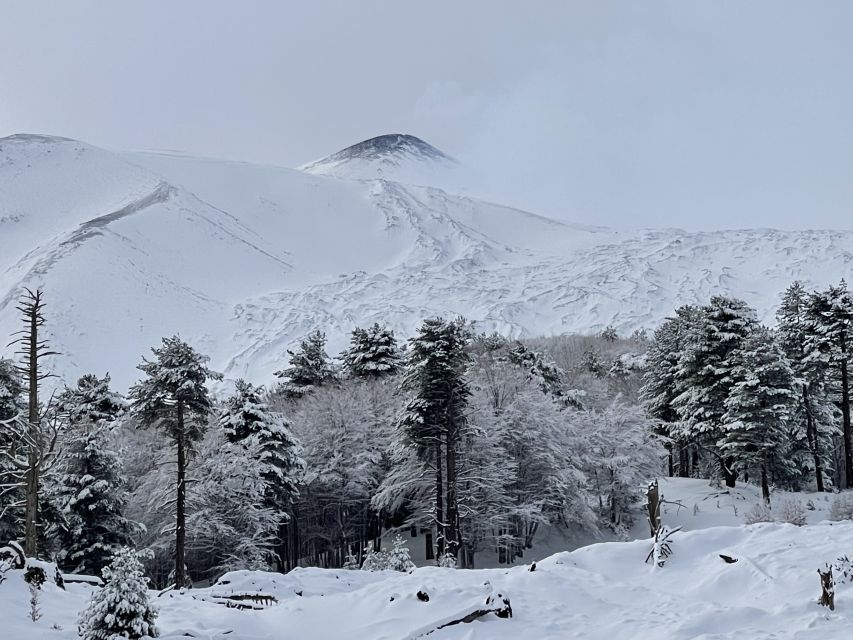
Many mountain walks give you either snow or volcanic scenery. This one gives you both at once. At Piano Provenzana, snow covers the ground and trees, while exposed lava remains black, rough, and sharply broken. That visual contrast is the heart of the outing.
The setting also changes as you climb. You begin in a snowy forest at about 1,800 meters. Then the trees give way to open volcanic ground, lava flows, cracks, and side craters. By the high point, you are looking across Etna’s upper slopes toward the summit craters, where volcanic gases are still released.
I like the fact that the route is not simply a walk to a viewpoint. The volcano itself provides the story. You see where lava moved, where craters opened, and where the eruption damaged buildings at Piano Provenzana. The guide helps connect those physical marks to Etna’s activity, making the scenery easier to understand.
The experience is also relatively short by volcano standards. Three hours is enough to give you a proper outing without taking up an entire day in Sicily. Still, the distance and climb are real. The 5-kilometer return route includes a total ascent of 300 meters, and snowshoeing takes more effort than ordinary walking.
More Volcano Treks in Catania
- Mount Etna: Guided Trek 3,000 Meters to the Summit
★ 4.8 · 1,407 reviews - Etna Sunset Tour: Volcano trek, Cave & tasting from Catania
★ 4.8 · 1,290 reviews - From Catania: trek on Mount Etna, Lava Cave & tasting Tour
★ 4.8 · 563 reviews
Starting at Piano Provenzana at 1,800 meters
Your meeting point is the parking area near the active chairlift at Etna Nord, outside Chiosco Bar Mareneve. The exact meeting time can be moved earlier, sometimes to 8:45 or 9:00, because parking fills quickly when skiers arrive. This is important. Do not treat the start time as a loose suggestion if you are driving up.
Piano Provenzana is the practical base for the walk. Here, you have a short safety briefing of about 15 minutes before setting out. The guide can explain the route, the snow conditions, and the basic rhythm of the hike.
This is also where you should sort out equipment. Snowshoes and trekking poles are not included, and the stated rental price is €12 per person from authorized rental shops on site. Trekking shoes can be rented for €5 per pair, and a windbreaker costs €5 to rent.
I would arrive with enough time to park, use the facilities, and check your clothing before the briefing. The combination of ski traffic, rental equipment, and mountain weather can make a rushed arrival unpleasant. Parking costs €5 for the full day on weekdays and €8 on Sundays and public holidays.
Crossing snowy woods and old lava flows
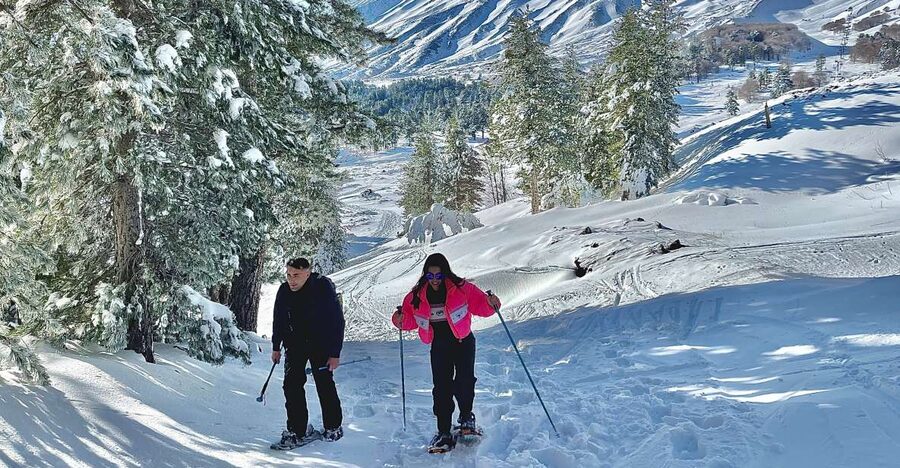
The first part of the route runs through snowy woodland. At 1,800 meters, the forest gives you some protection from open wind, though you still need warm clothing and a jacket. Snowshoes spread your weight across the surface, making it easier to cross deep or soft snow than it would be in ordinary boots.
The walk then moves into the volcanic zone on Etna’s north side. Here, the scenery becomes rougher. You cross old lava flows and pass fractures and lateral craters created by eruptions away from the central summit. The dark rock may be partly buried by snow, but its shape and color remain visible.
This is where a guided outing earns its keep. Volcanic terrain can look simple from a distance, but the details matter. A guide can point out the difference between forest, lava, crater rims, and eruption damage. The included service is specifically provided by a volcanological guide, rather than just a walking escort.
The route is not described as technical climbing, but it is still mountain hiking. Snowshoes add weight and alter your footing. You should expect a steady uphill effort, especially as you approach the side craters. A low level of fitness, heart or respiratory problems, recent surgery, back trouble, or other pre-existing medical conditions are reasons to choose a different activity.
The 2002 eruption zone and damaged resort
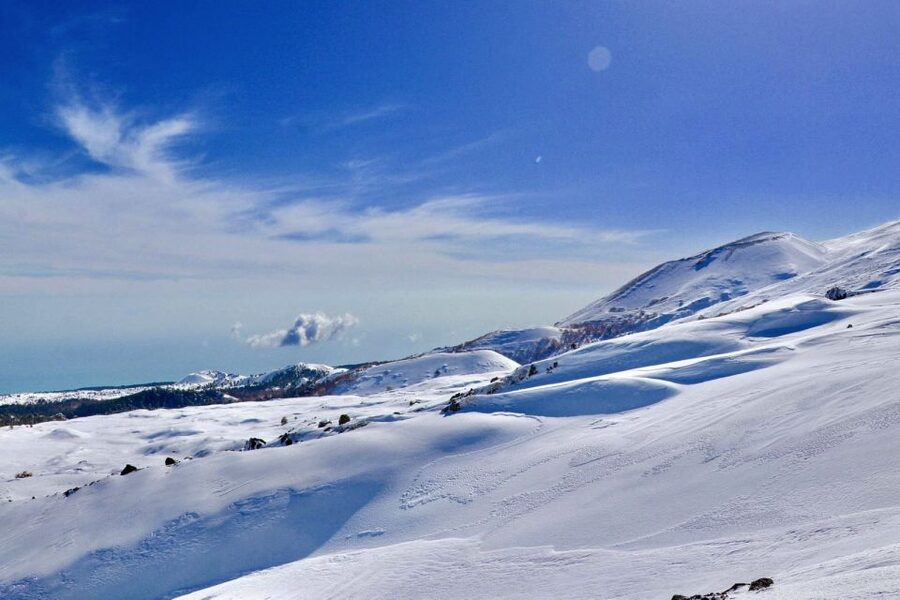
One of the strongest parts of the walk is the chance to see the large craters linked to the 2002 eruption. The eruption on Etna’s northern side damaged the tourist facilities at Piano Provenzana, and the route passes through areas affected by those lava flows.
You do not need to be a volcano specialist to appreciate the scene. Snow makes the black lava more visible, and the damaged structures give the eruption a human scale. Instead of looking at a distant crater from a safe overlook, you move through terrain shaped by recent volcanic activity.
The itinerary includes a guided visit and sightseeing stop of roughly 30 minutes in this broader crater area. That is enough time for the guide to explain the setting and for you to take photographs without turning the outing into a nonstop march.
I would keep your camera ready, but do not let the photo stops distract you from footing. Uneven volcanic ground can hide beneath snow, and crater rims are not places for careless wandering. Stay with the guide and follow instructions, especially near edges, fractures, or steep sections.
More Volcano Treks in Italy
- Etna Volcano: South Side Guided Summit Hike
★ 5.0 · 311 reviews - Mount Etna: North Upper Craters Guided Tour by 4×4 with Trek
★ 4.6 · 243 reviews - Catania: Mount Etna Sunset Trekking with Wine Tasting
★ 5.0 · 140 reviews - From Catania: Private mt. Etna trekking and pic-nic
★ 5.0 · 37 reviews
The 2,200-meter side craters and the big view
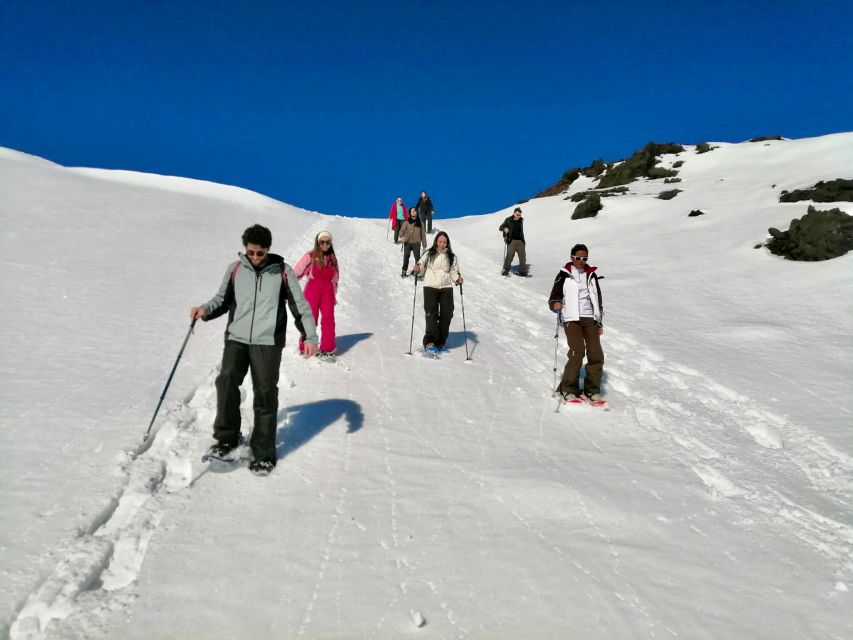
The high point comes at the large lateral craters, around 2,200 meters above sea level. From here, you can look over the snow-covered upper volcano toward Etna’s summit craters. The summit remains active, with volcanic gases visible in suitable conditions.
You also get a wide view down toward the coast. Giardini Naxos and Taormina can be seen from the route, and on a clear day you may see across to Calabria. Visibility controls how much of this panorama you receive. Clouds, wind, and haze can change the view quickly on a mountain.
This viewpoint is the reward for the climb, but it is not a guaranteed postcard. The tour description wisely qualifies the distant views with good visibility. I would book it for the combination of snow, craters, and volcanic ground first, then treat the sea and Calabria views as a bonus.
A photo stop of about 10 minutes is included along the route, and the high crater area provides more time for sightseeing and pictures. The scenery is especially strong because the foreground is so stark: snow, black rock, crater walls, and the broad Sicilian coast below.
What the three-hour schedule feels like
The outing has a simple rhythm:
- You meet outside Chiosco Bar Mareneve near the chairlift.
- You have about 15 minutes for free time and a safety briefing.
- You follow the guide through snowy woods and volcanic ground.
- You stop for photographs and a guided explanation of the eruption area.
- You spend time at the side craters and return to the starting point.
The listed total duration is three hours, with a 5-kilometer round trip and 300 meters of positive elevation gain. The pace will depend on snow conditions, the group, and how much time is needed for safety and explanations.
That duration works well if you are fitting Etna into a wider day in northern Sicily. You are not committing to a full-day expedition, but you still get above the tree line and into a serious volcanic setting. I would not stack it with a demanding activity immediately afterward, since cold, snow, and the climb can leave you tired.
The tour ends back at Chiosco Bar Mareneve. Food is not included, so bring a snack and water. There is no bottled water provided, and the information does not promise a meal stop during the hike.
Gear, clothing, and the cost of being comfortable
The advertised price is $44 per person, which covers the volcanological guide service. That is a fair starting price for a three-hour guided mountain walk, but the true cost depends on what you already own.
You may need to add:
- Snowshoes and trekking poles: €12 per person
- Trekking shoes: €5 per pair to rent
- Windbreaker: €5 to rent
- Parking: €5 on weekdays or €8 on Sundays and public holidays
- Food and water
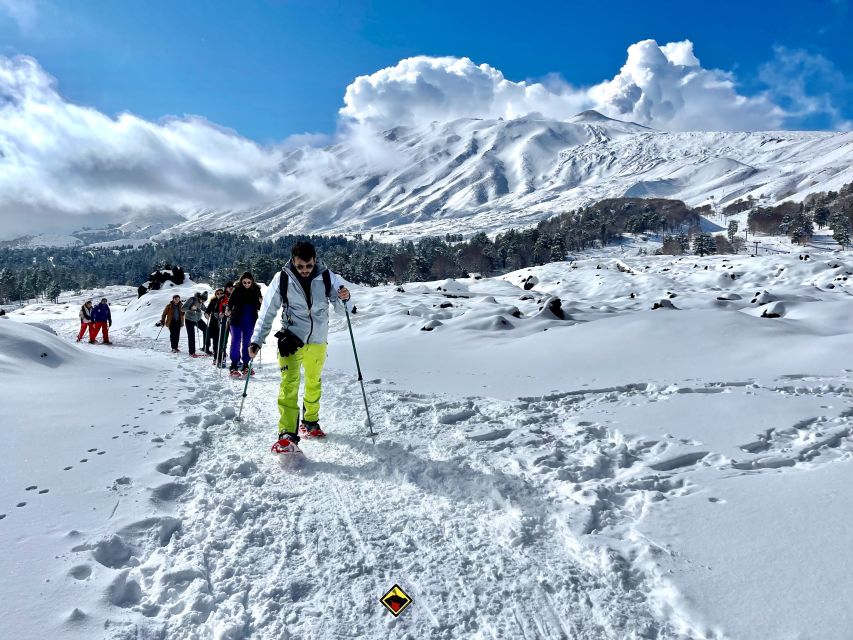
A ski suit is not included. Neither are a jacket, gloves, hat, sunscreen, or rain gear. You should arrive with warm, breathable layers, long pants, hiking shoes, gloves, a hat, sunglasses, sunscreen, and clothing that can handle snow and rain.
Bring a change of clothes if you have room. Snow and mountain weather can leave clothing damp, especially if you sit or kneel for photographs. A windproof outer layer is particularly useful because conditions can feel much colder in open crater country than in the forest.
Do not arrive in sandals, flip-flops, open-toed shoes, or high heels. Those choices are unsafe and specifically not allowed. If you need to rent shoes, use an authorized rental shop on site and allow time to get fitted before the briefing.
Who should book this winter Etna outing
I would recommend this for someone who wants more than a standard sightseeing stop at Etna. You get active time outdoors, volcanic features close at hand, and a guide who can explain the geology and eruption damage.
It suits you best if you:
- Have a reasonable level of fitness
- Enjoy walking on snow and uneven ground
- Want a shorter mountain experience rather than a full-day hike
- Can handle cold, wind, and changing weather
- Like photography and dramatic natural scenery
- Want to see Etna’s north side in winter
I would think twice if you have mobility limitations, back problems, heart or respiratory conditions, epilepsy, high blood pressure, recent surgery, or another medical issue listed among the restrictions. People afraid of heights may also find the crater area uncomfortable.
The activity is not described as suitable for a low level of fitness. That does not mean you need to be an expert hiker, but you should be comfortable with a 300-meter climb while wearing snowshoes. Ask a medical professional if you are unsure about mountain exercise at this altitude.
The guide languages are Italian, French, and English. Choose this outing only if one of those languages works for you, since the safety briefing and volcanic explanations are important parts of the experience.
Weather can change the whole experience
Etna is not a controlled outdoor attraction. Adverse weather can lead to cancellation or postponement, and the operator says you will be advised as early as possible if conditions are unsafe.
That flexibility is sensible. Wind, snow, visibility, and the condition of the route all matter at 1,800 to 2,200 meters. A canceled outing is frustrating, but a guide should not take a group onto exposed crater terrain in poor conditions simply to keep a schedule.
You can cancel up to 24 hours in advance for a full refund, and the reserve-now, pay-later option keeps your plans flexible. Those terms are useful for a weather-dependent activity, especially if your Sicily schedule is still changing.
I would keep a spare day or at least some flexibility around the booking if Etna is a major priority. If conditions are clear, you get the best chance of seeing the sea, Taormina, Giardini Naxos, and possibly Calabria. If cloud closes in, the nearby volcanic features still provide the main reason to go, but the long-distance view may disappear.
My verdict: book it for snow, lava, and a real climb
Book this snowshoe trek if you want a practical, three-hour introduction to Etna’s winter side. Its best features are specific and memorable: snowy forest, black lava, the 2002 eruption zone, large side craters, and views toward both the coast and the active summit.
The guide service and views are the strongest parts of the experience. Just budget for equipment and parking, arrive early enough to deal with busy ski traffic, and dress for mountain weather rather than mild Sicilian sunshine.
Skip it if you want a flat walk, guaranteed clear views, or an outing with no extra rental costs. For an active visitor who accepts those limits, $44 is a good value for guided access to one of Etna’s most unusual winter settings.
FAQ
How long is the Etna snowshoeing trek?
The activity lasts three hours. The route is about 5 kilometers round trip and includes 300 meters of total uphill elevation gain.
Where is the meeting point?
Meet in the parking lot near the active chairlift at Etna Nord in winter, outside Chiosco Bar Mareneve, also identified as Chiosco Bar Mareneve di Ferraro.
What equipment is included?
The volcanological guide service is included. Snowshoes and trekking poles are not included and can be rented from authorized shops on site for €12 per person.
Can I rent hiking shoes or a windbreaker?
Yes. Trekking shoes can be rented on site for €5 per pair, and a windbreaker can be rented for €5. A ski suit is not included.
What views can I see from the route?
The route can provide views of the sea, Giardini Naxos, and Taormina. In good visibility, you may also see Calabria. From the side craters, you can look toward Etna’s snow-covered summit and its gas-emitting summit craters.
Is the tour available in English?
Yes. The live guide service is offered in Italian, French, and English.
What happens if the weather is bad?
In adverse weather, the excursion may be canceled or postponed. You will be advised as early as possible. You can also cancel up to 24 hours before the activity for a full refund.
Just added around Catania
- Mount Etna Advanced Trekking: Private Full-Day Tour from Catania★ 5.0 · 21 reviews
- Trekking in the morning on Mount Etna★ 5.0 · 2 reviews
- One Day Tour in Catania and Trekking on Etna★ 5.0 · 2 reviews
- Sunset Trekking on Mount Etna★ 5.0 · 3 reviews
- Nature Reserve ,Trekking Eco Tour in Iblei National Park★ 5.0 · 27 reviews
- Etna trekking and wine tasting★ 5.0 · 28 reviews
- From Catania: Private mt. Etna trekking and pic-nic★ 5.0 · 37 reviews
- Mount Etna: trek with vintage car, tasting sicilian produtcs★ 5.0 · 5 reviews
Volcano Treks, compared.
Mount Etna: Trek to 3000m with cable car and 4×4
Read our review →
Mount Etna: Summit Crater Trek with Cable Car
Read our review →
Etna: summit craters trekking with volcano guide 3350mt
Read our review →
Mount Etna Trekking Tour Beyond the Tourist Trails
Read our review →
Mount Etna: Guided Trek 3,000 Meters to the Summit
Read our review →
Etna Sunset Tour: Volcano trek, Cave & tasting from Catania
Read our review →
Browse the lists this trek appears in