
Review · ITALY
Genoa: Columbus Trail Urban Trekking with Wine & Local Tastings
Genoa’s Columbus Trail pairs a 4-kilometer walk through the city’s old lanes with a generous Ligurian tasting at the end. You pass Columbus’s house, the Old Port, Via del Campo, UNESCO-listed Via Garibaldi, and the Castelletto viewpoint before returning to the starting area.
I like the small group, limited to six, and the way the route mixes major sights with small details such as votive shrines and artisan shops. I also like that the tasting includes two local wines, pesto made in a mortar, focaccia, cheeses, and cold cuts rather than just a token snack.
The main drawback is the route itself: cobblestones, slopes, and a short but demanding climb to Castelletto make this a poor choice for anyone with reduced mobility or anyone hoping for an easy, flat city stroll. Guides such as Gaia and Barbara bring a local, personal touch, but the pace still depends on walking comfortably for three hours.
Key points to know before booking
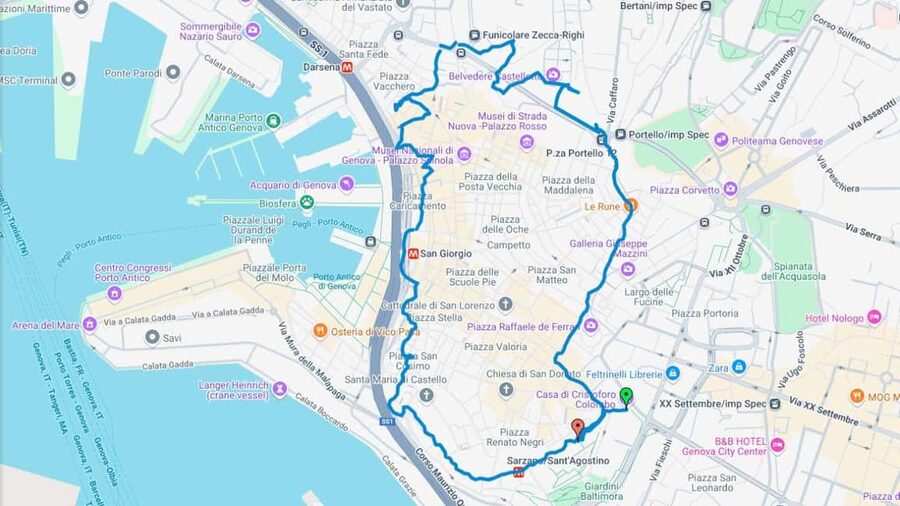
- A circular 4-kilometer route: Start near the House of Columbus and return to Porta Soprana after seeing the Old Port, Castelletto, Via Garibaldi, and Piazza De Ferrari.
- A small group of up to six: This is a more personal way to explore Genoa than a large walking tour.
- Castelletto is the visual high point: A short climb leads to one of Genoa’s best city views, followed by a ride down on the historic Castelletto Elevator.
- The food stop is part of the experience: Expect Genoese focaccia, mortar-made pesto, local cheeses, cold cuts, and two glasses of Ligurian wine.
- Local guides lead the walk: The team includes Gaia and Barbara, with tours offered in English or Italian.
- Plan for uneven streets: Comfortable shoes are essential, and the route is not suitable for people with reduced mobility.
Why the Columbus Trail is a smart way to see Genoa
Genoa can be hard to read at first. Its old center is a maze of narrow lanes, grand palaces, steep passages, churches, and busy harbor streets. The Columbus Trail gives you a clear thread through that maze without reducing the city to a list of famous buildings.
The route uses Christopher Columbus as its organizing idea, beginning near the House of Columbus and moving through places linked to Genoa’s civic, artistic, and working life. You are not simply walking from one photo stop to another. The guide connects the streets, buildings, local figures, and food traditions into one three-hour outing.
I especially like the balance between the main sights and smaller details. You see Palazzo San Giorgio and the Genoa Aquarium, but you also pass votive shrines built into walls, independent shops on Via di Ravecca, and streets connected with singer-songwriter Fabrizio De André. That mix gives you a better sense of Genoa than a route made only of grand monuments.
The tour costs $77 per person. That is not the lowest price for a city walk, but the value is easier to see when you count the small group, the guide, the trail map and stamped legend, the local business discounts, and the closing tasting. You also receive two glasses of wine, not merely a sample pour. For someone who wants history, orientation, and food in one booking, the price is reasonable.
A few more treks around Italy worth a look
- Catania: Mount Etna Sunset Trekking with Wine Tasting
★ 5.0 · 140 reviews - Vernazza: Panoramic Vineyard Trekking Tour w/ Wine Tasting
★ 4.9 · 126 reviews - From Siracusa: Etna Tour – Trek, Wine and Food
★ 4.8 · 50 reviews
Starting beside Columbus’s house and Porta Soprana
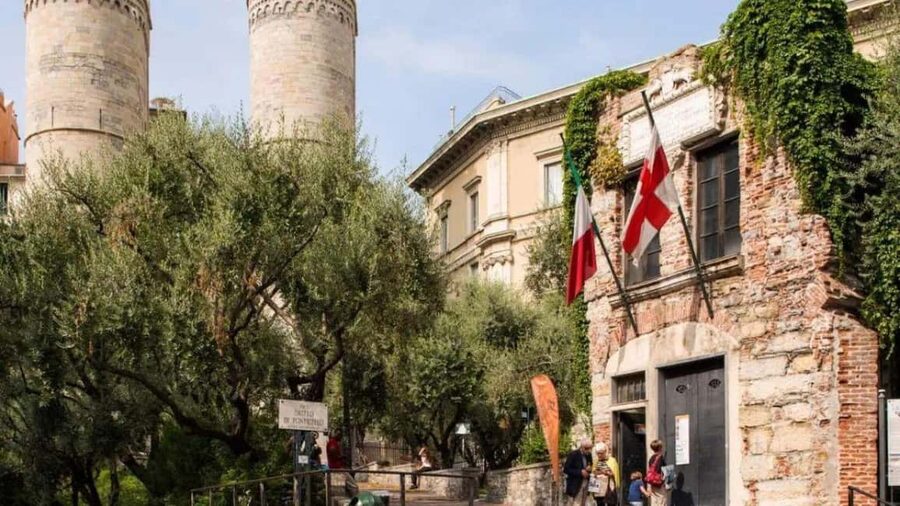
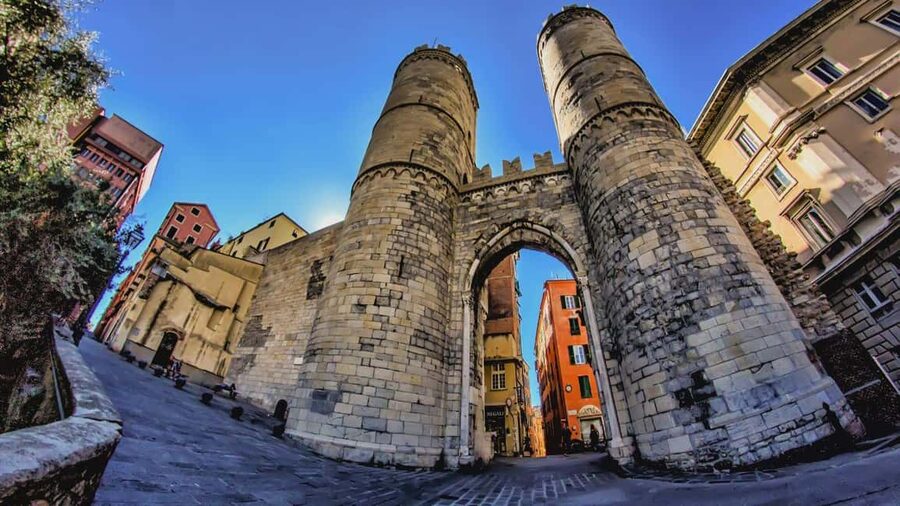
The walk begins at the House of Columbus, near Porta Soprana. This is a useful meeting point because it places you beside one of Genoa’s best-known medieval gateways and close to the first part of the old center.
You should arrive about 10 minutes early. The route also uses BioTigullio5Terre on Via di Ravecca 51/r as its operational base and tasting stop. There, you receive the Columbus Trail legend with an official stamp and meet the guide.
The House of Columbus is a modest starting point rather than a major indoor attraction included in the tour. Entrance fees to museums and attractions are not part of the price, so you should not assume that the walk includes admission to every sight along the way. The value here is the street-level setting and the context provided by the guide.
From the start, you move toward Via di Ravecca. This street has shops, craftspeople, and a more everyday feel than a polished monument district. Discounts are available at selected businesses along the street, which adds a practical reason to pay attention to the guide’s local recommendations.
From Sarzano to the Old Port
The first section passes through Piazza Sarzano, the Oratory of Sant’Antonio Abate, the Faculty of Architecture, and Via Mura delle Grazie. These stops show how many layers of Genoa sit close together. Religious buildings, university life, defensive walls, and residential streets appear within a compact area.
The route then continues toward San Giacomo della Marina and the Church of San Cosimo. Look for the small votive shrines set into the walls. They are easy to miss if you are walking alone, yet they reveal the personal and devotional side of the old city.
This is where having a guide matters most. Genoa’s center can feel visually crowded, with details above eye level and side streets that seem to lead nowhere. A local guide can point out what deserves a closer look and explain why an ordinary-looking corner belongs in the story of the city.
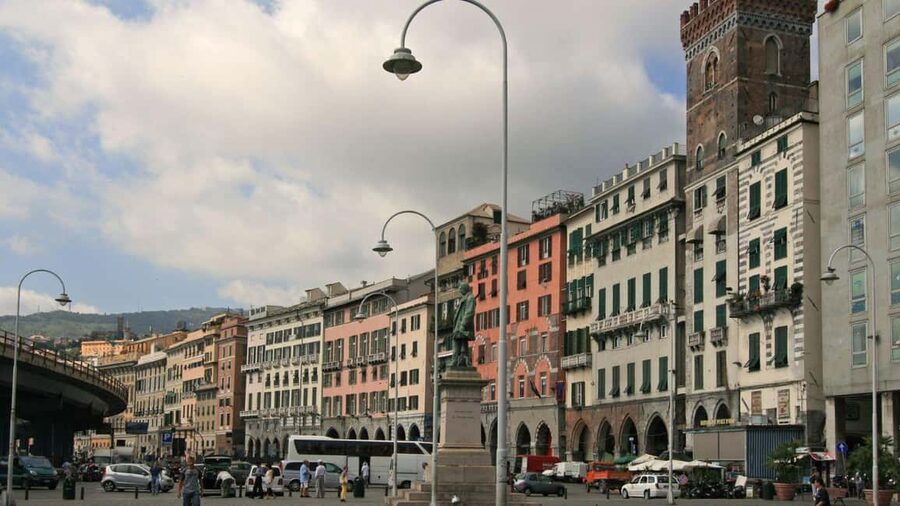
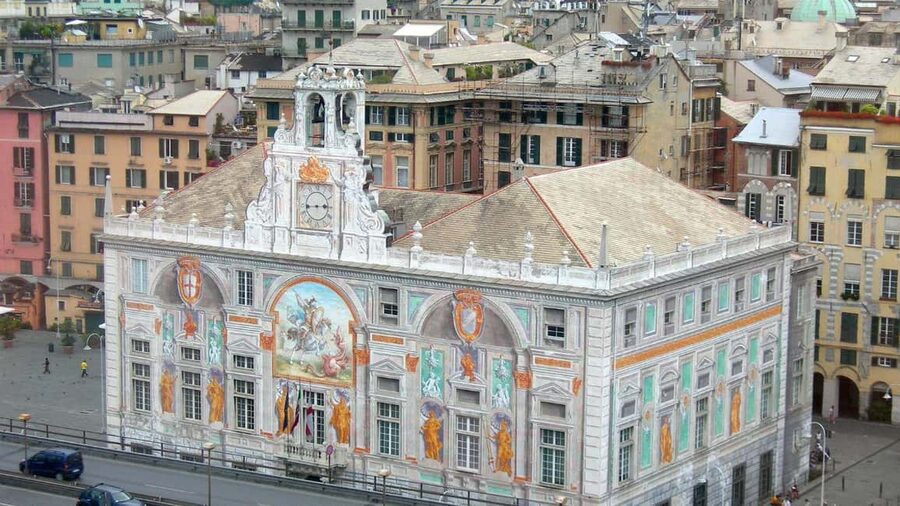
At Palazzo San Giorgio, you have a short visit and break of about 10 minutes. The building is one of Genoa’s major civic landmarks, and its position near the harbor helps explain the city’s long connection with trade and seafaring. The stop is brief, so expect an exterior-focused introduction rather than a full architectural tour.
You also pass the entrance to the Genoa Aquarium. The aquarium itself is not included, and this tour does not try to replace a visit there. Instead, the route lets you see how the modern waterfront meets the older center.
Via del Campo and the climb to Castelletto
The walk continues along Via del Campo, made famous by Fabrizio De André. This gives the route a cultural note beyond churches and palaces. You then reach Piazza Don Gallo and the birthplace of Giuseppe Mazzini, adding political and social memory to the tour.
After this, the route changes character. A short but intense climb leads up to Spianata di Castelletto. The climb is important to understand before you book. It is not a mountain hike, but the combination of slopes, cobblestones, and several hours on your feet requires reasonable fitness.
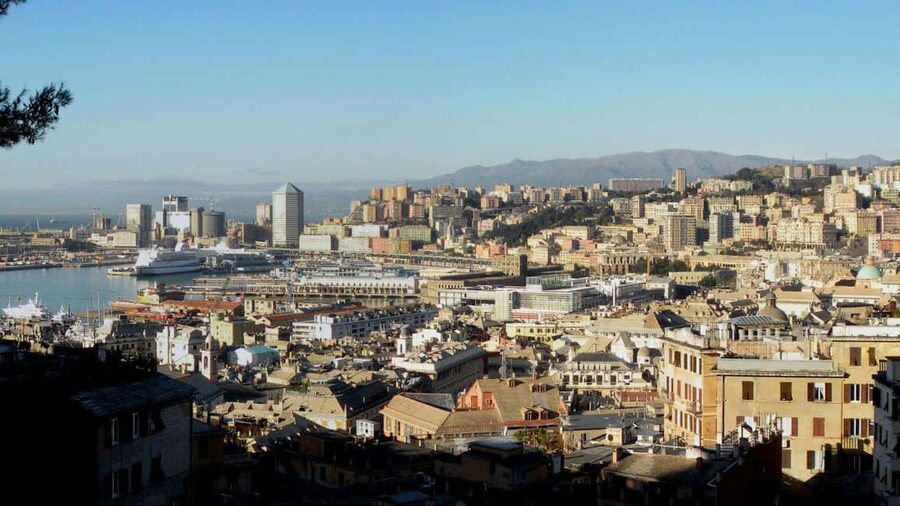
Castelletto is the main viewpoint of the walk. From the terrace, you can look across Genoa from the sea toward the inland hills. This is the moment when the city’s tight lanes make sense. You see how the historic center sits between the harbor and the rising ground behind it.
You get around 20 minutes here for a break, photographs, and explanation. Bring water and wear shoes with a firm sole. The route description specifically warns against unsuitable footwear and reduced mobility, and this section explains why.
The descent comes by the Castelletto Elevator, a charming city lift mentioned by poet Giorgio Caproni. The ride is included as part of the route, and it saves your knees from repeating the climb in reverse. It also adds a small piece of local transport history to the experience.
Same trailhead, a different route:
- Mount Etna: Trek to 3000m with cable car and 4×4
★ 4.6 · 3,823 reviews - Mount Etna: Summit Crater Trek with Cable Car
★ 4.8 · 1,875 reviews - Etna: summit craters trekking with volcano guide 3350mt
★ 4.7 · 1,712 reviews - Catania: Mount Etna Trekking Tour Beyond the Tourist Trails
★ 4.9 · 1,596 reviews
Via Garibaldi, De Ferrari, and the return loop
Back in the lower city, the walk reaches Piazza Fontane Marose. You then take Via Garibaldi, a UNESCO World Heritage Site lined with historic palaces. The street is one of Genoa’s grandest stretches, and it offers a sharp contrast to the narrow lanes visited earlier.
The stop at Piazza Fontane Marose lasts about 10 minutes, with time for photographs and a guided visit. The route does not include museum admission, so think of this as an outdoor architectural walk. You see the setting, hear the story, and can return independently if you want a closer look inside a particular palace.
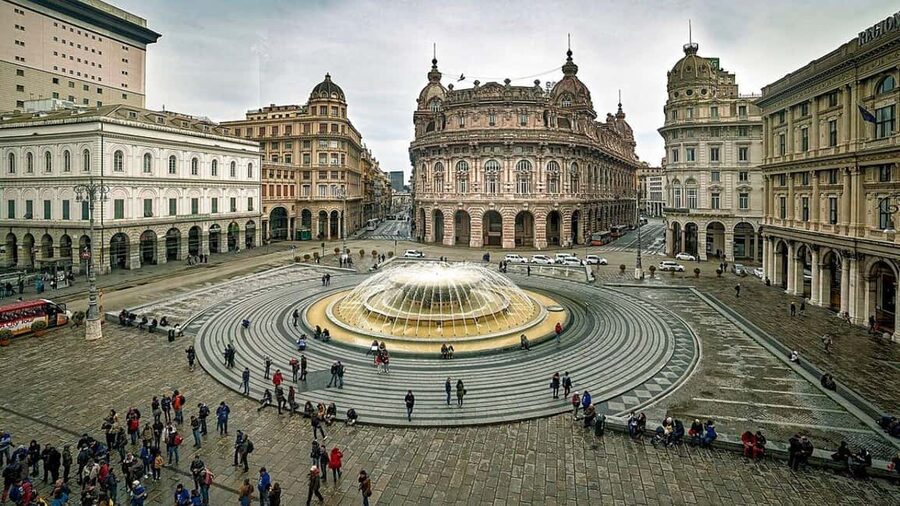
From Via Garibaldi, the route climbs Via XXV Aprile and reaches Piazza Raffaele de Ferrari. This is the heart of modern Genoa, with its broad space and central fountain. The square feels more open than the old lanes, making it a useful final chapter in the walk from medieval streets to the city’s present-day civic center.
The final stretch passes the Palazzo Ducale, the Carlo Felice Theater, and the Palazzo della Borsa before returning to Porta Soprana. This loop is one of the route’s strengths. You do not simply retrace your steps, and you finish close to where you began.
The schedule allows about 10 minutes at Piazza De Ferrari and another 10 minutes at Porta Soprana. These are short stops, so your guide will likely keep the group moving rather than pause for long individual exploration. If you want extensive time inside the Palazzo Ducale or the theater, plan a separate visit.
The Ligurian tasting at BioTigullio5Terre
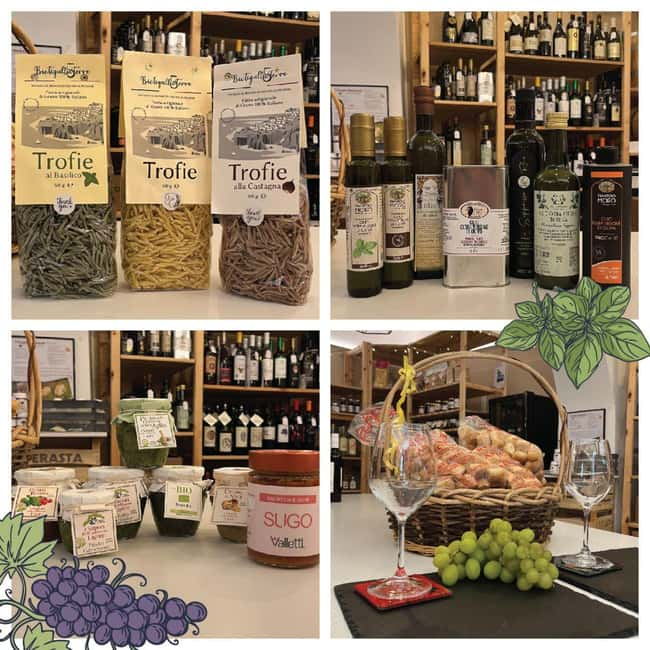
The food and wine stop comes after the walking, at BioTigullio5Terre on Via di Ravecca 51/r. This is more than a convenient snack at the end. It brings together the region’s everyday flavors and gives you a chance to sit down after the climb and city streets.
The tasting includes Genoese focaccia, pesto prepared in a mortar, local cold cuts, and cheeses. The mortar-made pesto is a particularly good detail because pesto is not just a flavor associated with Liguria. Its preparation is part of the local food culture, and seeing the traditional method gives the dish more context.
You also receive two glasses of Ligurian wine. One is a white, either Vermentino or Pigato, and the other is a red, either Ciliegiolo or Rossese. The exact wines can vary within those options, so this is not a fixed winery tasting with a long technical presentation. It is a relaxed introduction to local products after the walk.
The tasting portion is scheduled for about 20 minutes. That is enough for a pleasant sampling, but not a full lunch or an extended food tour. If you usually need a substantial meal, eat beforehand or plan lunch afterward. The tour includes the listed tasting, while extra drinks or food cost more.
This ending also supports the tour’s local focus. The operators work with Ligurian products, shops, and producers, and the experience includes discounts at selected businesses on Via di Ravecca. You get a chance to continue exploring local food after the tour instead of being directed only to large tourist venues.
Group size, language, and guide style
The group is limited to six people. That small size is a major reason to choose this walk over a cheaper large-group option. In narrow Genoese lanes, a small party is easier to keep together, and you have a better chance to ask questions without holding up a long line of people.
Tours are offered in English and Italian. The named guides include Gaia and Barbara. Gaia is described as polite, while Barbara brings strong local knowledge, enthusiasm for Genoa, and a helpful attitude. The guide team comes from Tigullio Trekking and BioTigullio5Terre, with a focus on Liguria, culture, the environment, and food.
The personal style is especially useful here because the route includes places that need explanation rather than grand visual impact. An expert can make a small shrine, a side street, or a literary reference matter to you. The experience is best for people who enjoy listening, asking questions, and noticing details.
The tour is confirmed with at least two participants. It runs in light rain, so bring an umbrella or raincoat if the forecast looks uncertain. Heavy rain or weather alerts can lead to a rescheduled tour or refund.
Who should book this Genoa walking tour?
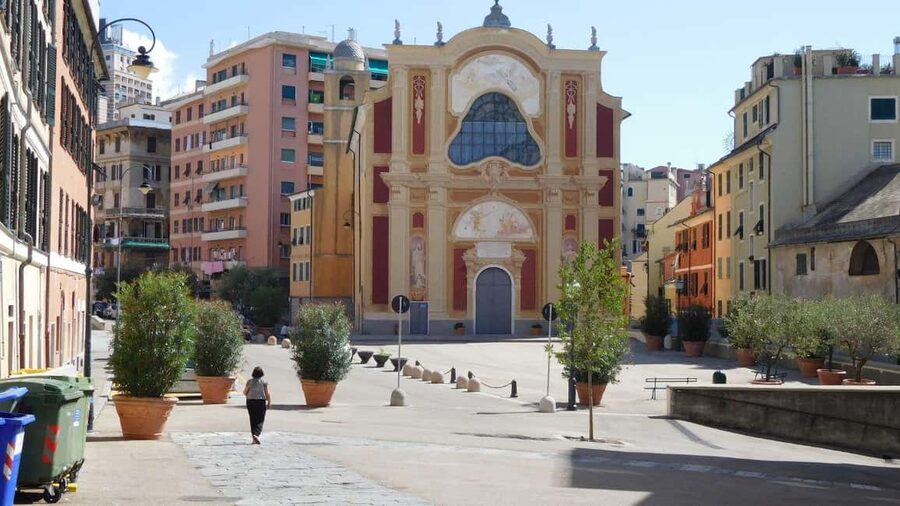
I would choose this for a first visit to Genoa if I wanted a guided introduction that went beyond the aquarium and major palaces. It works well for couples, solo visitors, and small groups who prefer local food and street-level culture to a large bus tour.
It also suits anyone who wants a clear sense of the city before exploring on their own. After three hours, you will have seen several useful districts, learned where Via Garibaldi and Castelletto fit into the city, and finished near the old center with food already sampled.
You should think twice if you dislike hills, uneven pavement, or a steady three-hour outing. The route is not suitable for people with reduced mobility, and the many age restrictions indicate that it is not designed for young children. Babies and children under 16 are listed as unsuitable for the activity.
The walk is also not a substitute for a full museum day. Entrance fees are not included, and stops at major buildings are relatively short. Choose it for context, orientation, and a taste of Genoa, then add museums or longer monument visits separately.
Should you book the Columbus Trail?
Book it if you want a small, local-feeling introduction to Genoa with a strong food finish. The best parts are the varied route, the Castelletto viewpoint, the ride on the city elevator, and the chance to taste pesto, focaccia, Ligurian cheeses, cold cuts, and two regional wines in one outing.
Skip it if you need a flat route, long indoor visits, or a full meal. At $77, the tour makes the most sense when you value a small group, a local guide, the included tasting, and practical orientation through a complicated city center.
FAQ
How long is the Columbus Trail tour?
The experience lasts about three hours and covers roughly 4 kilometers through Genoa’s historic center.
Where does the tour begin?
The meeting point is at the House of Columbus near Porta Soprana, with the operational starting point also connected to BioTigullio5Terre at Via di Ravecca 51/r.
Where does the tour finish?
The walking loop returns to the Porta Soprana area, and the final tasting takes place at BioTigullio5Terre on Via di Ravecca 51/r.
What food is included?
The tasting includes Genoese focaccia, pesto made in a mortar, local cold cuts, and cheeses.
How much wine is included?
Two glasses of Ligurian wine are included: one white, either Vermentino or Pigato, and one red, either Ciliegiolo or Rossese.
Is the tour offered in English?
Yes. The live guide can lead the experience in English or Italian.
How large is the group?
The group is limited to six participants.
Is the route suitable for people with reduced mobility?
No. The route includes cobblestones and slopes, including a climb to Castelletto, and is not suitable for people with reduced mobility.
What happens if it rains?
The tour operates in light rain, so you should bring an umbrella or raincoat. Heavy rain or weather alerts can lead to rescheduling or a refund.
Just added around Italy
- Wild Walk – Discovering the hidden paths★ 5.0 · 31 reviews
- Wine Hiking Sip & Trek★ 5.0 · 3 reviews
- Innerkofler-De Luca via ferrata to Monte Paterno★ 4.0 · 4 reviews
- Dolomites Trekking Experience★ 4.5 · 3 reviews
- Trekking an Island of Palmaria★ 4.5 · 6 reviews
- BarCa Winery Cinqueterre Trekking & Wine Tasting & Pesto Class★ 5.0 · 48 reviews
- Mount Etna Advanced Trekking: Private Full-Day Tour from Catania★ 5.0 · 21 reviews
- Trekking in the morning on Mount Etna★ 5.0 · 2 reviews
Wine Tours, compared.
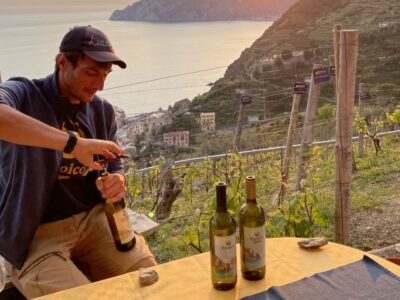
Vernazza: Panoramic Vineyard Trekking Tour w/ Wine Tasting
Read our review →
BarCa Winery Cinqueterre Trekking & Wine Tasting & Pesto Class
Read our review →
Camino Private Package wine experience PICKUP from CAPE TOWN
Read our review →
Browse the lists this trek appears in