
Review · CUSCO
From Cusco: Via Ferrata & Zip Line with lunch
Pachar’s Via Ferrata turns a sheer rock wall above the Sacred Valley into a climb you can manage with steel rungs, a harness, and a guide. Then you come back down by zip line, including one run up to 700 meters long. It is a smart pick if you want mountain scenery with a real physical challenge, not just a lookout stop.
I like two things here: the zip-line descent makes the climb feel worthwhile, and you can choose between a four-course meal in a transparent Sky Lodge or a simpler box lunch at the top. The main consideration is the long road ride from Cusco and the intermediate difficulty. You need steady health, a head for heights, and enough energy for a full outing.
Key points to know
- Pachar sits between Urubamba and Ollantaytambo, about 33 miles from Cusco.
- The Via Ferrata uses fixed iron rungs, so no previous climbing experience is required.
- The longest zip line reaches 700 meters, with shorter lines of about 250 meters.
- Lunch comes in two styles: a four-course meal in the Sky Lodge or a box lunch near the highest point.
- Start early if you can, since an October departure found more shade while still keeping the blue-sky views.
- Guide Americo received special praise for calm, hands-on help with foot and hand placement.
The rock climb begins in Pachar
The day starts with hotel pickup in Cusco’s historic center. You ride toward the Sacred Valley, following the route that links Pisac and Ollantaytambo. The trip takes about 110 minutes each way, so transportation accounts for a large part of the outing.
That long ride is the chief tradeoff. You do not simply walk from a Cusco hotel to an attraction. Still, the road takes you out of the city and toward the valley, where the setting changes from urban streets to wide mountain views. If you are staying in the Sacred Valley, ask carefully about pickup details before booking, since the stated pickup point is Centro Histórico in Cusco.
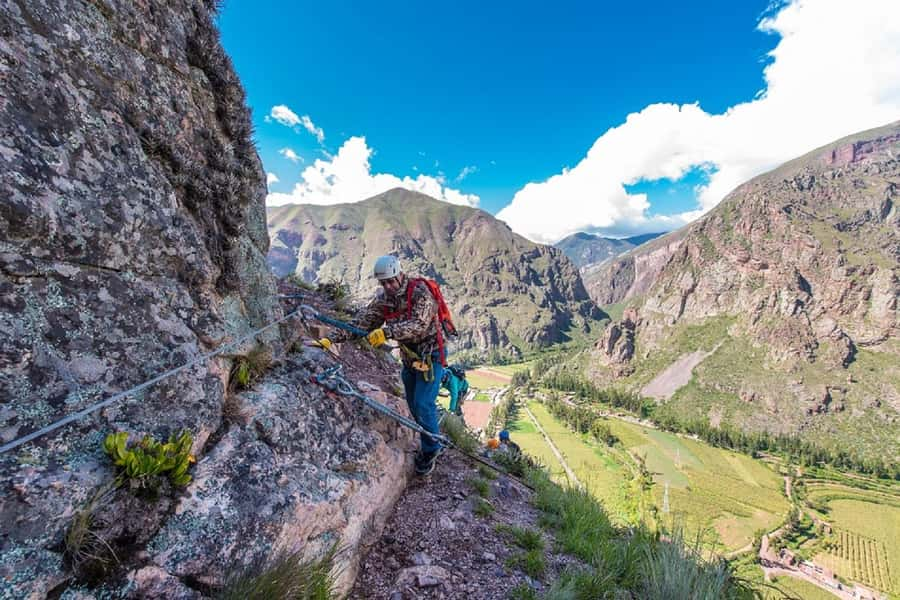
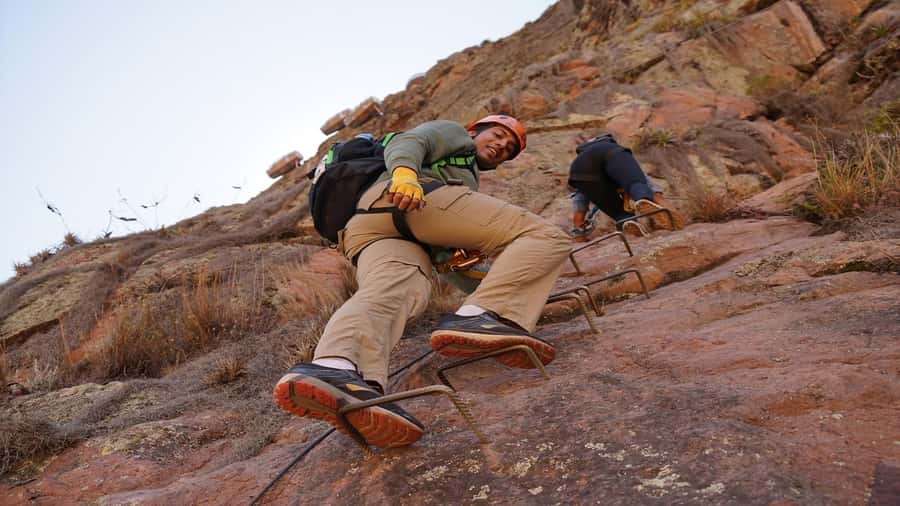
At Pachar, the base sits near the rock wall used for the activity. You receive a helmet, harness, gloves, and the appropriate safety system for the Via Ferrata. The guides explain how to use the equipment before you begin, and instruction is available in English or Spanish.
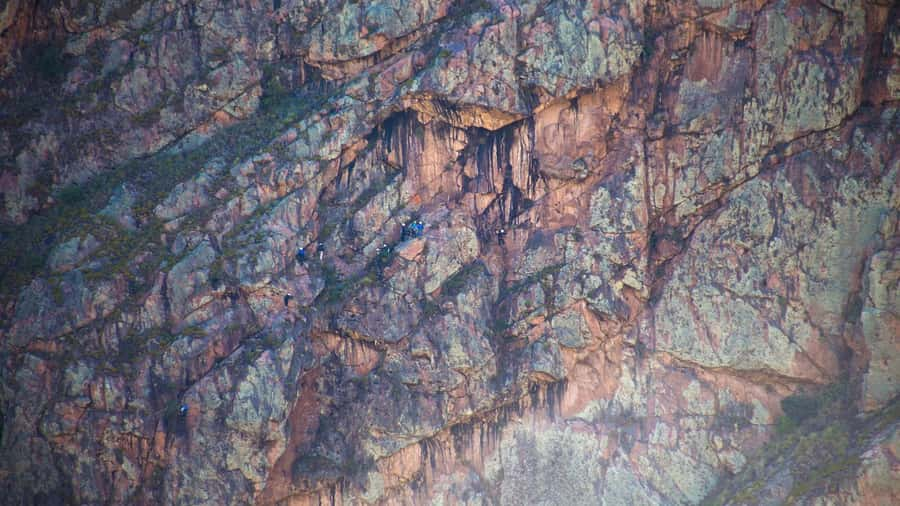
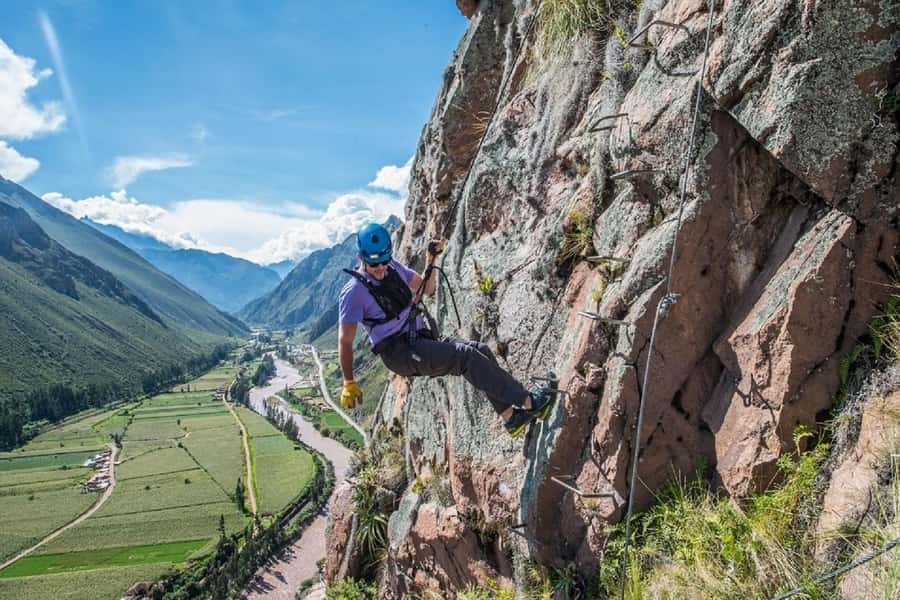
The Via Ferrata itself is not free climbing. You follow a route fitted with iron rungs anchored into the rock. Your hands and feet move from rung to rung while your safety equipment keeps you attached to the route. That makes the activity accessible to first-time climbers, but it does not make it easy.
The stated difficulty is intermediate. You should expect an active climb rather than a gentle scenic walk. A previous participant described it as challenging without becoming unpleasant, which is a useful way to set your expectations. You need to be comfortable with heights and able to maintain effort for about an hour of climbing.
More Via Ferrata Routes in Cusco:
- From Cusco: Via Ferrata and Sky Lodge Zipline
★ 5.0 · 16 reviews - Cusco: Via Ferrata, Skybike, and Rappel Adventure
★ 5.0 · 3 reviews - Banff: Mount Norquay 2.5 or 4-Hour Guided Via Ferrata Climb
★ 4.9 · 305 reviews
Why the fixed rungs matter for first-time climbers
I like the Via Ferrata format because it gives you a clear physical task without requiring previous climbing skills. You do not need to bring climbing technique or know how to set up ropes. The equipment and fixed route let you focus on the next rung, your breathing, and the views.
That simplicity can also make the route feel more demanding than the name suggests. You still pull and push yourself upward, and you may need help deciding where to place a hand or foot. Guide Americo was praised for stepping in when participants were unsure of their position, a detail that matters on a vertical route.
You should listen closely during the safety briefing. The equipment is included, but your attention is still part of the safety system. Move at the guide’s pace, use the fixed points as instructed, and tell the guide if you need a pause.
No prior experience is required, but the tour is not suitable for everyone. Children under eight, pregnant women, and people with back problems should not take part. The maximum listed weight is 265 pounds. You also need to be in good health and comfortable with height exposure.
The high point offers two very different lunch choices
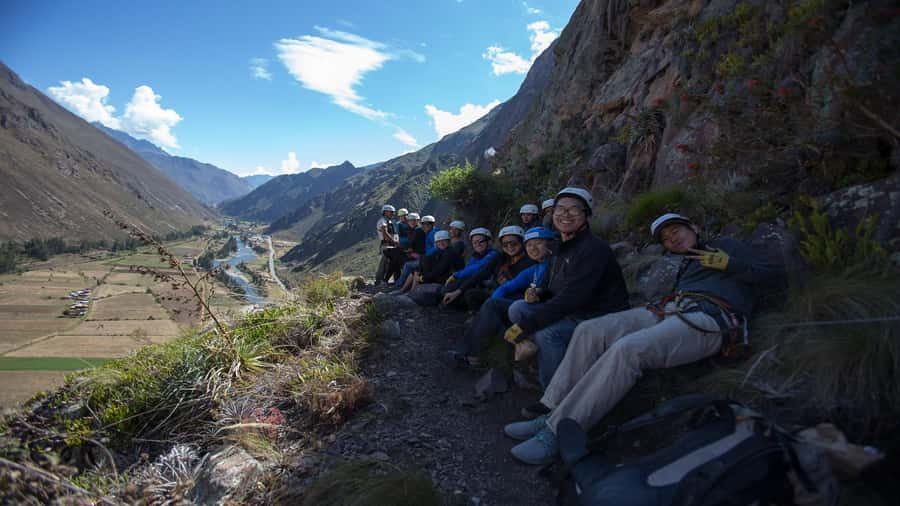
After roughly an hour on the Via Ferrata, the route reaches a suspension bridge and the highest point of the outing. This is where the lunch choice shapes the feel of your day.
The box lunch option is the simpler, more active version. You cross the suspension bridge and eat near the top of the route, with views over the Sacred Valley. It keeps the focus on the climb and the scenery, and it may suit you if you prefer a straightforward meal without adding a special dining stop.
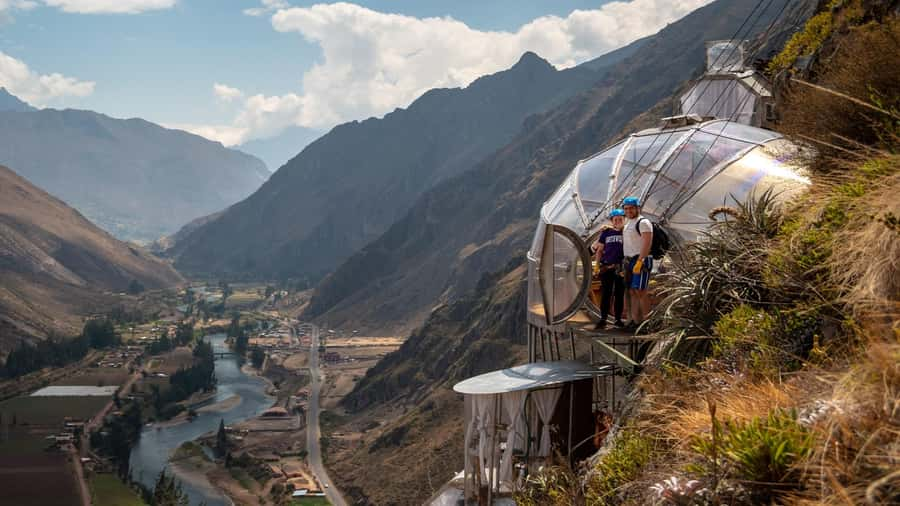
The Sky Lodge lunch is the more unusual option. The transparent capsule hangs on the mountain more than 400 meters above the valley. Inside, you receive a four-course meal with soup, salad, a first course, and dessert. The view is the main event, but the meal gives the activity a more polished finish than a standard packed lunch.
This choice also affects the price and likely the pace, so check the exact option when you book. The information provided lists both lunch styles, but it does not give separate prices for each. At $159 per person, the tour is not a budget activity, especially when compared with a simple valley excursion. The Sky Lodge meal helps explain the higher cost, while the box lunch gives you a less elaborate way to enjoy the same climb and zip lines.
I would choose the Sky Lodge if the meal itself is a major reason you are booking. If your priority is action, the box lunch may be enough. Either way, you should expect the food stop to include remarkable views rather than a quiet indoor restaurant setting.
The zip lines turn the descent into the reward
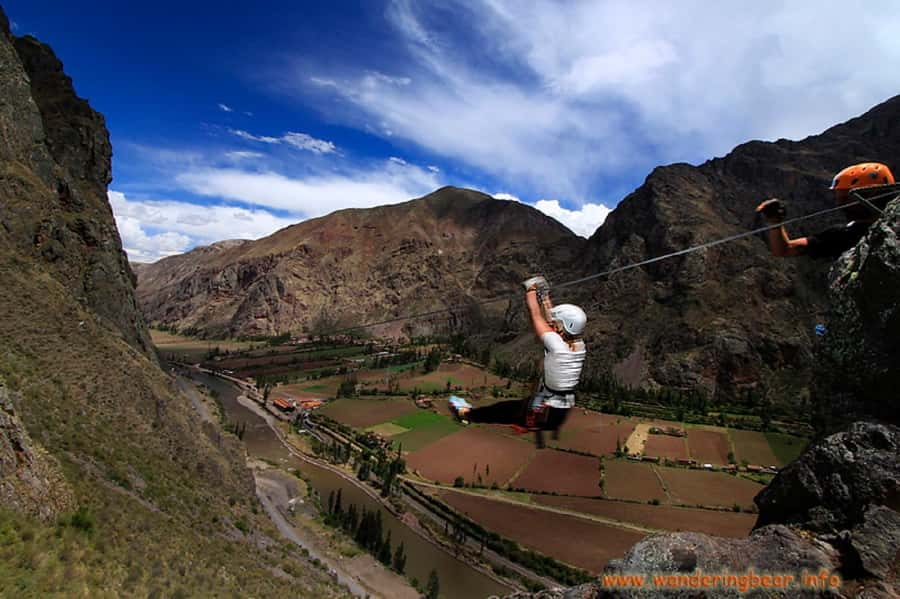
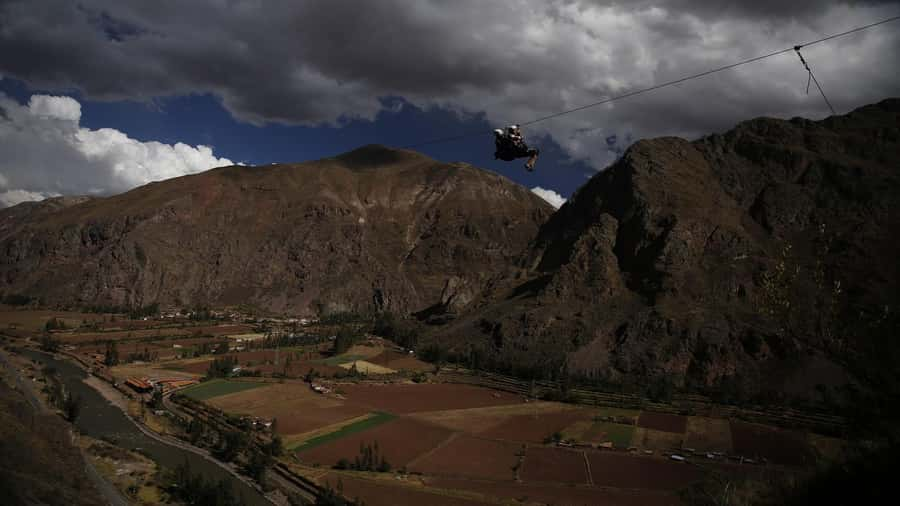
After lunch, you descend through the Sacred Valley by zip line. The route includes several lines, with shorter runs of about 250 meters and a longest line of 700 meters. That final figure is substantial enough to make the descent feel like the payoff for the climb.
The order matters. You first work your way upward on the Via Ferrata, then return to the base by flying across the rock face. One participant described the zip lines as the only way they would want to come down from a hike in the future. That captures the appeal: you avoid retracing the climb on foot, and the return becomes faster and more playful.
The zip line equipment is included, with its own harness, helmet, gloves, and zip-line set. The guides handle the instructions and help you prepare for each run. You should still expect height, speed, and exposure. If you can manage the Via Ferrata but dislike the thought of suspended travel, tell the guide before the descent begins.
The shorter lines provide a useful progression before the longest run. Exact line order and operating details can depend on conditions and the route in use, so do not assume every departure will feel identical. Weather and capacity affect availability, and the final confirmation comes after booking.
A few more treks around Cusco worth a look
- From Cusco: 7 Lakes Ausangate Trek with Breakfast and Lunch
★ 4.8 · 360 reviews - From Cusco: Rainbow Mountain Hike + Lunch
★ 4.5 · 2 reviews - Doi Inthanon Private Tour with Trek & Lunch from Chiang Mai
★ 5.0 · 622 reviews - From Sapa: 1-Day Guided Trek to Lao Chai & Ta Van with Lunch
★ 4.9 · 416 reviews
Early starts bring better comfort on the rock
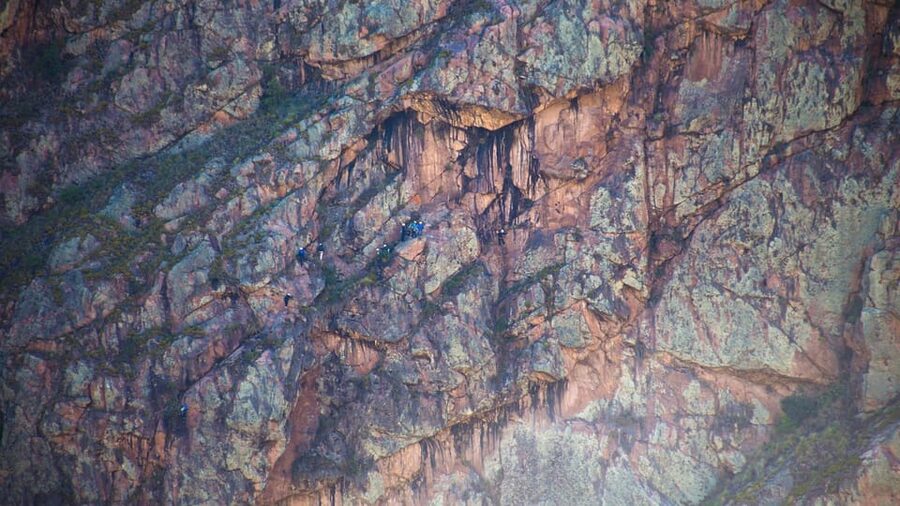
An early departure is practical for more than schedule reasons. A participant who went in October recommended starting as early as possible to find more shade while still enjoying blue skies and valley views. On an exposed rock wall, that can make a real difference.
The tour lasts about five to eight hours, including the drive to Pachar and the return to Cusco. The listed transport segments total roughly 220 minutes, or a little under four hours. That leaves the rest of the day for the activity, meal, preparation, and time at the base.
You should not plan another demanding activity immediately afterward unless your schedule is flexible. The climb is intermediate, and the road ride can be tiring even though you are sitting for much of it. A morning start also gives you a better chance of finishing without turning the whole day into an evening return.
Bring a jacket because mountain weather can shift, along with sunscreen and sunglasses for exposed sections. Wear comfortable sports shoes with a secure fit, long pants, and clothes that allow your legs and arms to move. A small daypack and reusable water bottle are useful, but avoid carrying more than you need on the climb.
What the $159 price really covers
At $159 per person, this is a premium half-day to full-day adventure rather than a low-cost add-on. The fee includes transportation from Cusco and back, professional guides, both sets of safety equipment, and your choice of lunch. You are paying for a complete operation, not just admission to a zip line.
The equipment matters. You do not need to rent a helmet, harness, gloves, or Via Ferrata set separately. You also avoid arranging transport to Pachar, which would otherwise take planning and could make the day more complicated.
The value is strongest if you want all three parts: guided climbing, a serious zip-line descent, and a meal with mountain views. If you only want a quick zip line, the price may feel high. If you want a structured adventure with transport and lunch included, it is easier to justify.
I also like the flexibility of choosing a box lunch instead of the Sky Lodge meal. You are not forced into the most elaborate version of the experience. The four-course meal is a reason to pay more attention to the package details, but the outdoor activity remains the core value.
Free cancellation up to 24 hours before the activity and the reserve-now, pay-later option reduce the risk of committing early. Christmas dates carry a 50 percent rate increase, so avoid assuming the regular $159 price applies during the holiday period.
The practical limits of the day
Capacity is restricted for each shift, and weather affects operation. Book in advance, but understand that availability is confirmed after booking. This is especially important if you have a tight Sacred Valley schedule or a train reservation later in the day.
The exact duration is listed as five to eight hours, not one fixed length. Road conditions, group pace, weather, and the selected lunch option can affect the timing. Leave room in your Cusco plans rather than treating the return time as exact.
The activity takes place at Pachar, between Urubamba and Ollantaytambo. It is not a climb in central Cusco, and it is not a substitute for a full archaeological tour of the Sacred Valley. The attraction is the rock route, the views, and the physical experience.
A good guide makes a real difference. The instruction is available in English and Spanish, and Americo was singled out for helping with hand and foot placement while keeping the experience comfortable. Since guide assignments can vary, I would still treat that as a helpful example rather than a promise that he will lead every departure.
Who should book this Pachar adventure?
I would recommend it to you if you want an active day in the Sacred Valley and like the idea of earning your views. It suits first-time climbers who are fit, open to instruction, and comfortable with height. The fixed rungs make the route approachable, while the intermediate rating keeps it from feeling like a simple walk.
It is also a good match for people who want one organized day rather than separate bookings for transport, climbing, zip lines, and lunch. The return by zip line gives the outing a clear shape: climb up, eat at the high point, then fly back down.
I would hesitate if you have back problems, are pregnant, weigh more than 265 pounds, or strongly dislike heights. I would also think twice if you have little time in Cusco and cannot spare the long ride to Pachar.
The best preparation is simple: start early, wear secure sports shoes and long pants, pack sunscreen and water, and leave your schedule open around the stated five to eight hours. You do not need past climbing experience, but you do need a reasonable level of health and a willingness to work.
Should you book the Via Ferrata and zip line?
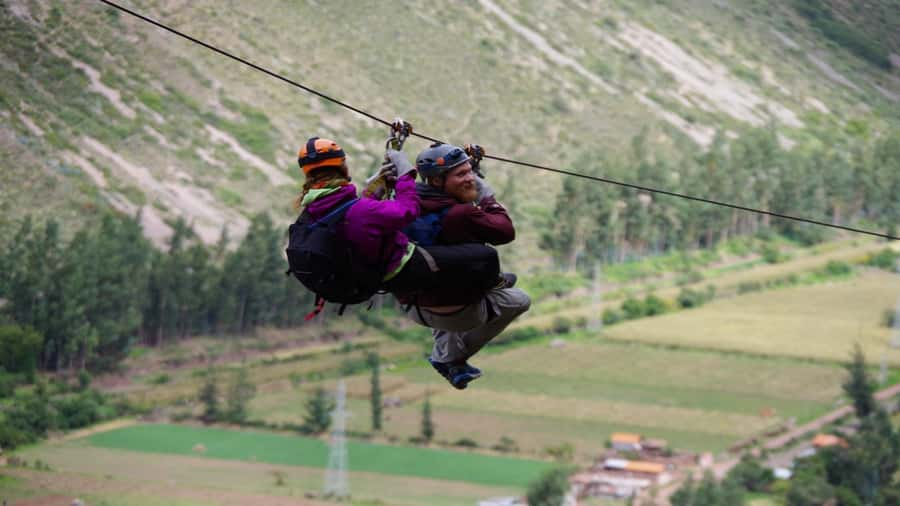
Book this tour if you want more than a viewpoint and are ready for a physical day. The combination of fixed-rung climbing, a suspension bridge, a long zip-line descent, and a meal above the Sacred Valley gives you several distinct experiences in one outing.
Choose the box lunch if action matters most and the Sky Lodge if the four-course meal in a transparent mountain capsule is part of the appeal. At $159, it is worth the cost for a well-organized adventure with equipment, guides, transport, and food included. It is less convincing for anyone seeking a cheap or relaxed day.
For the best shot at shade and clear views, request an early start. If you are healthy, steady with heights, and willing to spend much of the day traveling to and from Pachar, this is a strong choice for adding real adventure to a Cusco itinerary.
FAQ
Do I need previous climbing experience?
No. Previous experience is not required, but the Via Ferrata has an intermediate difficulty level and requires good health and tolerance for heights.
Where does the Via Ferrata take place?
The activity takes place at a rock wall in Pachar, between Urubamba and Ollantaytambo in the Sacred Valley.
How long is the tour?
The total duration is about five to eight hours. The bus ride from Cusco to Pachar takes about 110 minutes, followed by a similar return trip.
What lunch options are available?
You can choose a box lunch at the high point after the Via Ferrata or a four-course à la carte lunch in the Sky Lodge. The Sky Lodge menu includes soup, salad, a first course, and dessert.
How long are the zip lines?
The tour includes several zip lines. The longest is about 700 meters, while the shorter lines are about 250 meters.
What languages do the guides speak?
Instruction is available in English and Spanish.
Who should not take this activity?
The activity is not suitable for children under eight, pregnant women, or people with back problems. You must also weigh less than 265 pounds and be in good health.
Just added around Cusco
- Classic Choquequirao Trek – 5 Days / 4 Nights★ 5.0 · 52 reviews
- Short Inca Trail 2 Day Hike to Machu Picchu with Permits & Train★ 5.0 · 51 reviews
- 2 Day Tour Throughout the Short Inca Trail to Machu Picchu★ 5.0 · 36 reviews
- Small Group: 4-Day Inca Trail Trek to Machu Picchu★ 5.0 · 33 reviews
- 5-Day: Salkantay Trek to Machupicchu and Humantay Lake★ 5.0 · 42 reviews
- 2 Day – Short Inca Trail to Machu Picchu – Group Service★ 5.0 · 30 reviews
- 5 Day – Salkantay trek to Machu Picchu – Group Service★ 4.5 · 27 reviews
- Salkantay Trek Standard 5D/4N★ 5.0 · 48 reviews
Via Ferrata Routes, compared.
Banff: Mount Norquay 2.5 or 4-Hour Guided Via Ferrata Climb
Read our review →
Sant Feliu de Guixols: Climb Via Ferrata Cala del Molí
Read our review →
Small-Group Guided Via Ferrata Climbing with Banff’s Best Views
Read our review →
Via Ferrata in Gran Canaria. Vertical adventure park. Small groups
Read our review →Browse the lists this trek appears in