
Review · POKHARA
Poon hill Trek 3 days
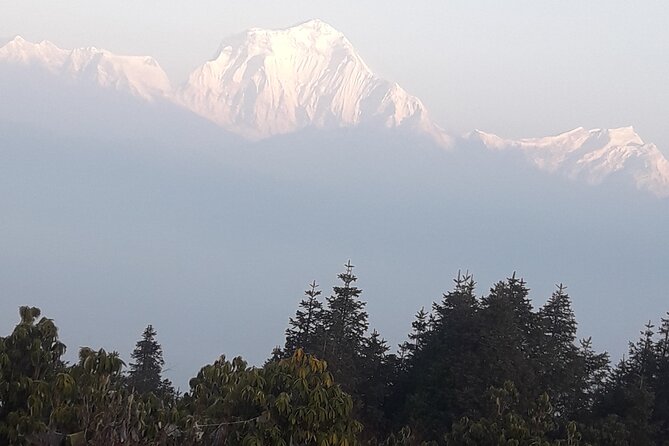
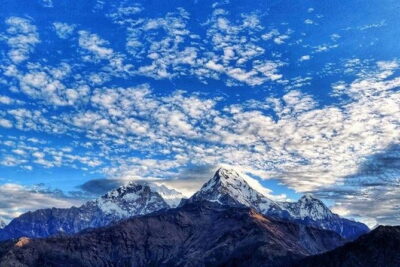
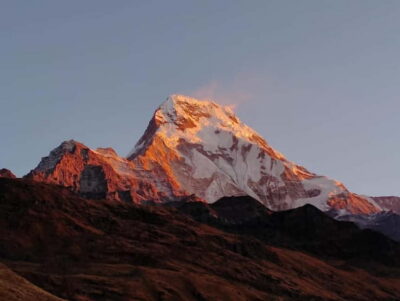
Poon Hill earns its fame at sunrise, when Annapurna, Dhaulagiri, Nilgiri, and other Himalayan peaks appear above the Kali Gandaki Valley. The 3-day route packs a serious mountain experience into a short trip, with a local guide arranging meals, rooms, permits, and porter help.
I like the small group limit of 12, which makes it easier to set a sensible walking pace. I also like that one porter is provided for every two people, so you do not need to carry your full kit. The main drawback is the hard first day, especially the 3,000-plus steps to Ulleri and the moderate fitness level required.
Key points before you book
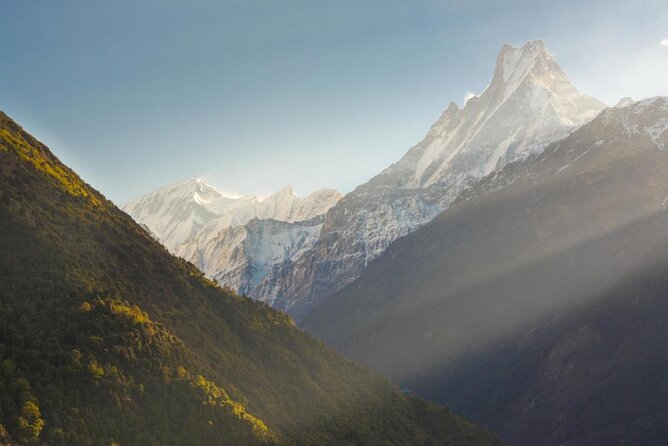
- Sunrise at Poon Hill: The high point is an early climb for views of Annapurna I, II, and III, Dhaulagiri, Tukuche Peak, Nilgiri, Mardi Himal, and Manaslu.
- A demanding first day: The stone steps to Ulleri are the trip’s clearest physical test.
- Small-group format: No more than 12 people join the trek, with a guide and one porter for every two hikers.
- Useful inclusions: Transport, all three daily meals, ACAP and TIMS permits, a kit bag, trekking poles, and winter microspikes are included.
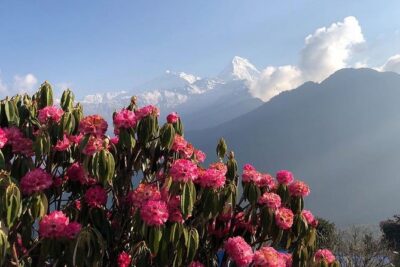
- Mountain villages and flowers: You pass Gurung and Magar villages, the Kali Gandaki Valley, and colorful rhododendrons.
- Strong value at $230: The price covers several costs that can add up quickly, but your Pokhara hotel, drinks, tips, and cancellation risk remain your responsibility.
Why Poon Hill works for a short Nepal trip
If you want a taste of Himalayan trekking without committing to a week or more, Poon Hill is a smart choice. You leave Pokhara, climb into the foothills, sleep in mountain settlements, and reach a famous sunrise viewpoint in only three days.
The route gives you more than a single viewpoint. You see village life, forest, high ridges, and broad mountain views. The scenery changes as you gain height, while the path offers a clear sense of effort and reward. This is not a flat sightseeing walk with a mountain backdrop. You should expect real uphill work.
The trip is listed at about 15 to 18 hours of trekking in total, spread across three days. That makes the daily walking more manageable than the total figure first suggests, but the steep stairs can still be tiring. You should have a moderate level of fitness and be comfortable walking uphill for extended periods.
The short format also suits a first Himalayan trek. You get support from a local guide, meals are handled, and permits are arranged in advance. You can concentrate on walking and enjoying the views instead of sorting out every practical detail yourself.
More Poon Hill Treks in Pokhara
- Pokhara: 4-Day Ghorepani, Poonhill & Ghandruk Mountain Trek
★ 5.0 · 132 reviews - Ghorepani – Poon Hill Trek 3N-4D
★ 5.0 · 125 reviews - From Pokhara: 3-Day Ghorepani Poon Hill Trek with Guide
★ 4.9 · 68 reviews
Day one: transport, Ulleri, and the long stone staircase
The day begins at 8:15 am with pickup and private transportation from Pokhara. The drive takes you toward the trailhead, after which the walking begins. The supplied details do not state the exact pickup point or driving time, so confirm those details when booking.
The first day is the toughest part for many people. The climb to Ulleri includes more than 3,000 steps, making it a steady test of your legs and lungs. You will want to use a measured pace rather than trying to keep up with the fastest person in the group.
This is where the guide matters most. A good guide can help you slow down before you burn out, and the small-group setup makes it more practical to stop for short breaks. One guide, Sabin, received particular praise for staying attentive, explaining things clearly, and walking at the hiker’s own pace. Guides can vary by departure, so do not assume Sabin will lead your group, but the example shows the kind of support you should expect.
Ulleri is known for its village setting and stairway approach. The route introduces you to the Gurung and Magar communities, whose villages add a human scale to the mountain scenery. You are not simply walking through empty hills. You are moving through a settled part of Nepal where trails connect homes, farms, and lodges.
Meals are included throughout the trek, covering breakfast, lunch, and dinner. That is useful on a short, organized trip because you do not need to budget separately for basic meals along the route. Drinks are not included, so plan to pay separately for beverages, including soft drinks, beer, and caffeinated table drinks.
Day two: forest paths and the approach to Poon Hill
The second day takes you farther into the mountain country, with forest, ridges, and village views replacing the lower trail. The area is known for its flora and fauna, especially rhododendrons. When the flowers are in season, the colorful trees add a welcome change to the stone steps and wooded paths.
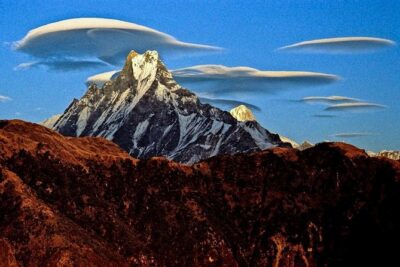
The route also opens toward several major peaks. The view includes Dhaulagiri at 8,167 meters, Tukuche Peak at 6,920 meters, Mardi Himal, Manaslu, Annapurna I, Annapurna II, Annapurna III, Nilgiri, and Khopra Danda. Weather controls how much you see, so you should treat the mountain panorama as a possibility rather than a guarantee.
Clear conditions are especially valuable here. Clouds can cover the higher peaks, and sunrise visibility depends on weather as well as timing. One recent departure reached Poon Hill in clear conditions after several cloudy days, showing why flexibility and luck play a part in the experience.
The route also gives you views toward the Kali Gandaki Valley and Jomsom horizon. These are not just decorative names on a map. They help you understand the shape of the region, with deep valleys and high ridges creating the dramatic contrast that makes the Annapurna area so striking.
Accommodation is organized by the guide, and the included meals simplify the day. The available information does not specify the names or grades of the lodges, so do not book this expecting a hotel-style stay. Think practical mountain accommodation, with comfort based on the setting rather than luxury.
Day three: the sunrise climb and the mountain panorama
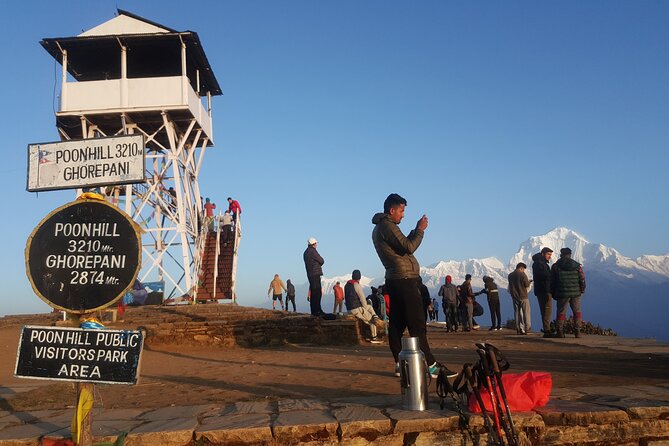
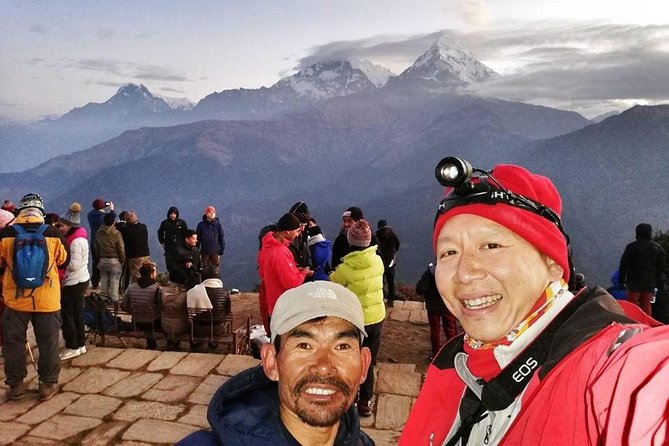
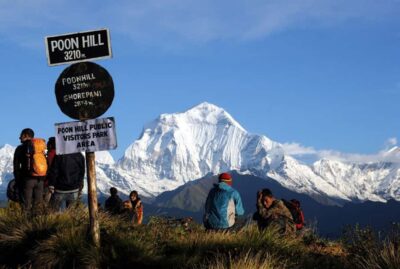
The main event comes with an early climb to Poon Hill. You will leave before sunrise so that you can reach the viewpoint in time for the first light on the peaks. The exact start time is not provided, so ask your guide for the night-before schedule.
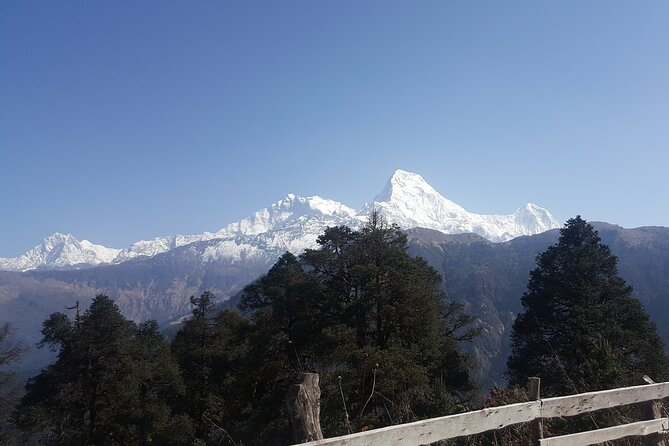
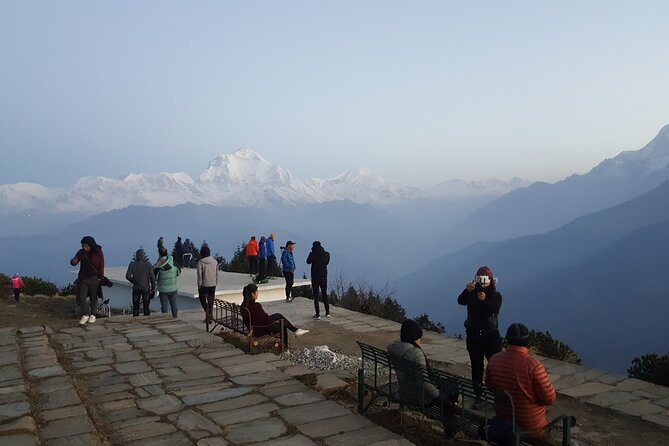
Poon Hill looks across a large section of the Himalayas. The listed view includes Dhaulagiri, Tukuche Peak, Mardi Himal, Manaslu, Annapurna I, II, and III, Nilgiri, Khopra Danda, the Kali Gandaki Valley, and the Jomsom horizon. You may also see the surrounding Gurung and Magar villages and rhododendron-covered slopes.
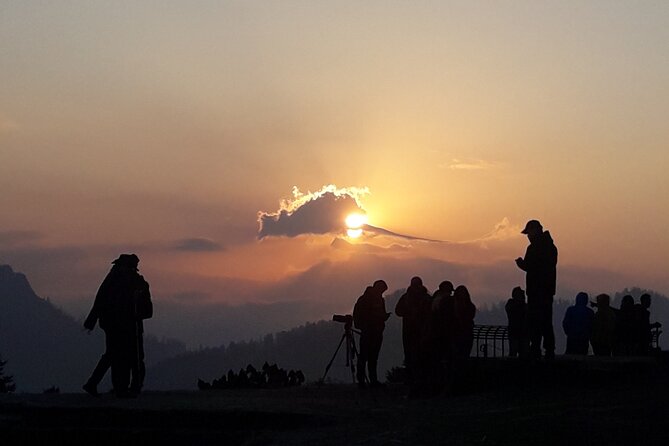
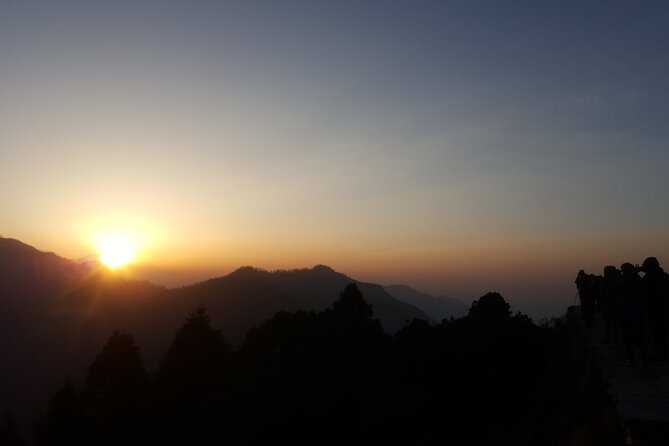
Sunrise is the reason to accept the early start. The peaks can shift from dark silhouettes to lit faces as the morning develops, giving you a short but memorable payoff for the climb. Bring patience. The weather may be clear, partly cloudy, or closed in, and no mountain tour can promise a perfect view.
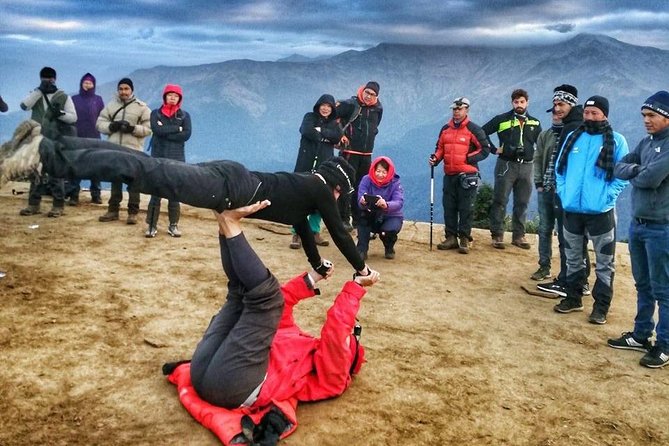
The viewpoint itself is likely to feel busy compared with the quieter trail, particularly because Poon Hill is one of Nepal’s best-known short treks. The small group helps with your own organization, but it cannot make the public viewpoint private.
After the viewpoint, you continue along the route according to local trail conditions and the guide’s plan. The supplied information does not give exact village stops or a precise return time, so keep your final day open rather than scheduling a tight onward connection.
Same trailhead, a different route:
- Trekking in Annapurna/Langtang/Everest/Upper Mustang regions
★ 5.0 · 161 reviews - Pokhara: Annapurna Foothills Day Hike with Transfers
★ 5.0 · 100 reviews - Kathmandu/Pokhara: 5-Day Annapurna Base Camp (ABC) Trek
★ 4.9 · 72 reviews - Annapurna Panorama trek
★ 5.0 · 71 reviews
What the $230 price really covers
At $230, this is a useful package if you want basic logistics handled. The price includes private transportation, breakfast, lunch, and dinner during the trek, the ACAP permit, the TIMS permit, an expert guide, one porter for every two people, a kit bag, and hiking poles.
Microspikes are included from December through February. That matters because winter conditions can make sections of the trail slippery. Their inclusion does not remove the need for sensible footwear or careful walking, but it is a useful seasonal extra.
The porter arrangement offers good practical value. With one porter for every two people, you can carry a lighter daypack and keep essential personal items with you. You should still ask what luggage weight is permitted, since that detail is not provided.
The price does not include your Pokhara hotel, drinks, or tips for the guide and porter. It also lists scuba equipment as excluded, although that has no practical role on a mountain trek. Budget separately for the items that matter: beverages, accommodation before and after the trek, and gratuities.
Private transportation is another cost-saving feature in terms of time and simplicity. You avoid arranging the transfer yourself, though you should confirm the pickup details and final return arrangements.
Group size, guides, and the walking pace
The group is limited to 12 hikers, which is small enough for a guide to keep an eye on the pace and group position. It is not a private trek, so you should expect to share the experience with other people of mixed ability.
The strongest praise focuses on guide care. A guide checked in on a slower hiker, offered help, and adjusted the pace with regular breaks. That support can make a steep route feel far more manageable, especially if you are new to multi-day trekking.
You should tell the guide early if the pace feels too fast. Do not wait until you are exhausted. The first day’s stairs can punish anyone who spends too much energy at the start.
The porter support also changes the experience. You still need a daypack with water, weather protection, and personal essentials, but you should not need to carry every item for three days. Ask before departure how the kit bag will be handled and what you should keep in your own pack.
Food, accommodation, and mountain comfort
Three meals per day are included, which gives the tour a clear advantage over a cheaper-looking trek where you pay for every meal. The food is described as good, and accommodation is described as clean and comfortable, but the available information does not provide menus or lodge names.
You should keep expectations realistic. This is a trekking package, not a luxury retreat. Rooms and facilities may be basic, and mountain conditions can affect comfort. The value comes from having meals, rooms, permits, transport, and support organized together.
Bring layers and keep important belongings protected from weather. The information confirms hiking poles and winter microspikes, but it does not give a full packing list. Ask about luggage limits, shower facilities, charging, and water arrangements before departure if those details matter to you.
Who should choose this trek?
I would suggest this trek to you if you have limited time in Nepal but still want a genuine mountain walk. It suits beginner hikers who are prepared for steep stairs, people adding a short trek to a Pokhara visit, and anyone who prefers a guide-led trip with the main logistics arranged.
It is also a good match if you value scenery over luxury. The combination of sunrise, mountain villages, rhododendrons, and major Himalayan peaks gives you a lot in three days.
I would be more cautious if you dislike early starts, steep climbs, or basic mountain accommodation. The route is short, but short does not mean effortless. The 3,000-plus steps to Ulleri are a clear warning.
The small-group setup helps, but you should not choose this trip expecting a private or highly flexible schedule. You will be moving with the group and following conditions on the trail.
Practical details before you commit
Confirmation is provided at booking, and pickup is offered. The meeting time is 8:15 am, and the route is near public transportation, though private transport is included.
The activity is non-refundable and cannot be changed after booking. That is important because mountain weather can affect the sunrise view, but the cancellation terms do not allow you to recover the payment or amend the reservation.
Tips for the guide and porter are not included. Plan for them separately if you feel the service deserves it, especially if the guide adjusts the pace and helps you through the harder sections.
The tour is recommended by all of the supplied ratings, with a 5 out of 5 score from 176 reviews. The most consistent strengths are organization, guide support, clean and comfortable accommodation, good food, and the sunrise viewpoint. The practical caution remains the physical demand of the first day and the uncertainty of mountain weather.
Should you book the 3-day Poon Hill Trek?
Book it if you want a compact Himalayan trek with a strong sunrise payoff and most major costs handled in advance. The $230 price is reasonable because it includes transport, meals, permits, guide service, porter support, poles, a kit bag, and seasonal microspikes.
Skip it if you want an easy walk, private rooms, flexible cancellation, or guaranteed clear views. You should be ready for steep steps, early mornings, and simple mountain lodging.
For the right hiker, this is an efficient way to experience Nepal’s mountain villages and famous peaks without giving up a full week. Pace yourself on day one, ask questions before departure, and leave room in your schedule for the mountain weather.
FAQ
How long is the Poon Hill Trek?
The experience lasts three days, with approximately 15 to 18 hours of trekking in total.
What time does the trek start?
The listed meeting time is 8:15 am.
How large is the group?
The group has a maximum of 12 hikers.
What meals are included?
Breakfast, lunch, and dinner are included during the trek. Beverages such as soft drinks, beer, and caffeinated drinks are not included.
Are permits included?
Yes. The ACAP permit and TIMS permit are included in the price.
Are hiking poles and winter equipment provided?
Hiking poles and a kit bag are included. Microspikes are provided for treks from December through February.
More 3-Day Experiences in Pokhara
- Pokhara: 3-Day Ghorephani and Poon Hill Private Trek
★ 5.0 · 58 reviews - From Pokhara: Budget 2 Night 3 days Poon hill trek
★ 5.0 · 20 reviews - Pokhara: 3-Day Trek
★ 4.5 · 7 reviews - Pokhara: 3-Day Ghorepani and Poon Hill Trek
★ 5.0 · 7 reviews
Just added around Pokhara
- Pokhara: Sarangkot Sunrise & Panoramic Annapurna View Tour★ 4.8 · 10 reviews
- Pokhara: Majestic Mardi Base Camp Guided Trek with HotSpring★ 5.0 · 6 reviews
- Pokhara: Bungee Jumping Experience Near Annapurna★ 5.0 · 9 reviews
- Pokhara: Annapurna Day Hike with Panoramic Views★ 4.3 · 7 reviews
- Pokhara: 9-Day Annapurna Base Camp Trek with Poon Hill★ 5.0 · 6 reviews
- Pokhara: 7-Day Annapurna Base Camp Trek & Hot Spring★ 4.0 · 3 reviews
- Pokhara: 5-Day Trek to Annapurna Base Camp and Hot Springs★ 5.0 · 4 reviews
- Pokhara: 5-Day Ghorepani and Poon Hill Private Trek★ 5.0 · 4 reviews
Poon Hill Treks, compared.
4-Day Ghorepani, Poonhill & Ghandruk Mountain Trek
Read our review →
Browse the lists this trek appears in