
Review · GREECE
Crete: Via Ferrata in the Asterousia Mountains
Crete’s Asterousia Mountains offer a rare kind of adventure: a Via Ferrata above the Libyan Sea, where steel cables and iron footholds carry you across steep rock and remote gorges. I like the small group limit of five and the chance to explore Crete’s only iron road trail, with certified guides such as Yorgos keeping the route safe and friendly.
I also like that the route is suitable for beginners without being a soft option. The main caution is clear: the long traverse needs steady footwork and some arm strength, and anyone with a fear of heights or vertigo should choose another outing.
Key points to know before booking
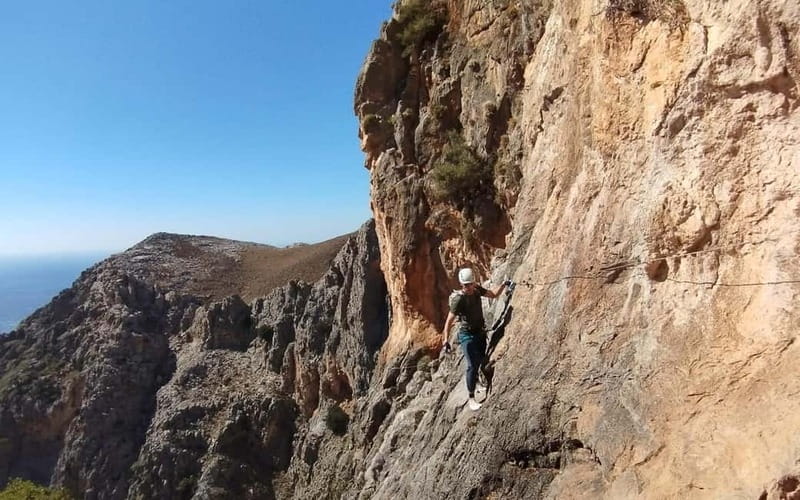
- Crete’s only iron road trail: The route begins near Kapetaniana and uses fixed cables, ladders, and iron footholds through rugged mountain terrain.
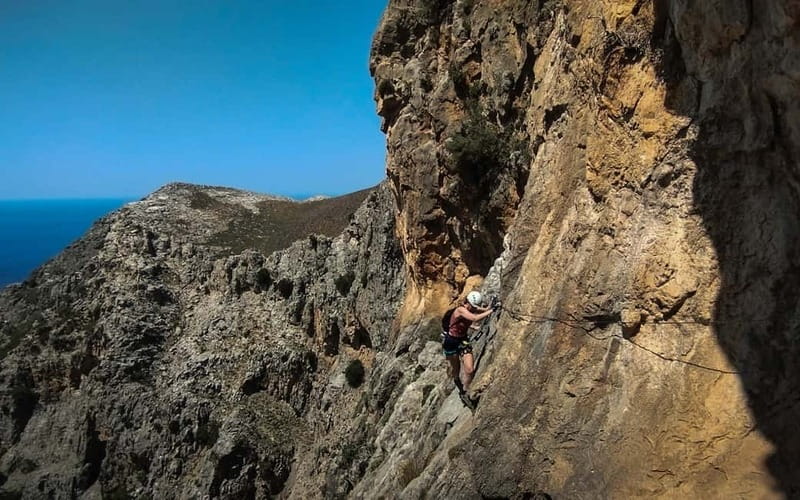
- Views over the Libyan Sea: Expect broad views of the South Sea, the Asterousia Mountains, and the surrounding gorges.
- Small groups of five: A limited group makes it easier to receive personal help on the rock.
- Beginner-friendly but physical: You do not need advanced climbing skills, but you do need a good fitness level and comfort with heights.
- A four-hour mountain outing: The timing allows for instruction, gear fitting, climbing, and pauses to take in the scenery.
- Bring the right clothing: Wear closed-toe hiking shoes and clothes that can get dirty. Leave jeans, luggage, and open-toed shoes behind.
Starting in Ano Kapetaniana
Your meeting point is the small square at the entrance to Ano Kapetaniana, a mountain village in the Asterousia range. You need to arrange your own way there because transport is not included, though a transfer may be available on request.
That detail matters. This is not a pick-up-and-drop-off activity from a large resort area. You need to plan the approach to the village and arrive ready for a mountain outing. If you are staying elsewhere in Crete, check the driving time before booking and allow room for the meeting arrangements.
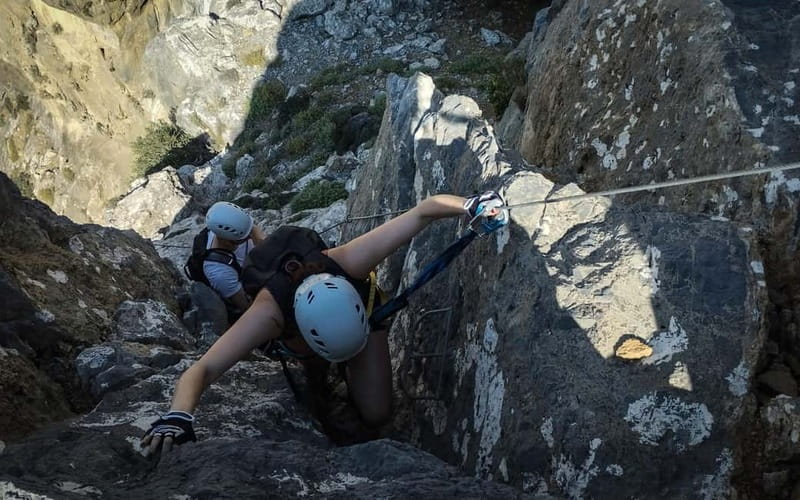
At the start, the guide provides the necessary safety equipment and explains how to use it. The equipment is a key part of the experience. You remain attached to the fixed protection system as you move along the route, while your guide shows you how to handle the connections and progress over the rock.
The group limit is five people. I consider that one of the strongest practical features here. A small group gives the guide more time to watch each person’s movement, answer questions, and offer encouragement at the harder sections. It also keeps the outing more personal than a large outdoor excursion.
English and Greek are available. The guide’s role is not limited to safety instructions. Yorgos also shares stories about Crete and the area, giving the climb a stronger sense of place.
More Via Ferrata Routes in Greece:
- Tinos: Via Ferrata Guided Hike
★ 4.8 · 4 reviews - Banff: Mount Norquay 2.5 or 4-Hour Guided Via Ferrata Climb
★ 4.9 · 305 reviews - Sant Feliu de Guixols: Climb Via Ferrata Cala del Molí
★ 5.0 · 253 reviews
What a Via Ferrata feels like on Crete
Via Ferrata means iron road, and the name tells you what to expect. Instead of finding your own climbing route up bare rock, you follow a protected path with fixed cables and metal aids. You use your hands and feet to move across and upward, clipping into the safety system as directed.
This route is described as suitable for beginners, but beginner-friendly does not mean effortless. You still need to pull, step, balance, and trust your footwear. One of the more demanding sections is a sustained traverse, where you move sideways along the rock for a longer stretch. You may not need advanced climbing technique, but the traverse can ask more of your arms and legs than the rest of the route.
The final part includes some upward climbing. It is not described as extremely difficult, yet it provides the outing’s strongest physical test. If you are comfortable with hiking and regular activity, you may find the route manageable. If you have a low fitness level, the four-hour duration and repeated movement on rock could feel demanding.
You should also be comfortable looking down. The route crosses steep cliffs and gorges, so height is not a minor detail. The activity is specifically unsuitable for people with vertigo or a strong fear of heights. That honest warning is useful: the safety gear protects you, but it does not remove the sensation of exposure.
Crossing cliffs, gorges, and the long traverse
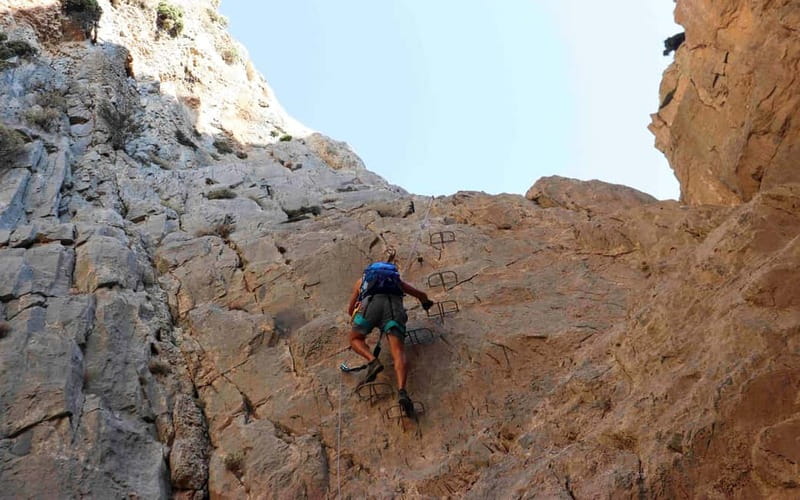
The route begins in the wild terrain around Kapetaniana and leads into the Asterousia Mountains. You move through a rocky setting rather than along a standard walking path. The fixed route gives you a direct way through steep sections that would otherwise require climbing experience.
The gorges are part of the appeal. They give the route shape and drama, while the cliffs create the height and open views that make Via Ferrata different from an ordinary mountain walk. At times, your attention will be on the next foothold or cable. At other points, you can pause and look out across the Libyan Sea.
The long traverse deserves special attention. This is the section where good shoes and patient movement matter most. You need to trust the grip of your footwear, keep your body close to the rock, and maintain enough strength to continue sideways for a sustained period.
I would not treat this as a sightseeing walk with a little climbing added. It is an active route where the views arrive between physical tasks. That is a benefit if you want a real challenge, but it may disappoint you if your main goal is a relaxed panorama with little exertion.
As you gain height, the views open toward the sea and the mountain slopes. The contrast is striking: bare rock and narrow gorges below, wide water and open sky beyond. The setting feels remote, even though the activity lasts only four hours.
The Libyan Sea and Asterousia views
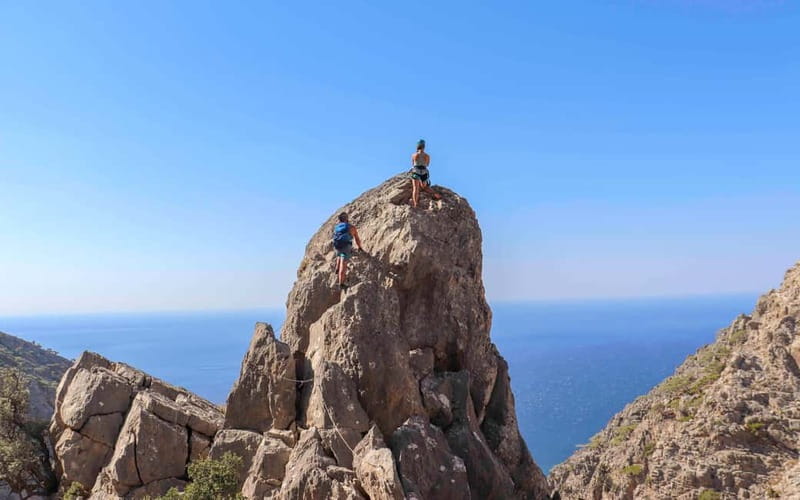
The scenery is one of the main reasons to choose this route. From the mountain, you look toward the Libyan Sea, the southern coast of Crete, and the Asterousia range. The height gives you a different view of the island from the usual beach or road stop.
The route also passes through an area with notable flora and fauna. You may see local plant life adapted to the dry, rocky setting, and the open cliffs make bird sightings possible. One participant specifically described being accompanied by eagles, so keep your eyes up when the route allows for a pause.
The best way to enjoy the views is to accept that they come in stages. During a technical move, focus on your feet, your hands, and the guide’s directions. When the route widens or you stop, take time to look outward and use your camera.
A camera is recommended, but pack it sensibly. You need both hands for much of the route, and a large camera bag would get in the way. A charged smartphone is a practical choice if it can be secured in your daypack or clothing. Large bags and luggage are not allowed.
Same trailhead, a different route:
- From Chania: Full-Day Samaria Gorge Trek Excursion & Guide
★ 4.6 · 3,191 reviews - From Rethymno: Samaria Gorge Full-Day Trek, Pickup & Guide
★ 4.5 · 1,610 reviews - Kourtaliotiko Gorge: Guided River Adventure Trek with Lunch
★ 4.9 · 106 reviews - Kourtaliotiko Gorge River Trek with Lunch! Pick-up Avaliable
★ 4.8 · 90 reviews
How difficult is this for a beginner?
The route is suitable for beginners, and you do not need prior Via Ferrata experience according to the activity information. The guide supplies the equipment and leads you through the system, which lets you concentrate on movement instead of route-finding.
Still, the activity requires good physical condition. You will spend several hours handling uneven rock, using your arms and legs, and dealing with steep terrain. The sustained traverse is the clearest point to consider. It requires strength over time rather than one quick burst.
I would rate this as a good first Via Ferrata for an active person who is willing to work. It is less suitable for someone who rarely exercises or who expects a gentle introduction. The route’s beginner label refers to technical access and guiding, not to a lack of effort.
The age limit is 13 and over. Unaccompanied minors are not allowed. The activity is also unsuitable for people with back problems, epilepsy, seasickness, low fitness, or anyone over 70. These restrictions are important because the route combines height, physical exertion, and a fixed position on steep rock.
Wear comfortable, breathable clothing that can get dirty. Hiking pants are a good choice. Closed-toe shoes are required, and proper comfortable footwear matters most during the traverse. Do not wear jeans, open sandals, or other shoes with poor grip.
What to pack for four hours on the rock
Pack light. You need enough for personal comfort, not a full day of luggage. The activity information recommends:
- Comfortable closed-toe shoes
- Breathable clothing and hiking pants
- A hat
- Biodegradable sunscreen
- Water and food
- A small daypack
- A change of clothes
- A charged smartphone or camera
A change of clothes is a sensible suggestion because the route is rocky and your clothing may get dirty. Food and drinks are not included, so bring your own supply for the four-hour outing.
Avoid alcohol and drugs, and do not bring large bags. You also cannot participate in open-toed shoes. These rules are practical rather than fussy: loose luggage and poor footwear are genuine problems on a fixed climbing route.
Is $141 a fair price?
At $141 per person, this is not a cheap way to spend four hours in Crete. The price needs to be judged against what is included and the type of activity. You receive the necessary Via Ferrata equipment, a certified guide, route supervision, and a small group capped at five people.
That small group changes the value. You are not paying for a crowded outdoor activity where the guide must divide attention among a large party. The guide can help you with the safety system, watch your progress, and offer advice on the more demanding sections.
The price also reflects the specialist nature of the route. You are using fixed mountain equipment in an exposed setting, rather than simply walking from one viewpoint to another. For someone who wants a distinctive physical experience and has the fitness for it, the cost can be reasonable.
The value is weaker if you mainly want scenery. You would be paying for a climbing activity that you might not enjoy if heights make you nervous or if you are not ready for the traverse. Think of this as a guided adventure with views, not as a scenic tour with a little excitement added.
Transport to Ano Kapetaniana is not included. If you need a transfer, ask about it when arranging the activity and account for that possible extra cost.
The guide makes a real difference
A Via Ferrata can feel intimidating during the first clipped section, especially when the rock drops away below you. The guide’s manner matters here. Yorgos is praised for giving useful tips, encouraging participants, and creating a relaxed atmosphere while keeping the activity safe.
That combination is valuable. You want clear directions when handling the equipment, but you also want a guide who can help you stay calm and keep moving. Yorgos also shares stories about the island and the area, adding local context during pauses.
The route is available in English and Greek. The group size means you can ask for help rather than trying to keep up with a large party. If you are new to Via Ferrata, tell the guide about your experience and fitness level at the start so the advice can be tailored to you.
Booking flexibility and timing
The activity lasts four hours, with starting times available according to the date you choose. That is long enough for a proper route without taking up the whole day, though you should allow extra time around the meeting point and your journey to and from the village.
You can cancel up to 24 hours in advance for a full refund. A reserve-now, pay-later option is also available, which helps if you are still arranging your Crete schedule.
Because the group limit is only five, check availability early if your dates are fixed. The small capacity is good for the experience, but it also means fewer places on each outing.
Who should book this Via Ferrata?
I would recommend it to an active adult or teenager aged 13 and above who wants something more unusual than a beach day. It suits you if you enjoy climbing, scrambling, mountain scenery, and a clear physical challenge. You do not need advanced climbing skills, but you should be ready to move continuously on steep rock.
It is a particularly good fit if you value a small group and personal guiding. The route, views, and guide interaction offer more than a standard outdoor attraction. You get a direct look at the southern side of Crete, with the Libyan Sea below and the Asterousia Mountains around you.
I would not book it if you dislike heights, suffer from vertigo, have a low fitness level, or want a quiet sightseeing outing. The safety equipment helps, but the exposure remains part of the experience. The traverse can also challenge your arms and footwear, so bring proper shoes and an honest sense of your ability.
If you are ready for a four-hour effort and want to see Crete from an unusual angle, this is a strong choice. Book it for the combination of remote rock, sea views, and close guidance from a certified leader, not simply for the promise of a panorama.
FAQ
Where does the Via Ferrata activity meet?
The meeting point is in the small square at the entrance of Ano Kapetaniana.
How long does the activity last?
The Via Ferrata experience lasts four hours.
Is transport to Ano Kapetaniana included?
No. Transport to the meeting point is not included, though a transfer may be available on request.
Is the route suitable for beginners?
Yes. The route is suitable for beginners, but you still need good physical condition and comfort with steep terrain and heights.
What languages does the guide speak?
The live guide service is available in English and Greek.
What is the minimum age?
Participants must be at least 13 years old. Unaccompanied minors are not allowed.
What should I wear and bring?
Wear comfortable breathable clothing, hiking pants, and closed-toe shoes. Bring a hat, food, drinks, biodegradable sunscreen, a small daypack, a change of clothes, and a charged smartphone or camera. Jeans, open-toed shoes, and large bags are not allowed.
Just added around Greece
- Half-Day River Trekking Stenosia from Kalamata★ 5.0 · 12 reviews
- Ios Island Trekking Tours: Discover Ios Unexplored★ 5.0 · 32 reviews
- Private Trekking Rouvas Gorge★ 4.5 · 4 reviews
- Samaria Gorge Trek: Full-Day Excursion from Heraklion with Guide★ 3.5 · 6 reviews
- River Trekking in Neda★ 4.5 · 7 reviews
- Karpathos Lastos mountain Hike with guide★ 5.0 · 55 reviews
- River Trekking at Kourtaliotiko Gorge Waterfalls★ 5.0 · 3 reviews
- River Trekking at Kourtaliotiko Gorge★ 5.0 · 4 reviews
Via Ferrata Routes, compared.
Banff: Mount Norquay 2.5 or 4-Hour Guided Via Ferrata Climb
Read our review →
Sant Feliu de Guixols: Climb Via Ferrata Cala del Molí
Read our review →
Small-Group Guided Via Ferrata Climbing with Banff’s Best Views
Read our review →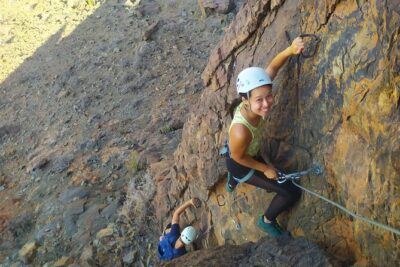
Via Ferrata in Gran Canaria. Vertical adventure park. Small groups
Read our review →Browse the lists this trek appears in