
Review · CUSCO
Ancascocha Trek To Machu Picchu 4 Days And 3 Nights
The Ancascocha Trek gives you a wilder route to Machu Picchu, with steep mountain paths, snow-capped peaks, waterfalls, llamas, and Inca sites before the famous citadel appears. It is a serious high-altitude hike, not a gentle walk with a scenic finish.
I like the quiet route, which avoids much of the traffic found on the Classic Inca and Salkantay trails. I also like the practical setup: meals, camping, park fees, hotel transfers, and a night in Aguas Calientes are included.
The main catch is the altitude. The trail reaches 14,599 feet, and the long uphill sections demand strong fitness. The bus from Aguas Calientes to Machu Picchu is not included, so budget for that separately.
Key points before you book
- A high pass at 14,599 feet: The climb to Kuychiccasa is the hardest part and calls for proper acclimatization.
- A quieter route to Machu Picchu: You pass through remote Andean country rather than following the busiest classic route.
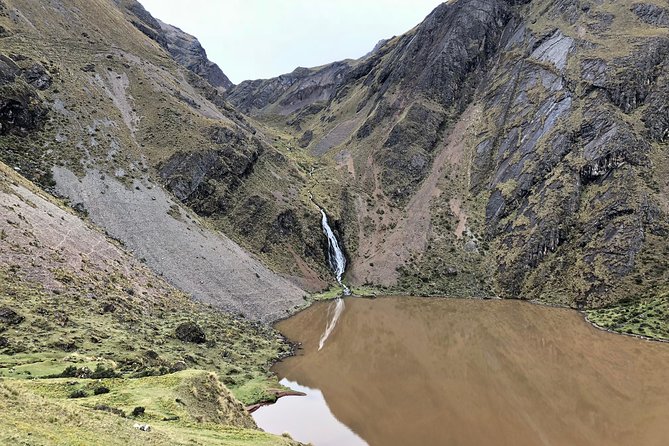
- Perolniyoc waterfall and Inca ruins: The opening day combines a powerful cascade with a cliff-top archaeological site.
- Camping plus Aguas Calientes: You spend two nights in camp and one night at a bed-and-breakfast near Machu Picchu.
- Small-group attention: The maximum group size is 30, and smaller departures may allow more contact with your guide.
- A strong food-and-logistics package: Buffet-style meals, camping equipment, park fees, transfers, and a local guide are included.
Why choose the Ancascocha route to Machu Picchu
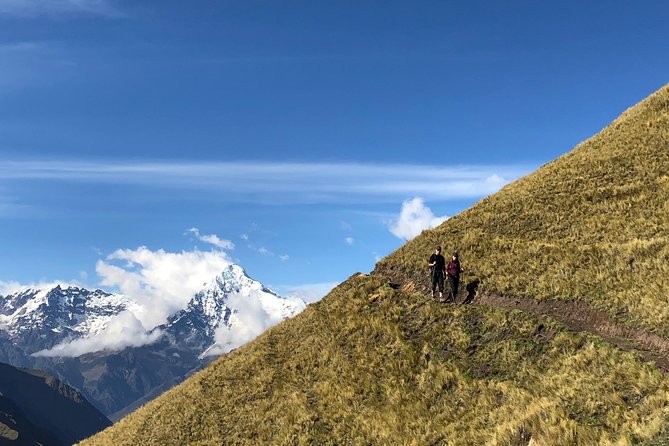
If the usual Inca Trail feels too well known, Ancascocha offers a different kind of approach. You trade some of the classic trail’s fame for open mountain views, scattered farming settlements, old ruins, and a much quieter feel.
That trade is important. You are not simply walking toward Machu Picchu through one continuous line of famous archaeological sites. Much of the appeal comes from the setting itself: broad views of the Andes, high passes, small houses, llamas, waterfalls, and changing scenery from green fields to alpine country.
The route is also a better fit for people who want the trek to be the main event. Machu Picchu remains the grand finish, but the days before it are demanding and memorable in their own right.
Action Peru Treks limits the departure to a maximum of 30 people. That is not always a truly small group, but it is more manageable than a large coach-style outing. The company has used guides including Lino, Eddy, Lina, Edison, Christian, and others on different departures. Guide assignments can change, but the strongest accounts repeatedly praise personal care, clear organization, and attention to hiking ability.
More Inca Trail Treks in Cusco
- Cusco: 4-Day Inca Trail to Machu Picchu with Accommodation
★ 4.8 · 432 reviews - Cusco: Machu Picchu 2-Day Inca Trail with Panoramic Train
★ 4.9 · 260 reviews - From Cusco: 2-Day Inca Trail to Machu Picchu
★ 4.2 · 244 reviews
Day 1: Soqma, Perolniyoc, and the climb to Chancachuco
Your day begins with hotel pickup in Cusco and a drive of about 1 hour and 45 minutes to Soqma, at roughly 10,512 feet. This is already high country, so do not think of the first morning as a warm-up at low elevation.
The opening walk takes about two hours to reach the lookout for Perolniyoc cascade. The waterfall is the first major reward, and it gives you a dramatic start before the route turns toward archaeology and high mountain terrain.
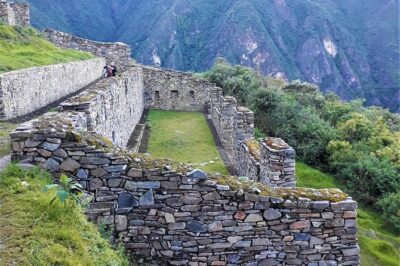
After about another 45 minutes, you reach the Inca site of Perolniyoc. The ruins sit on a cliff above the valley, giving your guide a good setting for explaining the place and its purpose. You also get time to walk through the remains rather than simply stopping for a photograph.
The next section is steep. Expect about an hour of climbing to Rayan, at 12,139 feet, where lunch is served. Food matters on a trek like this. A hot, substantial meal can make the difference between enjoying the afternoon and merely getting through it, and the cooks are a major part of the support team.
After lunch comes the day’s biggest challenge: about three hours uphill to Kuychiccasa Pass. At 14,599 feet, this is a serious climb even for fit hikers. The path passes rustic farmhouses, llamas, and views toward the snow-covered Nevadas.
At the pass, stop and take your time. The Chancachuco Valley opens below, with high peaks around it. Then the trail drops for about 45 minutes to camp at approximately 14,147 feet.
The camp is prepared before you arrive, so you can change into warmer clothes instead of setting up tents after a long day. That small practical detail matters at this elevation, where temperatures can fall quickly once the sun goes down.
High-altitude effort and what the first day demands
The first day is long because it combines several different climbs. You get the waterfall, the ruins, lunch, the high pass, and the descent to camp in one stretch.
The altitude is the real issue, not only the distance. Anyone booking this should already have a strong fitness level, as the operator requires. You should also allow time in Cusco before the trek to adjust to the elevation, although the supplied tour details do not promise an acclimatization program.
This is not the right choice if you want a relaxed introduction to mountain hiking. It is better suited to someone who enjoys sustained uphill walking and accepts that weather, altitude, and tired legs are part of the experience.
Days 2 and 3: Remote Andean country before Machu Picchu
The supplied program gives the clearest detail for the first day, while the remaining trek takes you through the Ancascocha route toward Machu Picchu. The overall experience includes ancient Inca remains, traditional Andean villages, small lakes, high mountain views, and several types of terrain.
That variety is one of the route’s best features. You might move from green fields to bare alpine ground, then pass snow-covered peaks or enter a warmer area as the trail loses elevation. The changing scenery keeps the walk from feeling like one long repeated climb.
The remote character also changes the rhythm of the trip. You are not moving from one crowded landmark to another. Instead, you spend long stretches with mountain views and rural settlements, with archaeological sites appearing along the way.
Two nights are spent camping. The support crew handles the camp setup, and meals include breakfast, lunch, and dinner. The supplied details describe buffet-style lunch and dinner, which is a welcome arrangement after a demanding day because you can choose how much to eat.
Do not expect hotel comfort during these nights. Camping is part of the point, but it also means cold evenings, basic sleeping arrangements, and less privacy. You should pack for changing temperatures and keep your essential items close.
The group also includes cooks and people handling the horses or mules on some departures. Past groups have singled out the food, camp preparation, and practical help from the support crew. That is worth emphasizing because a good support team changes the feel of a high-altitude trek.
Same trailhead, a different route:
- From Cusco: 7 Lakes Ausangate Trek with Breakfast and Lunch
★ 4.8 · 360 reviews - Machu Picchu: Inca Trail 2-Day Overnight Guided Tour
★ 4.9 · 203 reviews - Cusco: Full-Day Rainbow Mountain & Red Valley Trekking Tour
★ 4.5 · 121 reviews - Short Inca trail to MachuPicchu || 2days – 1nigth ||
★ 5.0 · 103 reviews
Arriving in Aguas Calientes
The final part of the trip brings you to Aguas Calientes, the town used as the base for Machu Picchu. One night at a bed-and-breakfast is included, giving you a proper bed after two nights in camp.
That overnight stop is useful rather than decorative. It breaks up the mountain journey and places you near the ruins for the guided visit. You also avoid having to finish a demanding trek and immediately rush through the archaeological site on the same day.
The return bus from Aguas Calientes to Machu Picchu on day four is not included. You need to pay for that separately, so factor it into the trip cost. The tour information does not state the exact bus price or departure time, so confirm those details before setting out.
The Machu Picchu visit
Machu Picchu is the payoff, and this tour includes a guided visit to the ruins. That guidance adds value because the site can otherwise become a collection of impressive walls and terraces without much context.
You visit one of the New7Wonders of the World and a UNESCO World Heritage Site, but the experience is still shaped by how you arrive. After several days on foot, the citadel carries more weight than it would as a quick day trip from Cusco.
The route also gives you a contrast. You begin among waterfalls, farms, and high passes, then end at one of Peru’s most famous archaeological sites. The trek puts the polished image of Machu Picchu into a larger Andean setting.
The exact guided-tour timing is not provided, so ask the operator how the visit is scheduled and what ticket time applies to your departure. Your guide should be able to explain the ruins and help organize the transition from Aguas Calientes.
What the $730 price includes
At $730 per person, the cost is not simply payment for a guide and a walk. The package includes:
- Hotel pickup and drop-off
- A local guide
- National park fees
- Camping gear and two nights of camping
- Breakfast, lunch, and dinner
- One night at a bed-and-breakfast in Aguas Calientes
That is a solid package for a four-day high-altitude trek. Meals and camp support are especially useful because carrying and arranging everything yourself would add work and likely extra expense.
The value depends on how much you want handled for you. If you already have camping equipment and prefer to plan your own food, the package may feel less necessary. If you want a guided route with meals, permits, transport from Cusco, and camp preparation included, the price is easier to justify.
The price does not include alcoholic drinks, excess luggage charges where applicable, or unspecified food and drinks. Most importantly, it excludes the round-trip bus tickets between Aguas Calientes and Machu Picchu.
The people who make the trek work
A mountain trek is only as good as its guide and support crew. Action Peru Treks has received especially strong praise for guides such as Lino and Eddy, with other departures naming Lina, Edison, Christian, and additional team members.
The useful quality to look for is not simply factual information about ruins. You want a guide who adjusts the pace, checks how people are handling the altitude, explains what you are seeing, and keeps the group organized.
Past groups have also highlighted cooks and horsemen by name, including Oscar, Elsa, Eliquin, Joel, and Super Mario on different trips. These names do not guarantee who will accompany your departure, but they show how much the support crew can shape the experience.
A maximum of 30 people is listed. Ask how many people are actually booked for your date. A departure of 8 or 10 feels very different from one close to the maximum, especially on steep climbs and around camp.
Practical strengths and possible drawbacks
The strongest advantages are clear:
- You avoid the busiest version of the classic route.
- You see a wider mix of Andean scenery.
- Your meals and camp are arranged for you.
- You receive a guided visit to Machu Picchu.
- You spend a night in Aguas Calientes instead of camping every night.
The drawbacks are just as clear. The pass is very high, and the first day includes a long uphill push. The route is not suitable for a person who is uncomfortable with strenuous hiking or who has not prepared for high altitude.
The included bus arrangement can also catch people off guard. The tour reaches Machu Picchu, but the bus tickets are an extra cost. Ask about this before booking so the final budget is accurate.
The free-cancellation rule is generous if your plans change: you can cancel for a full refund up to 24 hours before the start time. Cancellations or changes within 24 hours are not refunded or accepted.
Who should book this trek
I would point this trek toward fit hikers who want a quieter road to Machu Picchu and who value mountain scenery as much as the final ruins. It suits you if you like camping, long uphill walks, small rural communities, and a strong sense of effort before a major destination.
It is less suitable if you want a soft adventure, a low-altitude walk, or a trip with every cost included. Families should note that children must be accompanied by an adult, and the operator requires a strong physical fitness level.
Service animals are allowed, though the high passes and rough trail conditions deserve careful consideration before bringing one. The tour also offers a mobile ticket, and confirmation is provided at booking.
Should you book the Ancascocha Trek?
Book it if you want a demanding, quieter alternative to the most familiar routes to Machu Picchu. The waterfall, cliff-top ruins, rural settlements, high pass, snow-covered peaks, and organized camp support give the journey real substance.
Skip it if your main goal is comfort or if you are uncertain about handling 14,599 feet. Before paying, confirm your guide assignment, actual group size, bus arrangements, and what camping gear is supplied.
For a fit hiker who wants the road to Machu Picchu to feel like an adventure rather than a transfer, this is a strong choice. Just respect the altitude, prepare for steep climbs, and keep a little extra money aside for the bus and personal expenses.
FAQ
How long is the Ancascocha Trek to Machu Picchu?
The trek lasts four days and three nights.
Where does the trek begin?
Hotel pickup is provided in Cusco, followed by a drive of about 1 hour and 45 minutes to Soqma, at approximately 10,512 feet.
How high does the trek go?
The route reaches Kuychiccasa Pass at about 14,599 feet.
How many nights are spent camping?
Two nights are spent camping. The third night is at a bed-and-breakfast in Aguas Calientes.
Are meals included?
Yes. Breakfast, lunch, and dinner are included. Buffet-style lunch and dinner are specified.
Are bus tickets to Machu Picchu included?
No. Round-trip bus tickets from Aguas Calientes to Machu Picchu on day four must be purchased separately.
What happens if I need to cancel?
You can receive a full refund if you cancel at least 24 hours before the experience starts. Cancellations and changes made within 24 hours are not accepted or refunded.
More 4-Day Experiences in Cusco
- Choquequirao Trek 4 days and 3 nights
★ 5.0 · 81 reviews - 4 Day Inca Trail Trek to Machu Picchu Multi day tour
★ 5.0 · 70 reviews - Classic Inca Trail 4 Days to Machu Picchu
★ 5.0 · 69 reviews - Salkantay Trek 4 Days to Machu Picchu by Glamping Sky Lodge Dome
★ 5.0 · 68 reviews
Just added around Cusco
- Classic Choquequirao Trek – 5 Days / 4 Nights★ 5.0 · 52 reviews
- Short Inca Trail 2 Day Hike to Machu Picchu with Permits & Train★ 5.0 · 51 reviews
- 2 Day Tour Throughout the Short Inca Trail to Machu Picchu★ 5.0 · 36 reviews
- Small Group: 4-Day Inca Trail Trek to Machu Picchu★ 5.0 · 33 reviews
- 5-Day: Salkantay Trek to Machupicchu and Humantay Lake★ 5.0 · 42 reviews
- 2 Day – Short Inca Trail to Machu Picchu – Group Service★ 5.0 · 30 reviews
- 5 Day – Salkantay trek to Machu Picchu – Group Service★ 4.5 · 27 reviews
- Salkantay Trek Standard 5D/4N★ 5.0 · 48 reviews
Machu Picchu & Inca Trail Treks, compared.
4-Day Inca Trail to Machu Picchu with Accommodation
Read our review →
Machu Picchu 2-Day Inca Trail with Panoramic Train
Read our review →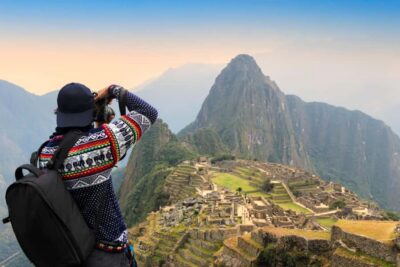
Machu Picchu: Inca Trail 2-Day Overnight Guided Tour
Read our review →
Short Inca trail to MachuPicchu || 2days – 1nigth ||
Read our review →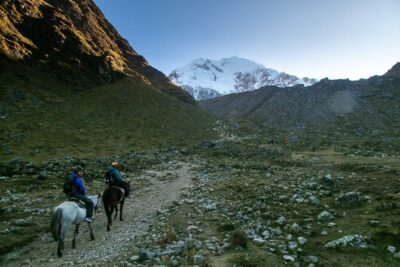
Machu Picchu: 5-Day Salkantay Trek with Panoramic Train
Read our review →Browse the lists this trek appears in