
Review · MOUNT ETNA
Mount Etna: Summit Trekking Tour
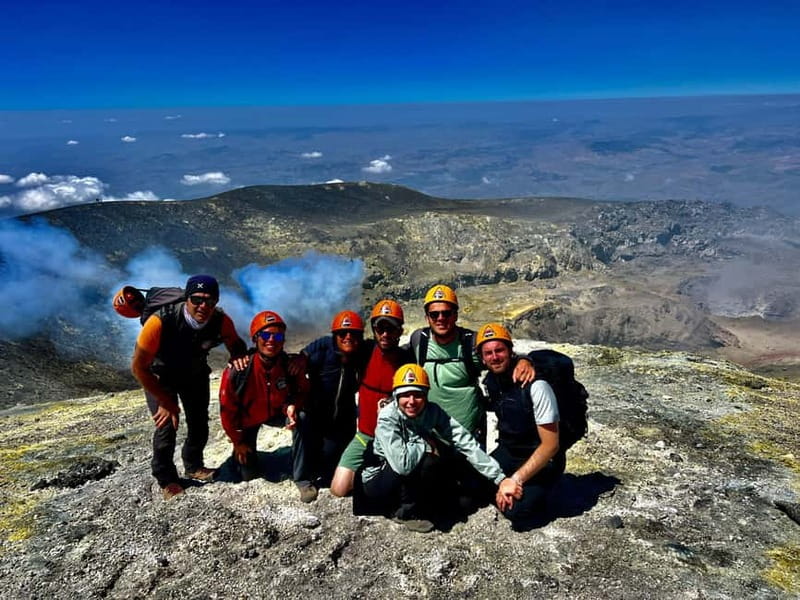
Mount Etna gives you a rare chance to walk across fresh volcanic ground and reach the summit area of Europe’s highest active volcano. The north-side route begins at Piano Provenzana, climbs by off-road 4×4 to about 2,900 meters, then continues on foot toward the craters at roughly 3,340 meters.
I like the small groups of up to 10 and the careful, unhurried pace. I also like the guides’ clear passion for Etna. Luca, Arturo, Marco, Paolo, Linda, and others are described as attentive, good-humored, and well informed about volcanoes. The main drawback is the terrain: altitude, steep slopes, wind, sulfur gas, and loose black gravel make this a real hike, not a scenic bus ride. The required €50 4×4 ticket is also paid separately in cash.
The key points at a glance
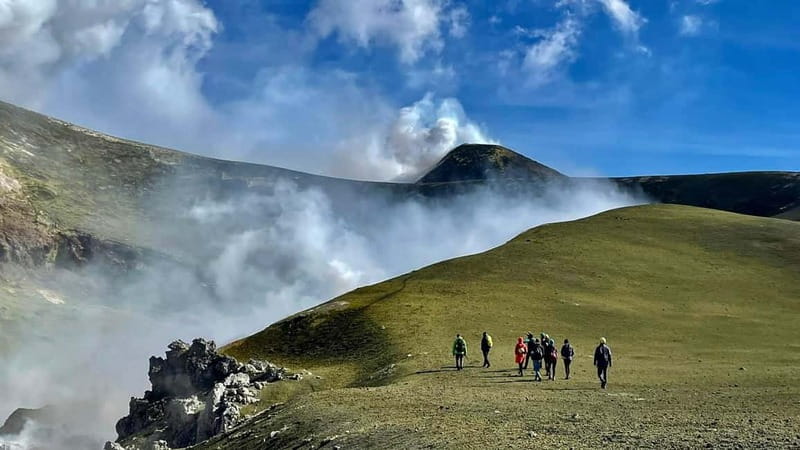
- A true summit-area hike: You climb about 450 meters from the 4×4 drop-off near 2,900 meters toward Etna’s high craters.
- The quieter north side: Piano Provenzana offers a wilder setting, with lava fields and fewer of the usual sightseeing crowds.
- Big views at high altitude: On a clear day, you may see northern and eastern Sicily, the Aeolian Islands, and the Calabrian coast.
- Useful loaner equipment: Hiking boots, jackets, helmets, and some extra clothing are available if your own gear is not suitable.
- Safety comes first: The route and time near the summit can change with weather, volcanic gas, and current activity.
- A separate transport cost: Budget another €50 per person, paid in cash on site, for the Unimog 4×4 ride.
Starting at Piano Provenzana on Etna’s north side
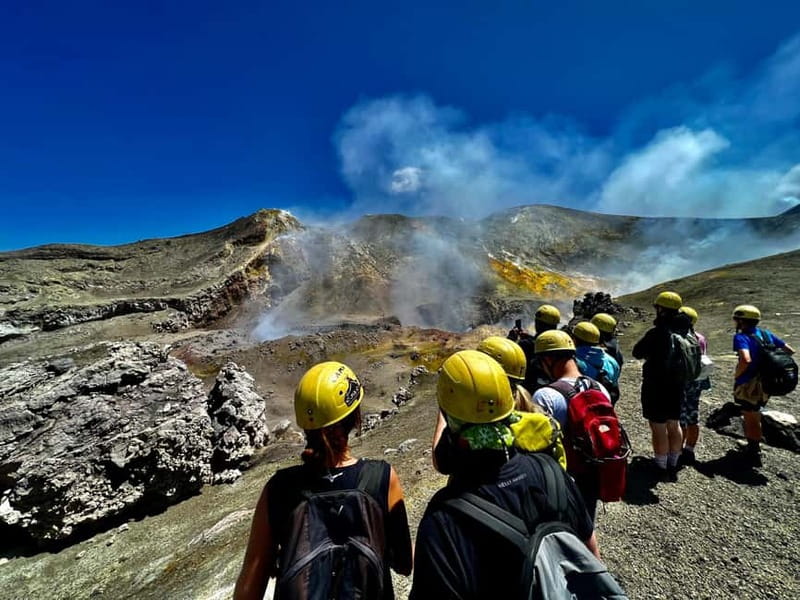
Your meeting point is Sole-neve Souvenirs in Piano Provenzana, where parking is available. This is on Mount Etna’s north side, a useful detail for planning because the mountain has several access points and the roads are not quick coastal routes.
Allow extra driving time. One visitor coming from more than three hours away found that Google Maps underestimated the approach because of the mountain roads. Arriving early is wise, especially if you are coming up from the coast and want a little time to adjust before hiking at altitude.
The outing starts with a briefing of about 20 minutes. This is when the guide checks the group, explains the route, and looks over clothing and equipment. The guides divide people by language when needed, with English, Italian, and French available.
The group limit of 10 matters here. On loose volcanic slopes, a guide can keep an eye on each person, adjust the pace, and help someone who is nervous on a steeper section. Luca and Arturo are especially praised for checking on people regularly, while several guides have helped tired or unsteady hikers continue safely.
More Volcano Treks in Italy
- Mount Etna: Trek to 3000m with cable car and 4×4
★ 4.6 · 3,823 reviews - Mount Etna: Summit Crater Trek with Cable Car
★ 4.8 · 1,875 reviews - Etna: summit craters trekking with volcano guide 3350mt
★ 4.7 · 1,712 reviews
The 4×4 ride to 2,900 meters
The climb starts in a special off-road vehicle, described as a Unimog or similar mountain truck. The ride takes about 20 minutes and carries you from Piano Provenzana to the high starting point of the walk.
This is more than a shortcut. It lets you reach the high volcanic zone without spending the first part of your limited tour time on a long lower-mountain climb. You also get a look at areas affected by recent eruptions, including black lava flows and scarred ground.
The ride is included in the route but not in the advertised $65 tour price. You pay €50 in cash on the spot. This charge is easy to miss when comparing activities, so count the total cost before booking. At roughly $65 plus €50, the tour is not the cheapest Etna option, but it includes a guide, insurance, helmet, and access to a high route that would be difficult to arrange alone.
Crossing lava fields toward the summit
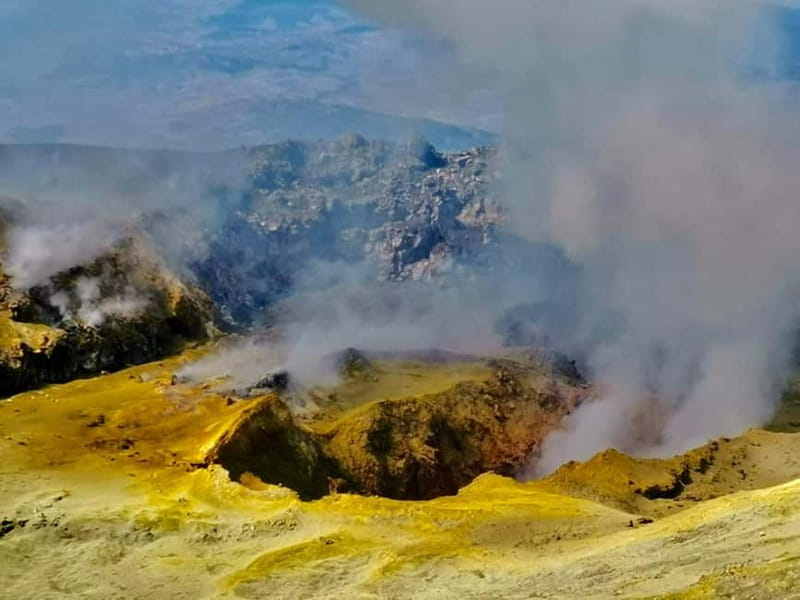
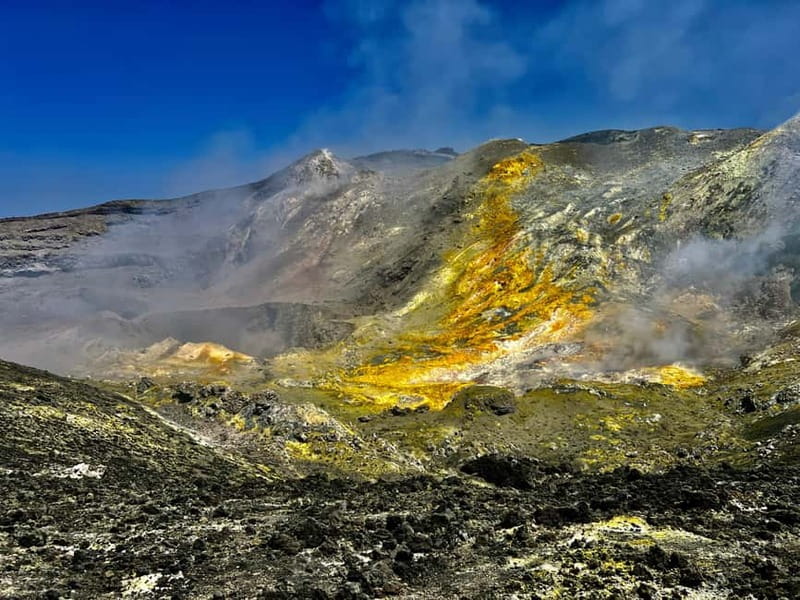
At approximately 2,900 meters, the walking begins. The route rises across lava fields and dark volcanic gravel toward the summit zone. From here, the mountain feels stark and open, with little to distract you from the rock, wind, sky, and distant views.
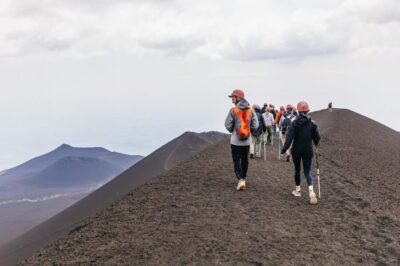
The climb gains around 450 meters. That figure sounds modest at sea level, but altitude changes the effort. The last part can feel hard, particularly when the air is cold or wind pushes across the ridge. A slow, steady rhythm helps. Guides commonly stop to explain the volcano, check the group, and give people time to catch their breath.
The ground is not a smooth trail. Loose material shifts under your boots, and small stones can get inside low shoes. Wear long trousers, long socks, and ankle-high boots if you have them. If you use the supplied footwear, ask for the highest boots available. A neck warmer, scarf, or face covering is useful when the wind lifts dust or sulfur fumes.
One practical warning: the volcanic gravel is sharp. A small rock rolling onto a leg can cut through clothing, so cover your arms and legs. Sunglasses protect your eyes from dust and bright volcanic ground. Contact lens wearers may prefer glasses, since dust and gas can make eyes uncomfortable.
Reaching the summit craters at 3,340 meters
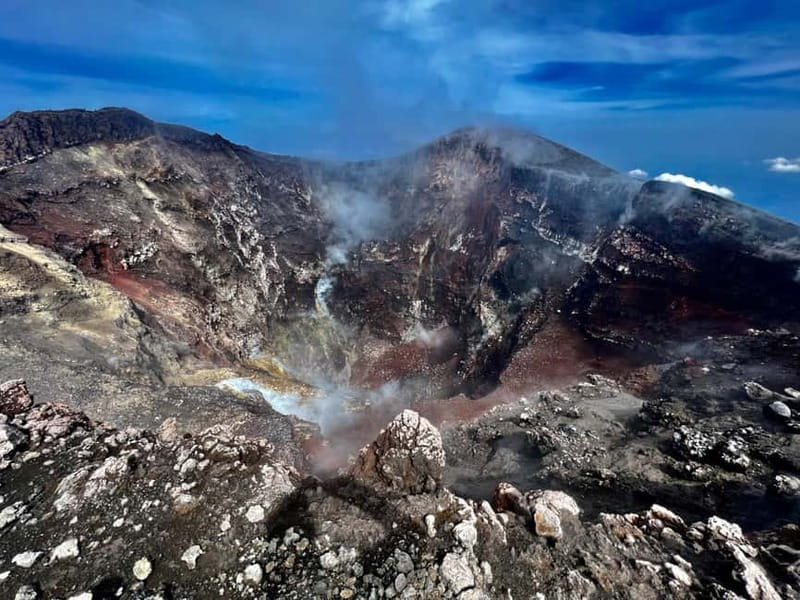
The high point of the route is the summit area, including the central crater zone. The exact route and how close you can approach depend on current volcanic activity, weather, wind direction, and the rules governing access to Etna’s summit.
That uncertainty is part of the experience. You may reach the summit craters, or the guide may stop below them and use a safer route. This is not a failure of the tour. Etna is an active volcano, and access rules can change quickly. One group could not summit because of conditions but still received a guided visit at around 3,000 meters and a rewarding walk on the upper slopes.
At the top, expect cold and wind even in July. Several people needed the supplied down jackets, and some appreciated borrowing boots, pants, or neck warmers. Pack layers rather than relying on a warm Sicilian forecast at sea level.
The views can be enormous. From about 3,400 meters, you may see Sicily spreading below, the Aeolian Islands offshore, and the Calabrian coast across the water. Clear air matters, so the view is never guaranteed. When clouds or volcanic haze close in, the craters and lava formations become the main attraction.
You may also smell or encounter sulfur gas. One person described standing in a sulfur cloud and coughing, while another noted the gas as part of the striking experience. Follow the guide’s instructions, keep your face covering handy, and understand that the group may move or shorten its stay if fumes drift toward the route.
Same trailhead, a different route:
- Catania: Mount Etna Trekking Tour Beyond the Tourist Trails
★ 4.9 · 1,596 reviews - Mount Etna: Guided Trek 3,000 Meters to the Summit
★ 4.8 · 1,407 reviews - Stromboli: Sunset Trekking at Sciara del Fuoco
★ 4.6 · 1,372 reviews - Etna Sunset Tour: Volcano trek, Cave & tasting from Catania
★ 4.8 · 1,290 reviews
The descent through sand gullies
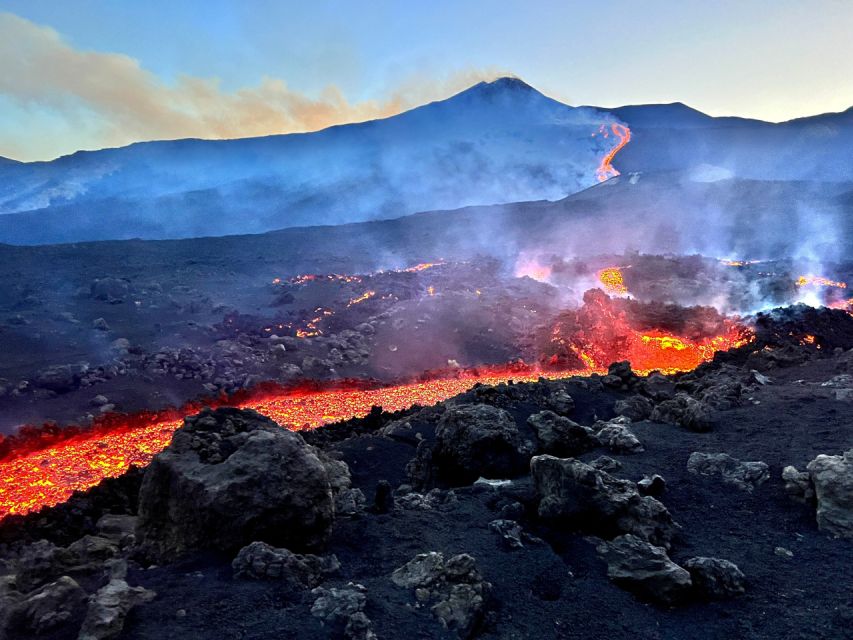
The return does not simply retrace the climb. After time around the summit, the route descends through sandy gullies toward the Pizzi Deneri area. This section can be fun, but it is also where many people feel the loose surface most clearly.
The gravel slides beneath your boots, and the slope may feel steeper on the way down than it did during the ascent. Use short steps, keep space between yourself and the person ahead, and do not hurry. Guides may demonstrate how to move on the surface and stop to let the group regroup.
The Pizzi Deneri area provides a grand view toward the Valle del Bove, one of Etna’s most dramatic formations. The broad volcanic depression gives you a different sense of the mountain’s size and past eruptions. You are no longer focused only on reaching the top. You can pause, look across the valley, and take in the scale of the volcano.
The stated tour plan includes a break of about 1.5 hours for rest, food, sightseeing, and walking. Bring your own picnic and drinks, since neither is supplied. A small daypack works better than a large bag on the loose slopes.
Guides who make the difference
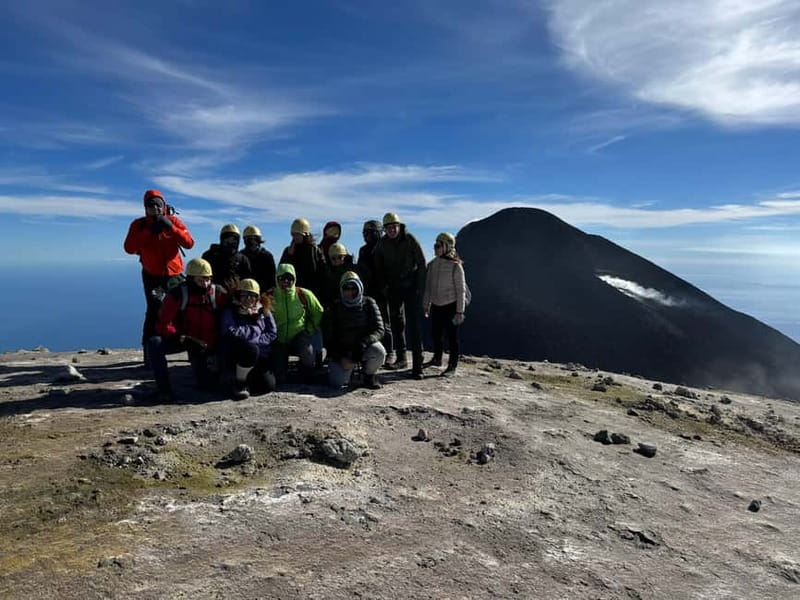
The strongest part of this tour is the guide service. Etna becomes much more meaningful when someone can explain why the rock looks different from one section to the next, how eruptions alter the slopes, and why the route changes with wind and volcanic conditions.
Luca Cosma is described as both a volcanological guide and the company owner. He answers questions before the tour, helps late arrivals when possible, and keeps a close eye on the group during the climb. Marco is praised for adjusting the pace and helping people over difficult ground. Arturo brings energy and humor while still watching safety closely.
Other named guides include Paolo, Basilio, Jonathan, Claudio, Andrea, and Linda. The feedback is notably consistent: guides explain clearly, wait for slower walkers, and do not rush the group. Paolo even led one outing at the age of 85, a reminder that experience and judgment matter as much as youthful speed in mountain guiding.
This does not mean every person will find the hike easy. A guide can adjust pace and route, but cannot remove the altitude or steep sections. The tour is not suitable for people with heart or respiratory problems, pregnant women, or people with a low level of fitness.
What the equipment includes, and what you should bring
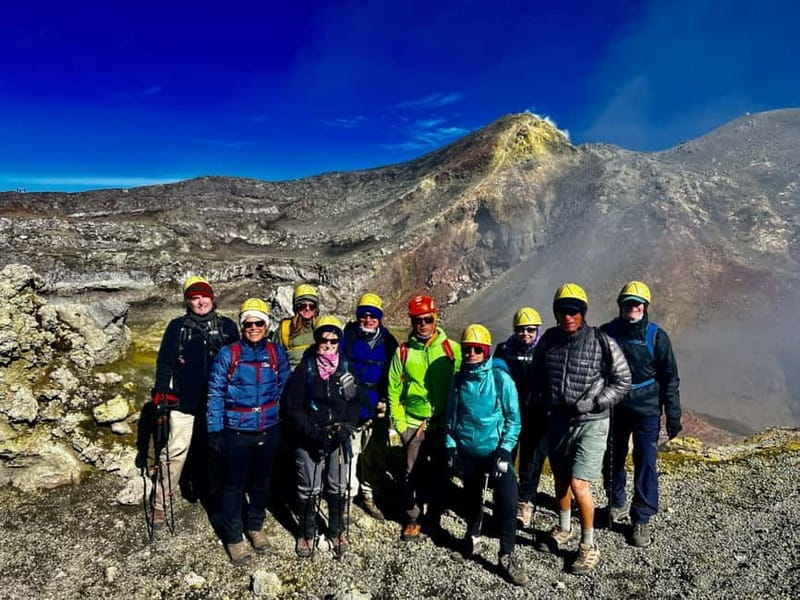
The supplied equipment is a real benefit. You can borrow hiking boots, a jacket, and a helmet. Some outings have also provided down jackets, pants, and neck warmers. This helps if you are touring Sicily with light luggage and did not bring mountain gear.
Still, loaner equipment does not replace sensible clothing. Bring:
- Sunglasses and a sun hat
- Long trousers and long socks
- A warm layer and weatherproof outer layer
- Food and plenty of water
- A scarf or face covering for dust and sulfur fumes
- Cash for the €50 4×4 ticket
- A small daypack
- Hiking shoes if you prefer your own well-fitting pair
Wear clothing you do not mind getting dusty. Volcanic grit finds its way into shoes, cuffs, and pockets. Alcohol and drugs are not allowed, and the activity is not designed for anyone who cannot manage an uphill mountain walk.
Is four and a half hours enough?
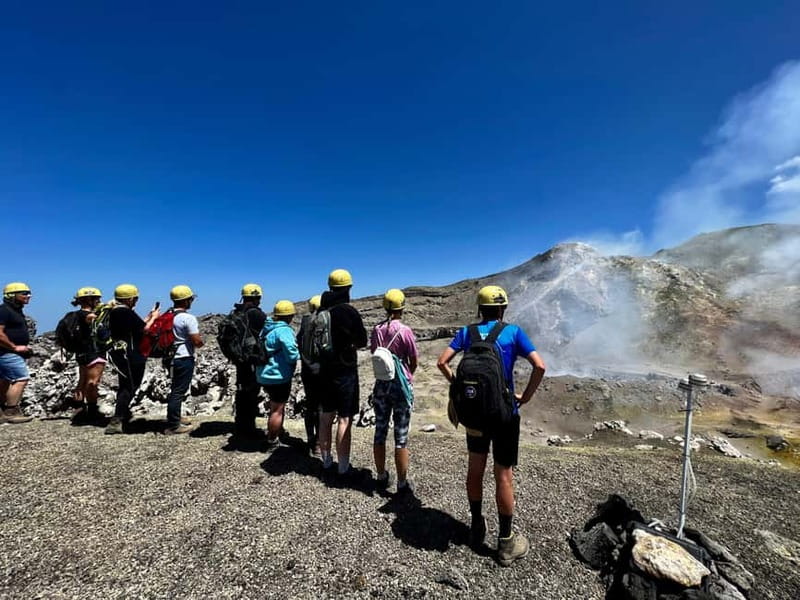
The advertised duration is 4.5 hours, including the briefing, 4×4 ride, hike, crater visit, rest period, descent, and return drive. That is a fairly efficient schedule for reaching the high mountain and coming back the same day.
The exact timing can shift. Weather, volcanic activity, the group’s pace, and the time spent near the summit all matter. The guides have sometimes allowed plenty of time for views and questions rather than forcing everyone through a rigid timetable.
If you are planning another activity later, leave breathing room. A mountain outing can run differently when conditions change, and you will likely want time afterward to change out of dusty clothes and recover from the altitude.
The value of the $65 price
The $65 starting price looks attractive for a summit-area Etna tour, but it does not cover the mandatory €50 4×4 ticket. That makes the true cost considerably higher. Food, drinks, and transport from your hotel are also separate.
Even so, the package includes several useful elements: a volcanological or alpine guide, insurance, helmet, hiking boots, and a jacket. The small group and high starting point add value because you spend your time on the upper volcano rather than walking a long approach route.
I would compare the full cost, not the headline price. For someone who wants the summit craters, a guide who can change the route safely, and equipment provided at the meeting point, the total can be fair. For someone mainly interested in a view from Etna with little walking, a shorter excursion may be a better match.
Free cancellation up to 24 hours before the activity and reserve-now, pay-later terms provide some flexibility. The important point is to accept that the summit itself is conditional. You are paying for a guided high-mountain Etna experience, not a guaranteed photo at a particular crater.
Who should book this Etna hike?
I would choose this tour if you want to walk on volcanic ground, learn about Etna from a specialist guide, and accept changing conditions. It suits people with reasonable fitness who are comfortable with altitude, loose gravel, cold wind, and a steep descent.
It is also a good fit if you are staying on the north side or can reach Piano Provenzana without a hotel transfer. The parking at Sole-neve Souvenirs makes the meeting point simple once you arrive.
I would think twice if you dislike uneven ground, have breathing or heart problems, or want a relaxed sightseeing trip. The 4×4 ride is enjoyable, but the main event is the hike. Even in summer, you may need warm clothing, and even with a slow pace, the final ascent can be demanding.
FAQ
Where does the Mount Etna summit tour meet?
The meeting point is Sole-neve Souvenirs in Piano Provenzana on Etna’s north side. Parking is available at the meeting point.
How high does the tour go?
The 4×4 ride reaches about 2,900 meters, and the walking route continues toward the summit area at roughly 3,340 meters.
Is the €50 4×4 ride included in the tour price?
No. The Unimog 4×4 round-trip ticket costs €50 per person and is paid in cash on site.
What equipment is provided?
The tour includes hiking boots, a jacket, a helmet, insurance, and a volcanological or alpine guide. Additional clothing such as down jackets, pants, or neck warmers may also be available.
Can the tour always reach the summit craters?
No. The route and summit access can change with volcanic activity, weather, wind, and safety regulations. The guide may offer a lower route or stop below the summit area when conditions require it.
What languages are available?
Guided tours are available in English, Italian, and French. Groups may be divided by language when appropriate.
Should you book the Mount Etna summit trek?
Book it if reaching Etna’s high craters is a major goal and you want a serious guide-led experience rather than a quick viewpoint stop. The north-side route, small group, 4×4 approach, loaner gear, and patient guides such as Luca, Arturo, Marco, and Linda make this a strong choice for an active day in Sicily.
Go in with clear expectations. Budget the extra €50, arrive prepared for cold and dust, and accept that volcanic conditions may change the route. If you can handle a 450-meter climb on loose ground, this is one of the more memorable ways to meet Mount Etna on its own terms.
Just added around Italy
- Wild Walk – Discovering the hidden paths★ 5.0 · 31 reviews
- Wine Hiking Sip & Trek★ 5.0 · 3 reviews
- Innerkofler-De Luca via ferrata to Monte Paterno★ 4.0 · 4 reviews
- Dolomites Trekking Experience★ 4.5 · 3 reviews
- Trekking an Island of Palmaria★ 4.5 · 6 reviews
- BarCa Winery Cinqueterre Trekking & Wine Tasting & Pesto Class★ 5.0 · 48 reviews
- Mount Etna Advanced Trekking: Private Full-Day Tour from Catania★ 5.0 · 21 reviews
- Trekking in the morning on Mount Etna★ 5.0 · 2 reviews
Volcano Treks, compared.
Mount Etna: Trek to 3000m with cable car and 4×4
Read our review →
Mount Etna: Summit Crater Trek with Cable Car
Read our review →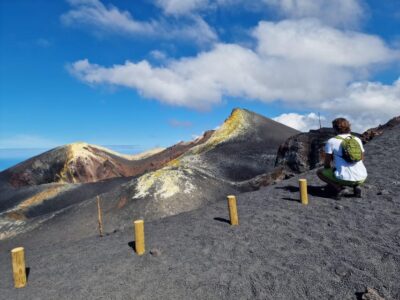
Etna: summit craters trekking with volcano guide 3350mt
Read our review →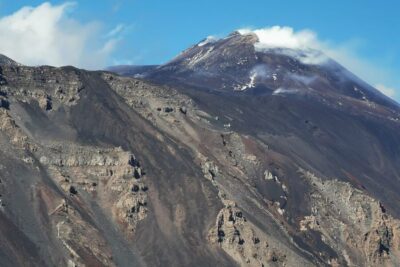
Mount Etna Trekking Tour Beyond the Tourist Trails
Read our review →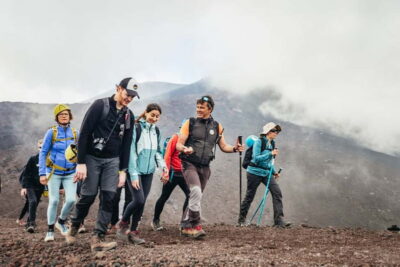
Mount Etna: Guided Trek 3,000 Meters to the Summit
Read our review →
Etna Sunset Tour: Volcano trek, Cave & tasting from Catania
Read our review →
Browse the lists this trek appears in