
Review · ITALY
Mount Etna: Central Crater (3,340 meters) with Jeep and Trek
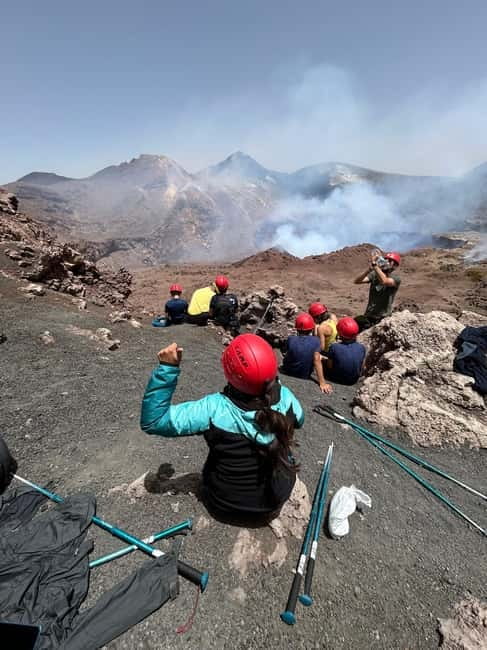
Etna’s upper slopes feel more like another planet than a Sicilian day trip. From 2,930 meters, a 4×4 carries you to the start of the climb, then you walk over old lava flows, volcanic bombs, and loose black rock toward the summit craters. Gas vents and sulphur vapour make the volcano feel very much alive.
I like two things right away: the small groups, limited to 10, and the supplied equipment. Good boots, poles, a helmet, and a wind jacket matter here. Guides such as Pietro, Mario, Giuseppe, Itala, and Daniele have been praised for clear explanations and careful attention to the group.
The catch is simple: this is a serious high-altitude hike, not a casual volcano viewpoint. The 4×4 ticket is paid separately, and wind, volcanic activity, or closed craters can change how high you go. Bring warm gloves, a hat, sunscreen, food, and water.
Key points before you book
- The walk begins at 2,930 meters: Expect about 100 minutes on foot to the summit area, then another 100 minutes back.
- Four craters are part of the goal: The route aims for the South-East, Bocca Nuova, North-East, and Central craters, but access depends on conditions.
- You receive useful mountain gear: Trekking shoes, helmets, poles, and wind jackets are included.
- The top is cold and exposed: October conditions have included sub-zero temperatures and strong wind.
- The 4×4 ride costs extra: The $59 price covers the guided trek and equipment, but not the return jeep ticket.
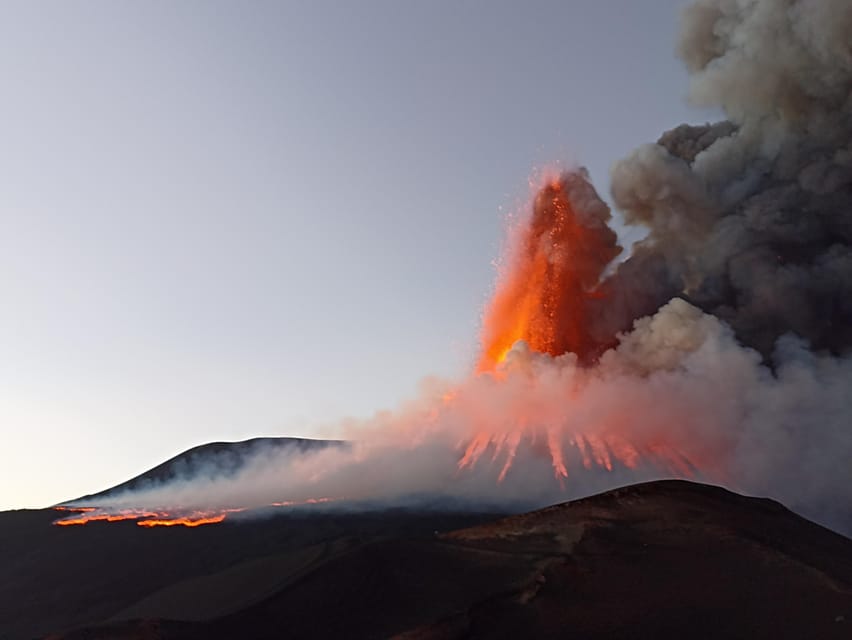
- Expect real volcanic activity, not flowing lava: Gas emissions, fumaroles, sulphur vapour, ash, and old lava are more likely than glowing red lava.
Starting at Piano Provenzana on Etna’s north side
Your meeting point is Piano Provenzana, the base for the Etna North route. This is where you meet the guide, receive the equipment, and sort out the practical details before heading higher.
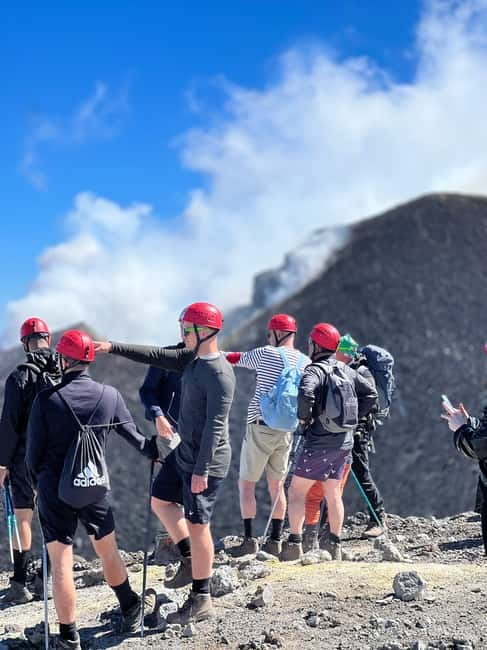
The gear is a useful part of the package. You receive trekking shoes, a helmet, trekking poles, and a wind jacket. You should still dress for cold weather. Long trousers, warm layers, gloves, and a hat are sensible choices. One October outing had temperatures below zero at the summit, with strong wind making it feel colder still.
Wear sunglasses and bring sunscreen. At high altitude, bright light reflects off pale volcanic rock and snow or ice when present. One participant specifically wished they had brought SPF, which is sound advice even on a cool day.
You also need your own food and drinks. There is a lunch break near the upper section, but no packed lunch is included. A simple sandwich, snacks, and enough water are more useful than trying to rely on a café or shop once the climb begins.
More Volcano Treks in Italy
- Mount Etna: Trek to 3000m with cable car and 4×4
★ 4.6 · 3,823 reviews - Mount Etna: Summit Crater Trek with Cable Car
★ 4.8 · 1,875 reviews - Etna: summit craters trekking with volcano guide 3350mt
★ 4.7 · 1,712 reviews
The 40-minute 4×4 ride to 2,930 meters
The first substantial section uses a 4×4 jeep and takes about 40 minutes. This is not just a novelty ride. It saves your legs for the part of Etna where the air is thinner, the ground is rougher, and the views open up.
The vehicle takes you across Etna’s upper volcanic zone to roughly 2,930 meters. From there, the walking section begins. The extra jeep charge is paid on site, so factor it into the advertised $59 price. The exact amount is not given here, so ask the operator before setting your final budget.
This arrangement offers good value for visitors who want the summit experience without spending the entire day walking from lower slopes. You still get a proper high-altitude hike, but the 4×4 removes a long approach.
Conditions can affect transport and access. Wind has caused changes to upper-mountain transport on some departures, so do not treat the planned vehicle and summit route as an absolute promise. The guides may need to alter the day for safety.
Walking across lava from 2,930 meters
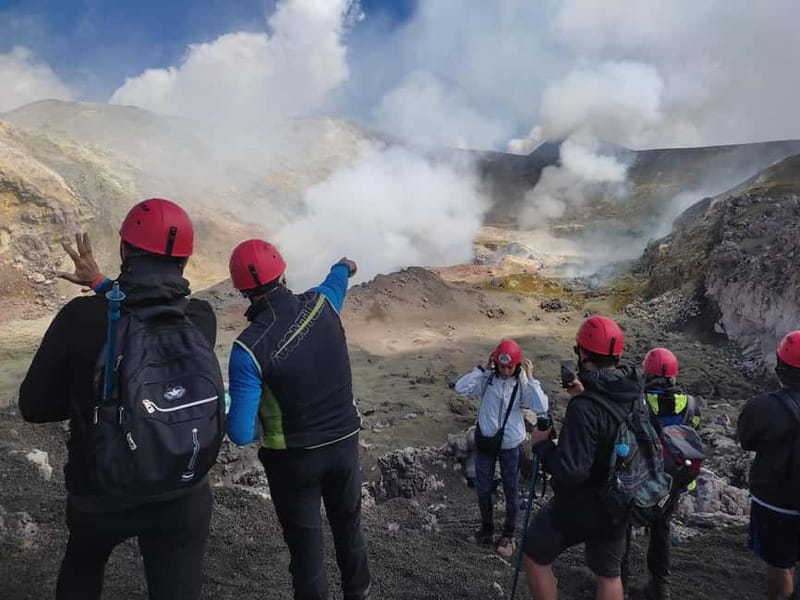
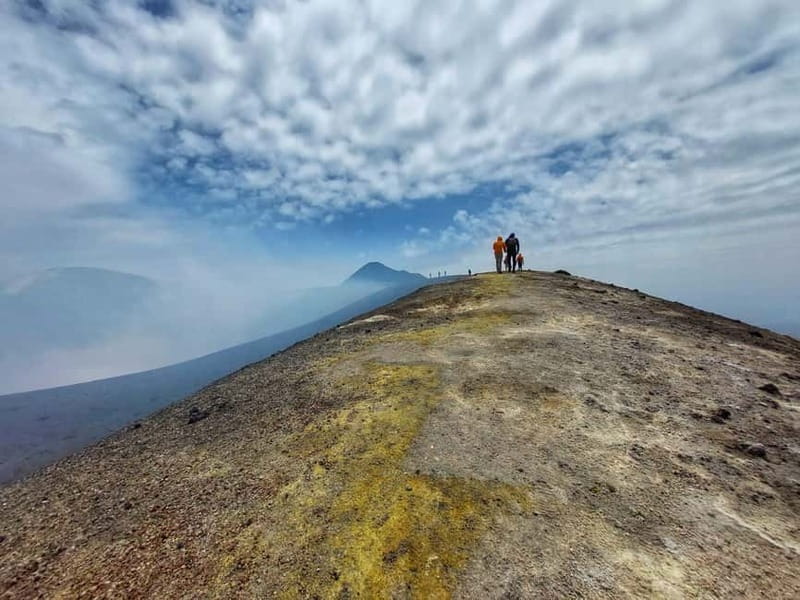
The hike toward the summit area takes about 100 minutes. It is not a neat trail through grass. You walk over old lava flows, loose volcanic waste, and fields scattered with volcanic bombs.
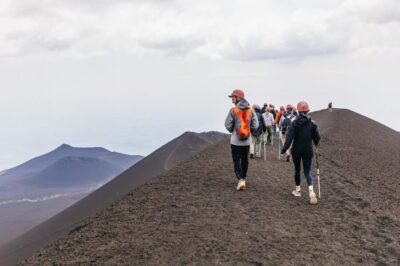
That rough surface is one reason the supplied trekking shoes and poles are valuable. The poles help with balance, especially on loose ground, while proper boots give you more confidence than ordinary trainers. Take the guide’s pace seriously. The group may move steadily rather than quickly, with pauses as needed.
The altitude is the main challenge. At 3,300 to 3,350 meters, even fit people can find the last section hard. One detailed account described the final 10 to 15 minutes as the toughest part. The guide adjusts the walking speed for the group, but you should still have a reasonable level of fitness.
This tour is not suitable for children under eight, people with mobility impairments, wheelchair users, or people with heart or respiratory problems. It is also not recommended for people over 75 or anyone with a low level of fitness. Those limits make sense. The route is exposed, high, and physically demanding.
Reaching Etna’s upper craters
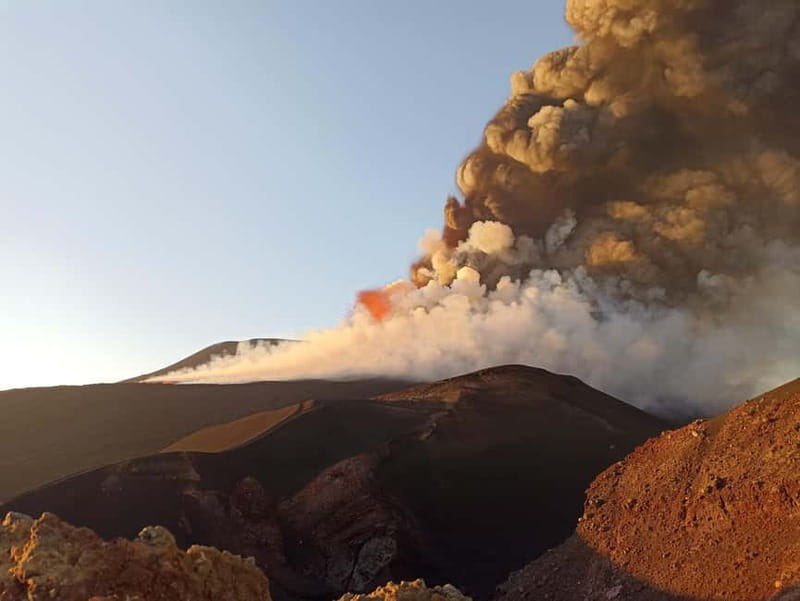
The stated goal is the Central Crater at about 3,340 to 3,350 meters. The material gives both figures, and altitude readings or route descriptions can vary slightly. The important point is that you are heading to Etna’s true upper summit area, not simply stopping at a roadside lookout.
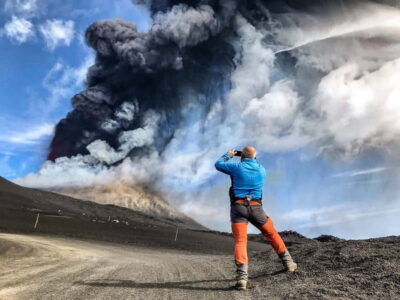
The four named craters are the South-East Crater, Bocca Nuova, North-East Crater, and Central Crater. From the top section, you may see gas emissions, fumaroles, sulphur vapour, and other signs of volcanic activity.
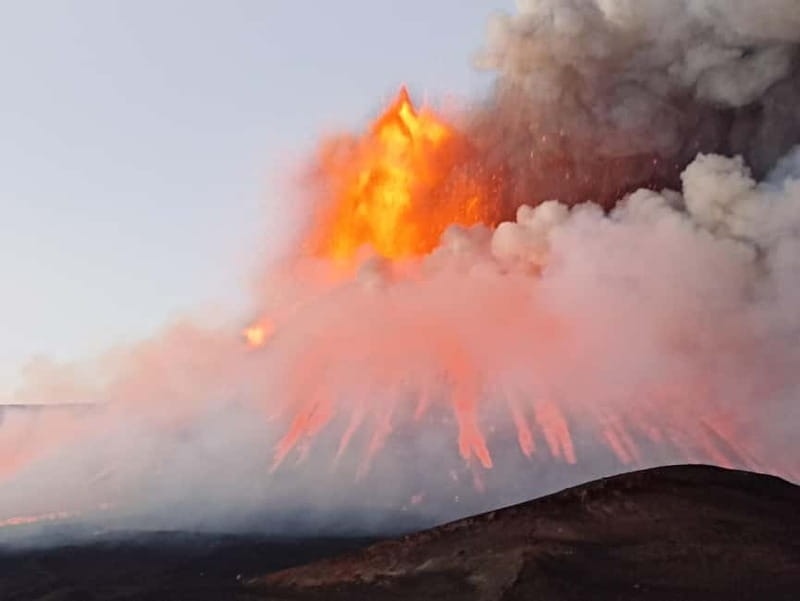
Do not book this expecting a guaranteed river of red lava. The more typical spectacle is smoke, vapour, black rock, crater rims, and the odd sense that the ground beneath you is still active. That can be more striking than a standard scenic hike, but it is a different experience from watching an eruption at night.
Access can change quickly. The Central Crater has been closed on a previous outing, while another departure was allowed to reach an additional northern crater. Recent volcanic activity may prevent the group from reaching the full planned summit. A good guide will put safety first, and the route can still be worthwhile when the exact crater access changes.
Same trailhead, a different route:
- Catania: Mount Etna Trekking Tour Beyond the Tourist Trails
★ 4.9 · 1,596 reviews - Mount Etna: Guided Trek 3,000 Meters to the Summit
★ 4.8 · 1,407 reviews - Stromboli: Sunset Trekking at Sciara del Fuoco
★ 4.6 · 1,372 reviews - Etna Sunset Tour: Volcano trek, Cave & tasting from Catania
★ 4.8 · 1,290 reviews
What the views are like from the summit area
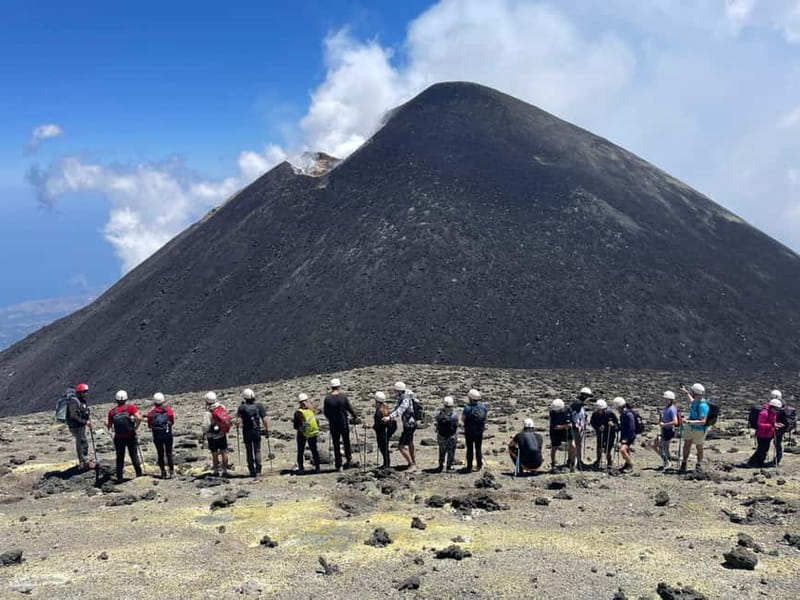
When the weather is clear, the height gives you broad views across Sicily and toward the coast. The Aeolian Islands may also be visible in good conditions.
Do not assume clear skies. Etna’s summit can be wrapped in cloud, wind, or sulphur vapour even when the lower slopes look pleasant. The best reward is not only the distant view, but the close-up volcanic setting: old lava, ash, jagged rock, crater edges, and steam rising from vents.
I find the combination especially worthwhile because the guide adds meaning to what might otherwise look like a field of black stone. Guides including Mario, Daniele, Giuseppe, Pietro, Ricardo, Alfio, and Itala have been praised for explaining volcanic features and keeping an eye on individual participants.
The guide’s role is also practical. On one outing, a person became mountain sick and the guides organized a rapid descent while keeping the rest of the group together. That is exactly the sort of calm decision-making you want on a high volcano.
A lunch break before the descent
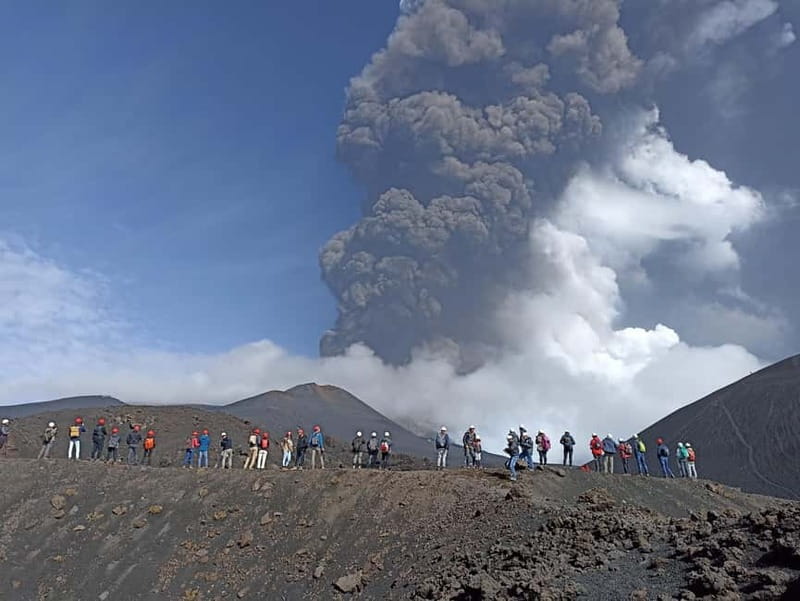
After time near the summit craters, you get a break for food and photos. Since lunch is not supplied, carry your own meal and drinks in a small pack.
The break is useful for more than eating. It gives your legs time to recover before the return walk and lets you take in the views without constantly moving. Keep your jacket close. At this height, the wind can turn a pleasant pause into a very cold one.
The visit is guided, but it is not a museum tour with a fixed indoor schedule. Your experience depends on cloud, wind, volcanic restrictions, and the pace of the group. That makes the day less predictable, but also keeps it tied to the real conditions of an active volcano.
The 100-minute walk back to the jeep
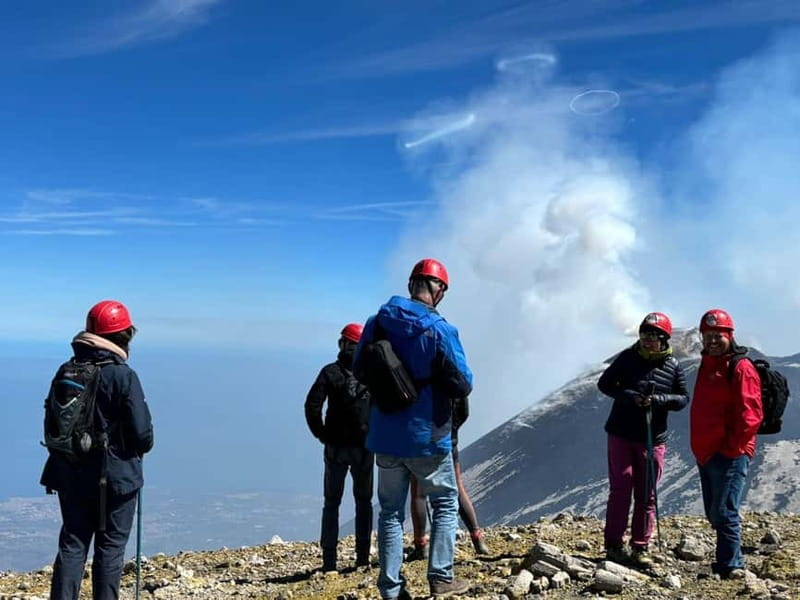
The descent takes about 100 minutes on foot. It may sound easier than the climb, but loose volcanic ground can be awkward downhill. Use the poles and keep your footing steady rather than rushing.
This is where comfortable clothing and good shoes pay off. You are returning over the same general upper-mountain terrain, so expect black rock, lava flows, and uneven ground rather than a smooth path.
The guide continues to manage the group during this part. A small group of up to 10 is a real advantage here. It is easier to stay together, ask questions, and adjust the pace than it would be in a large coach-sized party.
Once you reach the pickup point, the 4×4 takes about 40 minutes to return to Piano Provenzana. The whole outing lasts roughly 5.5 hours, with about 200 minutes of walking and 80 minutes in the jeep, plus time at the craters and the lunch break.
What the $59 price really covers
At $59 per person, the price looks attractive for a guided visit to Etna’s upper slopes. You are paying for an alpine and volcanological guide, specialist equipment, a small group, and an organized route into terrain that would be difficult to manage alone.
The value improves if you need rental gear. Trekking shoes, helmets, poles, and wind jackets are included. Buying or packing all of that for one volcano outing would be inconvenient, especially if the rest of your Sicily trip is based in warm coastal towns.
But $59 is not the complete transport cost. The round-trip 4×4 ticket is excluded and paid on site. Hotel pickup is also not included, though it can be requested. Food and drinks are your responsibility.
I would compare the final total with other Etna options before booking. Even so, the combination of upper-mountain access, a qualified guide, and equipment is a fair deal for a visitor who wants more than a lower viewpoint.
Language, group size, and booking flexibility
The live tour is offered in English, French, and Italian. The group is limited to 10 people, which suits anyone who wants personal attention without paying for a private tour.
The booking terms are flexible. You can reserve now and pay later, and cancellation is free up to 24 hours before the activity for a full refund. Those conditions are helpful for Etna, where weather and volcanic restrictions can affect plans.
The meeting point is Piano Provenzana. Hotel pickup is not standard, so you need to arrange your own way to Etna unless you request pickup separately.
Who should book this Etna trek
I would choose this tour if you want to stand in Etna’s upper volcanic zone and are ready for a real walk. It fits active visitors who value a guide, need equipment, and want to learn about volcanic activity while seeing the summit area.
It is also a good choice for visitors who do not want to spend the entire day climbing from lower elevations. The 4×4 ride gets you high quickly, leaving the main effort for the final approach.
I would think twice if you mainly want an easy scenic ride, a guaranteed crater visit, or warm weather. The summit can be icy, windy, and tiring. Route changes are part of visiting an active volcano, and the Central Crater may be closed.
FAQ
How long does the Etna tour take?
The activity lasts about 5.5 hours, including the 4×4 rides, the hike, time at the craters, and a lunch break.
Where does the tour begin?
You meet the guide at Piano Provenzana on Etna’s north side.
How high does the 4×4 take me?
The 4×4 ride takes you to about 2,930 meters, where the walking section begins.
How long is the hike?
The walk to the summit area takes about 100 minutes, followed by about 100 minutes back to the jeep pickup point.
Which Etna craters can I see?
The planned experience includes the South-East Crater, Bocca Nuova, North-East Crater, and Central Crater. Access depends on weather and volcanic activity.
Is the 4×4 ticket included in the price?
No. The round-trip 4×4 ticket is paid separately on site.
What equipment is provided?
The tour includes trekking shoes, helmets, trekking poles, and wind jackets.
Is lunch included?
No. You need to bring your own food and drinks.
Should I book this tour?
Book it if you want a serious, guided walk into Etna’s upper volcanic zone and can handle high-altitude terrain. The equipment, small group, and strong guide support add real value. Skip it if you need an easy outing or a guaranteed route to every crater. For the best chance of enjoying the day, bring warm layers, gloves, a hat, sunscreen, food, and water, and accept that Etna decides the final route.
Just added around Italy
- Wild Walk – Discovering the hidden paths★ 5.0 · 31 reviews
- Wine Hiking Sip & Trek★ 5.0 · 3 reviews
- Innerkofler-De Luca via ferrata to Monte Paterno★ 4.0 · 4 reviews
- Dolomites Trekking Experience★ 4.5 · 3 reviews
- Trekking an Island of Palmaria★ 4.5 · 6 reviews
- BarCa Winery Cinqueterre Trekking & Wine Tasting & Pesto Class★ 5.0 · 48 reviews
- Mount Etna Advanced Trekking: Private Full-Day Tour from Catania★ 5.0 · 21 reviews
- Trekking in the morning on Mount Etna★ 5.0 · 2 reviews
Volcano Treks, compared.
Mount Etna: Trek to 3000m with cable car and 4×4
Read our review →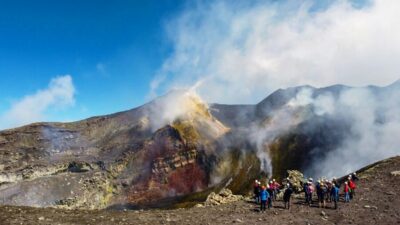
Mount Etna: Summit Crater Trek with Cable Car
Read our review →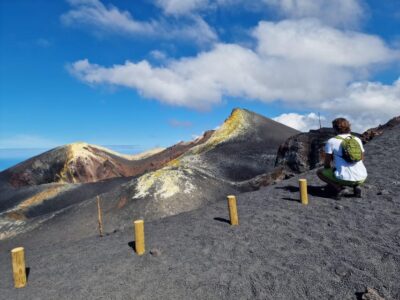
Etna: summit craters trekking with volcano guide 3350mt
Read our review →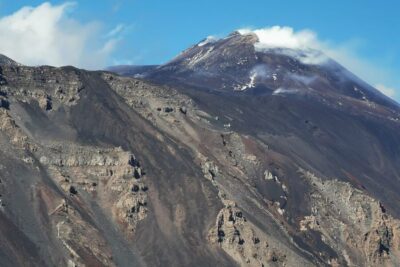
Mount Etna Trekking Tour Beyond the Tourist Trails
Read our review →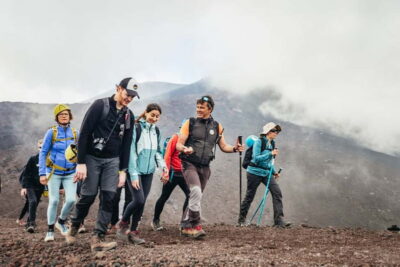
Mount Etna: Guided Trek 3,000 Meters to the Summit
Read our review →
Etna Sunset Tour: Volcano trek, Cave & tasting from Catania
Read our review →
Browse the lists this trek appears in