
Review · SPAIN
Sant Feliu de Guíxols: Guided tour of the Cala del Molí Via Ferrata
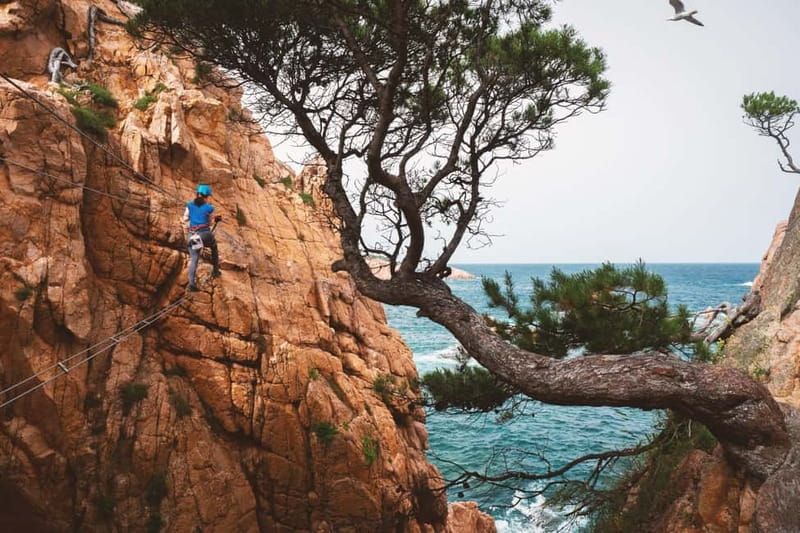
The Cala del Molí Via Ferrata is the only via ferrata in Europe that crosses the Mediterranean Sea. You climb and traverse above clear coastal water, using fixed cables, metal footholds, suspension bridges, and aerial walkways while the Costa Brava opens around you. It is a rare mix of rock climbing and sea outing.
I like the small groups of up to six, which give the guide room to help beginners without turning the route into a slow-moving parade. I also like that helmets, harnesses, energy dissipators, insurance, and photos are included, so you can focus on the route instead of assembling your own kit.
The main consideration is physical effort. This is rated K3, or intermediate, and includes vertical sections and exposed traverses. You do not need climbing experience, but you should be in good shape, and your arms may feel it afterward.
Key points to know before you book
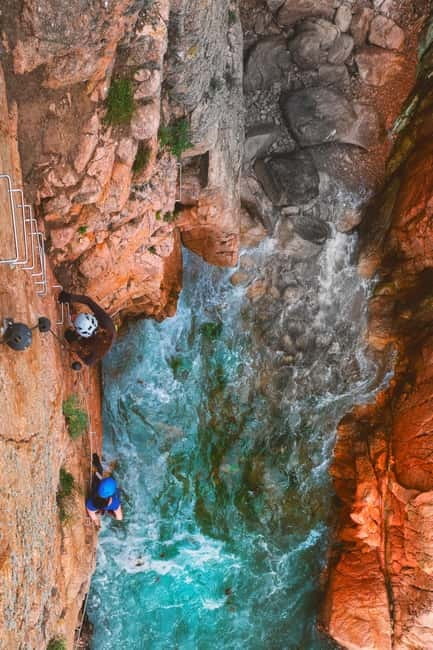
- The route crosses the Mediterranean: You move along rocky sections above the sea rather than simply hiking beside it.
- Suspension bridges add the thrill: Tibetan-style bridges and metal walkways create the most exposed moments.
- Miki and Miguel are named guides: The guiding is available in Spanish, English, and French, though English fluency may vary by guide.
- Small groups keep the coaching personal: A maximum of six participants makes this a better fit for first-timers.
- The $94 price covers the main extras: Equipment, professional guidance, accident and civil liability insurance, and photos are included.
- Good shoes matter: Wear sports clothing and grippy hiking or trail shoes. Sandals and flip flops are not allowed.
Why this Costa Brava climb is unlike a normal coastal walk
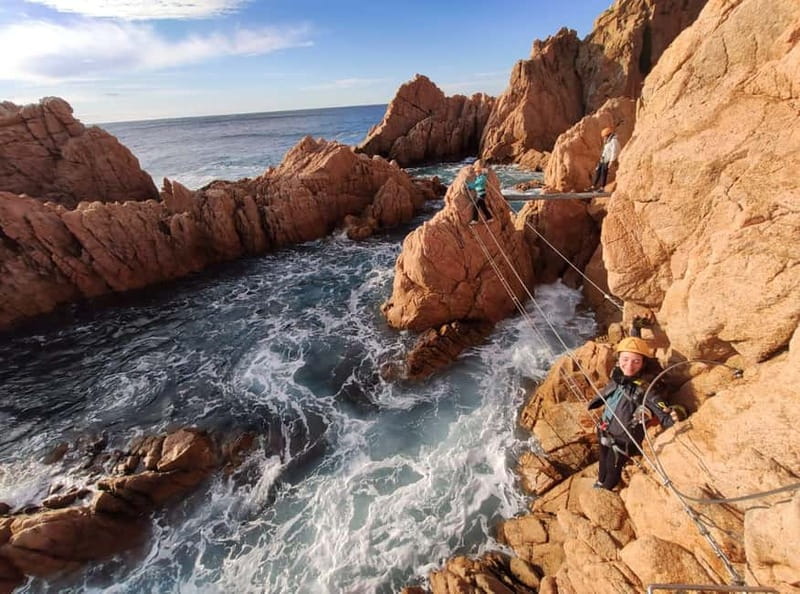
A standard Costa Brava outing gives you sea air and coves from ground level. This one puts you on the rock face, with the Mediterranean below and the fixed safety cable beside you. That change in height makes familiar coastal scenery feel fresh.
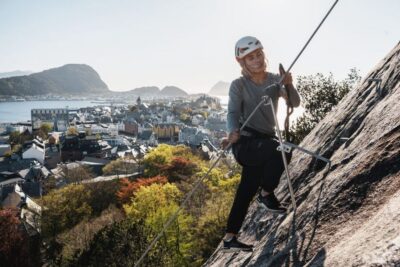
A via ferrata uses a steel cable fixed to the rock. You attach your harness to the cable with approved energy dissipators, then move from foothold to foothold. The guide explains how to pass the cable system and helps you through the more technical parts.
The Cala del Molí route is special because it does not stay inland. It crosses sections above the water, with the sea forming part of the route itself. You get the physical work of a climb, but also the wide views and fresh air of a coastal excursion.
This is not a silent nature walk. You will be concentrating on your hands, feet, cable, and balance. That is part of the appeal. The views arrive between movements, often when you pause on a ledge, bridge, or walkway.
More Via Ferrata Routes in Spain
- Sant Feliu de Guixols: Climb Via Ferrata Cala del Molí
★ 5.0 · 253 reviews - Gran Canaria: Guided Via Ferrata Excursion
★ 4.9 · 198 reviews - Via Ferrata in Gran Canaria. Vertical adventure park. Small groups
★ 5.0 · 183 reviews
Meeting near Cala del Molí
The meeting point is in a designated parking area near the start of the via ferrata in Sant Feliu de Guíxols. That is useful because you do not begin with a long approach walk. You meet the guide, receive a short explanation, and get ready close to the route.
The total activity lasts about 3.5 hours, while the active route is described as roughly three hours. The extra time allows for fitting equipment, safety instructions, group movement, and photographs.
The group limit of six matters here. On an exposed route, the guide needs to see what each person is doing and offer help when a move feels awkward. A larger group could mean more waiting at bridges and bottlenecks. This format keeps the experience more personal.
The guide may be Miki or Miguel. Miki is specifically noted for giving clear basic instructions, adapting to different ability levels, and taking photographs and videos. Miguel is also praised for friendly, patient instruction. The advertised languages are Spanish, English, and French, but English may not be equally strong with every guide, so be ready for demonstrations and simple gestures as part of the safety briefing.
Getting fitted with the safety equipment
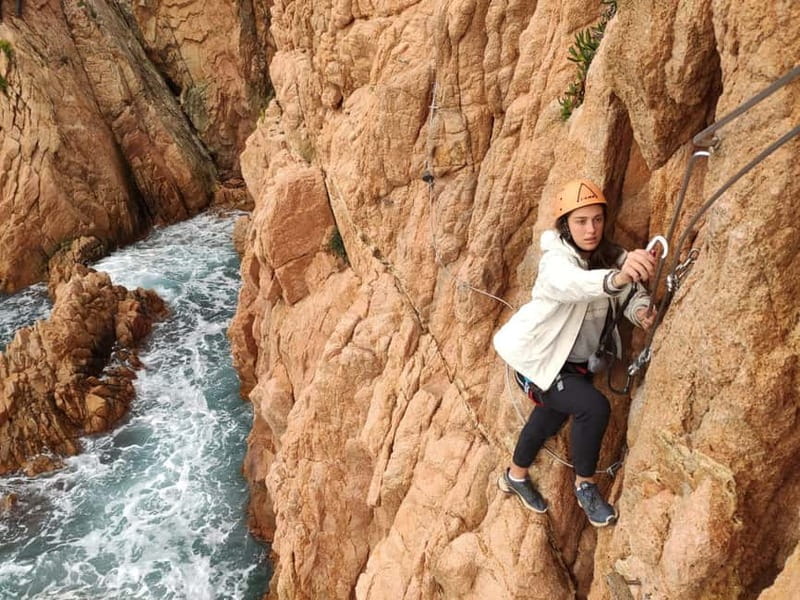
The included equipment consists of a helmet, harness, and approved energy dissipators. The dissipators connect you to the fixed cable and are designed for via ferrata use. The guide checks the system and explains how to move it along the route.
Pay attention during this opening talk. You will likely use the same basic system throughout the climb, but the cable changes at transitions, bridges, and other route features. A few minutes of careful instruction makes the rest of the experience much easier.
The equipment is a real part of the value here. At $94 per person, you are not paying only for access to a rocky route. You are also paying for the technical kit, a qualified guide, insurance, and photographs. Renting or organizing these pieces separately would be inconvenient, especially for a first attempt.
The guide stays with the group and offers technical advice during the activity. That is important for beginners, since the challenge is not simply strength. It is learning how to keep three points of contact, use the metal footholds, move the connectors properly, and manage nerves when the sea is visible below.
Starting the rock sections above the sea
The route begins with climbing and traversing along the rock. You use fixed metal holds and natural features in the stone while staying attached to the safety line.
The first part is where you learn the rhythm. Move one hand or foot at a time, keep your body close to the rock when that helps, and let your legs do more work than your arms. Beginners often pull too much with their hands. That can leave your forearms tired before the most exposed sections.
You do not need previous climbing experience. You do need reasonable fitness because the route includes vertical movement, traverses, and time spent supporting yourself on uneven footholds. One useful warning is that your arms may feel sore afterward, even if the route seems manageable at the start.
The scenery is already a major reward. From the rock face, you can look across the crystal-clear water and toward the coves of the Costa Brava. The setting keeps changing as the route bends around the coast, so you are not staring at one view for three hours.
Same trailhead, a different route:
- La Palma: Tajogaite Volcano Guided Trek
★ 4.8 · 1,810 reviews - From Barcelona: Montserrat Monastery & Scenic Mountain Hike
★ 4.9 · 978 reviews - Lanzarote: Timanfaya Natural Park Trekking Tour
★ 4.8 · 766 reviews - Volcano Trekking Tour (Timanfaya eruptions)
★ 5.0 · 339 reviews
Crossing the suspension bridges
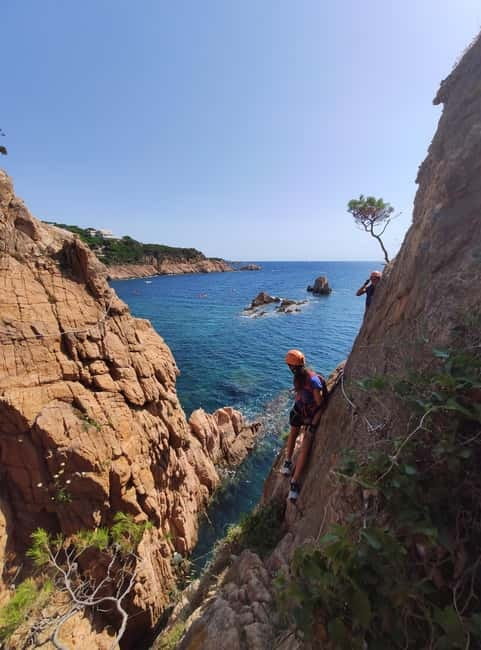
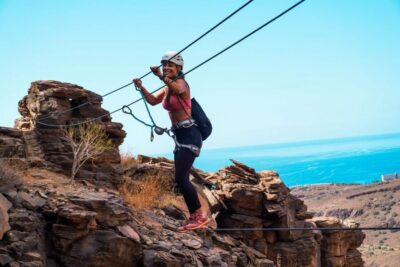
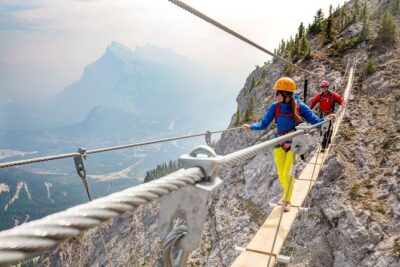
The suspension bridges are the sections most likely to raise your pulse. They add movement under your feet, open air around you, and a direct view down to the sea.
A Tibetan-style bridge requires balance and calm steps. It is less about speed than about finding a steady rhythm. The guide can explain where to place your feet and how to use the cable, which helps if the bridge feels less stable than expected.
These crossings are also the most memorable part for many people who want a true adventure rather than a simple guided walk. You get a clear sense that the route is using the coast in three dimensions: rock, air, and water.
Still, bridges are not a minor decoration. If heights make you uncomfortable, this is the point to think carefully about booking. The activity is designed to be safe, but safety equipment does not remove the feeling of exposure. A calm attitude and reasonable fitness will help more than bravado.
Moving along the metal walkways
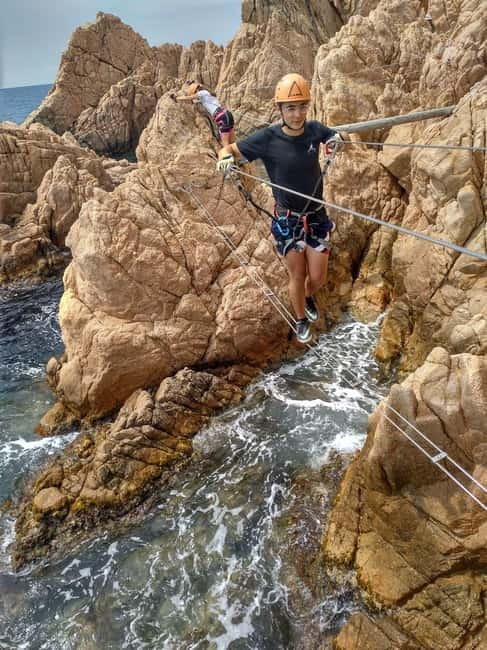
The aerial walkways provide another kind of challenge. Instead of a swinging bridge, you move across fixed metal sections attached to the rock, with open views beside and below you.
These walkways can feel more secure underfoot, but they still place you above the water and require attention. You need to keep moving in a controlled way, follow the cable system, and leave enough space for the person ahead.
The combination of fixed ladders, rock traverses, bridges, and walkways keeps the route varied. You are not repeating the same climbing motion over and over. One section may test your balance, another your arm strength, and another your comfort with height.
The route is rated K3, which places it at an intermediate level. The rating should not frighten a fit beginner, but it should prevent a bad match. This is not a casual family stroll, and it is not suitable for someone with a low level of fitness.
Taking in the Costa Brava views
The scenery is not just background decoration. It changes how the effort feels. A demanding move is followed by a broad view of the Mediterranean, a pause beside a cove, or a look along the rugged shoreline.
From higher and more exposed points, you see the coast from an angle that ordinary beach access cannot provide. The route gives you a succession of viewpoints rather than one lookout platform.
I would treat the photos as a useful bonus. The guide captures key moments while you are on the route, so you do not have to risk handling your phone during a bridge crossing or while attached to the cable. This also lets you remember the experience without turning every pause into a photography stop.
Keep your own camera use practical. The supplied information does not promise a waterproof case or a phone attachment, and the route requires attention. The guide’s photos are likely the easier way to get action shots.
What to wear and carry
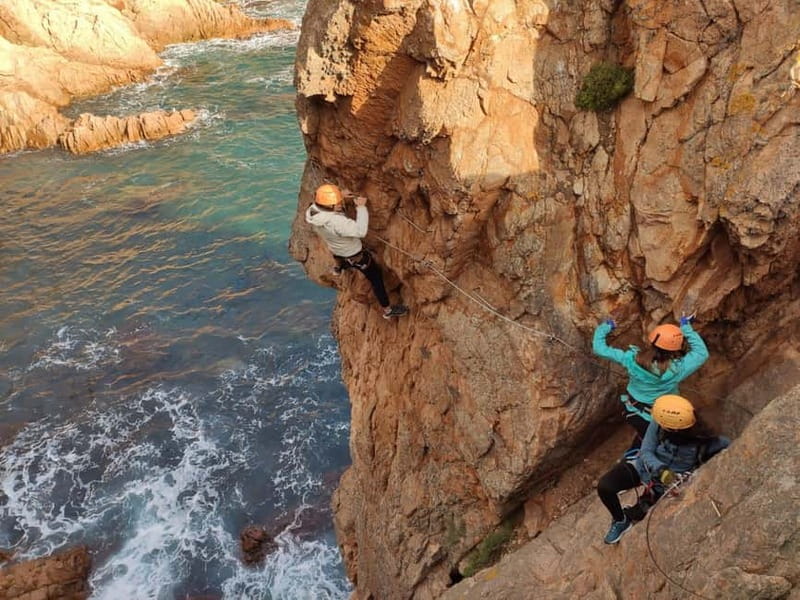
Wear sports clothing that allows your legs and shoulders to move freely. Hiking or trekking shoes with good grip are the best choice because you will use metal footholds and uneven rock.
Running shoes may work, but they are not ideal if the soles lack strong grip. Trail shoes with a firm tread are better. Fingerless gloves are also a smart comfort item, especially if you are new to via ferrata and expect to hold cables and metal features for long periods.
Bring water. The route lasts several hours and includes physical work. Sandals and flip flops are not allowed, so do not arrive in beach footwear simply because the activity is beside the sea.
You should also plan around the weather and the coastal setting, though no specific weather policy is provided. The activity takes place outdoors, and the operator may have the latest word on conditions before you go.
Is $94 a fair price?
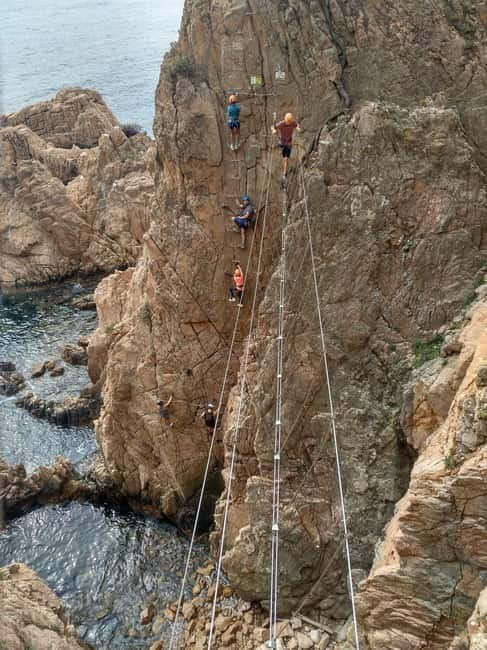
At $94, this is not the cheapest way to see the Costa Brava. It is priced as a guided technical activity rather than a regular sightseeing tour.
The value improves because the price includes a full equipment set, a professional guide, accident and civil liability insurance, and photographs. The small group limit also matters. You are paying for supervision that can adapt to a first-timer and a more experienced climber in the same group.
A family of four with two young teenagers can fit the stated age rules if the children are at least 10 and have parental authorization. That can make the outing a strong alternative to another day on the beach, especially for a family that already enjoys climbing or active trips.
The price makes less sense if you are looking for a relaxed coastal walk or have little interest in heights. You are paying for exposure, effort, equipment, and instruction. Book it for the activity itself, not simply for the views.
Who will enjoy this route most
This is a good match for an active beginner who wants a first via ferrata with a guide. You need basic fitness, but not previous climbing experience. The guide handles the technical instruction, while you supply the energy, attention, and willingness to move above the sea.
It also suits families with children aged 10 and older, couples, and small groups of friends. The route has enough excitement for experienced climbers, but the guide can adapt support to different ability levels.
It is not a good choice for someone with a low fitness level, someone who cannot manage vertical sections, or anyone seeking a quiet and easy outing. The activity is safe when you follow the instructions, but it still feels exposed and physical.
Language should be part of your decision. Spanish, English, and French are offered, and the guides have been praised for patient instruction. Still, English ability may vary, so you should be comfortable watching demonstrations and asking for clarification if a movement or equipment change is unclear.
Booking details worth knowing
The minimum age is 10, with parental authorization required for minors. The activity is limited to six people, which is a strong reason to reserve ahead if your dates are fixed.
You can cancel up to 24 hours in advance for a full refund. The reserve-now, pay-later option also gives you flexibility while you finalize your Costa Brava plans.
Starting times vary, so check availability before choosing your day. The meeting point is near the route in a designated parking area, but the supplied details do not state that transportation from Barcelona or another town is included. Plan to reach Sant Feliu de Guíxols independently unless your booking confirmation says otherwise.
Should you book the Cala del Molí Via Ferrata?
Book it if you want a real physical adventure in a remarkable coastal setting, especially if you like the idea of crossing bridges above the Mediterranean instead of watching the sea from a promenade. The small group, included equipment, insurance, and guide support make it approachable for fit beginners.
The best preparation is simple: wear grippy shoes, bring water, consider fingerless gloves, and arrive ready to use your arms and legs. If heights or strenuous movement sound unpleasant, choose a gentler Costa Brava activity instead.
For the right person, this is one of those outings that gives Sant Feliu de Guíxols a different shape. You do not just look at the Costa Brava. You work your way along it, one foothold, cable, bridge, and sea view at a time.
FAQ
Where is the Cala del Molí Via Ferrata?
It is located at Cala del Molí in Sant Feliu de Guíxols on Spain’s Costa Brava.
How long does the activity last?
The full activity lasts approximately 3.5 hours. The route itself is described as taking about three hours.
Is climbing experience required?
No. The activity is suitable for beginners who are in good physical condition, although it includes vertical sections and exposed traverses.
What difficulty level is the via ferrata?
It is rated K3, which is an intermediate level.
What equipment is included?
A helmet, harness, and approved energy dissipators are included. The activity also includes professional guidance, accident and civil liability insurance, and photographs.
What languages are available?
The guides provide the activity in Spanish, English, and French.
What is the minimum age?
The minimum age is 10. Minors need parental authorization.
What should I wear and bring?
Wear sports clothing and proper sports shoes, ideally hiking or trekking shoes with good grip. Bring water, and consider fingerless gloves. Sandals and flip flops are not allowed.
Just added around Spain
- Via Ferrata John Hogbin with Photos★ 5.0 · 4 reviews
- Half-Day Adventure and Climbing Via Ferrata in Gran Canaria★ 5.0 · 25 reviews
- The Roque Nublo Base Camp Experience: Hiking, Picnic and Climbing★ 5.0 · 11 reviews
- Private Climbing Experience Via ferrata Senda do Santo★ 5.0 · 8 reviews
- Via Ferrata Cala del Molí★ 4.0 · 4 reviews
- Via ferrata Cala del Molí in Sant Feliu de Guíxols★ 5.0 · 2 reviews
- Via ferrata de Sant feliu de guíxols – Via ferrata cala del molí★ 5.0 · 47 reviews
- Via Ferrata Adventure in Madrid with Transport★ 5.0 · 4 reviews
Via Ferrata Routes, compared.
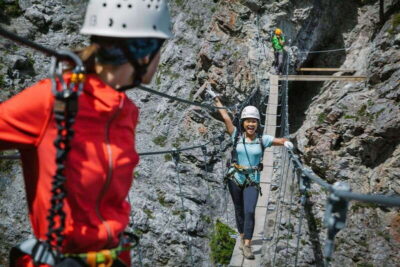
Banff: Mount Norquay 2.5 or 4-Hour Guided Via Ferrata Climb
Read our review →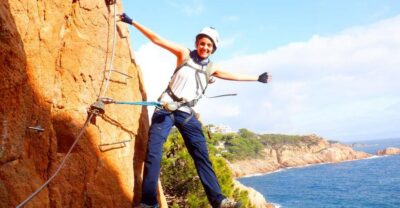
Sant Feliu de Guixols: Climb Via Ferrata Cala del Molí
Read our review →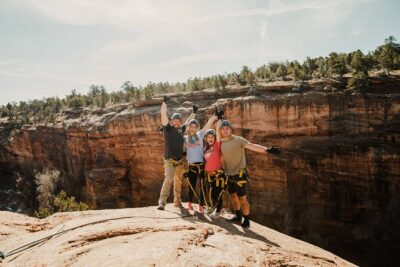
Small-Group Guided Via Ferrata Climbing with Banff’s Best Views
Read our review →
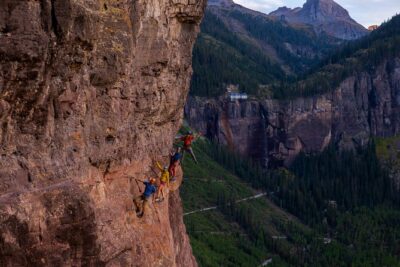
Via Ferrata in Gran Canaria. Vertical adventure park. Small groups
Read our review →Browse the lists this trek appears in