
Review · CHIANG MAI
Chiang Mai: 2-Day Jungle Trek with Elephant Farm & Raft Ride
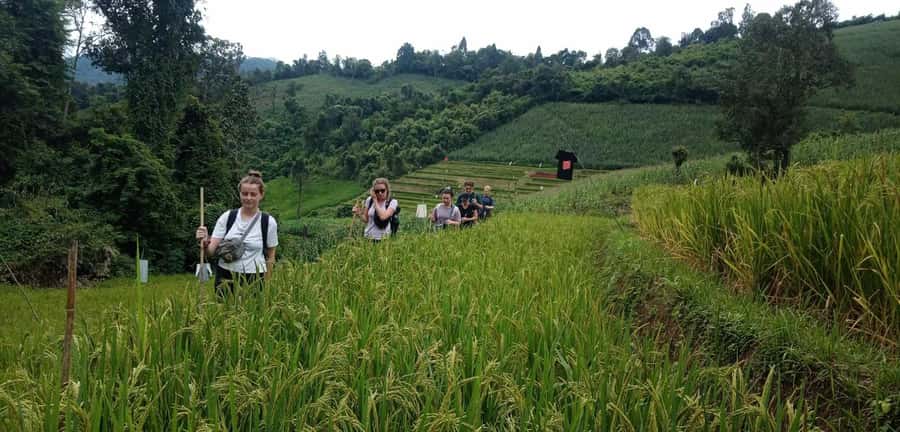
The best part of this two-day trip is the overnight stay in a Karen hill tribe village, where dinner, breakfast, and the evening take place at the edge of the forest rather than in a hotel. You walk through rice fields, bamboo groves, and mountain forest to get there, then wake to wide mountain views before continuing on foot.
I like the mix of activities. The jungle waterfall swim gives the first day a cool, welcome break, while the elephant visit and bamboo rafting add variety without turning the trip into a string of bus stops. The main drawback is the walking: expect several hours on foot, uphill sections, heat, mud in wet weather, and basic overnight conditions.
Key points to know before booking
- Eight to nine kilometers on the first day: The route includes uphill walking and can feel strenuous in heat or rain.
- A real village overnight: You sleep simply, often with mosquito nets, and eat food prepared by local residents.
- Elephants are not ridden: You can feed and bathe rescued elephants, though some visitors may still have personal concerns about bathing activities.
- Guides shape the experience: Witoon, Moon, Sammy, Louie, Toon, and other local guides are praised for humor, nature knowledge, patience, and care.
- Water is not included: Bring enough drinking water, plus insect repellent, sturdy shoes, swimwear, and a dry change of clothes.
- Good value at $97: Transport, guiding, meals, lodging, rafting, trekking, and the sanctuary visit are all included.
From Chiang Mai streets to the Mae Wang River
The day usually starts with hotel pickup between about 9:00 and 9:30 in the morning, or with a meeting at Baan Meesuk in Chiang Mai’s old town. Transport is by van or traditional songthaew, depending on the group and arrangements.
The group is limited to 12 people, which matters on a walking trip. A smaller group makes it easier to keep a steady pace and gives you more time to ask questions. Guides such as Witoon, Moon, Sammy, and Louie have been singled out for taking photos, explaining plants and animals, helping tired walkers, and keeping the mood light.
The first stop is a local market. This is not a long cooking lesson or a major sightseeing stop. It is a short chance to see vegetables, fruit, and regional food before heading into the countryside. If you like knowing what local families buy and eat, the market adds useful context. If you prefer to get straight to the mountains, it may feel brief.
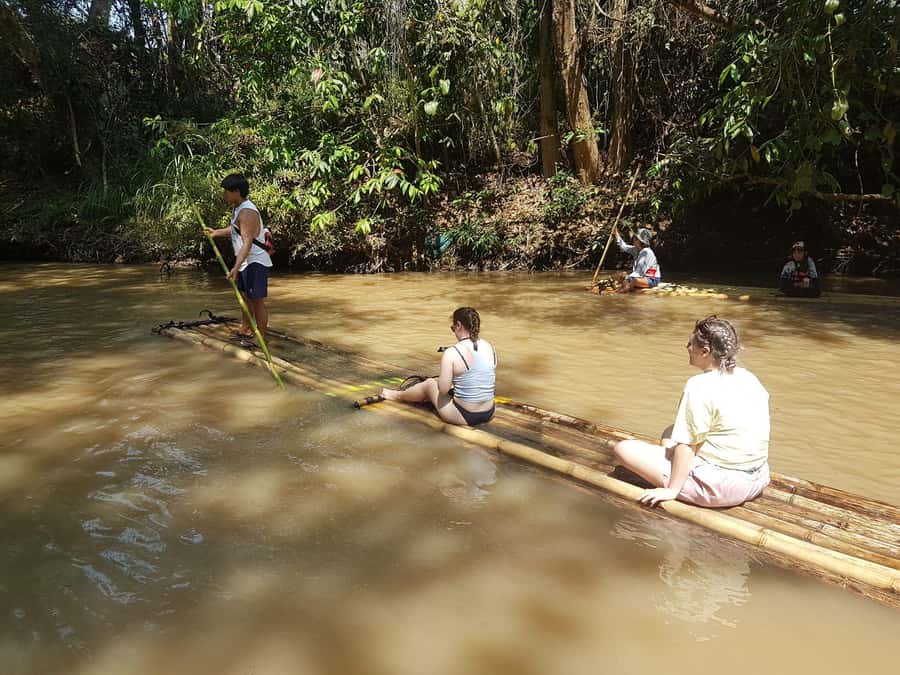
The Mae Wang River is generally calm enough for a gentle 40-minute ride on a bamboo raft. This is less about thrills than sitting low over the water while the river and forest pass at an easy pace. The rafting can be moved later in the schedule, and bad weather may affect it. One outing had to skip the raft because of rain, while other groups found it a highlight.
Wear long trousers and long sleeves for the river and trail. They help with sun, mosquitoes, and scratches from plants. You will also want flip-flops or sandals for wet areas, but keep proper hiking shoes for the trail itself.
More Jungle Treks in Chiang Mai
- Off the Map Chiang Mai Jungle Coffee Trek Roast and Brew
★ 5.0 · 107 reviews - Chiang Mai: 2-Days Jungle Trek, Waterfalls and Karen Village
★ 4.8 · 103 reviews - Chiang Mai: Elephant Sanctuary & Jungle Trek w/ Waterfall
★ 4.5 · 18 reviews
The waterfall stop is your first real reward
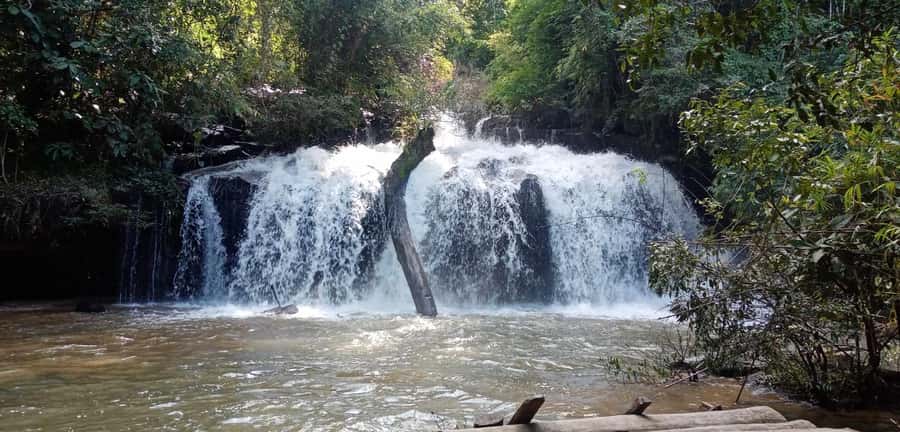
After the market and rafting, the route heads toward the trail. The walk passes through paddy fields and mixed forest before reaching a jungle waterfall after roughly two hours, though the exact timing and sequence can change.
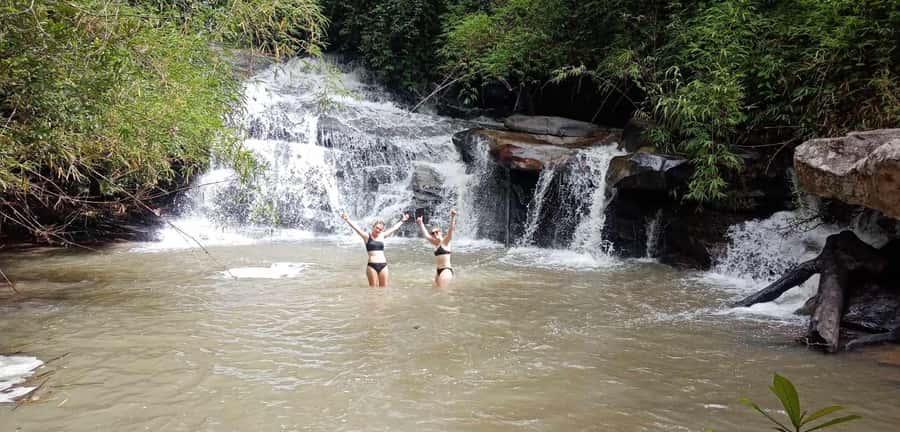
The waterfall is used as a lunch stop. A picnic here breaks up the first day and gives you a chance to cool off in the water. Some groups have stopped at more than one waterfall, and the swimming time depends on weather, water conditions, and the guide’s plan.
Pack swimwear where you can reach it quickly. Do not bury it at the bottom of your bag. You will also need a towel and a complete change of clothes, since wet socks and a damp shirt make the next uphill section much less pleasant.
One practical point is worth stressing: the waterfall may not be clearly announced as the swimming stop. Ask your guide early in the day when you will have time to change and swim. A small daypack is better than carrying a large bag, and your main luggage should not be part of the hike.
A two-hour climb into bamboo country
After lunch, the route turns uphill through tall bamboo and evergreen forest. The climb to the Karen village takes about two hours, though actual walking times vary with the group and trail conditions.
The walking is not technical, but it is not a casual stroll. The first day has been described as roughly 8 to 8.5 kilometers, with one group gaining about 550 meters in height. The combination of heat, humidity, uneven ground, and long uphill stretches is what makes it tiring.
I would rate this as a good choice for anyone with a reasonable level of fitness, not for someone seeking a soft nature walk. Go slowly. Guides have adjusted the pace for the group, and that matters more than trying to arrive first. Hiking shoes with grip are important, especially during the rainy season.
The forest is one of the trip’s strongest features. Guides may point out plants, insects, and animal signs along the way. One guide showed a tarantula in its nest, while another group learned about local plants and animals as they walked. These moments give the trail a sense of place that you do not get from simply taking photographs at a viewpoint.
Evening with a Karen hill tribe family
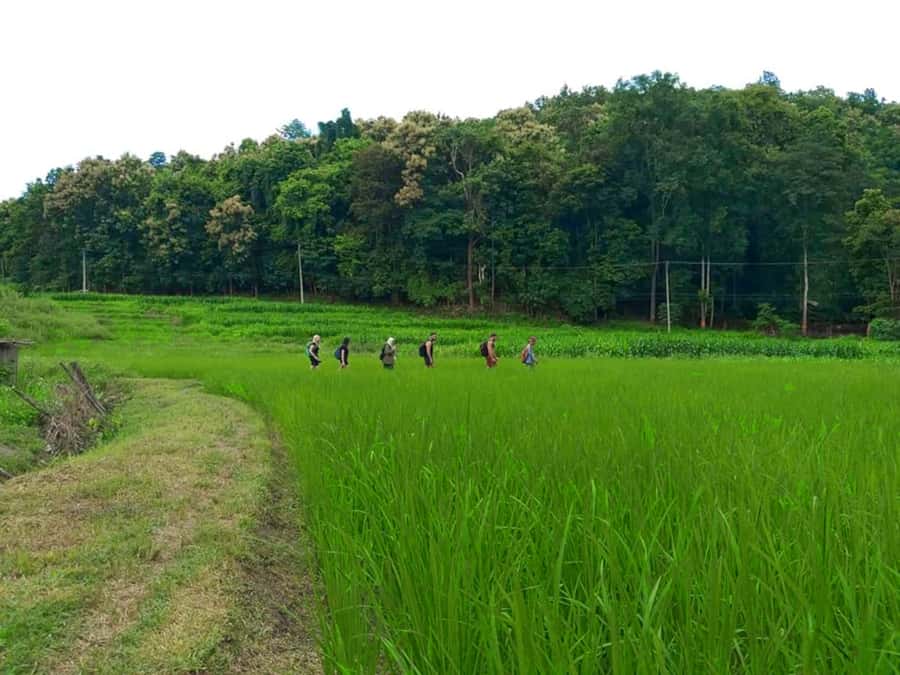
Arriving at the village near late afternoon changes the rhythm of the trip. You are no longer rushing between attractions. You have time to sit, look across the mountains, meet local people, and settle into a much simpler night.
The accommodation is basic but often more comfortable than people expect. Sleeping arrangements may include beds with mosquito nets, though one person specifically wished the beds were better. The village can also be cold at night, even after a hot day of hiking, so pack the jacket listed in the equipment advice.
Dinner is prepared by local residents and is included in the price. Several groups praised the portions, local dishes, sticky rice, tea, and the quality of the evening meal. The food is part of the cultural exchange, not just fuel after a long walk.
The evening may include a campfire, games, storytelling, music, or a small party. You might find yourself playing volleyball or sharing a drink with people from the village and your own group. Keep your expectations respectful. This is a short community visit, not a full course in Karen culture, and the village should not be treated as a stage set for visitors.
The best approach is simple: ask questions, listen, follow local customs, and avoid assuming that every part of village life is arranged for entertainment. The tour supports local communities, and your attitude helps determine whether that support feels respectful.
More Jungle Treks in Thailand
- Trek to a Jungle Waterfall
★ 5.0 · 14 reviews - 8KM White Water Rafting and 3HRS Jungle Trekking Adventure
★ 5.0 · 9 reviews - Chiang Mai: Jungle Trek, Elephants care & Bamboo Rafting
★ 4.5 · 8 reviews - Chiang Mai: Guided Jungle and Waterfall Trek with Transfer
★ 4.9 · 8 reviews
Sunrise, breakfast, and the trail back down
The second morning starts with breakfast in the village. The setting is a major part of the appeal. Several people described the morning mountain views and sunrise as memorable, so keep your phone or camera nearby.
After breakfast, you continue through the forest for about two hours toward the elephant sanctuary. Some route descriptions place the sanctuary before the waterfall and rafting, while others place it after the overnight trek. The order can shift, so focus on the included activities rather than expecting the exact same sequence every time.
The second day is generally easier on the lungs if much of the route is downhill, but downhill walking can be hard on knees and ankles. One group covered about seven kilometers on the second day. Rain can make descents slippery, so shoes with a firm sole are much better than casual trainers.
Bring water from Chiang Mai or buy it before the remote part of the trip. Drinking water is not included, and dehydration will make the uphill walking feel far harder. Sunscreen, a hat, sunglasses, and insect repellent are also practical, not optional extras.
Meeting rescued elephants without riding them
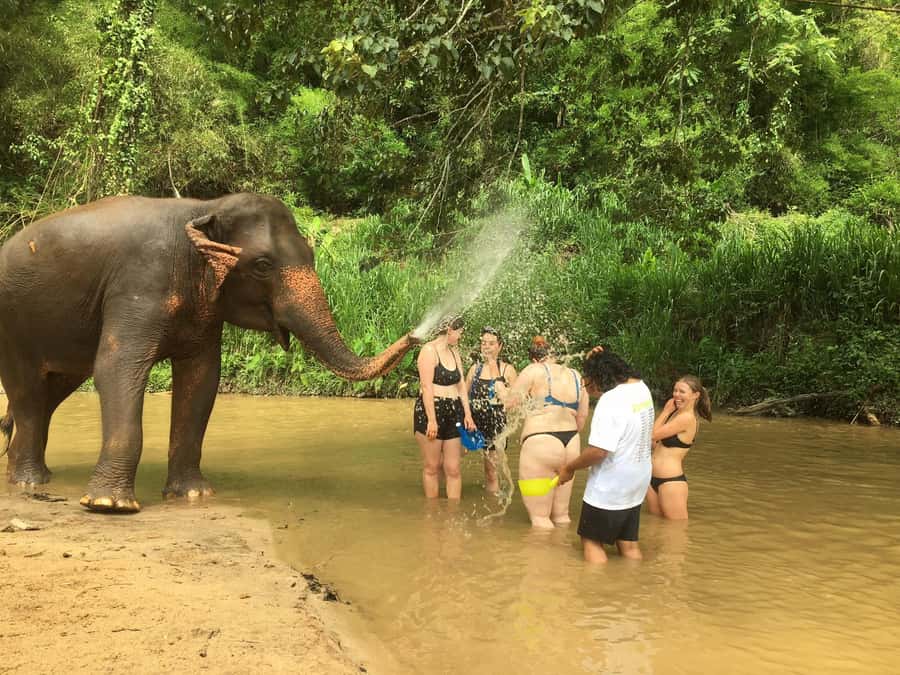
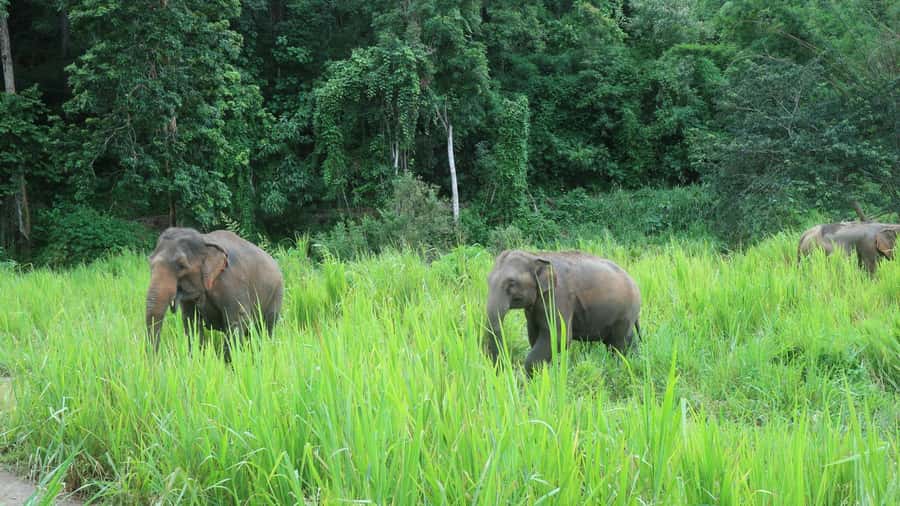
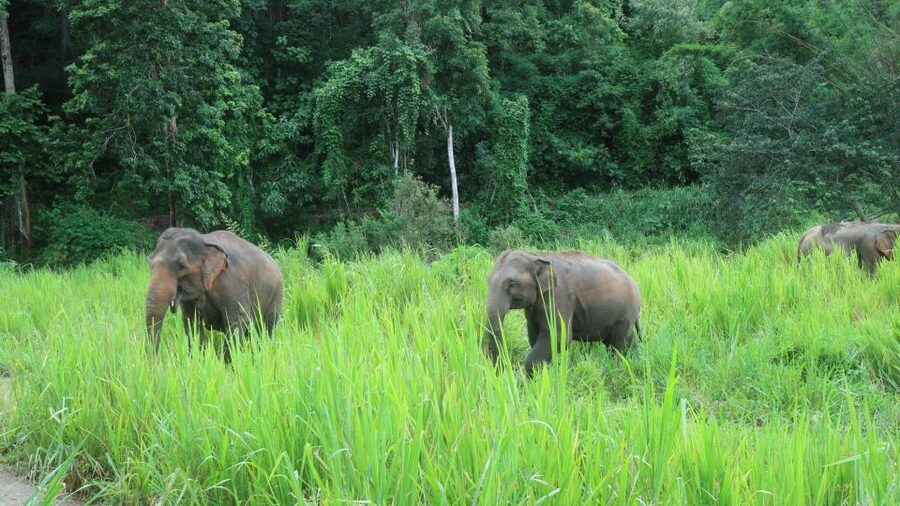
The elephant stop is at a jungle sanctuary that cares for rescued elephants. You can feed them, learn about them, and, when conditions allow, bathe with them in the river.
The tour does not include riding, and riding is specifically prohibited. That is an important distinction for anyone trying to choose a more responsible elephant experience. Still, bathing with elephants is not viewed the same way by everyone. Some people will be comfortable with it, while others prefer to observe elephants without direct contact.
Pay attention to how the animals are handled and follow the guide’s instructions. Do not assume that a close photo is worth making an elephant uncomfortable. The strongest part of this stop is seeing the animals at close range while learning about their situation, not collecting a dramatic photograph.
The stop also gives your legs a break. After the long trail, feeding the elephants is a more relaxed activity, and the guides usually help explain what to do. The setting is remote and fits the broader idea of a jungle trip rather than a city-based animal show.
Bamboo rafting and the ride back to Chiang Mai
The raft ride lasts about 40 minutes. It is quiet, simple, and best understood as a change of pace after the hiking. You sit on a bamboo platform and move along the Mae Wang River, taking in the forest at water level.
The river may be muddy or fast after rain, and the operator can change or cancel this part for safety. Bring dry clothes even if the sky is clear. You will be glad to have them after the waterfall, elephant bathing, and rafting.
After the final activities, the drive back to Chiang Mai takes about an hour. Arrival is expected around 4:30 p.m., though traffic, weather, and the group’s pace can alter the timing. Do not schedule a tight evening flight or an important reservation immediately afterward.
What the $97 price really covers
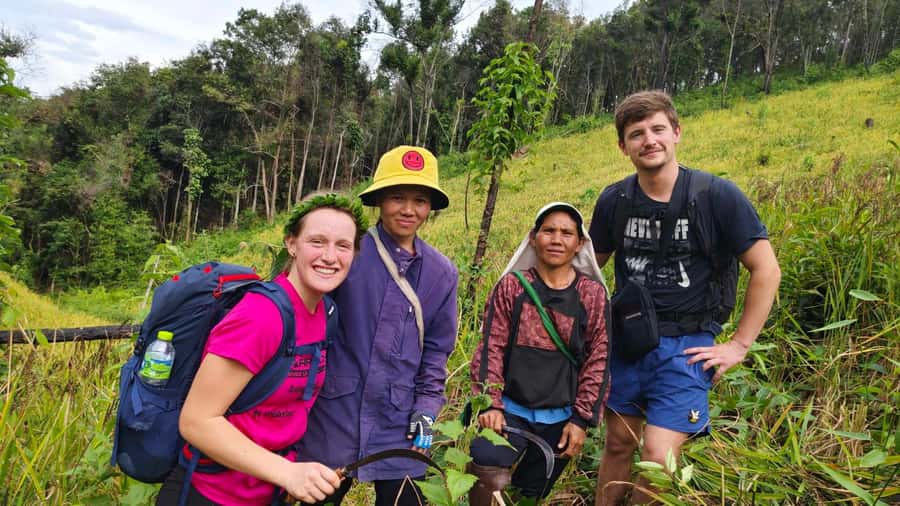
At $97 per person, this is strong value if you want several kinds of activity in one trip. The price includes hotel pickup and drop-off, transport, a guide, two lunches, dinner, breakfast, one night of basic lodging, the market stop, trekking, the elephant sanctuary, and bamboo rafting.
You would pay separately for many of those elements if booked one by one, and the transport into the mountains would be harder to arrange alone. The meals also remove much of the hassle of finding food along a remote trail.
The value depends on your comfort with simple conditions. You are not paying for a private vehicle, polished resort lodging, or a carefully timed luxury itinerary. You are paying for access to rural areas, local guides, a village stay, and a full outdoor program.
The small group limit of 12 helps. You still need to share transport and follow a group schedule, but you are less likely to feel lost in a large coach party. English and Thai guiding are available, and the quality of the individual guide can make a noticeable difference. Guides named Witoon, Moon, Sammy, Louie, Toon, Po, Patti, Lee, and others have been praised for their warmth and care, though you cannot request that a particular guide will be assigned.
Packing for heat, rain, and a cold village night
Take a small daypack and keep the load light. You will carry it through the forest, and every extra item feels heavier after the first climb.
Bring:
- Hiking shoes with good grip
- Long trousers and a long-sleeved shirt
- Shorts and swimwear
- A towel and a full change of clothes
- Insect repellent and sunscreen
- A sun hat and sunglasses
- Flip-flops for wet areas
- Rain gear
- A jacket for the village night
- Toiletries and any personal medication
- Drinking water
Wear clothes that can get dirty. During the wet season, mud and rain may affect the route and rafting. During the dry, hot months, shade and water become more important.
This trip is not suitable for pregnant people, wheelchair users, people with mobility impairments, people with heart or respiratory problems, epilepsy, vertigo, or a low level of fitness. Babies under one year and children under two are also excluded. If you have a medical concern, choose a less demanding outing.
Who should book this Chiang Mai trek?
You should book it if you want a broad taste of northern Thailand in two days and you are happy to work for the reward. The combination of forest walking, village hospitality, elephants, waterfalls, local food, and rafting gives you far more variety than a standard half-day countryside tour.
It suits couples, friends, and solo visitors who enjoy meeting a small group along the way. It also works well for people who want a cultural experience but do not want to give up outdoor activity.
Think twice if you need predictable timing, soft beds, air-conditioning, or a low-effort schedule. The tour can be physically demanding, the accommodation is basic, and the order of stops may change. It is also not the right pick if you strongly prefer to watch elephants without feeding or bathing them.
Final verdict: book it for the village, not just the elephants
I would choose this trip for the overnight Karen village and the walking route first, then treat the elephants and rafting as valuable extras. The village meal, mountain morning, forest trail, and time with local guides give the experience its character.
At $97, it offers a lot for two days. Pack properly, carry water, expect sweat and simple bedding, and leave room for the schedule to shift with weather. If that sounds appealing, this is one of the better ways to trade Chiang Mai’s city streets for a real night in the northern hills.
FAQ
Where does the tour start?
The meeting point is Baan Meesuk, a hotel and hostel in Chiang Mai’s old town. Optional hotel pickup is available, usually between 9:00 and 9:30 a.m.
How long does the tour last?
The experience lasts two days and includes one night of basic accommodation in a Karen hill tribe village.
How large is the group?
The tour is limited to 12 participants.
What languages do the guides speak?
Guiding is available in English and Thai.
Is hotel pickup included?
Hotel pickup and drop-off are included when arranged. The stated meeting point is Baan Meesuk in Chiang Mai’s old town.
How difficult is the trekking?
The route is physically demanding in places, with several hours of walking, uphill sections, and uneven forest trails. It is not suitable for people with a low level of fitness or mobility impairments.
What meals are included?
The tour includes two lunches, one dinner, and one breakfast.
Is drinking water included?
No. You need to bring or purchase your own drinking water.
Can I ride the elephants?
No. Riding the animals is not allowed. The elephant visit includes feeding, bathing when possible, and learning about rescued elephants.
Can the bamboo rafting be cancelled?
Yes. The itinerary can change because of bad weather or other circumstances. Rafting may be altered or skipped when river conditions are not suitable.
More 2-Day Experiences in Chiang Mai
- Chiang Mai 2-Day: Trekking, Tubing & Elephant Observation
★ 4.9 · 95 reviews - Chiang Mai: 2 Days, 1 Night Non-Tourist Trek
★ 4.8 · 57 reviews - Chiang Mai: 2-Days Chiang Mai Amazing Trek
★ 5.0 · 3 reviews - 2days 1night : Trekking with Karen people and Doi Inthanon
★ 4.8 · 3 reviews
More Farms in Chiang Mai
- From Ho Chi Minh: Can Gio Trek – Monkey Island & Crocodile Farm
★ 5.0 · 353 reviews - Trekking Tour to Hidden Waterfall & Sturgeon Farm for dog-lovers
★ 5.0 · 67 reviews - Trekking to Hidden Waterfall & Sturgeon Farm for dog-lovers
★ 4.8 · 43 reviews - Temple and Jungle Trekking tour with Lunch at Farm-to-Table
★ 4.8 · 6 reviews
Just added around Chiang Mai
- Trek to a Jungle Waterfall★ 5.0 · 14 reviews
- Trekking at the Monk Trail and Doi Suthep Temple Private Tour★ 5.0 · 3 reviews
- Small Group : Trekking Trip in Chiang Mai (Doi Suthep Area) with Market Tour★ 5.0 · 4 reviews
- Full-Day Trekking and Sightseeing Tour in Mae Kampong★ 5.0 · 46 reviews
- 11km Scred Mountain Hike★ 5.0 · 2 reviews
- One day Doi Inthanon National Park & Trekking on Kew Mae Pan★ 5.0 · 12 reviews
- Private Tour 2 Difference Trails Trekking at Doi Inthanon National Park★ 5.0 · 19 reviews
- 8KM White Water Rafting and 3HRS Jungle Trekking Adventure★ 5.0 · 9 reviews
Jungle Treks, compared.

3-Day Ethical Orangutan Jungle Trek | Bukit Lawang, Sumatra
Read our review →
Monkey Business 3 days – 2 nights Jungle trekking (including rafting)
Read our review →
Khao Sok: Private Day Trekking, Jungle Dinner & Night Safari
Read our review →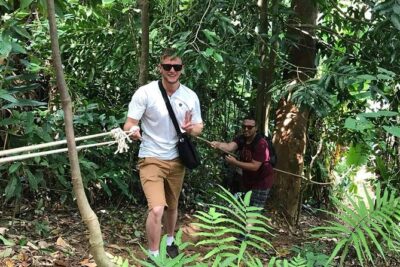
Big Buddha Jungle Trekking and Temple tour with Lunch
Read our review →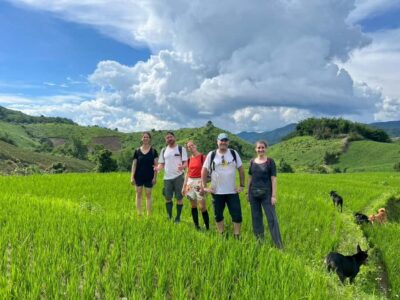
Jungle Adventure-Group Trekking & Bamboo Cooking
Read our review →
ORANGUTAN TREK (2D/1N) by EcoTravel Bukit Lawang
Read our review →Browse the lists this trek appears in