
Review · SPAIN
Callosa del Segura: Via Ferrata
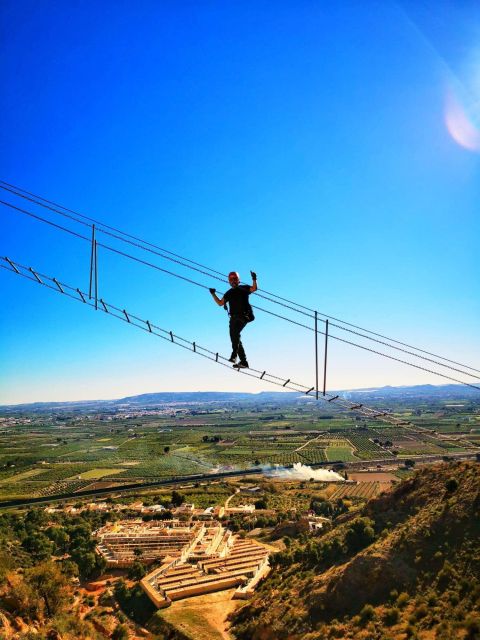
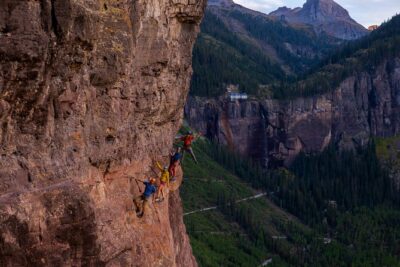
The first surprise at Callosa de Segura is the sheer vertical rock face rising above town. Then comes the choice: take the friendly K3 section, or add the much harder K5 climb for a serious test of nerve and strength. Along the way, you cross hanging bridges and use iron clamps fixed into the stone.
I like the route’s two-level design, which lets you match the climb to your ability. I also like that guides such as Edu, Juan, JuanLu, and Jazael have been praised for staying close to the group and helping children and less experienced climbers. The main drawback is clear: the second section is not a casual add-on, and people with vertigo or a strong fear of heights should skip this activity.
Key points before you book
- Two difficulty levels: Begin with the K3 initiation section, then decide if you are ready for the more demanding K5 route.
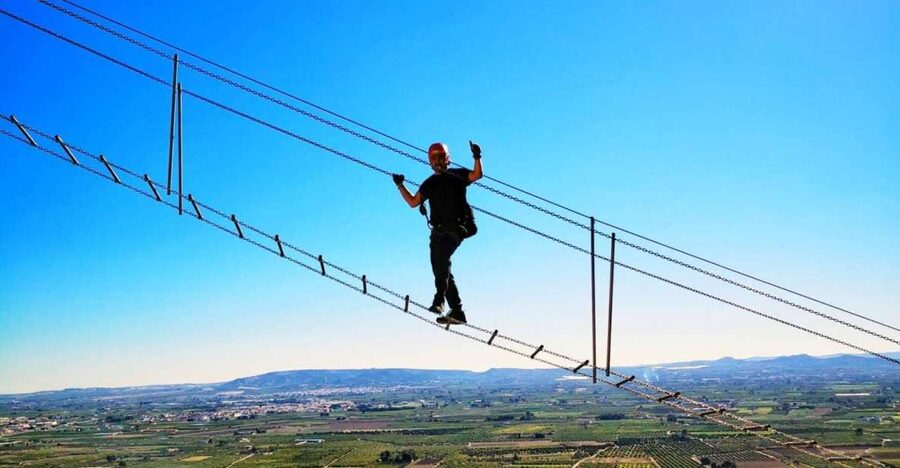
- Hanging bridges with open views: The suspension crossings are a major part of the fun, but they also expose you to height and movement.
- A three-hour mountain activity: Allow enough time for the full guided outing, not just the climbing itself.
- Guides and safety gear included: You receive a helmet, harness, energy absorber, descender, accident insurance, and civil liability coverage.
- Good access from several cities: Callosa de Segura is close to Alicante, Murcia, and Orihuela.
- Photos are included: You can focus on the route while the activity team records moments from the climb.
Callosa de Segura’s dramatic rock start
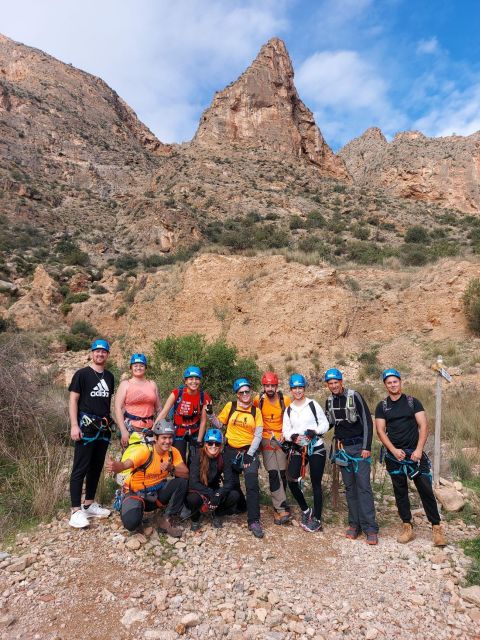
Callosa de Segura is a practical base for this activity. The town lies in Alicante province, close to Alicante, Murcia, and Orihuela, so the route can work well as an active half-day outing from any of those areas. The meeting point is at Via Ferrata de Callosa de Segura, C. 3 de Mayo, 37, 03360 Callosa de Segura, Alicante.
The rock above town gives you an immediate sense of scale. You do not need to wonder if this will be a gentle walk with a few metal steps. The route reaches a steep stone mass, and the second section takes that challenge seriously.
Arrive at least 15 minutes early. The start can be confusing if you arrive at the last moment, and one person specifically found the initial meeting a little unclear. The guides wear fluorescent orange Alicante Aventura shirts, which should help you identify the right people at the meeting point.
The activity has only a five-minute courtesy window once it begins. After that, the guides may leave with the group, so build in time to park, find the meeting area, and get ready. This is a small detail, but it matters more for a mountain activity than for a city tour.
More Via Ferrata Routes in Spain
- Sant Feliu de Guixols: Climb Via Ferrata Cala del Molí
★ 5.0 · 253 reviews - Gran Canaria: Guided Via Ferrata Excursion
★ 4.9 · 198 reviews - Via Ferrata in Gran Canaria. Vertical adventure park. Small groups
★ 5.0 · 183 reviews
Getting fitted with the right equipment
Alicante Aventura supplies the technical equipment needed for the route. That includes a harness, helmet, dissipator, and descender. The dissipator is the energy-absorbing section of your via ferrata system, while the descender is used where the route requires it.
You still need to arrive dressed for movement. Wear comfortable sports shoes with a secure fit, outdoor clothing, and sportswear that will not restrict your legs or arms. Bring water, snacks, sunscreen, and a small daypack. The supplied information lists both comfortable shoes and sports shoes, so the practical message is simple: choose proper closed footwear rather than casual sandals.
The guide’s safety briefing is an important part of the outing. You need to understand how to move the safety system along the cable and how to approach the bridges, clamps, and steeper sections. The guides speak Spanish, English, and French, which makes this a useful choice for mixed-language groups.
The climbing gear is included in the $53 price. That improves the value, since you do not need to rent the basic technical kit separately. Personal accident insurance and civil liability insurance are also included. Those details do not make the route risk-free, but they show that this is organized as a guided activity rather than an informal scramble up the hill.
The K3 section: a sensible first test
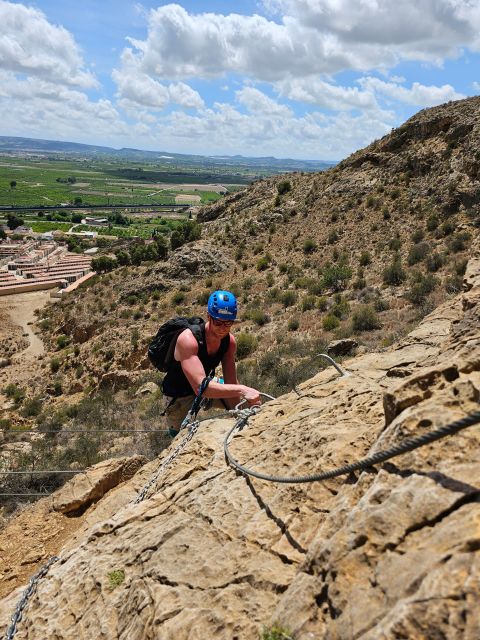
The via ferrata is divided into two sections. The first is rated K3, a moderate level commonly suited to people beginning this kind of climbing. You move along the rock using iron clamps and the natural stone, with the fixed safety cable keeping you connected to the route.
K3 does not mean effortless. You still need to pull yourself upward, place your feet carefully, and stay calm when the rock becomes steep. If you have never done a via ferrata, this first section lets you learn the basic rhythm without committing immediately to the most demanding part.
I would treat the K3 route as more than a warm-up. The activity description notes that it is a long via ferrata, and completing the first part helps you reach full capacity before facing the upper section. Your arms and legs get used to the movement, and you learn how much effort it takes to keep three points of contact on the rock.
This is also the section that makes the activity more flexible. If your group includes mixed abilities, you can complete the initiation route without feeling that you failed by not continuing. The K3 portion provides a complete outing in its own right, with bridges and views from the rock.
Parents should pay attention to the guide’s role here. One account specifically praised the way the guide looked after children and explained the route in English. That does not mean every child is automatically ready for the climb, but it suggests that an attentive guide can make a major difference for younger participants who need calm instructions.
Hanging bridges above the town
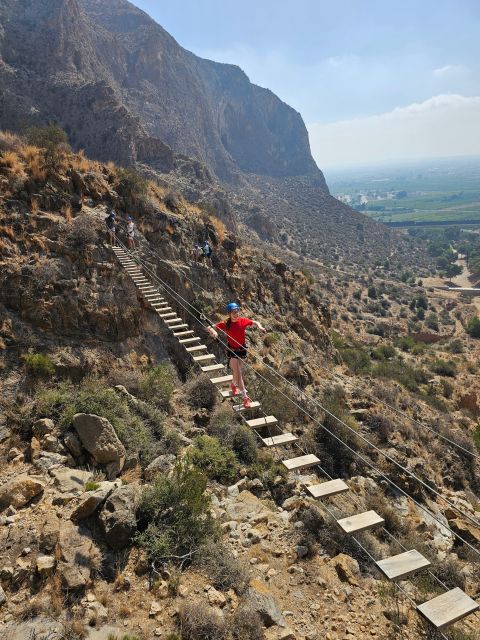
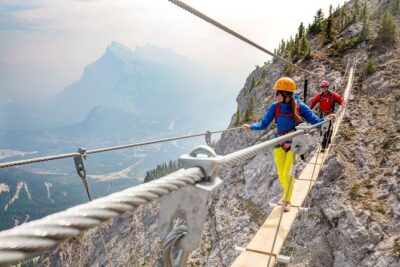
The hanging bridges are among the most memorable parts of the route. They add a different challenge from the fixed rock climbing. Instead of pressing your feet against a solid wall, you cross a suspended structure that can move beneath you.
That movement is part of the thrill. It also makes the bridges the point where a fear of heights becomes very real. You may find yourself looking across open space rather than at the rock directly in front of you. If that sounds exciting, the bridges add variety and reward you with wide views. If it sounds unpleasant, think carefully before booking.
The bridges also create the best photo moments. The activity includes photos, so you do not have to manage your phone while handling the safety system. You can concentrate on crossing, then enjoy images from the route afterward.
The views are a strong reason to choose this via ferrata rather than an indoor climbing wall. From the height, you can look back toward Callosa de Segura and the surrounding area. The setting gives the physical effort a clear payoff: you are not just climbing a training structure, you are moving through an exposed mountain route above the town.
Same trailhead, a different route:
- La Palma: Tajogaite Volcano Guided Trek
★ 4.8 · 1,810 reviews - From Barcelona: Montserrat Monastery & Scenic Mountain Hike
★ 4.9 · 978 reviews - Lanzarote: Timanfaya Natural Park Trekking Tour
★ 4.8 · 766 reviews - Volcano Trekking Tour (Timanfaya eruptions)
★ 5.0 · 339 reviews
The K5 section for stronger nerves
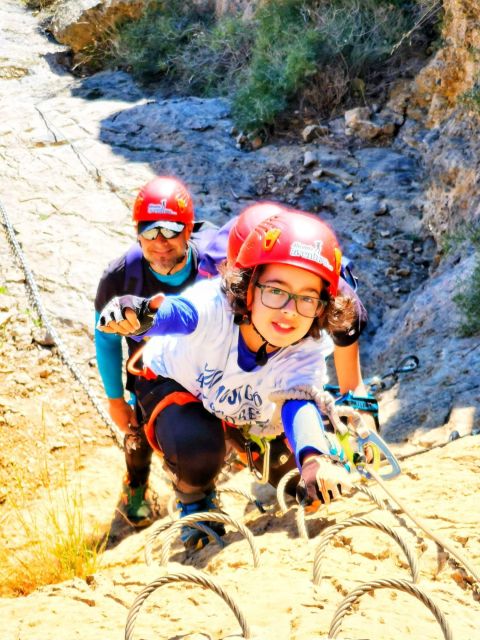
The second part is rated K5, and the difference matters. The route description presents it as the section for the bravest. It reaches the imposing vertical mass visible from below, with a harder climb using iron clamps and raw stone.
You should not decide on the K5 section just because you paid for the full activity. The right choice depends on your strength, comfort with exposure, and how you feel after the K3 section. Listen to the guide’s advice and be honest about your condition. Turning back from the first part is a sensible decision if your arms are tired or your confidence has dropped.
K5 is the reason experienced climbers may find this route satisfying rather than too easy. The route is not limited to a short introductory wall. It gives stronger participants a tougher section with more vertical climbing and a larger physical demand.
Still, difficulty ratings are not a substitute for personal judgment. A person who climbs indoors may be strong enough for the holds but less comfortable on exposed bridges. Someone with outdoor experience may manage the height well but find the long route tiring. The guide can help you judge the next step, but you should not treat the K5 section as compulsory.
Reaching the summit and taking the photos
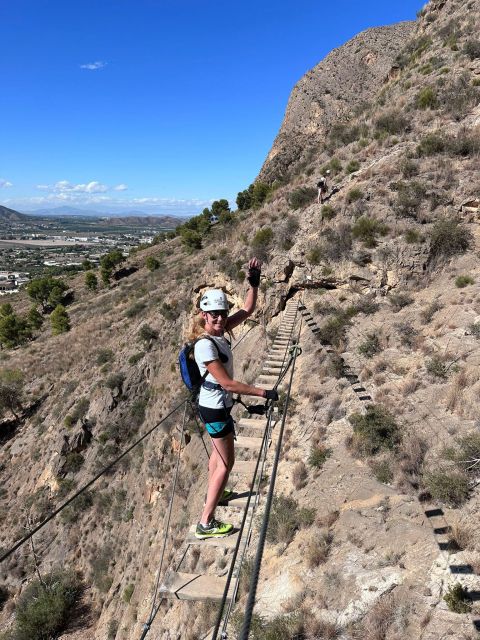
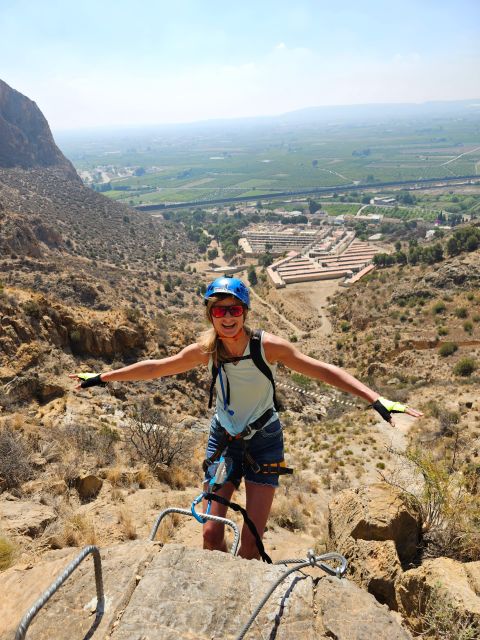
The upper route offers the best sense of achievement. After working upward through the clamps, cable, and natural rock, you reach higher ground with broad views from the summit area. This is where the climb shifts from problem solving to looking around and appreciating how high you have come.
The summit photographs are a useful part of the package. A via ferrata is not an easy setting for casual photography. Your hands are occupied, and stopping to handle a phone can distract you from the equipment. Having activity photos included lets you keep your attention on the route and gives you a record of the bridges and rock sections.
Expect the full outing to take about three hours. That time includes preparation, instruction, climbing, bridge crossings, and movement through both possible sections. It is long enough to feel like a proper outdoor activity, but short enough to fit beside other plans in the Alicante or Murcia area.
The exact feel of the three hours will depend on your group and on which section you complete. A group taking only K3 will have a different pace from one continuing into K5. Do not schedule something immediately afterward if you want to finish without pressure.
How the guides shape the day
A mountain guide can make or break a via ferrata. The strongest part of this activity is the personal attention reported from the guide team. Edu, Juan, JuanLu, and Jazael have all been singled out in feedback connected with the activity, with particular praise for clear help, humor, and close attention along the route.
You should expect instruction rather than a hands-off escort. The guides are there to help you use the technical system, move through harder points, and decide how to handle the second section. Their ability to explain in Spanish, English, or French is useful when a group does not share one first language.
The tone also seems suitable for people who want adventure without a grim military-style approach. A humorous guide can calm nerves, especially before a bridge or a steep wall. At the same time, the activity requires you to follow instructions carefully. Friendly does not mean casual about safety.
One practical weakness is the start-point clarity. Since arriving groups may need a moment to locate the correct meeting place, save the map link before leaving and look for the fluorescent orange Alicante Aventura shirts. That small bit of preparation should make the opening smoother.
Is $53 a fair price?
At $53 per person, this is good value if you want a guided climbing activity and do not already own the required equipment. The fee covers the guide, helmet, harness, dissipator, descender, photos, personal accident insurance, and civil liability insurance.
The value is strongest for first-timers. Buying or renting a harness and helmet for one outing would add cost and hassle, while a guide helps you learn the system without having to organize a private climbing day. The included photos also save you from trying to record the route yourself.
Experienced climbers may judge the price differently. If you already have technical equipment and know how to use it, you are paying mainly for the route, supervision, insurance, and group organization. The K5 section makes the outing more appealing to strong climbers, but the activity remains guided and structured rather than a private challenge.
The price does not include a stated meal or transport from Alicante, Murcia, or Orihuela. You need to make your own way to Callosa de Segura and bring water and snacks. For that reason, compare the $53 fee with the total cost of reaching the meeting point, not just the headline price.
Who should choose this via ferrata?
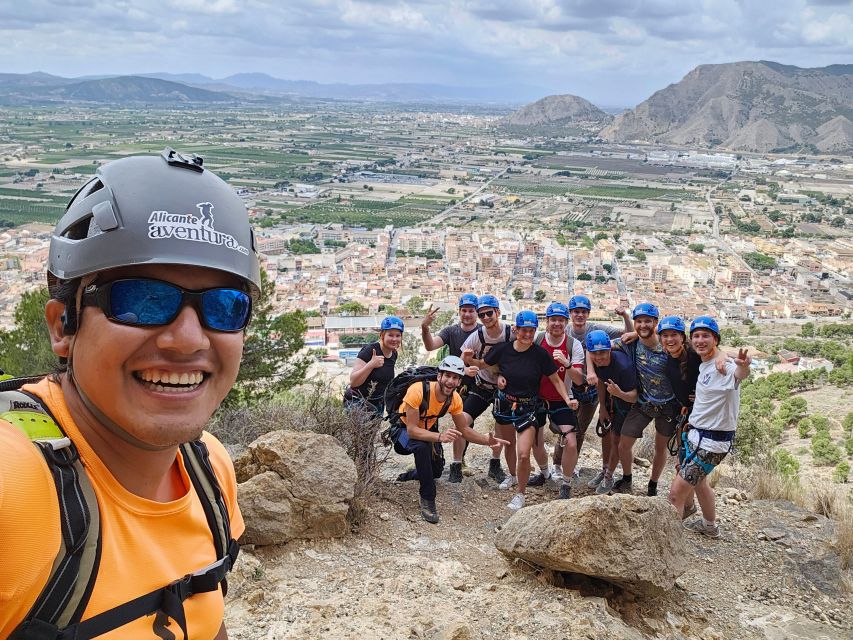
This route suits you if you want a physical outdoor activity with clear support and a choice of difficulty. It works particularly well for first-time via ferrata participants who are curious about climbing but do not want to arrange technical gear or find a route alone.
It also suits experienced participants who want a longer outing with a genuine K5 option. The first section gives you time to settle in, while the second offers a harder goal if your group has the strength and confidence.
You should not book if you are pregnant, have vertigo, or are afraid of heights. Those are stated exclusions, and the bridges and vertical rock make them important rather than minor warnings.
You also need to be comfortable with sustained physical effort. The K3 section is more approachable, but it is not a flat walk. Bring water, wear proper shoes, and expect to use your arms and legs for much of the three hours.
Booking and cancellation details
You can reserve now and pay later, which helps if your plans are still taking shape. The activity offers free cancellation up to 24 hours in advance for a full refund.
That flexibility does not cover a late arrival. If you miss the five-minute courtesy window after the activity starts, the guides may leave, and no refund or time change is given unless you notify the provider within the stated conditions. Arrive early, especially if you are unfamiliar with Callosa de Segura.
The activity has a rating of 4.8 from 31 ratings, with especially strong praise for the guides, the setting, the adventure, and the balance of easier and harder sections. One lower score focused on the confusing start rather than the route itself. I would take that as a reason to prepare carefully for arrival, not as a reason to dismiss the climb.
Should you book Callosa de Segura Via Ferrata?
Book it if you want a three-hour guided adventure near Alicante, Murcia, or Orihuela, and you like the idea of combining iron-clamp climbing with suspended bridges. The K3 and K5 format is the biggest advantage: beginners can stay with the first section, while stronger climbers can continue.
The best fit is an active person who accepts heights, follows instructions, and wants a real mountain setting without supplying technical equipment. The poor fit is anyone with vertigo, a strong fear of heights, or little patience for a prompt meeting and a physically demanding route.
For most suitable participants, $53 is a reasonable price for the equipment, guide, insurance, and photos. Save the meeting location, arrive 15 minutes early, bring water and sunscreen, and decide on K5 only after you have felt how the K3 section suits you.
FAQ
Where is the via ferrata located?
It is in Callosa de Segura, Alicante province, at Via Ferrata de Callosa de Segura, C. 3 de Mayo, 37, 03360 Callosa de Segura, Alicante.
How long does the activity last?
The activity lasts three hours.
How much does it cost?
The listed price is $53 per person.
What languages do the guides speak?
The guides speak Spanish, English, and French.
Are climbing helmets and harnesses included?
Yes. The technical equipment includes a helmet, harness, dissipator, and descender.
Does the activity include insurance?
Yes. Personal accident insurance and civil liability insurance are included.
Can beginners take part?
Yes. The route has a K3 section intended as the more approachable initiation section. You can choose to continue to the harder K5 section based on your experience and group.
What should I bring?
Bring comfortable sports shoes, comfortable outdoor clothing, water, snacks, sunscreen, and a small daypack.
Is the activity suitable for people afraid of heights?
No. The activity is not suitable for people with vertigo or a fear of heights.
Can I cancel for a full refund?
Yes. You can cancel up to 24 hours in advance for a full refund.
Just added around Spain
- Via Ferrata John Hogbin with Photos★ 5.0 · 4 reviews
- The Roque Nublo Base Camp Experience: Hiking, Picnic and Climbing★ 5.0 · 11 reviews
- Half-Day Adventure and Climbing Via Ferrata in Gran Canaria★ 5.0 · 25 reviews
- Private Climbing Experience Via ferrata Senda do Santo★ 5.0 · 8 reviews
- Via Ferrata Cala del Molí★ 4.0 · 4 reviews
- Via ferrata Cala del Molí in Sant Feliu de Guíxols★ 5.0 · 2 reviews
- Via ferrata de Sant feliu de guíxols – Via ferrata cala del molí★ 5.0 · 47 reviews
- Via Ferrata Adventure in Madrid with Transport★ 5.0 · 4 reviews
Via Ferrata Routes, compared.
Banff: Mount Norquay 2.5 or 4-Hour Guided Via Ferrata Climb
Read our review →
Sant Feliu de Guixols: Climb Via Ferrata Cala del Molí
Read our review →
Small-Group Guided Via Ferrata Climbing with Banff’s Best Views
Read our review →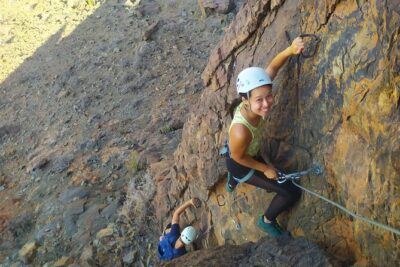
Via Ferrata in Gran Canaria. Vertical adventure park. Small groups
Read our review →Browse the lists this trek appears in