
Review · INDONESIA
3d/2n trekking mount rinjani summit lake & hot springs
Mount Rinjani is not a gentle walk with a mountain view at the end. It is a serious three-day climb across open savanna, loose volcanic rock, steep crater walls, and dark forest. The reward is a sunrise from the 3,726-meter summit, followed by Lake Segara Anak, hot springs, and two crater-rim camps.
I like the way this route shows you several faces of Rinjani: the wide grasslands from Sembalun, the lake inside the crater, and the forested descent to Senaru. I also like the practical package, with porters, cooked meals, tents, sleeping gear, drinking water, and transport included.
The main concern is the schedule. Summit sunrise, the descent to the lake, the hot springs, and the climb to the second camp make day two extremely demanding. You need good fitness, proper shoes, warm clothing, and the willingness to stop short of the summit if your body says no.
Key points to know before you book
- The summit attempt begins around 3 a.m. You climb in darkness for about three hours to reach the top at sunrise.
- Day two is the hardest day by far. After the summit, you still descend to the lake and climb to Senaru Crater Rim.
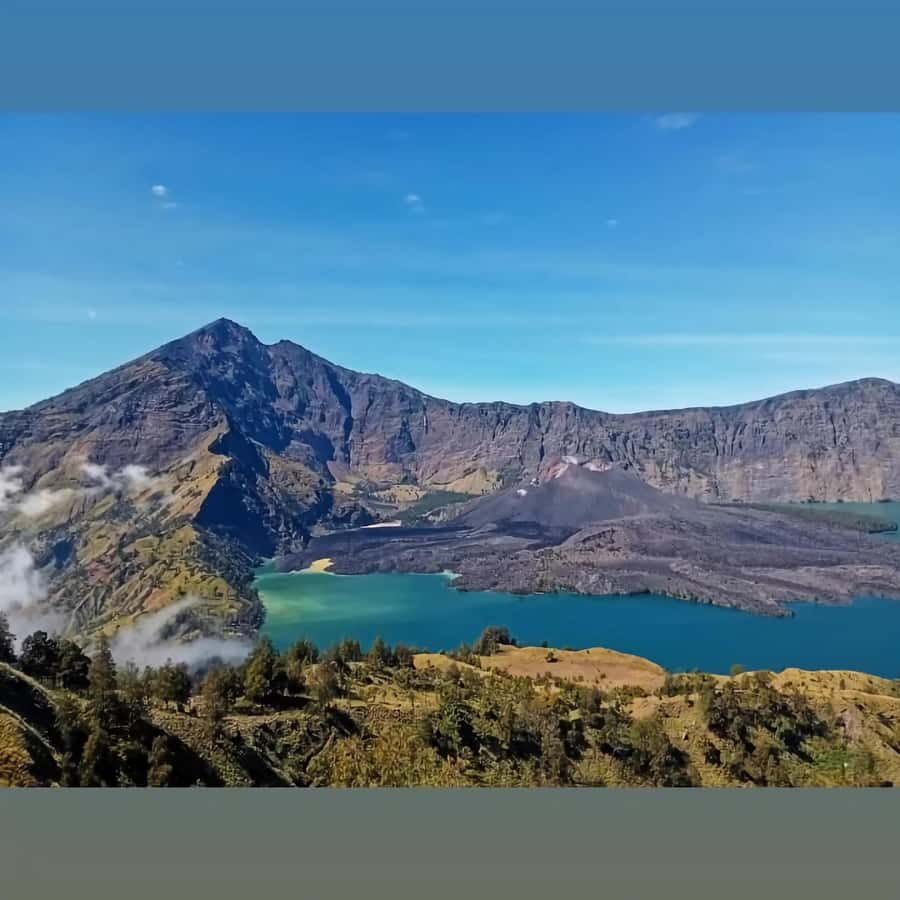
- Lake Segara Anak sits inside Rinjani’s crater. You can stop for lunch and spend a short time in the nearby hot springs.
- The route crosses two sides of the mountain. You start at Sembalun and usually finish at Senaru, though the operator notes that gate arrangements can change.
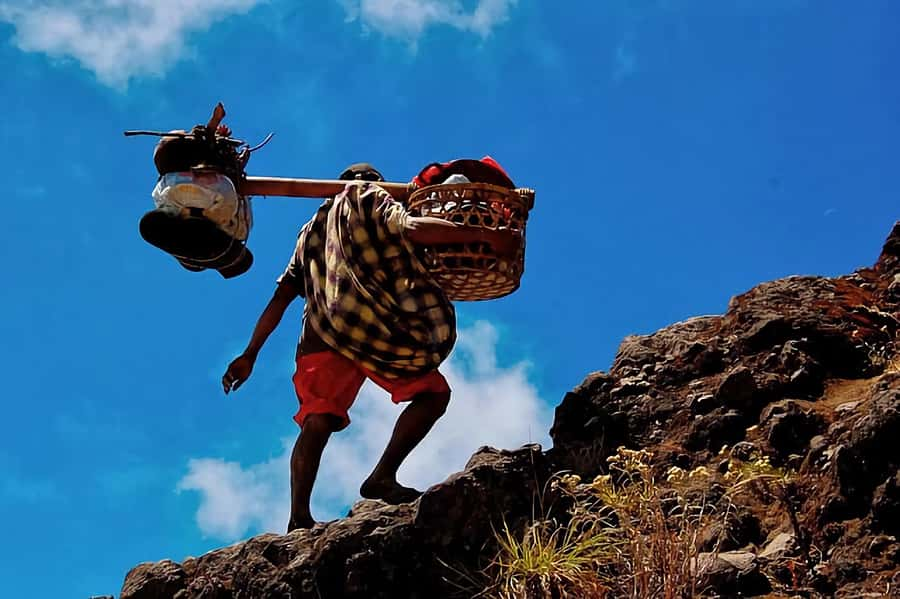
- Porters carry camp equipment and cooking gear. Meals include rice, noodles, curry, pancakes, vegetables, and fruit.
- The $154 price covers much of the practical work. You still need to pay the national park fee, listed as IDR 250,000 per person per day.
The Rinjani route in plain terms
This 3-day, 2-night trip is the classic crossing of Mount Rinjani. You begin at Sembalun on the eastern side and finish at Senaru on the northern side, giving you a far broader view of the volcano than a short out-and-back climb.
The route is designed around three big moments: sunset from the crater rim, sunrise from the summit, and the crater lake with its hot springs. That sounds tidy on paper. In practice, the mountain makes you earn each one.
The tour is offered privately or in a small group, with an English-speaking guide. Pickup is included from a hotel in Senaru or Sembalun, and drop-off is provided afterward to Senggigi, Bangsal Port, or Mataram. If you are staying in Sembalun, pickup is listed for 8:30 a.m. If you are in Senaru, the stated pickup time is 7 a.m., followed by a 4WD transfer to Sembalun.
There is one important route warning. The operator notes that the trek may start at Senaru and finish at Sembalun if the Sembalun entry permits are full. Confirm the trail direction before you set out, since the order of the climbs affects the experience.
More Hot Spring Treks in Indonesia
- Private Tour Mount Batur Sunrise Trekking and Natural Hot Spring
★ 5.0 · 431 reviews - Mount Batur Sunrise Trek & Natural Hot Spring Experience
★ 5.0 · 95 reviews - 3D/2N Rinjani trekking summit,lake and hot springs.
★ 5.0 · 85 reviews
Day one: Sembalun savanna to the crater rim
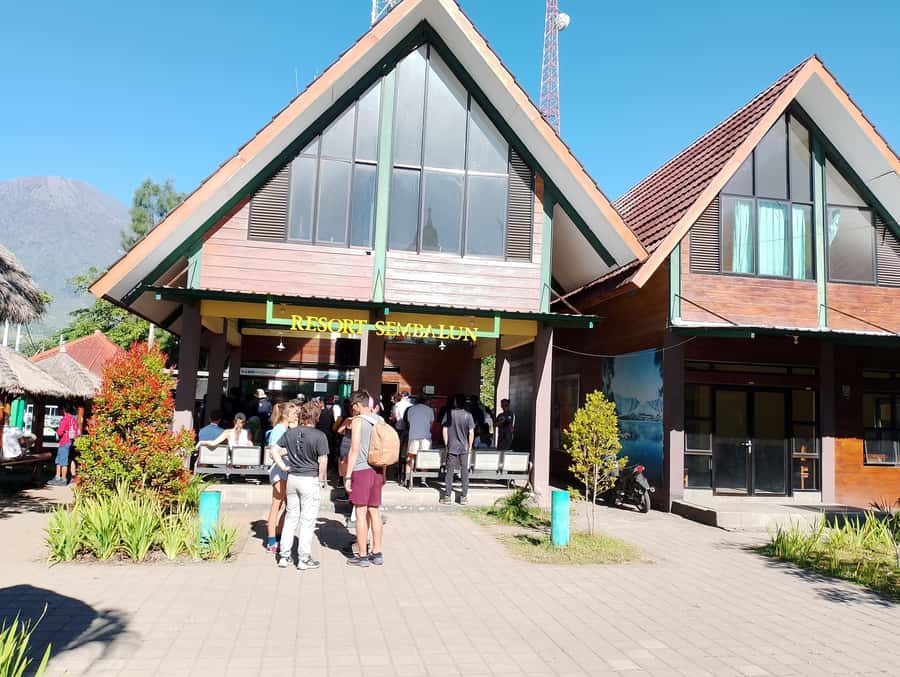
After registration at the Rinjani Trek Centre in Sembalun, at about 1,156 meters, you begin across open grassland. This first stretch is broad and exposed, with grand views across the high savanna and toward the mountain slopes.
The trail passes through rest points known as Pos 1 and Pos 2. These stops break up the morning and give you places to pause for snacks and water. The walk can feel manageable here, but do not let the easy start fool you. The serious climb comes after Pos 3.
At Pos 3, around 1,800 meters, you stop for a longer lunch break. From there, the path rises more sharply toward Sembalun Crater Rim at about 2,639 meters. The climb is steep, and the open ground offers little shade. A hat, sunscreen, sunglasses, and steady water breaks matter more here than they might on a forest trail.
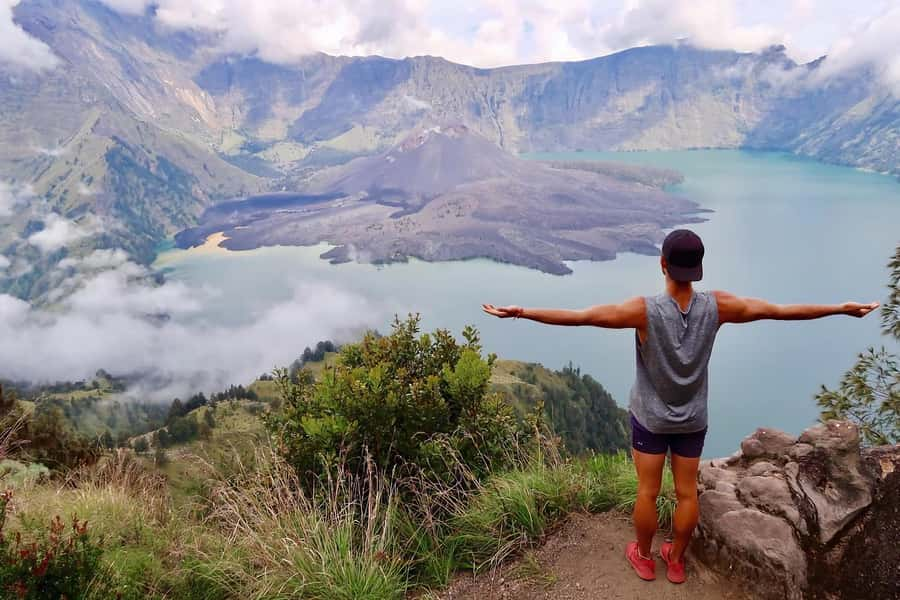
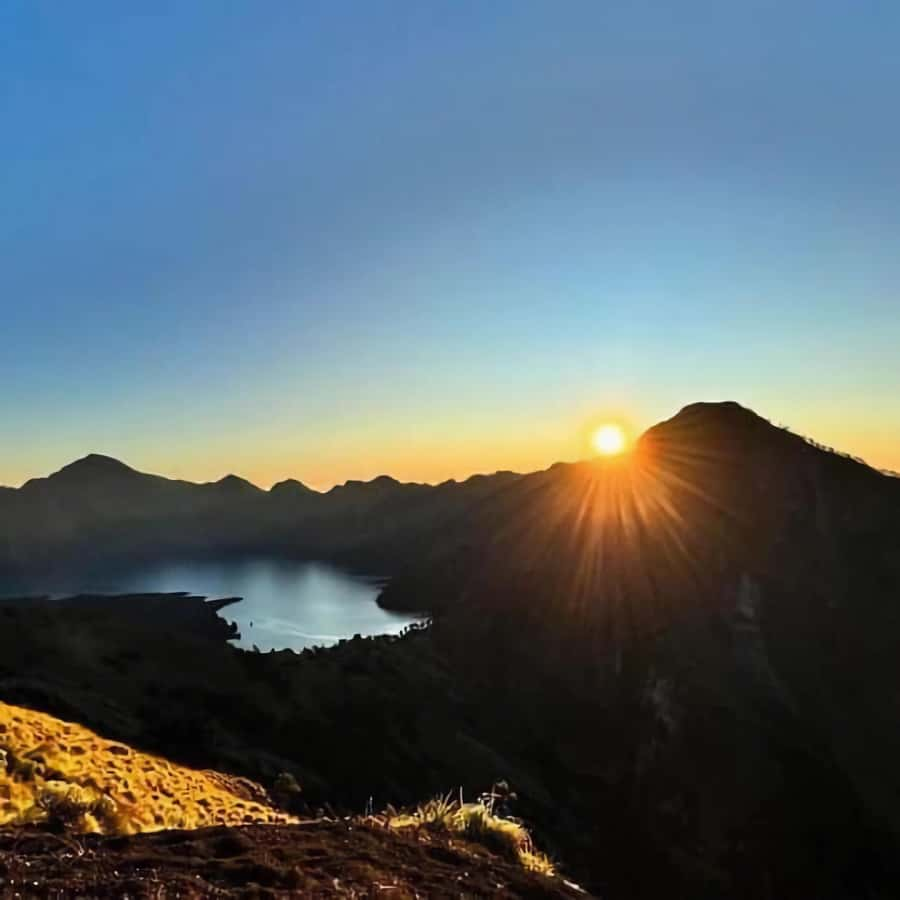
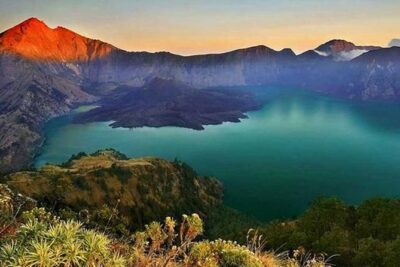
Camping on the Sembalun rim is one of the strongest parts of the trip. You can look across the crater toward the summit and down to Lake Segara Anak. Sunset brings the lake into view inside the volcanic bowl, while northern Lombok stretches out below.
The camp setup includes a tent, mattress, sleeping bag, toilet tent, and toilet paper. Porters carry the cooking and camping equipment, which makes a real difference. You still carry your personal bag and water, but you are not hauling the full camp uphill.
Night temperatures can be cold. Pack a jacket, gloves, long pants, and warm layers. One useful lesson from the trek is that a sleeping bag may not be enough for everyone. Some people sleep in their clothes, so bring thermal layers and a warm jacket rather than relying on summer hiking gear.
Day two: summit sunrise, lake lunch, and the long crater climb
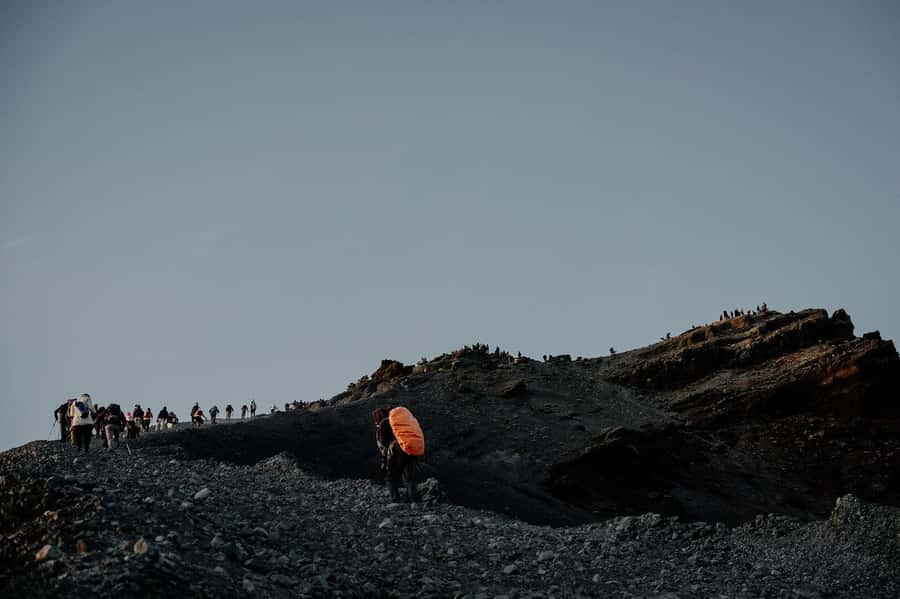
The alarm comes at about 3 a.m. You eat a light breakfast, switch on your head lamp, and begin the climb to the summit. The three-hour estimate depends on your pace, and the final section is slow for many people because the trail is steep and covered with loose volcanic rock.
This is where good footwear matters most. Hiking shoes are specifically recommended, while trekking shoes are not included. Sandals are useful at camp or near the hot springs, but they are not a substitute for sturdy shoes on the summit trail.
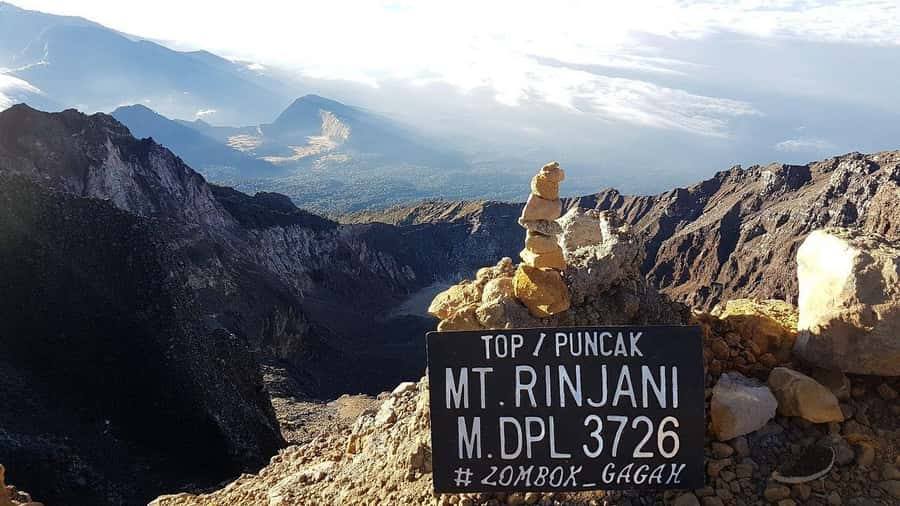
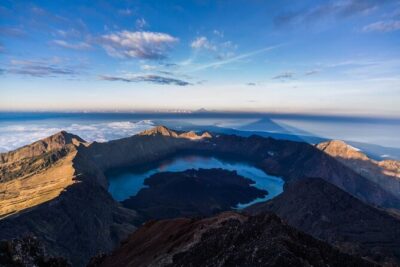
Reaching 3,726 meters in time for sunrise is the central challenge of the trip. From the summit, you can expect broad views over the crater, Lake Segara Anak, the surrounding forest, Mount Agung in Bali, and the three Gili Islands when conditions are clear. Bring gloves. The predawn wind and cold can make the summit uncomfortable even after a hard climb.
The descent back to camp is easier on the lungs but hard on the legs. After a hot breakfast and a rest, you continue down into the crater. The trail then leads to Lake Segara Anak at about 2,000 meters.
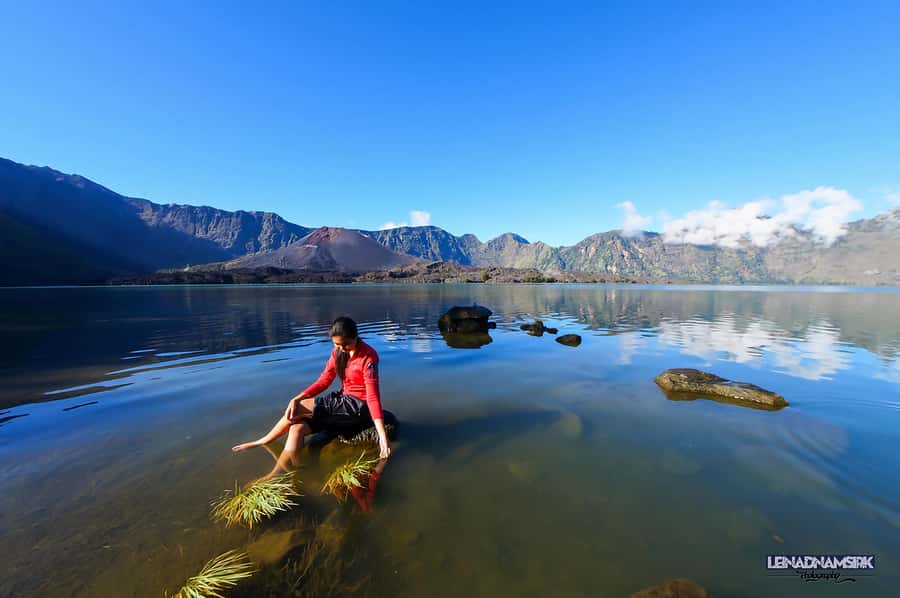
The lake is more than a scenic stop. It changes the mood of the trek. After the exposed summit route, the crater lake gives you a quieter place for lunch and a short break. The nearby hot springs offer a chance to soak for a few minutes, though the schedule does not allow a long spa session.
Then comes the catch. You still have to climb out of the crater.
The trail from the lake toward Senaru Crater Rim is steep and rocky, with sections through dense forest. This part can be especially tiring after the summit attempt and the descent to the lake. One account described the full day as more than seven hours after reaching the summit, with the group choosing to skip the summit because the full program was too exhausting. That is not a failure. It is a sensible decision on a mountain where fatigue and loose ground can create real problems.
The route has also been affected by earthquake damage in some sections. Conditions can make the second day feel rough or unsafe, especially at night after the hot springs. Hiking shoes, careful pacing, and close attention to your guide are essential. If your main goal is the summit rather than the lake, a shorter program without the hot springs may suit you better.
If you complete the climb, you reach Senaru Crater Rim at roughly 2,641 meters. The views back across the lake toward the summit are excellent, and Gunung Baru, the small volcanic cone inside Rinjani’s crater, adds another point of interest. Mount Agung and the Gili Islands may also be visible from this rim.
Dinner and the second night’s camp take place here. It is a good spot for another sunset, although your legs may be more interested in sitting down than watching the sky.
Day three: forest descent to Senaru
After breakfast, you begin the descent to Senaru. The trail passes the familiar rest points at Pos 3, Pos 2, and Pos 1 before entering thicker forest.
The forest offers shade and a cooler finish, but downhill walking is not automatically easy. Your knees and ankles take repeated impact, and loose ground can still slow you down. A longer lunch break helps divide the descent.
The route ends in Senaru at about 601 meters, usually around 1 p.m. From there, included transport can take you to Senggigi, Bangsal Port, or Mataram. That makes this a useful option if you are continuing to Lombok’s coast or catching a boat connection from Bangsal.
More Mount Rinjani Treks in Indonesia:
- Mount Rinjani Trek 3D-2N To Summit – Lake – Hotspring
★ 4.7 · 111 reviews - Rinjani trekking 2D 1N RIM
★ 5.0 · 94 reviews - Mount Rinjani 2-Day Trek to Senaru Crater Rim
★ 4.8 · 89 reviews - Mt Rinjani Trekking 2 Days 1 Night (Senaru Crater Rim)
★ 5.0 · 85 reviews
Food, porters, and what the $154 covers
At $154 per person, the trip offers fair value if you want a guided climb with camp support. The price includes pickup, drop-off to listed destinations, an English-speaking guide, professional porters, food, drinking water, camping equipment, a trekking pole, and a head lamp or hand torch.
The food is one of the practical strengths. The package lists two lunches, three dinners, and two breakfasts, along with about two liters of mineral water per person per day. Meals can include fried rice, curry, noodles, pancakes, fresh vegetables, and fruit. On a hard trek, a hot plate of food matters. It is not just a pleasant extra.
The porters carry the cooking and camp equipment, then prepare meals under difficult mountain conditions. A guide named Agus has been praised for staying attentive when members of a group struggled, and the cooking team has been credited with producing good meals in camp. Guides and porters are a major part of what you are paying for here.
The national park entrance fee is extra, listed as IDR 250,000 per person per day. Raincoats and trekking shoes are also excluded. You should budget for those items before you arrive, especially in wet or changeable weather.
The reserve-now, pay-later option and free cancellation up to 24 hours before departure add flexibility. Still, the mountain itself is not flexible. Weather, permits, trail conditions, and your fitness will shape the day more than the booking terms.
What to pack for a cold, exposed mountain
Your packing list should reflect two very different conditions. The Sembalun approach is open and sunny, while the summit and crater rims can be cold. The forest descent brings shade and a different type of footing.
Bring:
- Hiking shoes with a firm sole
- Warm jacket or down jacket
- Thermal shirt and thermal pants
- Gloves and a hat
- Long hiking pants
- Raincoat
- Sunglasses and sunscreen
- Head lamp or flashlight
- Towel and sandals
- Water bottle or cash for extra needs
- Camera, power bank, and binoculars if you want them
- Passport and trekking documents
A trekking pole is included, but extra support may still help on steep or loose sections. Keep your personal belongings in a small, manageable bag. The porters carry group equipment, not every item you decide to bring.
Who should choose this trek?
I would recommend this trip to a fit hiker who wants the full Rinjani route rather than a quick summit visit. You need to be comfortable walking for long hours, starting before dawn, climbing loose ground, and continuing after the main summit goal is complete.
It also suits people who value the variety of the route. You get the Sembalun grasslands, the summit, the crater lake, hot springs, Senaru forest, and views toward Bali and the Gili Islands.
I would be cautious about booking it if you have limited hiking experience, dislike steep descents, or want a relaxed camping trip. The three-day plan packs a great deal into the second day. Children under four are not suitable for the activity, and the demanding route suggests that older children and teenagers should only join with careful consideration of their fitness.
If your priority is the summit alone, ask about a shorter two-day option. The longer route is attractive because it includes the lake and hot springs, but those extras come after the hardest climb and before another steep ascent.
Should you book the Mount Rinjani 3-day trek?
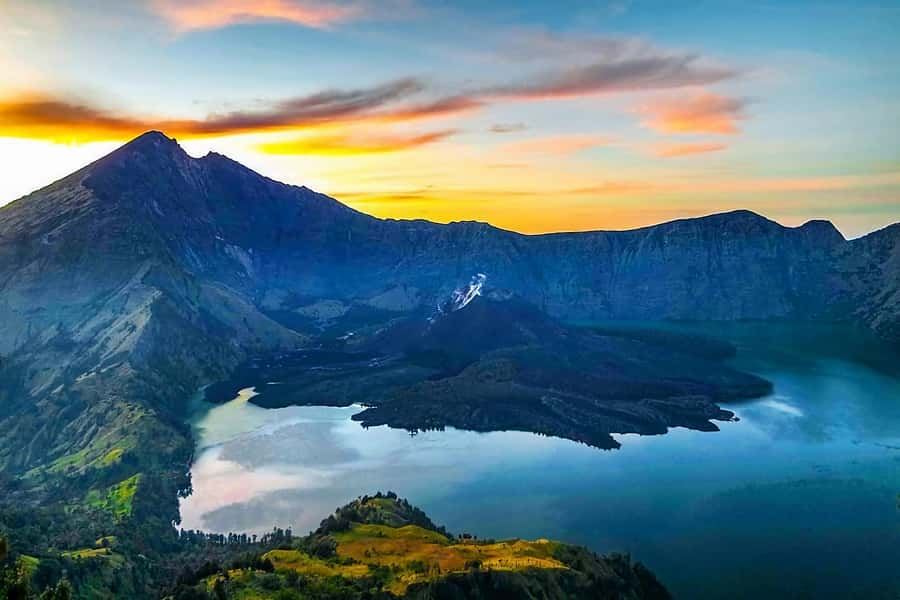
Book it if you want the most varied version of Rinjani and are prepared for a demanding mountain crossing. The views are the real payoff, especially sunrise from the summit, the crater lake from above, and the late-day light from Senaru Crater Rim.
Do not book it simply because the price looks low or because the itinerary sounds neat. Day two can overwhelm even fit hikers, and the route may include rough sections after earthquake damage. Go with proper shoes, warm clothing, realistic expectations, and permission to turn back from the summit if needed.
For a prepared hiker, the included guide, porters, meals, camp gear, and transport make $154 a useful package. For someone seeking an easy introduction to trekking, choose a shorter Rinjani plan instead.
FAQ
How long is the Mount Rinjani trek?
The activity lasts 3 days and includes 2 nights of camping on the mountain.
Where does the trek begin and end?
The standard route begins at Sembalun and finishes at Senaru. The operator notes that the route may be reversed if Sembalun entry permits are full.
What time does the summit climb begin?
You wake at about 3 a.m. for a light breakfast, then begin the climb to reach the summit for sunrise.
How high is Mount Rinjani’s summit?
The summit is listed at 3,726 meters.
Does the trek visit Lake Segara Anak?
Yes. After the summit and breakfast, you descend to Lake Segara Anak, located at about 2,000 meters inside the crater.
Can I visit the hot springs?
Yes. The itinerary includes a short stop at the hot springs near Lake Segara Anak.
Are meals and drinking water included?
Yes. The package includes two lunches, three dinners, two breakfasts, and about two liters of mineral water per person per day.
Is camping equipment provided?
Yes. A tent, toilet tent, toilet paper, sleeping bag, mattress, trekking pole, and head lamp or hand torch are included.
What is not included in the price?
The national park fee is extra at IDR 250,000 per person per day. Raincoats and trekking shoes are also not included.
More Spa & Hot Springs in Indonesia
- Mount Batur Sunrise Trekking & Natural Hot Spring – All Inclusive
★ 5.0 · 58 reviews - Mount Batur Sunrise Trekking & Hot Spring Tour
★ 5.0 · 54 reviews - Mount Batur Trekking & Hot Spring
★ 5.0 · 50 reviews - Mount Batur Sunrise Trek & Hot Springs Tour
★ 4.8 · 45 reviews
Just added around Indonesia
- Mount Batur Trekking & Hot Spring in Kintamani★ 5.0 · 23 reviews
- Rinjani Trekking 2D1N Senaru crater rim★ 5.0 · 6 reviews
- Ijen Blue Fire Trekking★ 5.0 · 44 reviews
- Sunrise Trekking At Sunan Ibu Kawah Putih★ 5.0 · 2 reviews
- Mount Agung Sunrise Trekking Private Tours★ 5.0 · 11 reviews
- volcano hike and jungle trekking adventure★ 5.0 · 36 reviews
- Sidemen rice terraces trek and local village walk★ 5.0 · 41 reviews
- Trekking Mount Rinjani 2D/1N To Second Summit★ 5.0 · 2 reviews
Mount Rinjani Treks, compared.
Mount Rinjani Trek 3D-2N To Summit – Lake – Hotspring
Read our review →
3D/2N Rinjani trekking summit,lake and hot springs.
Read our review →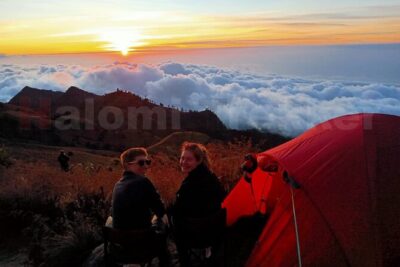
Mt Rinjani Trekking 2 Days 1 Night (Senaru Crater Rim)
Read our review →
Rinjani Trekking 3 Days 2 Nights (Sembalun – Senaru)
Read our review →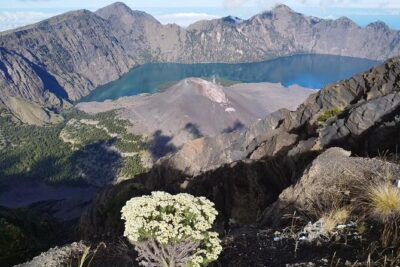
Rinjani Trekking Three Days Two Night Summit Lake
Read our review →Browse the lists this trek appears in