
Review · SPAIN
Sant Feliu de Guixols: Climb Via Ferrata Cala del Molí
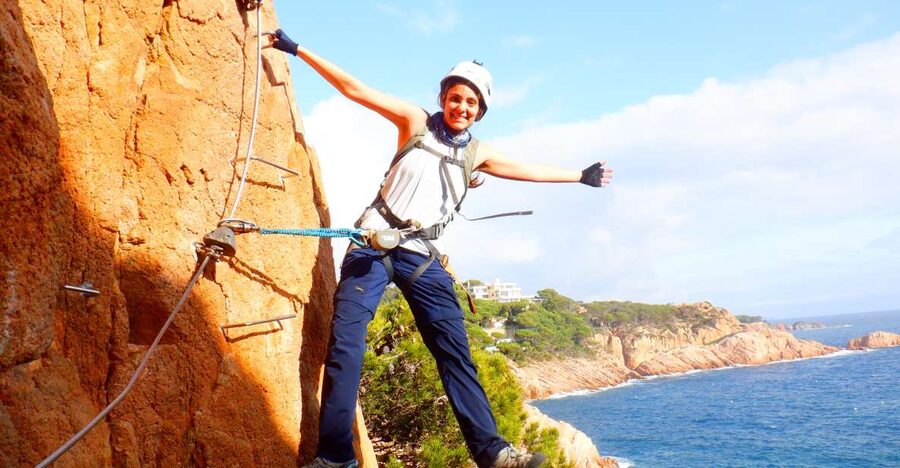
The remarkable thing here is the setting: Via Ferrata Cala del Molí runs along the Mediterranean, with metal cables and footholds fixed to the cliffs above the sea. You are not climbing in an inland canyon or mountain forest. You are moving along enormous coastal rock, with the horizon opening beside you.
I like the small groups, limited to eight, and the guides’ calm, personal support. Cristina, Miguel, Ariana, Kim, Eva, and others have helped climbers through the harder sections while keeping the mood friendly. I also like that photos, equipment, insurance, and end-of-climb refreshments are included. The main caution is simple: this is a real physical challenge, and the second section can feel intimidating if you are uneasy with heights.
Key points to know before you book
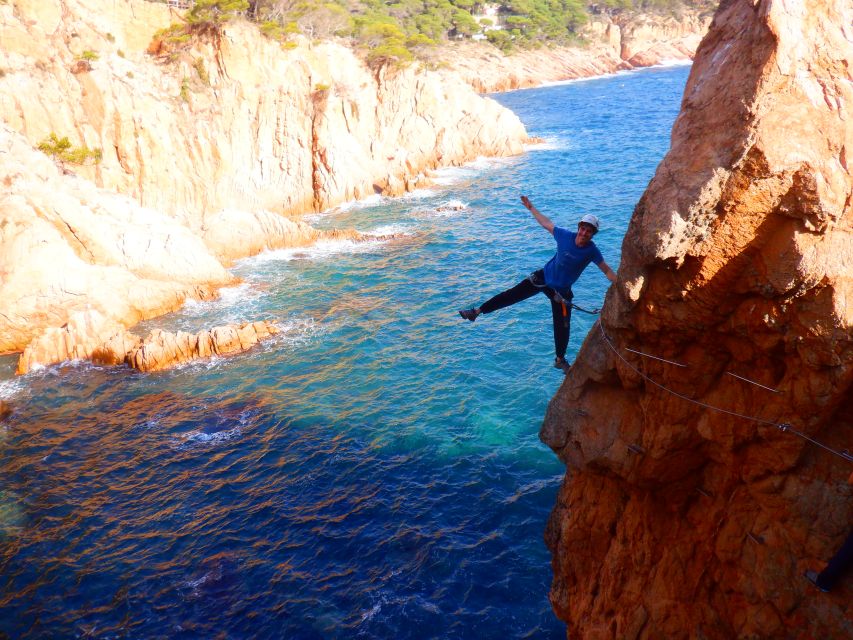
- The route runs above the sea: Cala del Molí is presented as the only via ferrata in the world built along the sea.
- Small groups make a difference: Up to eight people climb with a certified guide, allowing for help at difficult points.
- The route has an easier exit: You can leave after the first part before the more demanding section.
- Seasonal access changes: From December 1 through June 1, only the first part is open.
- The package is unusually complete: Gear, insurance, guide service, photos, and refreshments are included in the $41 price.
- Give yourself time to arrive: Parking at the port may mean a long, steep walk up stairs to Calle Sicilia n50.
Climbing above the Mediterranean at Cala del Molí
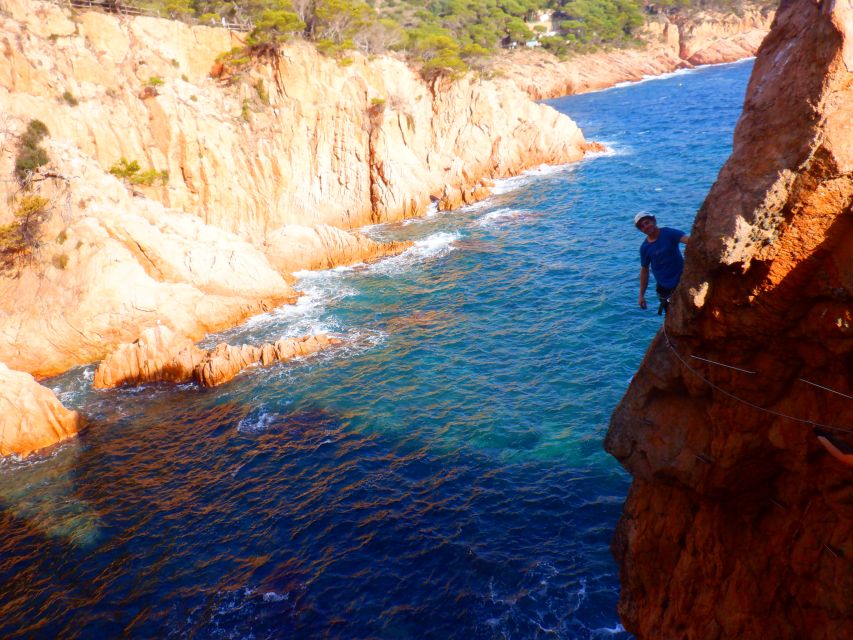
A via ferrata is a protected climbing route fitted with steel cables, steps, and other fixed aids. You clip into the safety system and use the rock and metal supports to move along the cliff. You do not need to be a technical rock climber, but you do need steady footing, a reasonable level of fitness, and a head for height.
Cala del Molí gives this activity an unusual setting. The route follows the Costa Brava cliffs above the water, so your view is not limited to the rock in front of you. You look across the Mediterranean, down toward the sea, and along the rugged shoreline as you progress.
The route is best understood as two parts. The first section offers the main introduction to the experience and is manageable for people with little or no via ferrata background. The second part brings more demanding sections, and the height and exposure become more noticeable. You can stop before that harder portion if your energy or confidence runs low.
That option matters. It means you do not have to treat the entire route as an all-or-nothing test. Still, you should not book this as a gentle coastal walk. The activity is designed for people who want exertion, height, and a touch of fear in the mix.
More Via Ferrata Routes in Spain
- Gran Canaria: Guided Via Ferrata Excursion
★ 4.9 · 198 reviews - Via Ferrata in Gran Canaria. Vertical adventure park. Small groups
★ 5.0 · 183 reviews - Gran Canaria: Cliff Climbing Via Ferrata Trip by Maspalomas
★ 4.9 · 177 reviews
What the three-hour outing feels like
The activity lasts about three hours, though the exact starting time depends on availability. You meet at Calle Sicilia n50 in Sant Feliu de Guíxols, where punctuality is important. Arriving late can mean losing the activity, so do not cut this close.
Transportation is not included. If you arrive by car, allow extra time for parking. The port is mentioned as a parking area, but reaching the meeting point from there may involve a long, steep climb up many stairs. That uphill walk could be tiring before you even put on the climbing gear.
Once the group is together, the certified guide provides the material and explains how to use it. The guide also manages the pace and helps you through sections that require more confidence or careful movement. The small group limit of eight is useful here, since the guide can pay attention to each person instead of simply moving a large crowd along.
The route itself combines walking, scrambling, and climbing on fixed equipment. You will use sports shoes and comfortable outdoor clothing, while hiking pants offer practical freedom of movement. Bring water and a small daypack. The supplied information does not call for specialist climbing equipment, since material is included.
At the end, you receive refreshments in an attractive coastal setting. Photos are also included, which is a real advantage on a route where you may not want to handle your own phone. The photographs give you a record of the cliff position, the sea behind you, and the parts of the route that are hard to capture while you are concentrating on your next foothold.
The first section: a good test for beginners
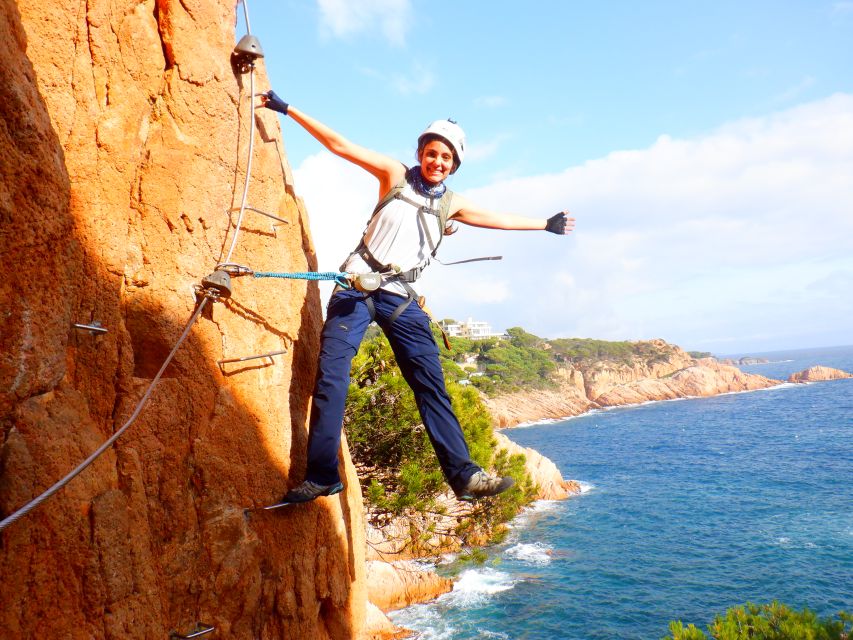
The first part is the best introduction to this activity. You learn how the safety system works, get used to the exposed position, and begin moving along the cliff with the guide nearby.
You might find the first few sections more nerve-racking than physically difficult. That is normal. Even a straightforward metal ladder or cable traverse feels different when the sea is visible below. The guide’s job is not only to explain the equipment, but also to help you judge your movement and keep calm.
This is where the activity works well for mixed-experience groups. Someone who has never tried a via ferrata can experience the basic route, while a more experienced climber still gets the unusual sea setting and strong views.
The first part is also the available option during the seasonal closure. From December 1 to June 1, the second section is closed, so the outing covers only the first part. That makes winter and spring bookings shorter in scope, although the coastal setting remains the main attraction.
If you are uncertain about your fitness, treat the first section as a useful measure. The guide can help you decide if continuing makes sense. A previous participant described the middle point as a sensible place to skip the harder portion if tired. That flexibility is worth remembering, especially in hot weather.
The second section: where the challenge rises
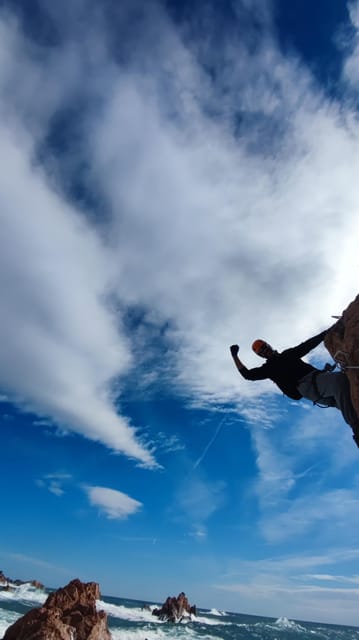
The second part is for people who are comfortable continuing after the introductory section. It is more demanding physically and mentally, with greater exposure and harder movements. One climber in good condition described the full route as more physically challenging than via ferratas in Mürren and Telluride.
That comparison gives you a useful warning. This is not automatically an easy first climbing experience just because fixed cables and steps are installed. You still need to pull, balance, place your feet carefully, and keep moving when the cliff position feels exposed.
The guides provide encouragement at the difficult points. Cristina is repeatedly singled out in the supplied feedback, along with Miguel, Ariana, Kim, and Eva, for being patient, supportive, funny, or highly prepared. The important practical point is that the guide stays involved rather than simply handing you equipment and sending you off.
You should expect some waiting if another person in your group needs help. In a group of up to eight, that is a fair trade for individual attention. The route is not a race, and the group pace will be shaped by the least confident climber.
People afraid of heights are specifically advised not to take this activity. The setting is part of the appeal, but it is also part of the test. If the thought of looking down from a sea cliff makes you freeze, a coastal walk would be a better choice.
Same trailhead, a different route:
- La Palma: Tajogaite Volcano Guided Trek
★ 4.8 · 1,810 reviews - From Barcelona: Montserrat Monastery & Scenic Mountain Hike
★ 4.9 · 978 reviews - Lanzarote: Timanfaya Natural Park Trekking Tour
★ 4.8 · 766 reviews - Volcano Trekking Tour (Timanfaya eruptions)
★ 5.0 · 339 reviews
The guides and the value of close supervision
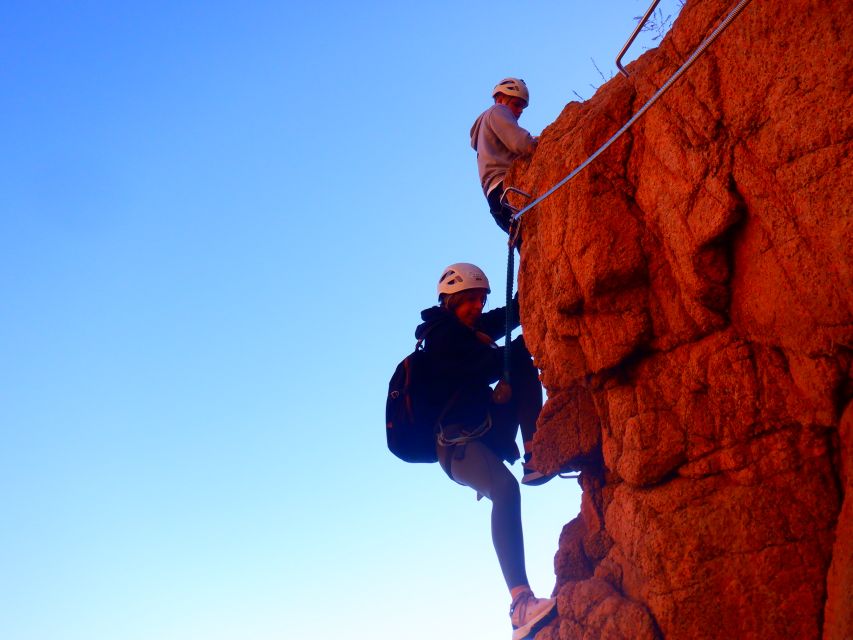
Guide quality matters more on a via ferrata than on a standard sightseeing tour. Here, the available guide languages are English, Italian, French, and Spanish. The guides explain the activity in several languages when needed, which is useful in a mixed international group.
The strongest praise is directed toward patient, reassuring instruction. Cristina is noted for helping people find the right amount of courage and motivation. Miguel is described as friendly, funny, and ready to help. Ariana made the activity feel safe and enjoyable, while Kim supported climbers through a demanding outing.
Those details tell you what to look for in practice. You want clear explanations before the climb, help at awkward sections, and someone watching the group rather than focusing only on the strongest climber. This experience appears designed around that kind of attention.
The ratio is also helpful. The group can include eight participants, and the activity information indicates close guide coverage. That is far more useful than joining a large outdoor group where you may feel rushed or overlooked.
Views, photos, and the character of the route
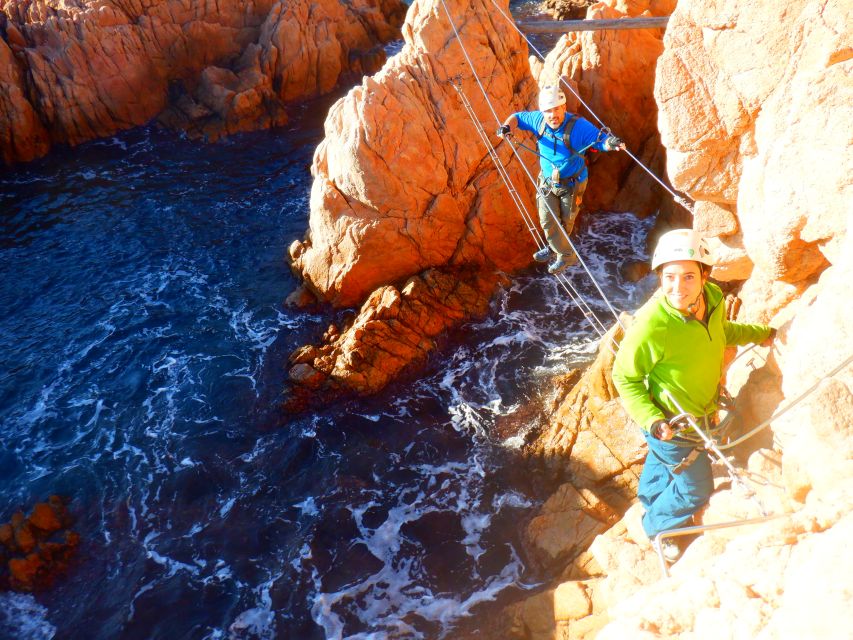
The scenery is the main reason to choose Cala del Molí over an ordinary climbing wall or inland route. The Mediterranean is visible throughout the climb, and the route takes you beside large cliffs with open views toward the horizon.
You will not simply reach a viewpoint at the end and take one photograph. The route itself creates changing angles as you move along the rock. Photos can show your position above the water, the scale of the cliff, and the narrow ledges or fixed sections behind you.
The included photographs are a strong value point. You can concentrate on safety and movement rather than trying to hold a phone while clipped to the cable. The images are shared without an extra fee, according to the supplied information.
Expect bright sun and heat in summer. One participant found the outing very hot, despite praising the scenery. Bring water, wear suitable outdoor clothing, and remember that the uphill approach from the port may add effort before the official activity begins.
What is included for $41
At $41 per person, the price is reasonable for an active three-hour outing, especially because several costs are bundled together. You receive a certified guide, climbing material, insurance, photos, and refreshments at the end.
The gear matters most. Buying or transporting your own via ferrata equipment would add cost and hassle, while a guide gives you a safer introduction than attempting an unfamiliar route alone. Insurance is another practical inclusion rather than a decorative extra.
The photographs and refreshments make the package feel finished, but the real value is the guided access to a distinctive route. You are paying for a supervised experience in a place that is difficult to enjoy in the same way without fixed equipment and a trained leader.
The price does not include transportation to the meeting point. You need to arrange your own way to Sant Feliu de Guíxols and allow for the walk from parking. That is the main extra cost and planning issue to keep in mind.
Free cancellation is available up to 24 hours before the activity for a full refund, and you can reserve now and pay later. Those terms help if your Costa Brava plans are still shifting, but punctuality on the day is not flexible.
Who should book this climb
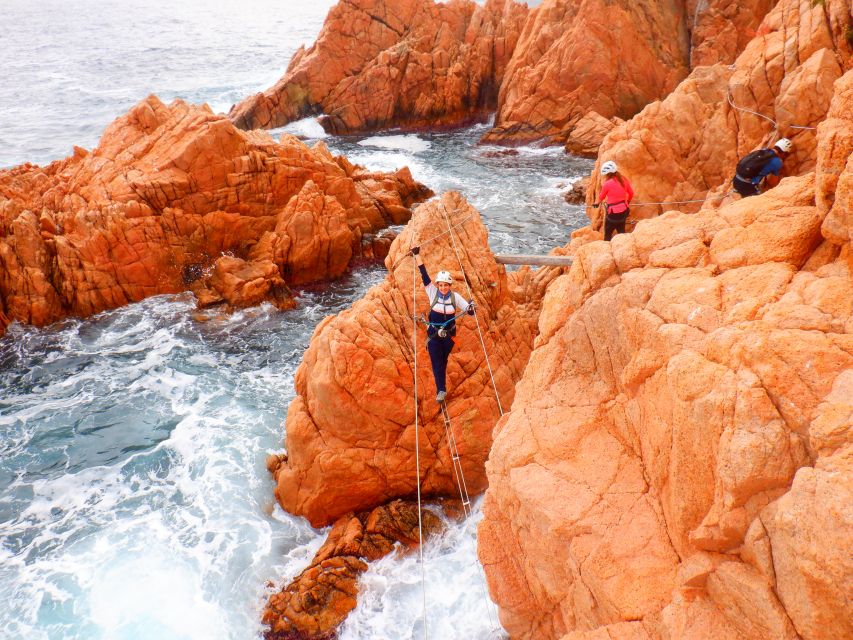
This suits adults and children aged 10 or older who are active, comfortable outdoors, and curious about a controlled climbing challenge. It also works for families with older children, provided everyone meets the fitness and height requirements.
A first-time climber can manage the first section with guide support. You do not need to arrive as an expert, but you should be willing to follow instructions and accept that the route may feel scary at points.
Experienced via ferrata climbers may find the sea setting the biggest draw. The route offers a different experience from mountain ferratas, with the horizon and water beside you instead of high alpine scenery.
The activity is not suitable for children under 10, pregnant women, wheelchair users, people with mobility impairments, or people with a low level of fitness. A maximum weight of 287 pounds, or 130 kilograms, and a minimum weight of 88 pounds, or 40 kilograms, are also specified.
You should not book if you are afraid of heights. That does not mean you need to be fearless, but you must be able to keep moving and listen to the guide when the cliff position feels intense.
What to bring and how to prepare
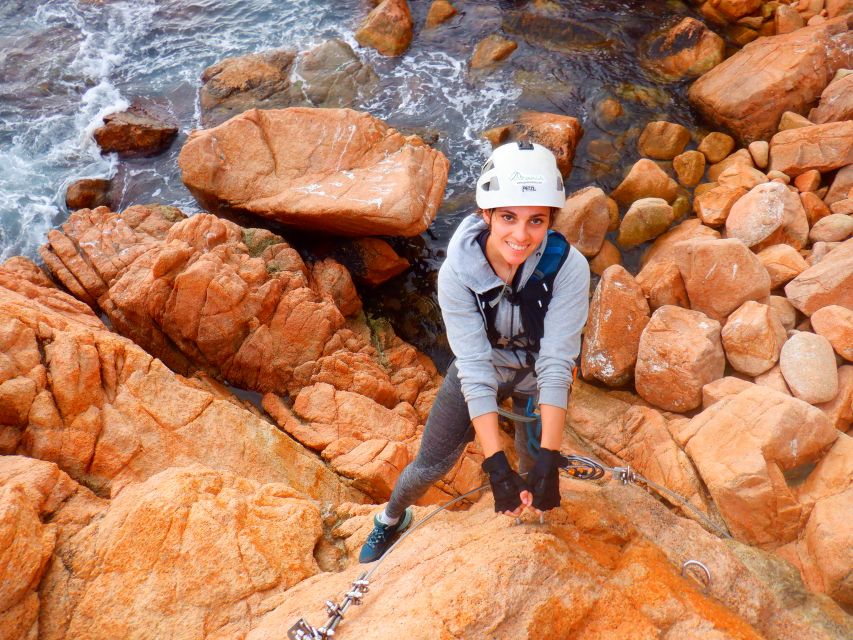
Wear sports shoes with a secure fit, comfortable clothes, hiking pants, and suitable outdoor clothing. Bring water and a daypack, but keep your load practical. You will want your hands and movement to remain as free as possible.
Bare feet are not allowed, and alcohol or drugs are prohibited. Those rules are basic, but they matter on a route where balance, attention, and clear communication are essential.
Check the date carefully if you want the full route. The second part is closed from December 1 through June 1, leaving only the first section. For a shorter, less demanding outing, that seasonal version may suit you. For the full challenge, book between June 2 and November 30, subject to current conditions and availability.
Give yourself more time than the activity duration suggests. The stated three hours covers the guided experience, not necessarily parking, stairs, or delays getting to Calle Sicilia n50. Arriving early is the sensible choice.
Should you book Via Ferrata Cala del Molí?
Book it if you want a memorable Costa Brava activity that combines physical effort, height, sea views, and close guide support. The $41 price is particularly fair because it includes equipment, insurance, photos, and refreshments rather than charging you for each item separately.
I would choose this for an active morning or afternoon, not as a relaxed sightseeing stop. The first section gives beginners a way to try the route, while the second section rewards people with the fitness and confidence to continue.
Skip it if you dislike heights, have mobility or fitness limits, or want a quiet walk beside the water. Also check the seasonal closure before booking. For the right person, this is a rare chance to move along a Mediterranean cliff on a protected route, with the sea beside you and a guide helping when the rock gets serious.
FAQ
Where does the Via Ferrata Cala del Molí activity meet?
Meet your guide at Calle Sicilia n50 in Sant Feliu de Guíxols, Catalonia.
How long does the activity last?
The guided activity lasts about three hours. Starting times depend on availability.
How much does the experience cost?
The listed price is $41 per person.
What is included in the price?
A certified guide, climbing material, insurance, photos, and refreshments at the end are included.
Is transportation included?
No. You must arrange your own transportation to the meeting point.
Can I do the full route all year?
No. The second part is closed from December 1 through June 1. During that period, the activity covers only the first part.
What languages do the guides speak?
The guides provide instruction in English, Italian, French, and Spanish.
Just added around Spain
- Via Ferrata John Hogbin with Photos★ 5.0 · 4 reviews
- Half-Day Adventure and Climbing Via Ferrata in Gran Canaria★ 5.0 · 25 reviews
- The Roque Nublo Base Camp Experience: Hiking, Picnic and Climbing★ 5.0 · 11 reviews
- Private Climbing Experience Via ferrata Senda do Santo★ 5.0 · 8 reviews
- Via Ferrata Cala del Molí★ 4.0 · 4 reviews
- Via ferrata Cala del Molí in Sant Feliu de Guíxols★ 5.0 · 2 reviews
- Via ferrata de Sant feliu de guíxols – Via ferrata cala del molí★ 5.0 · 47 reviews
- Via Ferrata Adventure in Madrid with Transport★ 5.0 · 4 reviews
Via Ferrata Routes, compared.
Banff: Mount Norquay 2.5 or 4-Hour Guided Via Ferrata Climb
Read our review →
Small-Group Guided Via Ferrata Climbing with Banff’s Best Views
Read our review →
Via Ferrata in Gran Canaria. Vertical adventure park. Small groups
Read our review →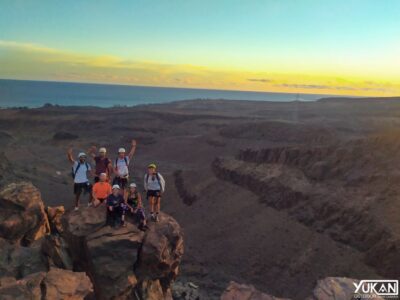
Gran Canaria: Cliff Climbing Via Ferrata Trip by Maspalomas
Read our review →Browse the lists this trek appears in