
Review · RISHIKESH
Chopta Trek
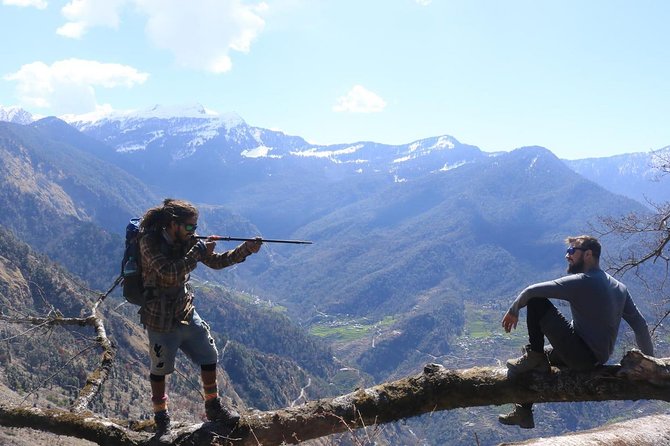
The sunrise hike toward Tungnath and Chandrashilla is the heart of this trip. You leave around 4 a.m. with chai, climb through the dark, and may reach the summit in time to see the first light strike the high Himalayan peaks, including Nanda Devi when the air is clear. I love the mix of a serious mountain morning with the comfort of a short four-day plan, and I like that the route includes both a family homestay and a campground.
The main trade-off is the amount of time spent in the vehicle. The return drive to Rishikesh takes about six to seven hours, and the road journey to the mountains is not a small part of the trip. You also need moderate fitness, warm clothing, and enough energy for an early uphill walk at altitude.
Key things to know before you book
- Sunrise at Chandrashilla: The early climb gives you the best chance of seeing the Himalayan peaks in soft morning light.
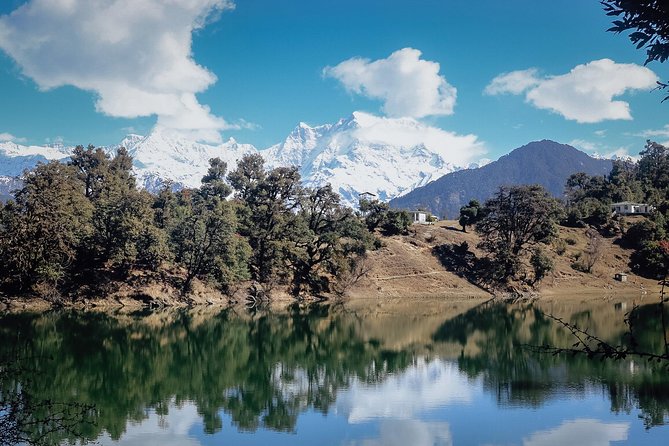
- Deoria Tal at 2,438 meters: A 2.5-kilometer forest walk leads to a lake with snow-covered mountains behind it.
- Real village stays: Sari village offers a look at a farming community surrounded by apple, peach, and rhododendron trees.
- Private guiding: Your group travels alone, allowing more flexibility and personal attention than a fixed group departure.
- Meals and gear included: Breakfast, lunch, dinner, camping, sleeping bags, transport, and forest permissions are covered.
- Beginner-friendly but not effortless: The route is technically manageable for beginners, yet the altitude, cold, and pre-dawn climb still demand preparation.
What this four-day Chopta trek is really like
This is a compact Himalayan trip rather than a long expedition. You get mountain roads, village life, forest paths, an alpine lake, a high temple, and a sunrise summit without committing to a week or more on foot.
The trip begins and ends in Rishikesh, Uttarakhand. The private format matters here. Mountain roads and weather can affect the pace, so having only your own group with the guide gives you more room to stop, ask questions, and adjust the day within reason.
The package costs about $201. That is not just the price of a guided walk. It includes private transportation, forest entry fees and permissions, camping equipment, sleeping bags, and nearly all meals. You still pay for extra food, drinks, souvenirs, and insurance, but the main costs of reaching and staying in the mountains are bundled together.
I would judge the value by looking at the transport and lodging as much as the walking. Rishikesh is far below the trek area, and the private vehicle covers the long mountain approach and return. For a small group that wants a guide and does not want to arrange separate rooms, permits, meals, and transport, the price is reasonable.
A few more treks around India worth a look
- Half day trekking (munnar valley Trekking & Tours )
★ 5.0 · 310 reviews - Nag Tibba 2 Days Trek (Pantwari to Pantwari)
★ 5.0 · 274 reviews - Bhrigu Lake and Alpine Meadow Trek
★ 5.0 · 121 reviews
Day one: Devprayag and Sari village
The road from Rishikesh begins with one of the trip’s most meaningful stops, Devprayag. Here, the Alaknanda and Bhagirathi rivers meet to form the Ganges. The visit lasts about 30 minutes, so think of it as a focused stop rather than a long sightseeing visit.
The confluence gives useful geographic context to the whole journey. You are not simply driving toward a collection of mountain viewpoints. You are following a river system that shapes the valleys, villages, farms, and pilgrimage sites of Uttarakhand.
The next major stop is Sari village, at about 2,011 meters. The village is home to roughly 1,000 people, with agriculture at the center of daily life. Apple and peach orchards, along with rhododendron trees, give the place a slower and more local feel than a busy hill station.
You spend time in the Chamoli district area for about three hours. The family homestay is one of the strongest parts of the trip because it connects the walking route with ordinary village life. You are not sleeping in a polished resort designed to look local. You are staying with a family, with the warmth and simplicity that usually implies.
That also means you should keep your expectations practical. A homestay is valuable for atmosphere and human contact, not for resort-style privacy or a long list of facilities. The available information does not specify room layouts or private bathrooms, so ask the operator if those details matter to you.
Day two: the 2.5-kilometer walk to Deoria Tal
After breakfast, you begin the forest walk toward Deoria Tal. The route covers about 2.5 kilometers before reaching the lake at an altitude of 2,438 meters. The walking distance is modest on paper, but the uphill movement and altitude can make it feel more demanding than a flat city walk.
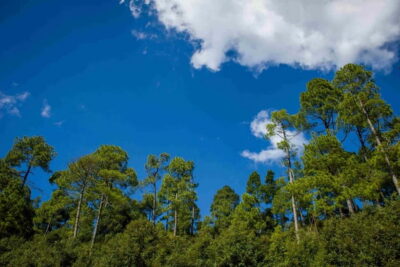
Deoria Tal is the kind of stop that rewards patience. The lake sits among green forest, with snow-covered Himalayan peaks visible behind it when conditions are clear. The planned visit lasts about an hour, giving you time to look across the water, take photographs, and catch your breath before continuing.
Weather matters here. Mountain views can disappear behind cloud, so you should treat the scenery as a possibility rather than a promise. Even without a perfect view, the forest approach and the high-altitude setting make the stop worthwhile.
The route then continues toward Chopta and passes through Rohini Bugyal, a meadow hidden in the Chopta Valley forest. The visit is planned for about an hour. A meadow break is useful on this kind of trip because it changes the rhythm from enclosed woodland to open grassland.
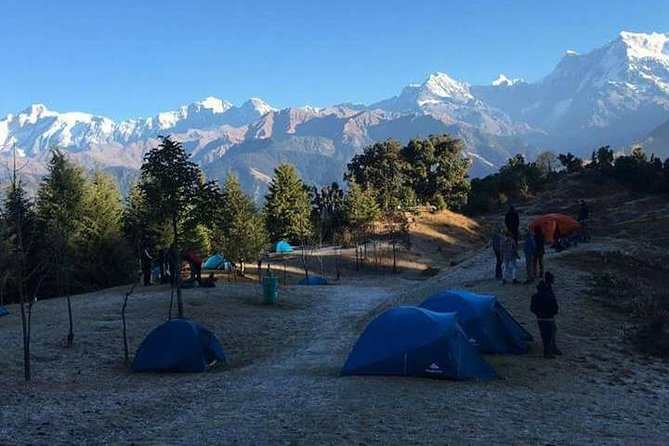
Chopta is where the trip shifts toward the high mountain portion. The plan includes a campground night here, along with camping equipment and sleeping bags. The two-night family homestay and one-night campground give you two different ways to sleep in the hills: village hospitality first, then a more direct mountain setting.
Do not pack as if this were a warm-weather camping trip. One German-language review specifically advises bringing warm clothing, and that is sensible advice for the early start and high altitude. The supplied details do not state the exact campground facilities, so pack for basic conditions rather than assuming hotel comforts.
Day three: the pre-dawn climb to Tungnath and Chandrashilla
The third day begins around 4 a.m. with chai. That early alarm is not a minor detail. It is the key to the sunrise plan, and it also means you should protect your energy the night before.
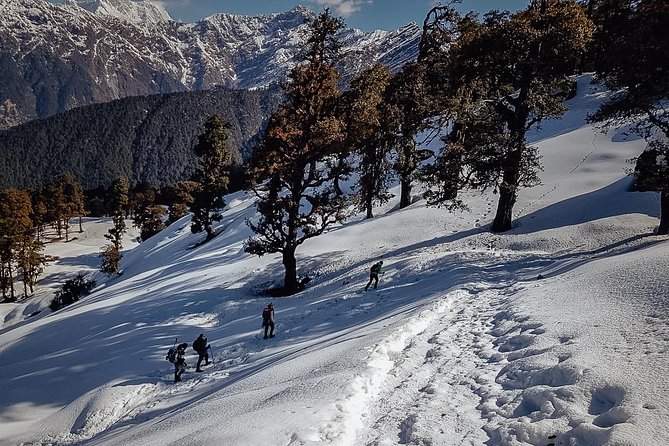
The walk toward Tungnath and the top of Chandrashilla Peak takes about five hours in the day’s schedule. The goal is to reach the high point for sunrise. In clear weather, you may see Nanda Devi, described here as India’s second-highest peak, along with wide views across the surrounding Himalayan summits.
Tungnath Temple adds a cultural reason to make the climb. This is not only a mountain walk to a viewpoint. The temple gives the route a pilgrimage character, while Chandrashilla provides the high summit setting and sunrise focus.
The route is described by one past participant as technically manageable for beginners. That should not be confused with easy. You need moderate physical fitness, and you will be walking uphill in cold conditions before breakfast. If your body handles steady mountain walking but you are not an experienced trekker, this may be a suitable introduction. If steep uphill walking is difficult for you, the five-hour schedule deserves serious thought.
The sunrise can be spectacular, but clouds may block the peaks. Your guide can help with timing and pacing, yet no guide can control visibility. I would book this morning for the walk itself and the chance of the view, not only for a guaranteed photograph.
Guide quality matters most on this day. Ankush is specifically praised for being fun and well informed, and his name is worth noting when you communicate with Mapping The Himalayas. You can ask whether he will lead your departure, since guide assignments may vary.
Same trailhead, a different route:
- Har Ki dun Trek by Himalaya Shelter
★ 5.0 · 102 reviews - Wild Elephant Anakulam & Waterfalls Tour(munnar valley Trekking)
★ 5.0 · 98 reviews - Friendship Peak Trek
★ 5.0 · 94 reviews - Half Day Hiking in Munnar Trekking Tour
★ 5.0 · 89 reviews
The human side: homestays, meals, and a private guide
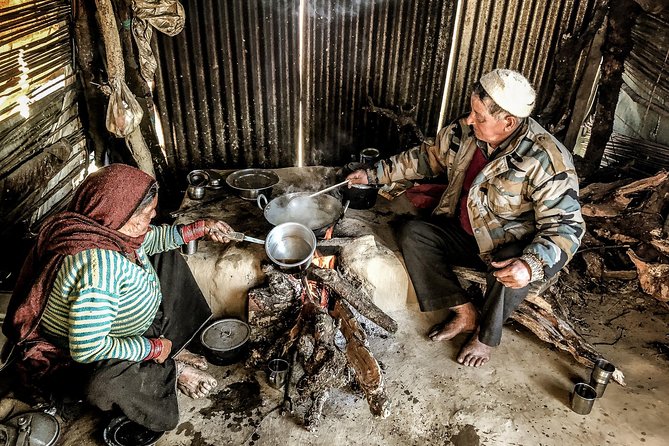
The family homestays are more than a place to sleep. They are one of the few parts of the trip that place you directly in a working village rather than a tourist center. The warm and friendly welcome described for the homestay is exactly the sort of contact that can make a short trip feel connected to the place.
Meals are included throughout the schedule: four breakfasts, four lunches, and three dinners. This is convenient in a remote mountain area, where arranging food independently would be awkward. It also helps you budget, since the main meal costs are already covered.
You should still bring money for extra food and drinks. The package does not include those purchases, and the long drives and early morning start may make a hot drink or snack appealing. Souvenirs and insurance are also your responsibility.
The private format is a real benefit if you value flexibility. You do not have to match the pace of a large group, and you can ask the guide to explain village life, the river confluence, the forest route, or the temple. The trade-off is that a private tour can feel less social if you hoped to meet a larger group of hikers.
Day four: the long return to Rishikesh
After breakfast, you drive back to Rishikesh. The journey takes about six to seven hours, so the final day is mostly transport rather than sightseeing.
That long return is important when planning your wider itinerary. Do not assume you will have a full afternoon in Rishikesh for another activity. You may arrive with time left in the day, but the schedule is best treated as a travel day.
The trip is advertised as about four days, although the overview also describes it as a short three-day trek. The clearest way to understand it is four calendar days with three overnight stays: two nights at family homestays and one night at a campground. Confirm the exact sleeping arrangements and departure time before you set other plans around it.
Who will get the most from this trip
I would recommend this trek to someone who wants a first taste of the Himalayan foothills without spending a week on a trail. It suits you if you value scenery, village contact, guided walking, and a private vehicle more than luxury accommodation.
It is also a good fit for a small private group with mixed experience. A guide can help set a sensible pace, and the route is technically approachable for beginners according to the available feedback. Still, everyone should be ready for altitude, cold, and the pre-dawn climb.
You may want a different trip if you dislike long road journeys, simple lodging, or early starts. The $201 price includes a great deal, but it does not turn a mountain route into a soft adventure. The five-hour summit day and the six-to-seven-hour return drive are the two parts I would consider most carefully.
The experience has a 4.9 rating from 52 reviews, with 98 percent recommending it. Those figures fit the strongest features of the trip: striking scenery, a friendly guide experience, welcoming homestays, and a memorable sunrise. They should not erase the basic realities of mountain travel, especially changing visibility and cold conditions.
You can cancel for a full refund if you do so at least 24 hours before the start time. Changes made inside that 24-hour window are not accepted, and the paid amount is not refunded for a late cancellation. The operator is Mapping The Himalayas.
Should you book the Chopta trek?
Book it if you want a compact, private Himalayan adventure with meals, transport, a guide, and a mix of village and camping stays already arranged. The Deoria Tal walk and Chandrashilla sunrise give the trip two clear scenic goals, while Devprayag and Sari add cultural and local context.
I would especially choose it if Ankush is available as your guide, since his personal approach is one of the trip’s strongest reported details. Before paying, confirm the exact homestay and campground facilities, your guide assignment, and whether the four included breakfasts match the actual overnight schedule.
Skip it if you need guaranteed mountain views, dislike rougher lodging, or cannot manage a pre-dawn uphill walk. For a fit beginner who wants a short route with a real sense of the Himalayas, this is a well-priced and thoughtfully shaped introduction.
FAQ
Where does the Chopta trek begin and end?
The tour begins in Rishikesh, Uttarakhand, India, and returns to the same meeting point at the end.
How long does the experience last?
The experience takes about four days. It includes two nights at family homestays and one night at a campground.
Is transportation from Rishikesh included?
Yes. Private round-trip transportation from Rishikesh is included.
What meals are included?
The package includes four breakfasts, four lunches, and three dinners.
Is this a private tour?
Yes. Only your group participates, with private transportation and a professional guide.
How difficult is the trek?
You should have a moderate level of physical fitness. The route is described as technically manageable for beginners, but the Chandrashilla walk involves an early uphill start and takes about five hours in the schedule.
What happens on the Chandrashilla day?
You wake around 4 a.m., have chai, and walk toward Tungnath Temple and the top of Chandrashilla Peak for sunrise. In clear weather, you may see Nanda Devi and other Himalayan peaks.
How far is the walk to Deoria Tal?
The forest walk to Deoria Tal is about 2.5 kilometers. The lake sits at an altitude of about 2,438 meters.
Is camping equipment provided?
Yes. Camping and sleeping bags are included. The trip also includes one night at a campground.
What is not included in the price?
Extra food, drinks, souvenirs, and any type of insurance are not included.
Can I cancel for a refund?
You can receive a full refund if you cancel at least 24 hours before the experience starts. Cancellations or changes made less than 24 hours before the start time are not accepted for a refund.
Just added around India
- Gokarna Beach Trek★ 5.0 · 9 reviews
- Jaipur Trekking and Hiking Tour with Guide★ 5.0 · 21 reviews
- Nagtibba Trek (Pantwari to Pantwari)★ 5.0 · 39 reviews
- Tirath Expedition: Trek to the Tirath Hans Kund & Saketi Top(4280m)★ 5.0 · 9 reviews
- Dayara Bugyal and Surya Top Trek★ 5.0 · 10 reviews
- 7-Day Kuari Pass Trek★ 5.0 · 3 reviews
- Triund Trek & Snow Line Trek★ 4.5 · 9 reviews
- Snowline Trek★ 4.5 · 11 reviews
Rishikesh Trekking Tours, compared.
Browse the lists this trek appears in