
Review · MARRAKECH
From Marrakech: Private Tour to Oasis and Trekking in the Desert of Erg Chigaga
Erg Chigaga is Morocco’s big desert experience, but getting there takes time. This four-day private trip makes the long journey worthwhile by linking the High Atlas, Ait Benhaddou, the Draa Valley, and a remote camp reached by rough desert tracks. You spend two nights in the dunes, not just a quick overnight stop.
I like the private vehicle and flexible guiding, especially when drivers such as Ali, Mustafa, or Brahim can adjust stops along the way. I also like the two-night camp stay, which gives you time for a sunrise, sunset, camel trek, dinner with music, and a quieter second evening under the stars.
The main drawback is the amount of driving. Day one and day four are long, and the off-road ride to Erg Chigaga can be bumpy. If you want a short desert taste, this is too much road time. If you want the remote Sahara and the journey that leads to it, the pace makes sense.
Key points to know before you book
- Two nights at Erg Chigaga: You get more than a rushed camel ride and one night in the sand.
- A real cross-country route: The journey includes Tizi-n-Tichka, Ait Benhaddou, Ouarzazate, Agdz, M’Hamid, Iriki, and Foum Zguid.
- Private door-to-door transport: Only your group participates, with a driver-guide handling the long transfers.
- Camel trekking and a nomadic lunch: The third day includes dromedaries, tamarind shade, kebabs, and fresh bread.
- Meals are built in: The package includes three breakfasts, three dinners, and one lunch.
- A high-comfort desert camp: The camp is described as comfortable, with dinner, tea, music, and room to enjoy the dunes at your own pace.
Why Erg Chigaga is worth the long road from Marrakech
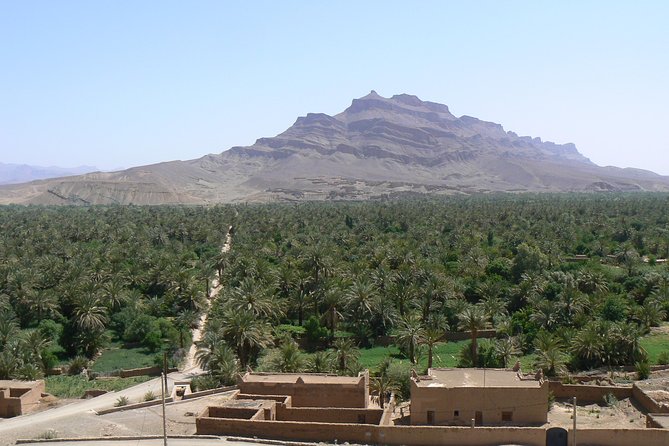
Many desert trips from Marrakech aim for the more accessible dunes near Merzouga. Erg Chigaga asks more of you. You cross the Atlas Mountains, continue through the Draa Valley, drive beyond M’Hamid, and then leave paved roads behind for roughly 50 kilometers of desert track.
That extra effort changes the feel of the trip. The route is not simply a transfer to a camp. It takes you through date-palm country, old caravan country, dry salt flats, fossil-bearing mountains, and open desert. By the time you reach the dunes, you have seen how Morocco shifts from mountain villages to oasis agriculture and then to Sahara emptiness.
I like this route because the destination has context. You see the water and palms of the Draa Valley before reaching the dry desert. You pass places tied to caravan travel and pottery making. You also return by a different route through Iriki and Foum Zguid, rather than retracing every mile.
The tradeoff is clear: this is not a relaxed four-day resort break. Expect long stretches in the vehicle. The private format helps because you are not tied to a large group, and you can discuss stops with your driver-guide, but the distances remain real.
A few more treks around Marrakech worth a look
- Mount Batur Sunrise Trekking Private All Inclusive
★ 5.0 · 906 reviews - Mount Batur Sunrise Trekking Private Tour with Breakfast and Hotel Transfer
★ 5.0 · 885 reviews - Private Mount Batur Sunrise Trekking Tour
★ 5.0 · 634 reviews
Day one: Atlas passes, movie-country, and the Draa Valley
Pickup begins at Menara Airport in Marrakech at 8:30 a.m. The first major section takes you across the High Atlas by way of the Tizi-n-Tichka pass, which reaches about 2,260 meters. The road brings mountain views, oak woods, walnut groves, Berber villages, and high pastures where goats and sheep roam.
This is a strong opening because Morocco changes quickly as you gain altitude. You are not just heading toward the desert. You are crossing a major natural divide, and the mountain road explains why the southern valleys developed their own rhythm and traditions.
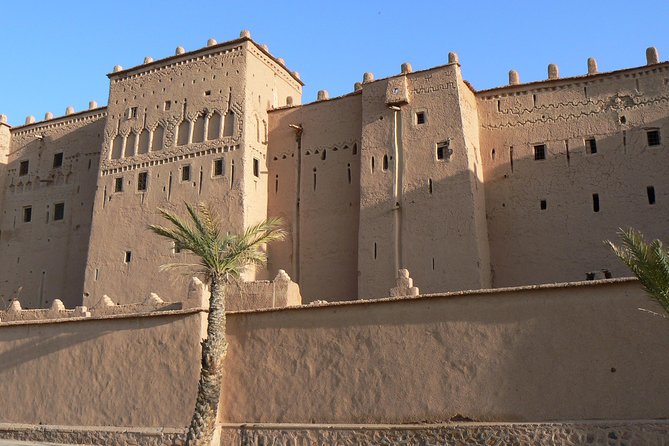
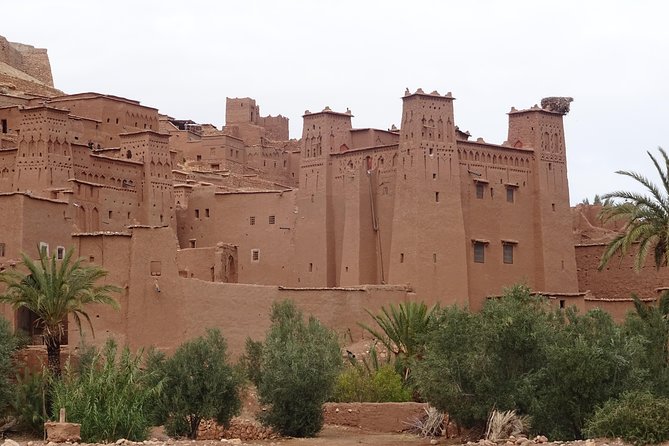
The first major stop is Ait Benhaddou, a UNESCO-protected fortified village. You have time to stop for lunch and walk around the earthen buildings. The setting has also served as a backdrop for films including Lawrence of Arabia, Jesus of Nazareth, and The Gladiator. Previous film sets remain in the area, giving the visit a slightly surreal touch.
Ait Benhaddou can feel familiar if you have seen it on screen, but the real value is walking through the settlement rather than simply taking a photo from the road. Bring sensible shoes and expect uneven ground. The visit is listed as about an hour, so you will get an introduction rather than a long architectural study.
Next comes Ouarzazate, often called Morocco’s film center. The schedule allows a brief stop, with the option to visit Kasbah Taourirt and film studios if you choose. Since the stop is short, ask your driver-guide how much time is actually available before paying for any extra visit or rushing through the area.
The day ends around Agdz and the Draa Valley. This is one of the most pleasing changes in scenery on the route. Millions of date palms line the valley, and the harvest runs from September through December. Roadside stalls and local shops sell the dates, which are a good small purchase if you want something tied to the region.
You stay in a Moroccan riad or courtyard home in Agdz, with tea service and dinner. This overnight stop matters because it breaks up the drive before the desert section. It also gives you a more settled evening than going straight from Marrakech to the dunes.
Day two: from caravan routes to the Erg Chigaga tracks
The second day carries you farther south through Zagora and Tamegroute before reaching M’Hamid. The route follows old caravan-country connections, including the historic movement toward Timbuktu. You also pass Tamegroute, known for its pottery.
M’Hamid is the practical end of the paved-road world for this trip. It is a desert outpost, and from here the journey changes character. Instead of a normal road transfer, you continue by jeep across rough tracks toward Erg Chigaga.
This is where you should set your expectations. The off-road drive can be adventurous, but it is not smooth sightseeing. You will spend time in a vehicle moving over desert tracks, and the ride may feel tiring after the long approach from Marrakech. The reward is access to a less developed dune area and a camp that is not reached by ordinary road.
The route passes the Iriki oasis, where you stop for tea before continuing. The word oasis can suggest flowing water and thick greenery, but here the setting is part of a dry desert route. The tea stop gives you a pause, a view, and a chance to understand the scale of the open country around you.
At Erg Chigaga, you settle into the camp for the first of two nights. Two nights are a major advantage. You do not have to arrive, eat, sleep, and leave before you have adjusted to the quiet. You have time to watch the dunes change color, take a camel ride, and enjoy the camp without treating every moment as a photo stop.
The camp is described as comfortable and well located among the dunes. Dinner, tea, and music form part of the evening. Some experiences also include live traditional music and sandboarding, but the supplied details do not promise sandboarding as a fixed part of this package, so ask ahead if it matters to you.
Day three: sunrise, dromedaries, and lunch under tamarind trees
The third day is the heart of the trip. Set an alarm for sunrise. Erg Chigaga’s dunes catch the early light, and the quiet is one of the best reasons to spend a second night rather than make a fast overnight visit.
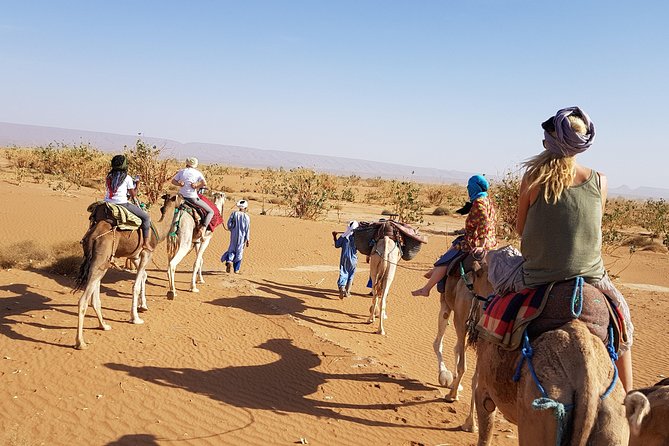
After breakfast, you set out on dromedaries. The ride is described as a few hours of trekking through the dunes. A camel ride is not the same as a fast excursion on horseback. You sit high, move slowly, and feel the rhythm of the animal beneath you. Some people find the saddle uncomfortable after a while, so you should be ready for a gentle but physically noticeable outing.
The route leads to tamarind trees, where the guides prepare a traditional nomadic lunch. Kebabs and fresh bread are included in the day’s story, and this meal adds something important: you are eating in the desert, not simply returning to a dining room at the camp.
The afternoon takes you back through the dunes. You can then watch sunset near camp before dinner and tea. This part of the day has a useful lack of pressure. There is no major town to reach and no hotel check-in to manage. You can simply let the desert be quiet.
The camp atmosphere is described as familiar and welcoming, with staff including Ali, Mohammed, Omar, Kalid, and Abdul involved in different desert experiences. The exact team on your departure may differ, but the operation is clearly built around personal guiding rather than a large coach group.
At night, look up. The desert’s low light pollution gives you a better chance of seeing a broad field of stars. The camp does not mean you are completely removed from comfort, but it does put you in a setting where silence, darkness, and open sky become the main entertainment.
Same trailhead, a different route:
- Marrakesh: 2-Day Mt. Toubkal Trek with 1-Night Stay & Meals
★ 4.7 · 795 reviews - Marrakech: 2-Day Atlas Mountains Trek with Village Stay
★ 4.8 · 717 reviews - From Marrakech: 3-Day Mount Toubkal Climbing Trek
★ 4.7 · 597 reviews - From Marrakesh: 2-Day Mount Toubkal Trek
★ 4.7 · 591 reviews
Day four: Iriki, Foum Zguid, and the road back to Marrakech
After breakfast, you leave the dunes by jeep and follow an old track associated with the Paris-Dakar rally. The route passes the dried-up salt lake of Iriki and continues below a fossil mountain before reaching Foum Zguid.
The salt lake and fossil country give the return journey a different texture from the dune camp. You are seeing the desert as a broad geological region, not only as rolling sand. A short stop in Foum Zguid includes fresh orange juice, a welcome break after the rough track.
Once you reach pavement, the ride continues to Tazenakht. This area is known for Moroccan rugs, and you stop for lunch with an opportunity to look at woven carpets. Carpet shopping can be useful if you already want one, but do not let the setting pressure you into a purchase. Take your time, ask about size and materials, and remember that the purpose of the stop is also to rest and eat.
The final section returns through the High Atlas and over Tizi-n-Tichka to Marrakech. You reach the city in the early evening. This is another long day, so do not plan a demanding dinner reservation or a tight onward connection.
The return route is one of the trip’s strengths. You see the salt lake and fossil mountain, stop in Foum Zguid, visit the rug-producing region near Tazenakht, and cross the mountains again. It is a lot of road, but it prevents the journey from feeling like a simple backtrack.
Meals, accommodation, and comfort
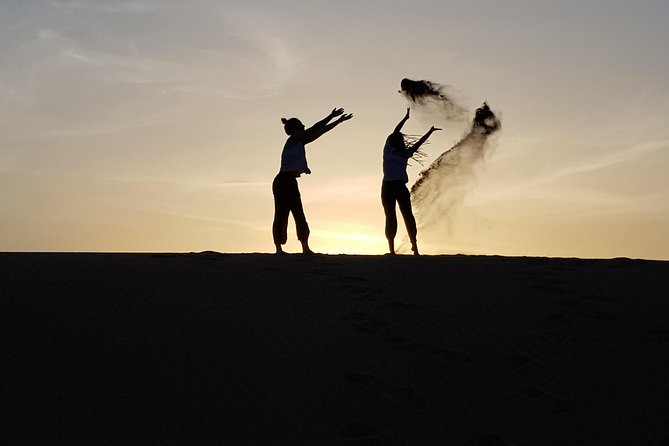
The price includes three breakfasts, three dinners, and one lunch. Dinner is provided at the Agdz riad and during the two desert nights. The included desert meals are more than a minor convenience because food choices are limited once you leave M’Hamid.
The first night is in a Draa Valley riad or courtyard home. The next two are in the Erg Chigaga camp. That mix gives you both a traditional inland lodging experience and the main desert stay.
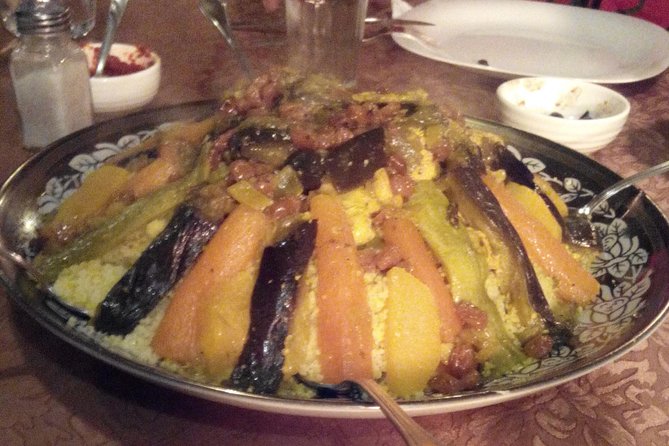
Reports about the food are especially strong, with praise for the camp meals, breakfast, dinner, fresh bread, kebabs, and tea. Still, meal details can vary by departure, so tell the operator about dietary needs before leaving Marrakech.
The vehicle is described in the feedback as private, air-conditioned, and comfortable. That matters here. You spend much of days one and four on the road, and a private vehicle lets you stop for tea, photographs, or a short break without waiting for a busload of people.
The private guide makes a practical difference
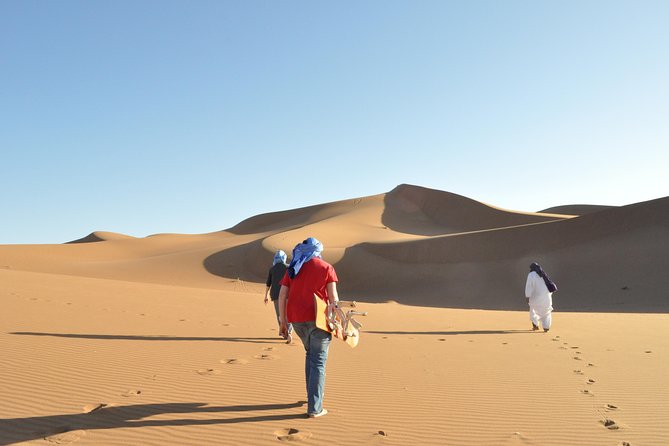
A private tour is more than a smaller group. It gives you a direct relationship with the person handling the road, timing, and local stops. Ali is repeatedly associated with the desert route, while Mustafa and Brahim are also praised in connection with careful driving and friendly service.
Helena handles correspondence before the trip and is described as quick to answer questions. That is useful for a route with several moving parts. Confirm the pickup point, the exact driver, the planned stops, and any food needs before departure.
The best part of the private setup is flexibility. You may be able to spend more time at a stop you value, or shorten a visit that is not your priority. That flexibility is especially helpful at Ouarzazate, where the listed visit can be brief but optional attractions may take more time.
The experience is still structured. You cannot turn a four-day crossing into a slow village tour without changing the plan. Think of the private format as control over the edges of the schedule, not a completely open itinerary.
Is the $614.14 price good value?
At $614.14 per person, the cost is significant, but it covers a demanding four-day route with private transport, guiding, three nights of lodging, three breakfasts, three dinners, and one lunch. You are also paying for the off-road access to Erg Chigaga, which is harder to arrange than a standard road trip.
I see good value here for two people or a small group that wants a private desert stay without organizing each transfer separately. The two-night camp is important to the calculation. A one-night trip can be cheaper, but it gives you far less time in the dunes.
The price does not mean every possible expense is covered. Admission to optional attractions, personal purchases, and anything not listed in the included meals or accommodation should be confirmed before you go. The itinerary lists free admission at the main stops, but that does not automatically mean every optional site or activity is included.
Who should book this desert trip?
I would choose this tour if you want the far-off Erg Chigaga dunes, enjoy scenic road journeys, and value a private guide. It suits couples, families with older children, and small groups who prefer their own vehicle and do not want to join a large departure.
It is also a good match if you want more than sand. Ait Benhaddou, the Atlas pass, Agdz, Tamegroute, Iriki, and Tazenakht give you a broad view of southern Morocco.
I would hesitate if you have limited mobility for camel riding, dislike rough vehicle tracks, or need a short and easy excursion from Marrakech. Children must be accompanied by an adult, and the child rate applies only when sharing with two paying adults. Most people can participate, but the long drives and desert conditions deserve honest thought.
The experience is available as a private activity, with pickup offered and mobile ticketing. Cancellation is free up to 24 hours before the start time. Within 24 hours, the amount paid is not refunded, and late changes are not accepted.
Should you book it?
Book it if the phrase two nights in Erg Chigaga matters to you more than a quick desert photo. The best parts are the private road journey, the Draa Valley overnight, the sunrise and camel trek, the nomadic-style lunch, and the time to enjoy the camp without rushing.
Skip it if you want a compact Marrakech day trip or a soft, road-based holiday. This is a long expedition with bumpy desert driving and two especially full travel days. For the right pace, it offers a well-rounded route to one of Morocco’s most remote-feeling desert areas.
FAQ
Where does the tour start?
The tour starts at Menara Airport in Marrakech, Morocco, at 8:30 a.m. Pickup is offered.
How long does the experience last?
The experience lasts approximately four days.
Is this a private tour?
Yes. Only your group participates in this private tour or activity.
Where do you sleep?
You spend one night in a Moroccan riad or courtyard home in the Draa Valley near Agdz, followed by two nights in a desert camp among the Erg Chigaga dunes.
What meals are included?
The package includes three breakfasts, three dinners, and one lunch.
Does the tour include camel trekking?
Yes. On day three, you ride dromedaries through the dunes for several hours, followed by a traditional lunch prepared near tamarind trees.
What is the cancellation policy?
You receive a full refund if you cancel at least 24 hours before the experience starts. Cancellations or changes made within 24 hours are not accepted and are not refunded.
Just added around Marrakech
- Mount Toubkal Trek 2 Days & 1 Night★ 4.5 · 26 reviews
- Marrakech: Mount Toubkal 2-Day trek from Marrakech★ 5.0 · 2 reviews
- Marrakech: High Atlas Tedali Summit Guided Day Trek★ 5.0 · 4 reviews
- Marrakech: 2 Day Toubkal Trek & 1 Nights with Hotel Pick up★ 5.0 · 2 reviews
- Marrakech: 3-Day Atlas Mountains Berber Villages Trek★ 4.5 · 41 reviews
- Marrakech: 2 Day Trek Atlas Mountains & Taoudja Summit 2724M★ 5.0 · 2 reviews
- Marrakech: Guided 2-Day Trek to Imlil and Imnan Valleys★ 4.6 · 14 reviews
- From Marrakech: Taoudja Summit Hike in the Atlas Mountain★ 5.0 · 5 reviews
Marrakech Trekking Tours, compared.
2-Day Mt. Toubkal Trek with 1-Night Stay & Meals
Read our review →
Summiting and Hiking the Atlas Mountains Day Trek from Marrakech
Read our review →
Browse the lists this trek appears in