
Review · CHIANG MAI
Chiang Mai: Hmong Village, Doi Suthep and Wat Pha Lat Trek
Wat Pha Lat is the real prize here: a quiet forest temple reached by the old Monk’s Trail, far removed from the traffic and souvenir stalls at Doi Suthep. I like the way this trip pairs a short, peaceful hike with Chiang Mai’s most famous temple, then adds a Hmong village and coffee stop for a broader view of life above the city.
I also like the small group limit of nine, plus hotel pickup and drop-off. The main caution is fitness. The trail is not a gentle stroll for everyone, and the day includes walking on uneven ground, steps, and time outdoors. One verified account found the walk closer to an hour than expected, so treat the advertised trekking time as flexible rather than guaranteed.
Key points at a glance
- Wat Pha Lat by the Monk’s Trail: Reach a 14th-century Lanna temple through a green forest path once used by monks heading toward Doi Suthep.
- Doi Suthep’s golden chedi: Visit Chiang Mai’s best-known temple and look across the city from its grounds.
- Hmong village coffee stop: Spend time in a traditional hill community, with room for photos, a walk, handicraft viewing, and coffee.
- Small-group transport: Groups of three use a sedan, four to five use an MPV, and five to nine use a van.
- Seven hours door to door: Pickup is available in Chiang Mai Old City and Nimman, with return to the same general areas.
- A day with real exertion: Bring hiking shoes, water, insect repellent, sun protection, and clothing suited to changing outdoor conditions.
Why Wat Pha Lat makes this tour special
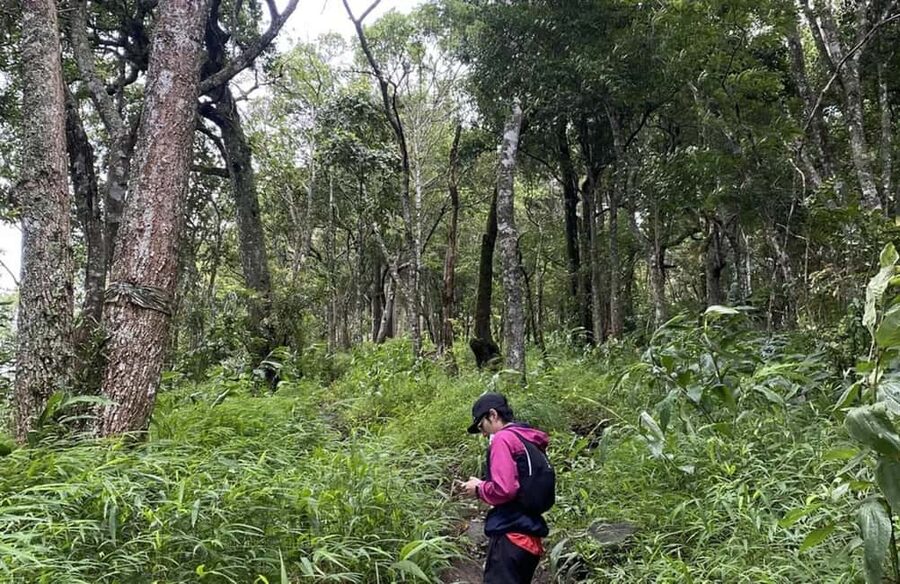
Many Chiang Mai day trips rush straight to Doi Suthep. This one takes a slower route first. You begin at the Monk’s Trail, a forest path with religious meaning and a calm, shaded feel. Monks and local people still use it as a pilgrimage route, so the walk is not simply a nature outing.
The path leads to Wat Pha Lat, a temple dating to around the 14th century, during the Lanna Kingdom. It served as a resting and meditation place for monks making their way up to Doi Suthep. That background helps explain the temple’s location: it is a pause along a sacred route, not just an isolated building in the trees.
I like this first stop because it gives you time to notice the setting. The forest, bird sounds, and old religious site create a sharp contrast with the larger temple farther uphill. You are likely to find the atmosphere more subdued than at Doi Suthep, though the amount of quiet can vary with the number of people on the trail and at the temple.
The hike is listed in the schedule as about 1.5 hours, while the activity details describe more than two hours of hiking. A verified booking account found the actual walk to be barely an hour. That difference matters if you are choosing the tour mainly for a long trek. Think of it as a moderate temple walk with a meaningful forest approach, not a full-day mountain hike.
A few more treks around Chiang Mai worth a look
- 3-in-1: Doi Inthanon Tour, Elephant Sanctuary, and Trekking Trail
★ 5.0 · 1,087 reviews - Chiang Mai: Doi Inthanon Trip with Pha Dok Siew Guided Trek
★ 4.6 · 910 reviews - Chiang Mai: 2-Day Jungle Trek with Elephant Farm & Raft Ride
★ 4.7 · 881 reviews
Walking the Monk’s Trail
Your vehicle takes you from your Chiang Mai accommodation to the trail starting point. Pickup is available from the Old City and Nimman areas, and you are asked to wait in the lobby 10 minutes before the scheduled time. Since the tour lasts seven hours, an early start may help you avoid the strongest heat, but the available start times depend on the date you select.
The trail itself is the most active part of the outing. You should expect natural ground rather than a smooth city walkway. Hiking shoes are a sensible choice, especially if rain has made sections slippery. Sunglasses, a hat, insect repellent, and weather-appropriate outdoor clothing belong in your daypack.
The walk has a clear purpose: you are following a route connected to Doi Suthep and Wat Pha Lat rather than taking a random woodland path. Your English or Thai-speaking guide can add context along the way and manage the pace for the small group. The guide is also the person to tell if you need a pause or have a concern about the route.
The tour is not suited to people with mobility impairments, heart problems, or a low level of fitness. That warning should be taken seriously. Even if the walk turns out to be shorter than the advertised estimate, the combination of hiking, temple steps, heat, and time on your feet can still be demanding.
Wat Pha Lat, a quiet stop before the crowds
At Wat Pha Lat, you get a chance to see a temple connected with the older route to Doi Suthep. The site is described as a peaceful place for monks to rest and meditate, and the forest setting is central to its appeal.
Do not expect the same scale or visual impact as Doi Suthep. Wat Pha Lat is valuable for its sense of pause and setting, not for grand crowds or a long list of formal attractions. Give yourself time to look around, listen to the forest, and appreciate why a resting place was built here.
This stop also gives the day a better rhythm. You hike first, explore a quieter religious site, then continue by car to the major temple. That saves you from doing all the uphill travel on foot while still letting you experience a historic section of the route.
Doi Suthep and the view over Chiang Mai
After Wat Pha Lat, you continue to Wat Phra That Doi Suthep by car. The temple is Chiang Mai’s best-known religious site, and the tour gives you about 30 minutes for the visit. That is enough for a focused look, but not a leisurely exploration of every corner.
The central feature is the golden chedi, which holds sacred Buddha relics. The temple grounds also provide broad views over Chiang Mai. On a clear day, the outlook is one of the strongest reasons to include Doi Suthep in your plans. Cloud, haze, and weather can affect what you see, so keep expectations practical rather than treating the panorama as guaranteed.
Thirty minutes is a brisk visit. You will have time to take in the main religious feature and look toward the city, but you may feel hurried if you want detailed photographs or a long period of quiet observation. The advantage is that the tour keeps moving and leaves room for the village visit later.
The switch from hiking to car transport is useful. You get the cultural value of arriving along the Monk’s Trail, but you do not have to make the entire ascent on foot. For many people, that is the right balance between effort and sightseeing.
Same trailhead, a different route:
- Chiang Mai: Doi Inthanon Park and Pha Dok Siew Trail Trek
★ 4.6 · 752 reviews - Doi Inthanon Private Tour with Trek & Lunch from Chiang Mai
★ 5.0 · 622 reviews - Chiang Mai: Doi Inthanon National Park and Pha Dok Siew Trek
★ 4.5 · 527 reviews - Chiang Mai: Gibbons, Trekking & Mae Kampong Small Group Tour
★ 4.9 · 504 reviews
A Hmong village above Chiang Mai
The final major stop takes you to a traditional Hmong hill tribe village in the highlands above Chiang Mai. The Hmong are an ethnic minority whose communities have roots in the highlands of southern China, Laos, Vietnam, and Myanmar. The visit offers a chance to see elements of their traditional lifestyle, handicrafts, and culture.
The schedule allows about 1.5 hours here. That includes free time, photographs, a walk, hiking, and a break. Coffee at the village is one of the appealing details of the day, especially after the temple walk and the time outside.
This part of the tour is best approached with curiosity and respect. You are not being promised a staged cultural performance. Instead, you have time to look around, learn from the guide, and notice how the village fits into the highland setting. The exact experience can depend on the day, the weather, and what is open when you arrive.
The village stop also keeps the tour from becoming only a temple circuit. You see a religious site in the forest, a major Buddhist temple, and a living hill community in one day. That range gives you a fuller picture of the area around Chiang Mai.
Still, do not assume the stop is an in-depth cultural study. The tour provides roughly 90 minutes, and the information supplied does not promise a cooking lesson, a formal craft workshop, or a meal. You may see handicrafts and local life, but those hoping for a long, hands-on village program should check the details before booking.
Transport, group size, and the $57 price
At $57 per person, the cost is reasonable if you value convenience and variety. The price includes hotel pickup and drop-off, an English or Thai-speaking guide, entrance fees, the vehicle, and the hiking portion. You do not need to arrange separate transport to the trail, Doi Suthep, or the village.
Vehicle size depends on the group. Three people use a sedan, four to five use an MPV, and five to nine use a van. A limit of nine people is small enough to feel more personal than a large coach outing, while still keeping the price below what a private car and guide might cost.
The value is strongest for a first visit to Chiang Mai when you want several highlights handled in one day. You get forest walking, two temple experiences, a city view, and a village stop without piecing together separate rides. It is less compelling if you already have easy access to a car and prefer to spend half a day at one temple or take a longer mountain hike.
Meals and personal expenses are not included. The supplied details specifically mention coffee at the village, but do not promise lunch or other food. Bring money for anything extra and carry water in your daypack.
A free cancellation policy is available up to 24 hours before the start time, and you can reserve now and pay later. Those terms are useful when Chiang Mai weather or your wider schedule is still unsettled. Check the final booking details for the exact pickup time and meeting information.
What the seven-hour day feels like
The day begins with pickup from your hotel in Chiang Mai Old City or Nimman. You should be in the lobby 10 minutes early, since waiting for a late departure can affect the rest of the schedule.
The first active section is the Monk’s Trail hike to Wat Pha Lat. Depending on the guide’s pace and conditions, this may occupy about an hour and a half or more, though one confirmed account found the walk shorter. After the temple visit, you ride to Doi Suthep for about 30 minutes.
The schedule then gives about an hour within Doi Suthep-Pui National Park, followed by roughly 1.5 hours at the Hmong village. The timing creates a full but manageable day, with the most physical effort early and more flexible sightseeing later.
A small group can make the day easier to manage. You can ask questions without competing with dozens of people, and the guide can respond to different walking speeds within reason. One confirmed booking was a group of only two, and the guide was described as friendly, reserved, and willing to respond to requests. That is a good sign for anyone who prefers calm guiding rather than constant commentary.
The return drive takes you back to Chiang Mai, with drop-off in the Old City area or Chiang Mai more generally. Traffic and road conditions can affect the exact return time, so avoid booking a tight evening commitment.
What to pack for comfort
Wear proper hiking shoes, not thin sandals. The trail is the key physical feature, and footwear with a secure sole will make the walk more comfortable.
Bring:
- Sunglasses and a hat
- Insect repellent
- Weather-appropriate outdoor clothing
- A small daypack
- Water and money for personal expenses
Temple visits also call for respectful clothing. The supplied details do not set out a specific dress code, so choose practical clothes that are suitable for a Buddhist temple as well as a forest walk.
The weather can change between Chiang Mai and the higher areas around Doi Suthep and the Hmong village. A light extra layer may help, but avoid carrying a bulky bag. You will appreciate keeping your hands free on the trail.
Who should book this outing
I would recommend this tour to you if you want a well-rounded first look at Chiang Mai’s hills and prefer having transport, entry fees, and a guide arranged in advance. It suits people who enjoy moderate walking but do not need a long wilderness trek.
It also fits solo visitors and couples who like a small-group format. The group limit of nine is large enough to keep the price sensible and small enough for a more direct guide experience.
You should think twice if you have mobility limitations, heart problems, or poor fitness. The activity is specifically not suitable for those conditions. You may also prefer another plan if your main goal is a detailed, unhurried visit to Doi Suthep, since the temple portion is only about 30 minutes.
The Hmong village stop is a good reason to choose this over a simple Doi Suthep transfer. Just keep your expectations measured. You are getting a short cultural visit with coffee, walking, photographs, and a chance to see handicrafts, not a full residential homestay or a guaranteed meal.
Should you book it?
Book this tour if you want Wat Pha Lat, Doi Suthep, and a Hmong village in one seven-hour outing, especially if you are staying in the Old City or Nimman and do not want to arrange transport yourself. The best features are the forest approach to Wat Pha Lat, the small group, and the useful mix of nature, religion, city views, and local culture.
Skip it if you are looking for a serious full-day trek, a long Doi Suthep visit, or a fully private experience. The advertised hiking times may vary, and the schedule moves at a steady pace. For most reasonably fit visitors, though, the $57 price buys a practical and varied day beyond central Chiang Mai.
FAQ
How long does the tour last?
The tour lasts seven hours, including hotel pickup, sightseeing, hiking, and return transport.
Where is hotel pickup available?
Pickup is available from accommodations in Chiang Mai City, including the Old City and Nimman areas. You should be ready in the lobby 10 minutes before pickup.
Is hiking included?
Yes. The experience includes a hike on the Monk’s Trail to Wat Pha Lat, and the activity details list more than two hours of hiking. The schedule lists the main hiking section as about 1.5 hours, but the exact walking time can vary.
Is the tour suitable for people with mobility impairments?
No. The tour is not suitable for people with mobility impairments, heart problems, or a low level of fitness.
Which languages are available?
The live guide service is available in English and Thai.
How large is the group?
The tour is limited to nine participants.
What vehicle is used?
Groups of three use a sedan. Groups of four to five use an MPV, and groups of five to nine use a van.
Are entrance fees included?
Yes. Entrance fees, hotel pickup and drop-off, the guide, the car, and the hiking portion are included.
Is food included?
Other meals are not included. Coffee at the Hmong village is part of the experience description, but lunch and other personal food expenses are not included.
Just added around Chiang Mai
- Trek to a Jungle Waterfall★ 5.0 · 14 reviews
- Small Group : Trekking Trip in Chiang Mai (Doi Suthep Area) with Market Tour★ 5.0 · 4 reviews
- Trekking at the Monk Trail and Doi Suthep Temple Private Tour★ 5.0 · 3 reviews
- Full-Day Trekking and Sightseeing Tour in Mae Kampong★ 5.0 · 46 reviews
- 11km Scred Mountain Hike★ 5.0 · 2 reviews
- One day Doi Inthanon National Park & Trekking on Kew Mae Pan★ 5.0 · 12 reviews
- Private Tour 2 Difference Trails Trekking at Doi Inthanon National Park★ 5.0 · 19 reviews
- 8KM White Water Rafting and 3HRS Jungle Trekking Adventure★ 5.0 · 9 reviews
Chiang Mai Trekking Tours, compared.

3-in-1: Doi Inthanon Tour, Elephant Sanctuary, and Trekking Trail
Read our review →
2-Day Jungle Trek with Elephant Farm & Raft Ride
Read our review →
Doi Inthanon Private Tour with Trek & Lunch from Chiang Mai
Read our review →
Doi Inthanon National Park and Pha Dok Siew Trek
Read our review →
Gibbons, Trekking & Mae Kampong Small Group Tour
Read our review →
Doi inthanon National Park + 2Hour Fantastic Trekking with Lunch
Read our review →Browse the lists this trek appears in