
Review · SPAIN
Callosa del Segura: Guided Via Ferrata in Callosa K3 with abseiling
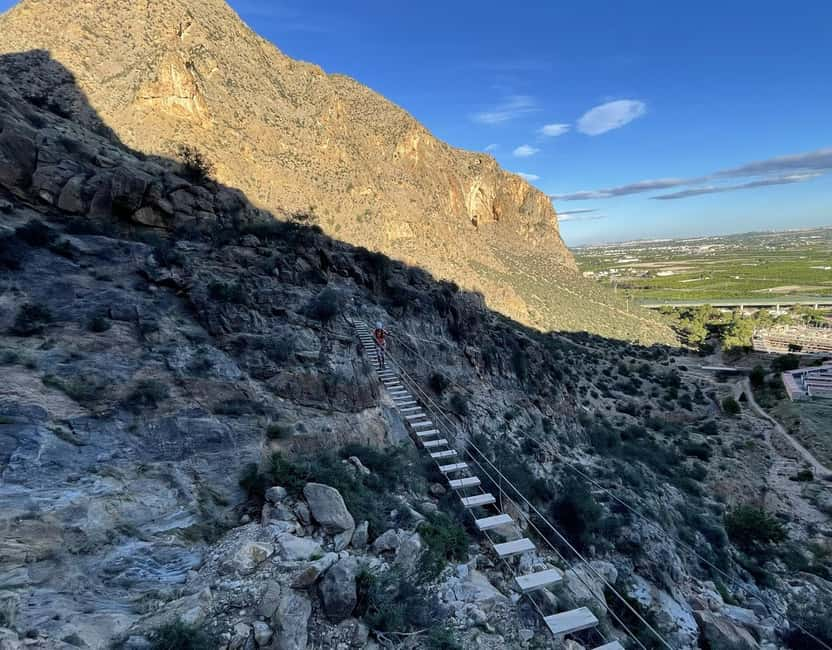
The Callosa de Segura via ferrata gives you a real taste of vertical adventure without sending you into a remote mountain wilderness. You climb above the Vega Baja, cross exposed bridges, work your way up a rocky wall, and finish with an abseil. The views toward the Mediterranean are a major part of the reward.
I like the choice of difficulty, from K2 to K5, and I like the small groups of no more than 10 people. The certified guides, proper safety gear, photos, and videos add solid value at $59. The main caution is simple: this is physical, exposed, and better suited to someone ready for a challenge than to a first-time sightseer.
Key points to know before you book
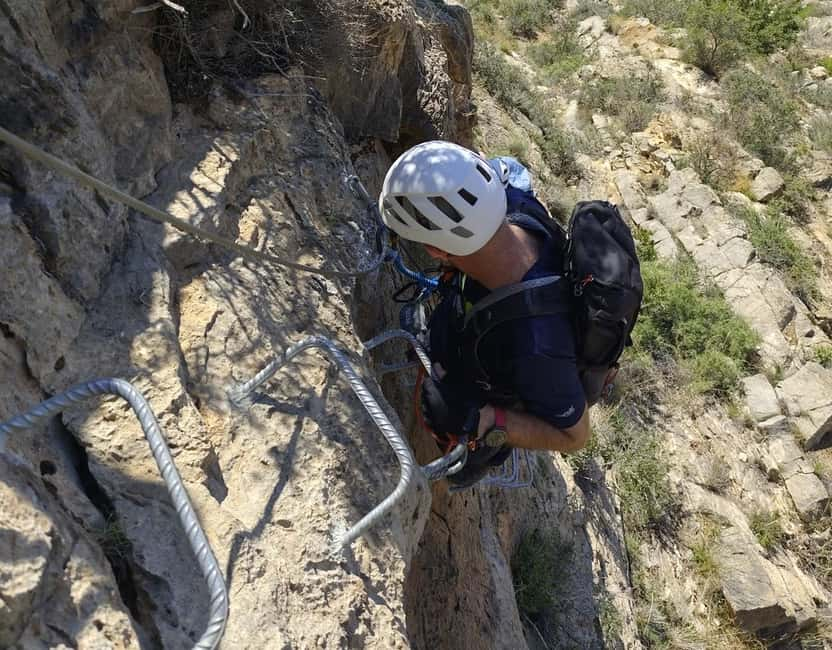
- K3 is the main sweet spot: You get bridges, height, and technical climbing without committing to the toughest K5 section.
- Three sections give you options: The route includes beginner, intermediate, and advanced areas, with sections measuring about 150 to 300 meters.
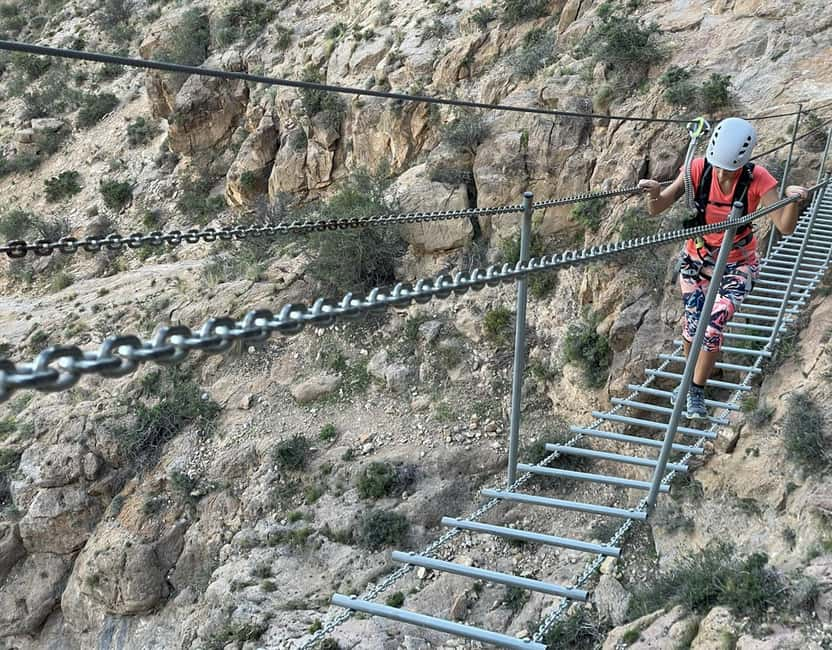
- The bridges are a highlight: Tibetan and Nepalese bridges add exposure and make the climb feel like more than a walk with cables.
- Tomas and the MasAventura team guide the climb: You receive instruction, encouragement, and technical support in a group limited to 10 people.
- The $59 price covers more than equipment: Your fee includes a certified guide, helmet, harness, energy absorber, insurance, and photo and video coverage.
- Plan for cooler months: Fall through spring is the sensible season. The hot summer months can make a strenuous climb much less pleasant.
A vertical route above Callosa de Segura
Callosa de Segura sits in Alicante province, in the Valencian Community. The Sierra de Callosa rises close to the town, so you do not spend half the day getting to a distant mountain trail. After meeting the guide, you have an approach walk of roughly 10 to 15 minutes before reaching the via ferrata.
That short approach matters. You save your energy for the climb, yet you still get a quick change from town to pine-scented mountain terrain. The setting feels open and exposed, with views across the Vega Baja and toward the Mediterranean Sea.
A via ferrata uses fixed cables, iron steps, anchors, and bridges to help you move across rock. You clip your energy absorber to the safety cable as you climb. It is not the same as ordinary hiking, and it is not quite the same as technical rock climbing. You still need to pull, step, balance, and make decisions, but the fixed protection gives the guide a controlled way to manage the route.
The Callosa route has a reputation for being one of the more demanding options in the area. That does not mean every section is extreme. It means the route offers enough height, exposure, and technical movement to feel like a serious outing.
More Via Ferrata Routes in Spain
- Sant Feliu de Guixols: Climb Via Ferrata Cala del Molí
★ 5.0 · 253 reviews - Gran Canaria: Guided Via Ferrata Excursion
★ 4.9 · 198 reviews - Via Ferrata in Gran Canaria. Vertical adventure park. Small groups
★ 5.0 · 183 reviews
What your 3.5 hours look like
The full activity lasts about three and a half hours, though the climbing time can vary with your chosen level and the pace of the group. The published technical notes describe around three hours for the activity itself, plus the short approach and the usual time needed for preparation, instruction, and return.
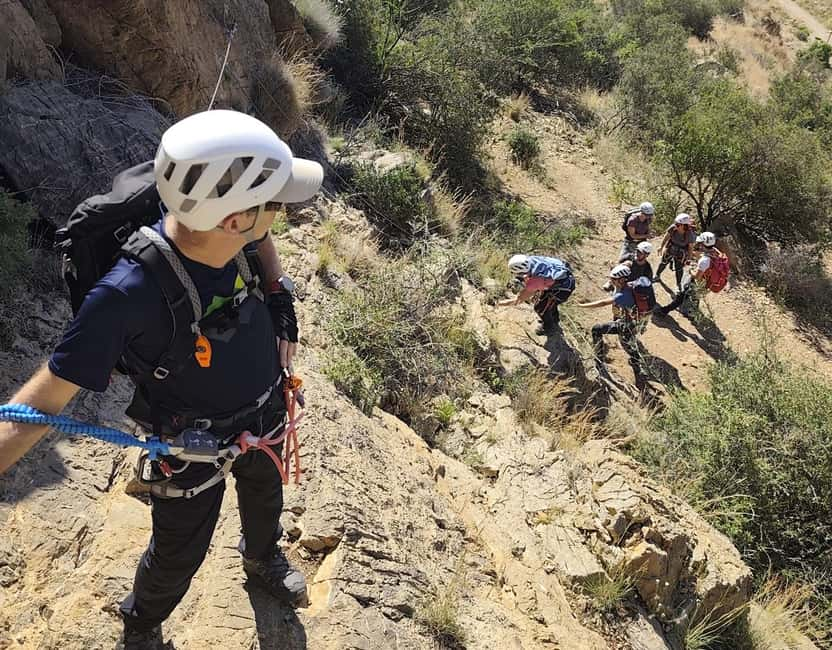
You begin by meeting the guide, who wears a green MasAventura shirt. The guide checks the group and fits the equipment: helmet, harness, energy absorber, anchor ropes, and carabiners. You should expect an explanation of how to clip and move safely before the route starts.
That briefing is not filler. On a via ferrata, the basic actions need to become automatic. You will move the carabiners from one cable section to the next, keep your balance on uneven rock, and listen when the guide explains where to place your feet or how to approach an exposed crossing.
The approach takes 10 to 15 minutes. Then the route begins with sections matched to the group’s ability. The climb can include beginner and intermediate terrain before reaching the more difficult K5 option. The main experience is described as K3, making it a useful choice for someone who has tried an easier via ferrata and wants more height and technique.
At some point, you will reach bridges and more vertical ground. The route sections range from 150 to 300 meters, so this is not a tiny climbing wall with a quick finish. The length gives the outing a sense of progression: you learn the movement, settle into the exposure, and then face harder obstacles with the guide’s help.
The final part includes abseiling. You descend under rope control, rather than simply walking down the approach route. For many people, this is an ideal finish because it changes the rhythm of the experience. You climb upward for much of the outing, then face the controlled challenge of going down through open space.
K2, K3, or K5: choosing the right challenge
The route is described with difficulty levels from K2 to K5. The K scale is used for via ferratas, with higher numbers generally indicating more demanding terrain, greater exposure, and more technical movement.
K2 is the beginner end of this route. It may suit someone who is new to via ferratas but still comfortable with heights, cables, and a physically active outing. Newcomers should be honest about their fitness and comfort with exposure rather than choosing only by the number.
K3 is the most useful target for many participants. It gives you a serious mountain experience, with vertical climbing and bridges, but it is not presented as the advanced end of the route. If you have already completed a beginner via ferrata, K3 is likely the natural next step.
K5 is for people who already have solid experience and want a harder test. It is not simply a longer version of K3. The physical and mental demands rise, and the guide decides how best to manage the group and conditions.
Your guide can adapt the route to the group’s level. One useful detail from a previous outing is that the group completed the level 2 and level 3 course in under two hours, then had enough time to try part of a level 5 section. That should not be read as a promise of the same schedule, but it shows how the route can offer extra challenge when the group moves efficiently and the guide considers it suitable.
Do not choose K5 just because it sounds more exciting. The best experience is one that leaves you pleased and tired, not overwhelmed. A guide can help you find the right balance.
Bridges, rock, and the feeling of height
The bridges are among the most memorable parts of the route. Tibetan and Nepalese bridges require balance and focus. They also create the kind of height exposure that a standard trail rarely provides.
A Tibetan bridge usually involves crossing on a narrow lower cable with hand cables on either side. A Nepalese bridge can feel more open and flexible. Exact bridge design can vary along the route, but you should expect movement underfoot and wide views around you.
This is where the Sierra de Callosa setting earns its place. You are close to the village, yet the route puts you on a natural rock wall above the surrounding plain. The Vega Baja spreads below, and on clear days the Mediterranean forms part of the horizon.
The views are not a side detail. They give you a reason to pause after a difficult move and make the physical work feel connected to the place. You are not climbing indoors or following an artificial obstacle course. You are moving through a mountain setting with pine trees, open rock, and a broad view toward the coast.
The height can also be the main drawback. If you are uncomfortable with exposed ledges or bridges, the scenery may not compensate for the nerves. The activity is not suitable for people with altitude sickness, and it demands a sensible attitude toward height even though you are protected by the via ferrata system.
Same trailhead, a different route:
- La Palma: Tajogaite Volcano Guided Trek
★ 4.8 · 1,810 reviews - From Barcelona: Montserrat Monastery & Scenic Mountain Hike
★ 4.9 · 978 reviews - Lanzarote: Timanfaya Natural Park Trekking Tour
★ 4.8 · 766 reviews - Volcano Trekking Tour (Timanfaya eruptions)
★ 5.0 · 339 reviews
What the guide adds to the experience
MasAventura provides a TD1 or TD2 certified guide in climbing or mountain activities. Your guide handles more than navigation. You receive help with fitting the equipment, using the safety system, reading the route, and managing the exposed sections.
Tomas, also referred to as Tomy, has guided this activity in a patient and encouraging way. His role is especially useful for mixed groups, where one person may move confidently while another needs more time with a bridge or a vertical step.
The guide also controls the pace. That affects both safety and enjoyment. Move too fast, and you burn energy early. Move too slowly, and the group can lose momentum. A guide who gives clear instructions and keeps the mood light can make a large difference during a demanding climb.
The group limit is 10 people. That is small enough for the guide to keep an eye on individual progress, although the exact feel will depend on how many people book for your date. A small group also makes it easier to ask questions and receive help without holding up a large crowd.
Guiding is available in Spanish, English, and French. Confirm your preferred language when booking, especially if clear technical instruction is important to you.
Gear, clothing, and physical demands
The activity includes a helmet, harness, energy absorber, anchor ropes, and carabiners. That saves you from hiring the core safety equipment separately and means the guide can make sure the system is suitable for the route.
You need to bring mountain shoes or sneakers with a good sole. Footwear matters more here than fashion. Smooth soles make rock steps, metal footholds, and the approach less comfortable.
Wear flexible sports clothing that lets you lift your legs and move your shoulders freely. Avoid clothing that restricts movement or catches easily on equipment. Bring at least one liter of water and some energy snacks. Food and drinks are not included.
Sunscreen is essential. The route is exposed, and the Valencian sun can be strong even outside the hottest part of summer. Via ferrata gloves are optional, but they may help if you dislike gripping cables or metal holds for long periods.
You should be ready for a workout. The route combines walking, climbing, balance, and concentration. The mental side is real too. A bridge may only take a few minutes, but those minutes require you to control your breathing and keep moving.
The activity is not suitable for children under 6. That age rule does not tell you everything about personal suitability. Older children and adults still need the confidence, fitness, and comfort with height required for the selected section.
Is $59 a fair price?
At $59 per person, the cost is reasonable for a guided half-day mountain activity. The value comes from the package rather than from the climb alone.
You receive a certified guide, technical equipment, civil liability insurance, accident insurance, and a photo report. The guide’s support is the key item. If you already own all the gear and know the route, the price may seem less attractive. For most visitors, though, paying for instruction and route management is more practical than trying to arrange the equipment independently.
The photos and videos are another useful extra. You can concentrate on the climb instead of trying to manage your phone while clipped to a cable. They also give you a record of the bridges, the rock sections, and the abseil.
The price does not include food or drinks, so budget for your own water and snacks. You also need to reach the meeting point yourself. The available details identify the Sierra de Callosa de Segura but do not state a transfer from Alicante or another city, so do not assume transport is part of the package.
When to go and how to prepare
Fall through spring are the recommended seasons. Cooler weather makes the physical work easier and reduces the risk of spending hours in direct summer heat.
The hottest summer months are best avoided. A route that feels manageable in mild weather can become draining when you are climbing in strong sun. Check the forecast before you go, and bring water even if the day looks mild.
Plan to arrive ready to move. Wear your sports clothes and proper shoes rather than changing at the meeting point. Keep your belongings simple, since the climb requires concentration and the equipment already adds weight and bulk.
The meeting point is marked by a guide in a green MasAventura shirt. If you have difficulty locating the group, look for that clear company identifier rather than expecting a large office or visitor center.
Cancellation is flexible up to 24 hours before the activity for a full refund. You can also reserve now and pay later, which helps if your Alicante plans are still shifting. Starting times depend on availability, so check the date carefully.
Who should book the Callosa via ferrata?
I would recommend this experience to someone who wants more than a scenic walk. You should enjoy physical challenges, be willing to use safety equipment, and feel at least reasonably comfortable with height.
It is especially suitable if you have already tried a beginner via ferrata and want to progress to K3. It can also suit a fit newcomer, provided you understand that this is not a gentle introduction with low exposure.
The activity works well for mountain lovers, active couples, small groups of friends, and anyone looking for a memorable half-day near Alicante. The choice between K2, K3, and K5 gives the guide room to match the route to the group.
I would be cautious about booking if you dislike heights, have altitude sickness, or want a relaxed outdoor outing with little exertion. The views are rewarding, but you earn them through climbing, bridges, and an abseil.
FAQ
How long does the Callosa via ferrata activity last?
The activity lasts about 3.5 hours. The technical information gives around three hours for the activity, with a 10 to 15 minute approach to the route.
What difficulty level is the route?
The main experience is described as K3, with sections ranging from K2 beginner level to K5 advanced level. The guide can help select a suitable section for the group.
Does the activity include abseiling?
Yes. Abseiling is included as part of the Callosa via ferrata experience.
What equipment is provided?
The activity includes a helmet, harness, energy absorber, anchor ropes, and carabiners. The equipment is approved technical gear.
What should I bring?
Bring sunscreen, at least one liter of water, comfortable sports clothing, mountain shoes or sneakers with a good sole, and energy snacks. Via ferrata gloves are optional.
Is food included?
No. Food and drinks are not included, so bring your own water and snacks.
What languages does the guide speak?
Guiding is available in Spanish, English, and French.
How large is the group?
The activity is offered in a small group limited to 10 participants.
Should you book it?
Book this if you want a serious half-day adventure with real height, bridges, mountain views, and professional support. At $59, the inclusion of equipment, insurance, a certified guide, and photos makes the price sensible.
Choose the K3 route if you have some prior experience or want a demanding but manageable challenge. Ask about K2 if you are new, and consider K5 only if you already have strong via ferrata skills. With Tomas or another MasAventura guide managing the pace and safety system, Callosa de Segura offers a memorable way to get above Alicante’s coastal plain without giving up the structure and reassurance of a guided outing.
Just added around Spain
- Via Ferrata John Hogbin with Photos★ 5.0 · 4 reviews
- Half-Day Adventure and Climbing Via Ferrata in Gran Canaria★ 5.0 · 25 reviews
- The Roque Nublo Base Camp Experience: Hiking, Picnic and Climbing★ 5.0 · 11 reviews
- Private Climbing Experience Via ferrata Senda do Santo★ 5.0 · 8 reviews
- Via Ferrata Cala del Molí★ 4.0 · 4 reviews
- Via ferrata Cala del Molí in Sant Feliu de Guíxols★ 5.0 · 2 reviews
- Via ferrata de Sant feliu de guíxols – Via ferrata cala del molí★ 5.0 · 47 reviews
- Via Ferrata Adventure in Madrid with Transport★ 5.0 · 4 reviews
Via Ferrata Routes, compared.
Banff: Mount Norquay 2.5 or 4-Hour Guided Via Ferrata Climb
Read our review →
Sant Feliu de Guixols: Climb Via Ferrata Cala del Molí
Read our review →
Small-Group Guided Via Ferrata Climbing with Banff’s Best Views
Read our review →
Via Ferrata in Gran Canaria. Vertical adventure park. Small groups
Read our review →Browse the lists this trek appears in