

Review · JAPAN
Private Local Hiking to enjoy the nature and culture of Mt.Fuji
Mt. Fuji’s quieter side comes into view on this private outing, where a sacred lava cave and ancient shrine matter just as much as the mountain itself. I like the mix of nature and local culture, and I like having guide Yuki, who has climbed Fuji more than 40 times and knows the area as a licensed local hunter. The main drawback is weather: clouds can hide the mountain, and the pickup service only works if you are staying in Kawaguchiko or Fujiyoshida, or can reach those areas yourself.
I also like the easy pace. The Sankodai trail is moderate and aimed at outdoor beginners, with free shoes, poles, rainwear, and gloves available. Lunch, however, costs extra, and the optional matcha stop adds another 1,000 yen per person.
Key points to know before booking
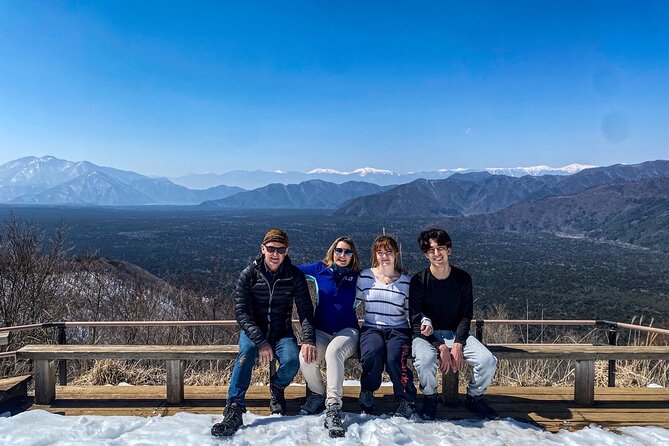
- A private Mt. Fuji day with Yuki: Your group receives private transport and a personal guide rather than joining a large bus tour.
- A 1.5 to 2 hour forest hike: The route takes about one hour uphill and 30 minutes down, with a break at the viewpoint. Some outings take closer to two hours in total.
- Culture beyond the standard viewpoints: Fuji Omuro Sengen Shrine and Ryugudoketsu offer a look at Fuji worship and local volcanic history.
- Free outdoor equipment: Trekking shoes, poles, rain jackets and pants, and gloves are available to borrow.
- Local food and Japanese garden: Yoshida Udon costs about 1,000 yen, while matcha with a sweet at Kaneyamaen costs another 1,000 yen if you choose it.
- Pickup has a narrow range: Hotel pickup is offered only around Kawaguchiko and Fujiyoshida, not from every base in the wider Fuji area.
Why this private Fuji outing feels different
Many Mt. Fuji excursions focus on a single photo stop. This one gives you a fuller sense of the mountain’s setting. You move from shrine grounds to quiet lakes, then into old forest and volcanic rock before walking to a high viewpoint.
That variety is the strongest reason to book. I like experiences that explain why a place matters, not just where to point your camera. Here, Fuji is presented as a mountain, a force of nature, and a sacred presence.
The guide makes a real difference. Yuki is a certified mountain guide, has climbed Mt. Fuji more than 40 times, and also holds a local hunting license. That combination gives him a useful connection to both the mountain trail and the surrounding forest.
You should still set your expectations correctly. This is not a summit climb. You do not climb to the top of Mt. Fuji. Instead, you walk through the foothills and reach Sankodai, where Fuji, Lake Saiko, and Aokigahara Forest can appear together when conditions are clear.
A few more treks around Japan worth a look
- Okinawa Jungle Trails & Waterfalls – Private Yanbaru Tour
★ 5.0 · 43 reviews - Mount Batur Sunrise Trekking Private All Inclusive
★ 5.0 · 906 reviews - Mount Batur Sunrise Trekking Private Tour with Breakfast and Hotel Transfer
★ 5.0 · 885 reviews
Starting near Kawaguchiko and Fujiyoshida at 9:00
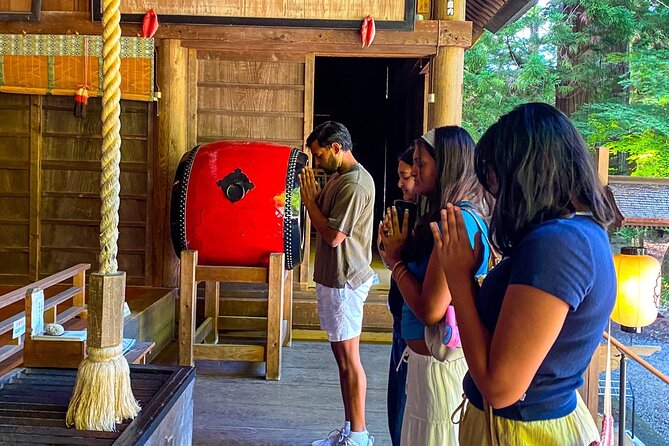
The tour begins at 9:00 a.m. Pickup is available if you are already staying in the Kawaguchiko or Fujiyoshida area. If you are based elsewhere, you need to make your own way to one of those areas.
This limitation matters. The private vehicle is a useful part of the day, but it is not a region-wide transfer service. Check your hotel location before paying, and allow time to reach the meeting area if you are not staying nearby.
Once you meet Yuki, the private format gives you some flexibility. The activity lasts about five to six hours, and the pace can suit your group better than a fixed coach schedule. One group was even dropped at the starting point of another afternoon tour, a handy bonus if you have a tightly planned day.
The vehicle also cuts out the need to piece together several rural bus connections. That has real value around the Fuji Five Lakes, where scenic stops are spread out. You can spend your energy on the forest and views instead of watching the clock between transport changes.
Lake Kawaguchiko and the first Fuji view
Lake Kawaguchiko is the best-known of the Fuji Five Lakes, and the meeting area gives you a chance to see why. The combination of lake and mountain draws large numbers of people, especially when the summit is clear.
This first stop helps you judge the day’s weather. Mt. Fuji can appear sharply one moment and vanish behind cloud the next. The tour requires good weather, and the Sankodai view is also dependent on visibility, so a clear sight here is a promising start.
Do not be discouraged if Fuji is partly covered. The outing has plenty of interest that does not depend on a perfect postcard view. The shrine, cave, forest, and lake stops still provide a worthwhile day when the summit is shy.
Fuji Omuro Sengen Shrine and the mountain’s spiritual side
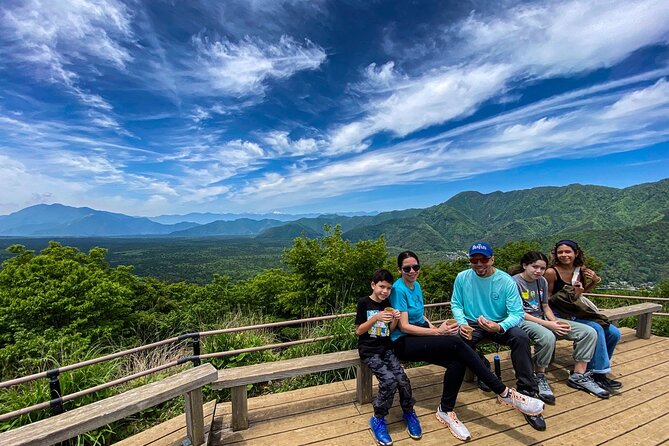
Fuji Omuro Sengen Shrine connects the outing to the old practice of Fuji worship. The shrine was built in response to a major eruption, with the hope of calming the mountain’s destructive power.
You spend about 15 minutes here, and admission is free. That is not long enough for a full shrine study, but it gives Yuki time to explain why people built a place of worship at the foot of an active volcano.
I like this early cultural stop because it changes how you read the rest of the day. The forest and lava are not only scenic features. They are part of a place where people have long respected, feared, and honored Mt. Fuji.
This is also a good fit if you want more than a nature walk. The tour does not treat local culture as decoration added between photo stops. It places the mountain’s spiritual role near the beginning, then returns to it at the sacred cave.
Same trailhead, a different route:
- Sawanobori River Trekking Tour
★ 5.0 · 30 reviews - Frozen fall trekking
★ 5.0 · 21 reviews - 3hours Primeval Forest and Stunning Views of Cliff Trekking Tour
★ 5.0 · 20 reviews - Mt. Inunaki Trekking and Goma Prayer Experience in Osaka
★ 5.0 · 8 reviews
Saiko Lake, a quieter companion to Kawaguchiko
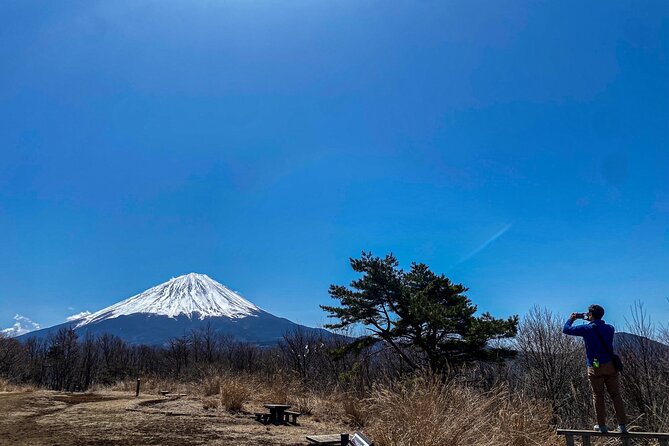
Saiko Lake is much quieter than Kawaguchiko and offers another angle on Fuji. You spend about 10 minutes here, looking across the water toward the mountain and the surrounding forest.
The stop is brief, but it helps show the character of the Fuji Five Lakes. Kawaguchiko is the famous introduction, while Saiko feels more peaceful and less dominated by the main tourist circuit.
If the air is clear, the view of Saiko and Mt. Fuji can be striking. If not, the lake remains a pleasant pause before the more active part of the day.
Bring your camera, but do not build the whole outing around a guaranteed mountain photograph. Weather around Fuji changes quickly. The better approach is to value the lake, forest, and volcanic sites as separate parts of the experience.
Aokigahara Forest and the story of the lava
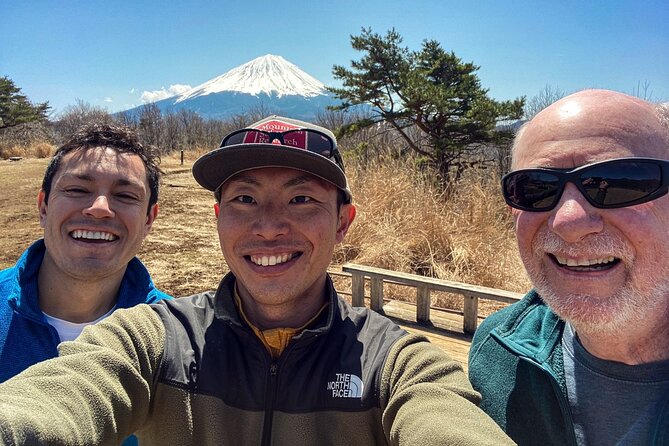
Aokigahara is known locally as Jukai, or the sea of trees. The name comes from the way the forest seems to spread like an ocean when viewed from above.
The forest formed after a major Mt. Fuji eruption about 1,200 years ago. Lava covered the ground, and the forest that followed now gives the area its distinctive character. You spend about 15 minutes learning about this setting before reaching the cave area.
This is a short visit rather than a long forest walk. That distinction is useful. You get an introduction to the forest and its volcanic origin, but the main hike comes later at Sankodai.
A guide is especially valuable here because the forest can seem visually simple at first glance. With an explanation of the eruption and the way the forest developed, you have more to notice than trees and dark ground. The setting becomes a record of Mt. Fuji’s past activity.
Ryugudoketsu and the sacred lava cave
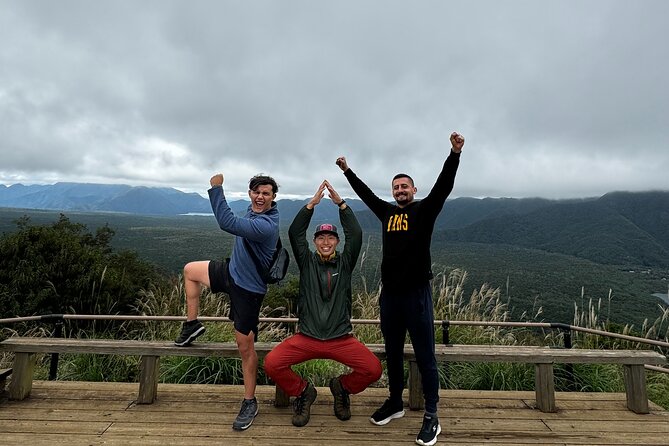
Ryugudoketsu is one of the more unusual stops. The cave was used by people who came to pray to the goddess of Mt. Fuji before climbing the mountain. They believed the cave interior represented the inside of the goddess.
You spend about 30 minutes at the cave entrance and surrounding area. This gives you time to understand the spiritual idea behind the place rather than rushing in for a quick photograph.
The cave is also a direct reminder that this region was shaped by volcanic activity. The same eruptions that produced the forest and lava formations also created spaces that later became sacred.
This stop may not suit you if you expect a large developed attraction with extensive visitor facilities. Its appeal comes from the combination of natural rock and old belief. You should approach it as a quiet cultural site, not a major showpiece.
The Sankodai hike, about one hour uphill
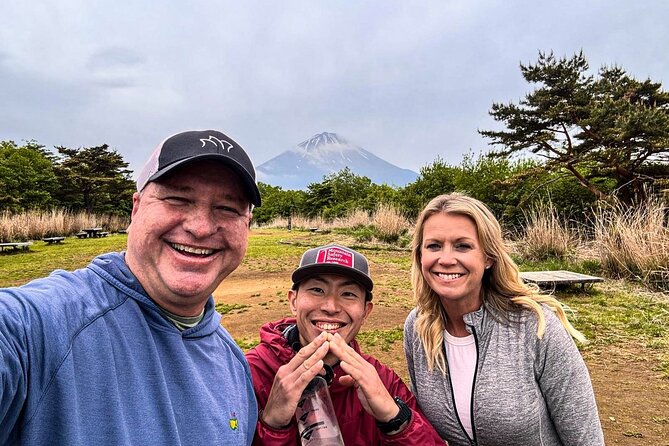
The main walk leads to Sankodai, a viewpoint reached by a moderate trail. The uphill portion takes about one hour, followed by roughly 30 minutes down. With a break at the top, some groups spend about two hours on the full hike.
The route is described as suitable for outdoor beginners. That does not mean you should treat it as a flat stroll. You will be walking uphill for a sustained period, so reasonable fitness and proper shoes will make the outing more comfortable.
The good news is that equipment is supplied at no extra charge. You can borrow trekking shoes, poles, rain jackets and pants, and gloves. This is useful if you are traveling light or did not plan to hike during your Japan trip.
At the top, the reward is a three-part view: Mt. Fuji, Aokigahara Forest, and Lake Saiko. On a clear day, that combination gives you a much better sense of how the mountain fits into its surroundings than a single roadside viewpoint.
Yuki’s guiding style also adds a personal touch. He has brought tea, coffee, chocolate, and snacks to the summit for past groups. Those small gestures matter after the climb, especially during the break at the top.
Cloud cover can change the result. You may see only part of Fuji, or no mountain at all. The trail still offers a walk through the wooded foothills, but you should book this day for the overall setting rather than a guaranteed panoramic view.
Yoshida Udon at a local restaurant
After the hike, Yuki takes you to a local restaurant for a regional meal. The featured dish is Yoshida Udon, a specialty of the area, and lunch costs about 1,000 yen per person.
That extra charge is modest, and I think it adds value because it keeps the meal connected to the place you are visiting. You are not simply stopping at a familiar chain or eating from a standard tour buffet.
The exact restaurant is selected by the guide, and the experience is intended to be the sort of local stop you might not find on your own. This is one of the moments where a private guide earns his fee.
Keep in mind that lunch is not included in the tour price. Carry enough yen for the meal, and remember that the schedule may vary slightly depending on the hiking pace and the time spent at the earlier stops.
Kaneyamaen’s garden and optional matcha
The final stop is Fujisan Onsen Hotel Kaneyamaen in Fujiyoshida. It is one of the city’s older hotels and opens its large Japanese garden to the public.
You have about 30 minutes here. You can simply relax in the garden, or choose matcha tea with a Japanese sweet for an additional 1,000 yen per person.
This ending works well after the hike. Instead of finishing with another crowded viewpoint, you get a quiet garden and a chance to slow down. The matcha is optional, so you can decide based on your appetite, budget, and interest in a traditional tea break.
The garden stop also makes the day feel balanced. The morning is outdoors and active, while the final half hour is calm and reflective. You can enjoy it even if the mountain stayed partly hidden.
What the $131.38 price gets you
At $131.38 per person, this is not the cheapest way to see Mt. Fuji. The price makes more sense when you count the private transportation, guide fee, and equipment rental.
A private vehicle is particularly useful for this route because the sites are spread between the two lakes, the forest, the cave, the trailhead, and Fujiyoshida. You are paying for a connected day rather than a single attraction.
The free rental gear adds practical value. Trekking shoes, poles, rainwear, and gloves can cost much more than expected when bought during a trip, and carrying all that equipment through Japan is inconvenient.
You still need to budget for lunch at around 1,000 yen and matcha at another 1,000 yen if you choose it. Insurance is not included. Group discounts are available, so the cost may work better for families or friends sharing a private outing than for one person booking alone.
Who should book this Mt. Fuji tour?
I would choose this experience if you want a private, mixed-interest day rather than a hard hike or a quick photo tour. It suits couples, families, and small groups who want nature, local food, history, and a gentle cultural finish.
It is also a strong choice for first-time hikers. The trail is moderate, the guide supplies equipment, and you receive help with the route. You should still be comfortable walking uphill for about an hour.
This may not be the best fit if your only goal is a guaranteed view of Mt. Fuji. Weather can spoil the summit view, and the tour requires suitable conditions. It is also less convenient if you are staying far outside Kawaguchiko or Fujiyoshida and cannot reach the pickup area.
The private setup is a major advantage for groups with mixed energy levels. Yuki can explain the shrine and forest, set a steady pace, and allow time for a break at Sankodai. Past outings have also run longer than the allotted time when the group needed it, though you should not assume extra time is guaranteed.
Practical details for a smoother day
Wear comfortable clothing suitable for a moderate hike, even if you plan to use the supplied shoes. Bring water and a small personal bag, though the provided rain gear is helpful in changing conditions.
Start with an open mind about the weather. A cloudy day can still be good for trekking, and one group found the overcast conditions comfortable for walking. The scenery may be less dramatic, but the shrine, cave, forest, and local meal remain part of the day.
The cancellation policy allows a full refund if you cancel at least 24 hours before the start time. Changes or cancellations inside that window are not accepted for a refund. If bad weather forces the provider to cancel, you can choose another date or receive a full refund.
Should you book it?
Book this tour if you want Mt. Fuji explained through its forests, lakes, volcanic rock, and religious traditions, not just photographed from a roadside. Yuki’s mountain experience, private transport, free hiking gear, local udon, and optional matcha make the $131.38 cost reasonable for a small group.
Skip it if you need a guaranteed clear view, want to climb Fuji itself, or are staying outside the limited pickup area. For everyone else, this is a well-rounded way to spend a day around the mountain, especially if you value a personal guide and a route that reaches places a standard sightseeing bus may miss.
FAQ
Where does the tour start?
The start time is 9:00 a.m. Pickup is available only for people staying in the Kawaguchiko or Fujiyoshida area, or for those who can reach those areas on their own.
How long does the experience last?
The full experience takes approximately five to six hours. The Sankodai hike itself takes about one hour uphill and 30 minutes down, although the complete walk can take closer to two hours with a break.
Is the hike suitable for beginners?
Yes. The trail is moderate and described as suitable for outdoor beginners. Free trekking shoes, poles, rain jackets and pants, and gloves are available.
Is lunch included in the price?
No. Lunch is not included and costs about 1,000 yen per person. The meal features local Yoshida Udon.
Is matcha included at Kaneyamaen?
No. You can relax in the garden without ordering anything, or choose matcha with a Japanese sweet for about 1,000 yen per person.
What happens if bad weather cancels the tour?
If the experience is canceled because of poor weather, you can choose a different date or receive a full refund. For your own cancellation, you must cancel at least 24 hours before the start time for a full refund.
Just added around Japan
- Relax and refresh in Karuizawa Forest! Shinanoji down trekking around two people★ 4.0 · 2 reviews
- Kanazawa Day Tour: Shomyo Falls & Tateyama Mountain Walks★ 5.0 · 4 reviews
- Mt. Inunaki Trekking and Goma Prayer Experience in Osaka★ 5.0 · 8 reviews
- Mt. Inunaki Trekking and Hot Springs in Izumisano, Osaka★ 5.0 · 3 reviews
- Matt Canyon River Trekking Nishiwaga Town, Iwate Prefecture★ 5.0 · 4 reviews
- Trekking Tour to Faith, Ancient Paths and the Falls from Hitachi★ 5.0 · 2 reviews
- Iriomote’s Adventure: Pinaisara Falls Canoe and Trekking Tour★ 5.0 · 7 reviews
- 3hours Primeval Forest and Stunning Views of Cliff Trekking Tour★ 5.0 · 20 reviews
Japan Trekking Tours, compared.
Okinawa Jungle Trails & Waterfalls – Private Yanbaru Tour
Read our review →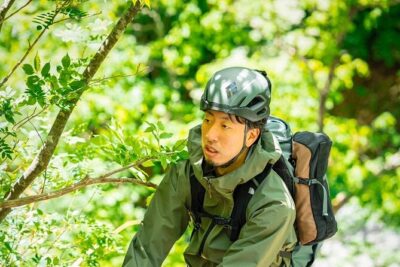
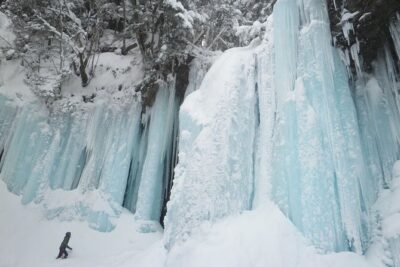
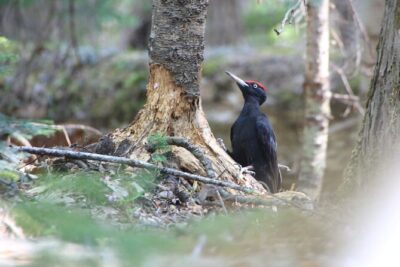
3hours Primeval Forest and Stunning Views of Cliff Trekking Tour
Read our review →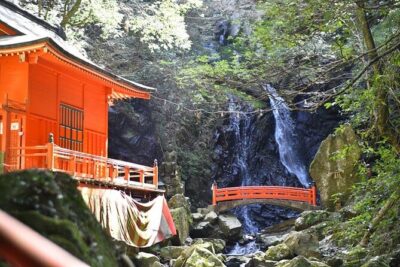
Mt. Inunaki Trekking and Goma Prayer Experience in Osaka
Read our review →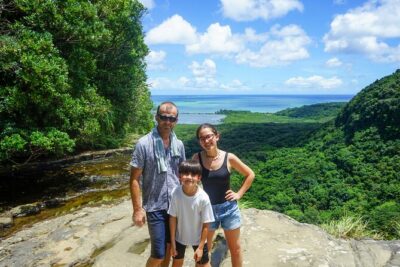
Iriomote’s Adventure: Pinaisara Falls Canoe and Trekking Tour
Read our review →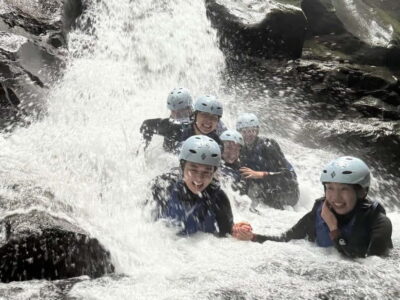
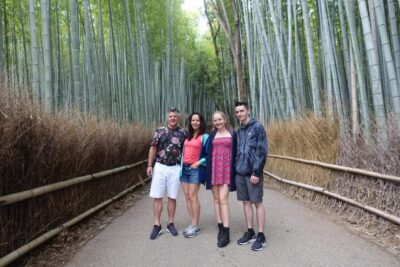
Kyoto: Arashiyama Bamboo Grove, Monkey Mountain Walking Tour
Read our review →Browse the lists this trek appears in