
Review · SPAIN
Benidorm: Via ferrata Ponoig, cerca de la Nucia
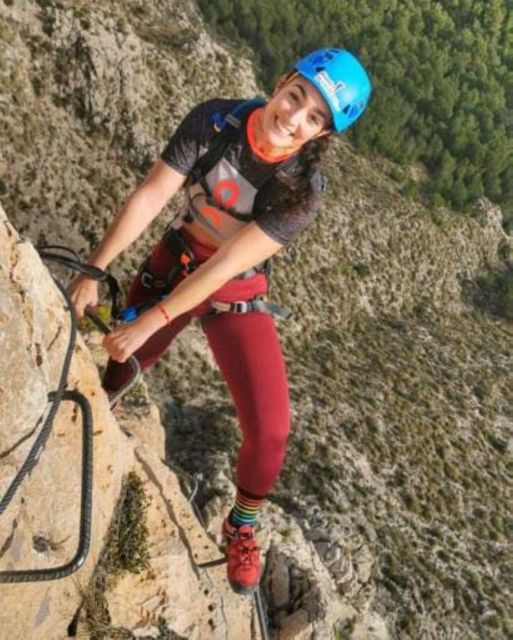
The big thrill here is that the route finishes with two abseils, not a simple walk back down. Near Polop, about 20 minutes from Benidorm, you climb 230 metres of iron clamps to the Sleeping Lion, then rappel 25 and 35 metres to return.
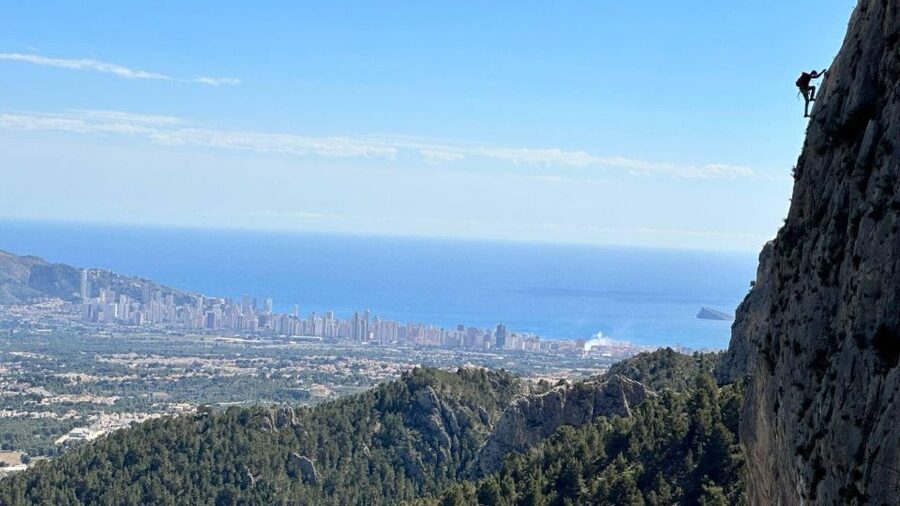
I like the open views over Benidorm, Altea, La Nucia, and Callosa, and I like the small groups, limited to eight people. The main thing to consider is the vertical nature of the route. You need a reasonable level of fitness, good shoes, and a calm head for heights.
Key points to know before booking
- Two vertical sections: Most of the 230-metre route runs straight up the rock on closely spaced iron clamps.
- K4 difficulty: The climb feels more dramatic than technically hard, but it still calls for fitness and comfort with exposure.
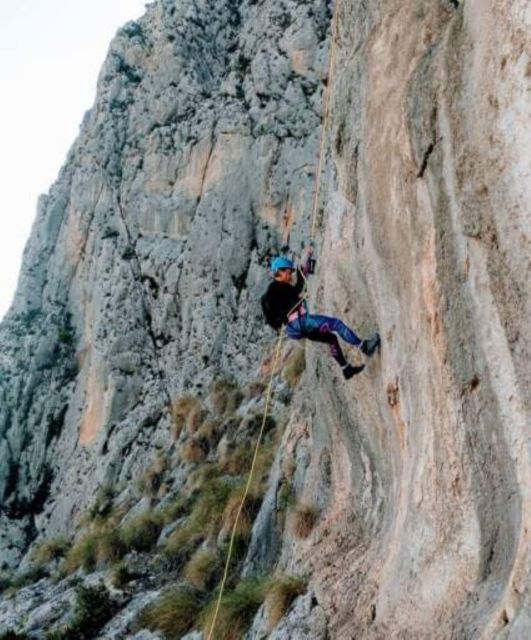
- Two abseils on the way down: You descend by rope for 25 metres and then 35 metres.
- Sleeping Lion viewpoint: The top gives broad views toward Benidorm, Altea, La Nucia, and Callosa.
- Small, multilingual groups: Up to eight people join each group, with instruction in Spanish, English, or French.
- Four hours for $65: The fee includes a mountain sports guide, safety gear, insurance, and activity photos sent by WhatsApp.
Why the Ponoig route feels different
Many via ferratas give you a marked trail for the return. Ponoig does not. After climbing the rock, you follow a mountain path to the ropes, then descend by abseil. That gives the outing a clear sense of progression: climb, reach the viewpoint, walk to the rappel station, and lower yourself back down.
The route is about 230 metres long and is rated K4. That rating matters. This is not a casual metal ladder bolted to a hillside, but neither is it described as an extreme climbing route. The clamps are close together, so you have frequent hand and footholds. The height creates much of the excitement.
You should still arrive in decent shape. One participant described the pace as fairly quick but manageable, while another specifically advised wearing good shoes and being reasonably fit. You do not need to be a rock climber, but you should be ready for several hours of movement on steep ground.
More Via Ferrata Routes in Spain
- Sant Feliu de Guixols: Climb Via Ferrata Cala del Molí
★ 5.0 · 253 reviews - Gran Canaria: Guided Via Ferrata Excursion
★ 4.9 · 198 reviews - Via Ferrata in Gran Canaria. Vertical adventure park. Small groups
★ 5.0 · 183 reviews
From the Polop car park to the first clamps
You meet at the Ponoig via ferrata car park, marked by a sign beside the road. The exact meeting point is supplied through a Google Maps link, and guides wear fluorescent orange Alicante Aventura shirts, which makes them easier to spot.
Arrive at least 15 minutes early. This is not just polite timing. You need a moment to find the car park, meet the guide, and get fitted with a helmet, climbing harness, and via ferrata safety set. The courtesy arrival window is only five minutes after the activity starts. After that, the group may leave without you.
The activity lasts about four hours, though the exact starting time depends on availability. It is worth bringing water, snacks, sunscreen, sports clothing, sturdy sports shoes, and a small daypack. Keep the pack light. You will be moving on steep rock, and anything bulky becomes a nuisance.
Before you begin, the guide should explain how the safety system works and how to move between the fixed cables and clamps. Listen closely, especially if this is your first via ferrata. The equipment is included, but the responsibility for using it carefully remains with you.
The first vertical section on iron clamps
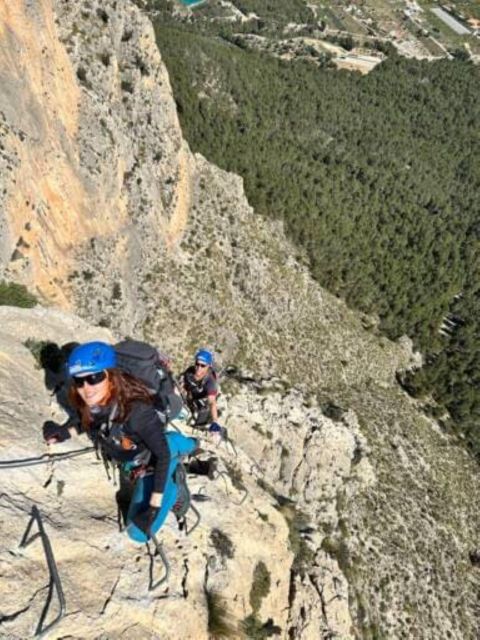
The climb starts with a strong impression of height. The route relies mainly on iron clamps rather than a long sequence of ladders or a broad walking trail. You grip one clamp after another and work upward through the first vertical section.
The close spacing helps. You have plenty of places to put your hands and feet, so the physical moves are often more straightforward than the view suggests. The challenge is keeping a steady rhythm while looking down at the rock and out toward the valley.
This is where the K4 rating becomes useful. The route is vertical and aerial, but its main demand is sustained movement and confidence. If you are fit, you can focus on technique: keep three points of contact when possible, use your legs instead of pulling only with your arms, and let the safety cable do its job.
The guides are there to keep the group moving safely. The small maximum of eight people also matters. It gives the guide a better chance to watch each person, and it prevents the climb from feeling like a crowded queue on the rock.
The Sleeping Lion and the Costa Blanca view
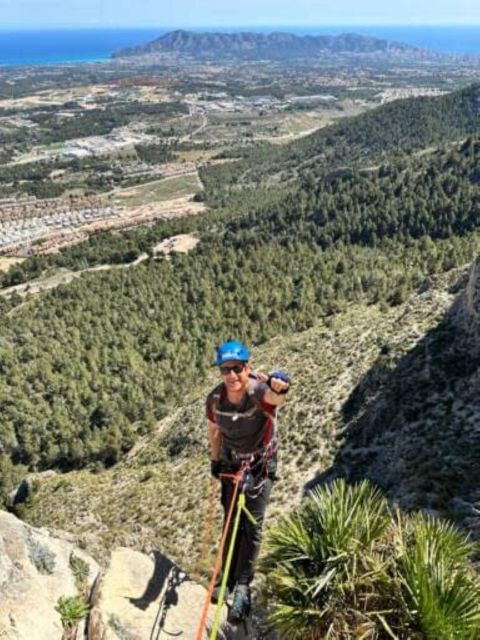
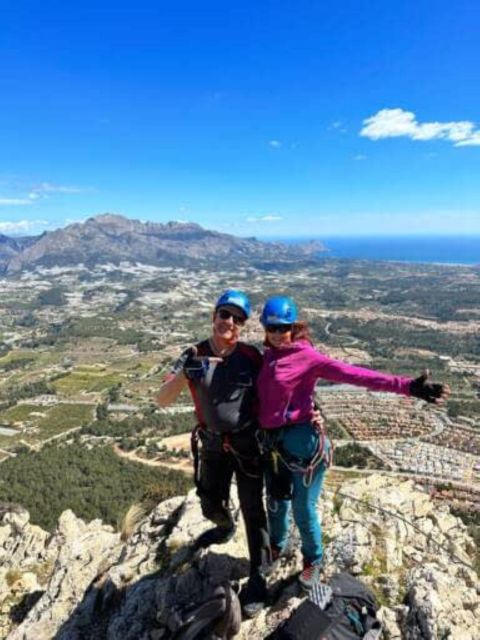
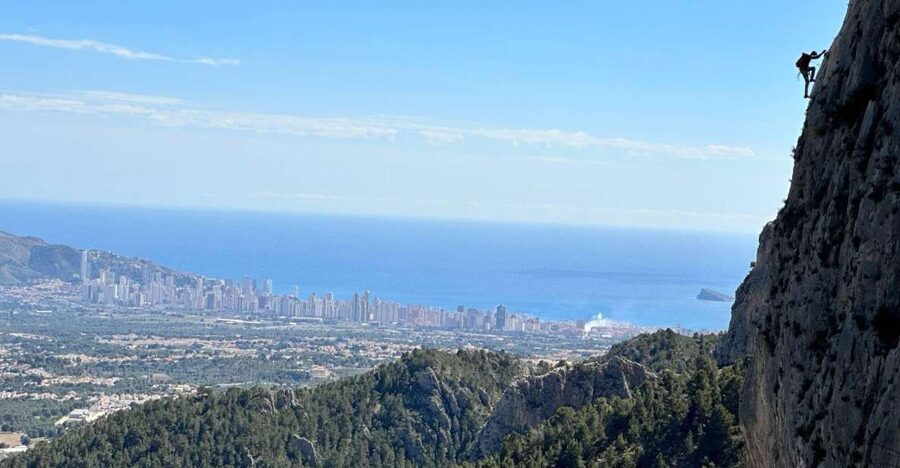
At the top, you reach the Sleeping Lion, a natural viewpoint with a wide look over the Costa Blanca. From here, you can see toward Altea, La Nucia, Callosa, and Benidorm.
This pause is more than a photo stop. After the vertical work, it gives you a chance to catch your breath and take in the geography around you. Benidorm appears in the background, while the viewpoint opens the outing beyond the immediate rock face.
Bring your phone or camera if you want pictures, but secure it well. The supplied activity photos are a useful bonus because taking your own photographs is awkward when you are wearing climbing gear and managing the safety line. The photos are sent by WhatsApp through a link once the staff have them, so make sure the phone number used for the booking can receive the message.
The viewpoint also gives you a useful pause before the return. You are not finished yet. The route down is the part that makes Ponoig unusual.
Same trailhead, a different route:
- La Palma: Tajogaite Volcano Guided Trek
★ 4.8 · 1,810 reviews - From Barcelona: Montserrat Monastery & Scenic Mountain Hike
★ 4.9 · 978 reviews - Lanzarote: Timanfaya Natural Park Trekking Tour
★ 4.8 · 766 reviews - Volcano Trekking Tour (Timanfaya eruptions)
★ 5.0 · 339 reviews
A mountain path leading to the ropes
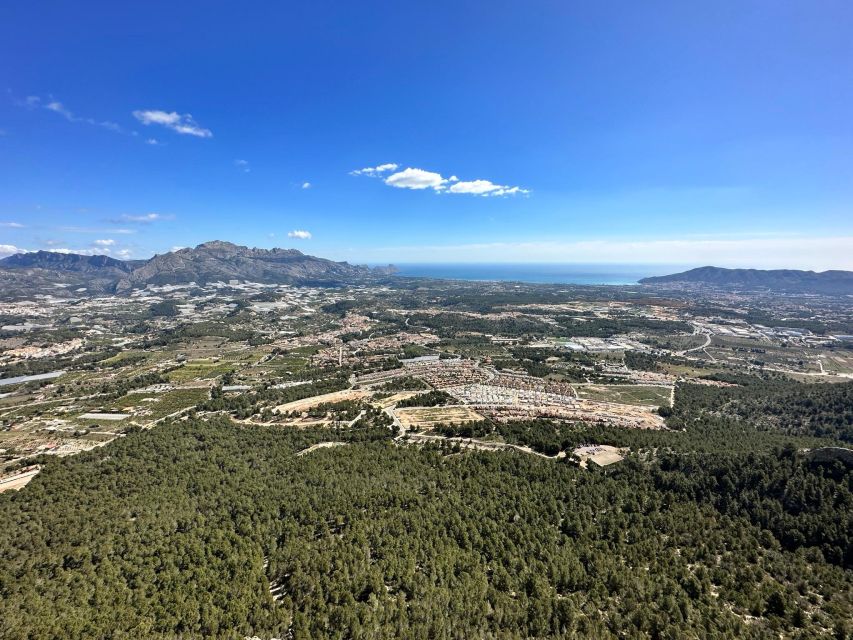
From the Sleeping Lion, you follow a path through the mountain toward the abseiling area. This section is less about climbing and more about moving carefully over uneven ground after the main ascent.
The path offers a change of pace, but you should not treat it as an ordinary stroll. You are still in mountain terrain, and sports shoes are important. Water and a snack also make sense here, especially if the sun is strong.
At the rope station, the guide prepares the group for the first descent. This is a useful moment to ask questions and watch how the system is arranged. If you are nervous, tell the guide before you reach the edge. The activity is designed for people who can handle the abseils, but clear communication helps the group move safely and at a sensible pace.
The 25-metre and 35-metre abseils
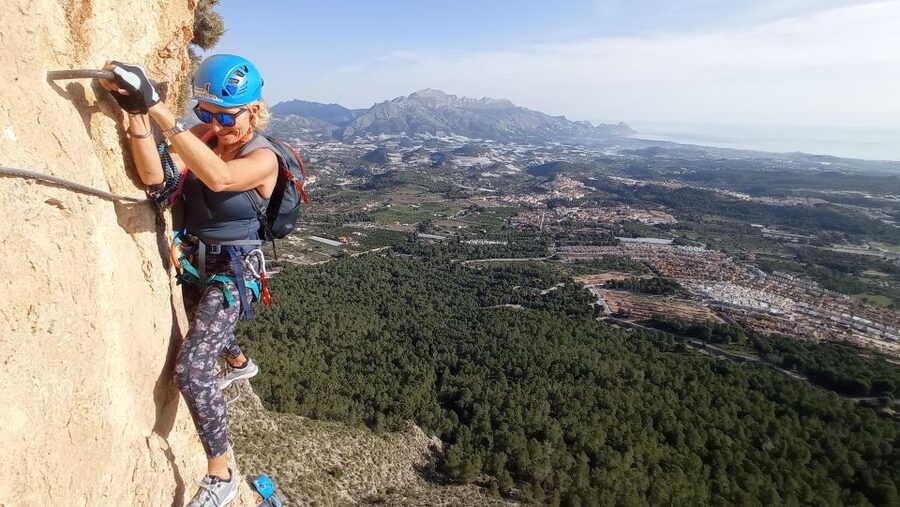
The first abseil drops 25 metres. The second drops 35 metres. Together, they provide the main finale of the experience.
Abseiling can feel very different from climbing. On the ascent, you choose each hand and foothold. On the descent, you lean back into the harness and control your movement with the rope system under the guide’s direction. The first step away from the rock may feel like the hardest part mentally.
The height is real, so this is not the right activity for someone with vertigo. Pregnant women are also advised not to take part. If you simply feel a little uncertain about heights but can follow instructions, tell the guide at the start and take the preparation seriously.
The two descents also mean you should not book this expecting a route where the guide does all the work. You are attached to the safety system, but you still need to listen, position your feet, and lower yourself with control. That active role is what gives the return its sense of achievement.
The guides and the group atmosphere
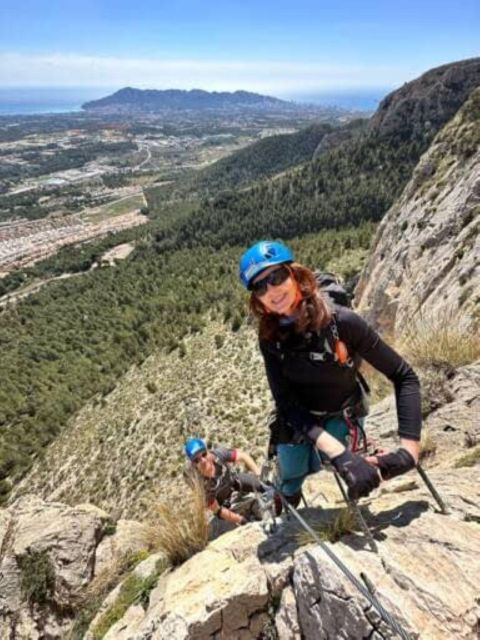
The activity is led by a medium mountain sports technician, with instruction available in Spanish, English, and French. Toni received especially warm praise for being encouraging and fun, while Vincent was described as supportive during the climb. Other guide names recorded for the activity include Donny and a guide whose name was heard as Johnny, though the latter is not certain.
Language can matter on a technical outing. One participant had a Spanish-speaking guide and relied on careful watching, gestures, and help from another English-speaking member of the group. That worked, but if you need detailed explanations in English, confirm the guide language when you book.
The group limit of eight is a strong point. It keeps the activity more personal than a large coach-style excursion and gives you a better chance to receive direct help. Solo participants should feel comfortable joining. One solo English speaker found the instructors welcoming and received explanations in English during the activity.
What $65 includes
At $65 per person, the price is reasonable for a four-hour guided mountain activity, particularly because the technical equipment is supplied. You receive a helmet, climbing harness, and via ferrata safety set, along with the guide and personal accident and civil liability insurance.
Photos are included too. That has real value here. You can concentrate on the route rather than trying to take pictures while clipped to a cable, and the images are sent by WhatsApp through a link without losing quality.
The booking information also lists entrance to the Falconera via ferrata among the inclusions. Since this outing is described as the Ponoig via ferrata, I would confirm that wording with Alicante Aventura before paying if the distinction matters to you.
The price does not cover your food, drink, shoes, sunscreen, or transport from Benidorm. You need to reach the Ponoig car park yourself. The location is about 20 minutes from Benidorm, near Polop, but the activity does not include a transfer.
Who should book this outing
I would recommend Ponoig to you if you want an active half-day outside Benidorm and like the idea of a real vertical route rather than a scenic walk. It suits people who are reasonably fit, comfortable following safety instructions, and willing to try two significant abseils.
It also works well for solo participants and small groups of friends. The multilingual guide options and eight-person limit make it easier to fit into an international holiday.
I would not choose it if you dislike heights, have vertigo, are pregnant, or want a gentle outdoor activity. The route is vertical from the beginning, and the descent is not optional. You must rappel 25 and 35 metres to get down.
Book with flexible plans in mind. Cancellation is free up to 24 hours before the activity, and you can reserve now and pay later. Still, arrive early on the day itself. Missing the five-minute courtesy window can mean missing the group without a refund or date change.
Should you book the Ponoig via ferrata?
Book it if the combination of iron-clamp climbing, big Costa Blanca views, and two abseils sounds more exciting than intimidating. The route is short enough to fit into a Benidorm holiday but substantial enough to feel like a proper mountain achievement.
The best reason to choose it is the complete shape of the outing. You climb two vertical sections, reach the Sleeping Lion, enjoy views over several Costa Blanca towns, and return by rope. For $65, with equipment, insurance, a guide, and photos included, it offers solid value.
Skip it if your main concern is height or if you want a relaxed sightseeing trip. Ponoig asks you to be active, alert, and ready to trust the rope. For the right person, that is exactly what makes the four hours memorable.
FAQ
Where is the Ponoig via ferrata?
It is near Polop, close to La Nucia and about 20 minutes from Benidorm. The meeting point is the Ponoig via ferrata car park.
How long does the activity last?
The activity lasts about four hours. Starting times depend on availability.
How difficult is the route?
The Ponoig via ferrata is rated K4. It is approximately 230 metres long and has two clearly separated vertical sections.
Do I need climbing experience?
The supplied information does not require previous climbing experience. You should be reasonably fit, able to follow safety instructions, and comfortable with vertical climbing and abseiling.
How do you get back down?
The route does not have a normal trail for the full descent. After following a mountain path to the rope station, you abseil 25 metres and then 35 metres.
What equipment is included?
The activity includes a helmet, climbing harness, and via ferrata safety set. It also includes a mountain sports technician and insurance for personal accident and civil liability.
What should I bring?
Bring water, snacks, sunscreen, sportswear, sports shoes, and a daypack.
What languages are available?
Guides may provide instruction in Spanish, English, or French. You should confirm the guide language when booking if you need detailed explanations in a specific language.
Can I cancel the booking?
You can cancel up to 24 hours in advance for a full refund. You can also reserve now and pay later, subject to the booking conditions.
Just added around Spain
- Via Ferrata John Hogbin with Photos★ 5.0 · 4 reviews
- Half-Day Adventure and Climbing Via Ferrata in Gran Canaria★ 5.0 · 25 reviews
- The Roque Nublo Base Camp Experience: Hiking, Picnic and Climbing★ 5.0 · 11 reviews
- Private Climbing Experience Via ferrata Senda do Santo★ 5.0 · 8 reviews
- Via Ferrata Cala del Molí★ 4.0 · 4 reviews
- Via ferrata Cala del Molí in Sant Feliu de Guíxols★ 5.0 · 2 reviews
- Via ferrata de Sant feliu de guíxols – Via ferrata cala del molí★ 5.0 · 47 reviews
- Via Ferrata Adventure in Madrid with Transport★ 5.0 · 4 reviews
Via Ferrata Routes, compared.
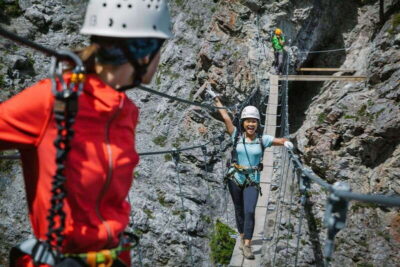
Banff: Mount Norquay 2.5 or 4-Hour Guided Via Ferrata Climb
Read our review →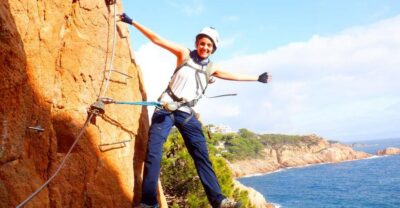
Sant Feliu de Guixols: Climb Via Ferrata Cala del Molí
Read our review →
Small-Group Guided Via Ferrata Climbing with Banff’s Best Views
Read our review →
Via Ferrata in Gran Canaria. Vertical adventure park. Small groups
Read our review →Browse the lists this trek appears in