
Review · INDONESIA
Trekking Mount Rinjani 2D/1N To Second Summit
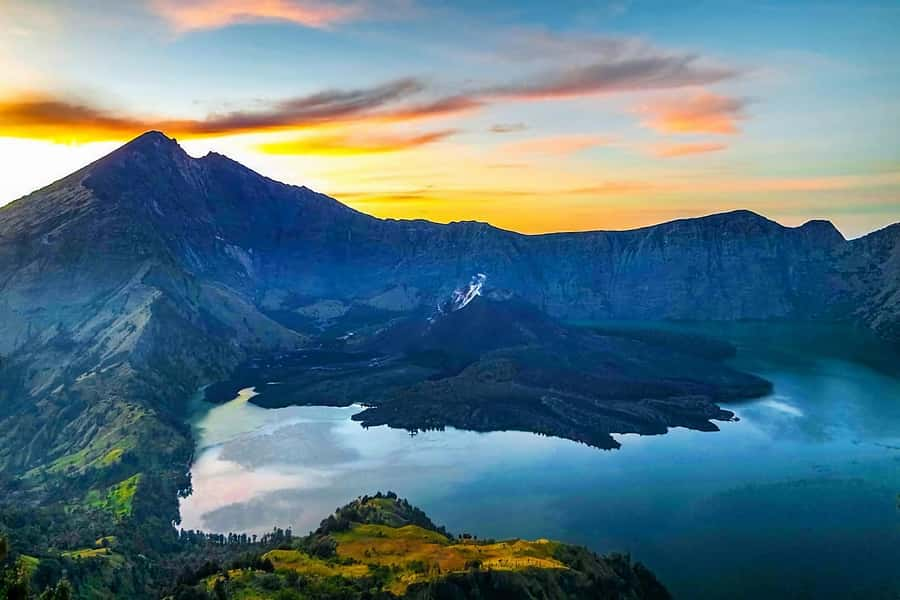
Mount Rinjani’s Sangkareang Second Summit rises to 3,126 meters, giving you a high mountain view without signing up for the longer three-day route. You walk through tropical forest, camp at Senaru Crater Rim, then climb before dawn for sunrise over Lombok, Bali, Sumbawa, the Gili Islands, and Segara Anak Lake.
I like the careful support from guide Nas and the porter team, especially on the hard final climb. I also like that meals, water, camping gear, trekking poles, and lights are included. The drawback is plain enough: this is still a very tough climb, with an early start and a long descent, so it is not a casual weekend walk.
Key points about this Rinjani climb
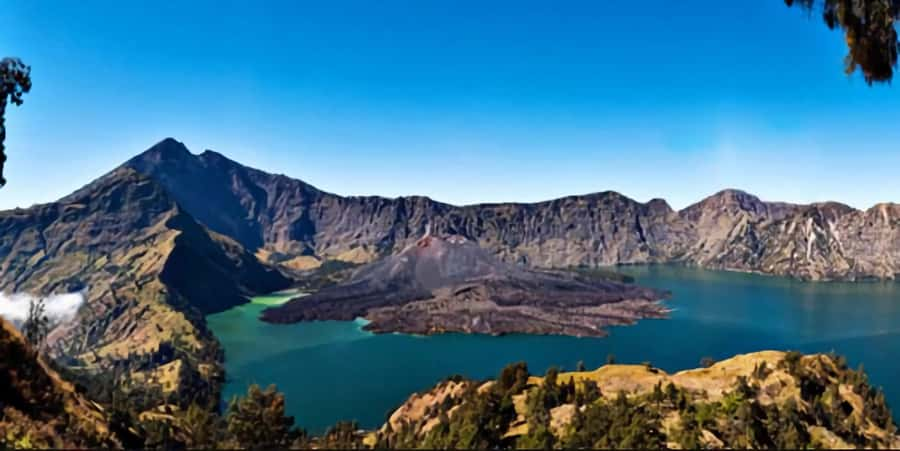
- Sangkareang Second Summit: Reach 3,126 meters for broad views across Lombok, Bali, Sumbawa, and Segara Anak Lake.
- Senaru Crater Rim camping: Sleep at 2,641 meters and watch sunset over Mount Agung.
- Pre-dawn summit push: Wake at 3:30 a.m. for a roughly two-hour climb to the summit.
- Full trekking support: An English-speaking guide and porters carry cooking and camping equipment.
- Generous meals and water: Food is cooked on the trek, with three liters of mineral water per person each day.
- Private group format: You trek with your own group rather than joining a large shared party.
Why the Second Summit route is worth your time
Mount Rinjani is one of Indonesia’s great mountain walks, but not every visitor has the time or stamina for a longer circuit. This two-day, one-night route focuses on the upper forest, the Senaru Crater Rim, and Sangkareang Second Summit.
That shorter schedule does not make the trek easy. You still climb from around 601 meters at Senaru village to 3,126 meters, then return on foot. The reward is that you get the mountain’s best moments in a compact plan: a high camp, sunset, a dark pre-dawn start, sunrise, and a long descent through forest.
I see this as a good choice if you want a serious mountain challenge but do not want to spend three days on the trail. It also suits people who value having the practical work handled by a guide and porter crew. They carry the tent, cooking gear, food, sleeping equipment, and water, allowing you to focus on walking.
The private group setup matters. You are not tied to the pace of a large mixed group, and the guide can give closer attention on the difficult sections. The supplied experience is operated by uji trekking, and guide Nas is named as part of the team.
More Mount Rinjani Treks in Indonesia:
- Mount Rinjani Trek 3D-2N To Summit – Lake – Hotspring
★ 4.7 · 111 reviews - Rinjani trekking 2D 1N RIM
★ 5.0 · 94 reviews - Mount Rinjani 2-Day Trek to Senaru Crater Rim
★ 4.8 · 89 reviews
From hotel pickup to the forest at 7:30 a.m.
The day begins with pickup at 7:00 a.m. from your hotel in Senaru or Sembalun. The detailed plan then has you starting the walk at about 7:30 a.m. Pickup arrangements should be confirmed after booking, since the activity asks you to send your location and preferred pickup time.
One useful touch is the reported breakfast and coffee provided before the walk for at least some Senaru pickups. Do not treat that as a replacement for your own breakfast planning, but it is a welcome start before a demanding day.
The trail first passes through dense tropical forest. You can expect plenty of shade, along with flora, birdlife, and butterflies. This opening section gives you time to settle into the pace before the path becomes more exposed and steep.
You should use the first hours wisely. Keep your steps steady, drink regularly, and avoid racing ahead while your legs still feel fresh. The climb becomes much less forgiving later.
Post 2 at 1,500 meters gives you a useful break
At about 11:00 a.m., you reach Post 2, also called Montong Satas, at roughly 1,500 meters. This is a shelter and planned rest point where the guide and porters provide fresh fruit and soft drinks.
It is a small detail, but scheduled breaks make a real difference on a climb like this. You can eat, drink, adjust your clothing, and check your pack before the next uphill section. Bring your own preferred snacks too, since the included food is designed for the group rather than your personal habits.
After Post 2, the trail continues uphill for around two hours toward Post 3, Mondokan Lolak, at 2,000 meters. This is where the height gain begins to feel more serious. You will have already spent several hours walking, and the air may feel cooler and thinner as you climb.
Lunch at Post 3 before the final push to camp
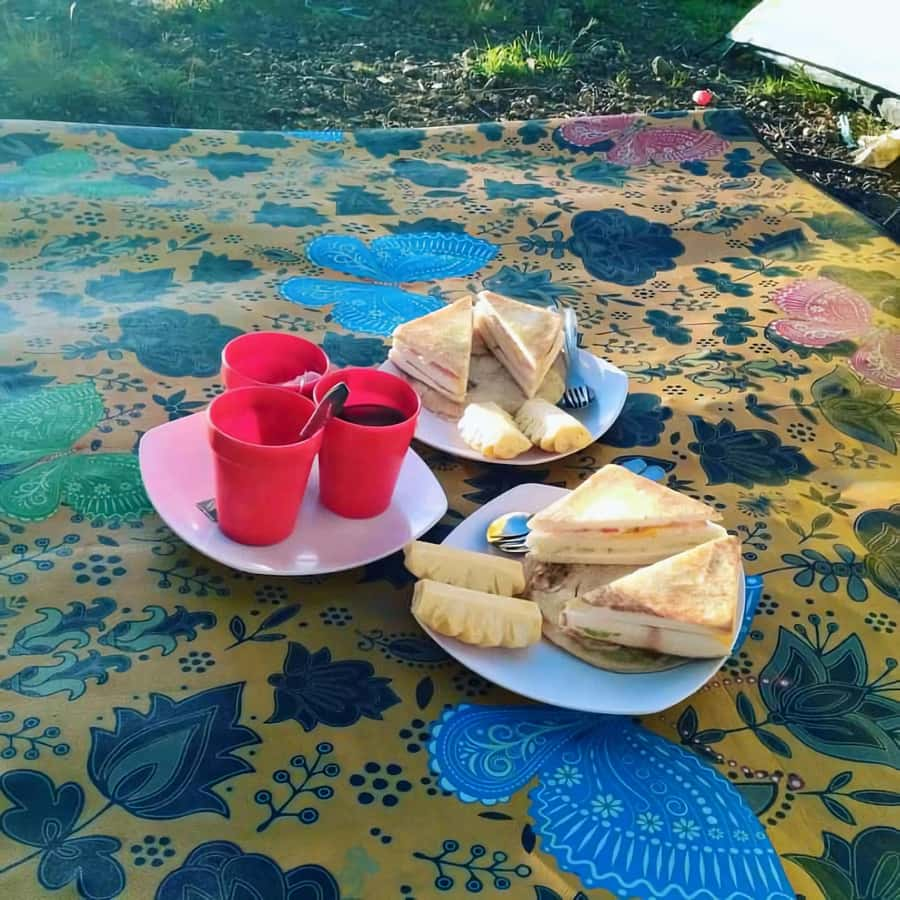
The itinerary schedules lunch at Post 3. This pause breaks up the first day well: forest in the morning, a substantial uphill section before midday, then lunch before the final climb to the crater rim.
From Post 3, you continue for roughly two hours to Senaru Crater Rim at 2,641 meters. The path is still uphill, and this last section can feel long after an early start. Keep some energy in reserve. Arriving at the rim is not the end of the effort, because you still need to sleep, wake early, and climb higher before sunrise.
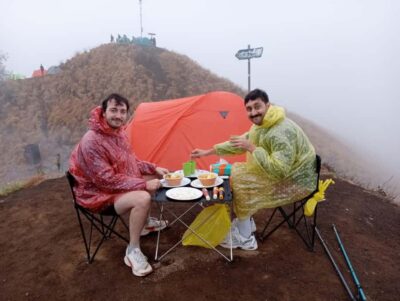
The porters set up camp at the crater rim. Included equipment covers the tent, toilet tent, paper, sleeping bags, and mattresses. A trekking pole, gloves, and a head lamp or hand torch are also supplied.
The sleeping setup is a real advantage for anyone who does not want to carry camping equipment. One important caution: the included mattress and sleeping bag are practical trekking gear, not a hotel room. Bring warm layers and rain protection, since the equipment list alone cannot control mountain weather.
A few more treks around Indonesia worth a look
- 2 Days and 1 Night Ethical Jungle Trek
★ 5.0 · 229 reviews - 2D1N Senaru Crater Rim Trekking
★ 5.0 · 178 reviews - 2 Days 1 Night Ethical Jungle Trekking
★ 5.0 · 153 reviews - ORANGUTAN TREK (2D/1N) by EcoTravel Bukit Lawang
★ 5.0 · 122 reviews
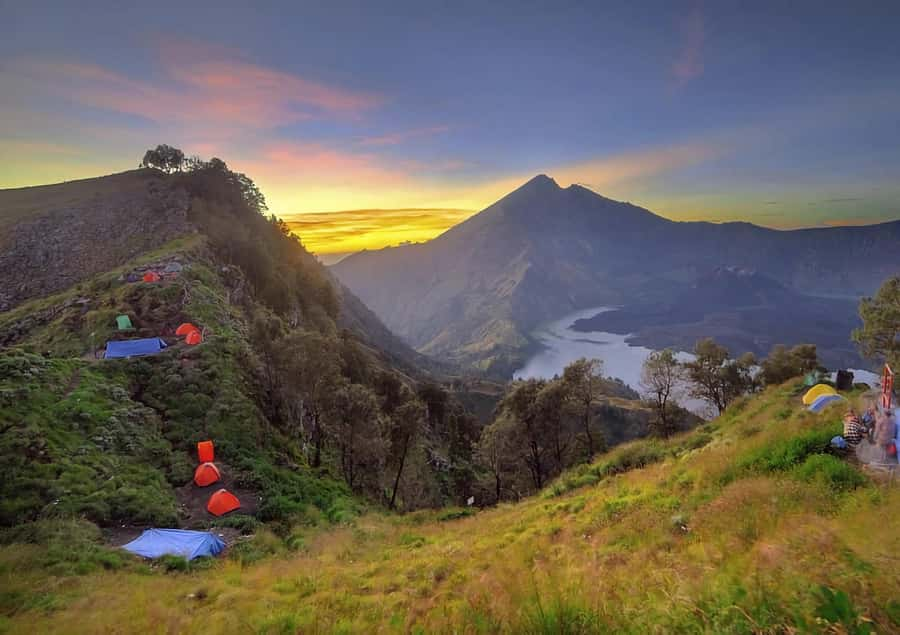
Sunset at Senaru Crater Rim
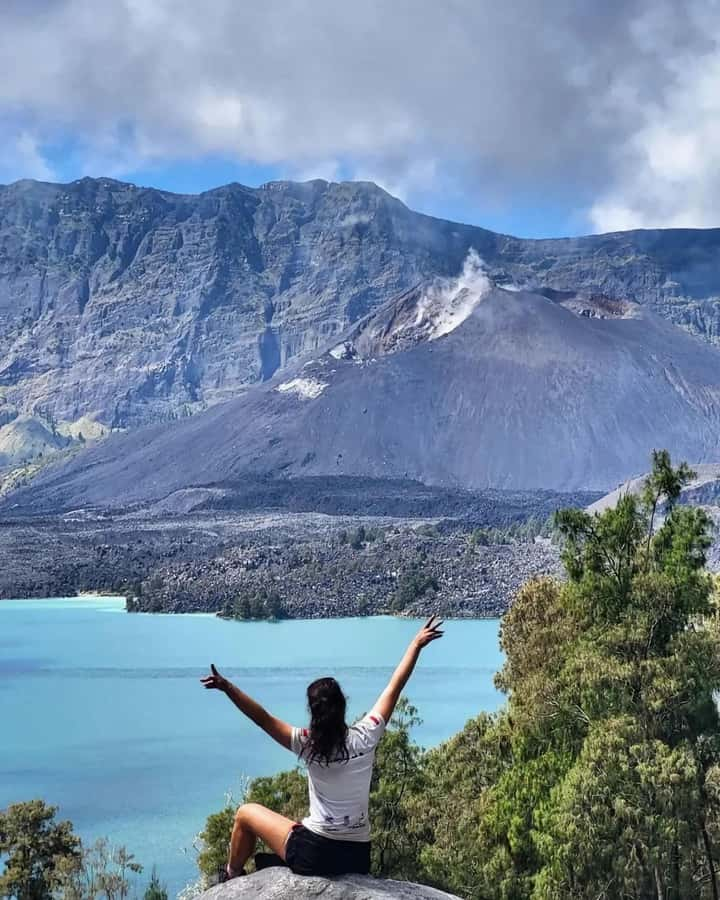
Senaru Crater Rim is the visual high point of the first day. From camp, you can watch the sun set over Mount Agung in Bali. The view also includes smoke from the new volcano at the edge of the lake, according to the route description.
This is the moment when the effort of the morning begins to make sense. You have climbed through forest and reached a high rim with open views, rather than simply walking from one village to another.
The rim is also where you need to manage your expectations. You are camping at 2,641 meters after a long day, and the next morning begins at 3:30 a.m. Sunset is worth enjoying, but do not turn it into a late night. Eat, organize your clothing and head lamp, and get as much rest as the conditions allow.
The exact look of sunset depends on cloud and weather. The route promises the setting, not a guaranteed clear sky. That is normal for a volcano trek, and it is one reason to bring a camera without making the whole trip depend on one perfect view.
The 3:30 a.m. climb to Sangkareang Summit
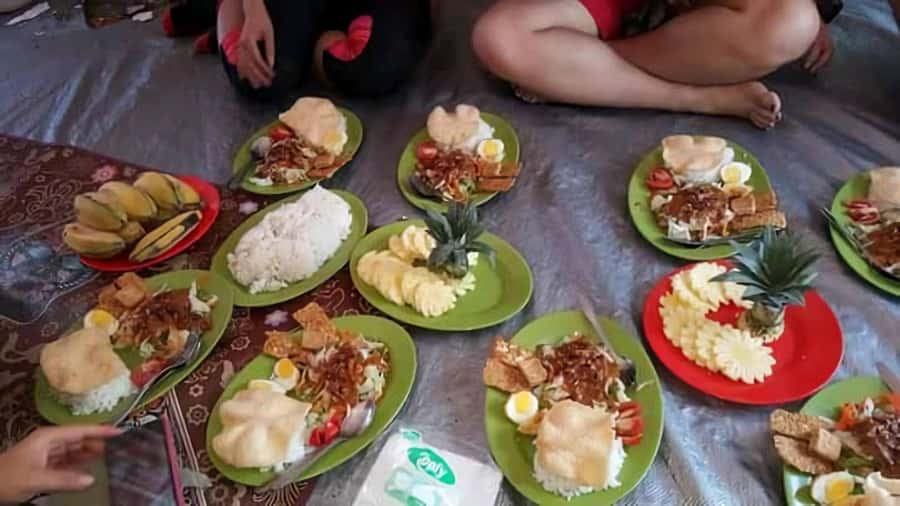
The second day starts at 3:30 a.m. with a light breakfast. You then begin the climb to Sangkareang Rinjani Second Summit, at 3,126 meters. The stated ascent takes about two hours.
This is the hardest and most time-sensitive part of the trip. You are walking in darkness, after a full day of uphill trekking, with sunrise as the target. The final climb is described as especially difficult. Guide Nas is noted for staying with a slower climber and allowing enough time to reach the summit before sunrise.
That detail matters more than fancy equipment. A good guide keeps the group together, watches the clock, and helps you use your remaining energy sensibly. If the pace becomes difficult, tell the guide early rather than waiting until you are exhausted.
Your head lamp is essential here. The tour includes one, but you should make sure it works before leaving camp. Gloves, a jacket, long pants, hiking shoes, and rain gear are also on the recommended list. Conditions can change quickly at high altitude, so pack these where you can reach them without emptying your bag.
Sunrise views across four islands and a crater lake
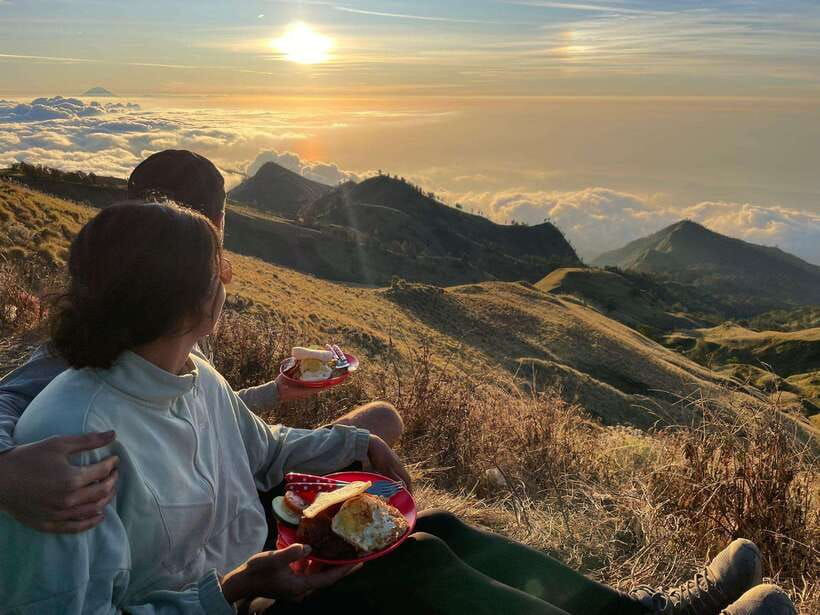
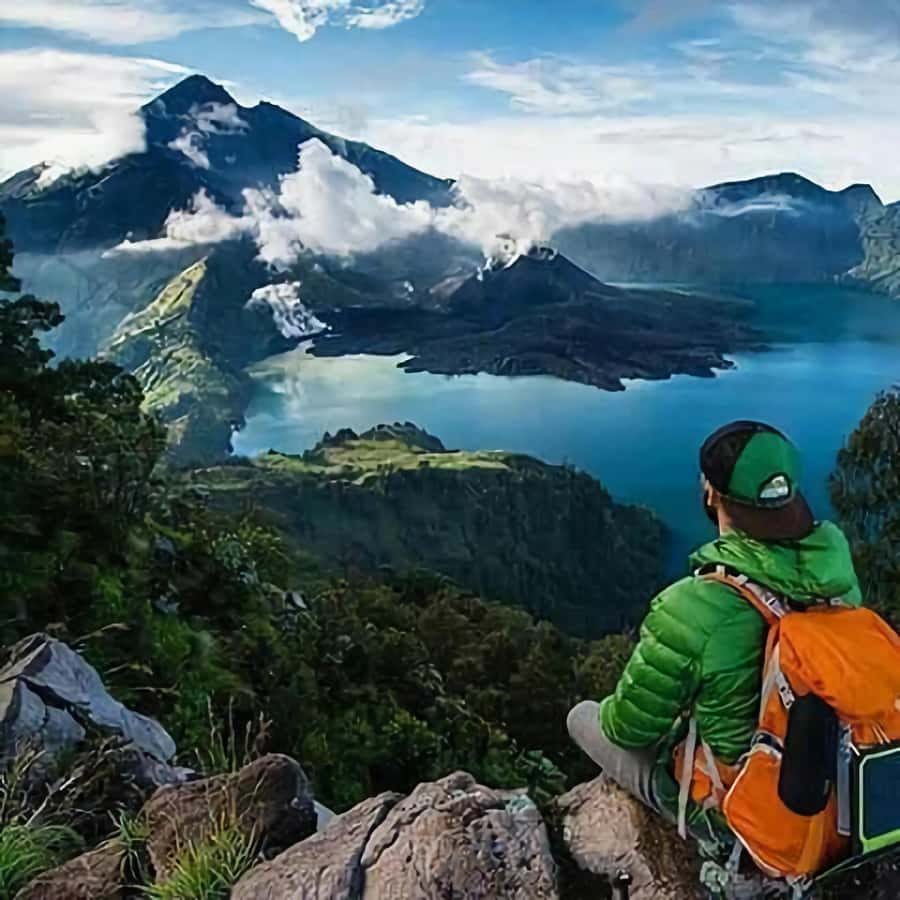
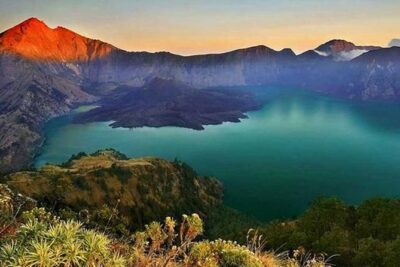
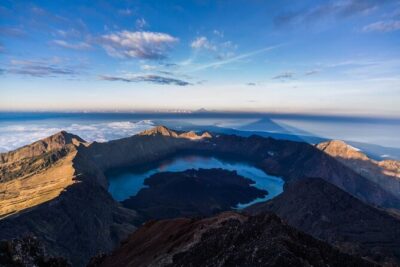
At Sangkareang Summit, the reward is a wide view over Lombok, Bali, Sumbawa, and Segara Anak Lake. The description also highlights sunrise views toward the Gili Islands and Mount Agung.
The summit is not just a finish line. It is the point where the route opens into a large view after hours of darkness and uphill work. Give yourself time to look around, take photographs, and recover before going down.
The summit name can cause some confusion. This is not the main highest point of Mount Rinjani. It is the Second Summit, reaching 3,126 meters. That distinction is important if your goal is specifically the mountain’s highest summit. If your goal is a shorter two-day route with a high summit viewpoint, this itinerary is better matched.
Breakfast, then five hours downhill to Senaru
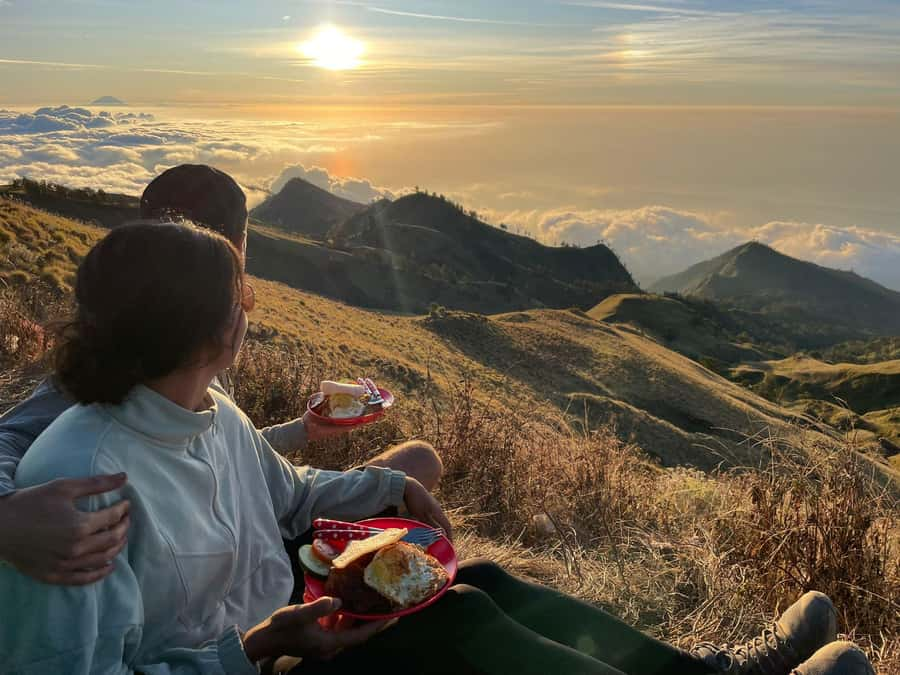
After returning to camp, you have breakfast and time to rest. Then you leave the crater rim and descend through the rainforest toward Senaru village, at about 601 meters.
The descent is estimated at five hours, with lunch along the way. Do not underestimate it. Going downhill may feel easier for your lungs, but it can be hard on knees, ankles, and tired thighs. Trekking poles are included and are especially useful here.
The forest return gives the route a different mood from the exposed crater rim. You may spot a black monkey if you are lucky. The forest also provides shade, but the long descent still requires patience. Keep drinking and take care with loose or uneven sections.
You arrive at Senaru village, prepare your luggage, and receive a drop-off to your hotel in Senaru. Transfers after the trek are not included, so clarify your onward plan before setting out. The stated pickup area includes Senaru or Sembalun, but the listed finish is Senaru village.
What the $224 price covers
At $224 per person, the price is not simply paying for a walk and a guide. It includes a working support system for a high mountain trek:
- Hotel pickup in Senaru or Sembalun
- An English-speaking guide
- Porters for cooking and camping equipment
- Food and drinking water
- Three liters of mineral water per person per day
- Tent, toilet tent, paper, sleeping bag, and mattress
- Gloves, trekking pole, and head lamp or hand torch
- Private group arrangements
- English audio guide access
The value is strongest if you would otherwise need to arrange camping equipment, meals, porters, and national park access separately. You also avoid carrying the cooking gear and tent yourself.
The national park entrance fee is extra at IDR 200,000 per person per day. A small daily pack is not supplied, and neither are trekking shoes, long pants, or your personal clothing. An extra porter for your own luggage also costs more.
Accommodation in Senaru or Sembalun before the trek is not included. You need a place to sleep before the early pickup if you are not already staying nearby. Transfers after the trek are also outside the stated price.
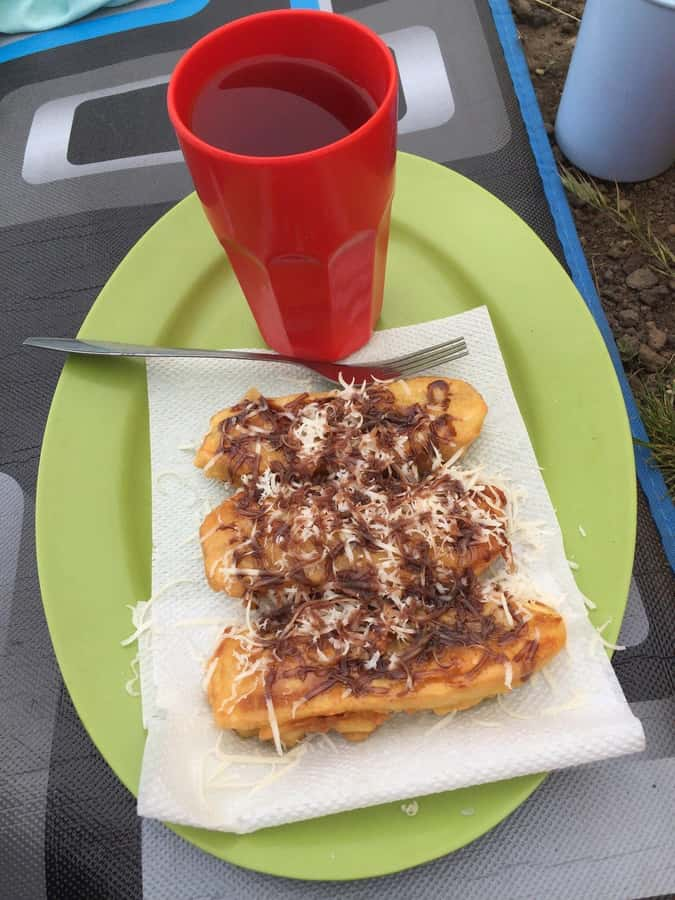
The two strongest practical benefits are the porter support and the food. The food is described as generous and very well prepared, with portions large enough that you should tell the team if you are not very hungry. That helps prevent waste and keeps the catering matched to your needs.
The porters do more than carry equipment. They cook, set up camp, and keep the basic operation moving. The company also makes an effort to remove rubbish, including rubbish left by other groups. That is worth noting on a mountain where waste management matters.
Who should choose this route?
I would recommend this trek to a reasonably fit adult who wants a demanding mountain experience in two days. You should be comfortable walking uphill for several hours, sleeping in a tent, waking before dawn, and descending for about five hours.
It can suit people with limited holiday time who still want sunset and sunrise from Rinjani. It is also a good match for private groups that want a guide’s full attention rather than a fixed large-group pace.
This is not suitable for children under seven or people over 70 under the stated conditions. Those age limits do not replace a personal fitness assessment. Anyone with health concerns should consider the altitude, steep climbing, early start, and long descent before booking.
You need hiking shoes, long or hiking pants, a jacket, hat, gloves, rain gear, a camera, and a power bank. Bring a small daily pack, since that is not included. The operator also asks you to contact them after booking, which is a good time to confirm pickup, national park fees, food needs, and what you plan to carry.
Should you book the Sangkareang Second Summit trek?
Book it if your priority is a short but serious Rinjani adventure with a high camp, dramatic sunset, pre-dawn summit climb, and strong logistical support. At $224, the package offers good value for the included porters, meals, water, camping gear, guide, and private format.
Think twice if you want a relaxed hike, dislike camping, or need the mountain’s highest summit rather than Sangkareang Second Summit. The final climb and five-hour descent demand real stamina.
For most fit hikers who want Rinjani’s big views without committing to three days, this is a well-focused choice. Confirm the pickup details and extra national park fee, pack for cold and wet conditions, and tell guide Nas or the team early if your pace drops. That preparation will do more for your trip than trying to prove anything on the trail.
FAQ
How long is the Mount Rinjani Second Summit trek?
The trek lasts two days and one night.
What altitude does Sangkareang Second Summit reach?
Sangkareang Rinjani Second Summit reaches 3,126 meters.
Where do you camp overnight?
You camp at Senaru Crater Rim, at about 2,641 meters.
What time does the summit climb begin?
You wake at 3:30 a.m. for a light breakfast and then start the roughly two-hour climb to the Second Summit.
Is hotel pickup included?
Yes. Pickup is included from hotels in Senaru or Sembalun. You should send the provider your pickup location and preferred time after booking.
Are food and water included?
Yes. Food and drinking water are included, with three liters of mineral water per person each day.
What camping equipment is provided?
The package includes a tent, toilet tent and paper, sleeping bags, and mattresses. Gloves, a trekking pole, and a head lamp or hand torch are also included.
Is the national park entrance fee included?
No. The national park fee is listed separately at IDR 200,000 per person per day.
Can I cancel the booking?
You can cancel up to 24 hours in advance for a full refund. The reserve-now, pay-later option lets you hold a place without paying immediately.
Just added around Indonesia
- Mount Batur Trekking & Hot Spring in Kintamani★ 5.0 · 23 reviews
- Rinjani Trekking 2D1N Senaru crater rim★ 5.0 · 6 reviews
- Ijen Blue Fire Trekking★ 5.0 · 44 reviews
- Sunrise Trekking At Sunan Ibu Kawah Putih★ 5.0 · 2 reviews
- Mount Agung Sunrise Trekking Private Tours★ 5.0 · 11 reviews
- volcano hike and jungle trekking adventure★ 5.0 · 36 reviews
- Sidemen rice terraces trek and local village walk★ 5.0 · 41 reviews
- Selogriyo Temple, treking Java Rice Terrace & waterfall★ 5.0 · 2 reviews
Mount Rinjani Treks, compared.
Mount Rinjani Trek 3D-2N To Summit – Lake – Hotspring
Read our review →
3D/2N Rinjani trekking summit,lake and hot springs.
Read our review →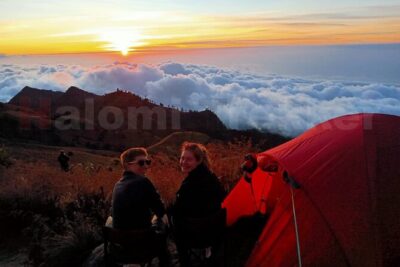
Mt Rinjani Trekking 2 Days 1 Night (Senaru Crater Rim)
Read our review →
Rinjani Trekking 3 Days 2 Nights (Sembalun – Senaru)
Read our review →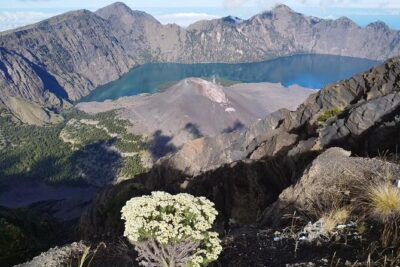
Rinjani Trekking Three Days Two Night Summit Lake
Read our review →Browse the lists this trek appears in