
Review · INDONESIA
Mount Rinjani 2-Day Trek to Senaru Crater Rim
Mount Rinjani’s 2-day crater-rim trek gives you the mountain experience without the longer push to the summit. You climb from forest into open, steep volcanic ground, then sleep beside the rim at 2,641 meters with Mount Agung in Bali across the water. I like the generous porter support and the surprisingly good meals, often including pancakes, fried bananas, fruit, soup, and rice dishes.
I also like the human side of this trip. Guides such as Ibrahim, Will, Sapar, Odi, and Sip have been praised for setting a comfortable pace, sharing local insight, and keeping spirits up on hard sections. The catch is simple: this is a tough hike, with about 2,000 meters of climbing, loose gravel, and a descent that can turn slick after rain.
Key points to know before you book
- Reach the 2,641-meter Senaru crater rim without attempting the more demanding summit route.
- Walk through Lombok rainforest first, then tackle steep, rocky, sandy ground above the trees.
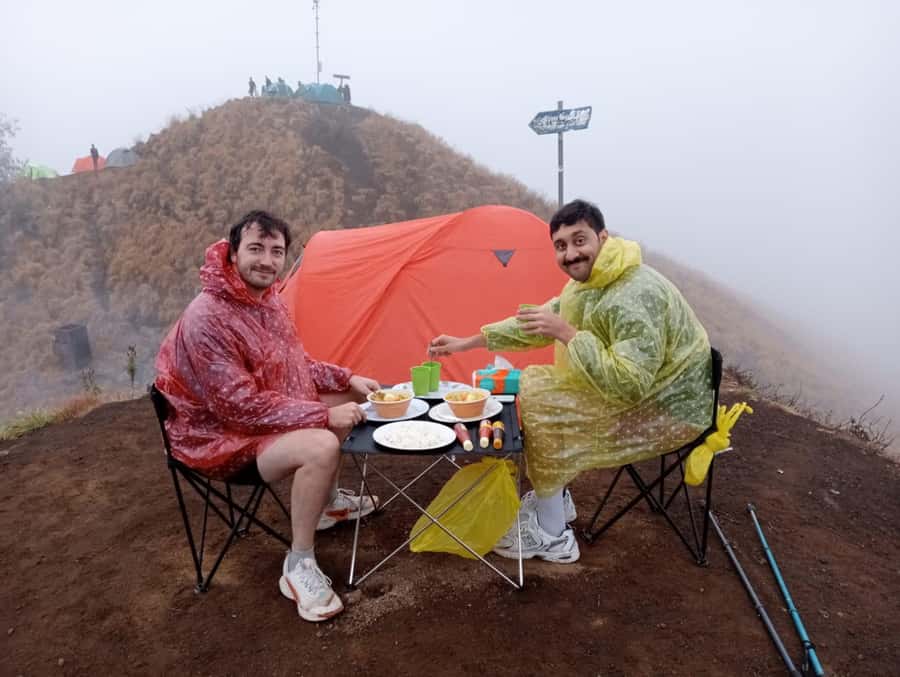
- Sleep in a supplied tent with a sleeping bag, mattress, pillow, camp chairs, and a toilet tent.
- Let porters carry the camping kit and food, while you carry a day pack of no more than 5 kilograms.
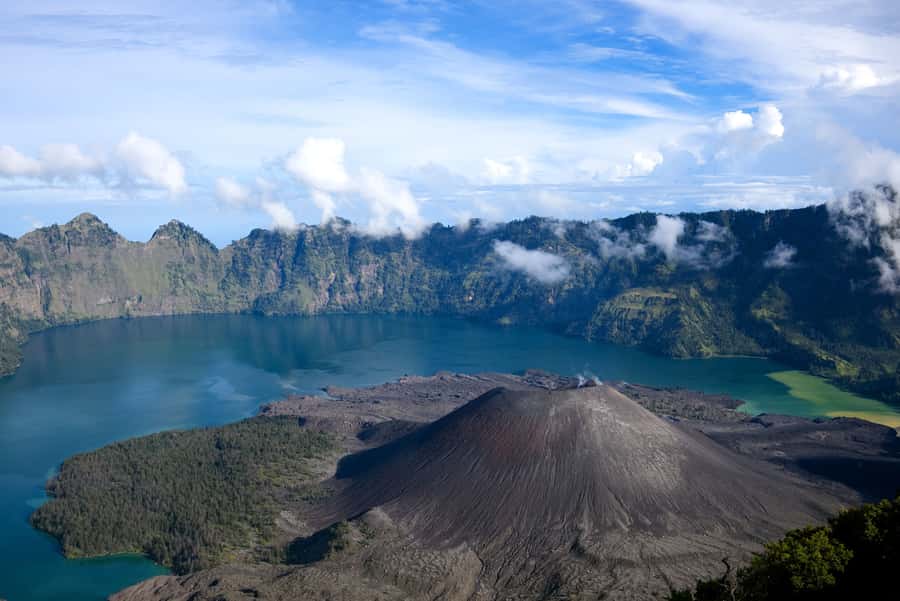
- Watch sunset over Mount Agung in Bali, weather permitting, with the crater lake and volcanic smoke below.
- Register early for the permit, since Rinjani National Park limits entry to 240 people per day.
What this Mount Rinjani trek is really like
This is a point-to-point mountain outing from the Rinjani National Park gate to the Senaru side of the mountain. You begin around Sembalun, climb to the crater rim, camp overnight, and descend through rainforest to Senaru Village the next day.
At $150 per person, the package offers good value if you want support rather than a do-it-yourself hike. A guide, porter service, meals, drinking water, camping equipment, insurance, and the night at the rim are included. The national park entrance fee is extra, listed at Rp 250,000 per person per day. For this two-day program, budget roughly Rp 500,000 per person for the park fee, subject to current government rates.
That price also reflects the work happening behind the scenes. Porters carry tents, food, water, and cooking gear up and down the mountain. They set up camp and prepare meals while you walk with a small day pack. You may add a porter for your personal belongings, but the included service is for camping equipment and supplies.
I consider that a major advantage. You still have to do the climbing, but you are not hauling a full tent, stove, food supply, and sleeping kit up a 2,000-meter ascent.
More Volcano Treks in Indonesia
- 2D1N Senaru Crater Rim Trekking
★ 5.0 · 178 reviews - Mt Rinjani Trekking 2 Days 1 Night (Senaru Crater Rim)
★ 5.0 · 85 reviews - Trekking Mt. Rinjani 2 Days 1 Night Senaru Crater Rim
★ 5.0 · 55 reviews
Register early for the 240 daily permits
The permit system is the part you should take seriously. Rinjani National Park allows only 240 people per day, and the available spaces can fill. If the quota is gone, you cannot simply arrive and start walking. You will need to reschedule.
Registration can be completed through the eRinjani app. You need each participant’s passport number, full name, date of birth, weight, height, and nationality. Payment goes directly to the Indonesian government bank account, at Rp 250,000 per person per day according to the supplied information.
If that process feels awkward, the local operator can help arrange the registration. I would confirm the permit status before committing to flights, hotels, or transport. This is not a minor paperwork detail. It determines whether you can enter the park on your chosen date.
Your larger luggage can be stored at the local operator’s office. Carry only what you need on the mountain. The suggested load is a small backpack of no more than 5 kilograms.
Day one: from forest to the crater rim
Your morning begins with breakfast and a transfer to the Rinjani National Park gate. There, you register and receive a briefing with your guide. The walk generally starts around 7:00 or 7:30 in the morning.
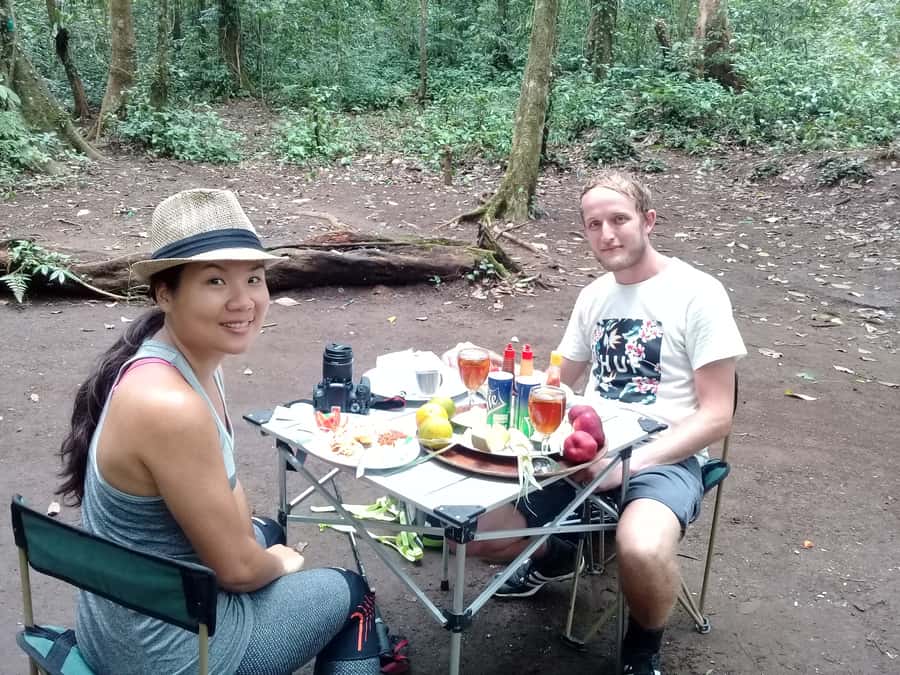
The opening section passes through dense tropical forest. This is the gentler-looking part of the route, though it still climbs steadily. You may notice bird life, butterflies, and a wide variety of plants. The trees offer shade, which helps during the first hours, but do not mistake the forest for an easy warm-up. You are gaining height from roughly 600 meters toward the crater rim at 2,641 meters.
At around 1,500 meters, you stop at Montong Satas Shelter for lunch. This break divides the day nicely. It gives you a chance to eat, refill your water, check your feet, and adjust clothing before the route becomes more exposed.
After lunch, the character of the walk changes. The trees thin out, and the ground becomes more volcanic. Expect rock, sand, and steep sections where every step can slide backward. One particularly useful piece of advice from people who have done this route is to bring trekking poles if you own them. They help on both the climb and the descent, especially where loose gravel gives way beneath your shoes.
The timing matters. Reaching the rim around 4:00 PM gives you a chance to settle into camp before sunset. It also means you should keep moving steadily without burning all your energy early in the forest.
The final climb is harder than the distance suggests
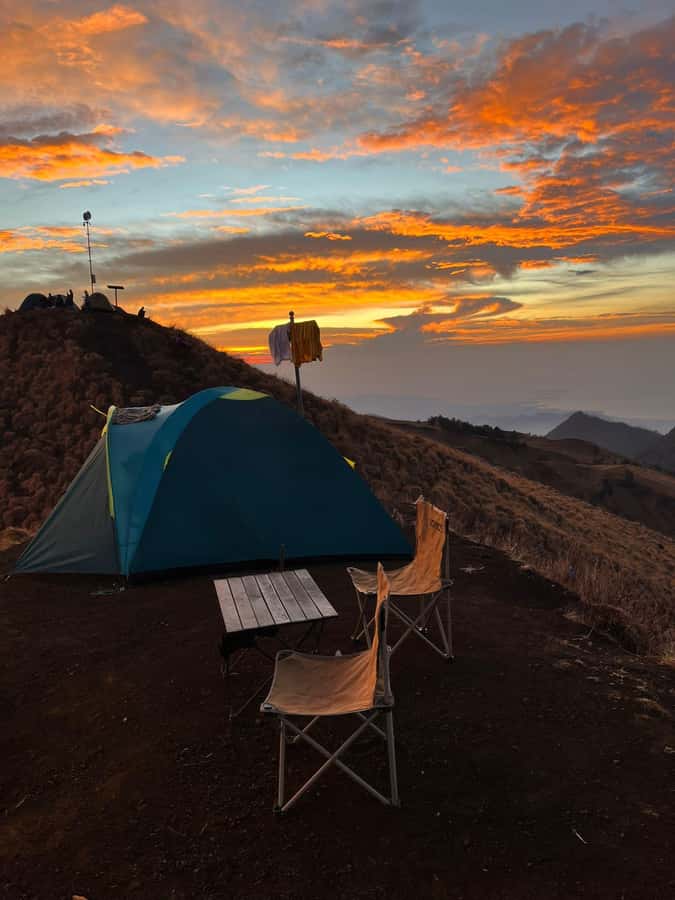
The route does not need to be exceptionally long to feel demanding. The sustained uphill grade is the issue. You gain roughly 2,000 meters in a short period, and there are few truly flat stretches.
A moderately fit person who regularly walks or hikes may find the route manageable, but you should not treat it as a casual nature walk. Several people found the ascent harder than expected, even with hiking experience. Your legs will work continuously, and the thin air becomes more noticeable as you approach the rim.
Good footwear matters. The package does not include trekking shoes, long pants, or gloves, so you must bring your own. Choose shoes with a secure grip, not lightweight trainers with smooth soles. Long trekking pants protect your legs from rough ground and cooler air. A windproof jacket is useful at the exposed campsite.
Your guide should control the pace. Past groups have particularly appreciated guides such as Ibrahim, who was described as attentive with breaks, water, snacks, and morale. Other groups worked with Will, Sapar, Odi, Sip, and Ojik, with praise for friendly service, local conversation, and steady support. Guide assignments can change, so book for the route and operator rather than expecting a specific person.
More Mount Rinjani Treks in Indonesia:
- Mount Rinjani Trek 3D-2N To Summit – Lake – Hotspring
★ 4.7 · 111 reviews - Rinjani trekking 2D 1N RIM
★ 5.0 · 94 reviews - Rinjani Trekking 3D2N Summit
★ 4.5 · 85 reviews - 3D/2N Rinjani trekking summit,lake and hot springs.
★ 5.0 · 85 reviews
Camping at 2,641 meters
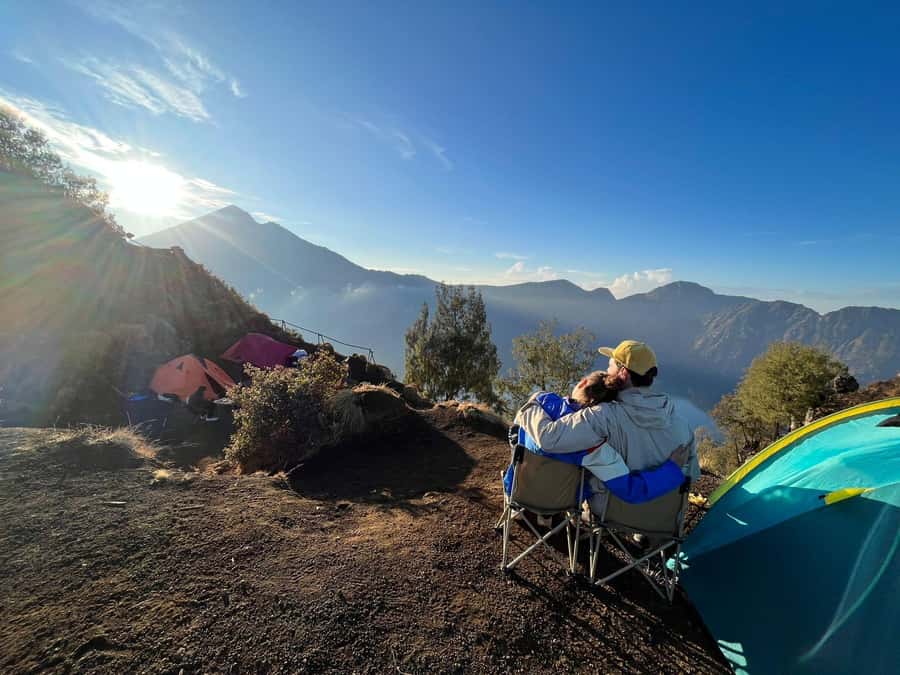
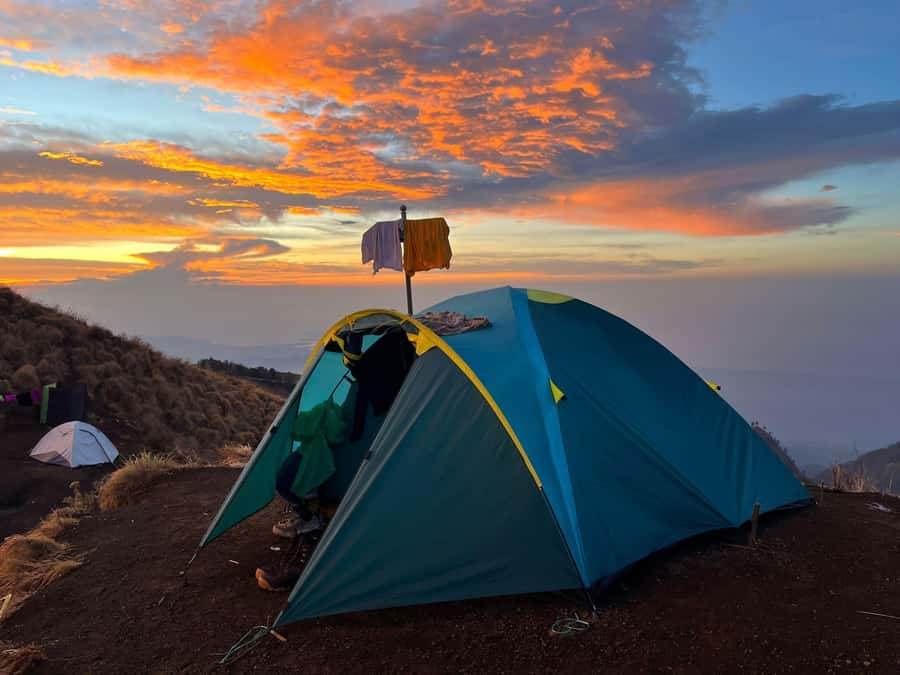
The crater-rim campsite is the reward for the climb. Your porters bring up the tents, food, and equipment, then set up the camp. The supplied kit includes a double-size tent, sleeping bag, pillow, mattress, camp chairs, and a toilet tent.
The basic camping comfort is better than you might expect on a mountain. Past groups described the tents and sleeping bags as clean and warm, and the camp chairs make a real difference when your legs are tired. Some equipment, such as jackets, may be available to rent through the operator, but confirm this before you go if you are concerned about cold weather.
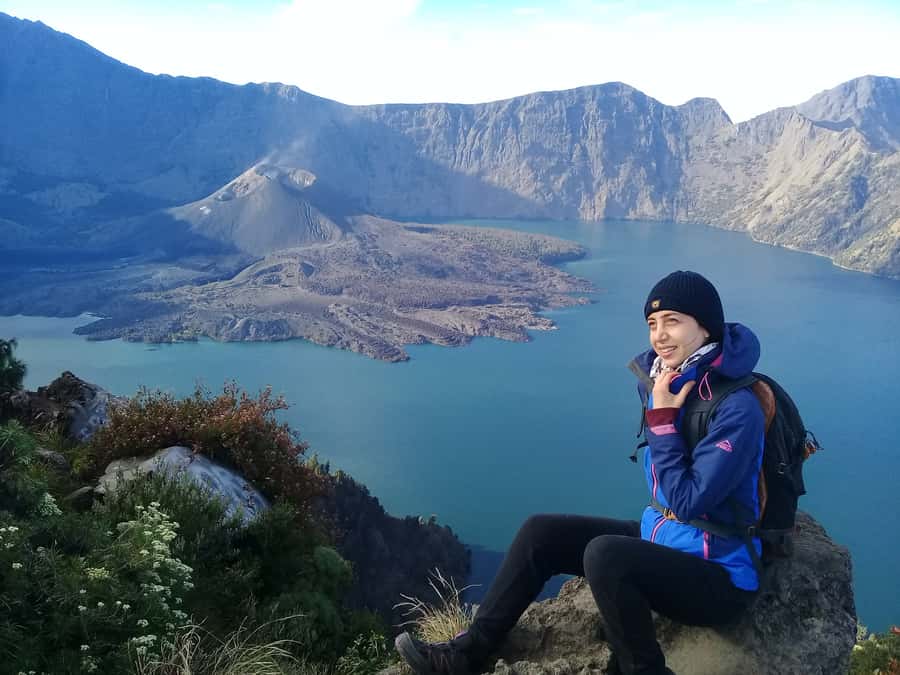
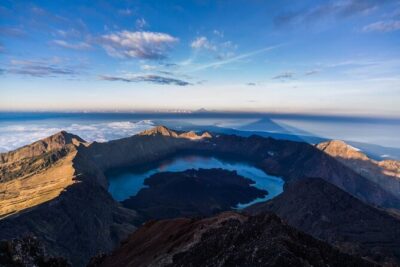
The setting is the main attraction. From the rim, you can look toward Mount Agung in Bali and watch the sun drop behind or around the volcano, depending on weather and your view. Below, the crater lake and volcanic formations create a dramatic scene. Smoke may rise from the volcano near the lake.
Weather can spoil the sunset or sunrise. Clouds may cover Mount Agung, and rain or strong wind can make the night less comfortable. Even so, the crater-rim position gives you a memorable mountain camp, and the views can open and close quickly. Keep your camera ready, but do not let photography distract you from footing near the edge.
Dinner is prepared by the guide and porters. Meals described on the route include nasi goreng-style rice, chicken curry soup, spaghetti, sandwiches, fresh vegetables, pineapple, other fruit, fried bananas, pancakes, coffee, and tea. The range is impressive considering the cooking takes place at a high campsite.
Do not expect restaurant timing. Your meal depends on the walking pace of the group and the porters’ setup work. Still, hot food and drinks at the rim are a meaningful part of the price.
Day two: sunrise, then a slippery descent
The second morning begins with breakfast and, weather permitting, sunrise over the crater. You then leave the rim and descend toward Senaru Village through rainforest.
Downhill sounds easier than uphill, but it can be more punishing on knees and ankles. Loose earth, rock, and slippery sections require care. Rain makes the descent more difficult, so trekking poles are especially useful. Give yourself time. The advertised descent takes about five hours, with lunch around 11:30 AM.
The return route brings you back under the trees. After the exposed crater rim, the shade feels welcome. Keep an eye out for black monkeys in the forest, though sightings are not guaranteed.
When you reach Senaru Village, the local operator takes you to its office. You can shower, have a welcome drink, and finish the trip there. This simple end-of-trek routine is valuable after a night outdoors and a long downhill walk.
Food, porters, and the service that matters
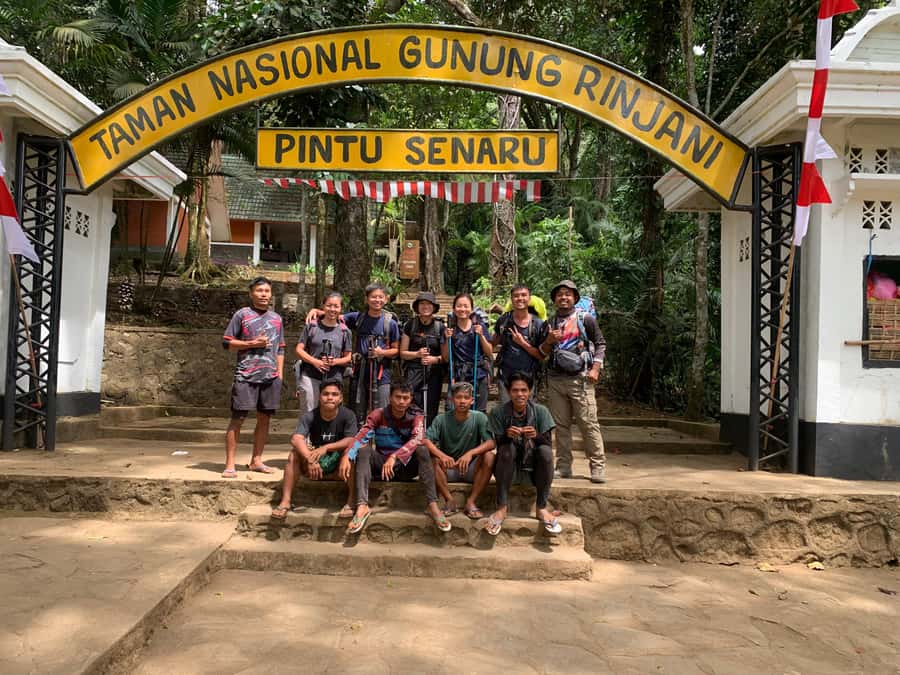
The strongest part of this experience is the support team. Your porter service carries the equipment and food, while the guide looks after the walking group. That division lets you focus on the trail instead of managing a heavy expedition pack.
The porters also cook. Meals reported on the route include fresh fruit, vegetables, rice, pasta, soup, curry, pancakes, fried bananas, and hot drinks. You should still bring small personal snacks if you have dietary needs or want quick energy between meal stops.
The guides add another layer. Some have offered local information about Lombok, while others have kept the mood light with jokes, music, and conversation. One group particularly enjoyed Ibrahim’s cheerful approach, including music during the walk. You should not assume every group will have the same personality, but the operator has a record of assigning guides who pay attention to pace and comfort.
The small-group limit is 15 people. That is large enough to meet other hikers but smaller than a mass-market mountain outing. Your experience will still depend on the fitness levels of the people in your group, since the guide may need to set a shared pace.
What to pack for this specific route
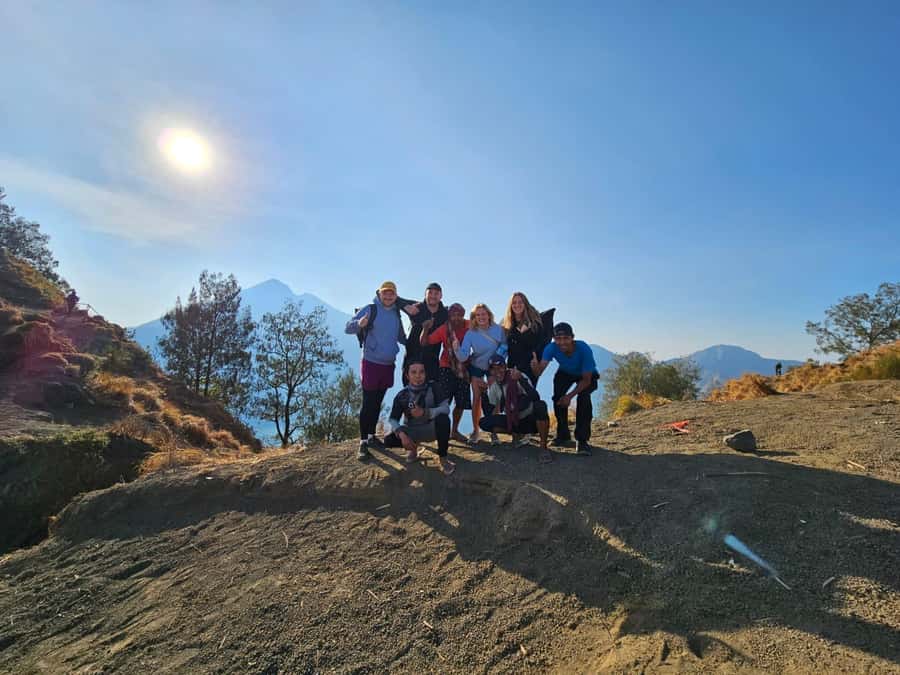
Keep your mountain bag below 5 kilograms. Your larger suitcase or travel bag can remain at the operator’s office.
Bring:
- Grippy trekking shoes
- Long trekking pants
- A windproof jacket
- Gloves
- Two to four cotton T-shirts
- Two pairs of shorts
- Sandals
- Swimwear
- Toiletries and a small towel
- Personal medication
- Sunscreen and insect repellent
- A camera
- A refillable water bottle or suitable container
The operator supplies safe drinking water, but you still need a way to carry it during the walking day. Pack layers rather than one bulky garment. The forest can feel warm, while the exposed rim can be cold and windy.
You must be comfortable walking long distances and handling steep ground. People with mountain sickness or a fear of heights should not join this activity. If you rarely hike, train beforehand with long uphill walks and stairs. Plan to take it easy for a couple of days afterward. The route can leave your legs tired, especially after the descent.
How the $150 price compares with the effort
The $150 price makes sense for someone who values a supported experience. You receive a guide, porter service, food, water, camping equipment, insurance, transport connected with the trek, and a shower and welcome drink at the end. The park entrance fee is not included, so add that separately.
The service also saves you from buying or carrying camping supplies for one night. If you already own mountain equipment and can arrange permits yourself, an independent trip might cost less, but you would take on more planning and physical load.
I would compare the price by asking what you want from Rinjani. If you want a simple, supported introduction to the mountain, this package is sensible. If you want a budget hike and are comfortable carrying your own shelter, food, and clothing, you may find cheaper arrangements locally. Confirm exactly what transport, permit assistance, and luggage storage are included before payment.
Free cancellation up to 24 hours before the activity and a reserve-now, pay-later option make the booking less rigid. Those terms do not remove the need to check permit availability early.
Who should book this crater-rim trek?
Book it if you want dramatic Rinjani scenery but do not need to reach the summit. The route gives you rainforest, volcanic terrain, a crater-rim camp, views toward Bali, and a descent through Senaru in only two days.
It suits an active person with a good fitness base, a sense of adventure, and realistic expectations about mountain walking. It is also a good fit if you want porters and a guide but still want some independence during the walk.
Think twice if you dislike steep climbs, loose gravel, basic outdoor sleeping, or uncertain weather. This is not a comfortable sightseeing tour with a short walk at the end. The scenery is beautiful, but you earn it.
Should you book Mount Rinjani with Rinjani Hero?
I would book this trek if your priority is a supported crater-rim experience rather than the lowest possible price. The porters, cooked meals, supplied camping gear, and attentive guide service remove much of the logistical burden. The main question is your fitness, not the quality of the view.
Before paying, confirm the permit for your exact date, the national park fee, pickup details, luggage storage, and whether you can request a particular guide. Bring proper shoes and trekking poles if available. If you accept a hard climb and a slippery descent, the sunset over Mount Agung and the night beside Rinjani’s crater can make this one of Lombok’s most memorable outings.
FAQ
How long is the Mount Rinjani crater-rim trek?
The activity lasts two days and includes one night camping at the crater rim. Day one is the climb from the park gate to the rim, and day two is the descent to Senaru Village.
How high is the campsite?
The campsite is at the crater rim at approximately 2,641 meters above sea level.
Is the national park entrance fee included?
No. The entrance fee is separate. The supplied information lists it at Rp 250,000 per person per day, so a two-day visit requires planning for two daily charges.
How do I register for the Rinjani permit?
You can register through the eRinjani app using each member’s passport number, full name, birthday, weight, height, and nationality. Payment is made to the Indonesian government bank account. A local guide can also help with registration.
How much luggage can I carry?
You should pack a small backpack weighing no more than 5 kilograms. The included porters carry camping equipment, food, and related supplies. An extra porter for personal belongings may be available as an add-on, and larger luggage can be stored at the operator’s office.
What is included in the camping setup?
The package includes a double-size tent, sleeping bag, pillow, mattress, camp chairs, and a toilet tent. It also includes meals, safe drinking water, a trekking guide, porter service, trekking insurance, and one night at the Senaru crater rim.
More 2-Day Experiences in Indonesia
- 2 Days and 1 Night Ethical Jungle Trek
★ 5.0 · 229 reviews - 2 Days 1 Night Ethical Jungle Trekking
★ 5.0 · 153 reviews - ORANGUTAN TREK (2D/1N) by EcoTravel Bukit Lawang
★ 5.0 · 122 reviews - Monkey Business 2 days – 1 night Jungle Trekking (including rafting)
★ 5.0 · 121 reviews
Just added around Indonesia
- Mount Batur Trekking & Hot Spring in Kintamani★ 5.0 · 23 reviews
- Rinjani Trekking 2D1N Senaru crater rim★ 5.0 · 6 reviews
- Ijen Blue Fire Trekking★ 5.0 · 44 reviews
- Sunrise Trekking At Sunan Ibu Kawah Putih★ 5.0 · 2 reviews
- Mount Agung Sunrise Trekking Private Tours★ 5.0 · 11 reviews
- volcano hike and jungle trekking adventure★ 5.0 · 36 reviews
- Sidemen rice terraces trek and local village walk★ 5.0 · 41 reviews
- Trekking Mount Rinjani 2D/1N To Second Summit★ 5.0 · 2 reviews
Mount Rinjani Treks, compared.
Mount Rinjani Trek 3D-2N To Summit – Lake – Hotspring
Read our review →
3D/2N Rinjani trekking summit,lake and hot springs.
Read our review →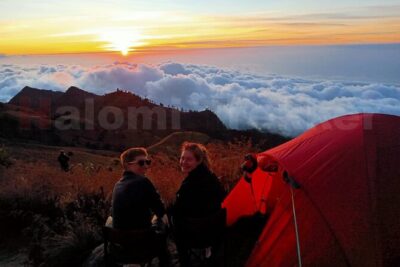
Mt Rinjani Trekking 2 Days 1 Night (Senaru Crater Rim)
Read our review →
Rinjani Trekking 3 Days 2 Nights (Sembalun – Senaru)
Read our review →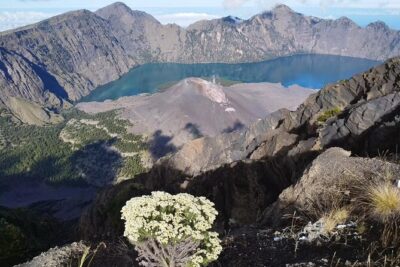
Rinjani Trekking Three Days Two Night Summit Lake
Read our review →
Mount Rinjani Trekking 2D/1N Summit Sunrise & Sunset Views
Read our review →Browse the lists this trek appears in