
Review · AREQUIPA
4 hours Tour: Route of Sillar with Trek in Culebrillas
Arequipa’s famous white buildings begin in the stone quarries outside town. This half-day outing takes you to the source, where you can see towering ignimbrite walls, watch local stonemasons at work, and try cutting a block of sillar yourself. The later walk through Culebrillas canyon adds petroglyphs and a quieter change of scene.
I like the tour for two clear reasons: it connects Arequipa’s architecture with the labor behind it, and it packs several worthwhile stops into a short morning. The volcano and Chilina Valley viewpoint is a useful bonus, especially if you want broad views without committing to a full-day trip.
The main caution is timing. The advertised duration is 270 minutes, or four and a half hours, and one recent departure began 30 minutes late and felt rushed. The English-language service can also depend on guide availability, so confirm your preferred language before setting out.
Key points to know before booking
- Añashuayco is a working quarry: You see the source of Arequipa’s pale volcanic stone, not a polished museum display.
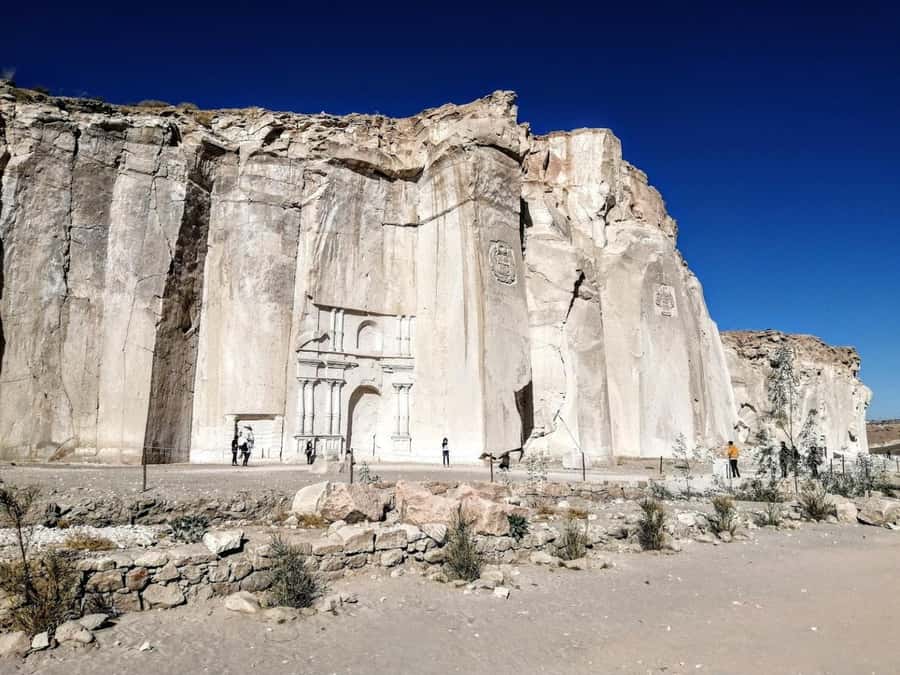
- The Church of the Company carving is made from sillar: Local stonemasons created this large-scale piece inside the quarry.
- Culebrillas includes a short canyon walk: Allow about 20 to 30 minutes for the passage between walls reaching 15 to 20 meters high.
- Wari petroglyphs add an older layer: The rock markings are attributed to the Wari culture and are more than a thousand years old.
- The 18-sol entrance fee is extra: Transport and a professional guide are included, but entrance charges are not.
- Morning and afternoon departures are available: The stated morning schedule runs around 9:15 a.m. to 1:30 p.m., with another shift at 2 p.m.
Why Arequipa’s white stone matters
Arequipa is often called the White City because many churches, mansions, and public buildings were built with sillar. The name can sound decorative, but sillar is not simply a pretty local building material. It comes from volcanic deposits, and its use is tied to the region’s volcanoes, quarry workers, builders, and long-running stonecraft.
This tour gives you the missing piece. Instead of admiring a white colonial façade in the city center, you travel to the places where the stone was extracted and shaped. That makes the city’s architecture easier to understand. The smooth walls and carved details downtown begin to look less like a single historic style and more like the result of hard, precise manual work.
The route also has a useful mix of scenery and culture. You are not spending four hours only inside a vehicle or only looking at rock walls. There is a viewpoint, a working quarry, a short walk, old rock art, and a few minutes to see the apachetas, small stacks of stones linked with gratitude toward nature and good fortune.
A few more treks around Peru worth a look
- From Arequipa: Sillar Route Trek
★ 4.2 · 461 reviews - From Cusco: 7 Lakes Ausangate Trek with Breakfast and Lunch
★ 4.8 · 360 reviews - From Arequipa: 2-Day Colca Canyon Trekking Tour
★ 4.8 · 243 reviews
Starting from central Arequipa at 9:15 a.m.
The meeting point is the main office at C. Álvarez Thomas 115, near the corner. Your name is checked there before the group receives basic instructions and gets into the tourist transport. The tour finishes near Av. La Marina, close to central Arequipa and the main square area.
The morning departure is scheduled for 9:15 a.m. That timing works well if you want to keep the afternoon open for Arequipa’s churches, museums, markets, or a leisurely lunch. A 2 p.m. departure is also offered, but it will use the same basic route and return later in the day.
The drive begins with about 25 minutes in the van. Transport is included in the $11 price, which is the biggest reason this makes financial sense. Arranging a private vehicle to reach the quarries would cost more, while local transport would require extra planning and would not provide the same continuous guiding.
Do allow some flexibility. One recorded outing started 30 minutes late, which reduced the time available at the stops. If you have a flight, bus, cooking class, or timed museum visit afterward, avoid scheduling it too closely to the expected 1:30 p.m. return.
The volcano and Chilina Valley viewpoint
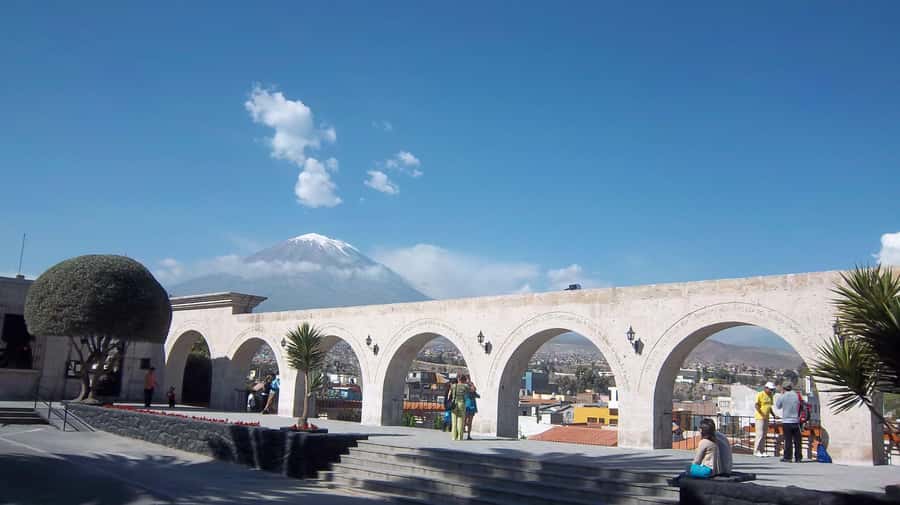
The first stop is a viewpoint reached after the initial drive. You get a photo break, a guided explanation, and time to look across the volcanoes and the Chilina Valley. Depending on the season, the exact opening viewpoint may change to another traditional spot where the volcanoes are visible.
This stop helps you get your bearings. The surrounding stone is not an isolated curiosity. It belongs to a volcanic region, and the view gives context for the material you will see later in the quarries. On a clear day, the volcano backdrop should be one of the most attractive photo opportunities on the route.
Keep expectations sensible. This is a short stop, not a long scenic walk or a mountain excursion. The appeal is the combination of broad views and a quick introduction to the area. If you want extensive volcano photography, you may find the allotted time brief, especially if the group arrives late.
Inside the Añashuayco quarry
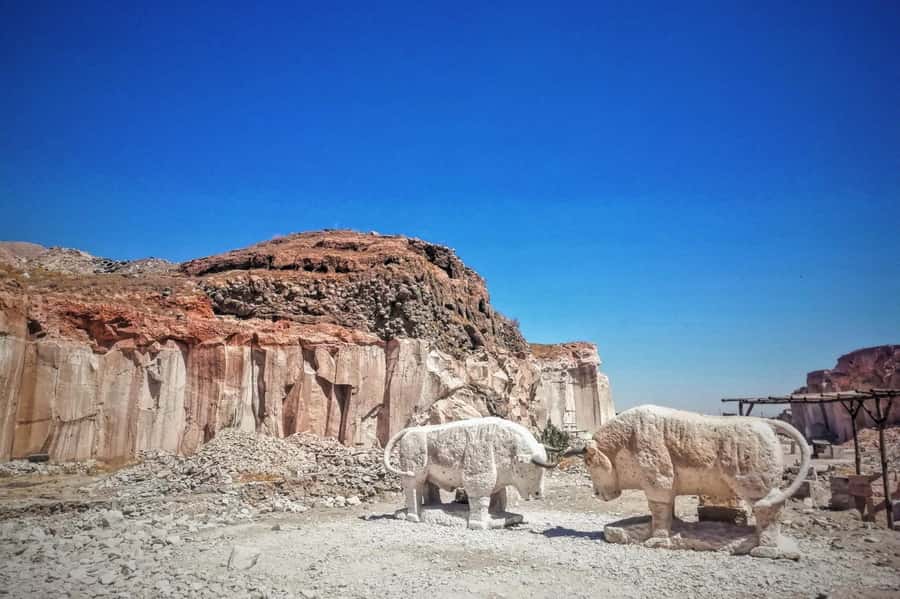
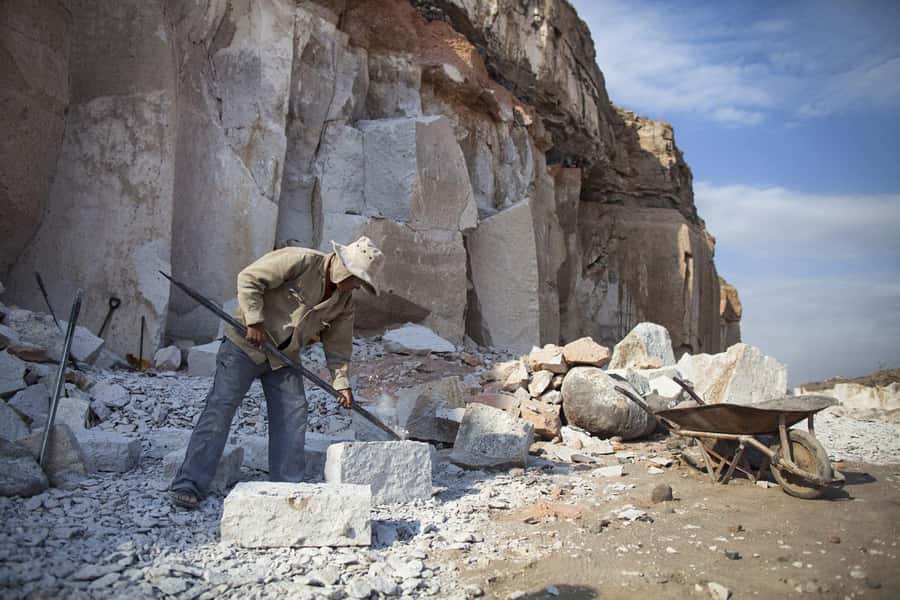
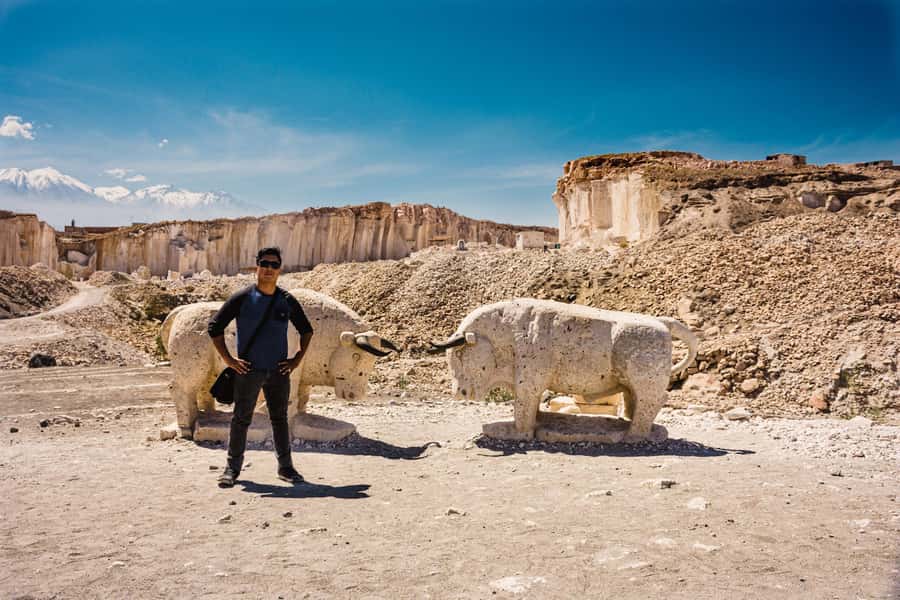
After roughly 45 minutes in the van, you reach the Añashuayco Quarry. This is the central stop and the part that gives the excursion its identity. The quarry is still operating, with stonemasons working early in the day to extract and shape sillar.
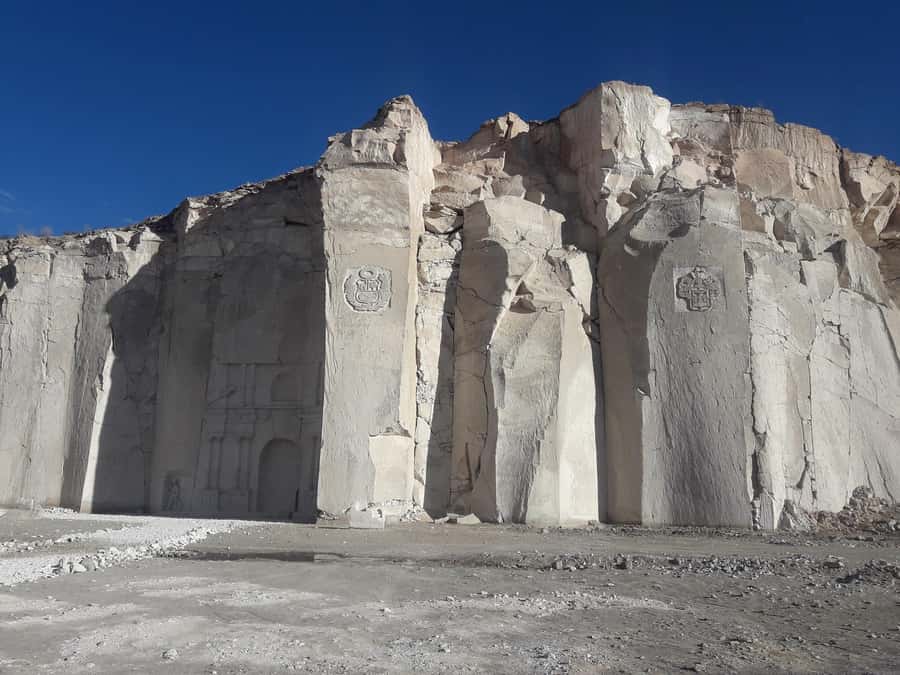
The quarry walls are formed by ignimbrite, a volcanic rock deposit. Extraction has created a large canyon with cliffs several meters high. The pale rock catches the light and creates the stark setting people associate with the Sillar Route, but the important point is that this is also a workplace.
Your guide explains how sillar is produced and how it has been used over time. Pay attention here, because the explanation links what you are seeing at the quarry with the buildings you will visit later in Arequipa. The stone is not just cut and loaded onto a truck. It is worked by hand, and the craft requires control, strength, and patience.
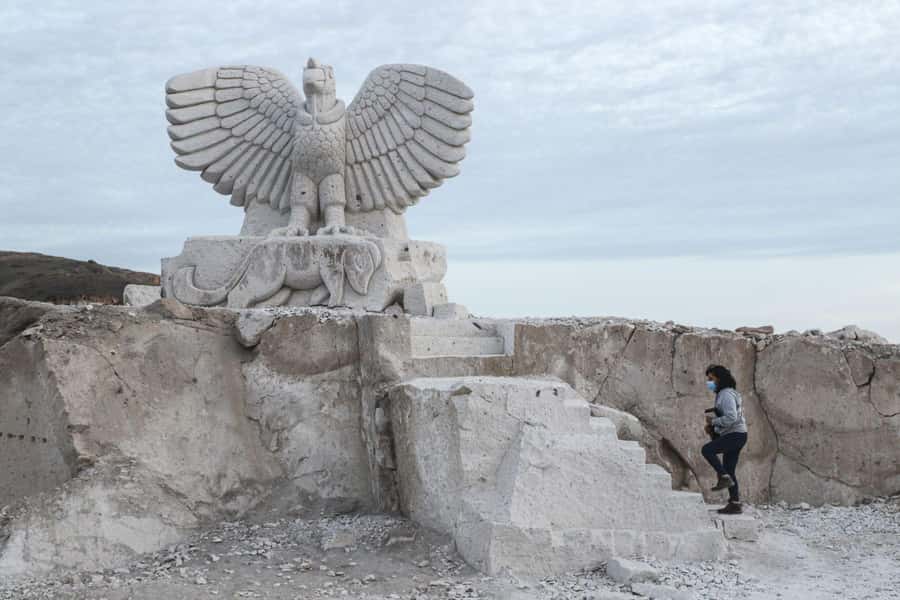
A particularly unusual feature is the large carving of the Church of the Company of Jesus. Local stonemasons made it inside the quarry, turning the same material used in Arequipa’s architecture into a scale representation of one of the city’s best-known religious buildings.
The visit can also include a meeting with one of the stonemasons. You can hear about the daily work directly and try cutting one of the stone blocks yourself. That hands-on moment is valuable because it turns an abstract explanation into a physical task. You quickly see that the stone may look soft and uniform from a distance, but shaping it still takes care and effort.
The quarry stop is listed at about 50 minutes. That is enough for the explanation, photographs, the church carving, and the practical demonstration, but not enough for a long independent wander. Stay close to the guide and be ready to move when the group does.
Same trailhead, a different route:
- Cusco: 4-Day Inca Trail to Machu Picchu with Accommodation
★ 4.8 · 432 reviews - Cusco: Machu Picchu 2-Day Inca Trail with Panoramic Train
★ 4.9 · 260 reviews - From Cusco: 2-Day Inca Trail to Machu Picchu
★ 4.2 · 244 reviews - Machu Picchu: Inca Trail 2-Day Overnight Guided Tour
★ 4.9 · 203 reviews
The 30-minute ride to Culebrillas
From Añashuayco, the van continues for about 30 minutes to the Quebrada de Culebrillas. This transfer is not a sightseeing stop, but it breaks up the quarry visit and brings you to a different kind of stone setting.
The change matters. Añashuayco shows human extraction and construction. Culebrillas shows the effect of water cutting through the rock. The two stops work well together because you see both the stone shaped by people and the stone shaped by nature.
The route is short enough for a half-day schedule, but the roads and traffic can affect the exact timing. If the morning begins late, Culebrillas is where you may feel the lost minutes most clearly, since the walk has a fixed, limited length.
Walking through the Culebrillas canyon
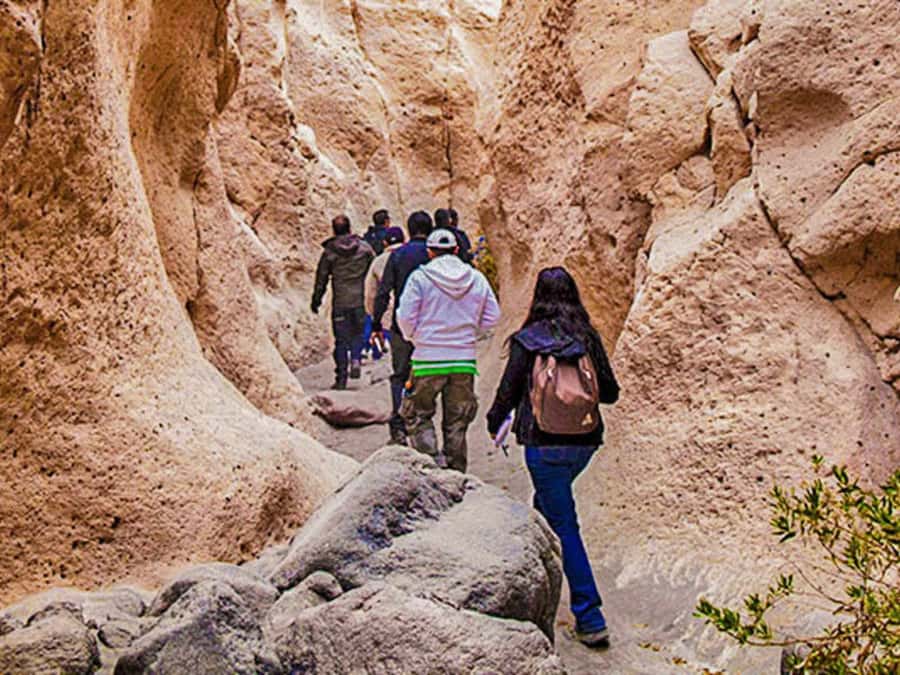
At Culebrillas, you walk inside a narrow canyon formed by the passage of water. The walls reach roughly 15 to 20 meters high and grow taller as you move farther in. The walk itself is about 20 minutes, though the stop is listed at around 30 minutes when time for photographs and guiding is included.
This is a simple walk rather than a strenuous trek. Still, you should expect an uneven natural surface and bring shoes you can walk in comfortably. The narrow walls create a different mood from the open quarry, and the short route gives you a chance to move rather than simply stand at viewpoints.
At the end of the walk, the guide points out petroglyphs attributed to the Wari culture. They are more than a thousand years old. The markings are not presented as a large archaeological site with extensive interpretation, so do not expect a museum-style visit. Their value comes from seeing ancient marks in the canyon itself, in the same setting where the rock formations and water channel remain visible.
Look carefully and listen to the guide’s explanation. In a short stop, it is easy to hurry past the petroglyphs or focus only on photographs. The walk is brief, so anyone particularly interested in archaeology may wish for more time.
Apachetas and the journey back
Before returning to Arequipa, you see the apachetas. These are stones placed one on top of another, associated with gratitude toward nature and with good luck. Their meaning gives the final stop a quiet, symbolic quality after the quarry’s noise and the canyon’s enclosed walls.
The apachetas are not a separate long visit. Think of them as a short cultural detail folded into the Culebrillas stop. They help show how the route is not only about geology and photo stops. Local beliefs and gestures remain part of how people relate to the surrounding land.
The van then returns toward the city. The stated arrival is around 1:30 p.m., near the main square, though traffic and any late start can change that. The route is therefore best treated as a morning or half-day activity rather than a precisely timed transfer.
What the $11 price really includes
At $11 per person, this is a strong value if you want the Sillar Route without arranging transport yourself. You receive tourist transport and a professional guide, and the route covers three distinct subjects: volcano views, the working quarry, and the Culebrillas canyon with its Wari petroglyphs.
The important extra cost is the entrance fee of 18 soles in total. Since that charge is not included, bring cash in local currency or confirm the accepted payment method before departure. The price remains modest even after adding the entrance fee, but the advertised fare is not the complete cost.
The value depends on what you want from the day. If your goal is a quick introduction to Arequipa’s volcanic stone and nearby sites, the cost is hard to criticize. If you prefer long walks, extensive archaeology, or a slow quarry visit, the short format may feel limited.
The overall rating is 4.2 from 69 ratings, which fits the experience’s strengths and weak spots. The most consistent positives are the friendly explanations, the entertaining pace, the new vehicle used on at least one outing, and the good price. The main concerns are a delayed start, limited time, and the possibility of the tour operating only in Spanish if the English guide is unavailable.
Language, guiding, and group expectations
Live guiding is offered in English and Spanish. Because the experience depends on explanations about stone production, local history, and the petroglyphs, language matters more here than it would on a simple scenic drive.
English availability should be confirmed at booking and again before departure. One scheduled English service had to run in Spanish because the English guide was ill, and the operator offered a different date. That is a fair response, but it does not help if you have a fixed travel schedule.
The guide’s role is especially useful at Añashuayco. Without context, the quarry can look like a dramatic wall of pale rock and little more. With clear explanation, you understand how the cliffs were formed, why the stone matters, and what the stonemason is doing.
This is a shared excursion, not a private custom tour. You will need to follow the group’s pace at the viewpoint, quarry, and canyon. That keeps the price low, but it also means you cannot assume extra time at your favorite stop.
Who should book this half-day outing?
I would recommend it to first-time visitors who want to understand Arequipa beyond the central plaza. It is also a good choice if you have only a few hours available, want transportation included, or prefer a guide to explain the cultural meaning behind what you see.
Families and casual sightseers may appreciate the short walk and the mix of activities. The chance to try cutting sillar gives the quarry visit more life than a standard photo stop. People interested in architecture will also get useful context for Arequipa’s white churches and colonial buildings.
I would be more cautious if you want a serious hike or a long archaeological visit. The Culebrillas walk is short, and the entire excursion is designed as a compact introduction. Anyone with a tight afternoon schedule should also allow extra time after the planned return.
Free cancellation is available up to 24 hours before departure, and you can reserve without paying immediately. Those terms help if your Arequipa plans are still shifting, but they do not remove the need to check the language, start time, and extra entrance fee.
Should you book the Sillar Route and Culebrillas tour?
Book it if you want a low-cost, well-rounded half-day outside Arequipa. The combination of a working quarry, a large sillar church carving, a hands-on stone demonstration, volcano views, Wari petroglyphs, and apachetas gives you more variety than the price suggests.
Skip it if your priority is a long canyon hike, a slow archaeological study, or guaranteed minute-by-minute timing. For most visitors, I would choose the morning departure, confirm English guiding, bring the 18 soles for entrance fees, wear practical shoes, and keep the afternoon free in case the van returns late.
FAQ
Where does the tour start?
It starts at the main office at C. Álvarez Thomas 115 in Arequipa. The coordinates provided are -16.4003911, -71.53703469999999.
Where does the tour finish?
The tour finishes near Av. La Marina in Arequipa, with drop-off close to the city center and main square.
How long does the experience last?
The stated duration is 270 minutes, or four and a half hours. The morning schedule runs approximately from 9:15 a.m. to 1:30 p.m.
Is there an afternoon departure?
Yes. A second shift is available at 2 p.m.
What is included in the price?
Tourist transport and a professional guide are included. Guiding is offered in English and Spanish.
Are entrance fees included?
No. Entrance fees cost 18 soles in total and must be paid separately.
What will I see at Añashuayco Quarry?
You will see a working sillar quarry, tall ignimbrite walls, an oversized carving of the Church of the Company of Jesus, and stonemasons at work. You may also be able to try cutting a stone block.
How long is the walk at Culebrillas?
The walk inside the canyon takes approximately 20 minutes. The full stop, including the visit and photographs, is listed at about 30 minutes.
Can I cancel for a full refund?
Yes. You can cancel up to 24 hours in advance for a full refund. You can also reserve now and pay later.
Just added around Peru
- Classic Choquequirao Trek – 5 Days / 4 Nights★ 5.0 · 52 reviews
- Short Inca Trail 2 Day Hike to Machu Picchu with Permits & Train★ 5.0 · 51 reviews
- 2 Day Tour Throughout the Short Inca Trail to Machu Picchu★ 5.0 · 36 reviews
- Small Group: 4-Day Inca Trail Trek to Machu Picchu★ 5.0 · 33 reviews
- 5-Day: Salkantay Trek to Machupicchu and Humantay Lake★ 5.0 · 42 reviews
- 2 Day – Short Inca Trail to Machu Picchu – Group Service★ 5.0 · 30 reviews
- 5 Day – Salkantay trek to Machu Picchu – Group Service★ 4.5 · 27 reviews
- Salkantay Trek Standard 5D/4N★ 5.0 · 48 reviews
Arequipa Trekking Tours, compared.
Private 3 Day Colca Canyon Trekking tour (superior Service)
Read our review →
2 Day Trek Including Transfer to Puno / Colca Canyon
Read our review →
Browse the lists this trek appears in