
Review · ETHIOPIA
4 Days Trekking to Simien Mountain National Park
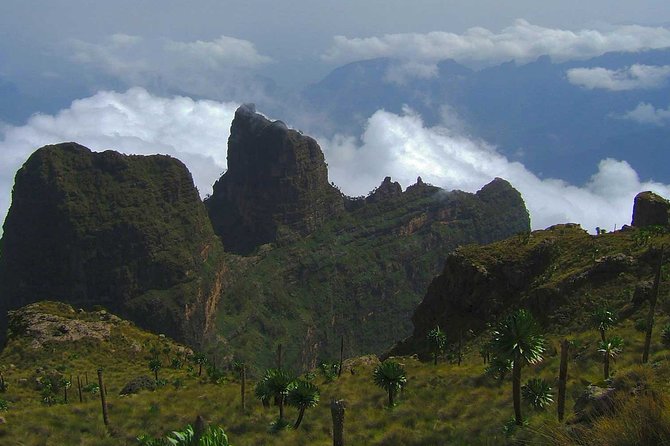
The big draw here is altitude and scale: the Simien Mountains rise into a chain of sharp peaks, deep gorges, and sheer cliffs in northern Ethiopia. Over four days, you walk from the park edge near Debark toward Gich, Imet-Gogo, and Chenek, with a chance to see gelada baboons, Walia ibex, giant lobelia, and Ras Dejen.
I like the mix of wild scenery and ordinary village life. A traditional coffee ceremony in Gich gives the trek a human side, while the 500-meter Jinbar waterfall and high escarpment paths supply the drama. The small group, capped at eight, should also make it easier to keep a steady pace and ask questions.
The main caution is altitude. The route reaches about 4,070 meters before the final climb to Buwahit at 4,430 meters, so this is not a gentle sightseeing trip. You need moderate fitness, patience with slow uphill walking, and a willingness to spend several days in a remote mountain park.
Key points at a glance
- A four-day route through Ethiopia’s famous high mountains: You move beyond a short viewpoint visit and spend several days on foot inside Simien National Park.
- The Jinbar waterfall drops about 500 meters: The cliff walk above the abyss is one of the tour’s strongest scenic moments.
- Gich village adds a local encounter: You can join a traditional coffee ceremony and see fields of barley and everyday farm life.
- High-altitude wildlife is part of the appeal: Gelada baboons appear early in the trek, while Walia ibex may be seen near Buwahit.
- The group is limited to eight people: That is a useful size for a demanding route and for coordinating transport, permits, and the park scout.
- The price is $275 per person: For four days with pickup, park arrangements, guiding, trekking support, and the return drive to Gondar, the cost can offer good value if the included services match your booking confirmation.
Why this four-day Simien route is worth your time
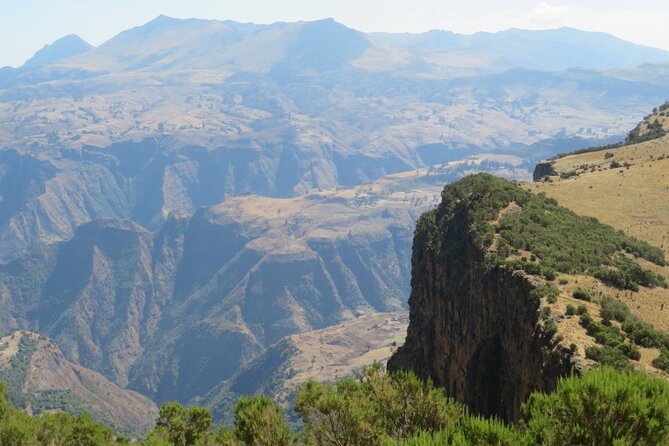
Simien is not simply a place to stop for a photograph and leave. The park was designated in 1966, and the mountain range became a UNESCO World Heritage site in 1978. Its appeal comes from the way geology, wildlife, farming, and high-altitude walking come together in one trip.
You follow established mountain trails along the northern escarpment, with views across foothills and plains, then move into a more dramatic section of cliffs and valleys. The route also reaches several high points, including Imet-Gogo at 3,926 meters, another summit around 4,070 meters, and Buwahit at 4,430 meters.
That variety matters. One hour you may be watching a troop of gelada baboons near the trail. Later, you may be walking through barley fields or looking down at a river far below. I like trips that give you more than scenery, and this one has enough contact with local life to avoid feeling like a series of mountain viewpoints.
More National Park Trips in Ethiopia:
- Simien Mountains National Park – 7 Day Trek
★ 5.0 · 5 reviews - Chiang Mai: Doi Inthanon National Park and Pha Dok Siew Trek
★ 4.5 · 527 reviews - From Kuala Lumpur: Taman Negara National Park Trek Day Tour
★ 4.4 · 395 reviews
From Gondar to Debark and Sankaber
The trip begins at 8:00 a.m., with pickup available from Gondar Airport or your hotel. The drive to Debark covers about 100 kilometers on a paved road and takes roughly two hours. At the park headquarters, the team arranges your permits and picks up the required park scout.
This part of the day is practical rather than scenic, but it matters. Permits and park procedures are handled before you reach the trail, and the scout is part of the support system inside the park. After Debark, you continue by vehicle for about another hour before beginning the first walk.
Day one is the easiest walking day. The trail follows the northern edge of the escarpment, with views toward the foothills and plains of northern Ethiopia. It is a sensible introduction to the region, giving you time to settle into the pace and altitude before the more demanding sections begin.
Gelada baboons are one of the early rewards. These Ethiopian highland animals are not found everywhere, so seeing them near the opening trail gives the first day a strong natural-history focus. The night is spent at Sankaber.
The itinerary gives only about one hour for the first walk, so do not expect a full day of hard trekking at this stage. That is good news if you are adjusting to the elevation, but you should still take the day seriously. A relaxed first afternoon is more useful than rushing into a high-altitude route too quickly.
Sankaber, the Jinbar waterfall, and Gich village
Day two brings the most varied walking of the trip. From Sankaber, you follow the northern escarpment eastward, descend toward the Kaba Valley, then climb again toward Gich Abyss. The route alternates between easier walking and uphill effort, with the scenery changing as you go.
A narrow ridge leads to a cliff with a wide view into the abyss and toward the Simien foothills. The Jinbar River then plunges about 500 meters into the gorge, creating the trek’s most memorable waterfall view. The scale is hard to appreciate from a short description. You are not just looking at a waterfall in a valley, but at water dropping from a high mountain edge into a huge cut in the earth.
The route continues for about two hours before lunch near the Jinbar River. That timing is useful to know because the morning includes both descents and climbs. You should expect the path to feel more demanding than day one, even though the distance is not fully specified.
After lunch, the character of the walk changes again. You cross fields of barley and reach Gich village, where you can take part in a traditional coffee ceremony in one of the huts. This is one of the strongest parts of the itinerary for me. The coffee stop is not just a break. It lets you see how agriculture fits into life at altitude and gives you a direct connection with the people who live beside the park trails.
From Gich village, it is a short walk to Gich camp. The combination of cliff views, farmland, and village contact makes day two feel fuller than a standard point-to-point hike. It also gives you a reason to pay attention to the route between the major viewpoints.
Giant lobelia and the high escarpment on day three
Day three begins at Gich camp and moves into one of the park’s most distinctive plant zones. You walk through fields of giant lobelia before reaching Imet-Gogo, a summit at about 3,926 meters.
Giant lobelia gives the high country an unusual look. These large plants are one of the details that separate Simien from ordinary mountain scenery, and the walk through them helps you notice the park as an ecosystem rather than only a place of cliffs and peaks.
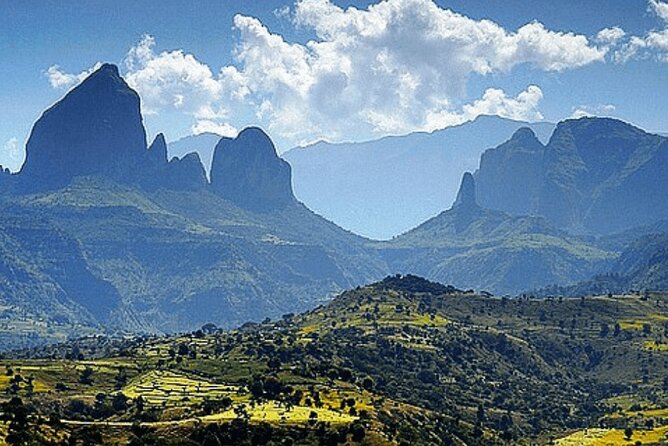
At Imet-Gogo, you have time to take in the views over the valleys and the unusual dome-shaped formations in the distance. The route later brings you closer to some of those forms, so the view works as a preview of the volcanic shapes ahead.
The trail then descends into the Jinbahir River Valley. This shift gives you a different angle on Imet-Gogo and the surrounding rock. From below, the volcanic formations can look as if large pieces of the mountains have been removed. It is a useful reminder that this is a place shaped by erosion and time, not simply a row of high peaks.
You also follow the edge of a section of escarpment that drops almost vertically for several hundred meters. This is where the trek becomes more serious. The path itself is described as part of an established trail network, but the exposure and altitude can still make the walking feel demanding.
A summit of around 4,070 meters is reached on this day. The itinerary does not provide a full hour-by-hour breakdown for the route, so you should ask the operator about the exact day three schedule, camp arrangements, and expected walking time before departure. That is especially important if you are planning around transport, equipment, or your own altitude limits.
A few more treks around Ethiopia worth a look
- 4 Day Trekking Simien Mountains
★ 5.0 · 2 reviews - Cusco: 4-Day Inca Trail to Machu Picchu with Accommodation
★ 4.8 · 432 reviews - Pokhara: 4-Day Ghorepani, Poonhill & Ghandruk Mountain Trek
★ 5.0 · 132 reviews - TOUR PACKAGE (jungle trekking, taxi, Room) 4 DAYS 3 NIGHTS in BUKIT LAWANG
★ 5.0 · 118 reviews
Buwahit at 4,430 meters and the return to Gondar
The final day is the physical high point of the trip. You climb Buwahit, described as the second-highest peak in the Simien Mountains, at 4,430 meters.
The reward is a wide mountain view and a chance to see Walia ibex, an Ethiopian endemic associated especially with the Simien range. The animal belongs to the goat family and is one of the park’s signature species. Wildlife is never guaranteed, but the route gives you a good reason to keep your eyes on the ridges and rocky slopes rather than walking with your head down.
From Buwahit, you may also see Ras Dejen, Ethiopia’s highest mountain, at about 4,543 meters. The view toward Ras Dejen adds a fitting finish to the trek, even though this tour does not climb that peak.
After the high point, you descend to Chenek camp, where the vehicle waits. The drive back to Gondar takes about four hours. That is a long final transfer after a high-altitude climb, so keep the day’s rhythm in mind. The trip ends back at the original meeting point, but you should not treat the return drive as a quick hop.
Day four is likely to be the toughest day because of the altitude and the climb to Buwahit. The itinerary sets the acceptable age range at 12 to 70, but age alone tells you little about readiness. Your fitness, experience with uphill walking, and response to high altitude matter much more.
What the $275 price means in practice
At $275 per person, this is priced as a fairly accessible multi-day mountain trip rather than a luxury expedition. The value comes from the combination of transport from Gondar, park permit arrangements, a local guide, a park scout, several days of trail access, and the return vehicle from Chenek.
The group maximum of eight is another point in its favor. A small party usually makes it easier to keep the route organized and adjust the pace within reason. It also gives you a better chance to speak with the guide instead of simply walking behind a large crowd.
The supplied details do not spell out every inclusion, such as meals, camping equipment, porter support, or accommodation arrangements. Ask for that list before paying, especially because a four-day trek can involve different expectations about tents, sleeping gear, food, and luggage.
The service team includes Solomon, who handles the company side, and Jon is identified as a guide connected with the trek. The operation is described as punctual and flexible, including the ability to adjust an itinerary when needed. Still, confirm who will lead your specific departure, since staff can vary by date.
Who should book this trek
You should consider this trip if you want a proper mountain route rather than a short park visit. It suits you best if you enjoy long days outdoors, can manage repeated climbs, and want a mix of wildlife, geology, village life, and high viewpoints.
It is also a good match for natural-history enthusiasts. Gelada baboons, Walia ibex, giant lobelia, and highland bird life all form part of the experience. You do not need to be a specialist, but you should enjoy looking closely and moving at a patient pace.
This is less suitable if you want a relaxed Ethiopian holiday with little physical strain. The route reaches more than 4,000 meters, includes steep ascents and descents, and ends with a four-hour drive to Gondar. Anyone with concerns about altitude or strenuous walking should seek medical advice before booking.
Near-public transportation is available, but the tour is designed around pickup from Gondar Airport or a hotel. Mobile tickets are offered, and confirmation is sent within 48 hours, subject to availability. The experience also requires good weather and a minimum number of participants. If poor weather or insufficient bookings cancel the trip, you are offered another date or a full refund.
For cancellations, you receive a full refund if you cancel at least 24 hours before the start time. Changes or cancellations inside that window are not accepted for a refund.
Is the Simien four-day trek a good buy?
I would book this if your priority is seeing Simien on foot, with enough time to move beyond the first viewpoint and reach the park’s higher country. The best parts are the Jinbar waterfall, the coffee ceremony at Gich, the giant lobelia near Imet-Gogo, and the chance to spot Walia ibex around Buwahit.
I would pause before booking if you need a fully specified package. Ask exactly what food, camping gear, luggage handling, and staff support are included. Also ask for the expected walking hours on day three and the plan for the night before the Buwahit climb.
For a fit person who wants a challenging Ethiopian mountain trip at a moderate price, this is a strong choice. You get real trail time, striking cliffs, local contact, and a small group. Just respect the altitude, confirm the practical details, and do not mistake the four-day label for an easy holiday.
FAQ
Where does the trek start?
The experience starts at 8:00 a.m. with pickup from Gondar Airport or a hotel in Gondar, Ethiopia.
How long is the drive from Gondar to the Simien park headquarters?
The drive to Debark is about 100 kilometers and takes around two hours on a paved road. After permits and the park scout are arranged, you drive for about another hour before the first walk.
What is the highest point reached on the tour?
The route climbs Buwahit at about 4,430 meters. It also reaches Imet-Gogo at 3,926 meters and another summit at around 4,070 meters.
Can I see gelada baboons and Walia ibex?
Gelada baboons may be seen during the first day near the northern edge of the escarpment. Walia ibex may be seen during the climb near Buwahit, but wildlife sightings cannot be guaranteed.
Is this trek suitable for all ages?
The stated age range is 12 to 70. You also need a moderate level of physical fitness because the route includes high-altitude climbs and descents.
What happens if the tour is canceled because of weather?
If poor weather cancels the experience, you are offered a different date or a full refund. The same options apply if the minimum number of participants is not reached.
Just added around Ethiopia
- Simien Mountains National Park – 7 Day Trek★ 5.0 · 5 reviews
- Day trek to Simeien Mountains★ 5.0 · 3 reviews
- 2 Days Simien Mountains Trekking★ 5.0 · 6 reviews
- 2 Nights 3 Days Trek to Semien Mountain★ 5.0 · 4 reviews
- Day trek to Simien Mountain★ 5.0 · 5 reviews
- 3 Days Simien Mountains Trekking★ 5.0 · 3 reviews
- 6 Days Bale Mountains Trekking★ 5.0 · 10 reviews
- 5-Day Northern Ethiopia Tour : 3D Simien Mountains Trek & Axum.★ 5.0 · 9 reviews
National Parks, compared.
Doi Inthanon National Park and Pha Dok Siew Trek
Read our review →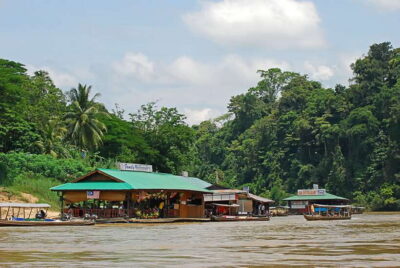
From Kuala Lumpur: Taman Negara National Park Trek Day Tour
Read our review →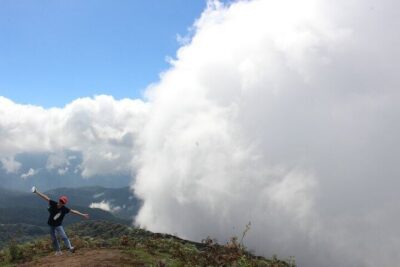
Doi inthanon National Park + 2Hour Fantastic Trekking with Lunch
Read our review →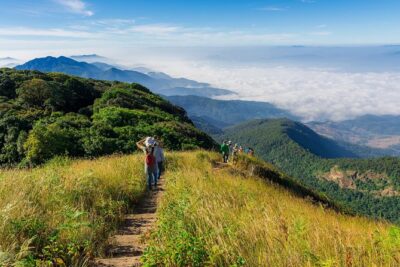
Doi Inthanon National Park with Nature Trail Trekking 1-Day Tour
Read our review →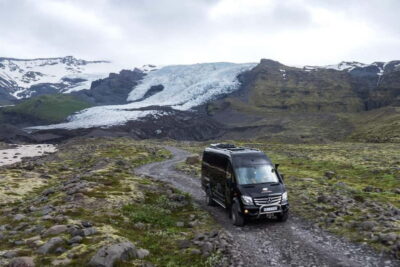
Half-Day Vatnajökull National Park Glacier Hike
Read our review →
Cat Ba National Park Full Day Trekking Tour to Viet Hai Village
Read our review →
From Da Nang or Hoi An: Bach Ma National Park Trek & Lunch
Read our review →
Bach Ma National Park trekking deluxe daily tour from Hue
Read our review →Browse the lists this trek appears in