
Review · ADDIS ABABA
4 Day Trekking Simien Mountains
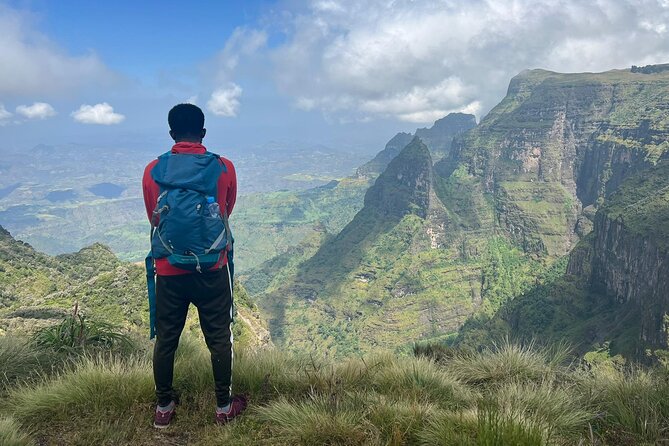
The best part of this trek is the way it turns the Simien Mountains into a walking journey rather than a string of roadside viewpoints. You follow old trails between villages, camp above deep gorges, and watch gelada baboons grazing beside the path. The route also reaches serious altitude, including Buwahit at 4,430 meters.
I like the variety. One day brings an easy escarpment walk and broad views over northern Ethiopia. Another gives you the Jinbar waterfall, barley fields, and the cliff-top camp at Gich. I also like that the price includes park fees, meals, a scout, guide, mules, and accommodation, which removes many of the awkward costs from a remote trek.
The main consideration is the physical demand. Day three runs for about seven to eight hours, with steep climbs and high altitude. There is also a practical detail to confirm before paying: the meeting point is in Addis Ababa, while the itinerary begins in Gondar at 9:00 a.m. Ask exactly where the trek starts and what transport is arranged.
Key points before you book
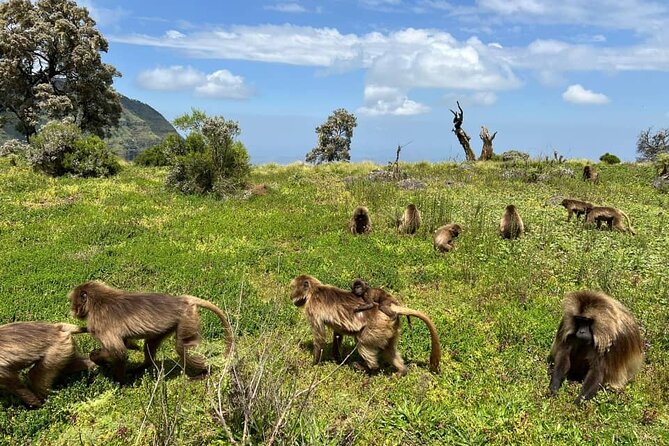
- Gelada baboons appear early: You may see them on the first day and again around the barley fields near Gich.
- The route reaches high altitude: Imet-Gogo is listed at 3,926 meters, Inatye at 4,070 meters, and Buwahit at 4,430 meters.
- Three nights are spent camping: Sankaber, Gich, and Chennek form the main overnight sequence.
- The Jinbar waterfall is a highlight: The river drops about 500 meters into the abyss.
- The package covers the expensive basics: Transport, park fees, guide, scout, mules, accommodation, and nine included meals are listed.
- The group stays fairly small: The minimum is two people and the maximum is ten.
Why this four-day route works
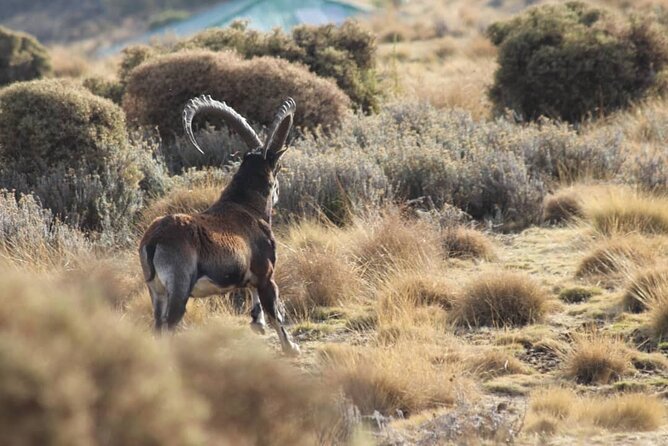
The Simien Mountains are not simply a place for a quick lookout stop. The attraction is the movement between high ridges, open pasture, river valleys, and sheer volcanic cliffs. This trek gives you enough time to see those changes at walking pace.
You begin along the northern edge of the escarpment, then move east through the Gich area and onward to Chennek. The route finishes with a climb toward Buwahit, with views toward Ras-Dejen, Ethiopia’s highest peak at 4,543 meters.
That progression matters. The first day lets you settle into the altitude and camp routine. The second adds longer walking and a major waterfall. The third is the hardest full trekking day, with Imet-Gogo and Inatye. The fourth gives you a final summit attempt before the trip ends back at the meeting point.
The package is priced at $450 per person. That is not just a guiding fee. It includes an air-conditioned vehicle, bottled mineral water, a guide, a scout or ranger, all park entrance fees, mules and a mule handler, accommodation, government taxes, and breakfast, lunch, and dinner for the three nights. Lunch is also listed for day four, giving you four lunches in total.
Drinks are not included. That sounds minor, but remote mountain camping makes small extras worth planning for. You should also clarify the transport plan because the published details mention pickup in Addis Ababa, while the first day describes leaving Gondar. That may reflect a wider Ethiopia itinerary or a transfer arrangement, but the information here does not explain it.
A few more treks around Ethiopia worth a look
- 4 Days Trekking to Simien Mountain National Park
★ 5.0 · 7 reviews - Cusco: 4-Day Inca Trail to Machu Picchu with Accommodation
★ 4.8 · 432 reviews - Pokhara: 4-Day Ghorepani, Poonhill & Ghandruk Mountain Trek
★ 5.0 · 132 reviews
Day one: Sankaber and the first escarpment walk
The first day begins with a drive to Debark, the park headquarters. The stated journey from Gondar is about 100 kilometers and three hours by 4×4 on a good gravel road. At Debark, you obtain permits and meet the local guide and scout before continuing for about an hour into the national park.
This is a sensible introduction to the area. The first walk lasts roughly three to four hours and follows the northern edge of the escarpment. It is described as easy, which makes it useful for getting your legs moving before the longer days ahead.
The views stretch over foothills and the plains of northern Ethiopia. The setting changes quickly from road travel to open mountain paths, and the first wildlife sighting may come in the form of gelada baboons. These animals are a major reason to walk here, since you may encounter them near the trail rather than needing a special vehicle excursion.
You finish at Sankaber camp, where tea and coffee are provided and camp is prepared before you arrive. That small touch matters after a long transfer. You can reach camp, drink something warm, and settle in rather than dealing with every camp task at the end of the day.
Still, do not treat day one as effortless. The drive is long, the gravel road can be tiring, and you begin sleeping at altitude. If you are arriving from Addis Ababa, make sure the operator explains how you reach Gondar or Debark, since the stated 9:00 a.m. departure point and the day one route do not line up clearly.
Day two: Gich Abyss, Jinbar waterfall, and village paths
Day two brings about five hours of walking. After breakfast, you follow the northern escarpment east before descending toward the Kaba valley. The route then climbs to Gich Abyss and reaches a narrow ridge with a strong view into the abyss and toward the Simien foothills.
The most dramatic sight is the Jinbar River waterfall. The river falls roughly 500 meters into the abyss, so this is one of the route’s major visual rewards. The path continues for about two hours before lunch beside the Jinbar River.
After lunch, you climb from the valley through barley fields toward Gich village. Gelada baboons may be around these fields, giving you a chance to see the animals in a working rural setting rather than at a marked viewing stop. That connection between village life, farming, and mountain trails is one of the most appealing parts of the route.
Gich camp sits above the village. Its position gives the overnight stop a more exposed mountain feel than a regular roadside campsite. You should expect scenery to be the main luxury here, not comfort or entertainment.
The day is shorter than day three, but the route includes both descents and climbs. That combination can be harder than the walking time suggests, particularly at altitude. Take the morning steadily and keep water within reach. Bottled mineral water is included, but the package does not include drinks generally, so ask what quantity is supplied and bring any preferred extras.
Day three: giant lobelia, Imet-Gogo, and Inatye
Day three is the physical centerpiece. The schedule gives seven to eight hours of walking, though the listed stop duration says about six hours. That difference is worth clarifying, especially if you want an exact pace or need to plan around altitude.
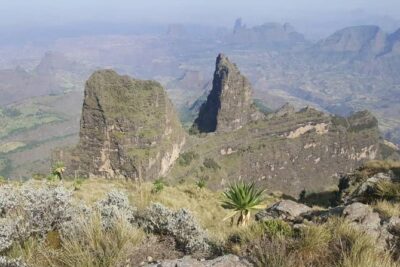
The trail passes fields of giant lobelia before reaching the high viewpoints around Saha and Imet-Gogo. Imet-Gogo is listed at 3,926 meters. The route then follows steep cliffs southward, with views toward striking dome-shaped formations in the distance.
The scenery changes again as you descend into the Jinbar River Valley. From below, the cliffs and volcanic forms can look broken apart, as if huge sections of the mountain have been removed. This is not a gentle stroll, but it is the kind of route that explains why the Simien Mountains are protected as a UNESCO World Heritage site.
From the valley, you climb again to Inatye at 4,070 meters. The summit area is used as a lunch stop, giving you a chance to rest at one of the day’s best viewpoints. After lunch, the route descends for about two hours along a steep trail toward Chennek.
This is where fitness becomes important. The issue is not only distance. You are gaining and losing height repeatedly, and the route reaches more than 4,000 meters. A moderate fitness level is required, according to the tour details, but I would read that as a baseline rather than a guarantee of ease.
Mules and a mule handler are included. That is valuable on a trek with steep sections and camping equipment. It does not remove the need to carry your own day bag, water, and personal items, but it should reduce the load you need to manage between camps.
Same trailhead, a different route:
- Trekking at Bale Mountains 3 Days
★ 5.0 · 28 reviews - 3 Days Bale Mountains Trekking
★ 5.0 · 19 reviews - 6 Days Bale Mountains Trekking
★ 5.0 · 10 reviews - 5-Day Northern Ethiopia Tour : 3D Simien Mountains Trek & Axum.
★ 5.0 · 9 reviews
Day four: Buwahit and the view toward Ras-Dejen
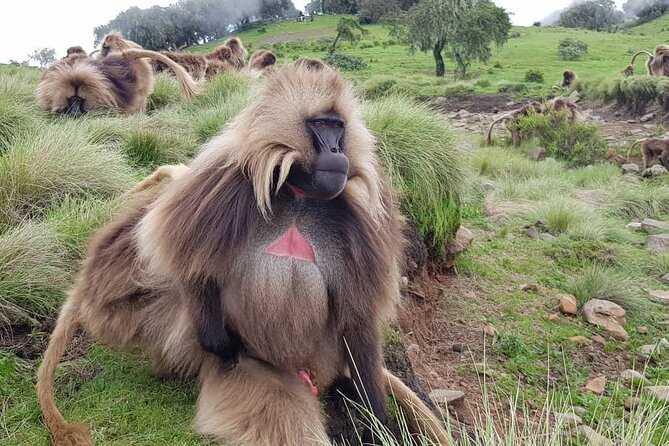
The final day is a five to six-hour round trip from Chennek camp. The goal is Buwahit, listed at 4,430 meters, the second-highest peak in the Simien Mountains.
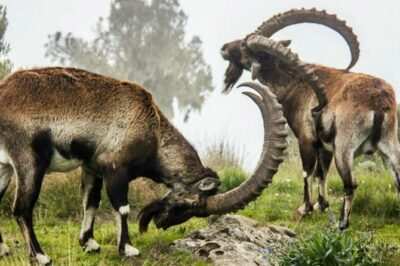
The climb offers a last chance to see wildlife, including Walia ibex. If conditions are lucky, you might also spot the Simien fox, a rare mammal found only in Ethiopia. The route is as much about the views as the summit itself. Looking west, you see the valley beyond Chennek. Looking east, you may see toward Ras-Dejen at 4,543 meters, the country’s highest peak.
You return to Chennek for lunch. The afternoon itinerary is cut short in the supplied details, so do not assume a particular afternoon activity or transfer. Confirm how and when you return to the meeting point before booking.
Buwahit makes the final day worthwhile, but the summit attempt is not a casual farewell walk. At 4,430 meters, altitude may affect your pace even if you are fit. Your guide and scout are important here, and you should follow their advice if the conditions or your energy make the full climb unwise.
Camps, guides, mules, and meals
This is a camping trek, with three nights in the park. The listed camps are Sankaber, Gich, and Chennek. Camp preparation is included, and tea and coffee are specifically mentioned at Sankaber.
A local guide and scout or ranger accompany the route. The guide helps with navigation and the walking plan, while the scout is especially relevant in a national park where permits, wildlife, and park rules matter. A small group of up to ten people should make it easier to keep the pace together than a large coach-style excursion.
The supplied feedback gives two useful names. Yigzaw, also called Mickey, is identified as the managing director, and Mulate is singled out for appreciation in one response. If you want to know who will actually lead your trek, ask whether Mulate is available and who your guide will be on each day. The company connected with the experience is Danakil Depression Tours.
Meals include three breakfasts, four lunches, and three dinners. That is a major part of the package value because arranging food in a remote mountain park would otherwise be inconvenient. Drinks are extra, so budget for those separately and ask what drinking water is supplied beyond the listed bottled mineral water.
What the $450 price really buys
At $450 per person, the value depends on your starting point and the transport arrangement. If the price includes the stated 4×4 travel, park permits, guide, scout, mules, camps, taxes, water, and nine meals, it covers the main costs of a four-day mountain trek in one payment.
I especially like the inclusion of mules and a handler. Carrying camping equipment over steep trails can change the experience from demanding to miserable. I also see value in having permits and park entry handled at Debark rather than leaving you to sort them out alone.
The weak point is clarity, not necessarily value. Pickup is offered and the listed meeting point is Cameron Street, Oasis Building, Cameroon Street, Addis Ababa. Yet day one begins in Gondar. Before booking, ask three direct questions:
- Is $450 the full price from Addis Ababa, or does the trek begin in Gondar?
- Is transport between Addis Ababa, Gondar, and the park included?
- What exactly happens after lunch on day four?
Free cancellation is available if you cancel at least 24 hours before the start time. Changes or cancellations inside that window are not accepted for a refund.
Who should choose this trek
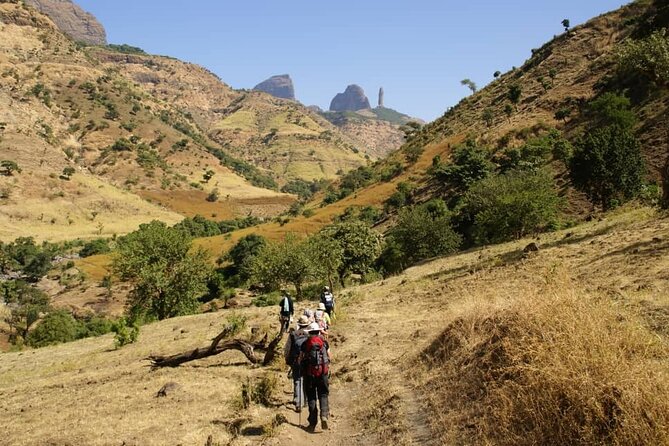
I would choose this route if you want a proper mountain walk with wildlife and camps, not a short park visit. It suits you if you can handle repeated climbs, steep descents, and high altitude while carrying a small personal bag.
It is a good match for people interested in natural history. Gelada baboons, Walia ibex, giant lobelia, and the possibility of seeing the Simien fox give the route more depth than scenery alone. It also suits you if you enjoy seeing rural paths used between villages and high pasture.
I would hesitate if you want hotel comfort, short walks, or a tightly timed schedule. The third day is long, the fourth reaches very high altitude, and the transport information needs sorting out. The minimum group size is two, so solo booking may depend on another person joining.
Should you book the Simien Mountains trek?
Book it if you want the full four-day experience of the park and are prepared for real mountain walking. The strongest features are the changing route, the gelada sightings, the Jinbar waterfall, the high viewpoints, and the practical inclusion of meals, permits, mules, and staff.
Before you pay, get the Addis Ababa to Gondar arrangement in writing and confirm the exact guide. Ask about Mulate if that is the person you hope to have, and confirm the final afternoon plan. With those details settled, $450 can be a sensible price for a small-group trek through one of Ethiopia’s most dramatic mountain areas.
FAQ
How long is the Simien Mountains trek?
The experience lasts approximately four days and includes three nights of accommodation in the park.
Where does the activity start?
The listed meeting point is Cameron Street, Oasis Building, Cameroon Street, Addis Ababa, Ethiopia, with a stated start time of 9:00 a.m. The day one route begins from Gondar, so you should confirm the exact departure arrangement before booking.
What is included in the price?
The package includes an air-conditioned vehicle, bottled mineral water, guide, scout or ranger, park entrance fees, mules and a mule handler, government taxes, accommodation, four lunches, three breakfasts, and three dinners.
Are drinks included?
No. Drinks are not included in the tour price.
How many people can join the trek?
The activity requires a minimum of two people and accepts a maximum of ten.
What fitness level is required?
A moderate physical fitness level is required. The route includes walking days of about three to eight hours, steep climbs and descents, and high points including Buwahit at 4,430 meters.
Just added around Ethiopia
- Simien Mountains National Park – 7 Day Trek★ 5.0 · 5 reviews
- Day trek to Simeien Mountains★ 5.0 · 3 reviews
- 2 Days Simien Mountains Trekking★ 5.0 · 6 reviews
- 2 Nights 3 Days Trek to Semien Mountain★ 5.0 · 4 reviews
- Day trek to Simien Mountain★ 5.0 · 5 reviews
- 4 Days Trekking to Simien Mountain National Park★ 5.0 · 7 reviews
- 3 Days Simien Mountains Trekking★ 5.0 · 3 reviews
- 6 Days Bale Mountains Trekking★ 5.0 · 10 reviews
Addis Ababa Trekking Tours, compared.
Northern Ethiopia & Trekking Simien Mountains , 10 Days
Read our review →
One Day Trekking Tours To Mount Zuqualla And Lake Zuqualla
Read our review →Browse the lists this trek appears in