
Review · SPAIN
Tenerife : Camino Real hike
Tenerife’s old Camino Real was once a working road for moving food, livestock, and trade. Today, it gives you a closer look at the island’s rural side, with native plants, old stonework, and wide views toward Mount Teide. This is not a gentle stroll. The roughly six-kilometer route has plenty of loose rock, steep climbs, and descents.
I like the way this walk joins nature with everyday island history, rather than treating Tenerife as only a beach destination. I also like the simple transport plan: a bus ride from the south, four hours on foot, then a ride back to your hotel area. The main caution is the trail itself. You need good fitness, steady footing, and a willingness to keep your eyes on the ground for much of the walk.
Key points to know before booking
- A genuine old route: Walk a former trade and transport path with rural and ethnographic features.
- Four hours on foot: The hike is about six kilometers, but rocky ground and repeated climbs make it feel demanding.
- Native Canarian plants: Look for tabaibas and cardones, two plants closely tied to Tenerife’s dry volcanic terrain.
- Mount Teide views: The route offers striking views toward Spain’s highest mountain.
- Simple half-day logistics: Bus transport, a hiking guide, and pickup and return to the hotel area are included.
- Bring your own food and drinks: Nothing to eat or drink is included, and there may be no toilet stop during the six-hour outing.
A working road turned mountain path
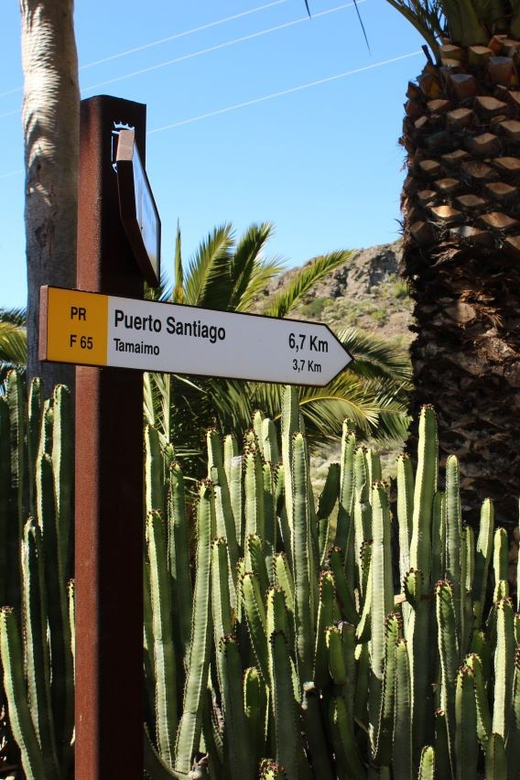
The Camino Real routes of Tenerife grew from necessity. Before modern roads connected the island, people used footpaths to carry supplies, move animals, and reach neighboring settlements. Many such routes have disappeared, but this one remains available as a walking route through the countryside.
That background gives the hike more meaning than a scenic walk with no story attached. You are following a path shaped by work and survival. The stone under your feet was not laid for sightseeing. It was part of daily life.
The route near Santiago del Teide takes you through natural scenery and rural spaces in the south of Tenerife. You can expect native vegetation, open views, and signs of earlier human use along the way. The exact ethnographic features are not specified, so you should think of them as small details to notice rather than a formal museum-style collection.
I like this kind of outing because it shows a quieter side of the island. You are not simply driven to a viewpoint, given ten minutes for photographs, and returned to the coast. The main experience is the path itself.
A few more treks around Spain worth a look
- La Palma: Tajogaite Volcano Guided Trek
★ 4.8 · 1,810 reviews - From Barcelona: Montserrat Monastery & Scenic Mountain Hike
★ 4.9 · 978 reviews - Lanzarote: Timanfaya Natural Park Trekking Tour
★ 4.8 · 766 reviews
The bus ride from Tenerife’s south
The day begins at one of the supplier’s pickup points, with options listed around Av. Antonio Dominguez, the Bus Stop Sol Arona Hotel, and Isla Bonita. Select your pickup location when booking, and arrive ready for a 45-minute coach ride.
That transfer matters. It turns the outing into a proper excursion from the resort areas rather than a walk you need to reach on your own. It also means the total six-hour schedule includes about 90 minutes on the bus, leaving roughly four hours for the hike.
The transport is practical rather than part of the sightseeing. You are using it to reach Santiago del Teide and return after the walk. If you are staying in the southern resort zone, the included pickup and return make the $65 price easier to justify. You do not need to arrange a separate taxi or rental car for the route.
Still, keep the timing in mind. This is not six full hours of walking. It is a six-hour outing, with bus time included. That is useful for planning your day, especially if you have an evening reservation or another activity booked.
Four hours around Santiago del Teide
The hiking portion lasts about four hours. That sounds moderate until you account for the surface. One detailed account of the route describes around six kilometers of difficult stone underfoot, with constant uphill and downhill sections. The path is not presented as a smooth trail suitable for every casual walker.
You will need to place your feet carefully. On rocky ground, even a short route can take time and effort. The repeated rises and drops also change the feel of the walk. You may not be covering a great distance, but your legs and balance will be working throughout.
This is the most important point to understand before booking. The tour is not suitable for people over 70, and the route is better matched to someone in good physical condition with some experience on uneven mountain paths. You do not need to be an elite climber, but you should be comfortable with a hard walk on stones and steep sections.
The trail’s difficulty also affects sightseeing. You may want to pause and study a plant or view, yet you still need to watch the ground. One recent booking described the path as demanding enough that careful footing took constant attention. That is useful advice: enjoy the scenery, but do not expect to stroll along while looking around the whole time.
Tabaibas, cardones, and Tenerife’s native plants
The walk introduces you to endemic Canarian flora, including tabaibas and cardones. These plants are not just decoration beside the path. They are part of the island’s natural character and have particular uses and features that the guide can explain.
Tabaibas are a familiar sight in Tenerife’s dry areas, while cardones have a taller, cactus-like appearance and a strong presence in the island’s volcanic scenery. The supplied information does not give a full plant list, so you should not expect a specialist botany tour. The value is in seeing these plants in the countryside where they grow, with explanations about their traits and traditional uses.
I particularly like this element because it gives you something specific to look for. A walk becomes more rewarding when you can recognize the plants rather than seeing only a general stretch of scrub and rock.
The guide leads the walking portion and can conduct the tour in French, Spanish, English, or German. That language range is useful if you want explanations about the plants and rural features rather than a silent route-finding service. No guide’s personal name is provided, so you should not book expecting a particular named guide.
Same trailhead, a different route:
- Volcano Trekking Tour (Timanfaya eruptions)
★ 5.0 · 339 reviews - Caminito del Rey: Trekking Tour with Hiking Guide
★ 4.1 · 295 reviews - Sant Feliu de Guixols: Climb Via Ferrata Cala del Molí
★ 5.0 · 253 reviews - Gran Canaria: Guided Via Ferrata Excursion
★ 4.9 · 198 reviews
Views toward Mount Teide
The route includes views of Mount Teide, a major scenic reward on this side of the island. The mountain gives the outing a clear visual focus, especially when the path opens out across the countryside.
The view is part of the walk, not a separate stop with a long viewing platform or scheduled photo break. Because the trail has frequent rocky climbs and descents, you may need to choose your moments carefully. Stop when the guide allows and when the ground is safe.
This is where the route’s effort pays off. You are seeing Teide from a rural path rather than from a bus window or a developed lookout. The combination of volcanic scenery, native plants, and an old track gives the view more context.
Do not expect every minute to offer a wide panorama. Some parts of the route may require your attention on the stones. But the changing terrain and open views are a good reason to choose this over a simple countryside drive.
Ethnographic details along the way
The walk also includes different ethnographic elements. In plain terms, you may see traces connected with the traditional use of the countryside, such as old path features or signs of how people and animals once moved through the area.
The available details do not identify each feature, so I would not book this as a guided archaeology tour. Instead, think of the human details as a layer added to the natural scenery. The guide can help connect the path to earlier island life, when roads were used for food, livestock, and local trade.
That is an important distinction. The route’s appeal is not based on grand monuments. It is based on modest evidence of rural life. If you enjoy old roads, working landscapes, and the way people adapted to difficult ground, you will get more from the walk than someone looking only for dramatic viewpoints.
The path also shows why many old routes disappeared. Once modern roads took over transport, footpaths lost their daily purpose. This Camino Real survived long enough to become a way for you to encounter that earlier network on foot.
A demanding trail, not a relaxed nature walk
The strongest positive feedback about this experience is clear: one booking rated the hike as excellent with no suggested improvements. That matches the tour’s appeal for the right kind of walker. If you want an active day with a real trail, native vegetation, and a sense of place, the route can be very satisfying.
But you should take the difficulty warning seriously. Another booking described continuous stone surfaces, repeated ups and downs, and steep uphill sections. The concern was not simply that the walk was long. It was that the ground demanded constant concentration.
I would treat this as a hard hike rather than an easy excursion. Good shoes with firm grip are essential, although the supplied tour details do not specify equipment requirements. You should also be comfortable spending four hours outdoors on uneven ground.
The route may disappoint you if you want many relaxed stops for photographs or plant study. One six-hour outing was completed without a planned stop, and the lack of a toilet opportunity was a specific concern. That means you should use a toilet before departure and plan to manage without facilities during the walking portion.
The absence of food and drinks is another practical issue. Bring what you need for the day, since refreshments are not included. The information provided does not specify a meal break, so do not count on one.
What the $65 price includes
At $65 per person, this tour offers fair value if you need transport from the southern resort area. The price includes the bus to and from Santiago del Teide, a hiking guide, and pickup and return to the hotel area.
That bundle saves you the trouble of arranging transport to an unfamiliar trailhead. It also gives you a guide to explain the plants and rural features, rather than leaving you to interpret the Camino Real on your own.
The value is less convincing if you already have a car and only want a short walk. You would still need to provide your own food and drinks, and the hike is demanding enough that the main benefit comes from the guided route and transport rather than from comfort or amenities.
For an active half-day in Tenerife, I think the price is reasonable. You are paying for access to a less developed part of the island, the guide’s help on a difficult route, and the convenience of hotel-area transport. You are not paying for a soft adventure with regular stops, refreshments, or extensive facilities.
Who should book this Camino Real hike
This excursion suits you if you:
- Enjoy rocky mountain paths and steady physical effort.
- Want to see Tenerife beyond the resort coast.
- Like old roads, rural history, and traditional uses of the land.
- Are interested in native plants such as tabaibas and cardones.
- Want Mount Teide views without joining a sightseeing-only coach trip.
- Prefer a guided outing with transport included.
You may want a different activity if you need frequent rests, easy footing, toilet access, or plenty of time to stop for photographs. The age restriction also matters. People over 70 are listed as not suitable, and younger walkers with balance or mobility concerns should consider the terrain carefully.
This is also not the best choice if your main goal is a detailed botanical lesson. The plant information is an important part of the outing, but the route is still a physically demanding hike first.
Languages, timing, and simple preparation
Guiding is available in French, Spanish, English, and German. That gives you a reasonable chance of receiving explanations in a language you understand, though the specific language arrangement for your departure should be confirmed when booking.
The full outing lasts six hours. Allow 45 minutes for the outward bus journey, about four hours for hiking, and another 45 minutes for the return. Pickup and drop-off are arranged at the offered points in the southern resort area, including Av. Antonio Dominguez, the Sol Arona Hotel bus stop, and Isla Bonita.
Bring water and food because they are not included. Wear footwear suited to stones and slopes, and arrive prepared for a walk where the ground may demand more attention than the distance suggests.
The operator offers free cancellation up to 24 hours before departure and allows you to reserve now and pay later. Those policies give you some flexibility, but the main booking decision is physical: can you handle four hours on a rocky path with frequent climbs and descents?
Should you book it?
Book this Camino Real hike if you want an active, meaningful look at Tenerife’s countryside and you are comfortable with a hard rocky trail. The mix of old transport routes, native plants, ethnographic details, and Mount Teide views gives the outing real character.
Skip it if you want a gentle walk, regular comfort stops, or a sightseeing trip where you can keep your eyes on the scenery at all times. At $65, it is good value for a fit walker who needs transport and a guide, but the route’s difficulty should be your deciding factor, not the attractive price.
FAQ
Where does the Camino Real hike take place?
The walking portion takes place around Santiago del Teide, in the rural and natural areas of southern Tenerife.
How long does the experience last?
The full experience lasts six hours, including two 45-minute bus journeys and about four hours of hiking.
How long is the walking route?
The route is approximately six kilometers, according to the available tour information.
Is transportation included?
Yes. Bus transport to and from the hiking area is included, along with pickup and return to the hotel area.
Where are the pickup points?
The listed pickup options include Av. Antonio Dominguez, the Bus Stop Sol Arona Hotel, and Isla Bonita. Select one of the supplier’s offered points when booking.
What languages are available?
The live guide service is available in French, Spanish, English, and German.
Are food and drinks included?
No. Food and drinks are not included, so bring your own supplies.
Is the hike suitable for everyone?
No. The activity is not suitable for people over 70, and the route includes difficult rocky ground, frequent uphill and downhill sections, and some steep climbs. It is intended for people in good physical condition.
Just added around Spain
- Via Ferrata John Hogbin with Photos★ 5.0 · 4 reviews
- Half-Day Adventure and Climbing Via Ferrata in Gran Canaria★ 5.0 · 25 reviews
- The Roque Nublo Base Camp Experience: Hiking, Picnic and Climbing★ 5.0 · 11 reviews
- Private Climbing Experience Via ferrata Senda do Santo★ 5.0 · 8 reviews
- Via Ferrata Cala del Molí★ 4.0 · 4 reviews
- Via ferrata Cala del Molí in Sant Feliu de Guíxols★ 5.0 · 2 reviews
- Via ferrata de Sant feliu de guíxols – Via ferrata cala del molí★ 5.0 · 47 reviews
- Via Ferrata Adventure in Madrid with Transport★ 5.0 · 4 reviews
Spain Trekking Tours, compared.
Lanzarote: Timanfaya Natural Park Trekking Tour
Read our review →
Caminito del Rey: Trekking Tour with Hiking Guide
Read our review →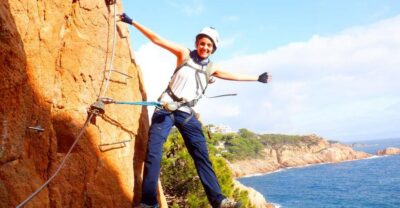
Sant Feliu de Guixols: Climb Via Ferrata Cala del Molí
Read our review →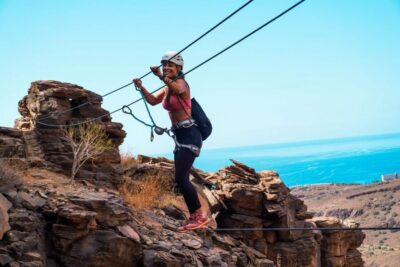
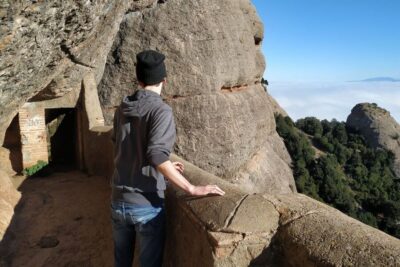
Montserrat Monastery & Hiking Off the Beaten Path
Read our review →Browse the lists this trek appears in