
Review · UBUD
Sidemen Trekking: A Walk from a Different Perspective
Sidemen shows you a quieter side of Bali, one where rice farmers still work narrow paddies and village temples sit beside everyday life. This two-hour walk through fields and local lanes gives you views of Mount Agung that you cannot get from a resort pool or a main road.
I like the route’s local focus, especially the explanations of rice farming, village customs, food crops, and Balinese Hindu practice. I also like the small-group feel, with no more than 10 people and guides such as Adi, Darya, Wayan, and Adidas who know the paths and people.
The main catch is that this is not a hard mountain hike, but it is not a smooth stroll either. Narrow raised paths, irrigation edges, uneven ground, and slippery patches call for steady footing. Arrange your ride home before you start, since Grab cars are limited at the finish.
Key points to know before you book
- Rice fields from farmer paths: Walk along narrow routes used by local workers rather than viewing the paddies only from a road.
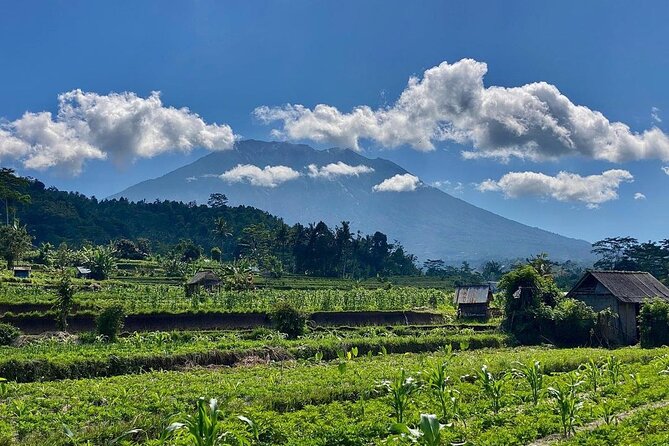
- Mount Agung views: The route points toward Bali’s famous volcano, with broad views across the terraces when conditions are clear.
- Local guides with strong area knowledge: Adi, Darya, Wayan, and Adidas are praised for explaining farming, culture, religion, and village life.
- Easy effort, careful footing: The walk is generally relaxed, but some raised paths and waterways require balance and good shoes.
- Market to Warung Ume Anyar: Begin at Pasar Sidemen and finish at a restaurant in Ogang Village, about two to two and a half hours later.
- Good value at $13.75: Bottled water and a guided route through rural Sidemen make this an inexpensive way to see more than the usual Bali highlights.
Why Sidemen is worth seeing on foot
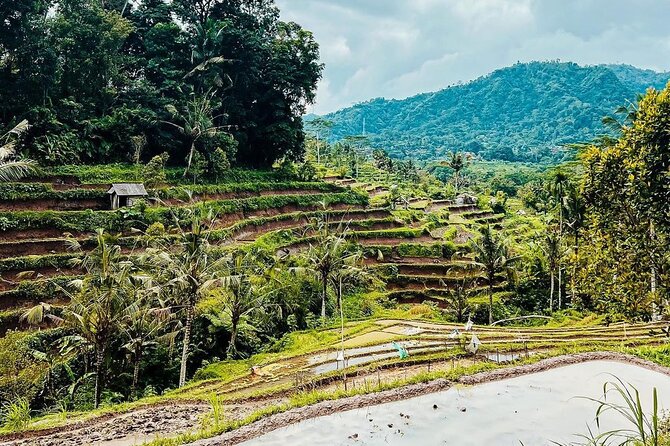
Sidemen is a better match for you if you want to understand how rural Bali works, not just photograph it. The area is made up of villages, rice terraces, gardens, temples, and small roads, with Mount Agung providing the grand backdrop.
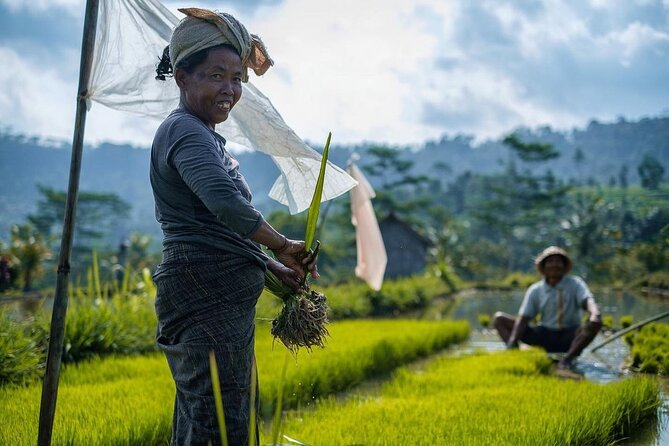
The route brings you close to ordinary activity. You may see rice work in progress, flowers grown for offerings, chili and other crops, irrigation channels, and villagers moving between homes and fields. The guide adds the missing context: how rice is grown, how seasonal crops change, and how farming connects with local cooking and religious life.
That context matters. Rice terraces can look like a picture-perfect green carpet from a viewpoint, but the walk shows the effort behind them. Water is directed through irrigation channels, farmers use narrow paths between paddies, and crops change with the season. In December, some rice may already have been harvested, leaving other plants in the fields. The scenery can therefore look different from the classic all-green image, but it may give you a better sense of how agriculture actually works.
The experience also offers a useful contrast with southern Bali. Kuta, Legian, and Seminyak are built around beaches, nightlife, shops, and heavy development. Sidemen feels much more tied to farming and village life. This is not a claim that the area is untouched, but the walk gives you a clear view of Bali beyond its busiest resort centers.
More Walking Tours in Ubud:
- Vatnajökull Glacier Walk from Hali
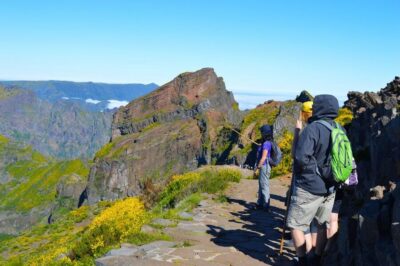
★ 5.0 · 479 reviews - From Funchal: Madeira Peaks Mountain Walk
★ 4.8 · 380 reviews - Sidemen Trekking: A Walk from a Different Perspective
★ 4.9 · 324 reviews
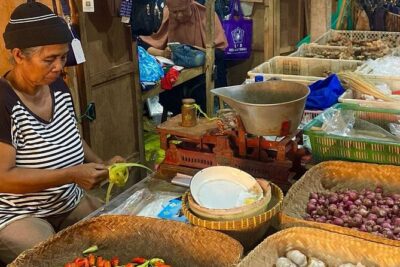
Starting at Pasar Sidemen
The meeting point is Pasar Sidemen, the traditional market on Jl. Sidemen. Find the shop marked Upa Boga. This detail matters because a market can have several entrances and nearby businesses, so arrive with the exact meeting point saved on your phone.
If you stay in Sidemen, arrange transport through your hotel. The local instructions do not recommend using Grab for hotel pickup, since some hotels allow Grab drivers to drop off but not collect departing clients. This is a small planning point that can save you a frustrating start.
The market itself opens from 5:00 AM to 10:00 AM. If you want to look around before walking, choose a morning session and allow time to see the market before meeting the guide. The activity itself lasts about two hours, so an early start lets you combine the market with the walk without rushing.
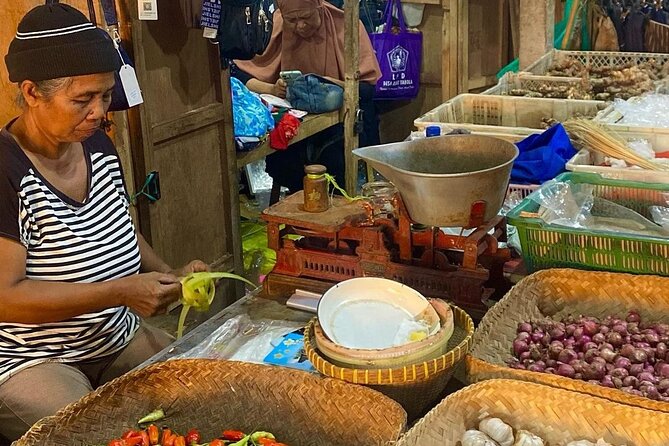
The market is more than a convenient meeting place. It gives you a practical introduction to the village, with local trade and daily routines before the route turns toward the fields. Do not expect a long market tour unless arranged separately. The main activity begins with the walk.
From village streets to open rice terraces
The first part moves through Sidemen village and then uphill toward the rice paddies. The route uses streets as well as paths, so this is not a continuous field walk. That mix is useful because you see homes, village spaces, temples, and farmland as parts of one community rather than separate tourist stops.
The route can rise and fall, though the overall effort is described as easy by several people who took it. You will stop often for views, explanations, and photographs. The pace is less about covering ground quickly and more about noticing how the village works.
As you leave the built-up area, the scenery opens toward the paddies. Some viewpoints let you look across the terraces from a distance, while other sections place you right beside the crops. The change in scale is one of the best parts of the walk. From above, the fields form patterns across the valley. On the paths, you notice mud, water, plants, and the narrow strips used by farmers.
The guide is especially useful here. The paths are not always obvious, and several sections are routes local farmers use rather than marked walking trails. Adi, Darya, Wayan, and Adidas are each praised for making the route more engaging with stories about agriculture, culture, and people they know in the villages.
Following the irrigation channels
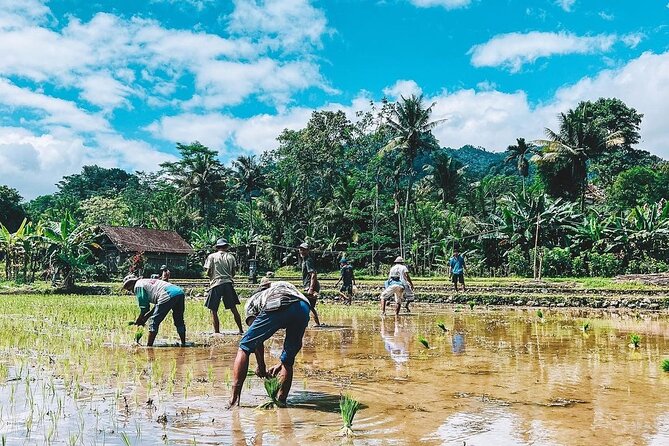
One of the most distinctive parts of the route follows the irrigation water. Rather than simply walking to a viewpoint, you trace the channels that bring water through the farming area. This shows why the fields sit where they do and how closely local agriculture depends on shared water systems.
The path beside the irrigation can be narrow. At points, you may be walking along a raised edge or a slim terrace between fields. That makes the setting feel more direct and rural, but it also creates the main physical demand of the activity. The issue is not stamina so much as balance.
Wear proper hiking shoes or sturdy walking shoes. Sandals and smooth-soled footwear are poor choices if the ground is wet. Bring sunscreen, a sun hat, and sunglasses, as well as water. Bottled water is included, but you still want protection from the sun during an exposed section.
You may also get mud on your shoes. That is not a flaw in the route. The walk uses working farm paths, and the best approach is to accept a little dirt rather than try to keep your footwear spotless. Take care after rain, when the footing may be more slippery.
A few more treks around Ubud worth a look
- Mount Batur Sunrise Trekking Private All Inclusive
★ 5.0 · 906 reviews - Private Mount Batur Sunrise Trekking Tour
★ 5.0 · 634 reviews - Mount Batur Sunrise Trekking (Private Tour and Breakfast at Restaurant)
★ 5.0 · 598 reviews - Private Tour : Mount Batur Sunrise Trekking With Private Guide
★ 5.0 · 422 reviews
Crossing the hanging wooden bridge
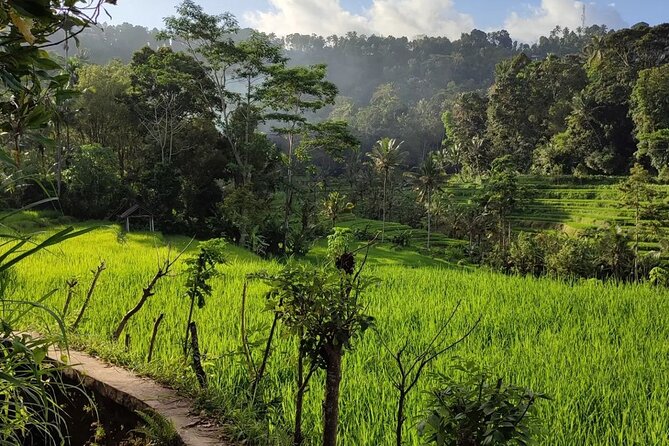
The route includes a hanging wooden bridge used by both motorbikes and people. This is a memorable detail because it shows how village infrastructure serves daily life, not just sightseeing.
The bridge is not presented as an adventure attraction with special equipment or a long crossing. It is part of the local route, so follow the guide’s instructions and take your time. If narrow or elevated paths make you uneasy, this is one of the sections to approach carefully.
The bridge also adds variety to the walk. In a short two-hour route, you move from a market to village streets, from fields to waterways, and then across a crossing used by residents. That variety helps the experience feel like a look at local movement rather than a simple photo stop.
Temples, crops, and everyday Balinese life
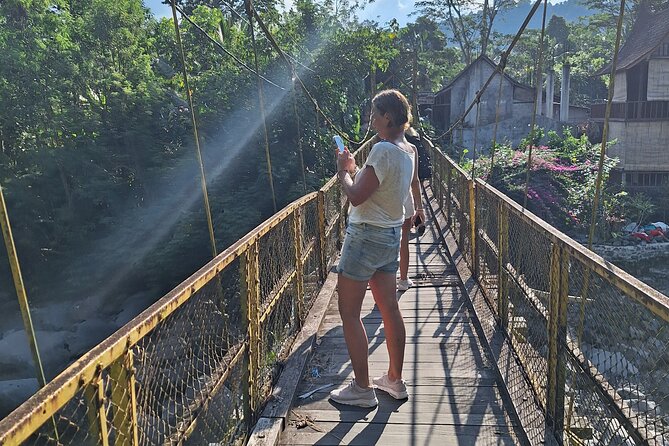
The route passes a village and a temple used by local residents for prayer. This is a chance to understand that religion here is part of ordinary community life, not something confined to a major monument or formal cultural show.
Guides explain the connection between Balinese Hindu practice, offerings, farming, and household routines. You may hear about flowers used for offerings and see plants that also have a place in local cooking. The strongest part of the experience is this connection between what grows in the fields and what people eat, cook, and use in ceremonies.
The guide’s role shapes the walk. Adi is praised for humor and clear explanations, while Darya is described as patient and thoughtful. Wayan is noted for sharing the life of his village, and Adidas is praised for making traditional work, cooking, and learning easy to understand. Guide assignments can change, so book this expecting a local guide, but not a guaranteed individual.
The small group cap of 10 helps. You can ask questions without trying to speak over a large crowd, and a guide has a better chance of helping people through the narrow sections. It also keeps the walk quieter, which suits the rural setting.
Mount Agung and the best photo moments
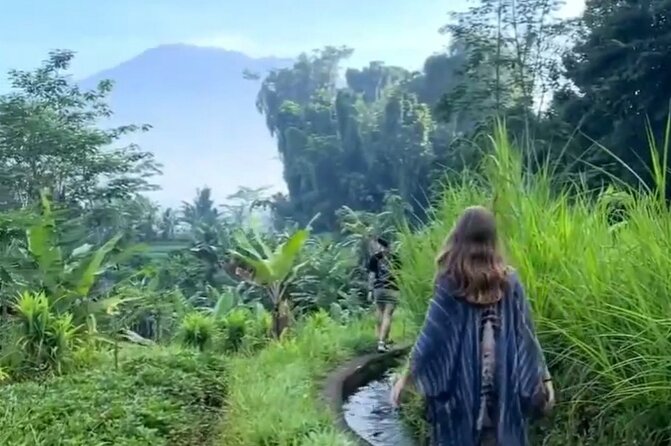
Mount Agung is the visual anchor of the walk. The route heads in its direction, and several points offer views across the rice terraces toward the volcano. Weather controls how much you see, so do not treat a clear mountain view as guaranteed.
The best photographs may not come from one formal lookout. You will find changing views as the path rises, turns through fields, and opens across the terraces. Bring a phone or camera, but keep your attention on the ground in the narrow sections.
The route offers a different perspective from the usual terrace viewpoint. You are not only looking at the fields from a road. You are walking through them, with irrigation water at your side and farming paths under your feet. That closer view gives the scenery more meaning.
How difficult is this two-hour walk?

The activity is best described as an easy rural walk with sections that require agility. It is not a serious hike, and several descriptions call it relaxed or not taxing. One guide-led route covers close to 4 km in about two hours, with frequent stops.
The catch is footing. Some paths are narrow and raised above the fields. Other sections can be slippery, uneven, or close to waterways. You need enough balance to place your feet carefully and adjust to changing ground.
I would choose this for you if you are comfortable walking for two hours and handling uneven paths. It suits couples, solo visitors, small groups, and anyone who wants a cultural activity with light exercise. It may not suit someone with poor balance, limited mobility, or a strong dislike of mud and narrow edges.
The official guidance asks for moderate physical fitness. That is fair. You do not need athletic training, but you should not treat the walk as fully accessible or suitable for all ages. The route has ups and downs, and the farm sections are not paved.
What the $13.75 price includes
At $13.75 per person, this is a strong-value activity if you want a guide rather than a self-guided walk. The price includes bottled water and a route that would be difficult to follow independently because some paths are not clearly marked.
It does not include hotel pickup, hotel drop-off, or tips. That low price therefore works best if you are already in or near Sidemen and can arrange your own transport. If you need a private car from another part of Bali, the transfer may cost more than the walk itself.
The value comes from access and interpretation. You could walk near rice fields on your own, but you might miss the irrigation route, the less obvious farm paths, and the explanations of crops, religion, and village life. A guide also helps you avoid taking a wrong turn and can introduce the setting in a way a map cannot.
Group discounts are available, and the maximum group size is 10. If you want a private experience, check the booking details before paying, since the standard format is a small group rather than an automatically private tour.
Ending at Warung Ume Anyar
The walk ends at Warung Ume Anyar Restaurant in Ogang Village. It is a practical finish, giving you a place to rest, have a drink, or eat after the route.
Plan your pickup before the trek begins. Arrange for your driver to meet you around two to two and a half hours after the start time. Grab does operate in the area, but there are only a few drivers, and some may ask for offline payment or an extra fee. A prearranged driver is the safer choice if you have a flight, reservation, or another fixed plan.
You can walk back to the starting point if needed. The return is about 3 km, or 30 to 40 minutes along the main road. That option is useful, but after two hours on uneven ground, most people will prefer a planned ride.
Allow extra time beyond the advertised two hours. The stated duration is approximately two to two and a half hours, and stops, footing, weather, and transport arrangements can affect your schedule.
Weather, cancellation, and what to bring
The activity needs good weather. If poor conditions cause cancellation, you are offered another date or a full refund. You can also cancel for a full refund up to 24 hours before the start time. Changes or cancellations made within 24 hours are not accepted for a refund.
Bring:
- Hiking shoes or sturdy walking shoes
- Sun hat
- Sunscreen
- Sunglasses
- Drinking water beyond the included bottle if you prefer more
A small bag is best. You will want your hands free on narrow paths and near the bridge. Keep electronics secure, especially if the ground is wet.
Who should book this Sidemen walk?
Book it if you want rural Bali explained by someone who lives in the area. The strongest parts are the guide’s local knowledge, the farming details, and the chance to use paths that are hard to find without help.
It is also a good choice if you have only a short time in Sidemen. Two hours is enough to see the market area, village, temple, fields, irrigation, bridge, and Mount Agung views without filling an entire day.
Think twice if you want a demanding trek. The route is active but gentle, with many pauses for photos and conversation. You will not get a long mountain climb or a wilderness hike.
Think twice as well if you need smooth, level paths. The scenery comes with narrow terraces and uneven footing. That is precisely what makes the walk feel local, but it requires care.
Should you book Sidemen Trekking?
Yes, if your idea of a good Bali experience includes farms, village paths, local stories, and a close look at daily life. At $13.75, the walk offers unusually good value, especially for the guide’s help with routes that are not easy to spot.
Book a morning session if you want to visit Pasar Sidemen before walking. Wear shoes you can get dirty, arrange your return car in advance, and leave room in your schedule for a route that may run closer to two and a half hours.
Skip it if you want a polished attraction, a strenuous hike, or completely flat ground. For everyone else, this is a simple, affordable way to see Sidemen from ground level, with rice fields and Mount Agung doing the scenic work and the local guide adding the meaning.
FAQ
Where does the Sidemen trekking tour start?
The trek starts at Pasar Sidemen, the Sidemen Traditional Market, on Jl. Sidemen. Meet at the shop marked Upa Boga.
Where does the trek finish?
The route ends at Warung Ume Anyar Restaurant in Ogang Village. You can relax there with a drink or meal after walking.
How long does the activity take?
The walk takes approximately two hours, though you should allow two to two and a half hours for the full experience.
Is hotel pickup included?
No. Hotel pickup and drop-off are not included. If you are staying in Sidemen, arrange transport through your hotel.
What should I bring?
Bring a sun hat, hiking boots or sturdy walking shoes, sunscreen, and sunglasses. Bottled water is included.
Is this a difficult hike?
It is generally an easy walk, not a strenuous hike. However, narrow raised paths, irrigation edges, uneven ground, and slippery sections require moderate fitness and good balance.
Can I cancel for a refund?
You can cancel up to 24 hours before the start time for a full refund. If poor weather causes the activity to be canceled, you will be offered another date or a full refund.
Just added around Ubud
- Explore rice terraces munduk & waterfall trekking experience★ 4.9 · 7 reviews
- Ubud: Trekking Through Rivers & Forests to Three Waterfalls★ 5.0 · 16 reviews
- Lemukih Hidden Trekking Waterslide Sekumpul and Fiji Waterfall★ 5.0 · 20 reviews
- Bali Most Scenic Waterfalls Trekking★ 4.5 · 9 reviews
- Munduk Twin Lake Jungle Hike, Ulun Danu Temple, & Waterfall★ 5.0 · 26 reviews
- Mount Batur Trekking and Natural Hot Spring – All Inclusive Tour★ 5.0 · 23 reviews
- All inclusive Mount Batur Trekking with Hot Spring tour★ 5.0 · 41 reviews
- Mount Batur Trekking & Hot Spring★ 5.0 · 50 reviews
Walking Tours, compared.

Sidemen Trekking: A Walk from a Different Perspective
Read our review →

Ice Cave and Glacier Walk into Blue Glacier Canyon
Read our review →
Vatnajökull Guided Beginner Glacier Walk with 4×4 Transfer
Read our review →
Browse the lists this trek appears in