
Review · VIK
Sólheimajökull Glacier Hike & Ice Climbing Intro – Small Group
Sólheimajökull is not a scenic backdrop you simply admire from a parking lot. You walk onto the glacier, cross uneven blue ice, and learn to pull yourself up a real ice wall with crampons and an ice axe. Introductory ice climbing is optional, so you can focus on the glacier hike if the vertical work feels too much.
I like the small group of up to eight per guide, which gives you time for safety questions, steady pacing, and personal coaching. I also like the mix of science and adventure, from glacier retreat and ice formation to crevasses, caves, ridges, and sinkholes. The main drawback is practical: ankle-support boots are mandatory, and renting them costs extra if your own shoes do not qualify.
Key points to know before you book
- Real ice climbing: Learn basic technique on a glacier ice wall, with a harness, helmet, crampons, and ice axe.
- Small, focused groups: The maximum is eight people per glacier guide, allowing more direct instruction.
- Moderate physical effort: Expect three to four kilometers on uneven ice, with sore calves possible after climbing.
- Boot rules matter: Hiking boots with ankle support are required, and crampons fit EU shoe sizes 35 to 50 only.
- Flexible starting point: You can meet at the Sólheimajökull parking lot, or choose pickup from Reykjavík.
- Waterfalls may be included: Reykjavík departures include Seljalandsfoss and Skógafoss, while glacier-only departures finish at the café meeting point.
Why Sólheimajökull makes a good first glacier climb
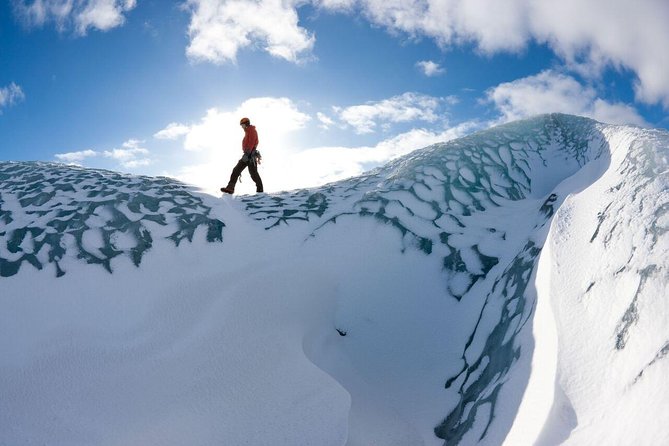
Sólheimajökull is one of Iceland’s most accessible glaciers for a first taste of ice travel. You are not signing up for a technical mountaineering expedition. Instead, you spend about four and a half hours learning how to move safely over changing ice, then try the basics of climbing a vertical wall.
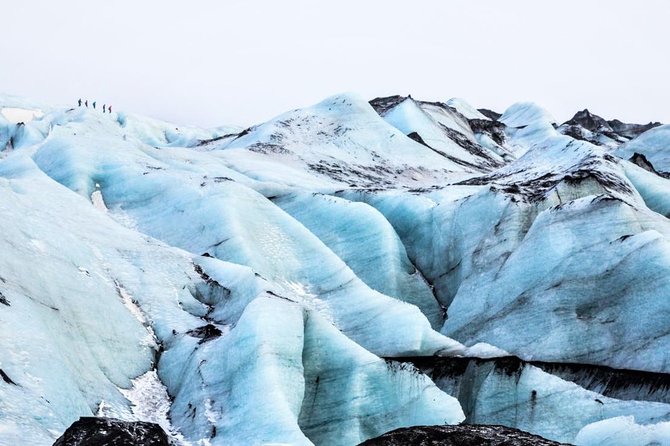
That balance is the heart of the experience. The glacier gives you wild scenery, but a certified guide keeps the day organized and manageable. You will not simply walk in a straight line across a flat white field. The route can include frozen crevices, jagged ridges, caves, sinkholes, and unusual ice shapes.
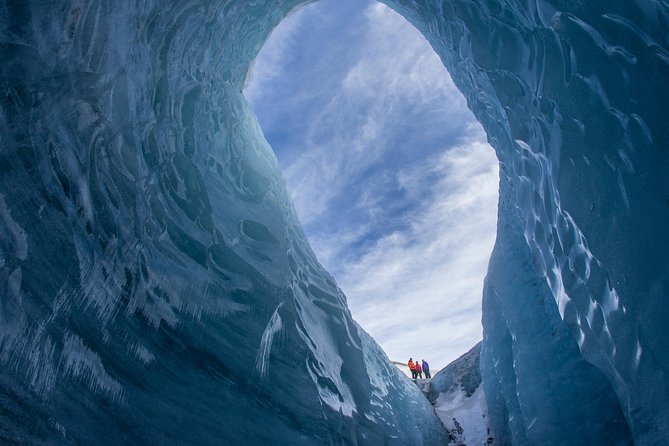
The ice may show deep blue tones, especially inside older, compressed sections. These colors are not painted or added for effect. They come from the way dense glacier ice absorbs and reflects light. Your guide can also explain how the glacier formed and how it has receded over time.
That last point adds weight to the outing. You are not only looking at ice. You are walking across a moving, changing body of ice that records Iceland’s weather and climate. The scenery can change from day to day, so the exact route and formations are not fixed.
More Glacier Hikes in Iceland
- Skaftafell: Ice Cave Tour and Glacier Hike
★ 4.5 · 1,746 reviews - Reykjavik: Glacier Hike, Waterfalls and Black Sand Beach
★ 4.8 · 1,285 reviews - Sólheimajökull: Blue Ice Glacier Hike near Vík (Easy)
★ 4.7 · 1,260 reviews
Getting fitted out at the yellow school bus
If you meet at the glacier, go to the Sólheimajökull parking lot and look for the yellow school bus. The original meeting and ending point is beside Sólheimajökull Café, which makes the arrival fairly simple once you reach the site.
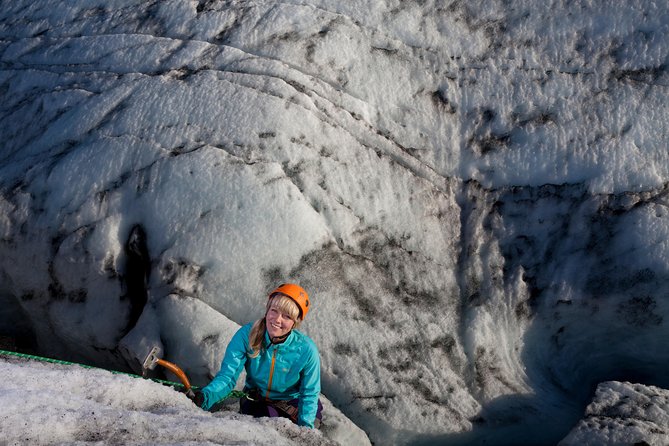
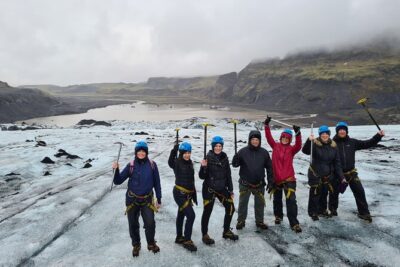
Before setting off, you receive glacier crampons, an ice axe, a helmet, and a harness. The gear is not decorative safety equipment. Crampons give your boots grip on hard ice, while the axe helps with balance and climbing. The harness is used for the climbing portion and other safety procedures.
Expect a proper briefing before walking onto the glacier. You will be shown how to place your feet, handle the axe, and move with the group. Pay close attention here. The equipment works best when you use it exactly as instructed, and glacier ice is less forgiving than a normal hiking trail.
The gear package is included in the price, but clothing and footwear require more thought. Ankle-support hiking boots are mandatory. Sturdy shoes can be rented, along with waterproof jackets and pants, but those rentals cost extra. One practical improvement would be to include required boot rental in the basic price, but for now you should check your footwear before booking.
The specialized crampons fit EU sizes 35 through 50. If your shoes fall outside that range, you cannot take part. This is an important rule, not a minor packing note.
Walking across crevasses, ridges, and blue ice
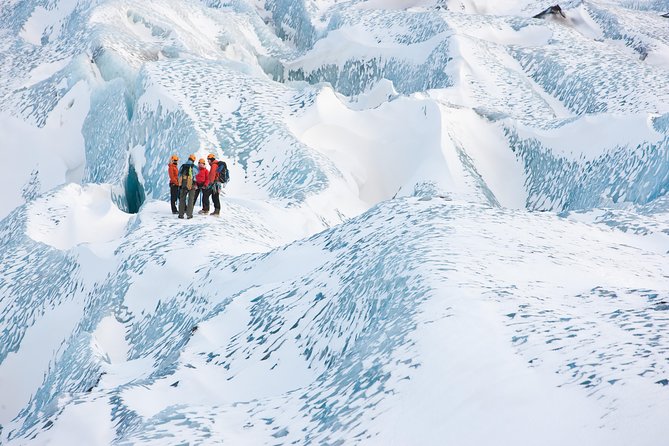
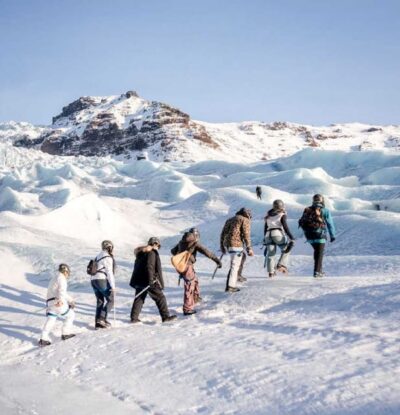
The hiking portion is about three to four kilometers over uneven ground. That distance sounds modest, but glacier walking is more demanding than an ordinary path. You step carefully, adjust to irregular surfaces, and use muscles that may not get much work on a city holiday.
The group moves at a controlled pace. That matters because the ice can be rough, and your guide needs to keep everyone together. You may stop to examine a formation, look into a crevasse, hear about glacier movement, or wait while another person completes the climbing section.
The scenery is constantly close at hand. You might see ridges cut into the ice, openings that lead toward caves, or hollows shaped by meltwater. These features are not permanent attractions with signs and barriers. They are part of a changing glacier, and some areas may be unsuitable on the day of your visit.
The guide decides where the group can safely go. That can mean the route varies from what you expected. A particular cave may be inaccessible, or an ice wall may no longer be suitable for climbing. This is a strength, not a weakness, provided you value safety over a fixed checklist.
The hike is described as moderate, but do not treat it as effortless. Your legs, back, and arms all get involved. The climbing section puts extra pressure on your calves, and several people have found that the next day brings noticeable soreness. Good fitness is not required, but you should be comfortable walking on uneven ground for several hours.
Learning the basics of ice climbing
The introductory climbing session is the most memorable part for many people. You do not need prior climbing experience. The guide explains the basic movement, checks your equipment, and helps you use the ice tools correctly.
Ice climbing is less about pulling yourself up with your arms than many first-timers expect. Your crampons provide the main support. You place your feet firmly into the ice, keep your body balanced, and use the ice axes for grip and movement. Your legs do much of the work, which explains the calf soreness.
The route is normally arranged so that people climb one after another while the guide manages the rope and belay. That means you may spend some time waiting in the cold. Wear warm layers and keep your waterproof outer clothing on even when you are not climbing.
The small group helps here. With no more than eight people per guide, you have a better chance of receiving useful corrections instead of a rushed demonstration. Guides such as Monica, Gaia, Daniel, Francesco, Steve, Alberto, and Claudia have been singled out for their calm instruction, good humor, technical skill, and attention to safety. Guide assignments can change, but the key quality to look for is patient coaching.
You are free to treat the climbing as an introduction rather than a test. Try the wall, listen to the guide, and stop if you feel uncomfortable. The outing is designed for beginners, but beginner-friendly does not mean risk-free. You still need to follow instructions and accept that conditions may limit what you can do.
Same trailhead, a different route:
- Skaftafell: Blue Ice Glacier Hike on Vatnajökull
★ 4.7 · 1,045 reviews - From Reykjavik: Glacier Hike, South Coast and Waterfalls Day Trip
★ 5.0 · 915 reviews - Glacier Hike and South Coast Small-Group Tour from Reykjavik
★ 5.0 · 827 reviews - Sólheimajökull Glacier Hike – Adventure in a Small Group
★ 5.0 · 799 reviews
What the guide adds beyond the equipment
The guide is the difference between a glacier walk and a well-run glacier experience. The equipment lets you move over the ice, but the guide explains where to step, where not to step, and why the ice looks and behaves as it does.
Expect information about glacier creation, changing ice formations, and retreat over past years. This gives the outing more substance than a photo stop. The guide also monitors the group’s pace and comfort, which is especially useful when some people are confident hikers and others are new to uneven ice.
The strongest guide feedback centers on three things: safety, patience, and personality. A good guide can make a high-risk activity feel controlled without pretending it is harmless. You should feel encouraged, but not pushed.
The group size is especially valuable for families with teenagers, couples who want hands-on instruction, and first-time climbers who need several attempts to find the right foot placement. The minimum age is 14, so younger children cannot join this activity.
Reykjavík pickup, or meeting at the glacier
The price is listed at $211.72 per person. Whether that feels fair depends partly on how you reach Sólheimajökull.
If you drive or arrange your own transport to the parking lot, the price covers the guided glacier activity and safety gear. You still need to account for transport, food, drinks, and possible boot or clothing rental. For someone already touring Iceland’s south coast, meeting at the glacier is often the cleaner choice.
Pickup from Reykjavík is available if selected. The pickup process can take up to 30 minutes, and you are asked to be ready at your chosen location at 8:00. Reykjavík departures also include stops at Seljalandsfoss and Skógafoss, two of the south coast’s best-known waterfalls.
The small group and certified guide help support the price. You are paying for specialist equipment, route judgment, instruction, and a tightly managed activity rather than a simple walk. Still, this is not the cheapest way to see a glacier. It offers better value if you want to climb and learn, not just take photographs.
The experience is offered in English, and a mobile ticket is available. The tour is usually booked well in advance, around 42 days, so leaving it until the last minute may reduce your choice of dates.
Seljalandsfoss and Skógafoss on the Reykjavík option
The waterfall stops apply to the Reykjavík pickup version. They are not part of the basic glacier meeting-point route, so check the option you choose.
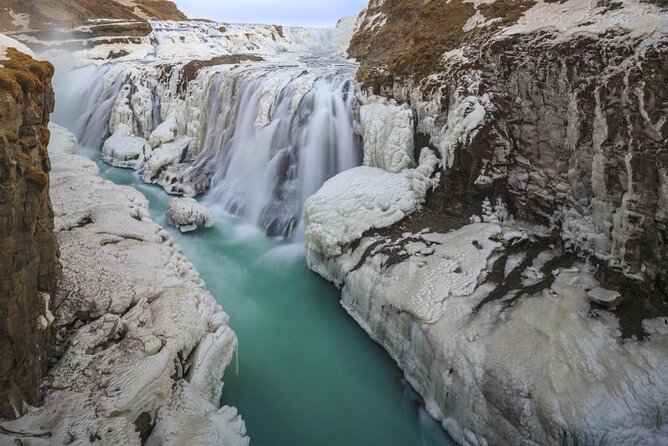
Seljalandsfoss is famous for the path that can allow you to look behind the falling water when conditions permit. It adds a very different setting to the day: spray, rock, and open air after your time on the ice. Waterproof clothing is useful here, not only on the glacier.
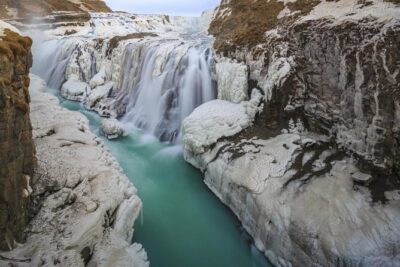
Skógafoss is a broad, powerful waterfall with a strong visual impact from below. Its scale makes it a worthwhile companion to the glacier stop, though adding two waterfalls also makes the day feel more like a full south coast outing than a focused climbing session.
If your priority is ice climbing, meeting at Sólheimajökull gives you the simplest structure. If you want a wider sightseeing day and need Reykjavík transport, the waterfall version may offer better overall value.
Clothing, fitness, and small details that matter
Pack for cold, wet, exposed conditions. You need warm layers, waterproof trousers, and a waterproof jacket. The glacier itself may not feel brutally difficult, but wind can make waiting turns at the ice wall uncomfortable.
Wear proper hiking boots with ankle support. Sneakers and soft shoes are not suitable. If you rent boots, confirm the fit and EU size before the activity begins. Crampons are available only for sizes 35 to 50 EU.
You should be comfortable walking three to four kilometers over uneven terrain. This is not a suitable choice if you want a gentle sightseeing walk with little exertion. It is a good fit if you can handle moderate activity and do not mind using your legs, arms, and back.
Bring food and drinks if you need them. They are not included. The outing ends back at the original meeting point, so you can return to the café area afterward.
Free cancellation is available until 24 hours before the start time. If poor weather forces cancellation, you can receive a different date or a full refund. Changes made within 24 hours are not accepted, so keep your final plans firm.
Who should book this Sólheimajökull experience?
I would recommend it to an adventurous first-time climber, an active couple, or a family with teenagers who want more than a roadside glacier photograph. It also suits anyone curious about how glaciers work and willing to trade a little comfort for direct contact with the ice.
You should think twice if you dislike cold weather, have trouble walking on uneven ground, or want a completely relaxed sightseeing day. The climbing is optional, but the glacier hike still requires balance, warm clothing, and moderate fitness.
At $211.72, this is a worthwhile purchase when the ice itself is your main reason for visiting Iceland’s south coast. The small group, proper gear, and personal instruction give the price real value. Just budget for transport if needed, and do not overlook the required boots.
Should you book it?
Book this tour if you want to walk on real glacier ice and try a controlled introduction to ice climbing, not simply view Sólheimajökull from a distance. The best parts are the close contact with crevasses and blue ice, the small group, and guides who focus on safe, patient instruction.
Choose another activity if you want a low-effort outing, cannot wear EU size 35 to 50 footwear, or do not have ankle-support boots. For everyone else, this is a memorable south coast adventure with enough guidance to make a demanding setting feel approachable.
FAQ
How long does the glacier hike and ice climbing activity last?
The experience lasts approximately four hours and 30 minutes.
Do I need previous ice-climbing experience?
No. The activity includes an introductory ice-climbing session, and no previous experience is required.
What equipment is included?
The tour includes a helmet, harness, glacier crampons, and ice axe, along with a certified English-speaking glacier guide.
What footwear do I need?
Hiking boots with ankle support are mandatory. Crampons are available for EU shoe sizes 35 through 50. Sturdy hiking shoes, waterproof jackets, and waterproof pants can be rented for an additional charge.
Where does the activity begin and end?
The glacier-only activity begins at the Sólheimajökull glacier parking lot and ends back at the original meeting point near Sólheimajökull Café.
Are Seljalandsfoss and Skógafoss included?
The two waterfalls are included with the Reykjavík pickup option. They are not listed as part of the glacier-only departure from the Sólheimajökull parking lot.
Just added around Iceland
- Glacier Combo Kayking at Glacier Lagoon and Glacier Hike★ 5.0 · 2 reviews
- Glacier Hike: Summer Treasure – Glacier Discovery★ 5.0 · 4 reviews
- 3 Hours Guided Breidamerkurjokull Glacier Hike from Jokulsarlon★ 5.0 · 3 reviews
- Arctic Glacier Hike away from the Crowds Vatnajokull Glacier★ 5.0 · 2 reviews
- Sólheimajökull: Glacier Hike and Ice Climbing Tour★ 5.0 · 6 reviews
- Sólheimajökull: Glacier Hike and Blue Ice Cave Tour★ 5.0 · 15 reviews
- Sólheimajökull: Glacier Hike and Ice Cave Tour★ 4.7 · 21 reviews
- Jökulsárlón: Glacier Hike, Ice Cave, and Photoshoot Package★ 5.0 · 4 reviews
Glacier Hikes & Ice Caves, compared.
Glacier Hike, Waterfalls and Black Sand Beach
Read our review →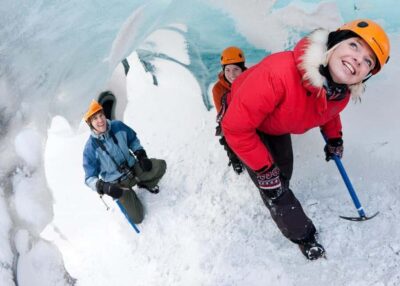
Sólheimajökull: Blue Ice Glacier Hike near Vík (Easy)
Read our review →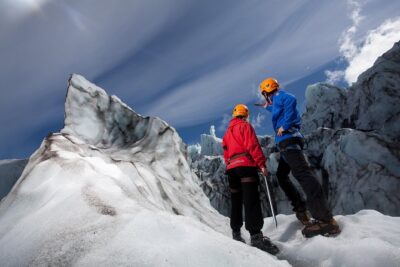
Glacier Hike and South Coast Small-Group Tour from Reykjavik
Read our review →
Perito Moreno Glacier Trekking Tour and Cruise
Read our review →
Sólheimajökull Glacier Hike – Adventure in a Small Group
Read our review →Browse the lists this trek appears in