
Review · CHIANG RAI
Cultural trekking and boat trip
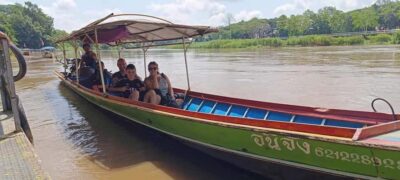
The best part of this Chiang Rai day is its change of pace. You start on the Mae Kok River in a long-tail boat, then move through bamboo forest and farmland on foot, stopping to plant a tree before reaching Lahu and Akha villages. It feels less like a checklist of sights and more like a day spent moving through local life. The tree planting gives the hike a lasting purpose, while the waterfall and hot spring add welcome rewards.
I like the mix of transport and walking, and I like that lunch is served at a local restaurant rather than treated as an afterthought. If your guide is June, expect a warm, informative presence; she has been praised for explaining local nature and culture clearly. The main drawback is the uphill start, which can be tiring in full sun. Bring proper hiking shoes, and do not treat this as a gentle sightseeing drive.
Key points
- Mae Kok River by long-tail boat: Enjoy a 45-minute ride toward Buddha Cave before the walking begins.
- Plant your own tree: Choose a spot along the trekking route and leave behind a living memorial.
- Lahu and Akha villages: Walk into two hill-tribe communities with time for cultural explanation.
- Huay Kaew Waterfall: Bring a swimsuit if you want to cool off at Chiang Rai’s second-largest waterfall.
- Tea and hot springs: Finish with a Chinese village, tea plantation, and mineral bath.
- A full-value day: At $94 per person, the price covers transport, guide, food, boat ride, tree, and hot bath.
From Chiang Rai to the Mae Kok River
Your day begins with pickup in Chiang Rai. The tour can collect you from a hotel, airport, or bus station, which is useful if your schedule is tight or you are changing transport. From there, you travel to the boat pier, where the day shifts from road travel to river travel.
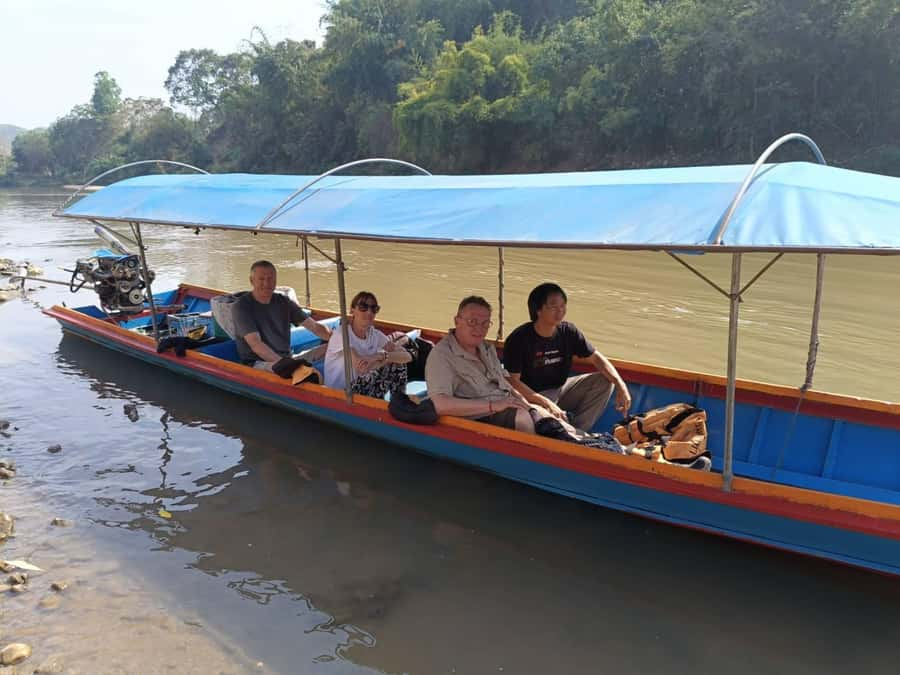
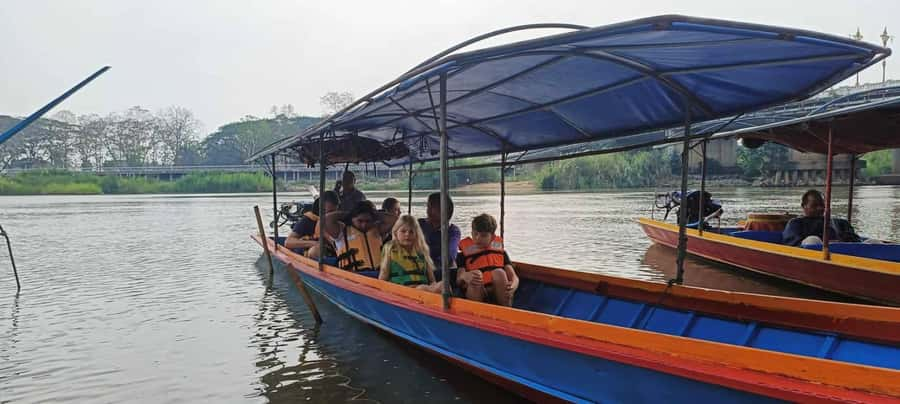
The long-tail boat ride lasts about 45 minutes. These narrow motorboats are a classic way to move along northern Thailand’s rivers, and the ride gives you a quieter view of the countryside than a road transfer would. You travel along the Mae Kok River toward Buddha Cave, taking in the waterway and surrounding scenery before reaching the first walking section.
I like this opening because it gives you time to settle into the day. You are not immediately asked to climb a hill or keep up with a walking group. Still, a boat ride is weather-dependent in feel. Bring sun protection, and keep your camera secure around the water. The activity specifically suggests bringing a camera and cash.
A few more treks around Chiang Rai worth a look
- Chiang Rai: Jungle Adventure-Group Trekking & Bamboo Cooking
★ 4.9 · 166 reviews - 1 Day Trekking in Chiang Rai forest (walk only)
★ 4.9 · 95 reviews - Authentic trek only walk in Chiang Rai jungle
★ 5.0 · 90 reviews
The first walk through bamboo and farmland
After the boat portion, the route turns inland. The walking is split into two sections, with about three hours of total walking listed for the day. One part lasts around 1.5 hours, followed by lunch, and the later section lasts about two hours.
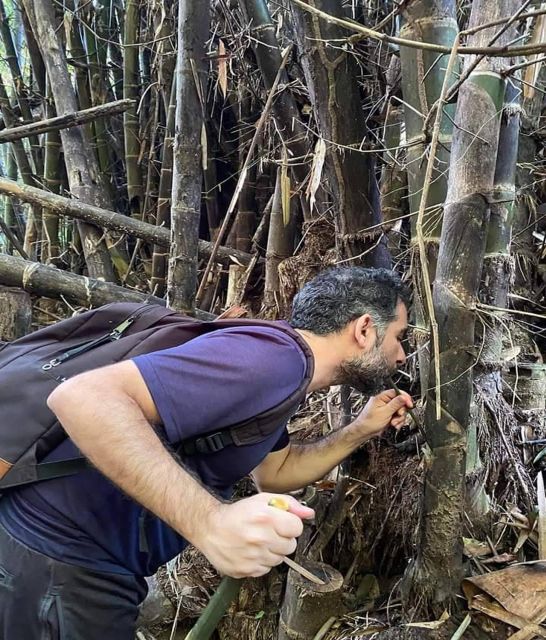
The first stretch passes through bamboo forest and farmland. This is where the tour feels most connected to the area’s daily rhythm. Instead of moving only between famous viewpoints, you walk through places tied to farming and village life. Your guide explains the local nature and culture as you go, so the route has more meaning than a simple woodland stroll.
You should expect some effort early on. The first 20 to 30 minutes can be steep and exposed to the sun, making this the hardest part for some people. After that, the route is described as manageable, but you still need sturdy footwear and enough water. Drinking water is included, yet carrying a small personal supply is sensible for a warm day.
This is not the right outing if you want a flat path or a relaxed coach tour. The activity excludes hiking shoes, so you need to bring your own. Mosquito repellent is also not included, and it belongs in your day bag.
Planting a tree along the trail
A distinctive part of the day is the tree planting. The tour team prepares a plant before the boat trip, then brings it along to the trekking area. You can choose your own spot and plant it as a small memorial of your time in northern Thailand.
I like this because it changes your role. You are not only passing through the countryside and taking photographs. You take part in a simple act tied to the place itself. The planting is not presented as a large conservation project, so you should keep your expectations in proportion. It is a personal gesture, not a substitute for learning about forest management or local environmental work.
Still, it gives the walk a memorable anchor. You may remember the patch of bamboo, the farm path, or the view near your chosen tree long after you have forgotten the order of ordinary stops. Wear clothes that can handle soil and a little rough use.
A local lunch with time to slow down
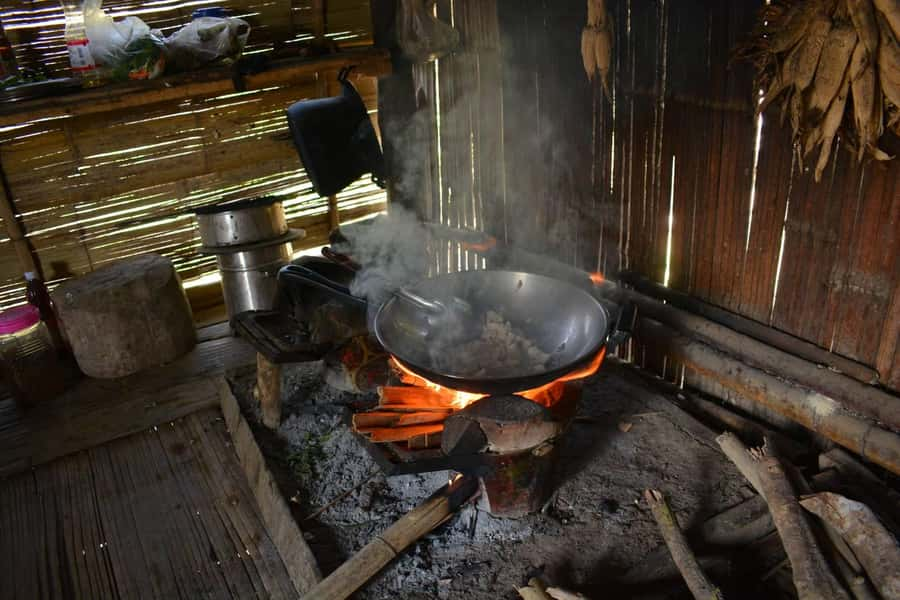
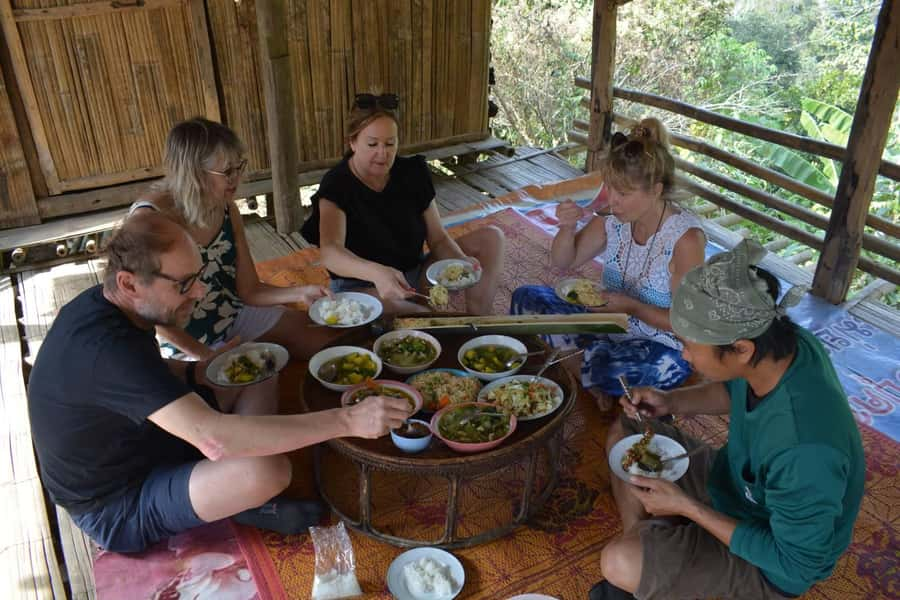
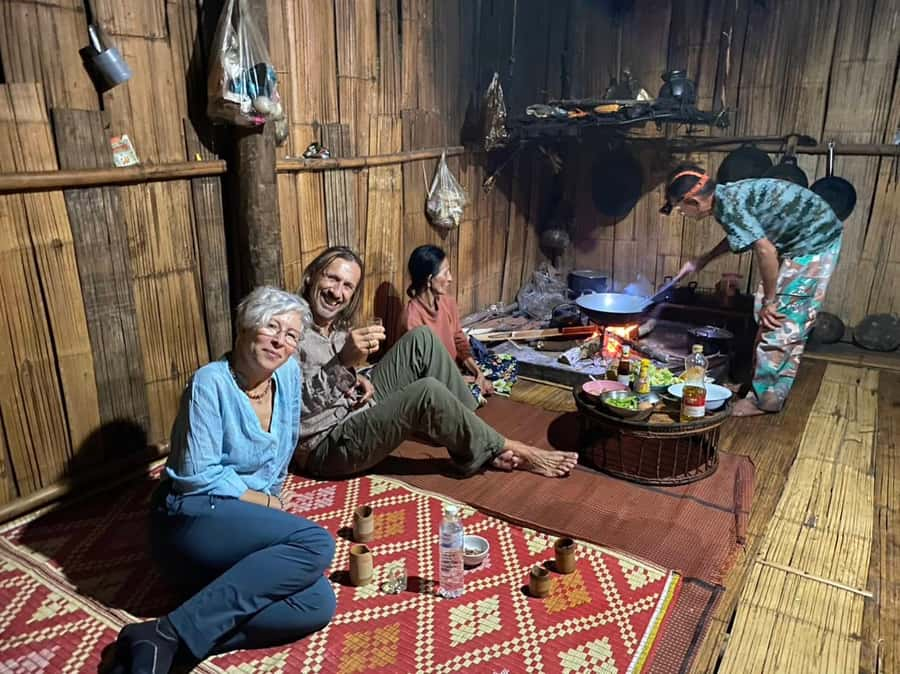
Lunch takes about an hour at a local restaurant. The food is one of the strongest parts of this experience, especially if you want to eat in a less polished setting. The guides also emphasize eating and drinking in the local way, and one account describes cooking together in a simple bamboo hut.
The exact meal can vary, so do not book this expecting a fixed international menu. That is part of the appeal, but it also means you should tell the guide about food needs before setting out. The supplied information does not list vegetarian, allergy, or other dietary arrangements.
Lunch also gives your legs a useful break. By this point, you have completed the boat ride and the first hiking section, including the uphill start. Take the full hour rather than rushing through the meal. The second walking section still includes village paths, a waterfall, and other stops.
Same trailhead, a different route:
- Chiang Rai: 1-Day Trekking and Longtail Boat Trip
★ 4.9 · 53 reviews - 1 Day Trekking Group Tour With Bamboo Cooking / Chiang Rai
★ 5.0 · 51 reviews - Akha & Lahu village trekking 1 day
★ 4.8 · 18 reviews - 1 Day trekking : Chiang Rai popular activity,Fun in Nature.
★ 4.8 · 18 reviews
Walking into Lahu and Akha villages

After lunch, the route continues toward Lahu and Akha hill-tribe villages. These stops are best understood as community visits along a walking route, not as staged cultural shows. The guide provides information about local culture and nature, and you have a chance to see a different side of life around Chiang Rai.
The most respectful approach is simple: listen, follow your guide’s instructions, and ask before photographing people or homes. The tour description says people in the two villages are friendly and open, but it does not promise a formal performance, craft market, or extended home visit. That makes the experience more direct, but you should not expect a museum-style presentation.
I find this part valuable because the villages make the earlier farm and forest sections easier to understand. You have already walked through the setting. Now you see the communities connected to it. The experience is strongest for you if you are curious about how rural life fits into the wider region, rather than looking only for a dramatic photo stop.
Cooling off at Huay Kaew Waterfall
The route reaches Huay Kaew Waterfall, described as the second-largest waterfall in Chiang Rai. You can enjoy time for a swim, so pack a swimsuit if you want to get in the water. A towel is not listed among the inclusions, so ask the operator what is available or pack a small one.
This is a welcome break after the walking. Waterfalls are often more enjoyable when you have earned them, and the chance to cool off makes the day feel less like a continuous hike. The stop is not only for swimmers. You can rest and enjoy the setting if you prefer to stay dry.
The practical catch is that swimming adds another layer of preparation. Keep your valuables secure, and use cash carefully since the tour asks you to bring it. The information does not specify changing facilities, water conditions, or how long the stop lasts, so do not count on a full beach-style setup.
Chinese village, tea plantation, and the final hot bath
The route then continues to a Chinese village and tea plantation. These stops broaden the day’s cultural picture. You are no longer seeing only river and forest environments. You also encounter a Chinese-influenced community and an agricultural setting connected to tea.
The tea plantation is likely to interest you most if you want to see how local crops shape the countryside. The tour does not specify a tasting or shopping stop, so think of it as a scenic and cultural visit rather than a guaranteed tea workshop.
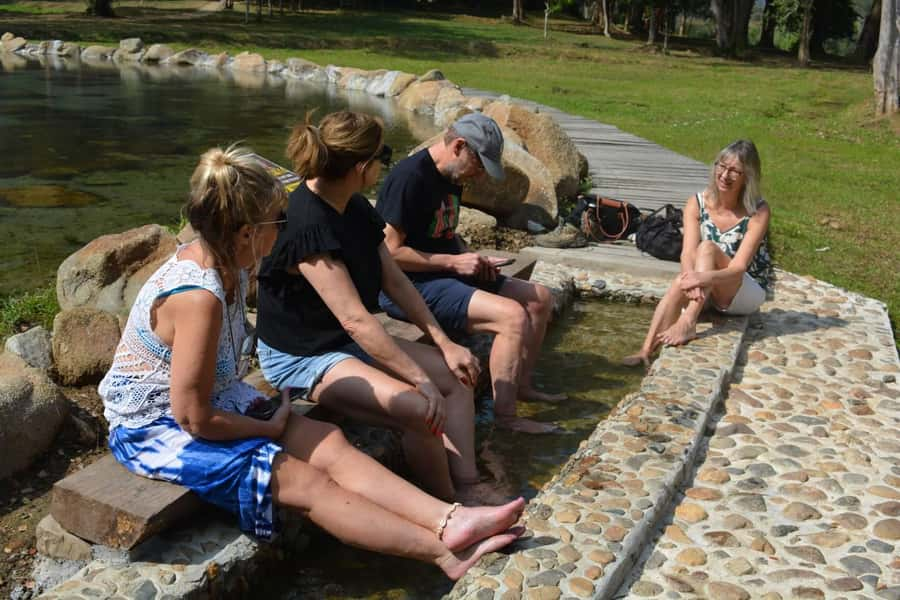
The final stop is a hot spring, where a mineral hot bath gives your legs a chance to recover before the drive back to Chiang Rai. This is a smart ending after roughly three hours of walking. I would not plan another demanding activity for the evening. The bath is included, but the information does not say how long you can stay in it or whether private bathing areas are available.
What the $94 price really covers
At $94 per person, this is not the cheapest way to see the countryside around Chiang Rai. It is also not just a hike. Your price includes transportation, a TAT-licensed guide, lunch, drinking water, the 45-minute boat trip, a tree to plant, and the hot bath.
That bundle matters. Booking each element separately would take time and create transport problems, especially since the day moves between the river, rural paths, villages, waterfall, tea area, and hot spring. The value is strongest if you want one organized day with a guide who handles the transitions.
You still need to pay attention to what is left out. Hiking shoes, mosquito repellent, and a swimsuit are not included. Bring cash, a camera, suitable shoes, sun protection, and clothes that can handle walking and tree planting. Babies under one year, people with diabetes, and people over 95 are listed as unsuitable for this activity.
The tour has a live guide in Thai and English. If you care about having a particular guide, ask in advance whether June is available, since she has been singled out for her warmth, organization, and explanations. The company is Chai Machete Tours, and the guides are described as experienced, including 20 years of hiking work and a background as former soldiers.
Who should book this Chiang Rai day
I would choose this tour if you want variety more than a single headline attraction. You get river travel, hiking, local food, tree planting, hill-tribe villages, a waterfall, a tea plantation, and a hot spring in one long day.
It suits you especially well if you enjoy moderate physical activity and want a guide to explain what you are seeing. The early uphill section means you need reasonable fitness, even though much of the later route is manageable. It is a poor match for you if you need level paths, dislike heat, or want a slow day with very little walking.
Families should consider the age and activity limits carefully. Babies under one year are not suitable, and people with diabetes are also listed as unsuitable. The upper age limit is 95, but the more useful question is whether you can handle a sunny uphill start and several hours on foot.
The perfect weather is not guaranteed, and the route includes outdoor sections where heat and insects may affect your comfort. Good shoes and mosquito repellent are not optional extras for me. They are basic equipment.
Should you book it?
Book this day if you want to combine Chiang Rai’s river, rural paths, villages, waterfall, tea country, and hot springs without arranging several separate trips. The tree planting and local meal give it more character than a standard sightseeing loop, and the guide-led format adds useful context.
Skip it if you want a completely easy day or if you are uncomfortable with village visits and simple local dining. For most active visitors who want a full, well-rounded day outside the city, $94 is a fair price for the transport, food, boat, guide, and final hot bath. Pack for a real walk, not a casual outing, and you will be prepared for what this experience actually offers.
FAQ
How long does the cultural trekking and boat trip last?
It is a full-day activity. The schedule includes a 45-minute river boat ride, about 1.5 hours of initial hiking, a one-hour lunch, and about two hours of later hiking before returning to Chiang Rai.
Where can pickup take place?
Pickup is available from a hotel, airport, or bus station in Chiang Rai.
What languages does the guide speak?
The live guide service is available in Thai and English.
Is lunch included?
Yes. Lunch and drinking water are included in the price.
Can I swim during the tour?
Yes. You can swim at Huay Kaew Waterfall. Bring your own swimsuit because it is not included.
What should I bring?
Bring a camera, cash, and hiking shoes. Mosquito repellent and a swimsuit are also practical because they are not provided.
Just added around Chiang Rai
- Full Day Trekking & bamboo cooking Tour in Chiang Rai★ 5.0 · 7 reviews
- Trekking with Lunch cooked by Bamboo in the Chiang Rai jungle★ 5.0 · 12 reviews
- Akha private eco-trekking 2 days 1 night Chiang Rai★ 4.5 · 2 reviews
- One Day Trekking Chiang Rai Jungle Adventure and Bamboo Cooking★ 3.5 · 3 reviews
- 1 Day Trekking Group Tour With Bamboo Cooking / Chiang Rai★ 5.0 · 51 reviews
- Chiang Rai Trek:Jungle Hike, Bamboo-Cooked Lunch & Boat Ride★ 5.0 · 7 reviews
- Chiang Rai: The Adventure of Trekking & Bamboo Cooking★ 5.0 · 3 reviews
- Chiangrai: Group Trekking with Bamboo Cooking★ 4.8 · 5 reviews
Cruises & Boat Tours, compared.

Perito Moreno Glacier Trekking Tour and Cruise
Read our review →
Dubai: Private Luxury Everest Yacht Cruise from Dubai Marina
Read our review →
Phang Nga Treasures Sunrise Trekking and No-crowd James Bond by longtailed boat
Read our review →
Queenstown: Walter Peak Horse Trek & Queenstown Lake Cruise
Read our review →
Half Day Walter Peak Horse Trek and Cruise from Queenstown
Read our review →

Browse the lists this trek appears in