
Review · INDIA
Ancient Lava Stream Trek through dense Tropical forest.
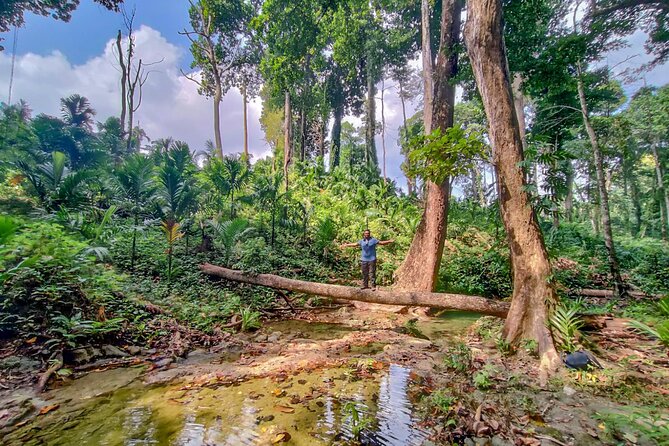
Havelock’s ancient lava stream trek trades beach time for a close look at how the island works. You walk from coastal forest into an areca nut plantation, then push into thicker forest toward a freshwater stream while learning how volcanic forces shaped the Andamans.
I like the clear focus on plants and geology, rather than a quick walk with little explanation. I also like the glimpse into areca nut farming, an everyday part of island life that many visitors miss.
The catch is physical: the trail can be strenuous, slippery, and rope-assisted. If you have back, knee, or cardiovascular problems, or simply lack strength and balance, this is not the outing for you.
Key points before you book
- A forest-to-stream route: The walk moves through coastal forest, areca nut plantation, dense tropical growth, and a freshwater stream.
- A lesson in island formation: Your guide explains evidence of the Andamans’ volcanic beginnings and the wildlife that developed here.
- Real hands-on trail work: Rope-assisted climbing and rappelling appear on slippery sections, so this is more than a flat nature walk.
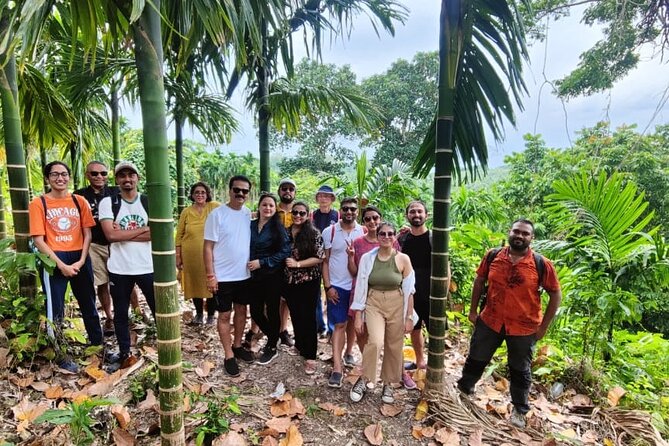
- A small-group outing: The group is limited to 15 people, which should make plant and geology explanations easier to follow.
- A short but demanding afternoon: The tour starts at 1:00 pm, lasts about 2 hours and 30 minutes, and returns to the same meeting point.
- Good value for active nature lovers: At $33.56 per person, the price covers all fees and taxes, but not an air-conditioned vehicle.
Why this trek feels different from a standard forest walk
Many island excursions show you scenery. This one asks you to read the island. The route links the coast, working farmland, thick tropical forest, and a freshwater stream, giving you several ways to understand Havelock in one outing.
The most useful part is the guide’s interpretation. You are not just looking at trees and passing through shade. You learn about plants, trees, geology, and the way wildlife has adapted to island conditions. That makes a difference in a tropical forest, where an untrained eye can easily miss the story.
The geology angle is especially worthwhile. The walk includes evidence of how the islands formed and an explanation of their natural past. You should not expect a formal geology field course, but you will come away with a clearer sense of why the Andamans have the terrain and plant life they do.
The group limit of 15 is another practical plus. That is small enough for questions and close listening, yet large enough that you are not paying for a private tour. If your group enjoys asking about unfamiliar plants or the island’s formation, the format should work well.
A few more treks around India worth a look
- Half day trekking (munnar valley Trekking & Tours )
★ 5.0 · 310 reviews - Nag Tibba 2 Days Trek (Pantwari to Pantwari)
★ 5.0 · 274 reviews - Bhrigu Lake and Alpine Meadow Trek
★ 5.0 · 121 reviews
Starting at Govind Nagar at 1:00 pm
The meeting point is in Govind Nagar, Havelock Island, and the activity ends back there. The fixed afternoon start makes the outing easy to fit around other plans, but you should allow time to arrive ready for the trail rather than treating this as a casual stroll from the road.
The tour lasts about two and a half hours. That is long enough to move through several types of terrain without taking up an entire day. It also means you should arrive prepared for continuous activity, since the route includes climbing and slippery ground.
No air-conditioned vehicle is included. That matters if you are arranging the tour as part of a wider day of sightseeing. The listed price covers all fees and taxes, but transportation in an air-conditioned vehicle is not part of the package.
The experience is booked, on average, six days ahead. I would not leave it until the last moment if your Havelock schedule is tight, especially since the group limit is 15 people.
From coastal forest to the areca nut plantation
The trek begins in coastal forest, giving you an early look at the vegetation shaped by the island’s position and climate. This first section sets the tone: the focus is not simply on walking but on noticing how different plants fit into the environment.
You then reach an areca nut plantation. Areca nut, often called beetle nut, is an important crop in parts of South Asia, and this section gives you a direct look at the work behind it. The route includes a glimpse into the lives of people involved in planting and harvesting, adding a human side to what could otherwise be a purely natural-history outing.
I like this change of scene. A plantation is managed land, while the forest beyond it is less controlled. Seeing both in sequence helps you understand that Havelock is not just untouched jungle. People live, farm, and work within the island’s natural setting.
The plantation section may also be the easiest part of the walk to appreciate if you are interested in local life. You are not being taken to a staged cultural display. Instead, the crop is part of the route and the explanation connects it to the people who depend on it.
Into denser tropical forest
After the plantation, the vegetation becomes denser and the walk more demanding. This is where the activity shifts from an interpretive nature walk to a proper trek.
Your guide points out endemic flora and fauna adapted to the Andaman environment. The word endemic matters here: some species are tied closely to these islands, so the forest is not simply a copy of mainland India. You might notice plants or signs of wildlife that would be easy to overlook without guidance.
A strong plant guide can transform this section. The most useful information is not just a list of names. It is learning what a plant is doing in the forest, how it fits local conditions, and why island species may develop differently from those on the mainland.
The forest also provides the clearest setting for the island’s wildlife story. The activity includes discussion of wildlife history, but it does not promise a dedicated animal-spotting safari. Keep your expectations sensible. You are going to observe the forest and its signs, not follow a guaranteed list of creatures.
The trail itself is part of the lesson. Uneven, damp ground and changing vegetation show you the conditions that plants and animals have adapted to. They also demand your attention, so this is not the best outing for anyone hoping to walk while distracted by a phone.
Same trailhead, a different route:
- Har Ki dun Trek by Himalaya Shelter
★ 5.0 · 102 reviews - Wild Elephant Anakulam & Waterfalls Tour(munnar valley Trekking)
★ 5.0 · 98 reviews - Friendship Peak Trek
★ 5.0 · 94 reviews - Half Day Hiking in Munnar Trekking Tour
★ 5.0 · 89 reviews
Reaching the freshwater stream
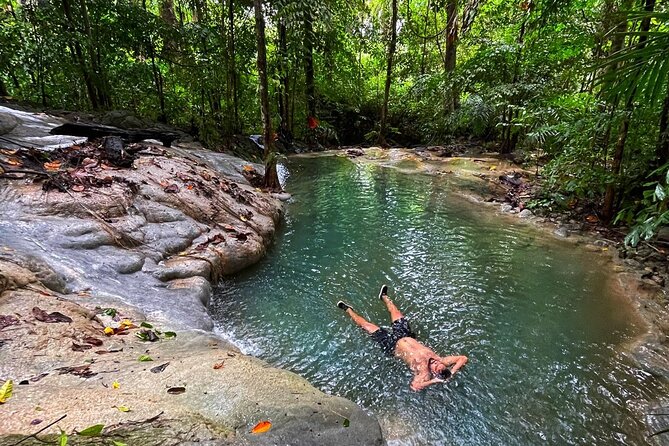
The route leads to a freshwater stream, the natural endpoint and one of the trek’s most appealing features. After the coastal forest and plantation, the stream shows another side of the island’s water system.
The stream is also where the geology discussion gains a physical setting. You can connect the explanation of island formation with the rock, soil, and water around you. The information provided does not promise a dramatic waterfall or swimming stop, so you should think of this as an interpretive destination rather than a water activity.
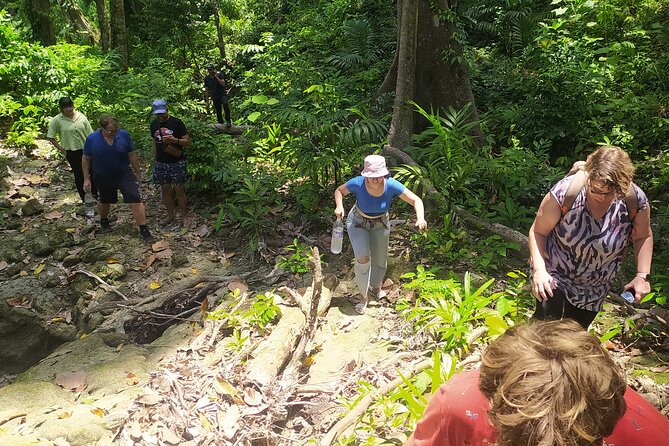
This part of the route may feel peaceful, but getting there takes effort. The trek includes slippery sections, and the approach can involve rope-assisted climbing and rappelling. Those features give the outing a little adventure, but they also raise the skill and fitness demands.
If you are comfortable using a rope for support and moving carefully over slick ground, the challenge may be a welcome change from ordinary sightseeing. If you have poor balance, weak legs, or a fear of steep or slippery terrain, the same sections could make the outing stressful.
How hard is the 2.5-hour trek?
The stated requirement is a moderate physical fitness level, but the route description adds important detail. This is not simply a moderate walk on a smooth path. It can be strenuous, slippery, and physically demanding enough to include rope-assisted climbing and rappelling.
I would plan for a genuine outdoor workout. You need to manage uneven terrain, maintain balance, and possibly pull or lower yourself with rope assistance. The short duration should not mislead you. Two and a half hours can feel long when every step requires care.
This activity is specifically not recommended for people with back, knee, or cardiovascular problems, or for anyone with general weakness. Take that warning seriously. The guide may help you through a section, but assistance does not remove the strain on joints, muscles, or the heart.
The best match is an active adult who regularly handles moderate hikes and feels confident on damp ground. If you are unsure, choose a gentler forest outing rather than hoping this one will be easier than described.
Wear clothing you can move in and expect the trail to be part of the experience, not a minor transfer between attractions. The available information does not specify equipment or clothing requirements, so you should confirm any packing details with the provider before setting out.
What the guide adds to the experience
The strongest praise for this outing centers on explanation. The guide covers plants, trees, and Andaman geology in detail, which is exactly what turns the trek from a sweaty walk into a useful introduction to the island.
I would pay close attention during the first part of the route. Once you understand the basic plant and geology themes, later sections of forest become easier to read. You may start noticing how the terrain changes, why certain plants appear in particular places, and how the forest relates to the island’s past.
The small maximum group of 15 supports this style of guiding. A large crowd would make it harder to hear or stop for questions, while a small group can keep moving without losing the educational thread.
The provider is Seashell Habitat Institute Activity Centre. No guide names are provided, so you should not book this expecting a particular named naturalist. The important factor is the guide’s ability to explain the forest clearly and manage the rope sections safely.
Is $33.56 a fair price?
At $33.56 per person, the value depends on what you want from Havelock. If you want only a short walk through greenery, the price may feel high compared with exploring on your own. If you want guided interpretation, a route through several environments, and a more active outing, the cost is reasonable.
All fees and taxes are included, which keeps the advertised price easier to understand. The missing piece is an air-conditioned vehicle. You need to handle your own transport arrangements, so factor that into the total cost of the afternoon.
The value is strongest for people who care about context. You are paying for access to a structured route and for explanations about island geology, endemic life, and areca nut cultivation. Those details are difficult to gain from a casual walk without a guide.
The rating shown for the experience is 4.9 from 58 reviews, with 100 percent recommending it. That is a strong signal, especially alongside the repeated emphasis on detailed plant and geology explanations. Still, the high rating should not make you ignore the physical warning. A well-liked trek can remain the wrong choice for someone with knee pain or limited fitness.
Weather, cancellation, and planning
The outing requires good weather. If poor weather cancels it, you are offered another date or a full refund. That policy is useful in the Andaman climate, where wet conditions can affect both comfort and trail safety.
You can cancel for a full refund if you do so at least 24 hours before the start time. Cancellations or changes made less than 24 hours before the experience are not accepted, and the cut-off follows local time.
The mobile ticket is convenient, but the bigger planning issue is the fixed meeting point and afternoon start. Confirm your route to Govind Nagar and leave enough time to arrive before 1:00 pm. Since the trek ends where it begins, you will not need to arrange a second pickup point.
Who should book this Havelock trek?
I would choose this outing if you want to understand Havelock beyond its beaches and are comfortable with a physically active afternoon. It suits people who enjoy plant identification, geology, local agriculture, and the feel of a real forest trail.
It is also a good choice if you prefer a small group and a guide who explains what you are seeing. The areca plantation gives the route a human dimension, while the freshwater stream and volcanic geology add variety.
I would skip it if you need a flat, gentle path, dislike slippery ground, or have back, knee, cardiovascular, or general weakness concerns. The rope work is not a decorative extra. It signals that the trail can demand real effort.
Should you book it?
Book this trek if the idea of learning how an island formed while walking through coastal forest, farmland, and dense tropical growth sounds better than another passive sightseeing stop. The detailed attention to plants and geology gives the $33.56 price real value, and the return to Govind Nagar keeps the outing neatly contained.
Skip it if your main goal is relaxation or if your body is not ready for slippery, rope-assisted terrain. For the right person, this is a compact and memorable look at Havelock’s natural and working sides. For the wrong person, it is simply too demanding.
FAQ
Where does the trek start and finish?
It starts in Govind Nagar on Havelock Island, Andaman and Nicobar Islands, and ends back at the same meeting point.
What time does the activity begin?
The trek starts at 1:00 pm.
How long does the experience last?
The activity lasts approximately 2 hours and 30 minutes.
What is included in the price?
All fees and taxes are included. An air-conditioned vehicle is not included.
How physically demanding is the trek?
You need a moderate level of physical fitness. The route can be strenuous and slippery, with rope-assisted climbing and rappelling. It is not recommended for people with back, knee, cardiovascular, or weakness-related concerns.
What happens if the weather is poor or I need to cancel?
You can cancel at least 24 hours before the start time for a full refund. If poor weather causes the activity to be canceled, you will be offered another date or a full refund.
Just added around India
- Gokarna Beach Trek★ 5.0 · 9 reviews
- Jaipur Trekking and Hiking Tour with Guide★ 5.0 · 21 reviews
- Tirath Expedition: Trek to the Tirath Hans Kund & Saketi Top(4280m)★ 5.0 · 9 reviews
- Nagtibba Trek (Pantwari to Pantwari)★ 5.0 · 39 reviews
- Dayara Bugyal and Surya Top Trek★ 5.0 · 10 reviews
- 7-Day Kuari Pass Trek★ 5.0 · 3 reviews
- Snowline Trek★ 4.5 · 11 reviews
- Triund Trek & Snow Line Trek★ 4.5 · 9 reviews
India Trekking Tours, compared.
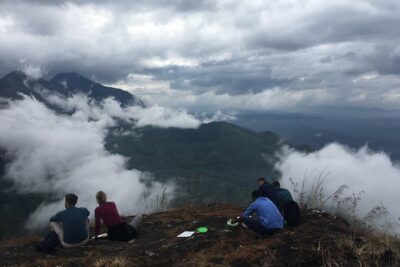
Half day trekking (munnar valley Trekking & Tours )
Read our review →
Wild Elephant Anakulam & Waterfalls Tour(munnar valley Trekking)
Read our review →

Browse the lists this trek appears in